Ultrasonic topic: "Phytochemicals"
Phytochemical is an umbrella term for plant-derived (greek word “phyto” means plant) chemicals, which includes a wide variety of compounds that occur naturally in plants. Many phytochemicals are known for their beneficial effects on human health and are therefore highly valued compounds of nutrition. Terpenes, phytosterols, isothiocyanates, organosulfides, stylbenes, isoflavonoids, alkaloids, phenolic acids and anthocyanides are the most important sub-groups of phytochemicals, which include numerous phytochemicals such as caffeine and theobromine (alkaloids); allicin, glutathione and sulphoraphane (organosulfides); ptherostilbene and resveratrol (stylbenes); or epicatechin, naringin and quercitin (flavonoids) to name just a few.
To use phytochemicals as drugs or nutritional supplements, the plant chemicals must be isolated from the cell matrix. Ultrasonic extraction is a powerful and reliable method to release phytochemicals from plants such as vegetables, herbs, fruits, roots, and bark. Ultrasonic extraction equipment is used in small and large scale, e.g. for the production of terpenes from hemp and cannabis, quercetin from apples, tea and onion, allicin from garlic, caffeine from coffee, theobromine form cocoa beans or ellagic acid from pomegranate.
Intense ultrasound waves are used to create acoustic cavitation, whose shear forces disrupts cell walls and flush the phytochemicals from the cell interior into the solvent. As a non-thermal method, ultrasonic extraction prevents the thermal degradation of heat-sensitive compounds and results in high-quality extracts. High extraction efficiency, (almost) complete extraction, rapid processing and safe operation are further advantages of ultrasonic extraction.
Read more about ultrasonic processors and their use in phytochemical extraction!

Found 54 hits. Showing results 49 - 54.
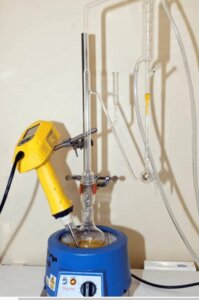
Ultrasonic Hydrodistillation of Essential Oils
The conventional extraction of essential oils is expensive and time-consuming. Sonication intensifies extraction resulting in higher yields and superior extract quality. Hielscher sonicators can be easily integrated into any conventional hydrodistillation system to improve efficiency and quality. Hydrodistillation of Botanical…
https://www.hielscher.com/ultrasonic-hydrodistillation-of-essential-oils.htm
Ultrasonic Cannabis Glycerin Extraction for Fast, Alcohol-Free Tinctures
Produce high-quality cannabis glycerin extracts in minutes instead of weeks. Hielscher ultrasonicators intensify the extraction of cannabinoids, terpenes, and other plant compounds from cannabis and hemp into vegetable glycerin, propylene glycol, oils, or other formulation carriers. Non-thermal extraction for alcohol-free…
https://www.hielscher.com/preparation-of-cannabis-glycerin-extract-with-ultrasonics.htm
Highly Efficient Ginger Extraction by Sonication
Ultrasonic extraction of essential oils and active compounds from ginger convinces by high efficiency and high yields. Ultrasonic extraction is a mild, non-thermal process which yields in high quality extracts. Whilst other extraction methods are limited in their upscaling capability,…
https://www.hielscher.com/highly-efficient-ginger-extraction-by-sonication.htm
Cannabis Oil / CBD Nanoemulsion by Ultrasonics
Making clear, translucent cannabis nanoemulsions is a real challenge. Ultrasonic emulsifiers are a highly efficient technique to produce clear, long-time stable nanoemulsion encapsulating cannabinoids. Ultrasonically nano-emulsified CBD, CBG or THC have a significantly higher bioavailability. Make CBD Nano-Emulsions using an…
https://www.hielscher.com/ultrasonic-cannabis-oil-emulsion.htm
Ultrasonically Cold-Brewed Tea
Power ultrasound is an established technique for the efficient extraction of flavors, polyphenols, and bioactive compounds from plant materials. Cold‑brewed tea provides numerous advantages, preserving a greater proportion of thermolabile bioactives while delivering a smoother, more refined flavor profile. As…
https://www.hielscher.com/ultrasonically-cold-brewed-tea.htm
Solvent-Free Stevia Extraction with Ultrasound
The conventional extraction of the sweet components such as stevioglycosides from Stevia rebaudiana uses toxic solvents. In order to obtain a healthy, high-quality food product, a solvent-free extraction method is required. The ultrasonic extraction technique avoids the use of solvents…
https://www.hielscher.com/solvent-free-stevia-extraction-with-ultrasound.htm