Ultrasonic topic: "Ultrasonic Lysis and Cell Disruption"
Lysis is the term which describes the disruption of cell walls or membranes. Ultrasonic disruptors are a reliable tool to break cells in order to release intracellular compounds such as DNA, proteins, organelles, and phytochemicals. For ultrasonic lysis (aka cell disruption), high-intensity / low-frequency ultrasound waves are applied to disrupt the cell membranes. Since ultrasonication promotes mass transfer, the intracellular material is released into the surrounding solvent. The fluid containing the contents of lysed cells is called a lysate.
Cell lysis is the first step in cell fractionation, organelle isolation and protein extraction and purification.
Read more about ultrasonic cell disruptors and ultrasonic lysis!

Found 58 hits. Showing results 1 - 12.

Microplate Sonication in Shotgun Proteomics – Application Note
Shotgun proteomics depends on efficient, reproducible sample preparation to convert complex biological material into LC-MS/MS-ready peptides. The UIP400MTP microplate sonicator supports this process by enabling standardized, parallel sonication of small-volume samples, helping laboratories improve disruption, extraction, and resolubilization in microplate-based…
https://www.hielscher.com/microplate-sonication-in-shotgun-proteomics.htm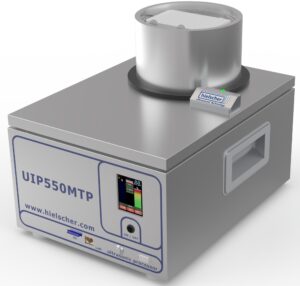
UIP550MTP Microplate Sonicator
The most powerful ultrasonic solution for uniform sonication of 6-, 12-, 24-, 48-, 96-, and 384-well plates. Achieve consistent cell lysis, protein extraction, and DNA fragmentation across all wells simultaneously. UIP550MTP – 550 W Ultrasonic Power for High-Throughput Sample Preparation…
https://www.hielscher.com/uip550mtp.htm
Sonication-Assisted Protein Extraction from Tumor Tissue – Protocol
This protocol describes a sonication-assisted protein extraction method for tumor tissue that advances the standard CPTAC urea lysis workflow by adding a controlled probe-sonication step during tissue disruption. Building on the established deep-scale CPTAC proteome and phosphoproteome preparation strategy, this…
https://www.hielscher.com/sonication-protein-extraction-from-tumor-tissue-protocol.htm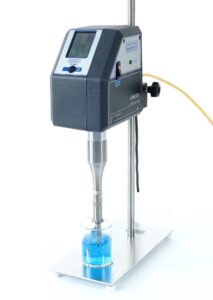
Probe-Type Sonicators for Reliable Lab Workflows
Hielscher Ultrasonics offers a comprehensive range of lab probe sonicators and ultrasonic lab homogenizers designed to meet the diverse needs of research, quality control, process development, and small-scale production. From compact devices for small sample volumes to high-power sonicators for…
https://www.hielscher.com/lab-probe-sonicators.htm
Ultrasonic Extraction for Leghemoglobin Production
A cleaner, faster, and more scalable way to unlock the "meaty" molecule behind plant-based foods: Leghemoglobin - the heme-containing protein responsible for the aroma, color, and flavor of meat - has become one of the most valuable biomolecules in the…
https://www.hielscher.com/ultrasonic-extraction-for-leghemoglobin-production.htm
How Sonication Can Supercharge Lysozyme for Bacterial Cell Lysis
, Kathrin HielscherSonication boosts lysozyme efficiency in bacterial cell lysis: Researchers find a growing body of research shows that combining lysozyme with ultrasonic sonication dramatically improves bacterial cell lysis in biotechnology and protein production workflows. While lysozyme alone often struggles with dense or over-expressing bacterial cultures, sonication enhances enzyme effectiveness by weakening cell walls through cavitation-driven mechanical forces. The result is faster processing, more complete cell disruption, and higher protein yields. Laboratories increasingly use Hielscher sonicators to precisely control ultrasonic energy, reduce processing time, and achieve reproducible results across research and industrial-scale applications.
https://www.hielscher.com/sonication-supercharges-lysozyme-for-bacterial-cells.htm
New Sonication Technology Streamlines Sample Prep in Standard 50 mL Falcon Tubes
, Kathrin HielscherA new VialTweeter-spec sonicator designed for single 50 mL Falcon tubes is helping laboratories streamline sample preparation while reducing contamination risks. By enabling high-intensity, non-contact ultrasonic processing in closed tubes, the system allows researchers to perform ultrasonic lysis and move directly to centrifugation and downstream steps without transferring samples. The approach improves workflow efficiency, reproducibility, and safety-benefits that are especially relevant for applications such as extracellular vesicle research, proteomics, and other sensitive analytical procedures.
https://www.hielscher.com/new-sonication-technology-streamlines-sample-prep-in-standard-50-ml-falcon-tubes.htm
Universal Compatibility: Sonicate Multi-well Plates with the UIP400MTP
The UIP400MTP multi‑well plate sonicator is engineered for universal compatibility, enabling efficient, non‑contact ultrasonic processing across virtually all standardized microplate formats without the need for proprietary consumables. It accepts and operates seamlessly with 6‑, 12‑, 24‑, 48‑, 96‑, and 384‑well…
https://www.hielscher.com/uip400mtp-plate-compatibility.htm
Video: Falcon Tube Sonicator
Experience how the Hielscher VialTweeter delivers powerful, contamination-free sonication inside a sealed 50 mL Falcon tube to accelerate workflows ranging from microbiology to formulation development. For more information about this Falcon tube sonicator, please click here!
https://www.hielscher.com/video-falcon-tube-sonicator.htm
50 mL Falcon Tube Sonicator
This VialTweeter sonicator delivers up to 200 watts of focused sonication power to closed 50 mL Falcon tubes, centrifuge tubes or conical sample vials. The high amplitude and intense sonication enables rapid and uniform treatment in a closed Falcon tube. It ensures…
https://www.hielscher.com/50-ml-falcon-tube-sonicator.htm
Protocol using Hielscher Multi-Sample Sonicators in Biofilm and Proteomic Analysis
The use of multi-sample sonicators, such as the VialTweeter Multi-Tube Sonicator and the UIP400MTP Microplate Sonicator, streamlines laboratory workflows for high-throughput applications. Both devices allow precise and uniform ultrasonic processing across multiple samples, minimizing variability and enhancing reproducibility. This is…
https://www.hielscher.com/protocol-using-hielscher-multi-sample-sonicators-in-biofilm-and-proteomic-analysis-2.htm
Probe-Type Sonication for Sample Preparation: A Comprehensive Guide
Probe-type sonication is a powerful tool for disrupting cells, shearing DNA, and dispersing particles in liquid samples. Like all techniques in life science, microbiology and clinical analysis, sonication requires careful optimization to avoid sample damage, particularly when working with heat-sensitive…
https://www.hielscher.com/probe-type-sonication-for-sample-preparation-a-comprehensive-guide.htm