Biocide-free Sterilization and Dispersion of Water-Based Coatings
Water-based coatings are widely used because they support low-VOC formulations, safer handling, and more sustainable production. At the same time, their water content makes them highly susceptible to microbial contamination. Bacteria, yeasts, and molds can enter the product through raw materials, tanks, pipelines, filling systems, or ambient exposure during manufacturing and storage. Once contamination occurs, microorganisms can proliferate quickly and compromise both product quality and shelf life.
This is why microbial stability is a critical quality factor in water-based paints, coatings, inks, and pigment dispersions.
Sonication Combines Pigment Dispersion and Microbial Control in One Industrial Process
Traditionally, manufacturers rely on preservatives and in-can biocides to control spoilage. However, increasing regulatory pressure and rising demand for cleaner formulations are driving the search for alternatives. High-intensity sonication offers a highly effective solution by enabling simultaneous dispersion and sterilization in one process step.
For coating manufacturers, this means that ultrasonic processing is not only a dispersion technology. It is also a powerful process tool for improving microbiological stability while supporting low-biocide or biocide-free formulation strategies.
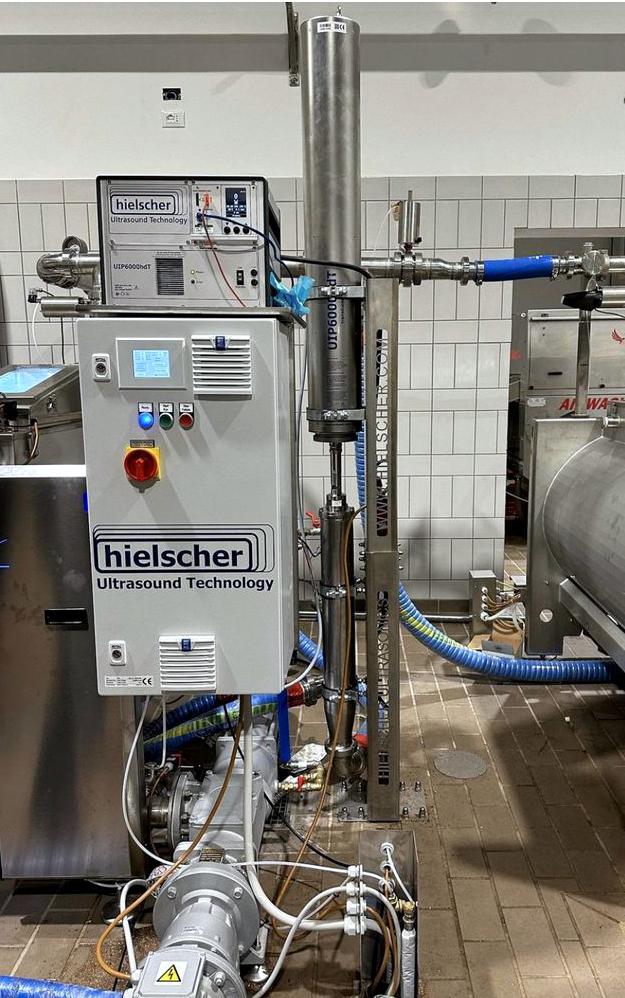
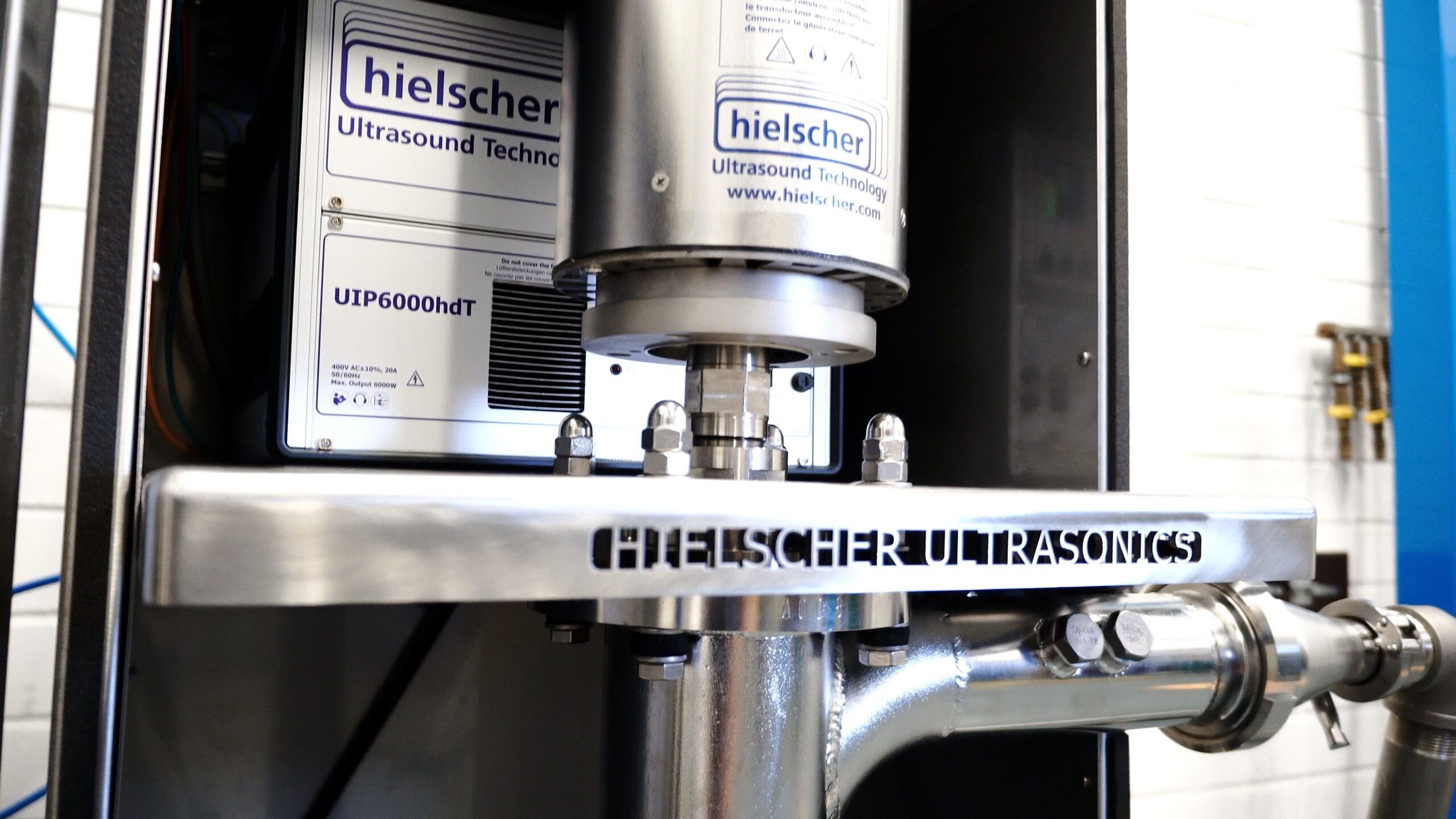
Industrial sonicator UIP6000hdT (6kW) for simultaneous pigment dispersion and microbial sterilization of water-borne paint and coating formulations
Why Microbial Stability Is Industrially Critical in Water-Based Paints
Microbial contamination directly affects product quality and process reliability: The microbial stability of paints is of major industrial relevance because microbial growth can trigger a range of product defects and production issues. Water-based formulations often contain organic ingredients such as binders, dispersants, wetting agents, thickeners, and defoamers. These components can create a favorable environment for microbial growth if contamination is introduced during processing or storage.
In industrial practice, insufficient microbial control can result in:
- viscosity drift and pH changes
- gas formation and container swelling
- foul odor and discoloration
- reduced storage stability
- film defects and inconsistent application behavior
- for immersion baths – increased cleaning frequency and contamination-related downtime
Microbial spoilage does not only damage the product. It can also create recurring hygiene problems in tanks, pipes, and recirculation loops, leading to production losses, rework, customer complaints, and disposal costs. For this reason, microbial stability is not a secondary property. It is a core requirement for commercially successful water-based coatings.
How Sonication Works in Water-Based Coatings
Acoustic cavitation creates intense shear and thereby microbial disruption: High-power ultrasound works through acoustic cavitation. When ultrasonic waves pass through a liquid, microscopic bubbles form, grow, and implode. These cavitation events generate highly localized shear forces, turbulence, pressure changes, and microjets.
In water-based coatings, these cavitational effects are valuable because they act on both particles and microorganisms at the same time. Pigment agglomerates are broken down efficiently into finer particles, while microbial cells are mechanically damaged and inactivated. This makes sonication especially attractive for formulations where both dispersion quality and microbial stability are essential.
One process step delivers two critical functions
Instead of treating pigment dispersion and microbial control as separate tasks, sonication combines them in a single operation. This dual effect offers a clear industrial advantage.
The same ultrasonic energy that deagglomerates pigment clusters and disperses particles uniformly can also reduce the viable microbial load in the coating. As a result, sonication supports:
- finer and more uniform pigment dispersion
- improved color strength and optical consistency
- reduced microbial contamination during processing
- improved storage stability of water-based products
- lower dependence on preservatives and in-can biocides
This makes sonication highly relevant for the development of more sustainable and cleaner-label coating systems.
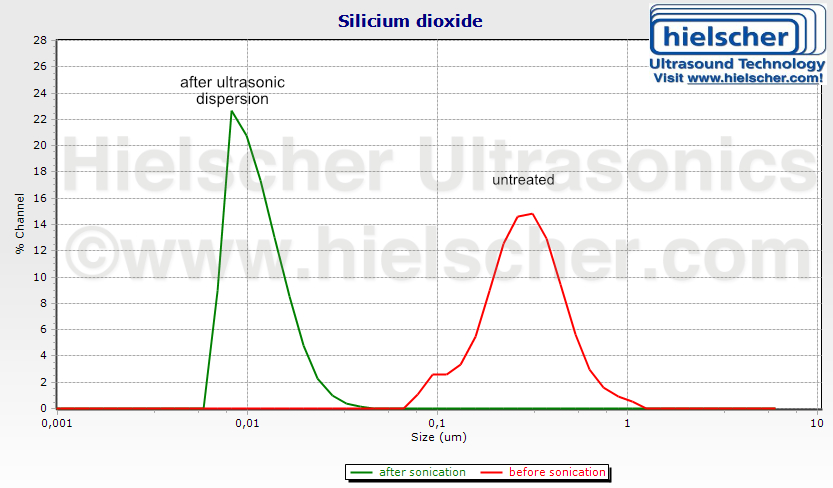
Ultrasonically dispersed silicium dioxide: red curve – untreated; green curve: after ultrasonic dispersion

Industrial ultrasonic homogenizer UIP16000 (16kW) for the production of paints and coatings
Advantages of Simultaneous Dispersion and Sterilization of Paint Pigments
- Better dispersion quality improves coating performance
Pigments and fillers often form agglomerates that are difficult to break with insufficient mechanical energy. Sonication provides intense and targeted shear, making it highly effective for deagglomeration and particle-size reduction. A finer dispersion can improve several performance characteristics of the final coating, including color development, opacity, gloss, and long-term stability. - Simultaneous sterilization supports biocide reduction
At the same time, ultrasonic cavitation can damage microbial cells present in the liquid phase. This reduces contamination in the product stream and helps improve microbial stability without relying exclusively on chemical preservation. For manufacturers pursuing low-biocide or biocide-free systems, this is a significant process advantage. - Process intensification reduces complexity
Combining two key process objectives in one inline step simplifies production. Instead of adding separate treatment stages for dispersion and microbial control, coating producers can integrate both into one controlled sonication process. This reduces handling, supports cleaner production, and improves reproducibility.
Why Biocide-Free Processing Is Gaining Importance
Regulatory, environmental, and market demands are reshaping formulation strategies
The shift toward low-biocide and biocide-free coatings is driven by several industrial factors. Regulatory frameworks are becoming stricter, environmental expectations are increasing, and customers are asking for safer, more sustainable products with fewer substances of concern.
In this context, physical process technologies gain strategic relevance. Sonication is especially attractive because it does not merely replace one additive with another. It introduces a non-chemical treatment principle that improves both dispersion and microbial stability through mechanical energy.
For formulators and production managers, this offers several benefits:
- support for more sustainable product concepts
- reduced dependence on conventional preservatives
- improved process hygiene
- stronger positioning for next-generation water-based coatings
Why Hielscher Sonicators Are the Best Solution for Industrial Coating Production
Precise Control for Reproducible Processing Conditions
Hielscher sonicators are designed for industrial process control. In coating production, precise control over sonication parameters is essential because formulation behavior depends on pigment type, solids content, viscosity, temperature, flow rate, and treatment intensity.
Hielscher systems allow accurate adjustment of important process parameters such as:
- amplitude
- pressure
- flow rate / residence time
- temperature
- energy input
This precision allows manufacturers to optimize pigment dispersion improving formulation quality and achieving reproducible microbial reduction.
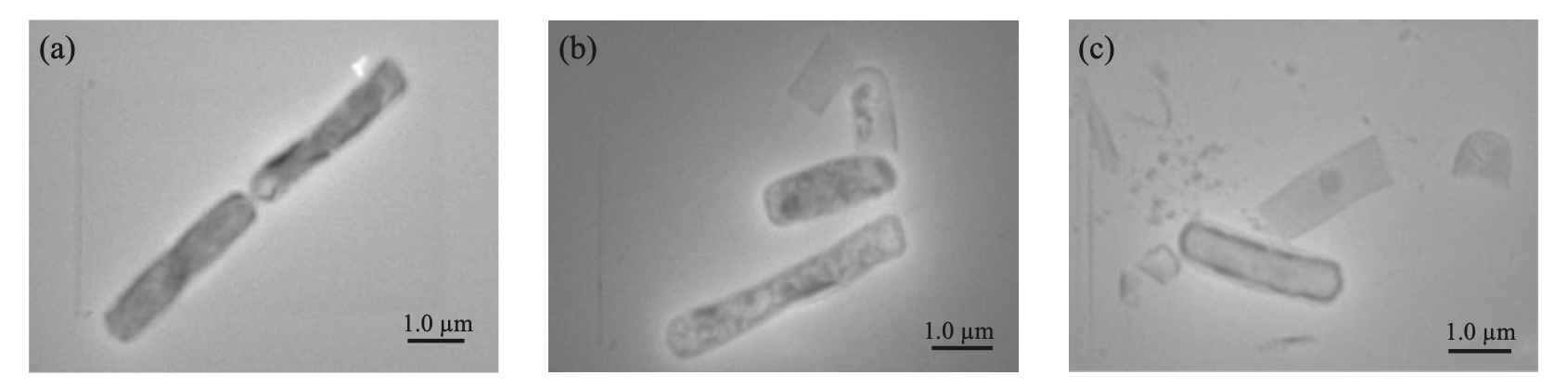
SEM images of B. subtilis vegetative cells before (a) and after ultrasound irradiation for 30 min (b), (c).
Study and image: © Hashimoto et al., 2020
Pressurizable Flow Cells for Intensified Sonication
Elevated pressure increases cavitation intensity
A key advantage of Hielscher technology is the use of pressurizable flow-cell reactors. Pressure has a strong effect on cavitation behavior. Under elevated pressure, cavitation becomes more intense and more effective, which is particularly valuable for demanding dispersions and continuous microbial inactivation.
Pressurizable flow cells support:
- intensified ultrasonic treatment
- more effective deagglomeration
- improved process efficiency
For industrial coating plants, this means that ultrasonic treatment can be tuned not only for lab-scale feasibility, but also for real production throughput and product demands.
Inline Processing for Continuous Manufacturing
Sonication can be integrated directly into the production line
Hielscher sonicators are highly suitable for inline processing. This allows water-based coatings to be treated continuously as they pass through the production system. Inline sonication fits well into industrial manufacturing because it avoids unnecessary batch handling and can be integrated into transfer loops, recirculation systems, or dedicated process lines.
Inline processing offers clear operational advantages:
- continuous treatment under defined conditions
- easy integration into existing plants
- reduced manual handling
- improved process efficiency and consistency
For coating manufacturers, this makes sonication a practical production technology.

Spray-dried TiO2 before and after ultrasonic milling
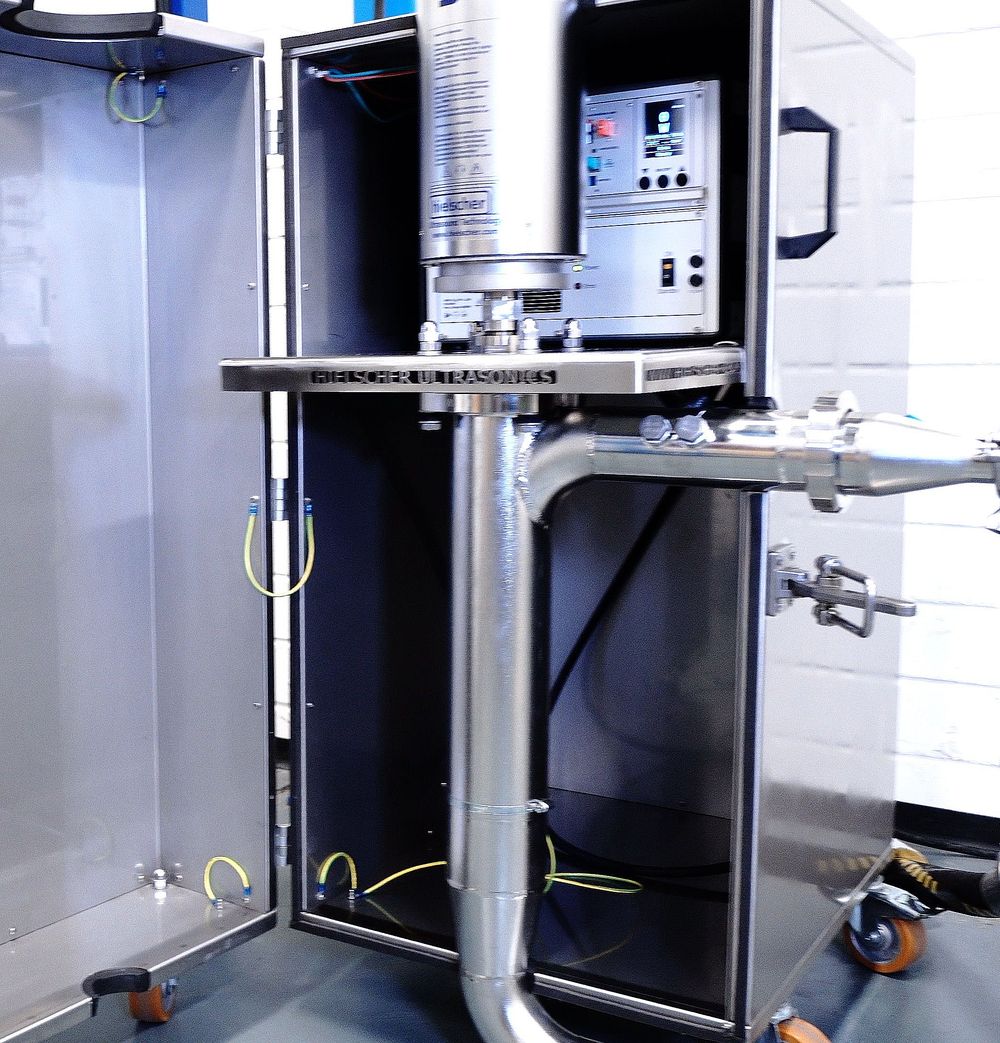
UIP6000hdT (6000 watts ultrasound, 20 kHz frequency) for processing of coating formulations
Linear Scalability from Lab to Industrial Production
Process parameters can be transferred reliably across scales
Scale-up is a critical issue in process development. Hielscher ultrasonic systems are designed for linear scalability, which means that process conditions established at laboratory or pilot scale can be translated systematically to industrial production.
This is especially important for companies developing innovative low-biocide coatings, because it reduces risk during implementation and helps accelerate commercialization.
The advantages of linear scalability include:
- easier process development
- reliable transfer from R&D to production
- predictable performance at larger throughput
- lower scale-up uncertainty
Easy Cleaning and Hygienic Process Design
Cleanability matters when microbial stability is the goal
If microbial control is a key process objective, equipment hygiene becomes even more important. Hielscher sonicators are designed for practical industrial cleaning and straightforward integration into hygienic process environments.
Easy cleaning helps manufacturers:
- reduce contamination risks in equipment
- stop microbial growth
- shorten cleaning and maintenance efforts
- improve process reliability over repeated production cycles
In water-based coatings, where contamination can persist in tanks, dead zones, and transfer systems, easy-to-clean ultrasonic equipment contributes directly to product stability and operational robustness.

Sonicated chalk paint on the grindometer demonstrates the perfectly uniform deagglomeration and particle size distribution of the pigments
Reproducible Results for Industrial Quality Assurance
Consistency is essential for coating manufacturers
Industrial paint production requires highly reproducible process results. Optical properties, rheology, shelf life, and microbiological stability must remain consistent from batch to batch and over long production periods.
Hielscher sonicators provide reproducible ultrasonic conditions that support:
- uniform pigment dispersion
- stable particle-size reduction
- consistent microbial treatment
- reliable product quality across production runs
This reproducibility is essential for process validation, quality assurance, and the industrial adoption of ultrasonic technology.
Sonication as a Strategic Technology for Modern Water-Based Coatings
 The coatings industry is moving toward formulations that are more sustainable, lower in hazardous additives, and more robust in performance. Sonication fits this direction exceptionally well because it addresses two major production challenges at once: the need for efficient pigment dispersion and the need for microbial stability.
By combining these functions in one process step, sonication helps manufacturers simplify production, improve coating quality, and reduce dependence on conventional preservation systems. This makes ultrasonic treatment highly attractive for architectural paints, industrial coatings, functional dispersions, inks, and related water-based systems.
Hielscher sonicators provide the industrial platform needed to implement this strategy in practice. Their precise control, pressurizable flow cells, inline capability, linear scalability, easy cleaning, and reproducible results make them particularly suitable for the production of paints and coatings.
Take Advantage of Ultrasonic Coating Dispersion and Steriliziation
Biocide-free sterilization and dispersion of water-based coatings using sonication is a highly promising approach for modern paint manufacturing. Sonication improves pigment dispersion, reduces microbial load, and supports stronger product stability in one integrated process. This combination is especially valuable in an industry that is under growing pressure to reduce preservatives while maintaining high product quality and process efficiency.
For manufacturers of water-based paints and coatings, Hielscher sonicators offer a practical and industrially proven solution. Their process controllability, inline integration, intensified flow-cell design, scalability, hygienic cleanability, and reproducible performance make them an excellent choice for simultaneous dispersion and sterilization of paint pigments.
The table below gives you an indication of the approximate processing capacity of our ultrasonicators:
| Batch Volume | Flow Rate | Recommended Devices |
|---|---|---|
| 10 to 2000mL | 20 to 400mL/min | UP200Ht, UP400St |
| 0.1 to 20L | 0.2 to 4L/min | UIP2000hdT |
| 10 to 100L | 2 to 10L/min | UIP4000hdT |
| 15 to 150L | 3 to 15L/min | UIP6000hdT |
| n.a. | 10 to 100L/min | UIP16000hdT |
| n.a. | larger | cluster of UIP16000hdT |
Design, Manufacturing and Consulting – Quality Made in Germany
Hielscher ultrasonicators are well-known for their highest quality and design standards. Robustness and easy operation allow the smooth integration of our ultrasonicators into industrial facilities. Rough conditions and demanding environments are easily handled by Hielscher ultrasonicators.
Hielscher Ultrasonics is an ISO certified company and put special emphasis on high-performance ultrasonicators featuring state-of-the-art technology and user-friendliness. Of course, Hielscher ultrasonicators are CE compliant and meet the requirements of UL, CSA and RoHs.

Literature / References
- Spiteri, D., Chot-Plassot, C., Sclear, J., Karatzas, K. A., Scerri, C., Valdramidis, V. (2017): Ultrasound processing of liquid system(s) and its antimicrobial mechanism of action. Letters in
Applied Microbiology, 65 (4), 2017.. 313-318. - N.P. Badgujar Y.E. Bhoge T.D. Deshpande B.A. Bhanvase P.R. Gogate S.H. Sonawane R.D. Kulkarni (2015): Ultrasound assisted organic pigment dispersion: advantages of ultrasound method over conventional method. Pigment & Resin Technology, Vol. 44, Iss. 4. 214 – 223.
- Karekar, Sammit; Bhanvase, Bharat; Sonawane, Shirish; Deosarkar, Manik; Pinjari, Dipak; Pandit, Aniruddha (2014): Synthesis of zinc molybdate and zinc phosphomolybdate nanopigments by an ultrasound assisted route: Advantage over conventional method. Chemical Engineering and Processing: Process Intensification 87, 2014.
- Aydin, Z., Turgut, S. & Akbas, H.Z. (2018): Structural Differences of BaTiO3 Ceramics Modified by Ultrasonic and Mechanochemical Methods. Powder Metallurgy and Metal Ceramics, Vol. 57, No. 7-8, November, 2018.
Frequently Asked Questions
Why are Water-Borne Paints Prone to Microbial Spoilage?
Water-borne paints are prone to microbial spoilage because their aqueous phase provides the moisture required for the growth of bacteria, yeasts, and molds. In addition, many paint ingredients such as binders, thickeners, dispersants, defoamers, and other organic additives can serve as carbon and energy sources for microorganisms. Once contamination is introduced through raw materials, storage tanks, process water, air exposure, or production equipment, microbial metabolism can cause pH drift, viscosity changes, odor formation, gas production, discoloration, and loss of product stability.
How to Control Microbial Spoilage of Paint Immersion Baths?
Microbial spoilage of paint immersion baths can be controlled by combining hygienic process design with active microbial management. The most common measures include regular bath monitoring, cleaning and sanitation of tanks and circulation lines, filtration, controlled biocide dosing, and minimization of dead zones where biofilms can develop. In cathodic immersion coating systems, microbial growth is especially problematic because it can alter conductivity, pH, bath chemistry, and deposition behavior, which leads to parameter drift and higher maintenance demand. Physical treatment methods such as ultrasonic inline processing can also help reduce microbial load without toxic chemical additives and support bath stability by disrupting microbial cells and limiting contamination buildup.
Are Nanoparticles Capable to Reduce Microbial Growth?
Nanoparticles can reduce microbial growth when they possess intrinsic antimicrobial activity or when they release bioactive ions. Silver nanoparticles are a prominent example because they can damage microbial cell membranes, interact with proteins, induce oxidative stress, and release silver ions that inhibit vital cellular functions. Ultrasonically synthesized silver nanoparticles are particularly interesting because sonochemical methods can produce small and relatively uniform particles with high active surface area, which can enhance antimicrobial performance. Their effectiveness depends strongly on particle size, concentration, surface chemistry, dispersion stability, and the surrounding formulation matrix.
Read more about ultrasonically synthesized silver nanoparticles!
- high efficiency
- state-of-the-art technology
- reliability & robustness
- adjustable, precise process control
- batch & inline
- for any volume
- intelligent software
- smart features (e.g., programmable, data protocoling, remote control)
- easy and safe to operate
- low maintenance
- CIP (clean-in-place)
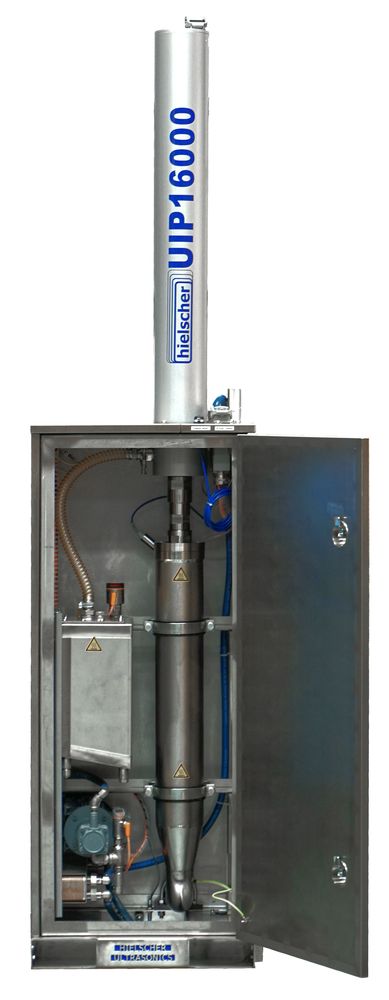
Ultrasonic disperser UIP16000hdT – acoustic cavitation disperses particles and kills microbes

Hielscher Ultrasonics manufactures high-performance ultrasonic homogenizers from lab to industrial size.