Reaktorë me shtrat të fiksuar me tejzanor
Sonication mund të përmirësojë reaksionet katalitike në reaktorët me shtrat fiks kryesisht duke intensifikuar transferimin e masës rreth dhe brenda shtratit të katalizatorit të mbushur. Për më tepër, sonication heq shtresat e pasivizimit dhe ndotjes nga sipërfaqja e katalizatorit duke rigjeneruar kështu vazhdimisht katalizatorin.
Si Sonication përmirëson katalizën e shtratit fiks
Në një reaktor me shtrat fiks, grimcat e katalizatorit mbeten të palëvizshme ndërsa reaktantët e lëngshëm, të gazit ose shumëfazorë rrjedhin nëpër shtrat. Performanca e reaksionit shpesh kufizohet nga transferimi i masës së jashtme, difuzioni i poreve, kanalizimi, ndotja dhe gradientët e transferimit të nxehtësisë. Ultratingujt mund të zvogëlojnë disa nga këto kufizime duke gjeneruar kavitacion akustik, mikrotransmetim, forca prerjeje dhe lëkundje presioni.

Sonicator UIP2000hdT i integruar në një reaktor të fiksuar
Efektet kryesore të reaksioneve të intensifikuara me ultratinguj në shtresë të fiksuar
- Përmirësimi i transferimit të masës së jashtme: Mikrorrjedha ultrasonike zvogëlon shtresën e qëndrueshme rreth grimcave të katalizatorit, duke lejuar që reagentët të arrijnë në vendet aktive më efikase.
- Përmirësimi i aksesueshmërisë së poreve: Fluktuacionet e presionit dhe lëvizja e lëngut të shkaktuara nga kavitacioni mund të përmirësojnë depërtimin e reagentëve në pore të katalizatorit dhe largimin e produkteve nga poret.
- Reduktimi i depozitimit dhe pasivizimit: Sonikimi mund të ndihmojë në heqjen e depozitave, filmave polimerikë, paraprakëve të qymyrit ose shtresave të tjera pasivuese nga sipërfaqet e katalizatorit, duke ruajtur aktivitetin katalitik për më gjatë.
- Kanalizimi i reduktuar në shtretërit e paketuar: Në studimet e shtratit të paketuar, ultratingujt janë treguar se modifikojnë sjelljen e rrjedhës dhe zvogëlojnë shpërndarjen, duke ndihmuar reaktorin t'i afrohet sjelljes më ideale të rrjedhës së prizës.
- Transferimi i Përmirësuar i Nxehtësisë: Rrjedhja akustike dhe turbulenca përmirësojnë shpërndarjen lokale të nxehtësisë, duke reduktuar pikat e nxehta ose zonat e ftohta në shtratin e katalizatorit.
- Konvertimi dhe rendimenti më i lartë: Duke përmirësuar transferimin e masës dhe aksesin e katalizatorit, sonication mund të rrisë shkallën e reagimit, konvertimin dhe rendimentin e produktit, veçanërisht kur reaksioni është i kufizuar në transport dhe jo thjesht i kufizuar kinetikisht.
Përmirësimi i kontaktit lëng-ngurtë: Ultratingujt promovojnë lagështim më të mirë të grimcave të katalizatorit, gjë që është veçanërisht e dobishme në sistemet e shtratit fiks me shtrat rrjedhës, të ushqyer me llum ose me fazë të lëngshme.
Si e përmirëson Sonication katalizën e shtratit fiks?
Mekanizmi kryesor është kaviteti akustik: valët ultratinguj krijojnë flluska mikroskopike që rriten dhe shemben në mënyrë të dhunshme. Shembja e tyre gjeneron forca shpuese lokale, mikrostruma, vale shoku dhe përzierje intensive. Afër sipërfaqeve katalitike, këto efekte mund të pastrojnë, aktivizojnë dhe rinovojnë ndërfaqen solid-likuid. Pasqyrimet mbi sonokatalizën e përshkruajnë këtë si një sinergji midis ultratingujve dhe katalizatorëve të ngurtë, duke përfshirë përmirësimin e transferimit të nxehtësisë, transferimit të masës dhe efekteve të lokalizuara në sipërfaqet katalitike.
Sonikimi është më i dobishëm kur reaksioni në shtresën fikse vuan nga:
- difuzion i ngadaltë brenda poreve të katalizatorit,
- lagështia e dobët e grimcave të katalizatorit,
- akumulimi i produktit brenda poreve,
- ngarkesa ose pasivizimi i sipërfaqes,
- kinetika e kufizuar nga transferimi i masës,
- ndryshimi i shpërndarjes në rrjedhën me shumë faza,
- kanalizimi nëpër shtresën e mbushur.
Katalizatorët e shtratit të fiksuar
Shtretërit fiks (nganjëherë i quajtur edhe shtrati i paketuar) zakonisht ngarkohen me fishekë katalizatorë, të cilët zakonisht janë granula me diametër nga 1-5 mm. Ato mund të ngarkohen në reaktor në formën e një shtrati të vetëm, si predha të veçanta ose në tuba. Katalizatorët bazohen kryesisht në metale të tilla si nikeli, bakri, osmiumi, platini dhe rodiumi.
Efektet e ultratingullit të fuqishëm mbi reaksionet kimike të ndryshme njihen mirë dhe përdoren gjerësisht për proceset industriale katalitike. Reaksionet katalitike në një reaktor me shtresë fikse përfitojnë gjithashtu nga trajtimi me sonikacion. Rrezatimi ultratingull i katalizatorit me shtresë fikse gjeneron sipërfaqe shumë reaktive, rrit transportin e masës midis fazës së lëngshme (reaktantëve) dhe katalizatorit, dhe heq shtresat pasive (p.sh. shtresat e oksidit) nga sipërfaqja.
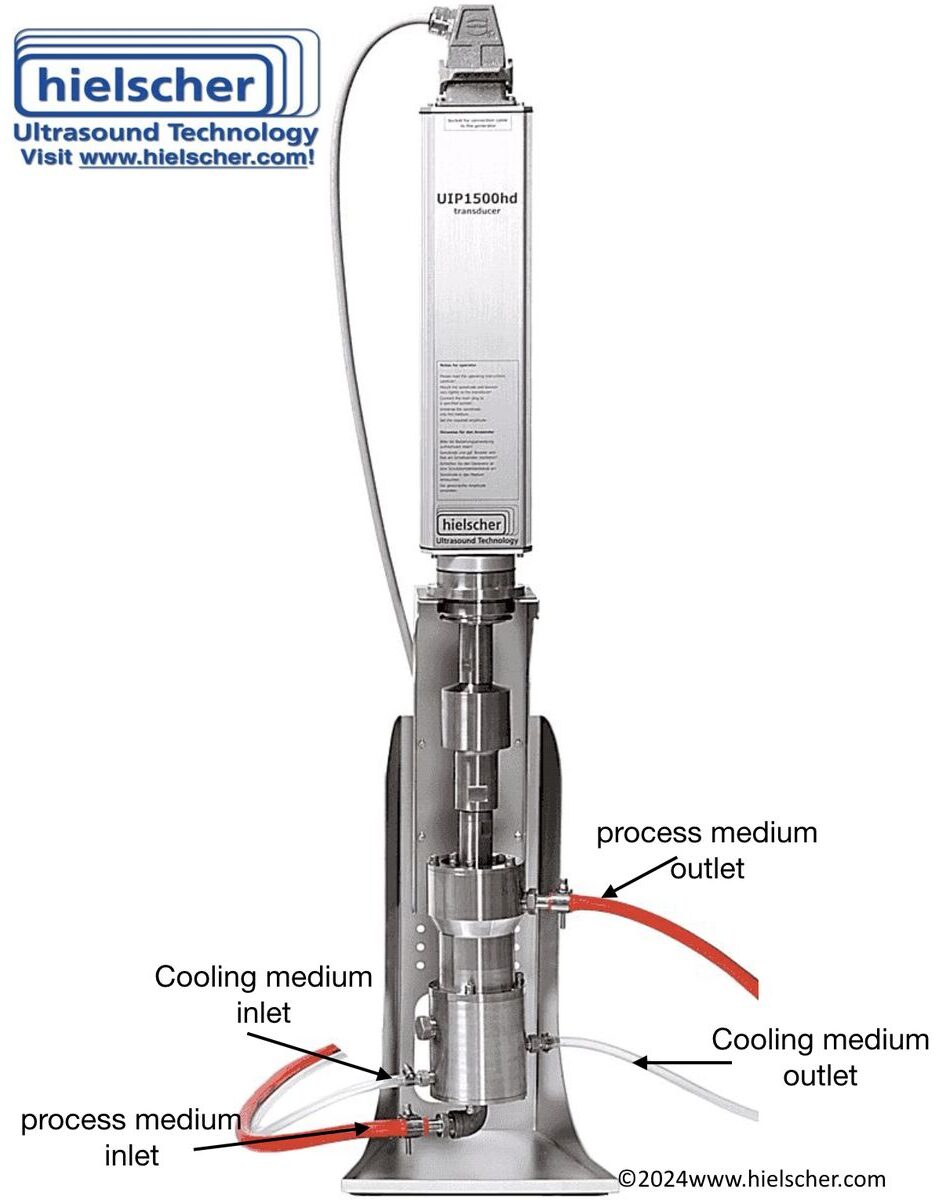
Sonikatori UIP1500hdT me qelizë-fluksi për riaktivizimin dhe riciklimin e katalizatorëve të përdorur
- Efikasiteti i përmirësuar
- Reaktivitet i rritur
- Shkalla e rritur e konvertimit
- Rendiment më i lartë
- Riciklimi i katalizatorit
Intensifikimi tejzanor i reaksioneve katalitike
Përzierja dhe trazimi tejzanor përmirëson kontaktin midis grimcave të reaktantit dhe katalizatorit, krijon sipërfaqe shumë reaktive dhe fillon dhe/ose rrit reaksionin kimik.
Përgatitja e katalizatorit tejzanor mund të shkaktojë ndryshime në sjelljen e kristalizimit, shpërndarjen / deagglomerimin dhe vetitë e sipërfaqes. Për më tepër, karakteristikat e katalizatorëve të paraformuar mund të ndikohen nga heqja e shtresave sipërfaqësore pasivizuese, shpërndarja më e mirë, rritja e transferimit të masës.
Shembuj të Reaksioneve të Përmirësuara Ultratingull
- Para-trajtimi tejzanor i katalizatorit Ni për reaksionet e hidrogjenizimit
- Katalizatori Raney Ni i sonikuar me acid tartarik rezulton në një enantioselektive shumë të lartë
- Katalizatorët Fischer-Tropsch të sintetizuar me ultratingull
- Katalizatorë pluhur amorfë të trajtuar në mënyrë sonokimike për rritjen e reaktivitetit
- Sono-sinteza e pluhurave të metaleve amorfe
Rimëkëmbja e katalizatorit me ultratinguj
Katalizatorët e ngurtë në reaktorët me shtrat fiks përdoren zakonisht në formën e rruazave sferike, peletave, ekstrudimeve ose grimcave cilindrike. Gjatë reaksioneve kimike, sipërfaqja e katalizatorit mund të pasivizohet nga një shtresë ndotëse, duke rezultuar në një humbje graduale të aktivitetit katalitik dhe/ose selektivitetit me kalimin e kohës.
Afati kohor i çaktivizimit të katalizatorit ndryshon ndjeshëm. Për shembull, çaktivizimi i një katalizatori plasaritjeje mund të ndodhë brenda sekondave, ndërsa një katalizator hekuri i përdorur në sintezën e amoniakut mund të mbetet aktiv për 5-10 vjet. Megjithatë, çaktivizimi i katalizatorit vërehet pothuajse në të gjitha proceset katalitike. Megjithëse mund të ndodhin mekanizma të ndryshëm çaktivizimi – duke përfshirë degradimin kimik, mekanik dhe termik – fouling është një nga shkaqet më të zakonshme të prishjes së katalizatorit.
Fouling refers to the physical deposition of species from the fluid phase onto the catalyst surface and within its pores. These deposits block reactive sites, restrict pore accessibility, and reduce contact between reactants and the active catalyst surface. Catalyst fouling by coke or carbonaceous deposits is often a rapid process; however, in many cases it can be partially or fully reversed by ultrasonic regeneration.
Ultrasonic cavitation is an effective method for removing passivating fouling layers from catalyst surfaces. During sonication, high-intensity ultrasound generates cavitation bubbles in a liquid medium. Their collapse produces localized shear forces, microjets, shock waves, and intense micro-mixing. These effects help detach fouling residues from the catalyst surface, reopen blocked pores, and restore access to active sites.
Rikuperimi i katalizatorit tejzanor zakonisht kryhet duke shpërndarë grimcat e katalizatorit në një lëng, të tilla si uji i dejonizuar ose një tretës i përshtatshëm, dhe duke e ekspozuar pezullimin ndaj trajtimit tejzanor të kontrolluar. Ky proces mund të heqë mbetjet e ndotjes nga materiale të ndryshme katalizatorësh, duke përfshirë katalizatorët e fibrave të platinit/silicës, katalizatorët e nikelit dhe katalizatorë të tjerë metalikë të mbështetur. Si rezultat, sonication mund të kontribuojë në rigjenerimin e katalizatorit, zgjatjen e jetëgjatësisë së katalizatorit dhe përmirësimin e qëndrueshmërisë së procesit.
Klikoni këtu për të mësuar më shumë rreth rigjenerimit tejzanor të katalizatorëve të shpenzuar!
Sonicators për integrimin në reaktorët kimikë
 Hielscher Ultrasonics ofron procesorë dhe variacione të ndryshme tejzanor për integrimin e ultrazërit të fuqisë në reaktorët me shtrat fiks. Sisteme të ndryshme tejzanor janë të disponueshme për t'u instaluar në reaktorë me shtrat fiks. Për llojet më komplekse të reaktorëve, ne ofrojmë tejzanor i personalizuar Zgjidhjet.
Mësoni se si sonication përmirëson reaksionet kimike në dizajne të ndryshme të reaktorëve!
Për të testuar efektet e sonikimit në reaksionin tuaj kimik, jeni të mirëpritur të vizitoni laboratorin tonë të procesit tejzanor dhe qendrën teknike në Teltow!
Na kontaktoni sot! Kemi kënaqësinë të diskutojmë me ju për intensifikimin tejzanor të procesit tuaj kimik!
Tabela më poshtë ju jep një tregues të kapacitetit të përafërt të përpunimit të sonikëve Hielscher:

Sistemi i rrjedhës tejzanor
- hidrogjenizimi
- Alcilimi
- Cianimi
- eterifikimi
- esterifikimi
- polimerizimi
- Alilimi
- Brominimi
(p.sh. katalizatorët Ziegler-Natta, metallocens)
Literatura / Referencat
- Francisco J. Navarro-Brull; Andrew R. Teixeira; Jisong Zhang; Roberto Gómez; Klavs F. Jensen (2018): Reduction of Dispersion in Ultrasonically-Enhanced Micropacked Beds. Industrial & Engineering Chemistry Research 57, 1; 2018. 122–128.
- Yasuo Tanaka (2002): A dual purpose packed-bed reactor for biogas scrubbing and methane-dependent water quality improvement applying to a wastewater treatment system consisting of UASB reactor and trickling filter. Bioresource Technology, Volume 84, Issue 1, 2002. 21-28.
- Argyle, M.D.; Bartholomew, C.H. (2015): Heterogeneous Catalyst Deactivation and Regeneration: A Review. Catalysts 2015, 5, 145-269.
- Oza, R.; Patel, S. (2012): Recovery of Nickel from Spent Ni/Al2O3 Catalysts using Acid Leaching, Chelation and Ultrasonication. Research Journal of Recent Sciences Vol. 1; 2012. 434-443.
- Sana, S.; Rajanna, K.Ch.; Reddy, K.R.; Bhooshan, M.; Venkateswarlu, M.; Kumar, M.S.; Uppalaiah, K. (2012): Ultrasonically Assisted Regioselective Nitration of Aromatic Compounds in Presence of Certain Group V and VI Metal Salts. Green and Sustainable Chemistry, 2012, 2, 97-111.
- Suslick, K. S.; Skrabalak, S. E. (2008): “Sonocatalysis” In: Handbook of Heterogeneous Catalysis, vol. 4; Ertl, G.; Knözinger, H.; Schüth, F.; Weitkamp, J., (Eds.). Wiley-VCH: Weinheim, 2008. 2006-2017.
Fakte që ia vlen të dihen
Çfarë është kavitacioni me ultratinguj?
Kavitacioni tejzanor është formimi, rritja dhe kolapsi i dhunshëm i avullit mikroskopik ose flluskave të gazit në një lëng të ekspozuar ndaj ultratingujve me intensitet të lartë. Gjatë kolapsit të flluskave, kushtet ekstreme lokale mund të ndodhin për kohë shumë të shkurtra, duke përfshirë temperaturën e lartë, presionin e lartë, valët e goditjes, mikroavionët dhe forcat intensive të prerjes.
Çfarë është Sonokimia?
Sonokimia është përdorimi i këtyre efekteve të kavitetit ultrasonik për të iniciuar, përshpejtuar ose modifikuar proceset kimike dhe fiziko-kimike. Ajo është veçanërisht e rëndësishme në sistemet me fazë të lëngshme sepse kaviteti përmirëson përzierjen, transferimin e masës, emulsifikimin, shpërndarjen e grimcave, pastrimin e sipërfaqes së katalizatorit dhe, në disa raste, formimin e radikalëve. Si rezultat, sonokimia përdoret për të intensifikuar reaksionet siç janë kataliza heterogjene, oksidimi, nxjerrja, polimerizimi, kristalizimi dhe sinteza e nanomaterialeve.
Çfarë është një Reaksion Katalitik Heterogjen?
Në kimi, kataliza heterogjene i referohet llojit të reaksionit katalitik ku fazat e katalizatorit dhe reaktantëve ndryshojnë nga njëra-tjetra. Në kontekstin e kimisë heterogjene, faza nuk përdoret vetëm për të dalluar ndërmjet të ngurtë, të lëngët dhe të gaztë, por i referohet gjithashtu lëngjeve të papërziershme, p.sh. vaji dhe uji.
Gjatë një reaksioni heterogjen, një ose më shumë reaktantë i nënshtrohen një ndryshimi kimik në një ndërfaqe, p.sh. në sipërfaqen e një katalizatori të ngurtë.
Shpejtësia e reagimit varet nga përqendrimi i reaktantëve, madhësia e grimcave, temperatura, katalizatori dhe faktorë të tjerë.
Përqendrimi i reaktantit: Në përgjithësi, një rritje e përqendrimit të një reaktanti rrit shpejtësinë e reaksionit për shkak të ndërfaqes më të madhe dhe në këtë mënyrë transferimit më të madh të fazës midis grimcave reaktante.
Madhësia e grimcave: Kur një nga reaktantët është një grimcë e ngurtë, atëherë ajo nuk mund të shfaqet në ekuacionin e shpejtësisë, pasi ekuacioni i shpejtësisë tregon vetëm përqendrime dhe trupat e ngurtë nuk mund të kenë një përqendrim pasi janë në një fazë tjetër. Megjithatë, madhësia e grimcave të lëndës së ngurtë ndikon në shpejtësinë e reagimit për shkak të sipërfaqes së disponueshme për transferimin e fazës.
Temperatura e reagimit: Temperatura lidhet me konstanten e shpejtësisë nëpërmjet ekuacionit Arrhenius: k = Ae-Ea/RT
Ku Ea është energjia e aktivizimit, R është konstanta universale e gazit dhe T është temperatura absolute në Kelvin. A është faktori Arrhenius (frekuenca). e-Ea/RT jep numrin e grimcave nën kurbë që kanë energji më të madhe se energjia e aktivizimit, Ea.
Katalizator: Në shumicën e rasteve, reaksionet ndodhin më shpejt me një katalizator, sepse ato kërkojnë më pak energji aktivizimi. Katalizatorët heterogjenë sigurojnë një sipërfaqe shabllon në të cilën ndodh reaksioni, ndërsa katalizatorët homogjenë formojnë produkte të ndërmjetme që lëshojnë katalizatorin gjatë një hapi pasues të mekanizmit.
Faktorë të tjerë: Faktorë të tjerë si drita mund të ndikojnë në disa reaksione (fotokimia).
Cilat janë Llojet e Dezaktivizimit të Katalizatorit?
- Helmimi me katalizator është termi për kimisorbimin e fortë të specieve në vendet katalitike të cilat bllokojnë vendet për reaksion katalitik. Helmimi mund të jetë i kthyeshëm ose i pakthyeshëm.
- Fouling i referohet një degradimi mekanik të katalizatorit, ku speciet nga faza e lëngshme depozitohen në sipërfaqen katalitike dhe në poret e katalizatorit.
- Degradimi termik dhe sinterizimi rezulton në humbjen e sipërfaqes katalitike, zonës mbështetëse dhe reaksioneve aktive të mbështetjes së fazës.
- Formimi i avullit nënkupton një formë degradimi kimik, ku faza e gazit reagon me fazën e katalizatorit për të prodhuar komponime të paqëndrueshme.
- Reaksionet avull-ngurtë dhe të ngurtë-ngurtë rezultojnë në çaktivizimin kimik të katalizatorit. Avulli, mbështetësi ose promotori reagon me katalizatorin në mënyrë që të prodhohet një fazë joaktive.
- Fshirja ose shtypja e grimcave të katalizatorit rezulton në humbjen e materialit katalitik për shkak të gërryerjes mekanike. Sipërfaqja e brendshme e katalizatorit humbet për shkak të shtypjes mekanike të grimcave të katalizatorit.
Lexoni më shumë rreth mënyrës se si sonikimi mund të rivendosë katalizatorët e shpenzuar!
Çfarë është Zëvendësimi Nucleofilik?
Nucleophilic substitution is a fundamental class of reactions in organic (and inorganic) chemistry, in which a nucleophile selectively bonds in form of a Lewis base (as electron pair donator) with an organic complex with or attacks the positive or partially positive (+) charge of an atom or a group of atoms to replace a leaving group. The positive or partially positive atom, which is the electron pair acceptor, is called an electrophile. The whole molecular entity of the electrophile and the leaving group is usually called the substrate.
Zëvendësimi nukleofilik mund të vërehet si dy rrugë të ndryshme – SN1 dhe SN2 reagim. Cila formë e mekanizmit të reagimit – sN1 ose SN2 – zhvillohet, varet nga struktura e përbërjeve kimike, nga lloji i nukleofilit dhe nga tretësi.