Reaktorët Kimikë të Përmirësuar nga Sonikimi – Llojet, Dizajnet dhe Mekanizmat
Reaktorët kimikë janë thelbi i kimisë industriale, sintezës së materialeve, prodhimit kimik të imët, prodhimit farmaceutik dhe përpunimit mjedisor. Ndërsa industritë kërkojnë procese më të shpejta, më të pastra dhe më efikase në energji, sonication, i njohur gjithashtu si përpunimi ultrasonik, është bërë një metodë gjithnjë e më e rëndësishme për intensifikimin e reaktorit. Teknologjia e reaktorit tejzanor po riformon përpunimin kimik duke përmirësuar përzierjen, transferimin e masës, kinetikën e reaksionit dhe katalizën heterogjene në sistemet e reaktorëve të grupeve dhe të vazhdueshme.
Si përmirëson sonikacioni reaktorët kimikë
By introducing high-power ultrasound into a chemical reactor, engineers can generate ultrasonic oscillatory flow mixing and acoustic cavitation inside the reaction medium. These mechanisms improve contact between reactants, accelerate mass transfer and can enhance reaction rates, selectivity and yield. Sonication is especially effective in solid-liquid systems, such as heterogeneous catalysis, and liquid-liquid systems, such as emulsification, extraction and biphasic reactions. It is used less frequently in gas-liquid mixtures because acoustic cavitation is generated less efficiently in liquids with high gas contents.
Në dizajnin modern të reaktorëve sonokimikë, lëngjet trazohen nga oscilimi ultrasonik dhe kavitacioni, zakonisht duke përdorur amplituda në rangun 10 deri 200 µm. Kjo mundëson efekte të fuqishme mikroskopike të përzierjes që janë të vështira për t'u arritur vetëm me trazim mekanik konvencional.
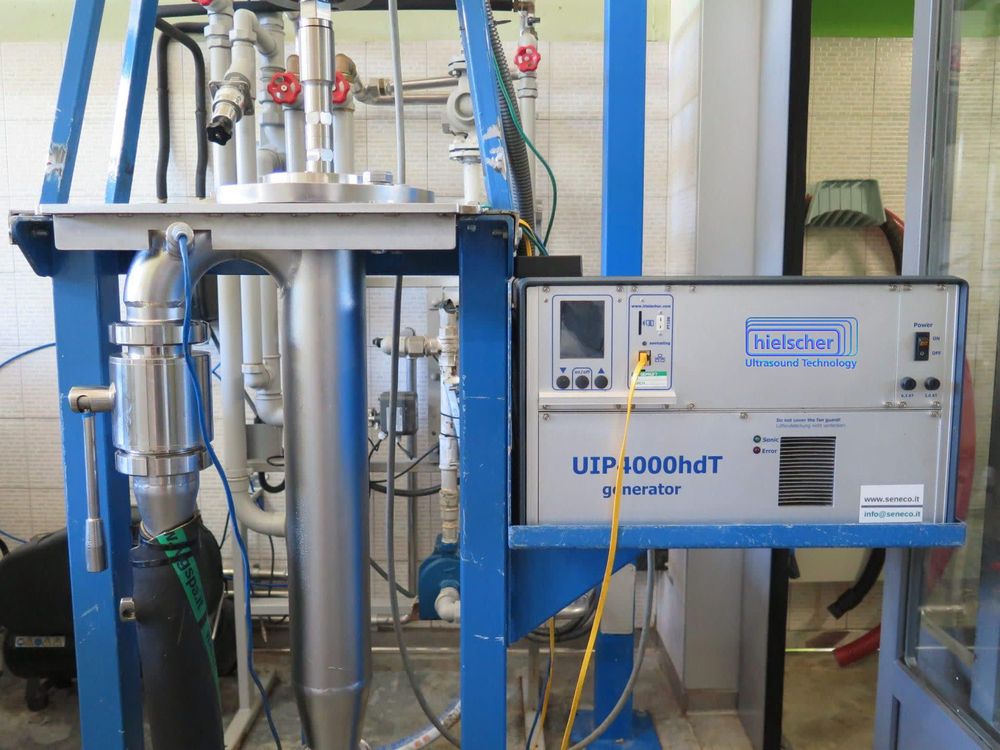
Sonikatori inline UIP4000hdT me qelizë rrjedhëse për reaksione kimike të intensifikuara
Pse sonikimi intensifikon reaktorët kimikë
Rëndësia industriale e sonikimit qëndron në aftësinë e tij për të ndikuar fenomenet e transportit kimik dhe fizik në shkallë mikro dhe meso. Ndryshe nga përzierja konvencionale, ultratingulli nuk lëviz vetëm lëngun në masë. Ai gjeneron valë presioni, lëvizje oscilatore, flluska kavitative dhe zona me energji të lartë të lokalizuara.
Kur flluskat akustike të kavitationit formohen, rriten dhe shemben, ato krijojnë mikro-mjedise intensive. Këto ngjarje mund të prodhojnë:
- forca të larta të prerjes lokale
- mikro-shkuma afër sipërfaqeve të ngurta
- valë shoku
- mikro-përzierje të shpejtë
- disperzion të përmirësuar të grimcave
- kontakt të përmirësuar ndërfaqësor
- transferim të shpejtë të masës dhe nxehtësisë
- efekte pastrimi sipërfaqësor dhe aktivizimi të katalizatorit
Këto fenomene bëjnë që sonikimi të jetë jashtëzakonisht i vlefshëm për intensifikimin e proceseve, veçanërisht kur reaksionet janë të kufizuara nga difuzioni, kontakti i dobët midis fazave, ndotja e katalizatorit ose përzierja e pamjaftueshme.
Sonikimi në Reaktorët me Partira
Reaktorët me partira përdoren gjerësisht në laboratorë, impiante pilot dhe prodhimin e kimikateve të veçanta. Ata janë fleksibël, të lehtë për t'u operuar dhe të përshtatshëm për skanimin e reaksioneve, sintezën e vëllimeve të vogla dhe produktet me vlerë të lartë.
Kur sonikimi aplikohet në reaktorët me partira, ai mund të përmirësojë ndjeshëm përzierjen dhe uniformitetin e reaksioneve. Sonde ultrasonike, qeliza fluksi ose transduktorë të montuar ekskluzivisht mund të shtojnë energji akustike direkt në mediumin e reaksionit.
Në sistemet me partira, sonikimi është veçanërisht i dobishëm për:
- kataliza heterogjene
- sinteza e nanogrimcave
- kontrollin e kristalizimit
- emulsifikimi
- Nxjerrja
- polimerizimi
- shkrirjen dhe shpërndarjen e solidëve
Për reaksionet solid-likuid, valezimi ultrasonik mund të parandalojë aglomerimin e grimcave dhe të përmirësojë aksesin në sipërfaqet katalitike ose reaktive. Në sistemet likuid-likuid, sonikimi mund të krijojë emulsione të imëta dhe të rrisë sipërfaqen ndërfazore midis fazave të pazëvendësueshme, gjë që shpesh çon në shpejtësi më të shpejta të reaksioneve.
Reaktorët Flow-Through për Procesimin e Vazhdueshëm Sonokimik
Reaktorët flow-through janë ndër dizajnet më të rëndësishme për sonikimin industrial. Në vend që të trajtojnë një vëllim të caktuar të lëngut, përzierja e reaksionit kalon vazhdimisht përmes një dhome reaktori ultrasonik.
Ky dizajn është shumë tërheqës për shkallëzim sepse lejon inxhinierët të kontrollojnë më saktë kohën e qëndrimit, shpejtësinë e rrjedhës, temperaturën, presionin dhe hyrjen e energjisë tejzanor. Reaktorët sonokimikë me rrjedhje përdoren shpesh kur kërkohet cilësi e qëndrueshme e produktit dhe funksionim i vazhdueshëm.
Përparësitë kryesore të reaktorëve me rrjedhje me zë përfshijnë:
- aftësia e prodhimit të vazhdueshëm
- riprodhueshmëria e përmirësuar e procesit
- kontroll më i mirë i temperaturës
- shpërndarja e kontrolluar e kohës së qëndrimit
- integrimi më i lehtë në linjat e procesit industrial
- arkitektura e shkallëzuar e reaktorit
Në këto sisteme, përzierja me rrjedhje oscilatore ultrasonike mund të përmirësojë përzierjen radiale dhe aksiale, të zvogëlojë gradientët e përqendrimit dhe të përmirësojë ndërveprimin e reaktantëve. Kjo është veçanërisht e vlefshme në proceset ku performanca e reaksionit varet nga kontakti i shpejtë i fazave ose shpërndarja e shpejtë.
Futje Ultrasonike Flow-Cell MultiPhaseCavitator
 The MultiPhaseCavitator Insert-MPC48 is a specialized insert for Hielscher ultrasonic flow cell reactors designed to intensify liquid/liquid and liquid/gas processes directly in the ultrasonic cavitation zone. By injecting a second liquid phase or gas phase through 48 fine cannulas into the primary liquid stream, the MultiPhaseCavitator creates very small droplets or gas bubbles with a high specific interfacial area. This makes it especially efficient for ultrasonic emulsification, where immiscible phases are dispersed into fine emulsions, and for catalytic gas reactions, where the injected gas phase is rapidly dispersed and brought into intimate contact with the liquid phase, dissolved reactants, or suspended catalysts. The resulting cavitational shear, micro-mixing, and enhanced mass transfer can improve reaction kinetics, phase-boundary contact, and process efficiency in continuous or batch flow-through operation.

Sonicator UIP2000hdT me reaktor të grupit kimik
Dizajnet e reaktorit kimik dhe përfitimet e sonikimit
| Lloji i reaktorit | Aplikimi tipik | Efektet kryesore të sonikës | Rëndësia teknike |
|---|---|---|---|
| Reaktorët e llumit | Kataliza heterogjene me grimca katalizatori të ngurta të pezulluar në një fazë të lëngshme; përdoret në hidrogjenizim, oksidim, konvertim të biomasës, Proceset e tipit Fischer-Tropsch, fotokataliza dhe trajtimi i ujërave të zeza. | Sonication përmirëson shpërndarjen e katalizatorit, deagglomerimin e grimcave, reduktimin e shtresës kufitare, rinovimin e sipërfaqes, transferimin e masës së lëngshme-ngurtë, pastrimin e sipërfaqes së katalizatorit dhe reduktimin e ndotjes. | Veçanërisht e rëndësishme sepse shumë reaksione katalitike në fazën e lëngut janë të kufizuara nga sa efikasisht arrijnë reaktantët te vendet aktive. Kaviteti akustik rrit kontaktin në ndërfaqen katalizator-lëng dhe mund të përmirësojë kinetikën e reaksionit. |
| Reaktorët me gotë të trazuar në mënyrë të vazhdueshme (CSTR) | Reaksione të vazhdueshme në fazën e lëngut, emulsifikim, reaksione katalitike, hedhje, kristalizim, reaksione polimerike dhe pezullime i ngurtë-lëng. | Ultrasioni rrit mikrotërheqjen, pezullimin e grimcave, emulsifikimin, shpërndarjen dhe furnizimin lokal të energjisë. Ai mund të kombinohet me trazim mekanik për të përmirësuar si mikrotërheqjen, ashtu edhe makrotërheqjen. | Reaktorët CSTR të sonikuar janë të dobishëm kur përzierësit konvencionalë nuk mund të eliminojnë plotësisht zonat e vdekura, shpërndarjen e dobët ose kufizimet lokale të transferimit të masës. Ultratingulli mbështet kushtet më të njëtrajtshme të reaksionit dhe intensifikim më të mirë të procesit. |
| Reaktorë me shtresë fikse | Shtresat katalitike të qëndrueshme që përdoren në hidrogjenim, oksidim, katalizë mjedisore, përpunim petrokimik dhe katalizë të fazës së lëngët heterogjene. | Sonikimi mund të përmirësojë lagështimin e katalizatorit, lëvizjen e lëngut përmes shtresës, reduktimin e shtresës kufitare, pastrimin e sipërfaqes, zvogëlimin e ndotjes dhe transferimin e masës në vendet katalitike. | Performanca e shtresës fikse shpesh kufizohet nga kanalizimi, lagështimi i dobët, rezistenca e difuzionit dhe formimi i depozitave. Intensifikimi i procesit me ultratinguj mund të përmirësojë përdorimin e katalizatorit dhe njëtrajtësinë e reaksionit. |
| Reaktorë me shtresë të fluiduar | Shtratet dinamike të grimcave të pezulluara të përdorura në katalizë, përpunimin e grimcave, mbulesë, polimerizim, tharje dhe reaksione lëng-ngurtë. | Eksitimi ultratinguj mund të përmirësojë shpërndarjen e grimcave, të reduktojë aglomerimin, të përforcojë kontaktin lëng-ngurtë, të stabilizojë pezullimet dhe të përmirësojë qasjen në sipërfaqen e katalizatorit. | Sonikimi është veçanërisht efektiv në shtretërit lëng-ngurtë të fluidifikuar, ku kavitacioni mund të gjenerohet eficientisht. Në sistemet e pasura me gaz, kavitacioni është më pak efektiv, duke bërë që ultratingulli të jetë më i përshtatshëm për aplikimet e reaktorëve bazuar në lëng. |
| Reaktorët me membranë | Sisteme të integruara reagim-ndarjeje të përdorura për heqjen selektive të produktit, dozimin e reagentëve, proceset katalitike me membranë dhe reaksionet e ndihmuara nga filtrimi. | Ultratingulli mund të reduktojë ngjitjen e membranës, të përmirësojë rrjedhën e permeatit, të rrisë pastrimin e sipërfaqes, të zvogëlojë polarizimin e përqendrimit dhe të përmirësojë përzierjen pranë ndërfaqes së membranës. | Sonikimi lidh inxhinierinë e reaksionit me shkencën e ndarjes. Ai është veçanërisht i vlefshëm aty ku ngjitja, rezistenca ndaj transferimit masik ose lidhja e dobët reaksion-ndarje kufizon performancën e reaktorit me membranë. |
Mekanizmat e Intensifikimit të Reaktorit Ultratinguj
Përparësitë e sonikimit në reaktorët kimikë bazohen në disa mekanizma që ndërveprojnë me njëri-tjetrin.
- Kavitacioni akustik është mekanizmi më i rëndësishëm. Ai përfshin formimin, rritjen dhe shkatërrimin e flluskave mikroskopike në një lëng të ekspozuar ndaj ultratingullit me intensitet të lartë. Shkatërrimi i flluskave gjeneron lëshim lokal të energjisë dhe forca mekanike të forta.
- Rryma akustike krijon lëvizje të qëndrueshme të lëngut të shkaktuar nga valët ultrasonike. Kjo përmirëson miksimin dhe transportin në zona ku përzierja mekanike mund të jetë e dobët.
- Përzierja përmes rrjedhës oscillatore ndodh kur dridhja ultrasonike shkakton lëvizje të shpejtë përpara dhe mbrapa të lëngut. Në sistemet e reaktorit, amplituda rreth 10 deri në 200 µm mund të prodhojë përzierje shumë efektive dhe transferim masor të përmirësuar.
- Microjetting dhe valët e goditjes ndodhin pranë flluska të kavitacionit që shkatërrohen, sidomos afër sipërfaqeve të ngurta. Këto efekte mund të pastrojnë sipërfaqet e katalizatorit, të prishin shtresat kufitare dhe të përmirësojnë aksesin e lëngut në vendet aktive.
- Rritja e sipërfaqes ndërfaqësore është veçanërisht e rëndësishme në sistemet lëng-lëng. Ultratingulli mund të krijojë pika të imëta dhe shpërndarje të qëndrueshme, duke rritur sipërfaqen e disponueshme për reagim ose transferim masash.
Së bashku, këto mekanizma e bëjnë sonikimin një mjet të fuqishëm për intensifikimin e reaktorëve kimikë.
Rëndësia Industriale e Dizajnit të Reaktorëve Sonokimikë
Rëndësia industriale e reaktorëve të sonikuar shtrihet përtej përzierjes më të shpejtë. Sonikimi ofron një mënyrë për të manipuluar mjediset e reaksionit në shkallë që pajisjet konvencionale nuk mund t'i arrijnë lehtësisht.
Në inxhinierinë kimike, shumë kufizime të reaktorëve lindin nga fenomenet e transportit në vend të shpejtësive të brendshme të reaksionit. Reagentët mund të mos arrijnë mjaftueshëm shpejt në vendet katalitike. Lëngjet jo të përzier mund të kenë zonë kontakti të pamjaftueshme. Solidët mund të grumbullohen. Membranat mund të bllokohen. Sipërfaqet e katalizatorit mund të bllokohen.
Sonikimi adreson këto kufizime duke përmirësuar drejtpërdrejt kushtet fizike brenda reaktorit. Kjo e bën atë të rëndësishëm për disa prioritete kërkimore dhe industriale:
- proçesim kimik më ekologjik
- kërkesë më e ulët për energji dhe tretës
- efikasitet më i lartë i katalizatorit
- zgjedhshmëri më e lartë e reaksionit
- zhvillim më i shpejtë i procesit
- prodhim i vazhdueshëm
- sisteme reaktorësh modular të intensifikuar
- sinteza e materialeve të avancuara
- konvertim i qëndrueshëm i biomases dhe rrjedhave të mbeturinave
Për kërkuesit, sonikimi ofron një metodë të kontrolluar për të studiuar marrëdhënien midis sasisë së energjisë akustike të futur, sjelljes së kavitationit, përmirësimit të transportit dhe performancës kimike. Për industrinë, ai ofron një rrugë praktike drejt sistemeve të reaktorëve kompakt, efikas dhe të skalueshëm.

Homogjenizues ultrasonik UIP2000hdT për reaksionet kimike në një reaktor rrjedhës
Avantazhet e Sonikimit në Reaktorët Kimik
Integrimi i ultrazërit në dizajnin e reaktorit ofron disa avantazhe operative dhe shkencore:
- shpejtim i shpejtësisë së reaksioneve përmes përmirësimit të transferimit të masës
- përzierje më e mirë në sistemet me shumë faza
- shpërndarje e përmirësuar e ngurta dhe piklave
- përdorim më i mirë i katalizatorit
- kufizime të zvogëluara të difuzionit
- sipërfaqe katalizatori dhe membranash më të pastra
- përmirësimi i riprodhueshmërisë së procesit në sistemet me rrjedhje
- reduktim i mundshëm i temperaturës, presionit ose kohës së reaksionit
- kompatibilitet me operacionin në seri dhe të vazhdueshëm
- relevancë e fortë për katalizën e çrregullt dhe reaksionet bifazike
Këto përfitime e bëjnë teknologjinë e reaktorëve ultrasonikë veçanërisht tërheqëse për kimikatet e rafinuara, kimikatet e specializuara, katalizën, nanomaterialet, kimikën e gjelbër dhe intensifikimin e proceseve.

Qelizë me rrjedhje qelqi tejzanor
Forconi reaktorin tuaj kimik me sonikatorët e Hielscher!
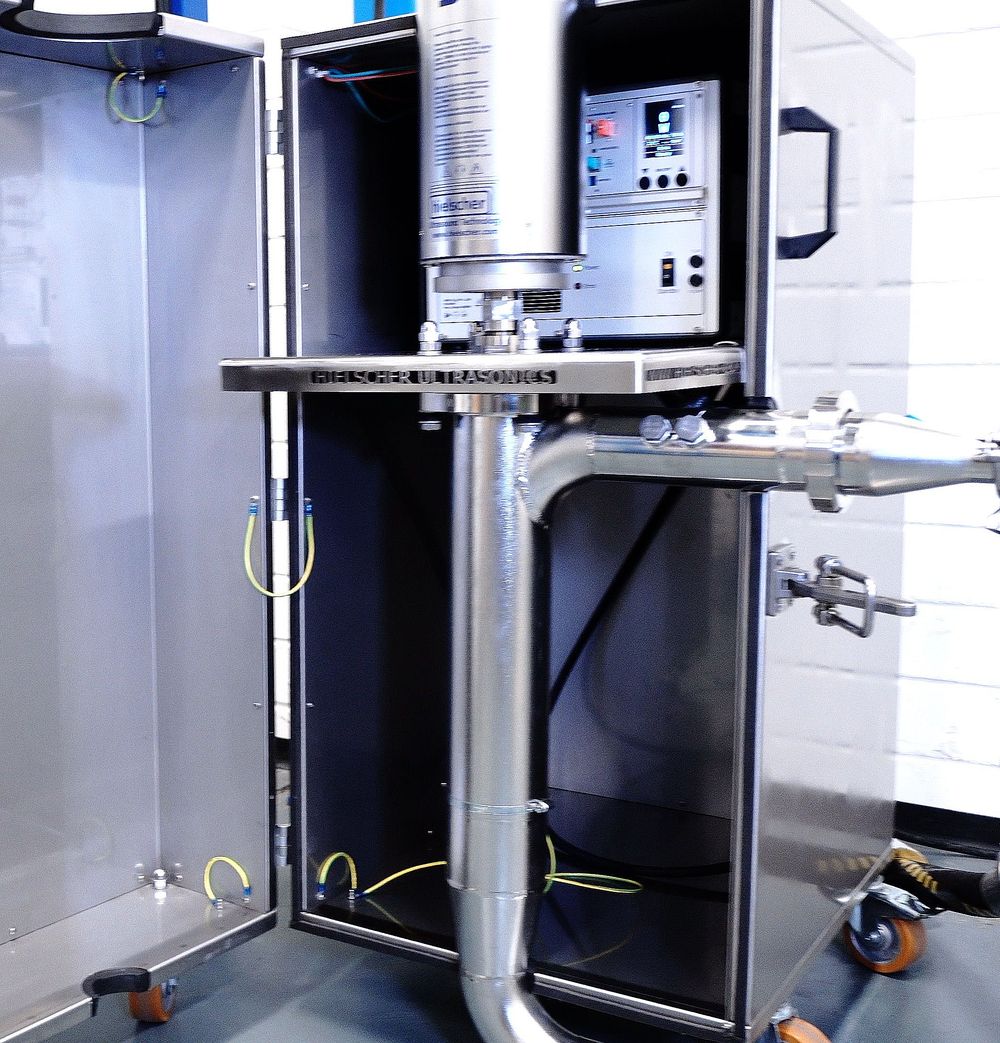 Hielscher sonicators are well suited for customized integration into chemical reactors because they are available as robust, high-power ultrasonic systems with adaptable sonotrodes, flow cells, reactor inserts, and process-specific accessories. Depending on the reaction setup, Hielscher ultrasonic processors can be installed in batch reactors, continuously stirred tank reactors, inline flow reactors, recirculation loops, pressurized systems, and pilot or production-scale plants. This flexibility allows ultrasound to be applied exactly where cavitation is most effective: at the liquid-solid, liquid-liquid, or liquid-gas interface. Hielscher Ultrasonics also offers various types of ultrasonic batch and inline reactors, enabling controlled sonochemical processing, emulsification, dispersion, catalyst activation, surface cleaning, mass-transfer intensification, and reaction acceleration. With precise control of amplitude, power input, temperature, pressure, flow rate, and residence time, Hielscher sonicators can be tailored to the specific requirements of laboratory research, process development, scale-up, and industrial chemical production.
Tabela e mëposhtme ju jep një tregues të kapacitetit të përafërt të përpunimit të ultrasonikëve tanë:
| Vëllimi i grupit | Shkalla e rrjedhjes | Pajisjet e rekomanduara |
|---|---|---|
| 1 deri në 500 ml | 10 deri në 200 ml/min | UP100H |
| 10 deri në 2000 ml | 20 deri në 400 ml/min | UP200Ht, UP400 St |
| 0.1 deri në 20L | 0.2 deri në 4L/min | UIP2000hdT |
| 10 deri në 100 litra | 2 deri në 10 l/min | UIP4000hdT |
| 15 deri në 150 litra | 3 deri në 15 l/min | UIP6000hdT |
| na | 10 deri në 100 l/min | UIP16000hdT |
| na | më të mëdha | grumbull i UIP16000hdT |
Dizajn, Prodhim dhe Konsulencë – Cilësi e prodhuar në Gjermani
Ultrasonikët Hielscher janë të njohur për cilësinë e tyre më të lartë dhe standardet e dizajnit. Qëndrueshmëria dhe funksionimi i lehtë lejojnë integrimin e qetë të ultrasonikëve tanë në objektet industriale. Kushtet e vështira dhe mjediset kërkuese trajtohen lehtësisht nga ultrasonikët Hielscher.
Hielscher Ultrasonics është një kompani e certifikuar ISO dhe i kushton theks të veçantë ultratingujve me performancë të lartë që paraqesin teknologjinë më të fundit dhe lehtësinë ndaj përdorimit. Sigurisht, ultrasonikët Hielscher janë në përputhje me CE dhe plotësojnë kërkesat e UL, CSA dhe RoHs.

Homogjenizues tejzanor UIP1500hdT me një reaktor rrjedhe të pajisur me xhaketë ftohëse për të kontrolluar temperaturën e procesit gjatë sonikacionit.
pyetjet e bëra shpesh
Çfarë janë reaktorët kimikë?
Reaktorët kimikë janë enë ose sisteme të inxhinieruara në të cilat reaksionet kimike kryhen në kushte të kontrolluara si temperatura, presioni, përzierja, koha e qëndrimit dhe përqendrimi i reaktantit. Qëllimi i tyre është të konvertojnë lëndët e para në produkte të dëshiruara me rendiment, selektivitet dhe efikasitet të përcaktuar të procesit.
Cilat janë llojet kryesore të reaktorëve kimikë?
Llojet kryesore të reaktorëve kimikë përfshijnë reaktorë në seri, reaktorë me enë të përzier vazhdimisht, reaktorë me rrjedhje plug, reaktorë me shtresë fikse, reaktorë me shtresë të fluidizuar, reaktorë në lëngje, reaktorë me membranë, dhe reaktorë fotokimikë ose elektrokimikë. Çdo lloj reaktori ndryshon në sjelljen e rrjedhjes, regjimin e përzierjes, karakteristikat e transferimit të nxehtësisë dhe masës, dhe përshtatshmërinë për reaksione homogjene ose heterogjene.
Cila është diferenca midis një reaktori me shtresë të fluidizuar dhe një reaktori me shtresë fikse?
Në një reaktor me shtrat fiks, grimcat e ngurta të katalizatorit mbeten të palëvizshme ndërsa reaktantët rrjedhin nëpër shtratin e paketuar të katalizatorit. Në një reaktor me shtrat të lëngshëm, një lëng që rrjedh lart pezullon dhe lëviz grimcat e ngurta, duke krijuar një shtrat dinamik me përzierje të fortë, transferim të përmirësuar të nxehtësisë dhe kontakt më të mirë grimca-lëng. Shtretërit fiks janë më të thjeshtë dhe mekanikisht të qëndrueshëm, ndërsa shtretërit e lëngshëm ofrojnë efikasitet më të lartë të përzierjes dhe transferimit të nxehtësisë, por kërkojnë kontroll më kompleks të rrjedhës.
Çfarë është një shtrat katalizator?
Një shtresë katalizatori është një vëllim i përcaktuar i grimcave të ngurta të katalizatorit të rregulluara brenda një reaktori. Ajo ofron sipërfaqen aktive mbi të cilën ndodhin reaksionet kimike. Shtresat e katalizatorit mund të jenë të qëndrueshme, si në reaktorët me shtresë fikse, ose të pezulluara në mënyrë dinamike, si në reaktorët me shtresë të lëngshme. Performanca e tyre varet nga aktiviteti i katalizatorit, madhësia e grimcave, poroziteti, sipërfaqja, distribucioni i rrjedhës, transferimi i nxehtësisë dhe transferimi masiv.
Literatura / Referencat
- Yu, Hang Gao, Jing; Zhong, Qili; Guo, Yahui; Xie, Yunfei; Yao, Weirong; Zhou, Weibiao (2018): Acoustic pressure and temperature distribution in a novel continuous ultrasonic tank reactor: a simulation study. IOP Conference Series: Materials Science and Engineering 2018.
- Francisco J. Navarro-Brull; Andrew R. Teixeira; Jisong Zhang; Roberto Gómez; Klavs F. Jensen (2018): Reduction of Dispersion in Ultrasonically-Enhanced Micropacked Beds. Industrial & Engineering Chemistry Research 57, 1; 2018. 122–128.
- M. Ajmal, S. Rusli, G. Fieg (2016): Modeling and experimental validation of hydrodynamics in an ultrasonic batch reactor. Ultrasonics Sonochemistry, Volume 28, 2016. 218-229.
- L. Castrillón, E. Marañón, Y. Fernández-Nava, P. Ormaechea, G. Quiroga (2013): Thermophilic co-digestion of cattle manure and food waste supplemented with crude glycerin in induced bed reactor (IBR). Bioresource Technology, Volume 136, 2013. 73-77.
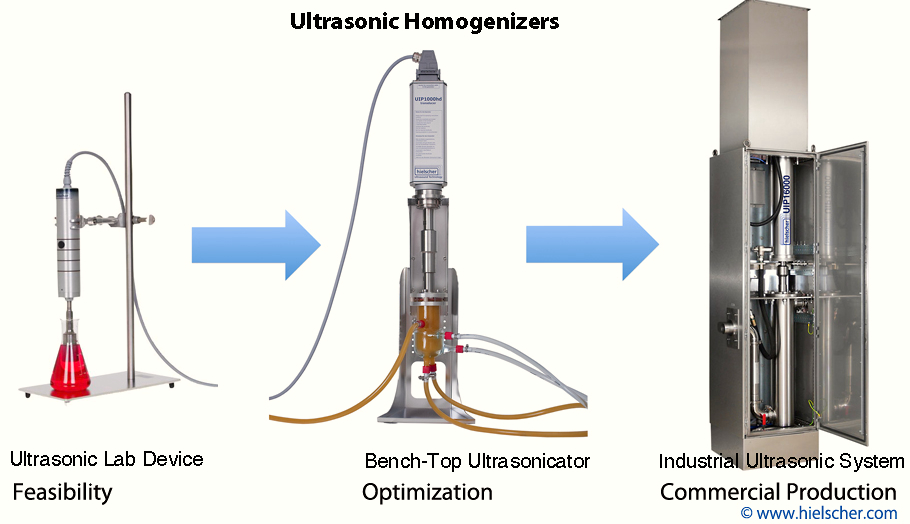
Hielscher Ultrasonics prodhon homogjenizues tejzanor me performancë të lartë nga laboratori te madhësia industriale.