Ultrasonic Sieving of Precious Materials
In the production of advanced materials, precision is paramount. Industries ranging from battery manufacturing, processing precious metals to 3D printing rely on high-purity, precisely sized powders. However, sieving “precious materials” – such as metal-rich powders, battery electrode components, and electronics-grade materials – presents unique challenges. Traditional mechanical sieving often results in mesh blinding, agglomeration, and static charging, leading to significant material loss and inconsistent particle size distributions.
The Hielscher UP200TS ultrasonic sieve shaker offers a superior solution for these demanding applications. By utilizing high-frequency oscillations, the system continuously vibrates and deblinds the sieve mesh, ensuring accurate fractionation and maximizing the recovery of valuable materials.
Enhance your Screening Process! Get in Touch!
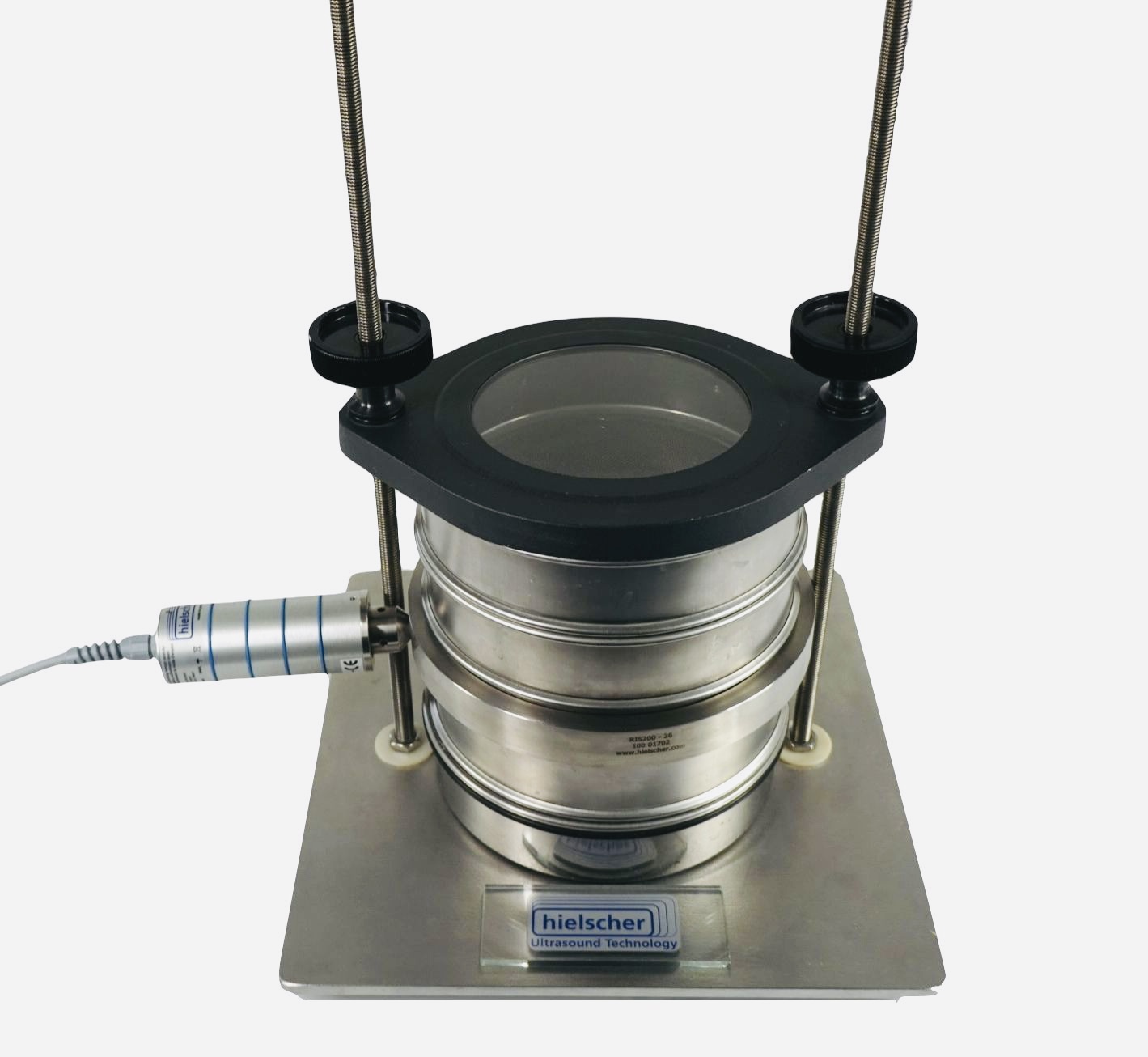
UP200TS Ultrasonic Sieve Shaker improves screening of dry and wet powders
The Benefits of the Ultrasonic Sieve Shaker
| Benefit | Effect | Relevance for Analysis and Industry |
|---|---|---|
| De-agglomeration (Breaking up clumps) |
Disperses agglomerates formed during transport or storage to ensure uniform particle size. | Ensures consistent quality for both fresh and recycled materials. |
| Contamination Control | Effectively removes foreign matter and dirt particles from the powder. | Prevents cross-contamination; ensures impurities are separated and discarded rather than recirculated. |
| Enhanced Powder Quality | Breaks up agglomerates and improves material fluidization. | Results in a smoother surface finish and reduces defects such as pinholes. |
| Defect Reduction | Minimizes surface blemishes by removing coarse grains and impurities. | Helps identify and prevent quality issues in the final product. |
The Challenge of Sieving Advanced Powders
Fine powders used in high-tech industries are often cohesive, sticky, or prone to static charging. When using conventional sieving methods, fine particles can lodge in the mesh apertures, causing rapid blinding. This blockage drastically reduces separation efficiency and can lead to the loss of expensive precious materials. Furthermore, aggressive mechanical sieving can degrade delicate particles or fail to break down soft agglomerates.
The Ultrasonic Sieving Solution
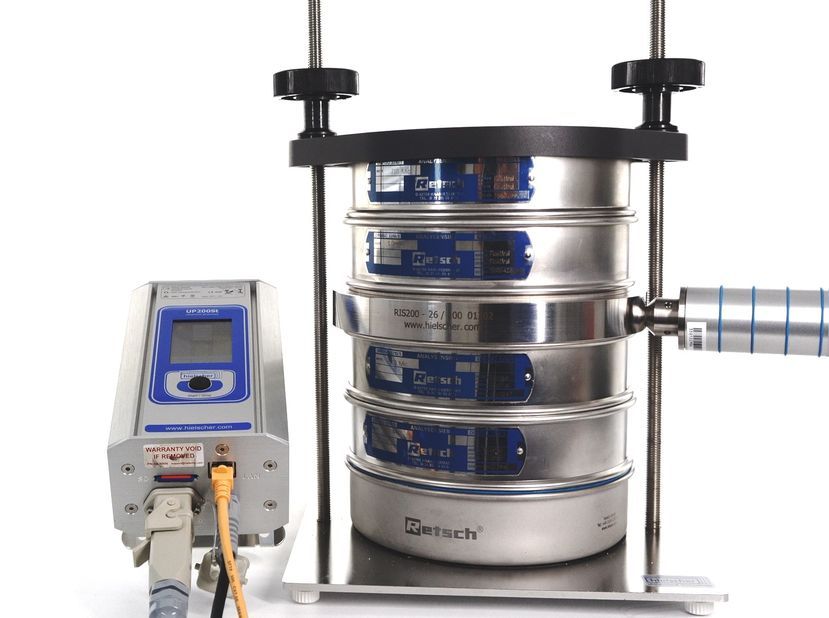
 The UP200TS ultrasonic sieve shaker addresses these issues by installing an ultrasonic ring between the standard laboratory sieve and the device base. This ring transmits high-frequency mechanical oscillations through the entire sieve surface. These rapid, low-amplitude vibrations keep the mesh openings clear by preventing fine particles from lodging in the apertures.
This “mesh activation” ensures that:
- Blinding is eliminated: The mesh remains open throughout the entire sieving process.
- Yield is maximized: A significantly larger portion of the desired material is recovered.
- Accuracy is improved: Precise particle size separation is achieved, even for fine meshes.
Applications of Ultrasonic Sieving in Advanced and Precious Materials
Ultrasonic sieving is particularly valuable for the following high-value applications:
Battery Manufacturing
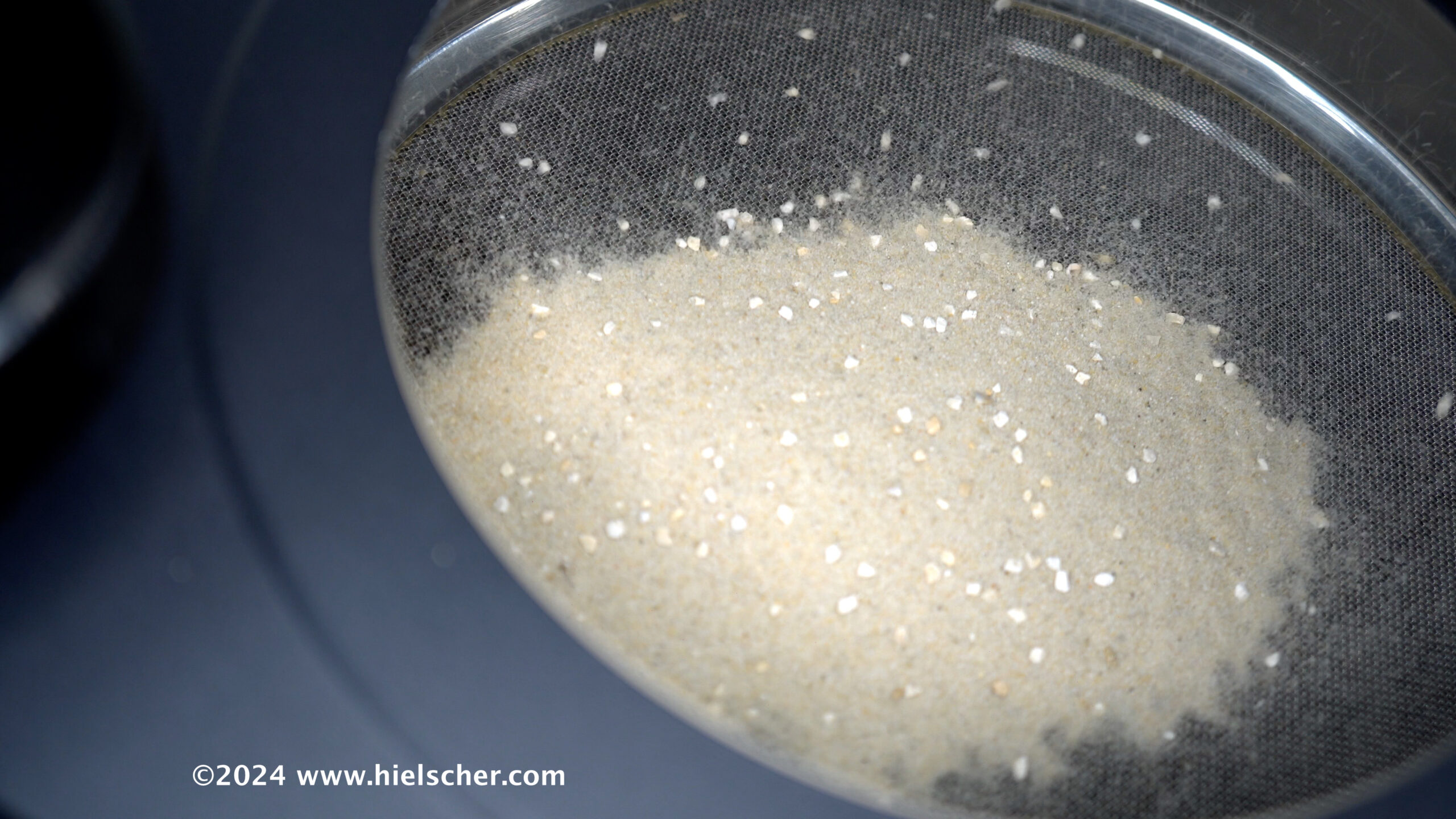 The production of battery electrodes requires strict control over particle size to ensure uniform coating and optimal electrochemical performance. Battery materials, such as active cathode and anode powders, often exhibit cohesive behavior. Ultrasonic sieving effectively separates these materials, preventing agglomeration that could compromise battery quality. Consistent particle size distribution is critical for the mixing and heat transfer processes in battery production.
Additive Manufacturing (e.g. 3D Printing)
Metal powders used in additive manufacturing must be free of agglomerates and oversized particles to ensure consistent powder flow and high-quality prints. The ultrasonic sieve shaker guarantees precise fractionation of metal-rich powders, removing defects and ensuring the material meets the strict specifications required for 3D printing. By preventing mesh blinding, the system ensures that every gram of expensive metal powder is correctly sized and usable.
Electronics
Fine metal powders and conductive pastes used in electronics require rigorous separation to remove impurities and ensure correct particle size. The ultrasonic system is ideal for screening these fine meshes, handling materials down to 20 µm without blinding. This precision is essential for the performance of electronic components and conductive inks.
Precious Metals
The processing of precious metals such as gold, silver, platinum, and palladium requires extreme precision to minimize costly material loss. These metals are often used in fine powder forms for catalysis, electronics, and high-end manufacturing. Due to their fine particle size and high value, traditional sieving often results in significant losses due to agglomeration and mesh blinding. Ultrasonic sieving ensures maximum recovery of these valuable materials by keeping the mesh open and effectively breaking down agglomerates. This technology guarantees that every gram of precious metal is accurately sized and utilized, preserving both the integrity of the material and the economic value of the process.

Why Choose Ultrasonic Sieving for Advanced and Precious Materials?
- Maximized Yield: By preventing mesh blinding, ultrasonic sieving significantly increases the recovery of the desired fraction. This is crucial for expensive precious and advanced materials where minimizing loss is essential.
- Superior Accuracy: The system provides precise particle size separation, critical for quality control in advanced manufacturing.
- Gentle on Material: Low-amplitude ultrasonic vibrations break down agglomerates without aggressive mechanical action, preserving the integrity of delicate particles.
- Versatility: The UP200TS supports dry, wet, and continuous screening modes, adapting to the specific requirements of different materials.
- Durability: Ultrasonic sieving reduces wear on sieve meshes and eliminates the need for manual cleaning, extending the lifespan of equipment and reducing contamination risks. The ultrasonic sieve shaker is built for heavy-duty operation. German engineering ensures low maintenance, reliability and device longevity.
Frequently Asked Questions about Ultrasonic Sieving
How does ultrasonic sieving improve the quality of battery materials?
Ultrasonic sieving prevents agglomeration and mesh blinding, ensuring a consistent particle size distribution. This consistency is vital for the uniform coating of battery electrodes and overall battery performance.
Why is precise sieving important for 3D printing powders?
In 3D printing, agglomerates or oversized particles can clog nozzles and ruin print quality. Ultrasonic sieving removes these defects, ensuring the metal powder flows smoothly and produces high-quality parts.
Can ultrasonic sieving handle sticky or cohesive metal powders?
Yes. The high-frequency oscillations break down agglomerates and prevent particles from sticking to the mesh, making it effective for sticky, cohesive, or fine metal powders.
Is the ultrasonic sieve shaker compatible with sieves according to ASTM E11-24?
Yes, the ultrasonic sieve shaker UP200TS can facilitate testing with ASTM E11-24-compliant sieves, but the shaker itself is not “certified to ASTM E11-24”. ASTM E11-24 is a specification for the sieve – not a complete particle-size analysis method. It does not prescribe one universal shaker or agitation mechanism.
Literature / References
- FactSheet Ultrasonic Sieve Shaker UP200TS – Hielscher Ultrasonics – english
- FactSheet Ultraschall-Siebsystem UP200TS – Hielscher Ultrasonics – deutsch
- Brnčić, Mladen; Ines, Bradač; Tripalo, Branko; Ježek, Damir; Obradović, Valentina; Sven, Karlović; Bosiljkov, Tomislav (2009): Ultrasonically Improved Sieving of Food Materials for Manufacturing of Direct Expanded Extrudates. Agriculturae Conspectus Scientificus (ACS) 74, 2009.
- Xu R., Hong J., Morse C.L., Pike V.W. (2010): Synthesis, structure-affinity relationships, and radiolabeling of selective high-affinity 5-HT4 receptor ligands as prospective imaging probes for positron emission tomography. Journal of Medicinal Chemistry Oct 14;53(19), 2010. 7035-7047.
- An, Y., Kim, K., Lee, YJ. et al. (2026): Binding properties of sulfur to enable solvent-free fabrication of high-performance polymer-free sulfur-carbon positive electrodes. Nature Communications 17, 2360 (2026).
Ultrasonic sieve shaker with sieving tower
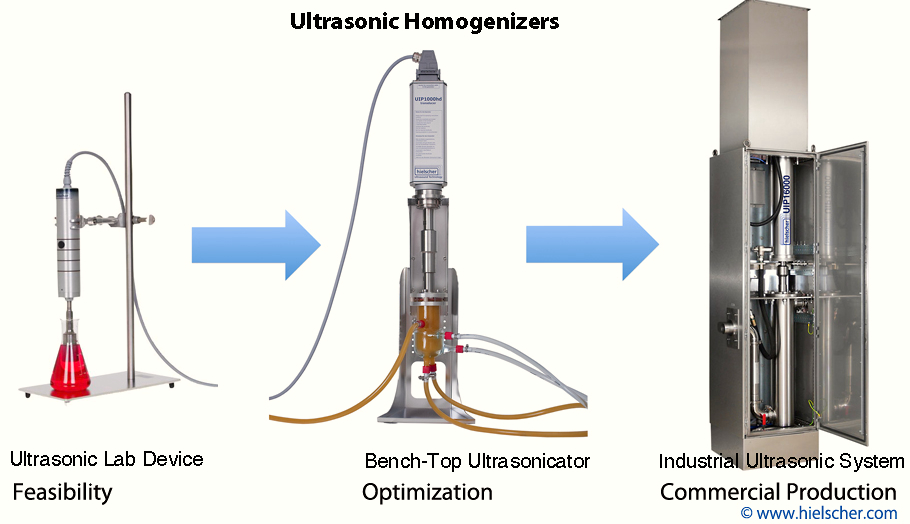
Hielscher Ultrasonics manufactures high-performance ultrasonic homogenizers from lab to industrial size.