Ultrasonic topic: "Sonication - Applications and Advantages"
Sonication is a process that uses high-frequency sound waves to agitate particles in a sample. When the ultrasonic probe (also known as a sonotrode or horn) comes into contact with a liquid or slurry, rapid pressure changes cause microscopic bubbles to form and collapse. This phenomenon, known as cavitation, creates intense shear forces that help break apart, mix, or emulsify materials. Because of its efficiency, sonication is widely applied in lab work, production, and research settings for tasks such as cell disruption, extraction of bioactive compounds, and nanoparticle dispersion.
Hielscher is the leading manufacturer of sonication equipment, providing reliable, high-performance sonication solutions for both small-scale laboratory tests and large-scale industrial processes. Hielscher sonicators are designed to deliver consistent amplitude and power levels, ensuring reproducible sonication results across different setups. With advanced features like automatic amplitude control and digital interfaces, Hielscher sonicators allow users to monitor and fine-tune their processes for optimal outcomes. Whether you are working with delicate biological samples or robust industrial materials, Hielscher offers you a range of systems tailored to different volumes and viscosities.
For anyone seeking detailed information about sonication, it is crucial to consider both the underlying technology and the design of the sonication equipment. Effective ultrasonic processing depends on factors such as power density, amplitude, and the specific properties of the sample being treated. Below, you will find a list of technical articles that provide more information about sonication.
Hielscher delivers user-friendly and customizable solutions to researchers and industry professionals, so that they can fine-tune these parameters to suit a diverse array of applications. By offering powerful, durable, and precise ultrasound tools, Hielscher is your go-to option for laboratory sonication experiments, pilot-scale trials, or full-scale production sonicators.

Found 50 hits. Showing results 1 - 12.

Powerful Ultrasonicator UP400St (400 Watts)
The ultrasonicator UP400St is a robust, versatile ultrasonic homogenizer that delivers high performance, for professional liquid processing. This advanced 400 watts digital ultrasonicator is perfect for precision sonication of samples from 5mL to approximately 4 liters. The UP400St sonicator combines…
https://www.hielscher.com/up400st-powerful-ultrasonicator.htm
Ultrasonic Extraction and Preservation
Ultrasonic extraction and preservation utilizes using power ultrasound for the disintegration of cell structures (lysis). Breaking cells with ultrasonics results in highly efficient extraction of intra-cellular compounds as well as microbial inactivation. Due to numerous advantages, ultrasonication is widely used…
https://www.hielscher.com/extraction_01.htm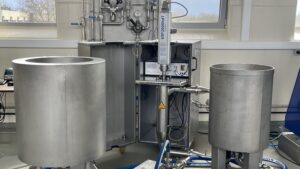
Ultrasound Advances Phase-Change Materials for Energy Storage
, Kathrin HielscherResearchers are increasingly using high-power ultrasonic processing (sonication) to improve the performance of phase-change materials (PCMs) used in thermal energy storage. By generating intense cavitation and micro-mixing, ultrasound enables the production of stable PCM dispersions, nano-enhanced PCMs, and nanoencapsulated materials with superior heat transfer and long-term stability. Studies show that sonication produces more homogeneous mixtures and smaller particle aggregates compared to conventional mixing methods, leading to more reliable thermal behavior and improved energy storage performance.
Advanced ultrasonic processors, such as those developed by Hielscher Ultrasonics, provide precise control over cavitation intensity and processing parameters, making them powerful tools for PCM research and scalable industrial production. The technology is already being used to disperse nanoparticles, create paraffin wax emulsions, and fabricate micro- and nano-encapsulated PCMs, helping researchers develop next-generation materials for building climate control, renewable energy storage, electronics cooling, and battery thermal management.

Nanodiamond Dispersion: Accurate Sample Preparation with Sonication
Efficient dispersion and deagglomeration of nanodiamonds are critical prerequisites for reliable analysis, as these materials exhibit a pronounced tendency to form strongly bound aggregates due to their high surface energy and extensive hydrogen bonding networks. Poorly dispersed suspensions can obscure…
https://www.hielscher.com/nanodiamond-dispersion-accurate-sample-preparation-with-sonication.htm
Cold Mix Asphalt – Produce Better Quality Using Sonication
Cold mix asphalt emulsions depend critically on controlling droplet size distribution, viscosity, and stability while minimizing the energy input required for processing. Hielscher sonicators break droplets efficiently, shorten processing time, and allow you to hit tighter specs with less surfactant…
https://www.hielscher.com/cold-mix-asphalt-produce-better-quality-using-sonication.htm
Video: 5mL VialTweeter® Sonicator
The Hielscher VialTweeter® offers sonication of closed, sterile test tubes, without cross-contamination, sample loss, or aerosols. For more information about this 5mL VialTweeter® sonicator, please click here!
https://www.hielscher.com/video-5ml-vialtweeter-sonicator.htm
Sterile Sonication of 5mL Test Tubes
By transmitting ultrasonic energy directly through the walls of closed 5mL test tubes, this Hielscher VialTweeter® offers precise and contamination-free sample processing. Unlike traditional sonication methods that involve direct contact with probes or open containers, this closed-vial approach eliminates the…
https://www.hielscher.com/sterile-sonication-of-5ml-test-tubes.htm
Using Sonicators in Specialized Enclosures
Sonicators made by Hielscher can be used in specialized atmospheres, such as anaerobic enclosures, fume hoods, glove boxes, or purged cabinets. These controlled environments allow for precise manipulation of oxygen levels, humidity, and reactive gases, while also offering explosion protection…
https://www.hielscher.com/using-sonicators.htm
50 mL Falcon Tube Sonicator
This VialTweeter sonicator delivers up to 200 watts of focused sonication power to closed 50 mL Falcon tubes, centrifuge tubes or conical sample vials. The high amplitude and intense sonication enables rapid and uniform treatment in a closed Falcon tube. It ensures…
https://www.hielscher.com/50-ml-falcon-tube-sonicator.htm
ASTM E2799-22 Protocol for Antimicrobial Evaluation
The Hielscher UIP400MTP is a powerful and efficient multi-well plate sonicator designed to streamline the sonication step in the ASTM E2799-22 protocol. By delivering uniform ultrasonic energy across the entire microtiter plate, the UIP400MTP ensures consistent and reliable detachment of…
https://www.hielscher.com/astm-e2799-22.htm
Fruit-Dairy Drink Innovation: The Role of Sonication
The production of fruit-infused dairy beverages (e.g. fruit-milk) undergoes significant improvements using sonication, a food processing technology that offers remarkable benefits over traditional methods. Ultrasonic processing using Hielscher probe-type sonicators enhances the quality and stability of these beverages by reducing…
https://www.hielscher.com/fruit-milk.htm
Video: Sono-Reactors for Biodiesel Production
Ultrasonic mixing has revolutionized biodiesel production since the early 2000s, delivering higher yields, faster reaction times, and better-quality biodiesel. Hielscher sonicators shorten transesterification time and save energy. The innovative MultiPhaseCavitator flow cell insert further enhances these benefits by introducing…
https://www.hielscher.com/video-sono-reactors-for-biodiesel-production.htm
Sonicator – Hielscher Ultrasonics | Lab to Industrial Scale
Sonicator power breaks tough cells, drives nano dispersions, forms fine nano emulsions, and turns promising lab work into real products. Whether you run daily prep, chase particle size distributions, test ultrasonics in class, or design a startup process, Hielscher Ultrasonics…
https://www.hielscher.com/sonicator.htm
A Comprehensive Guide to Temperature Control during Sonication
Temperature control in ultrasonic processing and sonochemical reactions is essential for maintaining sample integrity, protecting heat-sensitive compounds, optimizing reaction conditions, ensuring uniform sonication, and enhancing overall safety. All digital models of Hielscher sonicators come with a pluggable temperature sensor and…
https://www.hielscher.com/a-comprehensive-guide-to-temperature-control-during-sonication.htm