Ultraschall-Intensivierte Festbett-Reaktoren
Die Ultraschallbehandlung kann katalytische Reaktionen in Festbettreaktoren vor allem durch die Intensivierung des Stofftransports um das Katalysatorbett herum und in dessen Innerem verbessern. Zudem entfernt die Ultraschallbehandlung Passivierungs- und Ablagerungsschichten von der Katalysatoroberfläche und regeneriert den Katalysator dadurch kontinuierlich.
Wie Ultraschall die Festbettkatalyse verbessert
In einem Festbettreaktor verbleiben die Katalysatorpartikel ortsfest, während flüssige, gasförmige oder mehrphasige Reaktanten durch das Bett strömen. Die Reaktionsleistung wird häufig durch externen Stoffaustausch, Porendiffusion, Kanalisierung, Verschmutzung und Wärmeübertragungsgradienten eingeschränkt. Ultraschall kann einige dieser Einschränkungen verringern, indem er akustische Kavitation, Mikroströmungen, Scherkräfte und Druckschwingungen erzeugt.

Sonicator UIP2000hdT in einen Festbettreaktor integriert
Wichtigste Auswirkungen ultraschallverstärkter Festbettreaktionen
- Verbesserter externer Stoffaustausch: Durch Ultraschall-Mikroströmung wird die stagnierende Grenzschicht um die Katalysatorpartikel herum verringert, wodurch die Reaktanten die aktiven Stellen effizienter erreichen können.
- Verbesserte Porenzugänglichkeit: Durch Kavitation verursachte Druckschwankungen und Flüssigkeitsbewegungen können das Eindringen von Reaktanten in die Katalysatorporen sowie den Abtransport von Produkten aus den Poren verbessern.
- Verringerung von Ablagerungen und Passivierung: Durch Ultraschallbehandlung lassen sich Ablagerungen, Polymerfilme, Kokvorläufer oder andere passivierende Schichten von Katalysatoroberflächen entfernen, wodurch die katalytische Aktivität länger erhalten bleibt.
- Reduzierte Kanalisierung in Festbetten: In Untersuchungen an Mikrobettanlagen hat sich gezeigt, dass Ultraschall das Strömungsverhalten verändert und die Dispersion verringert, wodurch der Reaktor einem idealeren Pfropfenstromverhalten näherkommt.
- Verbesserte Wärmeübertragung: Akustisches Strömen und Turbulenzen verbessern die lokale Wärmeabfuhr und verringern dadurch Hotspots oder Kaltzonen im Katalysatorbett.
- Höhere Konversionsrate und Ausbeute: Durch die Verbesserung des Stofftransports und der Zugänglichkeit des Katalysators kann die Ultraschallbehandlung die Reaktionsgeschwindigkeit, die Umwandlung und die Produktausbeute steigern, insbesondere wenn die Reaktion eher transportbedingt als rein kinetisch begrenzt ist.
Verbesserter Kontakt zwischen Flüssigkeit und Feststoff: Ultraschall sorgt für eine bessere Benetzung der Katalysatorpartikel, was insbesondere in Tröpfchenbett-, Slurry- oder Flüssigphasen-Festbettsystemen von Vorteil ist.
Inwiefern verbessert die Ultraschallbehandlung die Festbettkatalyse?
Der Hauptmechanismus ist die akustische Kavitation: Ultraschallwellen erzeugen mikroskopisch kleine Bläschen, die wachsen und dann heftig zusammenbrechen. Ihr Zusammenbruch erzeugt lokale Scherkräfte, Mikrostrahlen, Stoßwellen und eine intensive Durchmischung. In der Nähe von Katalysatoroberflächen können diese Effekte die Fest-Flüssig-Grenzfläche reinigen, aktivieren und auffrischen. In Übersichtsartikeln zur Sonokatalyse wird dies als Synergie zwischen Ultraschall und festen Katalysatoren beschrieben, die eine verbesserte Wärmeübertragung, Stoffübertragung und lokalisierte Effekte an den katalytischen Oberflächen beinhaltet.
Die Ultraschallbehandlung ist besonders vorteilhaft, wenn bei der Festbettreaktion folgende Probleme auftreten:
- langsame Diffusion in die Poren des Katalysators,
- schlechte Benetzung der Katalysatorpartikel,
- Produktansammlungen in den Poren,
- Bewuchs oder Oberflächenpassivierung,
- durch Stoffaustausch begrenzte Kinetik,
- Ungleichmäßige Verteilung bei Mehrphasenströmungen,
- durch das Festbett strömen.
Festbett-Katalysatoren
Festbetten (manchmal auch Festbett genannt) werden üblicherweise mit Katalysatorpellets beladen, bei denen es sich in der Regel um Granulate mit Durchmessern von 1-5 mm handelt. Sie können in Form eines Einzelbettes, als separate Schalen oder in Rohren in den Reaktor geladen werden. Die Katalysatoren basieren meist auf Metallen wie Nickel, Kupfer, Osmium, Platin und Rhodium.
Die Auswirkungen von Leistungsultraschall auf heterogene chemische Reaktionen sind gut bekannt und finden in industriellen katalytischen Prozessen breite Anwendung. Auch katalytische Reaktionen in einem Festbettreaktor profitieren von einer Ultraschallbehandlung. Die Ultraschallbestrahlung des Festbettkatalysators erzeugt hochreaktive Oberflächen, erhöht den Stofftransport zwischen der flüssigen Phase (Reaktanten) und dem Katalysator und entfernt passivierende Schichten (z. B. Oxidschichten) von der Oberfläche.
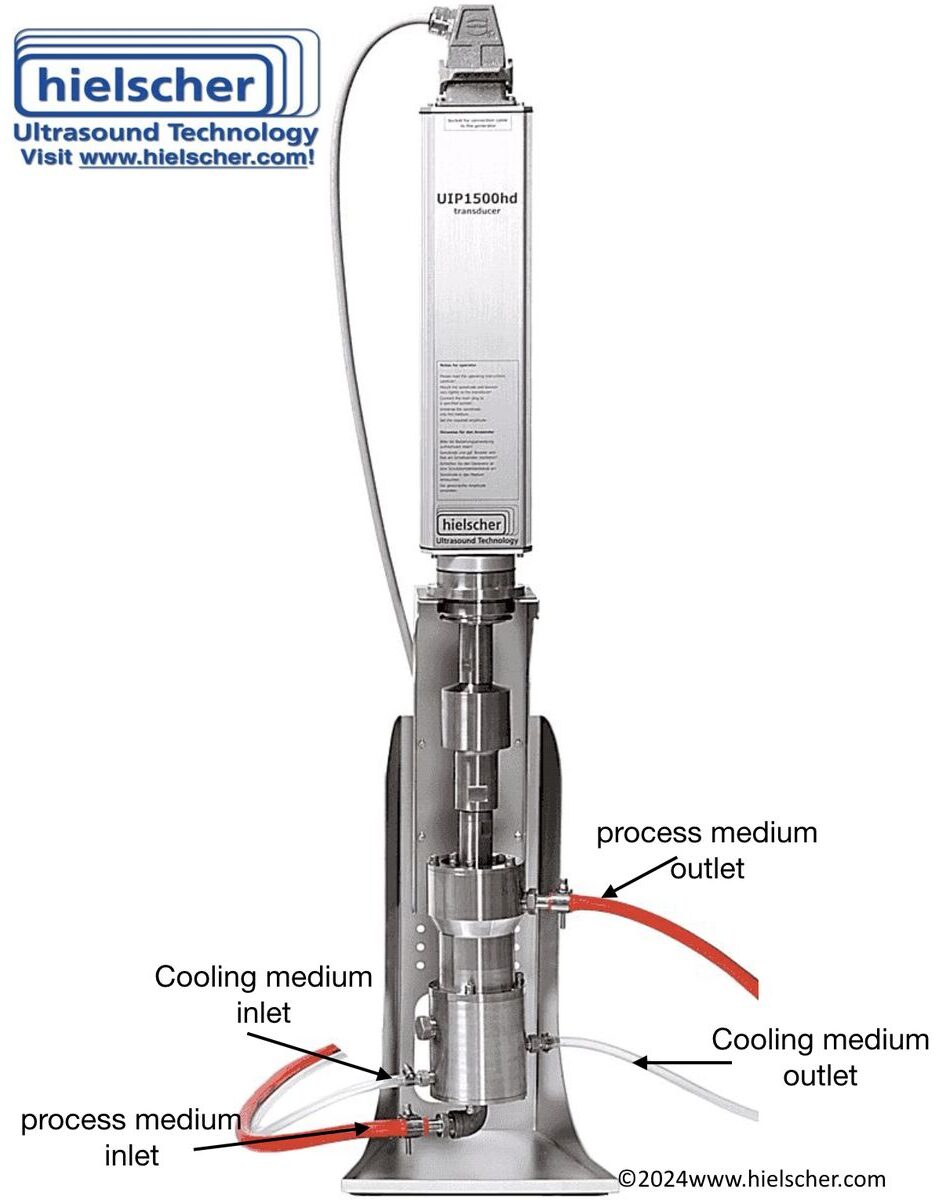
Sonicator UIP1500hdT mit Durchflusszelle zur Reaktivierung und Wiederaufbereitung von verbrauchten Katalysatoren
- Verbesserte Effizienz
- Erhöhte Reaktionsfähigkeit
- Erhöhte Conversion-Rate
- höhere Ausbeute
- Recycling von Katalysator
Ultraschall-Intensivierung katalytischer Reaktionen
Das Mischen und Rühren mit Ultraschall verbessert den Kontakt zwischen Reaktanten- und Katalysatorpartikeln, erzeugt hochreaktive Oberflächen und initiiert und/oder verstärkt die chemische Reaktion.
Die Herstellung von Ultraschallkatalysatoren kann zu Veränderungen des Kristallisationsverhaltens, der Dispersion / Desagglomeration und der Oberflächeneigenschaften führen. Darüber hinaus können die Eigenschaften von vorgeformten Katalysatoren durch das Entfernen passivierender Oberflächenschichten, eine bessere Dispersion und einen erhöhten Stofftransport beeinflusst werden.
Beispiele für durch Ultraschall verbesserte Reaktionen
- Ultraschall-Vorbehandlung von Ni-Katalysatoren für Hydrierungsreaktionen
- Beschallter Raney-Ni-Katalysator mit Weinsäure führt zu einer sehr hohen Enantioselektivität
- Ultraschall-synthetisierte Fischer-Tropsch-Katalysatoren
- Sonochemisch behandelte amorphe Pulverkatalysatoren für erhöhte Reaktivität
- Sono-Synthese von amorphen Metallpulvern
Ultraschall-Katalysator-Rückgewinnung
Feste Katalysatoren in Festbettreaktoren werden üblicherweise in Form von kugelförmigen Perlen, Pellets, Extrudaten oder zylindrischen Partikeln eingesetzt. Während chemischer Reaktionen kann die Katalysatoroberfläche durch eine Ablagerungsschicht passiviert werden, was im Laufe der Zeit zu einem allmählichen Verlust der katalytischen Aktivität und/oder Selektivität führt.
Der zeitliche Verlauf der Katalysatordeaktivierung variiert erheblich. So kann die Deaktivierung eines Crackkatalysators beispielsweise innerhalb von Sekunden erfolgen, während ein bei der Ammoniaksynthese verwendeter Eisenkatalysator 5–10 Jahre lang aktiv bleiben kann. Dennoch lässt sich eine Katalysatordeaktivierung in praktisch allen katalytischen Prozessen beobachten. Obwohl dabei unterschiedliche Deaktivierungsmechanismen auftreten können – einschließlich chemischer, mechanischer und thermischer Zersetzung – Ablagerungen sind eine der häufigsten Ursachen für den Katalysatorverfall.
Unter Fouling versteht man die physikalische Ablagerung von Stoffen aus der flüssigen Phase auf der Katalysatoroberfläche und in dessen Poren. Diese Ablagerungen blockieren reaktive Stellen, schränken die Zugänglichkeit der Poren ein und verringern den Kontakt zwischen den Reaktanten und der aktiven Katalysatoroberfläche. Die Verschmutzung des Katalysators durch Koks oder kohlenstoffhaltige Ablagerungen ist oft ein schneller Prozess; in vielen Fällen lässt sie sich jedoch durch Ultraschallregeneration teilweise oder vollständig rückgängig machen.
Die Ultraschallkavitation ist ein wirksames Verfahren zur Entfernung passivierender Ablagerungsschichten von Katalysatoroberflächen. Während der Ultraschallbehandlung erzeugt hochintensiver Ultraschall in einem flüssigen Medium Kavitationsblasen. Ihr Zusammenbruch erzeugt lokale Scherkräfte, Mikrostrahlen, Stoßwellen und eine intensive Mikromischung. Diese Effekte tragen dazu bei, Ablagerungsrückstände von der Katalysatoroberfläche zu lösen, verstopfte Poren wieder zu öffnen und den Zugang zu den aktiven Stellen wiederherzustellen.
Die Katalysatorrückgewinnung mittels Ultraschall erfolgt in der Regel dadurch, dass die Katalysatorpartikel in einer Flüssigkeit, wie beispielsweise entionisiertem Wasser oder einem geeigneten Lösungsmittel, dispergiert und die Suspension einer kontrollierten Ultraschallbehandlung ausgesetzt wird. Durch dieses Verfahren lassen sich Ablagerungen von verschiedenen Katalysatormaterialien entfernen, darunter Platin-Silica-Faser-Katalysatoren, Nickelkatalysatoren und andere Metallkatalysatoren auf Trägermaterial. Dadurch kann die Ultraschallbehandlung zur Regeneration des Katalysators, zur Verlängerung seiner Lebensdauer und zu einer verbesserten Nachhaltigkeit des Prozesses beitragen.
Ultraschallgeräte zum Einbau in chemische Reaktoren
 Hielscher Ultrasonics bietet verschiedene Ultraschallprozessoren und Variationen für die Integration von Leistungsultraschall in Festbettreaktoren an. Es stehen verschiedene Ultraschallsysteme zur Verfügung, die in Festbettreaktoren eingebaut werden können. Für komplexere Reaktortypen bieten wir kundenspezifischer Ultraschall Lösungen.
Erfahren Sie, wie die Ultraschallbehandlung chemische Reaktionen in verschiedenen Reaktortypen verbessert!
Um die Auswirkungen der Ultraschallbehandlung auf Ihre chemische Reaktion zu testen, laden wir Sie herzlich ein, unser Ultraschall-Prozesslabor und unser Technikzentrum in Teltow zu besuchen!
Kontaktieren Sie uns noch heute! Gerne besprechen wir mit Ihnen die Ultraschall-Intensivierung Ihres chemischen Prozesses!
Die nachstehende Tabelle gibt Ihnen einen Hinweis auf die ungefähre Verarbeitungskapazität von Hielscher-Sonicatoren:

Ultraschall-Durchflusssystem
- Hydrierung
- Alcylierung
- Cyanierung
- Veretherung
- Veresterung
- Polymerisation
- Allylierung
- Bromierung
(z.B. Ziegler-Natta-Katalysatoren, Metallocene)
Literatur / Literaturhinweise
- Francisco J. Navarro-Brull; Andrew R. Teixeira; Jisong Zhang; Roberto Gómez; Klavs F. Jensen (2018): Reduction of Dispersion in Ultrasonically-Enhanced Micropacked Beds. Industrial & Engineering Chemistry Research 57, 1; 2018. 122–128.
- Yasuo Tanaka (2002): A dual purpose packed-bed reactor for biogas scrubbing and methane-dependent water quality improvement applying to a wastewater treatment system consisting of UASB reactor and trickling filter. Bioresource Technology, Volume 84, Issue 1, 2002. 21-28.
- Argyle, M.D.; Bartholomew, C.H. (2015): Heterogeneous Catalyst Deactivation and Regeneration: A Review. Catalysts 2015, 5, 145-269.
- Oza, R.; Patel, S. (2012): Recovery of Nickel from Spent Ni/Al2O3 Catalysts using Acid Leaching, Chelation and Ultrasonication. Research Journal of Recent Sciences Vol. 1; 2012. 434-443.
- Sana, S.; Rajanna, K.Ch.; Reddy, K.R.; Bhooshan, M.; Venkateswarlu, M.; Kumar, M.S.; Uppalaiah, K. (2012): Ultrasonically Assisted Regioselective Nitration of Aromatic Compounds in Presence of Certain Group V and VI Metal Salts. Green and Sustainable Chemistry, 2012, 2, 97-111.
- Suslick, K. S.; Skrabalak, S. E. (2008): „Sonocatalysis“ In: Handbook of Heterogeneous Catalysis, vol. 4; Ertl, G.; Knözinger, H.; Schüth, F.; Weitkamp, J., (Eds.). Wiley-VCH: Weinheim, 2008. 2006-2017.
Wissenswertes
Was ist Ultraschall-Kavitation?
Unter Ultraschallkavitation versteht man die Entstehung, das Wachstum und den heftigen Zusammenbruch mikroskopisch kleiner Dampf- oder Gasblasen in einer Flüssigkeit, die hochintensivem Ultraschall ausgesetzt ist. Beim Zusammenbruch der Blasen können für sehr kurze Zeit extreme lokale Bedingungen auftreten, darunter hohe Temperaturen, hoher Druck, Stoßwellen, Mikrostrahlen und intensive Scherkräfte.
Was ist Sonochemie?
Unter Sonochemie versteht man die Nutzung dieser Ultraschall-Kavitationswirkungen zur Auslösung, Beschleunigung oder Modifizierung chemischer und physikalisch-chemischer Prozesse. Sie ist insbesondere in Flüssigphasensystemen von Bedeutung, da die Kavitation die Durchmischung, den Stoffaustausch, die Emulgierung, die Partikeldispersion, die Reinigung von Katalysatoroberflächen und in einigen Fällen die Radikalbildung fördert. Daher wird die Sonochemie zur Intensivierung von Reaktionen wie der heterogenen Katalyse, der Oxidation, der Extraktion, der Polymerisation, der Kristallisation und der Synthese von Nanomaterialien eingesetzt.
Was ist eine heterogene katalytische Reaktion?
In der Chemie bezieht sich die heterogene Katalyse auf die Art der katalytischen Reaktion, bei der sich die Phasen des Katalysators und der Reaktanten voneinander unterscheiden. Im Kontext der heterogenen Chemie wird Phase nicht nur zur Unterscheidung zwischen fest, flüssig und gasförmig verwendet, sondern bezieht sich auch auf nicht mischbare Flüssigkeiten, z.B. Öl und Wasser.
Während einer heterogenen Reaktion erfahren ein oder mehrere Reaktanten eine chemische Veränderung an einer Grenzfläche, z.B. auf der Oberfläche eines festen Katalysators.
Die Reaktionsgeschwindigkeit ist abhängig von der Konzentration der Reaktanten, der Partikelgröße, der Temperatur, dem Katalysator und weiteren Faktoren.
Konzentration der Reaktanten: Im Allgemeinen erhöht eine Erhöhung der Konzentration eines Reaktanten die Reaktionsgeschwindigkeit aufgrund der größeren Grenzfläche und damit eines größeren Phasentransfers zwischen den Reaktantenpartikeln.
Teilchengröße: Wenn einer der Reaktanten ein Feststoffpartikel ist, kann er nicht in der Geschwindigkeitsgleichung angezeigt werden, da die Geschwindigkeitsgleichung nur Konzentrationen anzeigt und Feststoffe keine Konzentration haben können, da sie sich in einer anderen Phase befinden. Die Partikelgröße des Feststoffs beeinflusst jedoch die Reaktionsgeschwindigkeit aufgrund der verfügbaren Oberfläche für den Phasentransfer.
Reaktionstemperatur: Die Temperatur bezieht sich über die Arrhenius-Gleichung auf die Geschwindigkeitskonstante: k = Ae-EA/RT
Dabei ist Ea die Aktivierungsenergie, R die universelle Gaskonstante und T die absolute Temperatur in Kelvin. A ist der Arrhenius-Faktor (Frequenz). e-EA/RT gibt die Anzahl der Teilchen unter der Kurve an, deren Energie größer ist als die Aktivierungsenergie, Ea.
Katalysator: In den meisten Fällen laufen Reaktionen mit einem Katalysator schneller ab, weil sie weniger Aktivierungsenergie benötigen. Heterogene Katalysatoren bieten eine Matrizenoberfläche, an der die Reaktion stattfindet, während homogene Katalysatoren Zwischenprodukte bilden, die den Katalysator in einem nachfolgenden Schritt des Mechanismus freisetzen.
Weitere Faktoren: Andere Faktoren wie Licht können bestimmte Reaktionen beeinflussen (Photochemie).
Welche Arten der Katalysatordeaktivierung gibt es?
- Katalysatorvergiftung ist die Bezeichnung für die starke Chemisorption von Spezies an katalytischen Stellen, die Stellen für katalytische Reaktionen blockieren. Vergiftungen können reversibel oder irreversibel sein.
- Fouling bezieht sich auf eine mechanische Degradation des Katalysators, bei der sich Spezies aus der flüssigen Phase auf der katalytischen Oberfläche und in den Poren des Katalysators ablagern.
- Thermische Degradation und Sintern führen zum Verlust der katalytischen Oberfläche, der Stützfläche und der aktiven Phasenunterstützungsreaktionen.
- Unter Dampfbildung versteht man eine chemische Abbauform, bei der die Gasphase mit der Katalysatorphase unter Bildung flüchtiger Verbindungen reagiert.
- Dampf-Feststoff- und Fest-Feststoff-Reaktionen führen zur chemischen Deaktivierung des Katalysators. Dampf, Träger oder Promotor reagiert mit dem Katalysator, so dass eine inaktive Phase entsteht.
- Der Abrieb oder die Zerkleinerung der Katalysatorpartikel führt zum Verlust von katalytischem Material durch mechanischen Abrieb. Die innere Oberfläche des Katalysators geht durch mechanisch induzierte Zerkleinerung des Katalysatorpartikels verloren.
Erfahren Sie mehr darüber, wie sich verbrauchte Katalysatoren durch Ultraschallbehandlung reaktivieren lassen!
Was ist eine nukleophile Substitution?
Die nukleophile Substitution ist eine grundlegende Reaktionsklasse in der organischen (und anorganischen) Chemie, bei der ein Nukleophil selektiv in Form einer Lewis-Base (als Elektronenpaarspender) eine Bindung mit einem organischen Komplex eingeht oder die positive oder teilweise positive (+) Ladung eines Atoms oder einer Atomgruppe, um eine Abgangsgruppe zu ersetzen. Das positiv oder teilweise positiv geladene Atom, das als Elektronenpaar-Akzeptor fungiert, wird als Elektrophil bezeichnet. Die gesamte molekulare Einheit aus Elektrophil und Abgangsgruppe wird üblicherweise als Substrat bezeichnet.
Die nukleophile Substitution kann auf zwei verschiedenen Wegen beobachtet werden – das Sn1 und Sn2 Reaktion. Welche Form des Reaktionsmechanismus – sn1 oder Sn2 – stattfindet, ist abhängig von der Struktur der chemischen Verbindungen, der Art des Nukleophils und dem Lösungsmittel.