Ultraschall-Intensivierte Chemische Reaktoren – Typen, Ausführungen und Mechanismen
Chemische Reaktoren sind das Herzstück der industriellen Chemie, der Materialsynthese, der Feinchemikalienproduktion, der pharmazeutischen Herstellung und der Umwelttechnik. Da die Industrie nach schnelleren, saubereren und energieeffizienteren Prozessen strebt, hat sich die Beschallung, auch bekannt als Ultraschallverfahren, zu einer immer wichtigeren Methode zur Intensivierung von Reaktoren entwickelt. Die Ultraschallreaktortechnologie verändert die chemische Verarbeitung, indem sie das Mischen, den Stoffaustausch, die Reaktionskinetik und die heterogene Katalyse in Batch- und kontinuierlichen Reaktorsystemen verbessert.
Wie Ultraschall chemische Reaktoren verbessert
Durch die Einleitung von Hochleistungsultraschall in einen chemischen Reaktor können Ingenieure im Reaktionsmedium eine durch Ultraschallwellen verursachte Strömungsmischung sowie akustische Kavitation erzeugen. Diese Mechanismen verbessern den Kontakt zwischen den Reaktanten, beschleunigen den Stoffaustausch und können die Reaktionsgeschwindigkeit, Selektivität und Ausbeute steigern. Die Ultraschallbehandlung ist besonders effektiv in Fest-Flüssig-Systemen, wie beispielsweise bei der heterogenen Katalyse, sowie in Flüssig-Flüssig-Systemen, wie bei der Emulgierung, Extraktion und bei zweiphasigen Reaktionen. In Gas-Flüssigkeits-Gemischen wird sie seltener eingesetzt, da akustische Kavitation in Flüssigkeiten mit hohem Gasgehalt weniger effizient erzeugt wird.
Bei der modernen Konstruktion sonochemischer Reaktoren werden Flüssigkeiten durch Ultraschallschwingungen und Kavitation durchmischt, wobei typischerweise Amplituden im Bereich von 10 bis 200 µm zum Einsatz kommen. Dies ermöglicht starke mikroskopische Mischeffekte, die mit herkömmlicher mechanischer Durchmischung allein nur schwer zu erzielen sind.
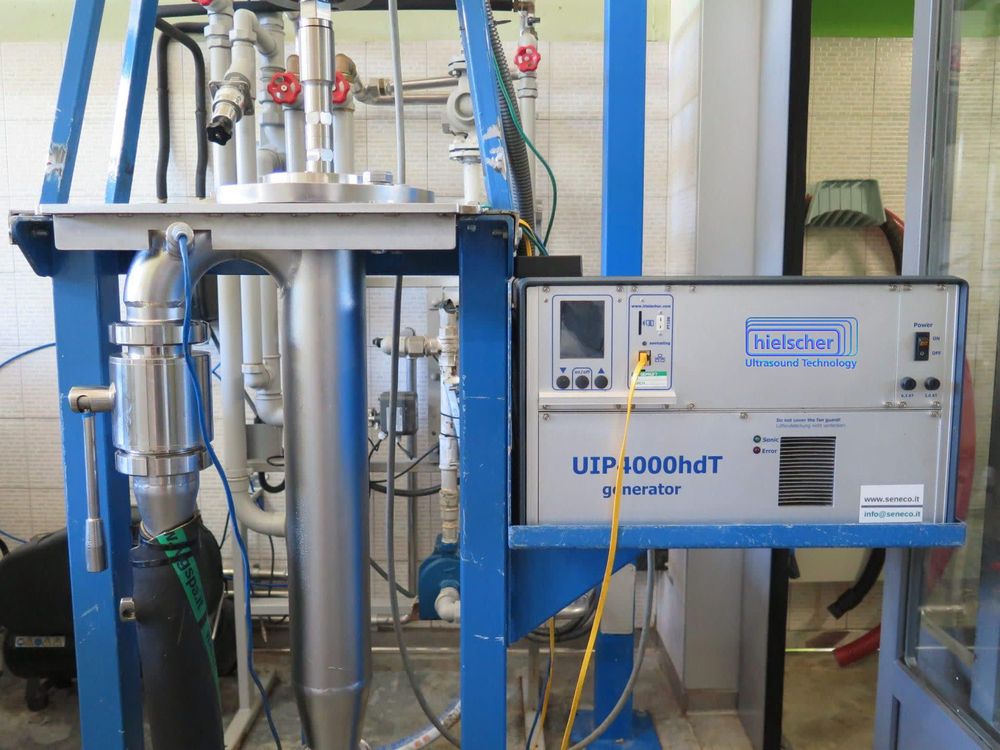
Inline-Sonicator UIP4000hdT mit Durchflusszelle für verbesserte chemische Reaktionen
Warum die Sonikation chemische Reaktoren intensiviert
Die industrielle Bedeutung der Ultraschallbehandlung liegt in ihrer Fähigkeit, chemische und physikalische Transportvorgänge auf der Mikro- und Mesoskala zu beeinflussen. Im Gegensatz zum herkömmlichen Rühren bewegt Ultraschall nicht lediglich die Flüssigkeit als Ganzes. Er erzeugt Druckwellen, Schwingungsbewegungen, Kavitationsblasen und lokal begrenzte Hochenergiebereiche.
Wenn sich akustische Kavitationsblasen bilden, wachsen und zusammenbrechen, entstehen dabei extreme Mikroumgebungen. Diese Vorgänge können Folgendes hervorrufen:
- hohe lokale Scherkräfte
- Mikrostrahlen in der Nähe fester Oberflächen
- Schockwellen
- schnelles Mikromischen
- verbesserte Partikeldispersion
- verbesserter Kontakt an der Grenzfläche
- beschleunigter Stoff- und Wärmeaustausch
- Auswirkungen der Oberflächenreinigung und der Katalysatoraktivierung
Aufgrund dieser Phänomene ist die Ultraschallbehandlung für die Prozessintensivierung von großem Wert, insbesondere wenn Reaktionen durch Diffusion, unzureichenden Phasenkontakt, Katalysatorverschmutzung oder unzureichende Durchmischung begrenzt werden.
Ultraschallbehandlung in Chargenreaktoren
Batch-Reaktoren finden in Laboren, Pilotanlagen und bei der Herstellung von Spezialchemikalien breite Anwendung. Sie sind flexibel, einfach zu bedienen und eignen sich für Reaktionsscreenings, Synthesen in kleinen Mengen sowie für hochwertige Produkte.
Wird Ultraschall in Chargenreaktoren eingesetzt, kann dies die Durchmischung und die Gleichmäßigkeit der Reaktion erheblich verbessern. Ultraschallsonden, Durchflusszellen oder extern angebrachte Wandler können akustische Energie direkt in das Reaktionsmedium einbringen.
In Chargenanlagen eignet sich die Ultraschallbehandlung besonders für:
- Heterogene Katalyse
- Synthese von Nanopartikeln
- Kristallisationssteuerung
- Emulgierung
- Extraktion
- Polymerisation
- Lösen und Dispergieren von Feststoffen
Bei Fest-Flüssig-Reaktionen kann Ultraschall die Agglomeration von Partikeln verhindern und den Zugang zu katalytischen oder reaktiven Oberflächen verbessern. In Flüssig-Flüssig-Systemen kann die Ultraschallbehandlung feine Emulsionen erzeugen und die Grenzflächenfläche zwischen nicht mischbaren Phasen vergrößern, was häufig zu schnelleren Reaktionsgeschwindigkeiten führt.
Durchflussreaktoren für die kontinuierliche sonochemische Verarbeitung
Durchflussreaktoren gehören zu den wichtigsten Konstruktionsformen für die industrielle Ultraschallbehandlung. Anstatt ein festes Flüssigkeitsvolumen zu behandeln, durchströmt das Reaktionsgemisch kontinuierlich die Kammer des Ultraschallreaktors.
Dieses Design ist für die Skalierung äußerst attraktiv, da es Ingenieuren ermöglicht, Verweilzeit, Durchflussrate, Temperatur, Druck und die zugeführte Ultraschallenergie präziser zu steuern. Durchfluss-Sonochemie-Reaktoren kommen häufig zum Einsatz, wenn eine gleichbleibende Produktqualität und ein kontinuierlicher Betrieb erforderlich sind.
Zu den wichtigsten Vorteilen von ultraschallbehandelten Durchflussreaktoren zählen:
- Kontinuierliche Produktionsfähigkeit
- verbesserte Reproduzierbarkeit des Prozesses
- bessere Temperaturregelung
- kontrollierte Verteilung der Verweilzeiten
- einfachere Integration in industrielle Prozesslinien
- skalierbare Reaktorarchitektur
In diesen Systemen kann die Mischwirkung durch ultraschallinduzierte Schwingungsströmungen die radiale und axiale Durchmischung verbessern, Konzentrationsgradienten verringern und die Wechselwirkung der Reaktanten optimieren. Dies ist insbesondere in Prozessen von großem Nutzen, bei denen die Reaktionsleistung von einem schnellen Phasenkontakt oder einer raschen Dispersion abhängt.
Ultraschall-Durchflusszellen-Einsatz „MultiPhaseCavitator“
 Der MultiPhaseCavitator-Einsatz MPC48 ist ein spezieller Einsatz für Hielscher-Ultraschall-Durchflusszellenreaktoren, der dazu dient, Flüssig-Flüssig- und Flüssig-Gas-Prozesse direkt in der Ultraschallkavitationszone zu intensivieren. Durch das Einleiten einer zweiten Flüssigkeits- oder Gasphase über 48 feine Kanülen in den primären Flüssigkeitsstrom erzeugt der MultiPhaseCavitator sehr kleine Tröpfchen oder Gasblasen mit einer hohen spezifischen Grenzfläche. Dadurch eignet er sich besonders gut für die Ultraschall-Emulgierung, bei der nicht mischbare Phasen in feine Emulsionen dispergiert werden, sowie für katalytische Gasreaktionen, bei denen die eingespritzte Gasphase rasch dispergiert und in engen Kontakt mit der Flüssigphase, gelösten Reaktanten oder suspendierten Katalysatoren gebracht wird. Die daraus resultierende Kavitationsscherung, Mikromischung und der verbesserte Stoffaustausch können die Reaktionskinetik, den Kontakt an den Phasengrenzen und die Prozesseffizienz im kontinuierlichen oder chargenweisen Durchflussbetrieb verbessern.

Sonicator UIP2000hdT mit chemischem Batch-Reaktor
Chemische Reaktordesigns und die Vorteile durch Ultraschall
| Reaktortyp | Typische Anwendung | Wichtigste Auswirkungen der Ultraschallbehandlung | Technische Relevanz |
|---|---|---|---|
| Schlammreaktoren | Heterogene Katalyse mit in einer flüssigen Phase suspendierten festen Katalysatorpartikeln; wird bei der Hydrierung, Oxidation, Umwandlung von Biomasse, bei Verfahren nach dem Fischer-Tropsch-Prinzip, in der Photokatalyse und bei der Abwasserbehandlung eingesetzt. | Die Ultraschallbehandlung verbessert die Katalysatordispersion, die Deagglomeration von Partikeln, die Verringerung der Grenzschicht, die Oberflächenerneuerung, den Stoffaustausch zwischen Flüssigkeit und Feststoff, die Reinigung der Katalysatoroberfläche sowie die Verringerung von Ablagerungen. | Dies ist besonders relevant, da viele katalytische Reaktionen in der Suspensionsphase davon abhängen, wie effizient die Reaktanten die aktiven Zentren erreichen. Akustische Kavitation verstärkt den Kontakt an der Grenzfläche zwischen Katalysator und Flüssigkeit und kann die Reaktionskinetik verbessern. |
| Kontinuierlich gerührte Tankreaktoren (CSTRs) | Kontinuierliche Flüssigphasenreaktionen, Emulgierung, katalytische Reaktionen, Ausfällung, Kristallisation, Polymerreaktionen und Fest-Flüssig-Suspensionen. | Ultraschall verbessert die Mikromischung, die Partikelsuspension, die Emulgierung, die Dispersion und die lokale Energiezufuhr. Er kann mit mechanischem Rühren kombiniert werden, um sowohl die Makromischung als auch die Mikromischung zu verbessern. | Ultraschallbehandelte CSTRs sind dann sinnvoll, wenn herkömmliche Rührwerke Totzonen, eine schlechte Dispersion oder lokale Einschränkungen beim Stoffaustausch nicht vollständig beseitigen können. Ultraschall sorgt für gleichmäßigere Reaktionsbedingungen und eine verbesserte Prozessintensivierung. |
| Festbettreaktoren | Stationäre Katalysatorbetten, die bei der Hydrierung, Oxidation, Umweltkatalyse, petrochemischen Verarbeitung und heterogenen Flüssigphasenkatalyse zum Einsatz kommen. | Die Ultraschallbehandlung kann die Benetzung des Katalysators, die Flüssigkeitsbewegung durch das Bett, die Verringerung der Grenzschicht, die Oberflächenreinigung, die Verringerung von Ablagerungen und den Stofftransport zu den katalytischen Zentren verbessern. | Die Leistung von Festbettanlagen wird häufig durch Kanalisierung, schlechte Benetzung, Diffusionswiderstand und Ablagerungsbildung eingeschränkt. Eine Prozessintensivierung mittels Ultraschall kann die Katalysatorausnutzung und die Reaktionsgleichmäßigkeit verbessern. |
| Wirbelschichtreaktoren | Dynamische Schichten aus schwebenden Partikeln, die in der Katalyse, der Partikelaufbereitung, der Beschichtung, der Polymerisation, der Trocknung und bei Fest-Flüssig-Reaktionen zum Einsatz kommen. | Die Ultraschallanregung kann die Partikeldispersion verbessern, die Agglomeration verringern, den Kontakt zwischen Flüssigkeit und Feststoff verbessern, Suspensionen stabilisieren und die Zugänglichkeit der Katalysatoroberfläche verbessern. | Die Ultraschallbehandlung ist besonders effektiv in Flüssig-Feststoff-Fließbetten, in denen Kavitation effizient erzeugt werden kann. In gasreichen Systemen ist die Kavitation weniger wirksam, weshalb sich Ultraschall besser für reaktorbasierte Anwendungen auf Flüssigkeitsbasis eignet. |
| Membranreaktoren | Integrierte Reaktions-Trennsysteme, die zur selektiven Produktentnahme, zur Reaktantendosierung, für katalytische Membranprozesse und für filtrationsgestützte Reaktionen eingesetzt werden. | Ultraschall kann die Membranverschmutzung verringern, den Permeatfluss verbessern, die Oberflächenreinigung optimieren, die Konzentrationspolarisation reduzieren und die Durchmischung im Bereich der Membrangrenzfläche verbessern. | Die Ultraschallbehandlung verbindet die Reaktionstechnik mit der Trenntechnik. Sie erweist sich insbesondere dort als wertvoll, wo Verschmutzungen, Massentransferwiderstände oder eine schwache Kopplung zwischen Reaktion und Trennung die Leistung von Membranreaktoren einschränken. |
Mechanismen der Ultraschall-gestützten Intensivierung von Reaktoren
Die Vorteile der Ultraschallbehandlung in chemischen Reaktoren beruhen auf mehreren miteinander wechselwirkenden Mechanismen.
- Die akustische Kavitation ist der wichtigste Mechanismus. Dabei kommt es zur Bildung, zum Wachstum und zum Zusammenbruch mikroskopisch kleiner Bläschen in einer Flüssigkeit, die hochintensivem Ultraschall ausgesetzt ist. Der Zusammenbruch der Bläschen führt zu einer lokalen Energiefreisetzung und starken mechanischen Kräften.
- Durch Akustikströmung wird eine gleichmäßige Flüssigkeitsbewegung erzeugt, die durch Ultraschallwellen ausgelöst wird. Dies verbessert die Durchmischung und den Transport in Bereichen, in denen mechanisches Rühren möglicherweise unzureichend ist.
- Eine oszillierende Strömungsdurchmischung entsteht, wenn Ultraschallschwingungen eine schnelle Hin- und Herbewegung der Flüssigkeit bewirken. In Reaktorsystemen können Amplituden von etwa 10 bis 200 µm eine äußerst effektive Durchmischung und einen verbesserten Stoffaustausch bewirken.
- In der Nähe von kollabierenden Kavitationsblasen, insbesondere nahe festen Oberflächen, treten Mikrostrahlen und Stoßwellen auf. Diese Effekte können Katalysatoroberflächen reinigen, Grenzschichten aufbrechen und den Zugang der Flüssigkeit zu den aktiven Stellen verbessern.
- Die Vergrößerung der Grenzflächenfläche ist insbesondere in Flüssig-Flüssig-Systemen von großer Bedeutung. Durch Ultraschall lassen sich feine Tröpfchen und stabile Dispersionen erzeugen, wodurch sich die für Reaktionen oder den Stoffaustausch verfügbare Fläche vergrößert.
Zusammen machen diese Mechanismen die Ultraschallbehandlung zu einem leistungsstarken Werkzeug für die Intensivierung chemischer Reaktionsprozesse.
Industrielle Relevanz des Designs sonochemischer Reaktoren
Die industrielle Bedeutung von Ultraschallreaktoren geht über das schnellere Mischen hinaus. Die Ultraschallbehandlung bietet die Möglichkeit, Reaktionsbedingungen in Größenordnungen zu beeinflussen, die mit herkömmlichen Anlagen nur schwer zu erreichen sind.
In der Verfahrenstechnik sind viele Einschränkungen bei Reaktoren eher auf Transportphänomene als auf die eigentlichen Reaktionsgeschwindigkeiten zurückzuführen. Reaktanden erreichen die katalytischen Zentren möglicherweise nicht schnell genug. Nicht mischbare Flüssigkeiten weisen unter Umständen eine unzureichende Kontaktfläche auf. Feststoffe können agglomerieren. Membranen können verschmutzen. Katalysatoroberflächen können verstopfen.
Die Ultraschallbehandlung überwindet diese Einschränkungen, indem sie die physikalischen Bedingungen im Reaktorinneren direkt verbessert. Dadurch ist sie für verschiedene Forschungs- und Industrieprioritäten von Bedeutung:
- umweltfreundlichere chemische Verarbeitung
- geringerer Energie- und Lösungsmittelbedarf
- verbesserte Katalysatoreffizienz
- höhere Reaktionsselektivität
- schnellere Prozessentwicklung
- kontinuierliche Fertigung
- modular aufgebaute Reaktorsysteme mit erhöhter Leistung
- Synthese fortschrittlicher Werkstoffe
- nachhaltige Verwertung von Biomasse und Abfallströmen
Für Forscher bietet die Ultraschallbehandlung eine kontrollierte Methode, um den Zusammenhang zwischen der zugeführten akustischen Energie, dem Kavitationsverhalten, der Transportverstärkung und der chemischen Leistung zu untersuchen. Für die Industrie bietet sie einen praktischen Weg zu kompakten, effizienten und skalierbaren Reaktorsystemen.

Ultraschall-Homogenisator UIP2000hdT für chemische Reaktionen imm Durchflussreaktor
Vorteile der Beschallung in chemischen Reaktoren
Die Einbindung von Ultraschall in die Reaktorkonstruktion bietet mehrere betriebliche und wissenschaftliche Vorteile:
- schnellere Reaktionsgeschwindigkeiten durch verbesserten Stoffaustausch
- bessere Durchmischung in Mehrphasensystemen
- verbesserte Verteilung von Feststoffen und Tröpfchen
- verbesserte Katalysatorausnutzung
- Einschränkungen durch verminderte Diffusion
- sauberere Katalysator- und Membranoberflächen
- verbesserte Prozessreproduzierbarkeit in Durchflusssystemen
- mögliche Verringerung der Temperatur, des Drucks oder der Reaktionszeit
- Kompatibilität mit dem Chargen- und dem kontinuierlichen Betrieb
- große Bedeutung für die heterogene Katalyse und zweiphasige Reaktionen
Diese Vorteile machen die Ultraschallreaktortechnologie besonders attraktiv für die Bereiche Feinchemikalien, Spezialchemikalien, Katalyse, Nanomaterialien, grüne Chemie und Prozessintensivierung.

Ultraschall-Durchflusszelle aus Glas
Intensivieren Sie Ihren chemischen Reaktor mit Hielscher Sonikatoren!
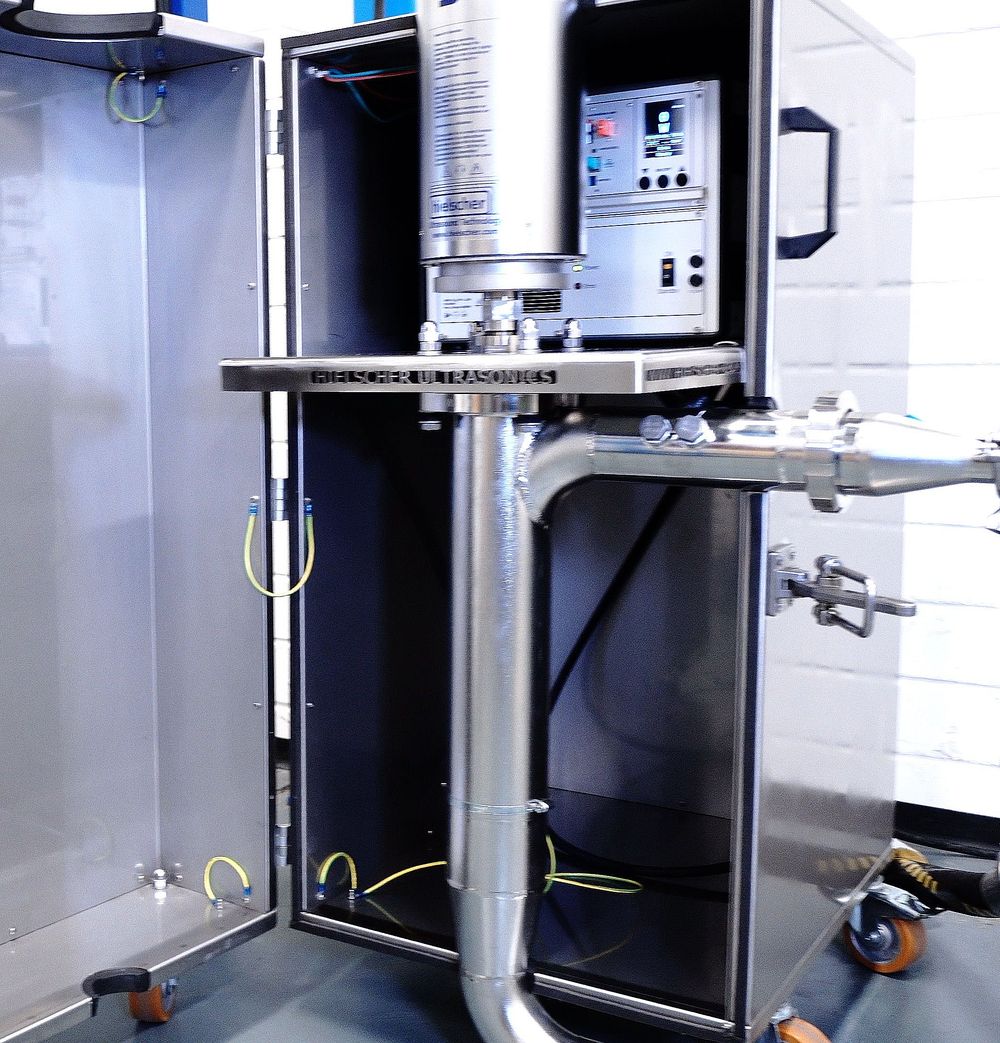 Hielscher-Ultraschallgeräte eignen sich hervorragend für die maßgeschneiderte Integration in chemische Reaktoren, da sie als robuste, leistungsstarke Ultraschallsysteme mit anpassbaren Sonotroden, Durchflusszellen, Reaktoreinsätzen und prozessspezifischem Zubehör erhältlich sind. Je nach Reaktionsaufbau können Hielscher-Ultraschallprozessoren in Chargenreaktoren, kontinuierlich gerührten Tankreaktoren, Inline-Durchflussreaktoren, Rezirkulationskreisläufen, Drucksystemen sowie in Pilot- oder Produktionsanlagen installiert werden. Diese Flexibilität ermöglicht es, Ultraschall genau dort einzusetzen, wo die Kavitation am effektivsten ist: an der Grenzfläche zwischen Flüssigkeit und Feststoff, zwischen zwei Flüssigkeiten oder zwischen Flüssigkeit und Gas. Hielscher Ultrasonics bietet zudem verschiedene Arten von Ultraschall-Batch- und Inline-Reaktoren an, die eine kontrollierte sonochemische Verarbeitung, Emulgierung, Dispersion, Katalysatoraktivierung, Oberflächenreinigung, Intensivierung des Stofftransports und Reaktionsbeschleunigung ermöglichen. Durch die präzise Steuerung von Amplitude, Leistungsaufnahme, Temperatur, Druck, Durchflussrate und Verweilzeit lassen sich die Ultraschallgeräte von Hielscher genau auf die spezifischen Anforderungen der Laborforschung, der Prozessentwicklung, der Skalierung und der industriellen chemischen Produktion abstimmen.
In der folgenden Tabelle finden Sie die ungefähre Verarbeitungskapazität unserer Ultraschallhomogenisatoren:
| Batch-Volumen | Durchfluss | Empfohlenes Ultraschallgerät |
|---|---|---|
| 1 bis 500ml | 10 bis 200ml/min | UP100H |
| 10 bis 2000ml | 20 bis 400ml/min | UP200Ht, UP400St |
| 0.1 bis 20l | 0,2 bis 4l/min | UIP2000hdT |
| 10 bis 100l | 2 bis 10l/min | UIP4000hdT |
| 15 bis 150 Liter | 3 bis 15 l/min | UIP6000hdT |
| n.a. | 10 bis 100l/min | UIP16000hdT |
| n.a. | größere | Cluster aus UIP16000hdT |
Design, Herstellung und Beratung – Qualität Made in Germany
Hielscher Ultraschallgeräte sind bekannt für höchste Qualität und Designstandards. Robustheit und einfache Bedienung ermöglichen die problemlose Integration unserer Ultraschallgeräte in industrielle Anlagen. Raue Bedingungen und anspruchsvolle Umgebungen sind für Hielscher Ultraschallgeräte kein Problem.
Hielscher Ultrasonics ist ein ISO-zertifiziertes Unternehmen und legt großen Wert darauf, Hochleistungs-Ultraschallgeräte zu entwickeln und zu produzieren, die sich durch modernste Technik und Benutzerfreundlichkeit auszeichnen. Selbstverständlich sind Hielscher Sonicators CE-konform und erfüllen die Anforderungen von UL, CSA und RoHs.

Ultraschall-Homogenisator UIP1500hdT mit einem Durchflussreaktor, der mit einem Kühlmantel zur Steuerung der Prozesstemperatur während der Beschallung ausgestattet ist.
Häufig gestellte Fragen
Was sind chemische Reaktoren?
Chemische Reaktoren sind speziell konstruierte Behälter oder Anlagen, in denen chemische Reaktionen unter kontrollierten Bedingungen wie Temperatur, Druck, Durchmischung, Verweilzeit und Reaktantenkonzentration ablaufen. Ihr Zweck besteht darin, Rohstoffe in gewünschte Produkte mit definierter Ausbeute, Selektivität und Prozesseffizienz umzuwandeln.
Was sind die wichtigsten Arten von chemischen Reaktoren?
Zu den wichtigsten Arten chemischer Reaktoren zählen Chargenreaktoren, kontinuierlich gerührte Tankreaktoren, Pfropfstromreaktoren, Festbettreaktoren, Wirbelschichtreaktoren, Slurry-Reaktoren, Membranreaktoren sowie photochemische oder elektrochemische Reaktoren. Jeder Reaktortyp unterscheidet sich hinsichtlich des Strömungsverhaltens, des Mischverhaltens, der Wärme- und Stoffübertragungseigenschaften sowie der Eignung für homogene oder heterogene Reaktionen.
Was ist der Unterschied zwischen einem Wirbelschichtreaktor und einem Festbettreaktor?
In einem Festbettreaktor verbleiben die festen Katalysatorpartikel ortsfest, während die Reaktanten durch das mit Katalysator gefüllte Bett strömen. In einem Wirbelschichtreaktor hält ein nach oben strömendes Fluid die festen Partikel in der Schwebe und bewegt sie, wodurch eine dynamische Schicht mit starker Durchmischung, verbesserter Wärmeübertragung und besserem Kontakt zwischen Partikeln und Fluid entsteht. Festbettreaktoren sind einfacher aufgebaut und mechanisch stabil, während Wirbelschichtreaktoren eine höhere Durchmischungs- und Wärmeübertragungseffizienz bieten, jedoch eine komplexere Strömungssteuerung erfordern.
Was ist ein Katalysatorbett?
Ein Katalysatorbett ist ein definiertes Volumen aus festen Katalysatorpartikeln, die im Inneren eines Reaktors angeordnet sind. Es bildet die aktive Oberfläche, auf der chemische Reaktionen ablaufen. Katalysatorbetten können stationär sein, wie in Festbettreaktoren, oder dynamisch in Suspension gehalten werden, wie in Wirbelschichtreaktoren. Ihre Leistung hängt von der Katalysatoraktivität, der Partikelgröße, der Porosität, der Oberfläche, der Strömungsverteilung, der Wärmeübertragung und dem Stoffaustausch ab.
Literatur / Literaturhinweise
- Yu, Hang Gao, Jing; Zhong, Qili; Guo, Yahui; Xie, Yunfei; Yao, Weirong; Zhou, Weibiao (2018): Acoustic pressure and temperature distribution in a novel continuous ultrasonic tank reactor: a simulation study. IOP Conference Series: Materials Science and Engineering 2018.
- Francisco J. Navarro-Brull; Andrew R. Teixeira; Jisong Zhang; Roberto Gómez; Klavs F. Jensen (2018): Reduction of Dispersion in Ultrasonically-Enhanced Micropacked Beds. Industrial & Engineering Chemistry Research 57, 1; 2018. 122–128.
- M. Ajmal, S. Rusli, G. Fieg (2016): Modeling and experimental validation of hydrodynamics in an ultrasonic batch reactor. Ultrasonics Sonochemistry, Volume 28, 2016. 218-229.
- L. Castrillón, E. Marañón, Y. Fernández-Nava, P. Ormaechea, G. Quiroga (2013): Thermophilic co-digestion of cattle manure and food waste supplemented with crude glycerin in induced bed reactor (IBR). Bioresource Technology, Volume 136, 2013. 73-77.
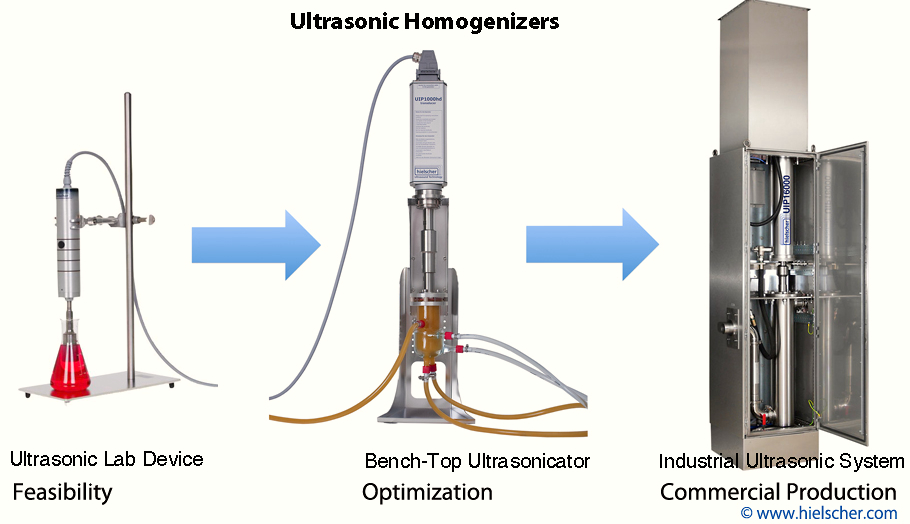
Hielscher Ultrasonics fertigt Hochleistungs-Ultraschall-Homogenisatoren vom Labor bis zum voll-kommerziellen Industriemaßstab.