Reaktivierung verbrauchter Katalysatoren mit Ultraschall
Die Reaktivierung verbrauchter Katalysatoren ist zu einem wichtigen Thema in der nachhaltigen chemischen Verarbeitung, im Raffineriebetrieb, in der Petrochemie, in der Umweltkatalyse und bei Strategien für die Kreislaufwirtschaft geworden. Katalysatoren sind für effiziente Reaktionen unentbehrlich, verlieren aber während der industriellen Nutzung allmählich an Aktivität durch Koksablagerungen, Metallvergiftung, Verschmutzung, Porenverstopfung, Versinterung, Oberflächenpassivierung oder die Ansammlung von Reaktionsnebenprodukten. Der Austausch verbrauchter Katalysatoren ist kostspielig und ressourcenintensiv, während die Entsorgung eine Belastung für die Umwelt darstellen kann. Die Regenerierung verbrauchter Katalysatoren mit Ultraschall ist eine einfache, aber hocheffiziente Technik zur Reaktivierung von Katalysatoren, die während der Nutzung passiviert, vergiftet oder verschmutzt wurden.
Reaktivierung verbrauchter Katalysatoren mit Ultraschall
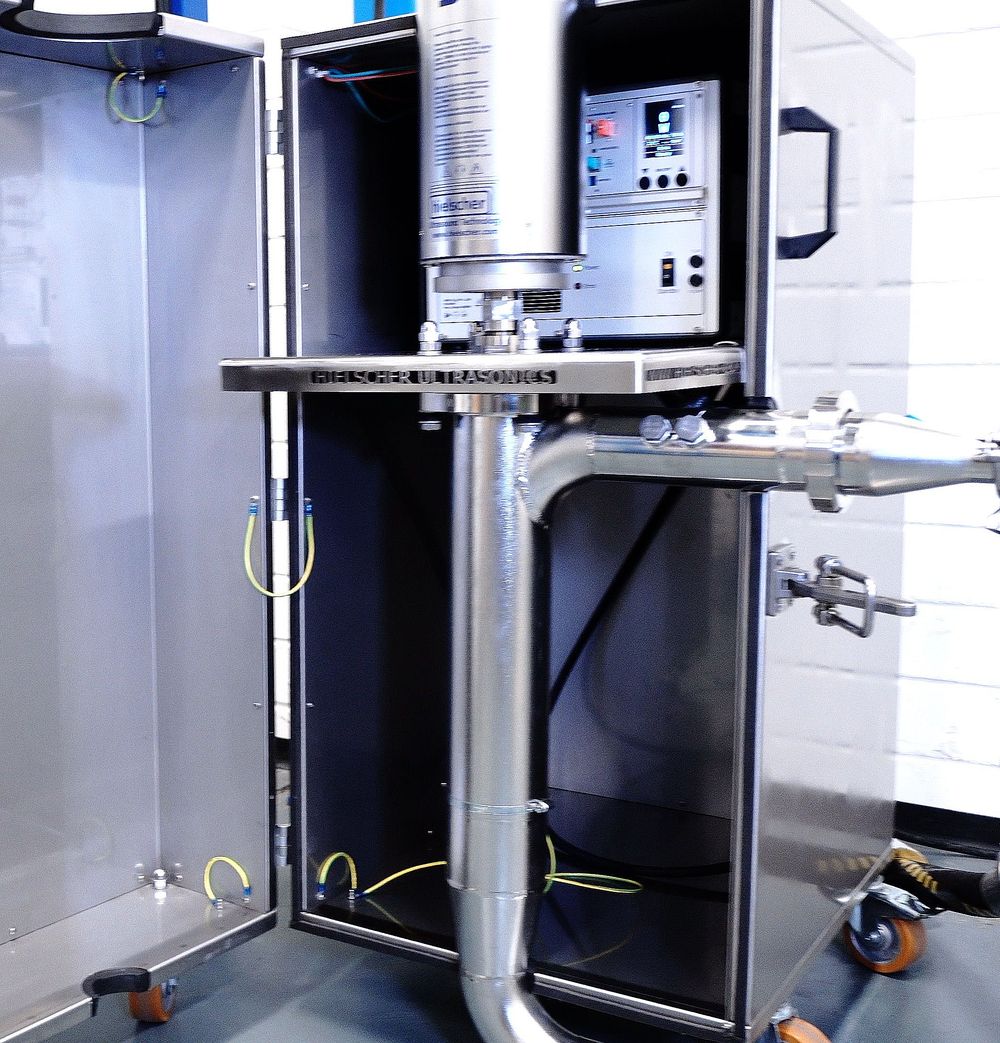 Die Ultraschallbehandlung, auch als Sonikation bekannt, bietet eine wissenschaftlich fundierte und technisch attraktive Methode zur Regenerierung und Reaktivierung verbrauchter Katalysatoren. Durch die Einwirkung von Hochleistungsultraschall auf Katalysatorsuspensionen entsteht im flüssigen Medium eine intensive akustische Kavitation. Das Zerplatzen der Kavitationsblasen erzeugt lokalisierte Mikrostrahlen, Stoßwellen, Scherkräfte und eine stark turbulente Mikromischung. Diese Effekte können Katalysatoroberflächen reinigen, Ablagerungen lösen, den Zugang von Reagenzien zu verstopften Poren verbessern und chemische Auslaugungs- oder oxidative Regenerationsprozesse unterstützen.
Jüngste Forschungsergebnisse zu verbrauchten Katalysatoren aus dem Bereich des flüssigen katalytischen Crackens haben gezeigt, dass eine ultraschallunterstützte Regeneration die Entfernung schädlicher Metalle verbessern und gleichzeitig dazu beitragen kann, das Zeolithgerüst und die Mikrostruktur der Katalysatorpartikel zu erhalten. Studien berichten zudem von einer ultraschallunterstützten Rückgewinnung von Metallen wie Nickel aus verbrauchten Katalysatoren, wobei die Ultraschallbehandlung die Extraktion durch die physikalischen und chemischen Effekte der akustischen Kavitation beschleunigt.
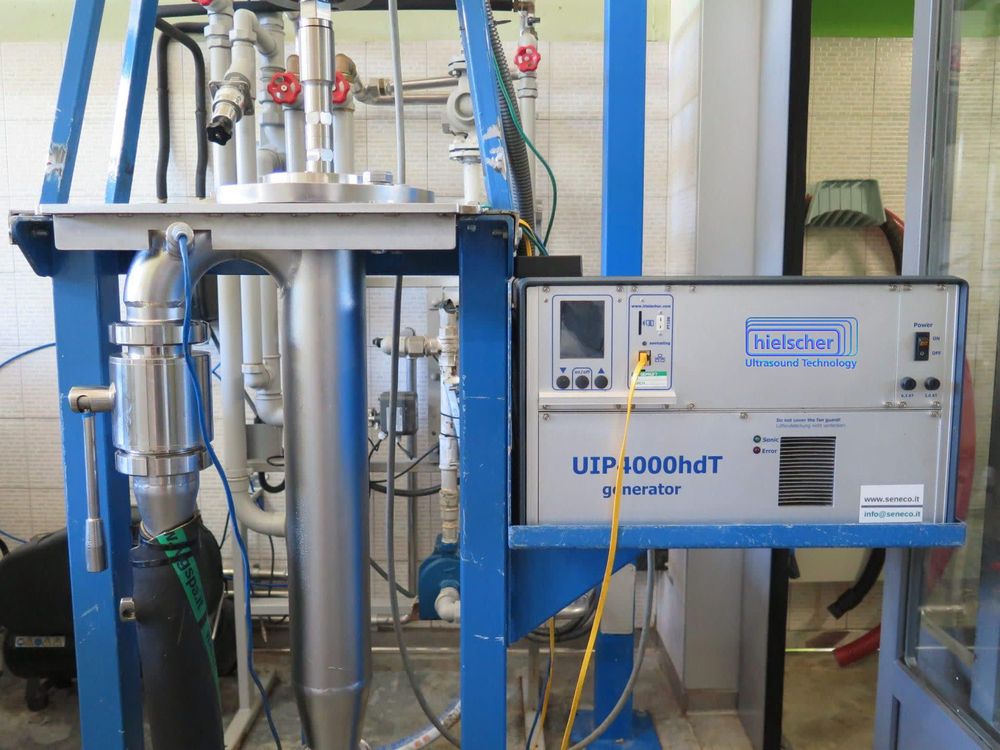
Inline-Sonicator UIP4000hdT für die industrielle Regeneration von verbrauchten Katalysatoren
Warum die Ultraschallbehandlung bei der Reaktivierung von verbrauchten Katalysatoren wirksam ist
Die wissenschaftliche Bedeutung der Ultraschallbehandlung liegt in ihrer Fähigkeit, heterogene Fest-Flüssig-Prozesse zu intensivieren. Die Katalysatorregeneration wird häufig durch einen unzureichenden Stoffaustausch, verstopfte Poren, passivierte Oberflächen und eine langsame Diffusion von Reinigungs- oder Auslaugungsmitteln in die Katalysatorstruktur eingeschränkt. Ultraschall überwindet diese Einschränkungen durch mechanische und physikalisch-chemische Mechanismen.
Zu den wichtigsten Vorteilen der Ultraschallbehandlung zählen:
Die Bedeutung von Ultraschall beschränkt sich nicht nur auf die physikalische Reinigung. In der Sonochemie kann Kavitation extreme lokale Bedingungen und reaktive Umgebungen erzeugen, die Oxidations-, Oberflächenmodifizierungs- oder chemische Extraktionsschritte unterstützen können. Dadurch kann Ultraschall die aktive Oberfläche von Katalysatoren vergrößern, die Verschmutzung von feststoffdispersen Katalysatoren verringern und zur Reinigung während Katalysator-Recyclingprozessen beitragen.
Industrielle Relevanz: Von der Reinigung des Katalysators bis zur funktionalen Reaktivierung
Die Reaktivierung verbrauchter Katalysatoren ist mehr als nur eine Wartungsmaßnahme. Sie ist ein wissenschaftlich bedeutender Weg zur Verbesserung der Lebenszyklusleistung von Katalysatoren. Ein regenerierter Katalysator muss nicht nur sauber aussehen, sondern auch seine katalytische Funktion in nennenswertem Umfang wiedererlangen. Dies erfordert die Wiederherstellung der zugänglichen aktiven Zentren, der Oberflächenazidität oder -basizität, der Porosität, der Dispersion und der Reaktionsleistung.
Die Ultraschallbehandlung von Katalysatoren ist wichtig, weil sie mehrere kritischen Faktoren der Katalysator-Regeneration beeinflusst:
Oberfläche: Passivierende Schichten werden entfernt und die aktive Oberfläche wird freigelegt.
Poren: Ultraschall unterstützt die Wiedereröffnung von verstopften Meso- und Mikroporen.
Partikel: Agglomerate werden dispergiert und die Homogenität der Suspension wird verbessert.
Ablauf: Ultraschall intensiviert den Kontakt zwischen Flüssigkeit und Feststoff und verbessert die Effizienz der chemischen Regenerationsmedien.
Nachhaltigkeit: Ultraschall unterstützt Wiederverwendung, Metallrückgewinnung und Abfallminimierung.
 Eine aktuelle Studie zur Regeneration von verbrauchten FCC-Katalysatoren (Fluid Catalytic Cracking) mittels Ultraschall und Oxidation kam zu dem Ergebnis, dass ultraschallunterstützte fortgeschrittene Oxidationsverfahren den Säuregehalt des Katalysators erhöhten und den Einsatz des regenerierten Katalysators bei der Synthese von Glycerinmonostearat ermöglichten. (vgl. Anggoro et al., 2026)
Eine weitere Studie hat gezeigt, dass das Eintauchen in verdünnte Schwefelsäure und die anschließende ultraschallunterstützte Auslaugung in einer Mischung aus Schwefelsäure und Oxalsäure die Entfernung schädlicher Metalle aus verbrauchten FCC-Katalysatoren deutlich verbessert, ohne das Zeolith-Y-Gitter und die Mikrostruktur der verbrauchten Katalysatorpartikel zu zerstören. Im Vergleich zur herkömmlichen Auslaugung benötigt die ultraschallunterstützte Auslaugung nur ein Viertel der Zeit, um eine nahezu gleichwertige Entfernung schädlicher Metalle zu erzielen, und bietet entscheidende Vorteile hinsichtlich der Erhaltung der Partikelintegrität. (vgl. Wang et al., 2021).
Ultraschallbehandlung bei der Katalysatorrückgewinnung und Metallrückgewinnung
Verbrauchte Katalysatoren enthalten je nach Katalysatortyp und industrieller Anwendung häufig wertvolle Metalle wie Nickel, Vanadium, Molybdän, Kobalt, Metalle der Platingruppe oder Seltenmetalle. Die Ultraschallbehandlung kann sowohl die Reaktivierung der Katalysatoren als auch die Rückgewinnung der Ressourcen unterstützen. Bei der ultraschallunterstützten Auslaugung verbessert die Kavitation das Eindringen der Auslaugungslösung, entfernt Grenzschichten um die Partikel herum und legt neue Oberflächen für die Reaktion frei.
Dies macht Ultraschall besonders interessant für:
- Verbrauchte Katalysatoren aus Raffinerien
- FCC-Katalysatoren
- Katalysatoren für die Hydrobehandlung und die Hydrodesulfurierung
- Fischer-Tropsch-Katalysatoren
- Metallkatalysatoren auf Träger
- Umweltkatalysatoren
- Aktivkohle und Adsorptionsmittel-Katalysator-Systeme
- Mit Metall verunreinigte oder verschmutzte heterogene Katalysatoren

Sonicator UP400ST mit Durchflusszelle
Technische Vorteile von Hielscher-Ultraschallgeräten für das Recycling von verbrauchten Katalysatoren
Die Hochleistungs-Ultraschallgeräte von Hielscher eignen sich hervorragend für das Recycling und die Reaktivierung von verbrauchten Katalysatoren, da sie kontrollierte, reproduzierbare und skalierbare Ultraschallenergie in Flüssig-Feststoff-Suspensionen einbringen. Für die Katalysatorregeneration ist die Prozesszuverlässigkeit von entscheidender Bedeutung: Amplitude, Leistungsaufnahme, Verweilzeit, Durchflussrate, Temperatur, Druck und Reaktorgeometrie müssen einstellbar und reproduzierbar sein – vom Laborversuch bis zum industriellen Durchsatz.
Hielscher bietet Ultraschallsysteme an, die von kompakten Laborgeräten bis hin zu industriellen Anlagen reichen, darunter Sonden-Ultraschallgeräte und Durchfluss-Ultraschallreaktoren für die kontinuierliche Verarbeitung. Die Ultraschallgeräte von Hielscher reichen von kleinen Laborgeräten bis hin zu industriellen Anlagen mit Leistungen von 500 W, 1.000 W, 2.000 W, 4.000 W, 6.000 W und 16.000 W, was eine Skalierung von Machbarkeitsversuchen bis hin zur Katalysatorbehandlung im Produktionsmaßstab ermöglicht.
Zu den technischen Vorteilen des Recyclings von verbrauchten Katalysatoren zählen:
- Hochintensive Ultraschallbehandlung mit Sonde zur Erzeugung einer effektiven Kavitation in abrasiven Katalysatorsuspensionen
- Durchflussreaktor-Optionen für kontinuierliche Regenerations-, Auslaugungs-, Wasch- oder Dispersionsprozesse
- Präzise Amplitudenregelung für reproduzierbare Prozessbedingungen
- Skalierbare Anlagenarchitektur vom Laborscreening bis zum industriellen Katalysatorrecycling
- Robustes Industriedesign für anspruchsvolle Umgebungen in der chemischen Verarbeitung
- Verträglichkeit mit sonochemischen Verfahren wie Säureauslaugung, oxidativer Reinigung, Dispersion und Oberflächenaktivierung
Diese Eigenschaften machen die Ultraschallgeräte von Hielscher zu einer praktischen Technologieplattform für Unternehmen und Forschungseinrichtungen, die fortschrittliche Verfahren zur Katalysatorregeneration entwickeln – ganz gleich, ob das Ziel darin besteht, die katalytische Aktivität wiederherzustellen, wertvolle Metalle zurückzugewinnen, das Entsorgungsvolumen zu reduzieren oder die Nachhaltigkeit der katalytischen Produktion zu verbessern.

Ultraschall-Homogenisator UIP2000hdT für die Katalysator-Regeneration im Durchflussverfahren
Eine nachhaltige Technologie für die Kreislaufwirtschaft im Bereich der Katalysatoren
Da die Industrie zunehmend auf eine sauberere Produktion und Ressourceneffizienz umstellt, gewinnt die Entsorgung von verbrauchten Katalysatoren zunehmend an strategischer Bedeutung. Die Ultraschallbehandlung unterstützt diesen Wandel, indem sie die Reaktivierung von Katalysatoren beschleunigt, effizienter gestaltet und technisch besser steuerbar macht. Anstatt verbrauchte Katalysatoren als Abfall zu behandeln, trägt die Ultraschallbehandlung dazu bei, sie in wiederverwendbare Materialien oder wertvolle Sekundärrohstoffe umzuwandeln.
Die industrielle Bedeutung der Ultraschallbehandlung liegt in ihrer Fähigkeit, mechanische Aktivierung, Oberflächenreinigung, Dispersion und Intensivierung des Stoffaustauschs in einem einzigen Prozess zu vereinen. Für industrielle Anwender liegt der Vorteil ebenso auf der Hand: verbesserte Wiederverwendbarkeit von Katalysatoren, geringerer Rohstoffverbrauch, weniger Abfallaufkommen und potenziell niedrigere Betriebskosten.
Nutzen Sie die Vorteile der Katalysatorregeneration mittels Ultraschall
 Die Reaktivierung verbrauchter Katalysatoren mittels Ultraschallbehandlung ist ein fortschrittlicher Ansatz für das Katalysator-Recycling mit großem wissenschaftlichem und industriellem Potenzial. Durch akustische Kavitation lassen sich Ablagerungen entfernen, verstopfte Poren wieder öffnen, der Stoffaustausch verbessern und chemische Regenerationsschritte intensivieren. In Kombination mit geeigneten Auslaugungs-, Oxidations-, Wasch- oder thermischen Verfahren kann die Ultraschallbehandlung dazu beitragen, die Katalysatoraktivität wiederherzustellen und wertvolle Metalle zurückzugewinnen.
Mit skalierbaren Hochleistungs-Ultraschallgeräten und industriellen Ultraschall-Durchflussreaktoren bietet Hielscher die technische Grundlage für die Entwicklung zuverlässiger, reproduzierbarer und effizienter Verfahren zur Regeneration von verbrauchten Katalysatoren. Da das Katalysator-Recycling für eine nachhaltige Chemie und eine kreislauforientierte industrielle Produktion zunehmend an Bedeutung gewinnt, entwickelt sich die Ultraschallbehandlung zu einem leistungsstarken Instrument zur Verlängerung der Katalysatorlebensdauer und zur Verbesserung der Ressourceneffizienz.
In der folgenden Tabelle finden Sie die ungefähre Verarbeitungskapazität unserer Ultraschallhomogenisatoren:
| Batch-Volumen | Durchfluss | Empfohlenes Ultraschallgerät |
|---|---|---|
| 1 bis 500ml | 10 bis 200ml/min | UP100H |
| 10 bis 2000ml | 20 bis 400ml/min | UP200Ht, UP400St |
| 0.1 bis 20l | 0,2 bis 4l/min | UIP2000hdT |
| 10 bis 100l | 2 bis 10l/min | UIP4000hdT |
| 15 bis 150 Liter | 3 bis 15 l/min | UIP6000hdT |
| n.a. | 10 bis 100l/min | UIP16000hdT |
| n.a. | größere | Cluster aus UIP16000hdT |
Design, Herstellung und Beratung – Qualität Made in Germany
Hielscher Ultraschallgeräte sind bekannt für höchste Qualität und Designstandards. Robustheit und einfache Bedienung ermöglichen die problemlose Integration unserer Ultraschallgeräte in industrielle Anlagen. Raue Bedingungen und anspruchsvolle Umgebungen sind für Hielscher Ultraschallgeräte kein Problem.
Hielscher Ultrasonics ist ein ISO-zertifiziertes Unternehmen und legt großen Wert darauf, Hochleistungs-Ultraschallgeräte zu entwickeln und zu produzieren, die sich durch modernste Technik und Benutzerfreundlichkeit auszeichnen. Selbstverständlich sind Hielscher Sonicators CE-konform und erfüllen die Anforderungen von UL, CSA und RoHs.

Hielscher Ultrasonics stellt Hochleistungs-Ultraschallhomogenisatoren für Mischanwendungen, Dispergierung, Emulgierung und Extraktion im Labor-, Pilot- und Industriemaßstab her.
Häufig gestellte Fragen
Was ist ein Katalysator?
Ein Katalysator ist eine Substanz, die die Geschwindigkeit einer chemischen Reaktion erhöht, indem sie die Aktivierungsenergie senkt, ohne dabei stöchiometrisch in der Reaktion verbraucht zu werden. Er bietet einen alternativen Reaktionsweg und kann oft wiederverwendet werden.
Was ist ein verbrauchter Katalysator?
Ein verbrauchter Katalysator ist ein Katalysator, der nach dem Einsatz seine katalytische Aktivität, Selektivität oder Stabilität ganz oder teilweise verloren hat. Die Deaktivierung kann durch Verschmutzung, Koksablagerungen, Vergiftung, Sintern, Auslaugen oder strukturellen Zerfall verursacht werden.
Was ist ein verbrauchter FCC-Katalysator?
Ein verbrauchter FCC-Katalysator ist ein deaktivierter Katalysator aus dem Verfahren des fluiden katalytischen Crackens in der Erdölraffinerie. FCC-Katalysatoren sind in der Regel Materialien auf Zeolithbasis, die dazu dienen, schwere Kohlenwasserstoffe in leichtere Produkte wie Benzin, Olefine und Flüssiggas (LPG) zu spalten. Sie werden durch Koksbildung, Metallverunreinigungen, hydrothermalen Abbau sowie den Verlust von Säuregehalt oder Oberfläche unbrauchbar.
Wie werden Katalysatoren verbraucht?
Katalysatoren werden nicht im idealen stöchiometrischen Sinne verbraucht, können jedoch während des Betriebs deaktiviert werden oder physikalisch verloren gehen. Zu den gängigen Mechanismen zählen:
- Vergiftung: irreversible Adsorption von Verunreinigungen an aktiven Stellen.
- Verschmutzung/Verkokung: Die Ablagerung von kohlenstoffhaltigem Material verstopft Poren und aktive Stellen.
- Sintern: Hohe Temperaturen führen dazu, dass aktive Partikel agglomerieren, wodurch sich die Oberfläche verringert.
- Auswaschung: Die aktiven Bestandteile lösen sich im Reaktionsmedium auf.
- Fluktuation: Mechanischer Abrieb zerkleinert Katalysatorpartikel, insbesondere in Wirbelschichten.
- Umwandlungsphase: Die Katalysatorstruktur wandelt sich in eine weniger aktive Form um.
Welche vier Arten von Katalysatoren gibt es?
Die vier üblicherweise unterschiedenen Typen sind:
Literatur / Literaturhinweise
- Darbandi, M., Moghaddasfar, A., Eynollahi, M. et al. (2025): Sustainable approach with enhanced removal performance of organic pollutant for wastewater treatment by ultrasonically regenerated mesoporous nickel oxide nanoparticles. Int. J. Environ. Sci. Technol. 22, 3495–3504 (2025).
- Anggoro D.D., Buchori L., Rinaldi N., Silviana S., Le Monde B.U., Putra M.F., Zainol, M.M. (2026): Hybrid Ultrasound and Advanced Oxidation Process Regeneration of Spent FCC Catalysts: Optimization and Their Catalytic Performance. Journal of Engineering and Technological Sciences, 58(2), 227–242.
- Xin Pu, Jin-ning Luan, Li Shi (2012): Reuse of Spent FCC Catalyst for Removing Trace Olefins from Aromatics. Bulletin of Korean Chemical Society 2012, Vol. 33, No. 8.
- hoher Wirkungsgrad
- Modernste Technik
- Zuverlässigkeit & Robustheit
- einstellbare, präzise Prozesskontrolle
- Batch & Inline
- für jedes Volumen
- intelligente Software
- intelligente Funktionen (z. B. programmierbar, Datenprotokollierung, Fernsteuerung)
- einfach und sicher zu bedienen
- Geringer Wartungsaufwand
- CIP (Clean-in-Place)
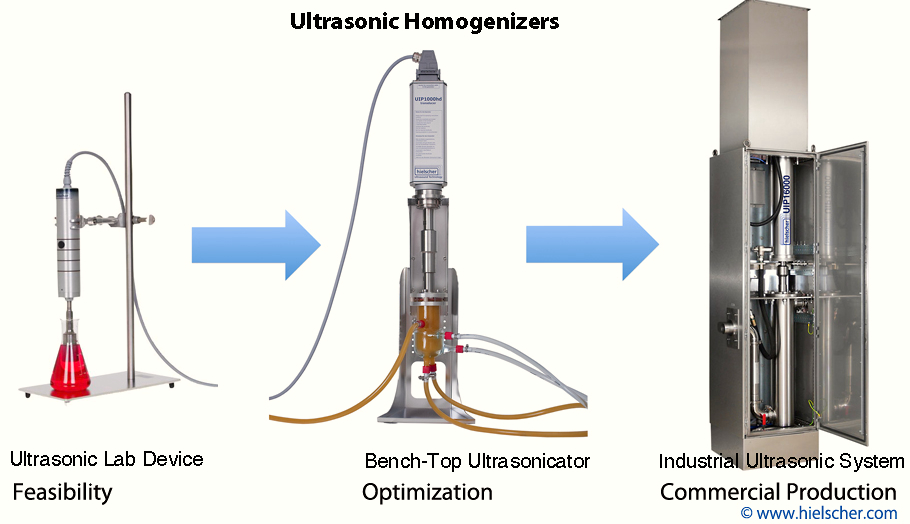
Hielscher Ultrasonics fertigt Hochleistungs-Ultraschall-Homogenisatoren vom Labor bis zum voll-kommerziellen Industriemaßstab.