超音波増感固定床リアクター
超音波処理は、主に充填された触媒層の周囲および内部における物質移動を促進することで、固定床反応器における触媒反応を向上させることができます。さらに、超音波処理により触媒表面の不動態化層やファウリング層が除去され、それによって触媒が継続的に再生されます。
超音波処理が固定床触媒反応をどのように改善するか
固定床反応器では、触媒粒子は静止したままであり、液体、気体、あるいは多相の反応物がその床内を流れます。反応性能は、多くの場合、外部からの物質移動、細孔内拡散、チャネリング、ファウリング、および熱伝達勾配によって制限されます。 超音波は、音響キャビテーション、マイクロストリーミング、せん断力、および圧力振動を発生させることで、これらの制約のいくつかを軽減することができる。

ソニケーター UIP2000hdT 固定床反応器に組み込まれている
超音波増強固定床反応の主な効果
- 外部物質移動の改善: 超音波マイクロストリーミングにより、触媒粒子周囲の停滞境界層が減少するため、反応物質が活性部位により効率的に到達できるようになる。
- 細孔へのアクセス性の向上: キャビテーションによる圧力変動や液体の動きは、反応物質の触媒細孔への浸透や、細孔からの生成物の除去を促進することができる。
- ファウリングの低減および不動態化: 超音波処理は、触媒表面から堆積物、高分子膜、コークス前駆体、その他の不動態化層を除去するのに役立ち、触媒活性をより長く維持することができます。
- 充填層におけるチャネリングの低減: マイクロ充填層に関する研究では、超音波が流動挙動を変化させ、分散を低減させることが示されており、これにより反応器がより理想的なプラグフロー挙動に近づくことが確認されている。
- 熱伝達の強化: 音響ストリーミングと乱流により、局所的な熱放散が促進され、触媒層内の高温域や低温域が低減される。
- コンバージョン率と収率の向上: 超音波処理は、物質移動と触媒へのアクセス性を向上させることで、特に反応が純粋に反応速度論的に制限されているのではなく、物質移動によって制限されている場合、反応速度、変換率、および生成物の収率を高めることができる。
液固接触の改善: 超音波処理は、触媒粒子の濡れ性を向上させる効果があり、これは特にトリクルベッド、スラリー供給、あるいは液相固定床システムにおいて有用である。
超音波処理は固定床触媒反応をどのように改善するのか?
主なメカニズムは音響キャビテーションである。超音波によって微細な気泡が生成され、それが成長して激しく崩壊する。この崩壊により、局所的なせん断、マイクロジェット、衝撃波、および激しい撹拌が生じる。 触媒表面付近では、これらの効果によって固液界面の洗浄、活性化、および再生が行われる。超音波触媒反応に関する総説では、これを超音波と固体触媒との相乗効果として説明しており、熱伝達や物質移動の向上、および触媒表面における局所的な効果が関与している。
超音波処理は、固定床反応において以下の問題が生じている場合に最も有効です:
- 触媒の細孔への拡散速度が遅く、
- 触媒粒子の濡れ性が悪い、
- 毛穴内の製品の蓄積、
- 付着や表面の不動態化、
- 物質移動制限型反応速度論、
- 多相流の分布不均一、
- 充填層を通る流体輸送。
固定床触媒
固定床(充填床と呼ばれることもある)には、通常、直径1~5mmの顆粒状の触媒ペレットが装填される。触媒ペレットは、シングルベッド、セパレートシェル、チューブの形でリアクターに充填される。触媒は主に、ニッケル、銅、オスミウム、白金、ロジウムなどの金属をベースにしている。
高出力超音波が不均一系化学反応に及ぼす効果はよく知られており、工業用の触媒プロセスで広く利用されています。固定床反応器における触媒反応も、超音波処理の恩恵を受けています。 固定床触媒に超音波を照射することで、反応性の高い表面が生成され、液相(反応物)と触媒間の物質移動が促進され、表面から不動態化被膜(酸化膜など)が除去される。
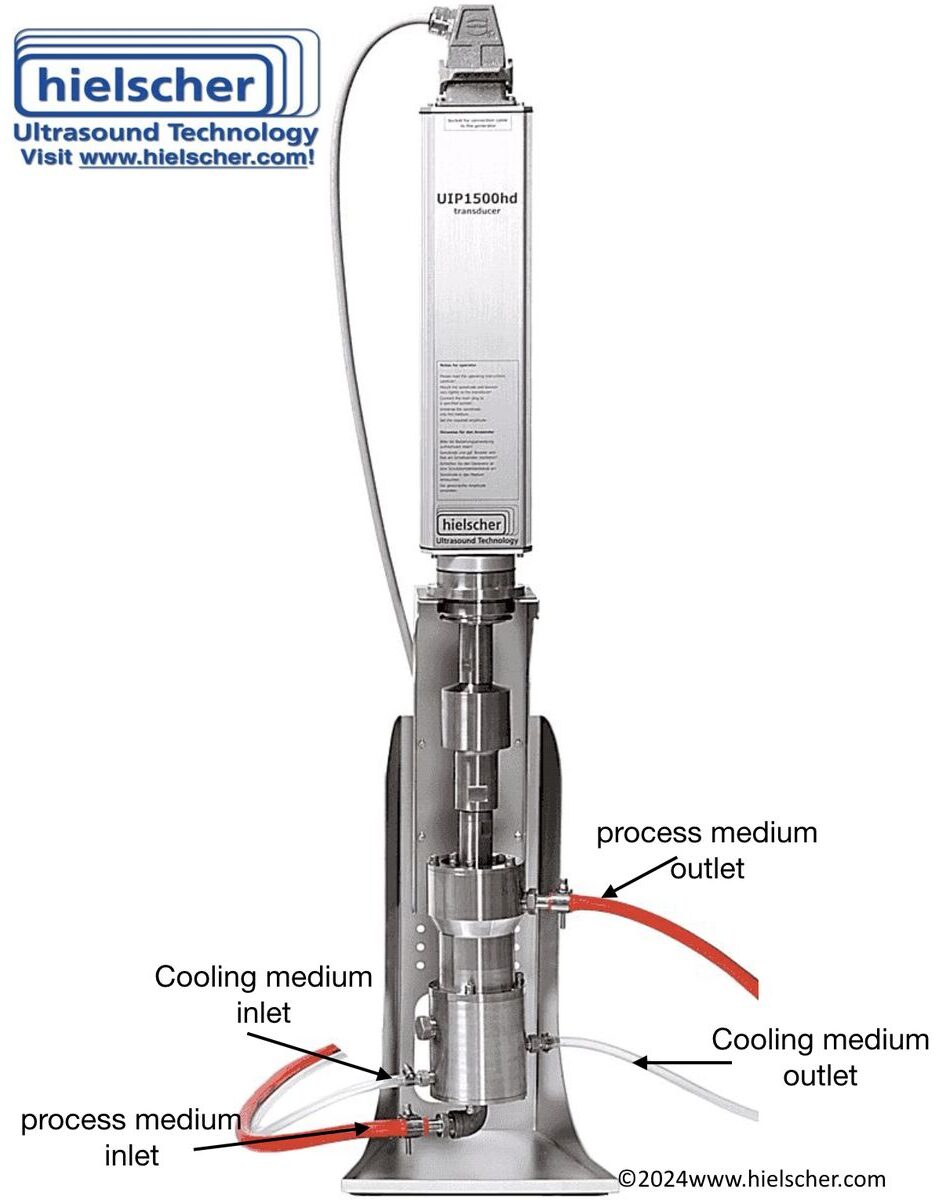
使用済み触媒の再活性化およびリサイクル用フローセル付きソニケーター UIP1500hdT
- 効率の向上
- 反応性の向上
- コンバージョン率の向上
- 高い利回り
- 触媒のリサイクル
超音波による触媒反応の促進
超音波による混合と撹拌は、反応物と触媒粒子の接触を改善し、反応性の高い表面を作り、化学反応を開始および/または促進する。
超音波による触媒調製は、結晶化挙動、分散/脱凝集、表面特性の変化を引き起こす可能性がある。さらに、不動態化表面層の除去、分散性の向上、物質移動の増加などにより、予備成形触媒の特性に影響を与えることができる。
超音波によって反応が促進された例
- 水素化反応用Ni触媒の超音波前処理
- 酒石酸でソニック処理したRaney Ni触媒は、非常に高いエナンチオ選択性を示す。
- 超音波合成によるフィッシャー・トロプシュ触媒
- 反応性を高めるソノケミカル処理アモルファス粉末触媒
- アモルファス金属粉末のソノ合成
超音波触媒回収
固定床反応器における固体触媒は、一般的に球状ビーズ、ペレット、押出成形品、あるいは円筒状粒子の形態で用いられる。化学反応の進行に伴い、触媒表面はファウリング層によって不動態化されることがあり、その結果、時間の経過とともに触媒活性や選択性が徐々に低下する。
触媒の失活にかかる時間は、場合によって大きく異なります。例えば、クラッキング触媒の失活は数秒以内に起こることもありますが、アンモニア合成に使用される鉄触媒は5~10年間も活性を維持することがあります。とはいえ、事実上すべての触媒反応において、触媒の失活が観察されます。失活のメカニズムは様々ですが – 化学的、機械的、および熱的な劣化を含む – ファウリングは、触媒の劣化を引き起こす最も一般的な原因の一つである。
ファウリングとは、流体相中の物質が触媒表面やその細孔内に物理的に堆積することを指します。これらの堆積物は反応サイトを塞ぎ、細孔へのアクセスを阻害し、反応物と活性触媒表面との接触を減少させます。 コークスや炭素質堆積物による触媒のファウリングは、多くの場合、急速に進行するプロセスですが、超音波再生処理によって部分的または完全に回復させることができるケースも少なくありません。
超音波キャビテーションは、触媒表面から不動態化ファウリング層を除去するための効果的な手法である。 超音波処理中、高強度の超音波によって液体媒体内にキャビテーション気泡が発生します。これらの気泡が崩壊すると、局所的なせん断力、マイクロジェット、衝撃波、および激しい微細混合が生じます。これらの作用により、触媒表面から付着残留物が剥離され、閉塞した細孔が再開通し、活性部位へのアクセスが回復します。
超音波による触媒の回収は、通常、触媒粒子を脱イオン水や適切な溶媒などの液体に分散させ、その懸濁液を制御された超音波処理にさらすことで行われます。このプロセスにより、白金/シリカ繊維触媒、ニッケル触媒、その他の担持金属触媒など、さまざまな触媒材料からファウリング残留物を除去することができます。 その結果、超音波処理は触媒の再生、触媒寿命の延長、およびプロセスの持続可能性の向上に寄与することができます。
使用済み触媒の超音波再生について詳しく知りたい方は、こちらをクリックしてください!
化学反応器への組み込み用超音波処理装置
 Hielscher Ultrasonics社は、固定床反応器にパワー超音波を組み込むための様々な超音波プロセッサーとバリエーションを提供しています。固定床反応器に設置するための様々な超音波システムが利用可能です。より複雑なリアクタータイプには カスタマイズ超音波 ソリューションを提供する。
さまざまな反応器設計において、超音波処理が化学反応をどのように促進するのか、その仕組みをご覧ください!
超音波処理が化学反応に及ぼす影響を検証したい場合は、テルトウにある当社の超音波プロセス研究所およびテクニカルセンターへぜひお越しください!
今すぐご連絡ください!お客様の化学プロセスの超音波増強について、喜んでご相談させていただきます!
下の表は、Hielscher社製ソニケーターの処理能力の目安です:

超音波フローシステム
- 水素化
- アルシレーション
- シアン化
- エーテル化
- エステル化
- 重合
- アリル化
- ブロミネーション
(例:Ziegler-Natta触媒、メタロセン)
文献・参考文献
- Francisco J. Navarro-Brull; Andrew R. Teixeira; Jisong Zhang; Roberto Gómez; Klavs F. Jensen (2018): Reduction of Dispersion in Ultrasonically-Enhanced Micropacked Beds. Industrial & Engineering Chemistry Research 57, 1; 2018. 122–128.
- Yasuo Tanaka (2002): A dual purpose packed-bed reactor for biogas scrubbing and methane-dependent water quality improvement applying to a wastewater treatment system consisting of UASB reactor and trickling filter. Bioresource Technology, Volume 84, Issue 1, 2002. 21-28.
- Argyle, M.D.; Bartholomew, C.H. (2015): Heterogeneous Catalyst Deactivation and Regeneration: A Review. Catalysts 2015, 5, 145-269.
- Oza, R.; Patel, S. (2012): Recovery of Nickel from Spent Ni/Al2O3 Catalysts using Acid Leaching, Chelation and Ultrasonication. Research Journal of Recent Sciences Vol. 1; 2012. 434-443.
- Sana, S.; Rajanna, K.Ch.; Reddy, K.R.; Bhooshan, M.; Venkateswarlu, M.; Kumar, M.S.; Uppalaiah, K. (2012): Ultrasonically Assisted Regioselective Nitration of Aromatic Compounds in Presence of Certain Group V and VI Metal Salts. Green and Sustainable Chemistry, 2012, 2, 97-111.
- Suslick, K. S.; Skrabalak, S. E. (2008): “Sonocatalysis” In: Handbook of Heterogeneous Catalysis, vol. 4; Ertl, G.; Knözinger, H.; Schüth, F.; Weitkamp, J., (Eds.). Wiley-VCH: Weinheim, 2008. 2006-2017.
知っておくべき事実
超音波キャビテーションとは?
超音波キャビテーションとは、高強度の超音波が照射された液体中で、微細な蒸気または気体の気泡が形成・成長し、激しく崩壊する現象である。気泡の崩壊時には、高温、高圧、衝撃波、マイクロジェット、および激しいせん断力など、極めて短時間ながら局所的に極端な状態が生じることがある。
ソノケミストリーとは何か?
超音波化学とは、こうした超音波キャビテーション効果を利用して、化学的および物理化学的プロセスを開始、促進、あるいは改変する技術である。キャビテーションは、混合、物質移動、乳化、粒子分散、触媒表面の洗浄、そして場合によってはラジカルの生成を促進するため、特に液相系において有用である。 その結果、ソノケミストリーは、不均一系触媒反応、酸化、抽出、重合、結晶化、ナノ材料の合成などの反応を促進するために利用されている。
「不均一系触媒反応」とは何ですか?
化学の分野では、不均一触媒反応とは、触媒と反応物の相が互いに異なるタイプの触媒反応を指す。不均一系化学の文脈では、相は固体、液体、気体を区別するために使われるだけでなく、例えば油と水のような混じり合わない液体も指す。
不均一系反応では、1つ以上の反応物が界面、例えば固体触媒の表面で化学変化を起こす。
反応速度は、反応物の濃度、粒子径、温度、触媒およびその他の要因に依存する。
反応剤濃度: 一般に、反応物の濃度が高くなると、界面が大きくなり、反応物粒子間の相間移動が大きくなるため、反応速度が増大する。
粒子径: 反応物の一つが固体粒子である場合、反応速度式は濃度のみを示し、固体は異なる相にあるため濃度を持つことができないため、反応速度式に表示することはできない。しかし、固体の粒子径は、相間移動に利用可能な表面積により反応速度に影響を与える。
反応温度: 温度はアレニウスの式によって速度定数に関係する: k = Ae-Ea/RT
Eaは活性化エネルギー、Rは普遍気体定数、Tは絶対温度(ケルビン)。Aはアレニウス(周波数)因子である。-Ea/RT は、活性化エネルギーEa より大きいエネルギーを持つ曲線の下の粒子の数を与える。
触媒: ほとんどの場合、触媒を用いると活性化エネルギーが少なくて済むため、反応がより速く起こる。不均一系触媒は、反応が起こる鋳型となる表面を提供し、一方、均一系触媒は中間生成物を形成し、メカニズムの次の段階で触媒を放出する。
その他の要因 光のような他の要因は、特定の反応(光化学)に影響を与えることができる。
触媒の失活にはどのような種類がありますか?
- 触媒毒とは、触媒サイトに化学種が強く吸着し、触媒反応を阻害することを指す。被毒には可逆的なものと不可逆的なものがある。
- ファウリングとは、触媒の機械的劣化のことで、触媒表面や触媒細孔に液相からの化学種が堆積する。
- 熱劣化とシンタリングは、触媒表面積、担体面積、活性相-担体反応の損失をもたらす。
- 蒸気形成とは、気相が触媒相と反応して揮発性化合物を生成する化学分解形態を意味する。
- 気相-固相反応および固相-固相反応は、触媒の化学的不活性化をもたらす。蒸気、担体、または促進剤が触媒と反応し、不活性相が生成される。
- 触媒粒子の磨耗または破砕は、機械的磨耗による触媒材料の損失をもたらす。触媒粒子の機械的な破砕により、触媒の内部表面積が失われる。
超音波処理によって使用済み触媒をどのように再活性化できるか、詳細はこちらをご覧ください!
求核置換反応とは何ですか?
求核置換反応は、有機(および無機)化学における基本的な反応の一種であり、この反応では、求核剤がルイス塩基(電子対供与体)として、有機錯体と選択的に結合するか、あるいは脱離基の代わりに正電荷または部分正電荷 (+)電荷を持つ原子または原子団に攻撃し、脱離基と置き換える。電子対受容体である正または部分的に正の電荷を持つ原子は、求電子剤と呼ばれる。求電子剤と脱離基からなる分子全体は、通常、基質と呼ばれる。
求核置換は2つの異なる経路で起こる。 – SN1とSN2 反応である。どの形式の反応機構か – sN1 または SN2 – が起こるかどうかは、化合物の構造、求核剤の種類、溶媒に依存する。