Hielscher Ultrasonics
あなたのプロセスについて喜んでご相談に応じます。
お電話ください: +49 3328 437-420
メールでのお問い合わせ [email protected]

Reactivation of Spent Catalyst Using Sonication

The reactivation of spent catalysts has become an important topic in sustainable chemical processing, refinery operations, petrochemistry, environmental catalysis, and circular-economy strategies. Catalysts are essential for efficient reactions, but during industrial use they gradually lose activity due to coke deposition, metal poisoning, fouling, pore blockage, sintering, surface passivation, or the accumulation of reaction by-products. Replacing spent catalysts is costly and resource-intensive, while disposal can create environmental burdens. Ultrasonic regeneration of spent catalysts is a simple yet highly efficient technique for reactivating catalysts that have been passivated, poisoned, or fouled during use.

Reactivation of Spent Catalyst Using Sonication

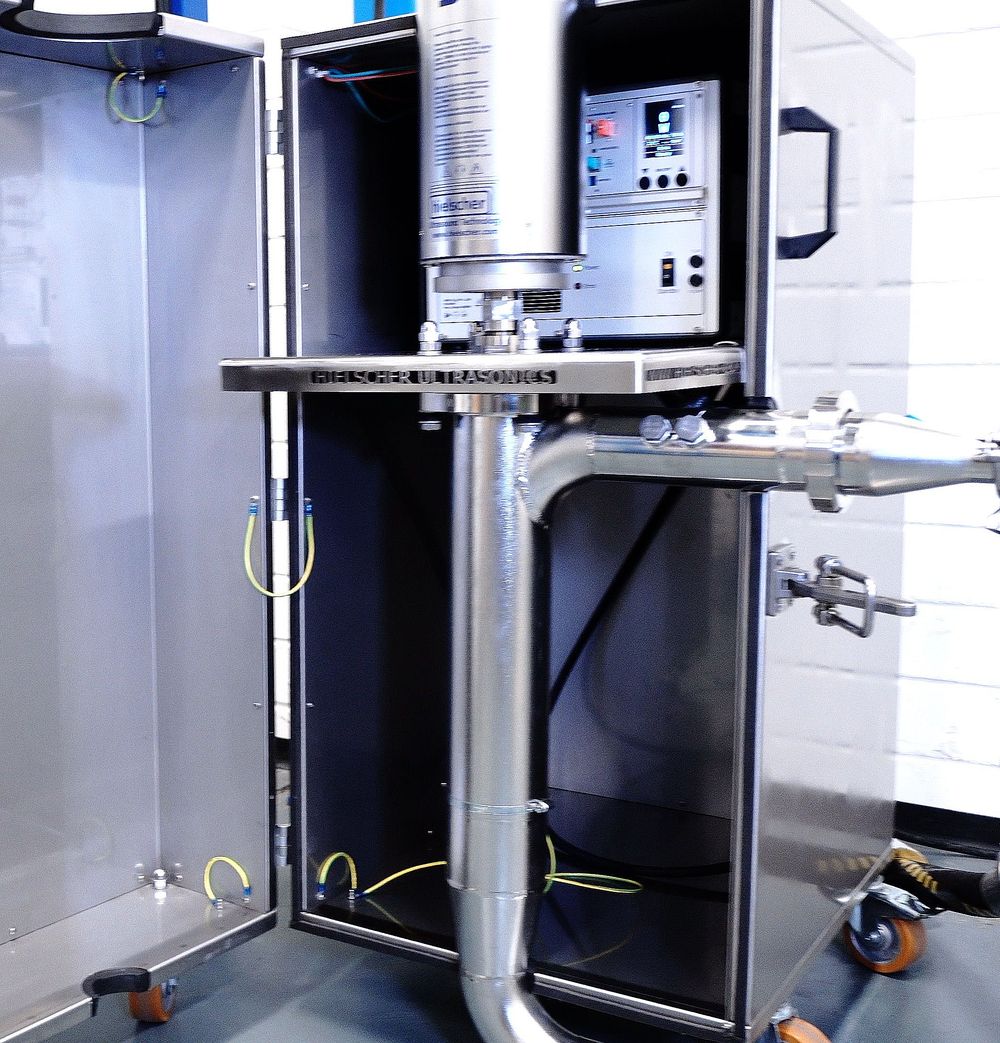
Hielscher industrial sonicator for inline processing of spent catalysts: Ultrasonic cavitation regenerates and refreshes spent catalysts by removing passivating layers, renewing particle modifications and reactivating and enlarging catalyst surfaces.Sonication, also known as ultrasonic treatment, offers a scientifically relevant and technically attractive method for regenerating and reactivating spent catalysts. By applying high-power ultrasound to catalyst suspensions, intense acoustic cavitation is generated in the liquid medium. The collapse of cavitation bubbles produces localized microjets, shockwaves, shear forces, and highly turbulent micro-mixing. These effects can clean catalyst surfaces, dislodge deposits, improve reagent access to blocked pores, and support chemical leaching or oxidative regeneration processes.
Recent research on spent fluid catalytic cracking catalysts has shown that ultrasonic-assisted regeneration can improve the removal of harmful metals while helping to preserve the zeolite framework and catalyst particle microstructure. Studies have also reported ultrasound-enhanced recovery of metals such as nickel from spent catalysts, with sonication accelerating extraction through the physical and chemical effects of acoustic cavitation.

資料請求


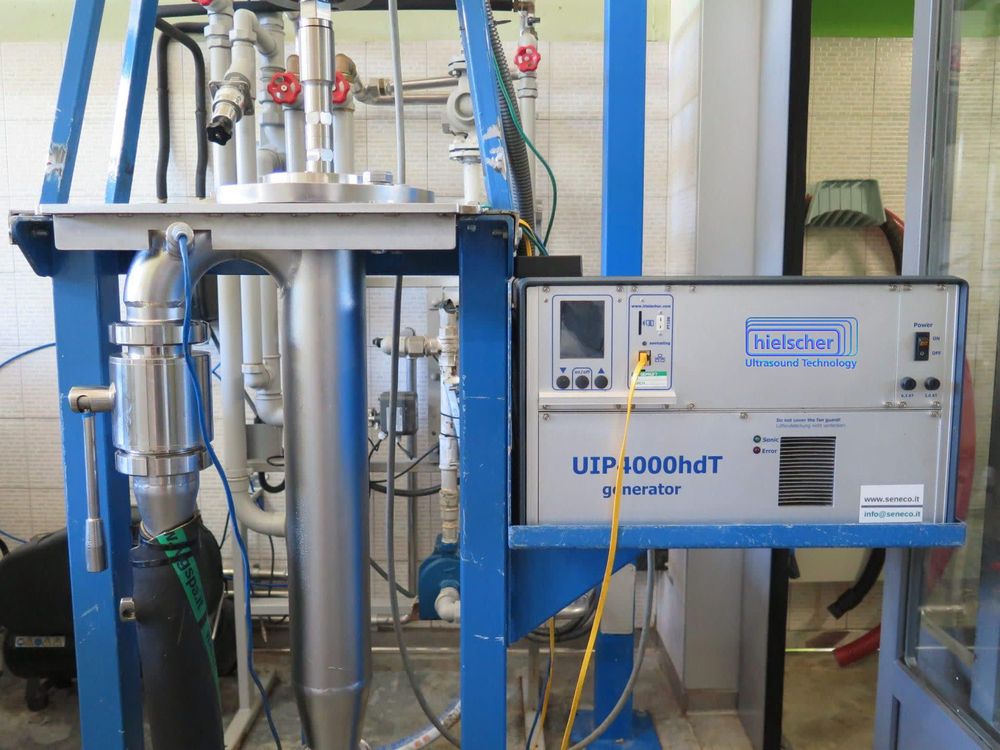
Inline sonicator UIP4000hdT for the industrial regeneration and depassivation of spent catalysts

Inline sonicator UIP4000hdT for the industrial regeneration of spent catalysts

Why Sonication Is Effective for Spent Catalyst Reactivation

The scientific importance of sonication lies in its ability to intensify heterogeneous solid-liquid processes. Catalyst regeneration is often limited by poor mass transfer, blocked pores, passivated surfaces, and slow diffusion of cleaning or leaching agents into the catalyst structure. Ultrasound addresses these limitations through mechanical and physicochemical mechanisms.

Key advantages of sonication include:

  • Removal of surface deposits: Ultrasonic cavitation can help detach coke, oxide films, fouling layers, and passivating coatings from catalyst surfaces.
  • Opening of blocked pores: Acoustic shear and microstreaming can improve access to internal pore networks, enhancing the effectiveness of washing, leaching, or oxidative treatment.
  • 物質移動の改善: Sonication increases liquid-solid contact and accelerates diffusion-controlled regeneration steps.
  • Particle deagglomeration: Ultrasonic dispersion breaks up catalyst agglomerates, exposing more active surface area.
  • Enhanced leaching performance: In metal-contaminated spent catalysts, ultrasound can intensify acid leaching and metal extraction.
  • Shorter processing times: By improving cleaning and reaction kinetics, sonication can reduce the time required for catalyst regeneration compared with conventional stirring.
  • Support for greener processing: More efficient regeneration helps extend catalyst life, reduce waste, lower raw-material demand, and improve the economics of catalyst reuse.
  • The relevance of ultrasound is not limited to physical cleaning. In sonochemistry, cavitation can create extreme local conditions and reactive environments, which can assist oxidation, surface modification, or chemical extraction steps. Thereby, ultrasonics can enlarge the active surface of catalysts, reduce fouling of solid dispersed catalysts and contribute to cleaning during catalyst recycling processes.

    この工業用グレードの1000ワットプローブ式ソニケーターは、卓越した効率で混合とホモジナイゼーションを実現します。UIP1000hdTは、粉砕、ナノエマルション、ナノ分散などの難しいアプリケーションに最適で、均一な粒子径の減少、エマルションの混合強化、粉体や液体の徹底的な分散を実現します。医薬品、化粧品、化学薬品など様々な産業において、処理時間の短縮、スケーラブルな結果、信頼性の高い性能を実感してください。超音波技術の力でプロセスを最適化しましょう!

    プローブ型ソニケーターUIP1000hdTでパワー超音波と超音波ミキシングをご活用ください!

    ビデオのサムネイル

    Industrial Relevance: From Catalyst Cleaning to Functional Reactivation

    Spent catalyst reactivation is more than a maintenance operation. It is a scientifically significant route to improving catalyst lifecycle performance. A regenerated catalyst must not only look clean; it must recover meaningful catalytic function. This requires restoration of accessible active sites, surface acidity or basicity, porosity, dispersion, and reaction performance.
     

    Ultrasonic treatment is relevant because it acts at several critical levels of catalyst regeneration:

    Surface: It removes passivating layers and exposes active sites.
    Pores: It supports the reopening of blocked mesopores and micropores.
    Particles: It disperses agglomerates and improves suspension homogeneity.
    Process: It intensifies liquid-solid contact and improves the efficiency of chemical regeneration media.
    持続可能性: It supports reuse, metal recovery, and waste minimization.


    このビデオでは、パージ可能なキャビネット内でインライン動作する2キロワットの超音波システムをご紹介します。Hielscher社は、化学工業、製薬、化粧品、石油化学プロセス、溶剤ベースの抽出プロセスなど、ほとんどすべての産業に超音波装置を供給しています。このパージ可能なステンレス製キャビネットは、危険区域での操作用に設計されています。このため、可燃性ガスや蒸気がキャビネット内に入るのを防ぐため、密閉キャビネットを窒素や新鮮な空気でパージすることができます。

    危険区域設置用パージ可能キャビネット入り1000ワット超音波発生装置 x 2台

    ビデオのサムネイル


    超音波浸漬ホモジナイザー UP400St - 浸漬ホモジナイザー用400W強力超音波プローブA recent study on ultrasonic and oxidation regeneration of spent Fluid Catalytic Cracking (FCC) catalysts reported that ultrasound-assisted advanced oxidation processes increased catalyst acidity and enabled the regenerated catalyst to be used in glycerol monostearate synthesis. (cf. Anggoro et al, 2026)
    Another study demonstrated the immersion in dilute sulfuric acid and subsequent ultrasonically-assisted leaching in a mixture of sulfuric acid and oxalic acid improves the removal of harmful metals in spent FCC catalyst significantly without destroying the zeolite Y framework and the microstructure of spent catalyst particle. Compared with conventional leaching, ultrasonic assisted leaching only needs 1/4 of the time to achieve much the same harmful metal removal effect and has superior advantages in retaining the integrity of particles. (cf. Wang et al, 2021).

    Sonication in Catalyst Recycling and Metal Recovery

    Spent catalysts often contain valuable metals such as nickel, vanadium, molybdenum, cobalt, platinum-group metals, or rare metals, depending on the catalyst type and industrial application. Sonication can support both catalyst reactivation and resource recovery. In ultrasonic-assisted leaching, cavitation improves penetration of the leaching solution, removes boundary layers around particles, and exposes fresh surfaces for reaction.

     
    This makes ultrasound particularly interesting for:

    • Refinery spent catalysts
    • FCC catalysts
    • Hydrotreating and hydrodesulfurization catalysts
    • フィッシャー・トロプシュ触媒
    • Supported metal catalysts
    • Environmental catalysts
    • Activated carbon and adsorbent-catalyst systems
    • Metal-contaminated or fouled heterogeneous catalysts
    超音波処理中の温度を正確に維持する冷却ジャケットを装備したフローセル付きラボ用超音波ホモジナイザー UP400St。

    ソニケーターUP400ST フローセルのセットアップ

    Technical Advantages of Hielscher Sonicators for Spent Catalyst Recycling

    Hielscher high-power sonicators are well suited for the recycling and reactivation of spent catalysts because they deliver controlled, reproducible, and scalable ultrasonic energy into liquid-solid suspensions. For catalyst regeneration, process reliability is essential: amplitude, power input, residence time, flow rate, temperature, pressure, and reactor geometry must be adjustable and reproducible from laboratory trials to industrial throughput.
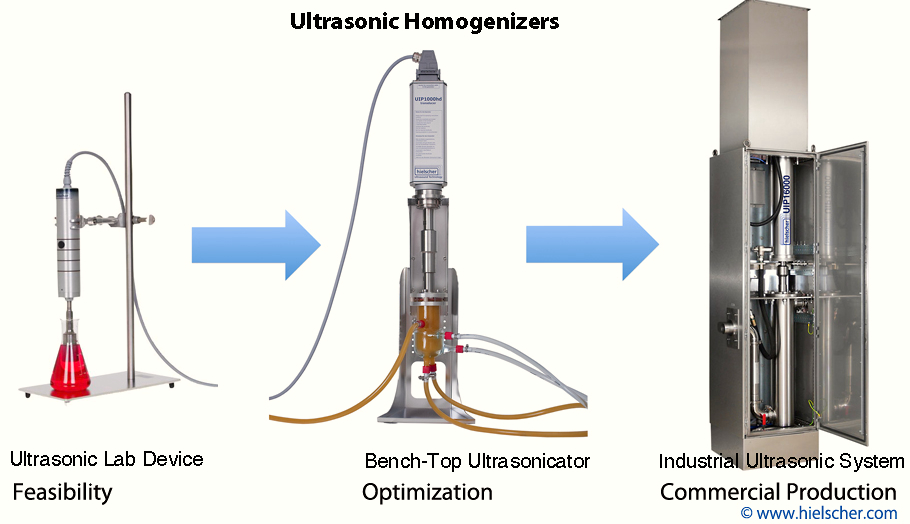
    Hielscher offers ultrasonic systems from compact laboratory devices to industrial units, including probe-type sonicators and flow-through ultrasonic reactors for continuous processing. Hielscher sonicators range from small lab units to industrial processors such as 500 W, 1,000 W, 2,000 W, 4,000 W, 6,000 W, and 16,000 W devices, enabling scale-up from feasibility testing to production-level catalyst treatment.

     
    For spent catalyst recycling, the technical advantages include:

    1. High-intensity probe sonication for effective cavitation in abrasive catalyst slurries
    2. Flow-through reactor options for continuous regeneration, leaching, washing, or dispersion processes
    3. Precise amplitude control for reproducible process conditions
    4. Scalable equipment architecture from lab screening to industrial catalyst recycling
    5. Robust industrial design for demanding chemical-processing environments
    6. Compatibility with sonochemical processes such as acid leaching, oxidative cleaning, dispersion, and surface activation

     
    These features make Hielscher sonicators a practical technology platform for companies and research institutions developing advanced catalyst regeneration protocols, whether the goal is to restore catalytic activity, recover valuable metals, reduce disposal volume, or improve the sustainability of catalytic production.


    Sonication is an efficient technique to regenerate and reactivate spent catalysts. Ultrasonic cavitation removes passivating layers (catalyst fouling and poisoning) and increases the active surface of solid catalysts

    Ultrasonic homogenizer UIP2000hdT for catalyst regeneration in a flow-through process


    A Sustainable Technology for the Circular Catalyst Economy

    As industries move toward cleaner production and resource efficiency, spent catalyst management is becoming a strategic priority. Sonication supports this transition by making catalyst reactivation faster, more efficient, and more technically controllable. Instead of treating spent catalysts as waste, ultrasonic processing helps transform them into reusable materials or valuable secondary raw-material sources.
    The industrial relevance of sonication lies in its ability to combine mechanical activation, surface cleaning, dispersion, and mass-transfer intensification in one process. For industrial users, the advantage is equally clear: improved catalyst reuse, reduced raw-material consumption, lower waste generation, and potentially lower operating costs.

    Take Advantage of Ultrasonic Catalyst Regeneration

    ジャケット付き、加圧可能な超音波フローセルリアクター(マンノサーモソニケーション用Reactivation of spent catalysts using sonication is an advanced approach to catalyst recycling with strong scientific and industrial potential. Acoustic cavitation enables the removal of deposits, the reopening of blocked pores, the improvement of mass transfer, and the intensification of chemical regeneration steps. When combined with suitable leaching, oxidation, washing, or thermal strategies, ultrasonic treatment can contribute to restoring catalyst activity and recovering valuable metals.
    With scalable high-power sonicators and industrial ultrasonic flow reactors, Hielscher provides the technical foundation for developing reliable, reproducible, and efficient spent catalyst regeneration processes. As catalyst recycling becomes increasingly important for sustainable chemistry and circular industrial production, sonication is emerging as a powerful tool for extending catalyst lifetime and improving resource efficiency.

    下の表は、超音波処理装置の処理能力の目安です:

    バッチ量 流量 推奨デバイス
    1〜500mL 10~200mL/分 UP100H
    10〜2000mL 20~400mL/分 UP200Ht, UP400ST
    0.1~20L 0.2~4L/分 UIP2000hdT
    10~100L 2~10L/分 UIP4000hdT
    15~150L 3~15L/分 UIP6000hdT
    n.a. 10~100L/分 UIP16000hdT
    n.a. より大きい クラスタ UIP16000hdT

    詳細はお問い合わせください。

    超音波プロセッサ、アプリケーション、価格に関する追加情報をご希望の方は、以下のフォームをご利用ください。お客様のプロセスについてご相談させていただき、ご要望に合った超音波システムをご提案させていただきます!


    デザイン、製造、コンサルティング – 品質 ドイツ製

    Hielscher社の超音波装置は、その最高の品質と設計基準でよく知られています。頑丈で操作が簡単なため、産業設備にスムーズに組み込むことができます。過酷な条件や厳しい環境でも、Hielscherの超音波装置は容易に対応できます。

    Hielscher Ultrasonics社は、ISO認証取得企業であり、最先端の技術と使いやすさを特徴とする高性能超音波振動子に特に重点を置いています。もちろん、Hielscherの超音波装置はCEに準拠しており、UL、CSA、RoHsの要件を満たしています。

    超音波高剪断ホモジナイザーは、実験室、ベンチトップ、パイロットおよび工業処理で使用されます。

    Hielscher Ultrasonics社は、ラボスケール、パイロットスケール、工業スケールの混合アプリケーション、分散、乳化、抽出用の高性能超音波ホモジナイザーを製造しています。


    よくある質問

    What is a Catalyst?

    A catalyst is a substance that increases the rate of a chemical reaction by lowering the activation energy, without being consumed stoichiometrically in the reaction. It provides an alternative reaction pathway and can often be reused.

    What is a Spent Catalyst?

    A spent catalyst is a catalyst that has lost part or all of its catalytic activity, selectivity, or stability after use. Deactivation may result from fouling, coke deposition, poisoning, sintering, leaching, or structural degradation.

    What is a Spent FCC Catalyst?

    A spent FCC catalyst is a deactivated catalyst from the fluid catalytic cracking process in petroleum refining. FCC catalysts are typically zeolite-based materials used to crack heavy hydrocarbons into lighter products such as gasoline, olefins, and LPG. They become spent due to coke formation, metal contamination, hydrothermal degradation, and loss of acidity or surface area.

    How do Catalysts get Consumed?

    Catalysts are not consumed in the ideal stoichiometric sense, but they can be deactivated or physically lost during operation. Common mechanisms include:

    • Poisoning: irreversible adsorption of impurities on active sites.
    • Fouling/coking: deposition of carbonaceous material blocks pores and active sites.
    • Sintering: high temperatures cause active particles to agglomerate, reducing surface area.
    • Leaching: active components dissolve into the reaction medium.
    • Attrition: mechanical abrasion breaks catalyst particles, especially in fluidized beds.
    • Phase transformation: the catalyst structure changes into a less active form.


    What are the Four Types of Catalysts?

    The four commonly distinguished types are:

  • Homogeneous catalysts: catalyst and reactants are in the same phase, usually liquid.
  • Heterogeneous catalysts: catalyst and reactants are in different phases, often a solid catalyst with gas or liquid reactants.
  • Biocatalysts: enzymes or whole cells catalyze biochemical reactions.
  • Electrocatalysts: catalysts accelerate electrochemical reactions at electrode surfaces.
  •  

    文献・参考文献

    なぜHielscher Ultrasonicsなのか?

    • 高性能
    • 最先端技術
    • 信頼性 & 堅牢性
    • 調整可能で正確なプロセス制御
    • バッチ & インライン
    • どのボリュームに対しても
    • インテリジェント・ソフトウェア
    • スマート機能(プログラマブル、データ・プロトコル、リモート・コントロールなど)
    • 操作が簡単で安全
    • ローメンテナンス
    • CIP(クリーンインプレイス)

    実現可能性試験からプロセスの最適化、最適なソニケーターによる産業用設置まで、Hielscher Ultrasonicsは超音波プロセスを成功に導くパートナーです!

    Hielscher Ultrasonics社は、高性能の超音波ホモジナイザーを製造しています。 ラブ への 工業用サイズ。

    あなたのプロセスについて喜んでご相談に応じます。