अल्ट्रासोनिक रूप से तीव्र फिक्स्ड बेड रिएक्टर
सोनिकेशन मुख्य रूप से पैक किए गए उत्प्रेरक बिस्तर के चारों ओर और अंदर द्रव्यमान स्थानांतरण को तीव्र करके फिक्स्ड-बेड रिएक्टर्स में उत्प्रेरक प्रतिक्रियाओं को सुधार सकता है। इसके अतिरिक्त, सोनिकेशन उत्प्रेरक सतह से निष्क्रिय और जमे हुए परतों को हटाता है, इस प्रकार उत्प्रेरक को लगातार पुनर्जीवित करता है।
फिक्स्ड-बेड उत्प्रेरकता में सोनिकेशन कैसे सुधार करता है
एक फिक्स्ड-बेड रिएक्टर में, उत्प्रेरक कण स्थिर रहते हैं जबकि तरल, गैस, या बहु-फेज़ अभिक्रिया सामग्री बिस्तर के माध्यम से प्रवाहित होती हैं। प्रतिक्रिया प्रदर्शन अक्सर बाहरी द्रव्य संवहन, छिद्र प्रसार, चैनलिंग, गंदगी जमाव और ताप-संवहन ढालों द्वारा सीमित होता है। अल्ट्रासाउंड इन सीमाओं में से कई को ध्वनिक कैविटेशन, माइक्रोस्ट्रीमिंग, कटाव बलों, और दबाव कंपन उत्पन्न करके कम कर सकता है।

सोनिकेटर UIP2000hdT फिक्स्ड-बेड रिएक्टर में एकीकृत
अल्ट्रासोनिक रूप से तीव्र फिक्स्ड-बेड अभिक्रियाओं के प्रमुख प्रभाव
- सुधरी हुई बाहरी द्रव्य संवहन: अल्ट्रासोनिक माइक्रोस्ट्रीमिंग उत्प्रेरक कणों के चारों ओर स्थिर सीमा परत को कम करता है, जिससे अभिक्रिया सामग्री सक्रिय स्थलों तक अधिक कुशलता से पहुँच सकती हैं।
- छिद्र पहुंच में वृद्धि: काविटेशन-प्रेरित दबाव परिवर्तन और तरल गति प्रतिक्रिया पदार्थों को उत्प्रेरक के छिद्रों में घुसने और उत्पादों को छिद्रों से हटाने में सुधार कर सकते हैं।
- जमे रहना और निष्क्रियकरण कम करना: स्नान ध्वनि (Sonication) जमा, पॉलिमर फिल्में, कोक पूर्वजनक या उत्प्रेरक सतहों से अन्य निष्क्रियकरण परतों को हटाने में मदद कर सकती है, जिससे उत्प्रेरक गतिविधि लंबे समय तक बनी रहती है।
- पैक्ड बेड में चैनलिंग कम करना: सूक्ष्म-पैक्ड-बेड अध्ययनों में, अल्ट्रासाउंड को प्रवाह व्यवहार को बदलने और विसरण को कम करने के लिए दिखाया गया है, जिससे रिएक्टर अधिक आदर्श प्लग-फ्लो व्यवहार के करीब पहुँचता है।
- उन्नत ताप स्थानांतरण: ध्वनिक प्रवाह और उथल-पुथल स्थानीय गर्मी अपव्यय को सुधारते हैं, जिससे उत्प्रेरक बिस्तर में गर्म स्थान या ठंडे क्षेत्र कम होते हैं।
- उच्च रूपांतरण और उत्पादन दर: द्रव्यमान स्थानांतरण और उत्प्रेरक की सुलभता में सुधार करके, सोनिकेशन प्रतिक्रिया की दर, रूपांतरण और उत्पाद की उपज बढ़ा सकता है, विशेष रूप से जब प्रतिक्रिया केवल गतिशील विश्लेषित सीमा में नहीं बल्कि परिवहन-सीमित होती है।
तरल-ठोस संपर्क में सुधार: अल्ट्रासाउंड उत्प्रेरक कणों की बेहतर तरलाई को बढ़ावा देता है, जो विशेष रूप से ट्रिकल-बेड, स्लरी-फीडेड, या तरल-चरण फिक्स्ड-बेड सिस्टम में उपयोगी है।
सोनिकेशन फिक्स्ड बेड उत्प्रेरण को कैसे सुधारता है?
मुख्य तंत्र ध्वनिक कैविटेशन है: अल्ट्रासोनिक तरंगें सूक्ष्म बुदबुदों का निर्माण करती हैं जो बढ़ते और हिंसक रूप से ध्वस्त होते हैं। उनका ध्वस्त होना स्थानीय कतरन, सूक्ष्म जेट, शॉकवेव और तीव्र मिश्रण उत्पन्न करता है। उत्प्रेरक सतहों के पास, ये प्रभाव ठोस-द्रव अंतरफलक को साफ, सक्रिय और ताज़ा कर सकते हैं। सोनोकैटालिसिस की समीक्षाएँ इसे अल्ट्रासाउंड और ठोस उत्प्रेरकों के बीच की एक सिनर्जी के रूप में वर्णित करती हैं, जिसमें बेहतर ऊष्मा और द्रव्यमान का स्थानांतरण और उत्प्रेरक सतहों पर स्थानीय प्रभाव शामिल हैं।
फिक्स्ड-बेड प्रतिक्रिया में सबसे लाभकारी होने पर सॉनीकेशन तब होता है जब:
- उत्प्रेरक छिद्रों में धीमी प्रसार,
- उत्प्रेरक कणों की खराब कोटिंग,
- छिद्रों के अंदर उत्पाद का संचय,
- फौलिंग या सतह निष्क्रियकरण,
- द्रव्यमान-स्थानांतरण-सीमित गति विज्ञान,
- बहु-चरण प्रवाह का असमान वितरण,
- पैक्ड बेड के माध्यम से चैनलिंग.
फिक्स्ड बेड कैटेलिस्ट्स
फिक्स्ड बेड (कभी-कभी पैक्ड बेड भी कहा जाता है) आमतौर पर उत्प्रेरक छर्रों से भरे होते हैं, जो आमतौर पर 1-5 मिमी से व्यास के साथ दाने होते हैं। उन्हें रिएक्टर में सिंगल बेड के रूप में, अलग-अलग गोले के रूप में या ट्यूबों में लोड किया जा सकता है। उत्प्रेरक ज्यादातर निकल, तांबा, ऑस्मियम, प्लैटिनम और रोडियम जैसी धातुओं पर आधारित होते हैं।
सशक्त अल्ट्रासाउंड का असमान रासायनिक प्रतिक्रियाओं पर प्रभाव अच्छी तरह से ज्ञात है और औद्योगिक उत्प्रेरक प्रक्रियाओं में व्यापक रूप से उपयोग किया जाता है। फिक्स्ड बेड रिएक्टर में उत्प्रेरक प्रतिक्रियाओं को सोनिकेशन उपचार से भी लाभ मिलता है। फिक्स्ड बेड उत्प्रेरक का अल्ट्रासॉनिक विकिरण अत्यधिक प्रतिक्रियाशील सतहें उत्पन्न करता है, द्रव चरण (प्रतिक्रियाशील पदार्थ) और उत्प्रेरक के बीच द्रव द्रव्य परिवहन को बढ़ाता है, और सतह से निष्क्रिय परतों (जैसे ऑक्साइड परतें) को हटा देता है।
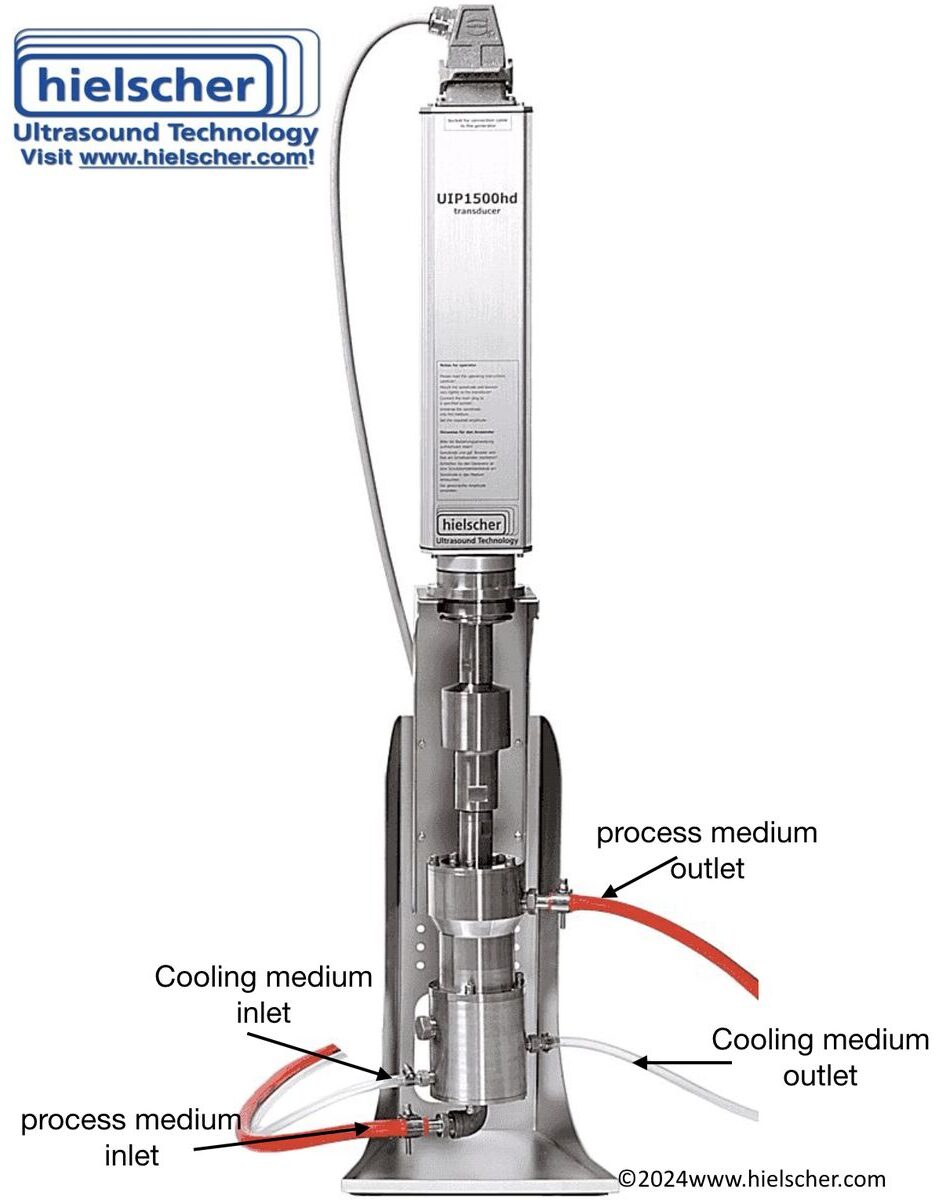
खर्च किए गए उत्प्रेरकों के पुनः सक्रियण और पुनर्चक्रण के लिए फ्लो-सेल के साथ सोनिकेटर UIP1500hdT
- बेहतर दक्षता
- बढ़ी हुई प्रतिक्रियाशीलता
- बढ़ी हुई रूपांतरण दर
- अधिक उपज
- उत्प्रेरक का पुनर्चक्रण
उत्प्रेरक प्रतिक्रियाओं की अल्ट्रासोनिक गहनता
अल्ट्रासोनिक मिश्रण और आंदोलन अभिकारक और उत्प्रेरक कणों के बीच संपर्क में सुधार करता है, अत्यधिक प्रतिक्रियाशील सतहों बनाता है और रासायनिक प्रतिक्रिया को शुरू करता है और / या बढ़ाता है।
अल्ट्रासोनिक उत्प्रेरक तैयारी क्रिस्टलीकरण व्यवहार, फैलाव / इसके अलावा, पूर्व-गठित उत्प्रेरक की विशेषताओं को निष्क्रिय सतह परतों को हटाने, बेहतर फैलाव, बड़े पैमाने पर हस्तांतरण में वृद्धि से प्रभावित किया जा सकता है।
अल्ट्रासोनिक रूप से सुधारी गई प्रतिक्रियाओं के उदाहरण
- हाइड्रोजनीकरण प्रतिक्रियाओं के लिए नी उत्प्रेरक का अल्ट्रासोनिक पूर्व-उपचार
- टार्टरिक एसिड के साथ सोनिकेटेड रैनी नी उत्प्रेरक के परिणामस्वरूप बहुत अधिक एनेंटिओसेलेक्टिविटी होती है
- अल्ट्रासोनिक रूप से संश्लेषित फिशर-ट्रॉप्श उत्प्रेरक
- बढ़ी हुई प्रतिक्रियाशीलता के लिए सोनोकेमिकल रूप से उपचारित अनाकार पाउडर उत्प्रेरक
- अनाकार धातु पाउडर का सोनो-संश्लेषण
अल्ट्रासोनिक उत्प्रेरक रिकवरी
Solid catalysts in fixed-bed reactors are commonly used in the form of spherical beads, pellets, extrudates, or cylindrical particles. During chemical reactions, the catalyst surface can become passivated by a fouling layer, resulting in a gradual loss of catalytic activity and/or selectivity over time.
The timescale of catalyst deactivation varies considerably. For example, the deactivation of a cracking catalyst may occur within seconds, whereas an iron catalyst used in ammonia synthesis may remain active for 5–10 years. Nevertheless, catalyst deactivation is observed in virtually all catalytic processes. Although different deactivation mechanisms can occur – including chemical, mechanical, and thermal degradation – fouling is one of the most common causes of catalyst decay.
Fouling refers to the physical deposition of species from the fluid phase onto the catalyst surface and within its pores. These deposits block reactive sites, restrict pore accessibility, and reduce contact between reactants and the active catalyst surface. Catalyst fouling by coke or carbonaceous deposits is often a rapid process; however, in many cases it can be partially or fully reversed by ultrasonic regeneration.
Ultrasonic cavitation is an effective method for removing passivating fouling layers from catalyst surfaces. During sonication, high-intensity ultrasound generates cavitation bubbles in a liquid medium. Their collapse produces localized shear forces, microjets, shock waves, and intense micro-mixing. These effects help detach fouling residues from the catalyst surface, reopen blocked pores, and restore access to active sites.
अल्ट्रासोनिक उत्प्रेरक पुनर्प्राप्ति आम तौर पर उत्प्रेरक कणों को किसी द्रव, जैसे डियोनाइज्ड पानी या किसी उपयुक्त सॉल्वेंट, में फैलाकर और निलंबण को नियंत्रित अल्ट्रासोनिक उपचार के संपर्क में ला कर किया जाता है। यह प्रक्रिया विभिन्न उत्प्रेरक सामग्री, जैसे प्लेटिनम/सिलिका फाइबर उत्प्रेरक, निकल उत्प्रेरक, और अन्य समर्थित धातु उत्प्रेरकों से फाउलिंग अपशेष को हटाने में सक्षम हो सकती है। इसके परिणामस्वरूप, सोनिकेशन उत्प्रेरक के पुनर्जनन, लंबी उत्प्रेरक आयु, और प्रक्रिया की स्थिरता में सुधार में योगदान कर सकता है।
खर्च हुए उत्प्रेरकों के अल्ट्रासोनिक पुनर्जनन के बारे में अधिक जानने के लिए यहां क्लिक करें!
रासायनिक रिएक्टर्स में एकीकरण के लिए सोनिकेटर्स
 Hielscher Ultrasonics निश्चित बिस्तर रिएक्टरों में बिजली अल्ट्रासाउंड के एकीकरण के लिए विभिन्न अल्ट्रासोनिक प्रोसेसर और विविधताएं प्रदान करता है। फिक्स्ड बेड रिएक्टरों में स्थापित होने के लिए विभिन्न अल्ट्रासोनिक सिस्टम उपलब्ध हैं। अधिक जटिल रिएक्टर प्रकारों के लिए, हम प्रदान करते हैं अनुकूलित अल्ट्रासोनिक समाधान।
जानें कि कैसे सोनिकेशन विभिन्न रिएक्टर डिज़ाइन में रासायनिक प्रतिक्रियाओं में सुधार करता है!
आपकी रासायनिक प्रतिक्रिया पर सोनिकेशन के प्रभावों का परीक्षण करने के लिए, आप हमारे अल्ट्रासोनिक प्रक्रिया लैब और तकनीकी केंद्र, टेल्टो में आने के लिए स्वागत हैं!
हमसे संपर्क करें आज! हम आपके साथ आपकी रासायनिक प्रक्रिया की अल्ट्रासोनिक गहनता पर चर्चा करने में प्रसन्न हैं!
नीचे दी गई तालिका आपको Hielscher सोनिकेटर की अनुमानित प्रसंस्करण क्षमता का संकेत देती है:
| बैच वॉल्यूम | प्रवाह दर | अनुशंसित उपकरण |
|---|---|---|
| 10 से 2000mL | 20 से 400mL/मिनट | यूपी200एचटी, UP400St |
| 0.1 से 20L | 0.2 से 4L/मिनट | यूआईपी2000एचडीटी |
| 10 से 100L | 2 से 10 लीटर/मिनट | UIP4000 |
| एन.ए. | 10 से 100 लीटर/मिनट | UIP16000 |
| एन.ए. | बड़ा | का क्लस्टर UIP16000 |

अल्ट्रासोनिक प्रवाह प्रणाली
- हाइड्रोजनीकरण
- अल्सीलेशन
- सायनेशन
- ईथरीकरण
- एस्टरीफिकेशन
- बहुलकीकरण
- एलिलेशन
- ब्रोमिनेशन
(जैसे ज़िग्लर-नट्टा उत्प्रेरक, मेटालोकेन्स)
साहित्य/सन्दर्भ
- Francisco J. Navarro-Brull; Andrew R. Teixeira; Jisong Zhang; Roberto Gómez; Klavs F. Jensen (2018): Reduction of Dispersion in Ultrasonically-Enhanced Micropacked Beds. Industrial & Engineering Chemistry Research 57, 1; 2018. 122–128.
- Yasuo Tanaka (2002): A dual purpose packed-bed reactor for biogas scrubbing and methane-dependent water quality improvement applying to a wastewater treatment system consisting of UASB reactor and trickling filter. Bioresource Technology, Volume 84, Issue 1, 2002. 21-28.
- Argyle, M.D.; Bartholomew, C.H. (2015): Heterogeneous Catalyst Deactivation and Regeneration: A Review. Catalysts 2015, 5, 145-269.
- Oza, R.; Patel, S. (2012): Recovery of Nickel from Spent Ni/Al2O3 Catalysts using Acid Leaching, Chelation and Ultrasonication. Research Journal of Recent Sciences Vol. 1; 2012. 434-443.
- Sana, S.; Rajanna, K.Ch.; Reddy, K.R.; Bhooshan, M.; Venkateswarlu, M.; Kumar, M.S.; Uppalaiah, K. (2012): Ultrasonically Assisted Regioselective Nitration of Aromatic Compounds in Presence of Certain Group V and VI Metal Salts. Green and Sustainable Chemistry, 2012, 2, 97-111.
- Suslick, K. S.; Skrabalak, S. E. (2008): “Sonocatalysis” In: Handbook of Heterogeneous Catalysis, vol. 4; Ertl, G.; Knözinger, H.; Schüth, F.; Weitkamp, J., (Eds.). Wiley-VCH: Weinheim, 2008. 2006-2017.
जानने के योग्य तथ्य
अल्ट्रासोनिक कैविटेशन क्या है?
Ultrasonic cavitation is the formation, growth and violent collapse of microscopic vapor or gas bubbles in a liquid exposed to high-intensity ultrasound. During bubble collapse, extreme local conditions can occur for very short times, including high temperature, high pressure, shock waves, microjets and intense shear forces.
सोनोकेमिस्ट्री क्या है?
सोनोकेमिस्ट्री रासायनिक और भौतिक-रासायनिक प्रक्रियाओं को शुरू करने, तेज करने या संशोधित करने के लिए इन अल्ट्रासोनिक गुहिकायन प्रभावों का उपयोग है। यह तरल-चरण प्रणालियों में विशेष रूप से प्रासंगिक है क्योंकि गुहिकायन मिश्रण, बड़े पैमाने पर स्थानांतरण, पायसीकरण, कण फैलाव, उत्प्रेरक सतह की सफाई और, कुछ मामलों में, कट्टरपंथी गठन को बढ़ाता है। नतीजतन, सोनोकेमिस्ट्री का उपयोग विषम उत्प्रेरक, ऑक्सीकरण, निष्कर्षण, पोलीमराइजेशन, क्रिस्टलीकरण और नैनोमटेरियल संश्लेषण जैसी प्रतिक्रियाओं को तेज करने के लिए किया जाता है।
एक विषम उत्प्रेरक प्रतिक्रिया क्या है?
रसायन विज्ञान में, विषम उत्प्रेरण उत्प्रेरक प्रतिक्रिया के प्रकार को संदर्भित करता है जहां उत्प्रेरक और अभिकारकों के चरण एक दूसरे से भिन्न होते हैं। विषमांगी रसायन विज्ञान के संदर्भ में, कला का उपयोग न केवल ठोस, तरल और गैस के बीच अंतर करने के लिए किया जाता है, बल्कि यह अमिश्रणीय तरल पदार्थों, जैसे तेल और पानी को भी संदर्भित करता है।
एक विषम प्रतिक्रिया के दौरान, एक या एक से अधिक अभिकारक एक इंटरफ़ेस पर एक रासायनिक परिवर्तन से गुजरते हैं, उदाहरण के लिए एक ठोस उत्प्रेरक की सतह पर।
प्रतिक्रिया दर अभिकारकों की एकाग्रता, कण आकार, तापमान, उत्प्रेरक और आगे के कारकों पर निर्भर करती है।
अभिकारक एकाग्रता: सामान्य तौर पर, एक अभिकारक की एकाग्रता में वृद्धि बड़े इंटरफ़ेस के कारण प्रतिक्रिया की दर को बढ़ाती है और इस तरह अभिकारक कणों के बीच अधिक चरण हस्तांतरण करती है।
कण आकार: जब अभिकारकों में से एक ठोस कण होता है, तो इसे दर समीकरण में प्रदर्शित नहीं किया जा सकता है, क्योंकि दर समीकरण केवल सांद्रता दिखाता है और ठोस में एक अलग चरण में होने के बाद से एकाग्रता नहीं हो सकती है। हालांकि, ठोस का कण आकार चरण हस्तांतरण के लिए उपलब्ध सतह क्षेत्र के कारण प्रतिक्रिया दर को प्रभावित करता है।
प्रतिक्रिया तापमान: तापमान अरहेनियस समीकरण के माध्यम से स्थिर दर से संबंधित है: k = Ae-ईए/आरटी
जहां Ea सक्रियण ऊर्जा है, R सार्वभौमिक गैस स्थिरांक है और T केल्विन में पूर्ण तापमान है। ए अरहेनियस (आवृत्ति) कारक है। ई-ईए/आरटी वक्र के नीचे उन कणों की संख्या देता है जिनकी ऊर्जा सक्रियण ऊर्जा, Ea, से अधिक होती है।
उत्प्रेरक पदार्थ: ज्यादातर मामलों में, उत्प्रेरक के साथ प्रतिक्रियाएं तेजी से होती हैं क्योंकि उन्हें कम सक्रियण ऊर्जा की आवश्यकता होती है। विषम उत्प्रेरक एक टेम्पलेट सतह प्रदान करते हैं जिस पर प्रतिक्रिया होती है, जबकि सजातीय उत्प्रेरक मध्यवर्ती उत्पाद बनाते हैं जो तंत्र के बाद के चरण के दौरान उत्प्रेरक को छोड़ते हैं।
अन्य कारक: प्रकाश जैसे अन्य कारक कुछ प्रतिक्रियाओं (फोटोकैमिस्ट्री) को प्रभावित कर सकते हैं।
उत्प्रेरक निष्क्रियता के प्रकार क्या हैं?
- उत्प्रेरक विषाक्तता उत्प्रेरक साइटों पर प्रजातियों के मजबूत रसायनशोषण के लिए शब्द है जो उत्प्रेरक प्रतिक्रिया के लिए साइटों को अवरुद्ध करते हैं। विषाक्तता प्रतिवर्ती या अपरिवर्तनीय हो सकती है।
- फाउलिंग उत्प्रेरक के एक यांत्रिक क्षरण को संदर्भित करता है, जहां द्रव चरण से प्रजातियां उत्प्रेरक सतह पर और उत्प्रेरक छिद्रों में जमा होती हैं।
- थर्मल गिरावट और सिंटरिंग के परिणामस्वरूप उत्प्रेरक सतह क्षेत्र, समर्थन क्षेत्र और सक्रिय चरण-समर्थन प्रतिक्रियाओं का नुकसान होता है।
- वाष्प गठन का अर्थ है एक रासायनिक क्षरण रूप, जहां गैस चरण वाष्पशील यौगिकों का उत्पादन करने के लिए उत्प्रेरक चरण के साथ प्रतिक्रिया करता है।
- वाष्प-ठोस और ठोस-ठोस प्रतिक्रियाओं के परिणामस्वरूप उत्प्रेरक का रासायनिक निष्क्रियता होता है। वाष्प, समर्थन, या प्रमोटर उत्प्रेरक के साथ प्रतिक्रिया करता है ताकि एक निष्क्रिय चरण उत्पन्न हो।
- उत्प्रेरक कणों के संघर्षण या कुचलने से यांत्रिक घर्षण के कारण उत्प्रेरक सामग्री का नुकसान होता है। उत्प्रेरक कण के यांत्रिक-प्रेरित कुचलने के कारण उत्प्रेरक का आंतरिक सतह क्षेत्र खो जाता है।
इसके बारे में और पढ़ें कि कैसे सोनिकेशन खर्च किए गए उत्प्रेरक को फिर से सक्रिय कर सकता है!
न्यूक्लियोफिलिक प्रतिस्थापन क्या है?
Nucleophilic substitution is a fundamental class of reactions in organic (and inorganic) chemistry, in which a nucleophile selectively bonds in form of a Lewis base (as electron pair donator) with an organic complex with or attacks the positive or partially positive (+) charge of an atom or a group of atoms to replace a leaving group. The positive or partially positive atom, which is the electron pair acceptor, is called an electrophile. The whole molecular entity of the electrophile and the leaving group is usually called the substrate.
न्यूक्लियोफिलिक प्रतिस्थापन को दो अलग-अलग मार्गों के रूप में देखा जा सकता है – एसN1 और एसN2 प्रतिक्रिया। प्रतिक्रिया तंत्र का कौन सा रूप – दक्षिणीN1 या एसN2 – जगह लेता है, रासायनिक यौगिकों की संरचना, न्यूक्लियोफाइल के प्रकार और विलायक पर निर्भर करता है।