ASTM 시험 및 실무 표준용 초음파 처리기
Hielscher 초음파 장치는 초음파 전단, 초음파 추출, 캐비테이션 침식 및 MBEC 생물막 박리 등 ASTM 방법에 필요한 정밀하고 재현성 높은 초음파 처리를 제공합니다.
ASTM 시험에서 초음파 분산기 선택이 중요한 이유
초음파 에너지를 사용하는 ASTM 시험 방법은 정의된 음향 캐비테이션 및 진동, 제어된 진폭, 재현 가능한 시료 배치, 일관된 온도 관리에 의존합니다. 부적절한 초음파 장치를 사용할 경우, 캐비테이션이 불충분하거나, 처리가 고르지 않거나, 과도한 가열이 발생하거나, 재현성이 떨어질 수 있습니다. Hielscher 초음파 처리기는 디지털 진폭 제어, 데이터 기록, 다양한 소노트로드 호환성, 그리고 견고한 연속 작동 기능을 갖추고 있어 실험실 검증 작업에 적합하도록 설계되었습니다.
ASTM 시험에서 초음파 분산기 선택이 중요한 이유
초음파 에너지를 사용하는 ASTM 시험 방법은 정의된 음향 캐비테이션 및 진동, 제어된 진폭, 재현 가능한 시료 배치, 일관된 온도 관리에 의존합니다. 부적절한 초음파 장치를 사용할 경우, 캐비테이션이 불충분하거나, 처리가 고르지 않거나, 과도한 가열이 발생하거나, 재현성이 떨어질 수 있습니다. Hielscher 초음파 처리기는 디지털 진폭 제어, 데이터 기록, 다양한 소노트로드 호환성, 그리고 견고한 연속 작동 기능을 갖추고 있어 실험실 검증 작업에 적합하도록 설계되었습니다.

초음파 전단 시스템 UP400St (24kHz, 400W) ASTM D2603 음파 전단 안정성 테스트용
제어된 에너지 공급
디지털 초음파 발생기는 방법 문서화를 위해 진폭, 시간, 펄스 설정 및 공정 온도를 추적 가능하게 유지하는 데 도움이 됩니다.
방법별 형상
프로브형 초음파 처리기, 고출력 캐비테이션 시스템, 플레이트형 초음파 처리기는 비커부터 마이크로타이터 플레이트에 이르기까지 다양한 ASTM 시료 형식에 적합합니다.
반복 가능한 시료 전처리
안정적인 초음파 처리 조건은 점도 변화, 추출 효율, 캐비테이션 침식 및 생물막 회수 결과에 대한 실험 간 비교 가능성을 향상시킵니다.
한눈에 보는 초음파 분쇄기 선택 가이드
| ASTM 표준 | 시험 목적 | 초음파 처리가 어떻게 도움이 되는가 | 권장 초음파 분사기 모델 |
|---|---|---|---|
| ASTM의 D2603 | 윤활유, 변속기 오일, 트랙터 오일, 유압유 및 기타 고분자 함유 오일과 같은 고분자 함유 오일의 초음파 전단 안정성. | 프로브로 생성된 초음파 캐비테이션은 강력하고 반복 가능한 전단력을 발생시킵니다. 이는 전단에 민감한 점도 지수 향상제의 기계적 열화를 가속화하며, 실험실에서 제어된 조건 하에서 영구적인 점도 손실을 측정할 수 있게 해줍니다. | S24d22 소노트로드가 장착된 UP400St |
| ASTM의 D5621 | 고분자 점도 조절제가 함유된 유압유의 초음파 전단 안정성. | 초음파 처리는 유압유에 정해진 고전단 음향 조건을 가합니다. 이를 통해 폴리머 첨가제가 극심한 기계적 응력 하에서 점도를 유지하는지, 아니면 성능이 저하되는지를 파악할 수 있습니다. | S24d22 소노트로드가 장착된 UP400St |
| ASTM G32 (영문) | 캐비테이션에 노출된 금속, 코팅, 합금, 세라믹 및 기타 공학 재료에 대한 캐비테이션 침식 시험. | 진동하는 초음파 소노트로드는 액체 내에서 제어된 캐비테이션 장을 생성합니다. 캐비테이션 기포가 반복적으로 형성되고 붕괴되면서 측정 가능한 침식이 발생하며, 이를 통해 캐비테이션 손상에 대한 재료의 저항성을 비교할 수 있습니다. | UIP1000hdt 대안: UIP500hdt 님 또는 UIP2000hdT 님 |
| ASTM의 E1979-21 | 납 함량 측정을 위한 페인트, 먼지, 토양 및 공기 시료의 초음파 추출. | 초음파 캐비테이션은 입자를 분해하고, 시료와 추출 용액 간의 접촉 면적을 늘리며, 후속 분석 측정을 위한 납의 방출을 촉진함으로써 추출 효율을 향상시킵니다. | UP200HT 일반 검사실용 UP400ST 더 높은 강도 또는 처리량을 위해 |
| ASTM의 E2799-22 | 다음에 대한 소독제 효능 시험 녹농균 MBEC 분석법을 이용한 생물막. | 플레이트 전체에 걸친 초음파 처리를 통해 96-peg MBEC 뚜껑에 부착된 생물막 세포를 웰 안으로 분리시켜 회수 및 정량 분석을 가능하게 합니다. 마이크로플레이트 전체에 균일하게 적용되는 초음파 처리는 웰 간 비교 가능성을 높이고, 고처리량 생물막 검사를 지원합니다. | 마이크로플레이트 초음파 발생기 UIP400MTP |
ASTM 표준에 권장되는 Hielscher 초음파 처리기
다음 ASTM 표준에서는 초음파 처리를 핵심 시험 단계로 사용하거나, 초음파를 이용한 시료 전처리 단계로 활용합니다. 필요한 시료 형상, 출력 수준 및 처리량에 맞는 모델을 선택하십시오.
ASTM의 D2603 – 고분자를 함유한 오일의 초음파 전단 안정성
ASTM D2603은 초음파 진동기 내에서 방사선 조사를 실시한 후 발생하는 영구 점도 손실을 측정하여, 고분자가 함유된 오일의 전단 안정성을 평가합니다. 이 시험은 윤활유, 변속기 오일, 트랙터 오일 및 기타 고분자 개질 오일과 같이, 강한 전단 하에서 점도 지수 향상제가 열화될 수 있는 유체에 사용됩니다.
초음파 처리의 핵심 기능: 초음파 프로브에 의해 생성되는 강렬하고 집중된 캐비테이션 및 전단력.
중요 관리점: 고정된 시험 시간, 정의된 프로브 형상, 시편 온도 제어, 그리고 재현 가능한 침지 깊이.
일반적인 결과: 초음파 처리 전후의 점도를 측정하여 영구적인 점도 손실을 정량화한다.
추천 초음파 처리기: S24d22 소노트로드가 장착된 Hielscher UP400St.
UP400St는 24 kHz에서 400 W의 초음파 출력을 제공하고, 정밀한 진폭 제어 기능과 통합 온도 모니터링 기능을 갖추었으며, 초음파 전단 안정성 시험에 사용되는 S24d22 프로브 형상과 호환되기 때문에 ASTM D2603 시험에 가장 적합한 Hielscher 제품 구성입니다.
ASTM D2603에 대해 자세히 알아보세요!
ASTM의 D5621 – 유압 유체의 초음파 전단 안정성
ASTM D5621은 초음파 진동기 내에서 초음파 조사를 가한 후의 최종 점도를 측정하여 유압유의 전단 안정성을 평가합니다. 이 시험법은 전단에 민감하거나 전단에 강한 폴리머 첨가제가 포함된 유압유에 특히 적합합니다.
초음파 처리의 핵심 기능: 음향 캐비테이션을 통한 중합체 전단 가속.
중요 관리점: 초음파 호른 선정, 진폭 안정성, 온도 제어 및 일관된 시험 시간.
일반적인 결과: 표준화된 초음파 처리 후의 최종 점도 또는 점도 변화.
추천 초음파 처리기: S24d22 소노트로드가 장착된 Hielscher UP400St.
UP400St는 ASTM D5621 시험을 수행하기에도 이상적인 선택입니다. 24 kHz 프로브형 초음파 전단 장치를 탑재한 이 제품은 실험실에 반복 가능한 유체 전단 시험을 수행할 수 있는 소형 디지털 제어 플랫폼을 제공합니다.
ASTM D5621에 대해 자세히 알아보세요!
ASTM G32 (영문) – 초음파 진동 장치를 이용한 캐비테이션 침식
ASTM G32는 진동 장치를 이용한 캐비테이션 침식 시험을 규정하고 있습니다. 시편은 고주파 진동에 노출됩니다. – 초음파 처리기에 의해 생성된 – 액체 내에서 공동이 생성되고 붕괴되면서 측정 가능한 재료 손실을 일으킵니다. 이 방법은 금속, 코팅재 및 기타 공학 재료의 캐비테이션 침식 저항성을 비교하는 데 사용됩니다.

Cavitation Erosion Testing을 위한 샘플 워크시트
초음파 처리의 핵심 기능: 진동하는 소노트로드에 의해 생성된 제어된 캐비테이션 영역.
중요 관리점: 진폭, 시편 형상, 갭 거리, 액체 온도, 노출 시간 및 시편 질량 손실 측정.
일반적인 결과: 침식 속도, 누적 질량 손실 또는 상대적 캐비테이션 저항성.
추천 초음파 처리기: Hielscher UIP1000hdT.
UIP1000hdT는 1000W, 20kHz의 프로브형 설계로 재현 가능한 캐비테이션 침식 연구에 필요한 높고 안정적인 진폭을 제공하므로, ASTM G32 표준을 준수하는 데 있어 Hielscher 제품 중 탁월한 선택입니다. 더 낮은 또는 더 높은 출력이 필요한 경우, Hielscher의 UIP500hdT 및 UIP2000hdT 모델이 적합한 대안입니다.
ASTM G32에 대해 자세히 알아보세요!
캐비테이션 침식 시험 절차에 대해 자세히 알아보세요!

UIP1000hdT (1000W, 20kHz) 캐비테이션 침식 시험 장치
ASTM의 E1979-21 – 납 함량 측정을 위한 페인트, 먼지, 토양 및 공기 시료의 초음파 추출
 ASTM E1979-21은 납 분석 전 환경 시료를 전처리하기 위한 초음파 추출 방법입니다. 이 방법은 납 제거, 리모델링, 직업 위생 및 환경 모니터링과 관련된 건조 도막, 침전된 먼지, 토양, 대기 미립자 등의 매트릭스에 적용됩니다.
초음파 처리의 핵심 기능: 초음파 추출을 통해 후속 분석 측정에 사용할 수 있도록 납을 분리한다.
중요 관리점: 추출 용기, 초음파 처리 시간, 온도, 산 매트릭스, 그리고 일관된 에너지 전달.
일반적인 결과: 하류 실험실의 분석 방법을 통해 측정된 추출된 납 농도.
추천 초음파 처리기: Hielscher UP200Ht 또는 UP400St.
일반적인 ASTM E1979 시료 전처리 작업의 경우, UP200Ht는 중소 규모의 추출 작업에 있어 실험실에서 선택하기에 매우 적합한 장비입니다. 더 높은 강도, 더 많은 시료 처리량, 또는 더 폭넓은 소노트로드 활용성이 필요한 경우에는 UP400St를 권장합니다.
ASTM E1979-21에 대해 자세히 알아보세요!
ASTM의 E2799-22 – MBEC 분석법을 이용한 녹농균 생물막에 대한 소독제 효능 평가
ASTM E2799-22는 고처리량 MBEC 분석 방식에서 녹농균(Pseudomonas aeruginosa) 생물막을 배양, 처리, 중화 및 회수하기 위한 운영 매개변수를 규정하고 있습니다. 생물막은 96-웰 수신 플레이트에 대응하는 96-페그 뚜껑 위에서 배양됩니다. 소독제 노출 후, 초음파 처리를 통해 생물막을 박리하고 회수합니다.
초음파 처리의 핵심 기능: 96-peg MBEC 뚜껑에서 바이오필름을 마이크로플레이트 웰로 동시에, 재현성 있게 분리하는 것.
중요 관리점: 판 전체에 걸쳐 균일한 초음파 에너지, 제어된 노출 시간, 낮은 교차 오염 위험, 그리고 과도한 파괴적 에너지 없이 세포를 회수할 수 있다는 점입니다.
일반적인 결과: 소독 처리 후 생존 가능한 생물막 세포의 정량적 회수.
추천 초음파 처리기: Hielscher UIP400MTP.
 UIP400MTP는 단일 용기 프로브 처리 방식이 아닌 마이크로타이터 플레이트용으로 설계되었기 때문에 ASTM E2799-22 표준에 이상적입니다. 이 장비는 플레이트 전체에 걸쳐 균일한 초음파를 전달하여 모든 웰을 동시에 처리할 수 있게 하며, MBEC 페그 뚜껑에서 생물막을 재현성 있게 박리할 수 있게 합니다. 따라서 플레이트 전체에 걸쳐 일관된 에너지 분포와 시료 간 비교 가능성이 필수적인 고처리량 생물막 워크플로우에서는 휴대용 프로브보다 이 장비가 더 적합합니다.
UIP400MTP와 MBEC 분석법에 대해 더 자세히 알아보세요!
ASTM E2799-22에 대해 자세히 알아보세요!
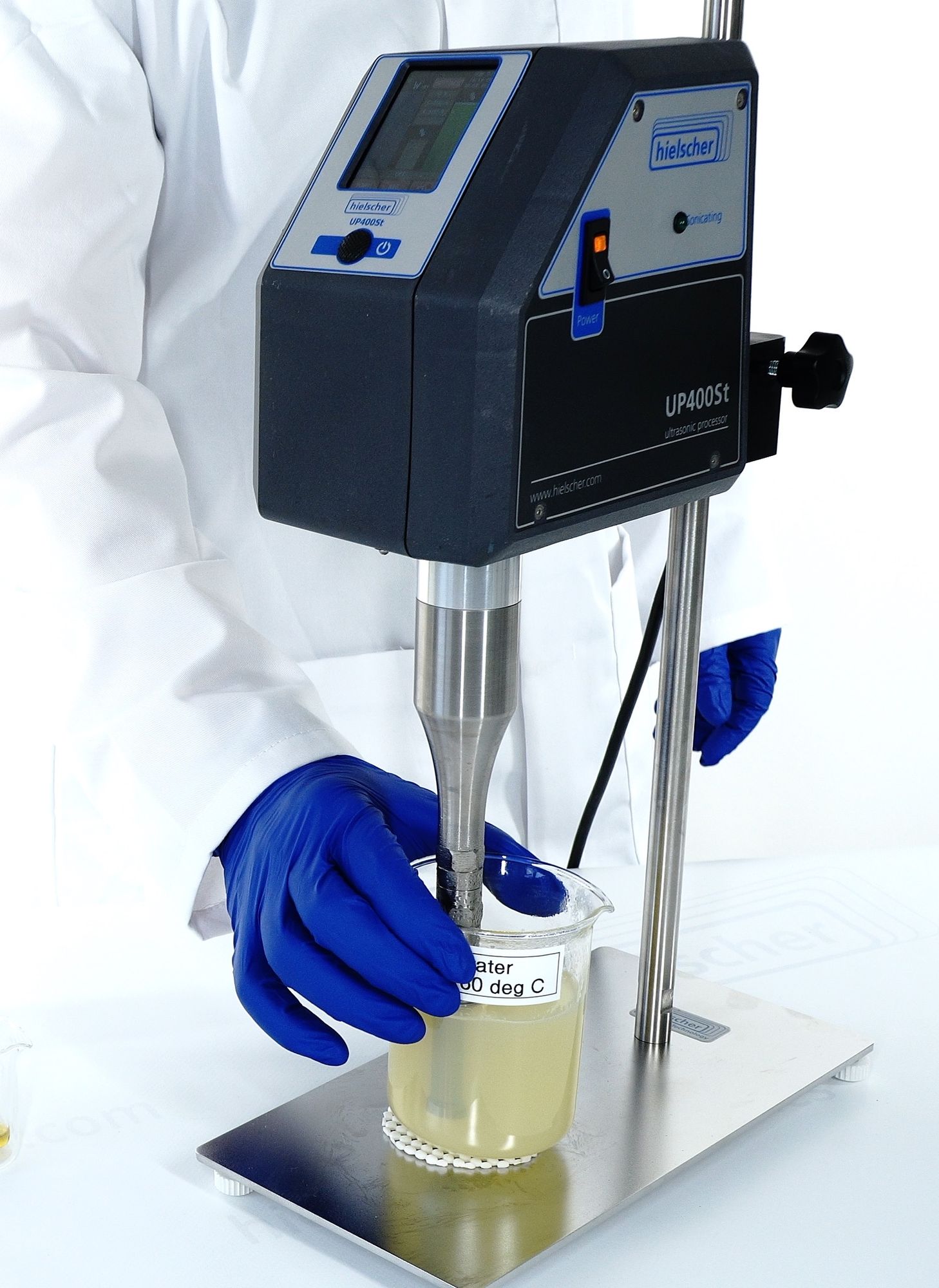
유압유 음향 전단 안정성 시험용 UP400St
항상 공식 ASTM 표준, 귀사의 실험실 품질 시스템에 반영된 최신 개정판 및 검증된 내부 SOP를 준수해야 합니다. Hielscher는 요구되는 분석법 기하학적 조건에 맞춰 소노트로드, 고정 장치, 용기 및 부속품을 구성하는 데 도움을 드릴 수 있습니다.
ASTM 표준은 관리 대상 문서입니다. 이 페이지에는 초음파 처리와 관련된 시험 적용 사례 및 장비 선정 지침이 요약되어 있으나, 이는 공식 ASTM 시험 방법 문서를 대체하지 않습니다.
설계, 제조 및 컨설팅 – 독일에서 만든 품질
Hielscher 초음파는 최고의 품질과 디자인 표준으로 잘 알려져 있습니다. 견고 함과 쉬운 작동으로 초음파를 산업 시설에 원활하게 통합 할 수 있습니다. 거친 조건과 까다로운 환경은 Hielscher 초음파기로 쉽게 처리 할 수 있습니다.
Hielscher 초음파는 ISO 인증 회사이며 최첨단 기술과 사용자 친화성을 갖춘 고성능 초음파에 특히 중점을 둡니다. 물론, Hielscher 초음파는 CE를 준수하며 UL, CSA 및 RoHs의 요구 사항을 충족합니다.
자주 묻는 질문
ASTM은 무슨 뜻인가요?
ASTM은 원래 ‘미국 재료시험협회(American Society for Testing and Materials)’의 약자였습니다. 현재 이 기구의 공식 명칭은 ASTM International이며, 재료, 제품, 시스템 및 서비스에 대한 자발적 기술 표준을 개발하고 있습니다.
ASTM에는 어떤 종류가 있나요?
ASTM 표준은 일반적으로 시험 방법, 사양, 실무 지침, 가이드, 분류 및 용어 표준 등 여러 문서 유형으로 분류됩니다. 과학 및 산업 분야에서 ASTM 표준은 주로 재료와 제품을 시험, 사양 지정, 분류 또는 기술하는 방법을 규정합니다.
ASTM, ISO, DIN의 차이점은 무엇인가요?
ASTM은 재료 시험 및 제품 성능 표준 분야에서 탄탄한 기반을 갖춘 표준 개발 기관입니다. ISO는 각국의 회원 기관을 통해 글로벌 표준을 개발하는 국제 표준 기구입니다. DIN은 독일의 국가 표준 기구로, 유럽 및 국제 표준화 과정에서 독일의 이해관계를 대변합니다.
ASTM은 ANSI와 같은 것입니까?
아니요, ASTM은 기술 표준을 개발하고 공표하는 반면, ANSI는 미국의 자발적 표준 체계를 조정하고 표준 개발 기관에 대한 인증을 수행합니다. ASTM 표준은 ANSI 관련 체계에서 사용될 수 있지만, ASTM과 ANSI는 서로 다른 기관입니다.

Hielscher 초음파는 실험실, 파일럿 및 산업 규모에서 혼합 응용 분야, 분산, 유화 및 추출을위한 고성능 초음파 균질화기를 제조합니다.
문헌 / 참고문헌
- ASTM D5621-20, Standard Test Method for Sonic Shear Stability of Hydraulic Fluids, ASTM International, West Conshohocken, PA, 2020.
- ASTM D2603-20, Standard Test Method for Sonic Shear Stability of Polymer-Containing Oils, ASTM International, West Conshohocken, PA, 2020.
- ASTM E2799-22 Standard Test Method for Testing Disinfectant Efficacy against Pseudomonas aeruginosa Biofilm using the MBEC Assay
- ASTM E1979-21 Standard Practice for Ultrasonic Extraction of Paint, Dust, Soil, and Air Samples for Subsequent Determination of Lead
- ASTM32 Standard Test Method for Cavitation Erosion Using Vibratory Apparatus
- Spencer Court, Ilaria Corni, Nicola Symonds (2018): Cavitation Erosion Performance of Steel, Ceramics, Carbide, and Victrex PEEK Materials. Materials Performance and Characterization 1 May 2018; 7 (5): 1093–1106.
- Bolewski, Łukasz; Szkodo, Marek; Kmieć, Mateusz (2017): Cavitation erosion degradation of Belzona® coatings. Advances in Materials Science. 17, 2017.
- Kmieć, Mateusz; Karpiński, Bartłomiej; Szkodo, Marek (2016): Cavitation Erosion of P110 Steel in Different Drilling Muds. Advances in Materials Science. 16, 2016.
- Müller, Saskia; Fischper, Maurice; Mottyll, Stephan; Skoda, Romuald; Hussong, Jeanette (2014): Analysis of the cavitating flow induced by an ultrasonic horn – Experimental investigation on the influence of actuation phase, amplitude and geometrical boundary conditions. EPJ Web of Conferences 67, 2014.
- Michael, Paul; Cheekolu, Mercy; Panwar, Pawan; Devlin, Mark; Davidson, Rob; Johnson, Duval; Martini, Ashlie (2018): Temporary and Permanent Viscosity Loss Correlated to Hydraulic System Performance. Tribology Transactions 61, 2018.
- 고능률
- 최첨단 기술
- 신뢰도 & 견고성
- 조정 가능하고 정밀한 공정 제어
- 일괄 & 인라인
- 모든 볼륨에 대해
- 인텔리전트 소프트웨어
- 스마트 기능(예: 프로그래밍 가능, 데이터 프로토콜, 원격 제어)
- 쉽고 안전한 작동
- 낮은 유지 보수
- CIP(clean-in-place, 클린-인-플레이스)