Hielscher Ultrasonics
귀하의 프로세스에 대해 논의하게 되어 기쁩니다.
전화주세요: +49 3328 437-420
메일을 보내주세요: [email protected]

Reactivation of Spent Catalyst Using Sonication

The reactivation of spent catalysts has become an important topic in sustainable chemical processing, refinery operations, petrochemistry, environmental catalysis, and circular-economy strategies. Catalysts are essential for efficient reactions, but during industrial use they gradually lose activity due to coke deposition, metal poisoning, fouling, pore blockage, sintering, surface passivation, or the accumulation of reaction by-products. Replacing spent catalysts is costly and resource-intensive, while disposal can create environmental burdens. Ultrasonic regeneration of spent catalysts is a simple yet highly efficient technique for reactivating catalysts that have been passivated, poisoned, or fouled during use.

Reactivation of Spent Catalyst Using Sonication

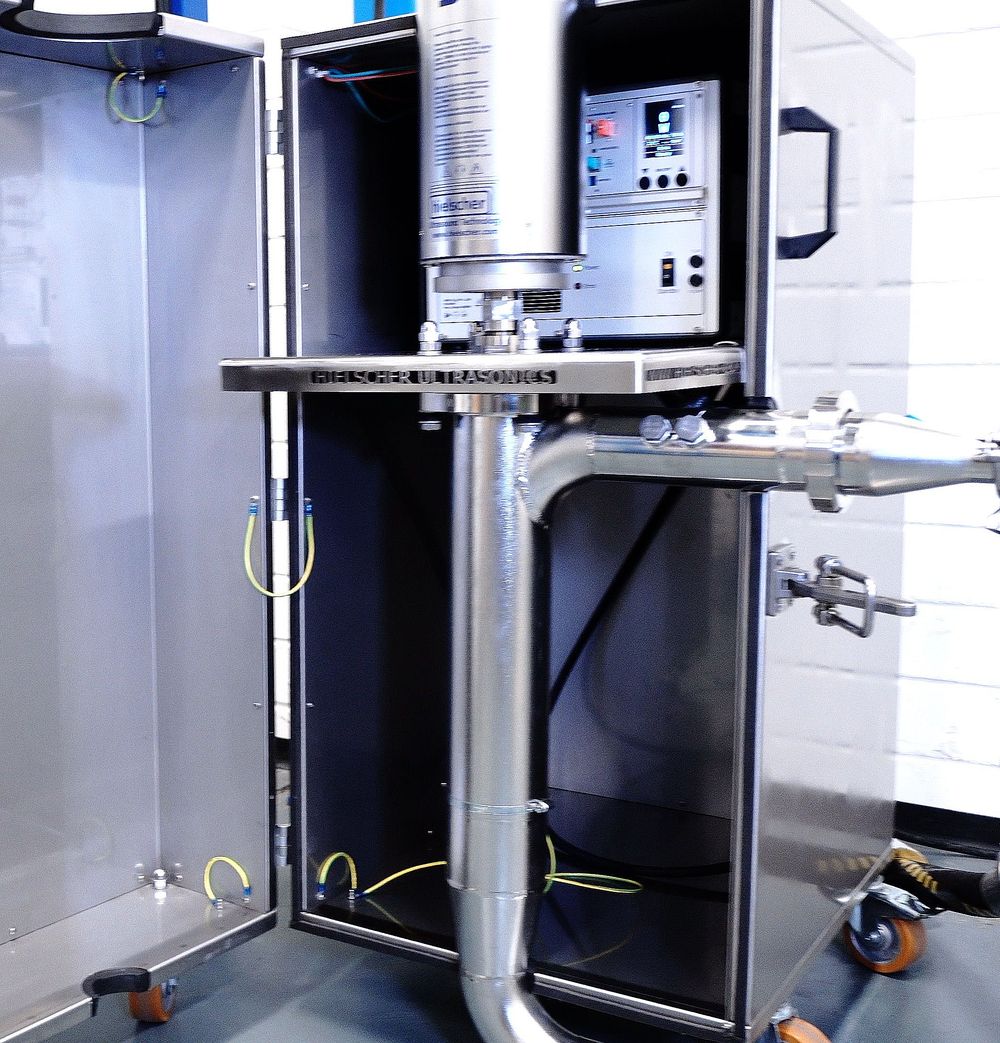
Hielscher industrial sonicator for inline processing of spent catalysts: Ultrasonic cavitation regenerates and refreshes spent catalysts by removing passivating layers, renewing particle modifications and reactivating and enlarging catalyst surfaces.Sonication, also known as ultrasonic treatment, offers a scientifically relevant and technically attractive method for regenerating and reactivating spent catalysts. By applying high-power ultrasound to catalyst suspensions, intense acoustic cavitation is generated in the liquid medium. The collapse of cavitation bubbles produces localized microjets, shockwaves, shear forces, and highly turbulent micro-mixing. These effects can clean catalyst surfaces, dislodge deposits, improve reagent access to blocked pores, and support chemical leaching or oxidative regeneration processes.
Recent research on spent fluid catalytic cracking catalysts has shown that ultrasonic-assisted regeneration can improve the removal of harmful metals while helping to preserve the zeolite framework and catalyst particle microstructure. Studies have also reported ultrasound-enhanced recovery of metals such as nickel from spent catalysts, with sonication accelerating extraction through the physical and chemical effects of acoustic cavitation.

정보 요청


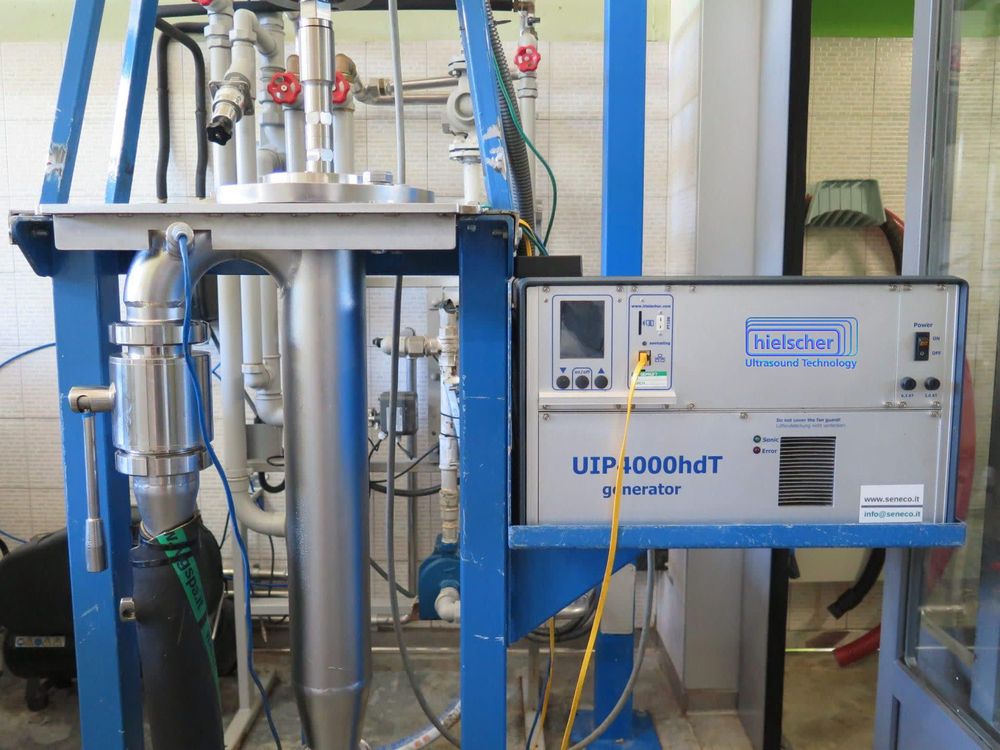
Inline sonicator UIP4000hdT for the industrial regeneration and depassivation of spent catalysts

Inline sonicator UIP4000hdT for the industrial regeneration of spent catalysts

Why Sonication Is Effective for Spent Catalyst Reactivation

The scientific importance of sonication lies in its ability to intensify heterogeneous solid-liquid processes. Catalyst regeneration is often limited by poor mass transfer, blocked pores, passivated surfaces, and slow diffusion of cleaning or leaching agents into the catalyst structure. Ultrasound addresses these limitations through mechanical and physicochemical mechanisms.

Key advantages of sonication include:

  • Removal of surface deposits: Ultrasonic cavitation can help detach coke, oxide films, fouling layers, and passivating coatings from catalyst surfaces.
  • Opening of blocked pores: Acoustic shear and microstreaming can improve access to internal pore networks, enhancing the effectiveness of washing, leaching, or oxidative treatment.
  • 향상된 대량 전송: Sonication increases liquid-solid contact and accelerates diffusion-controlled regeneration steps.
  • Particle deagglomeration: Ultrasonic dispersion breaks up catalyst agglomerates, exposing more active surface area.
  • Enhanced leaching performance: In metal-contaminated spent catalysts, ultrasound can intensify acid leaching and metal extraction.
  • Shorter processing times: By improving cleaning and reaction kinetics, sonication can reduce the time required for catalyst regeneration compared with conventional stirring.
  • Support for greener processing: More efficient regeneration helps extend catalyst life, reduce waste, lower raw-material demand, and improve the economics of catalyst reuse.
  • The relevance of ultrasound is not limited to physical cleaning. In sonochemistry, cavitation can create extreme local conditions and reactive environments, which can assist oxidation, surface modification, or chemical extraction steps. Thereby, ultrasonics can enlarge the active surface of catalysts, reduce fouling of solid dispersed catalysts and contribute to cleaning during catalyst recycling processes.

    이 산업용 등급의 1000 와트 프로브 형 초음파 발생기는 혼합 및 균질화에서 뛰어난 효율성을 제공합니다. 밀링, 나노 에멀젼 및 나노 분산과 같은 까다로운 응용 분야에 이상적인 UIP1000hdT는 균일 한 입자 크기 감소, 에멀젼의 향상된 혼합 및 분말 및 액체의 철저한 분산을 보장합니다. 제약, 화장품 및 화학과 같은 다양한 산업에서 더 빠른 처리 시간, 확장 가능한 결과 및 신뢰할 수 있는 성능을 경험하십시오. 초음파 기술의 힘으로 공정을 최적화하십시오!

    프로브형 초음파 초음파 처리기 UIP1000hdT로 파워 초음파 및 초음파 믹싱을 활용하세요!

    비디오 썸네일

    Industrial Relevance: From Catalyst Cleaning to Functional Reactivation

    Spent catalyst reactivation is more than a maintenance operation. It is a scientifically significant route to improving catalyst lifecycle performance. A regenerated catalyst must not only look clean; it must recover meaningful catalytic function. This requires restoration of accessible active sites, surface acidity or basicity, porosity, dispersion, and reaction performance.
     

    Ultrasonic treatment is relevant because it acts at several critical levels of catalyst regeneration:

    Surface: It removes passivating layers and exposes active sites.
    Pores: It supports the reopening of blocked mesopores and micropores.
    Particles: It disperses agglomerates and improves suspension homogeneity.
    Process: It intensifies liquid-solid contact and improves the efficiency of chemical regeneration media.
    지속 가능성: It supports reuse, metal recovery, and waste minimization.


    이 비디오에서는 퍼지 가능한 캐비닛에서 인라인 작동을 위한 2kW의 초음파 시스템을 보여줍니다. Hielscher는 화학 산업, 제약, 화장품, 석유 화학 공정 및 용제 기반 추출 공정과 같은 거의 모든 산업에 초음파 장비를 공급합니다. 이 퍼지 가능한 스테인리스 스틸 캐비닛은 위험 지역에서 작동하도록 설계되었습니다. 이를 위해 고객은 밀봉된 캐비닛을 질소 또는 신선한 공기로 퍼지하여 가연성 가스 또는 증기가 캐비닛으로 들어가는 것을 방지할 수 있습니다.

    위험 지역에 설치하기 위해 Purgeable Cabinet의 2x 1000 와트 초음파 발생기

    비디오 썸네일


    초음파 침지 균질화기 모델 UP400St - 침지 균질화를 위한 400와트의 강력한 초음파 프로브A recent study on ultrasonic and oxidation regeneration of spent Fluid Catalytic Cracking (FCC) catalysts reported that ultrasound-assisted advanced oxidation processes increased catalyst acidity and enabled the regenerated catalyst to be used in glycerol monostearate synthesis. (cf. Anggoro et al, 2026)
    Another study demonstrated the immersion in dilute sulfuric acid and subsequent ultrasonically-assisted leaching in a mixture of sulfuric acid and oxalic acid improves the removal of harmful metals in spent FCC catalyst significantly without destroying the zeolite Y framework and the microstructure of spent catalyst particle. Compared with conventional leaching, ultrasonic assisted leaching only needs 1/4 of the time to achieve much the same harmful metal removal effect and has superior advantages in retaining the integrity of particles. (cf. Wang et al, 2021).

    Sonication in Catalyst Recycling and Metal Recovery

    Spent catalysts often contain valuable metals such as nickel, vanadium, molybdenum, cobalt, platinum-group metals, or rare metals, depending on the catalyst type and industrial application. Sonication can support both catalyst reactivation and resource recovery. In ultrasonic-assisted leaching, cavitation improves penetration of the leaching solution, removes boundary layers around particles, and exposes fresh surfaces for reaction.

     
    This makes ultrasound particularly interesting for:

    • Refinery spent catalysts
    • FCC catalysts
    • Hydrotreating and hydrodesulfurization catalysts
    • Fischer-Tropsch 촉매
    • Supported metal catalysts
    • Environmental catalysts
    • Activated carbon and adsorbent-catalyst systems
    • Metal-contaminated or fouled heterogeneous catalysts
    초음파 처리 중 온도를 정확하게 유지하기 위해 냉각 재킷이 장착 된 플로우 셀이있는 실험실 초음파 균질화 기 UP400St.

    초음파 발생기 UP400St 플로우 셀 설정

    Technical Advantages of Hielscher Sonicators for Spent Catalyst Recycling

    Hielscher high-power sonicators are well suited for the recycling and reactivation of spent catalysts because they deliver controlled, reproducible, and scalable ultrasonic energy into liquid-solid suspensions. For catalyst regeneration, process reliability is essential: amplitude, power input, residence time, flow rate, temperature, pressure, and reactor geometry must be adjustable and reproducible from laboratory trials to industrial throughput.
    Hielscher offers ultrasonic systems from compact laboratory devices to industrial units, including probe-type sonicators and flow-through ultrasonic reactors for continuous processing. Hielscher sonicators range from small lab units to industrial processors such as 500 W, 1,000 W, 2,000 W, 4,000 W, 6,000 W, and 16,000 W devices, enabling scale-up from feasibility testing to production-level catalyst treatment.

     
    For spent catalyst recycling, the technical advantages include:

    1. High-intensity probe sonication for effective cavitation in abrasive catalyst slurries
    2. Flow-through reactor options for continuous regeneration, leaching, washing, or dispersion processes
    3. Precise amplitude control for reproducible process conditions
    4. Scalable equipment architecture from lab screening to industrial catalyst recycling
    5. Robust industrial design for demanding chemical-processing environments
    6. Compatibility with sonochemical processes such as acid leaching, oxidative cleaning, dispersion, and surface activation

     
    These features make Hielscher sonicators a practical technology platform for companies and research institutions developing advanced catalyst regeneration protocols, whether the goal is to restore catalytic activity, recover valuable metals, reduce disposal volume, or improve the sustainability of catalytic production.


    Sonication is an efficient technique to regenerate and reactivate spent catalysts. Ultrasonic cavitation removes passivating layers (catalyst fouling and poisoning) and increases the active surface of solid catalysts

    Ultrasonic homogenizer UIP2000hdT for catalyst regeneration in a flow-through process


    A Sustainable Technology for the Circular Catalyst Economy

    As industries move toward cleaner production and resource efficiency, spent catalyst management is becoming a strategic priority. Sonication supports this transition by making catalyst reactivation faster, more efficient, and more technically controllable. Instead of treating spent catalysts as waste, ultrasonic processing helps transform them into reusable materials or valuable secondary raw-material sources.
    The industrial relevance of sonication lies in its ability to combine mechanical activation, surface cleaning, dispersion, and mass-transfer intensification in one process. For industrial users, the advantage is equally clear: improved catalyst reuse, reduced raw-material consumption, lower waste generation, and potentially lower operating costs.

    Take Advantage of Ultrasonic Catalyst Regeneration

    마노-써모-소닉을 위한 재킷형 가압식 초음파 유량 셀 반응기Reactivation of spent catalysts using sonication is an advanced approach to catalyst recycling with strong scientific and industrial potential. Acoustic cavitation enables the removal of deposits, the reopening of blocked pores, the improvement of mass transfer, and the intensification of chemical regeneration steps. When combined with suitable leaching, oxidation, washing, or thermal strategies, ultrasonic treatment can contribute to restoring catalyst activity and recovering valuable metals.
    With scalable high-power sonicators and industrial ultrasonic flow reactors, Hielscher provides the technical foundation for developing reliable, reproducible, and efficient spent catalyst regeneration processes. As catalyst recycling becomes increasingly important for sustainable chemistry and circular industrial production, sonication is emerging as a powerful tool for extending catalyst lifetime and improving resource efficiency.

    아래 표는 초음파기의 대략적인 처리 용량을 나타냅니다.

    배치 볼륨(Batch Volume) 유량 권장 장치
    1 내지 500mL 10 내지 200mL/분 업100H
    10 내지 2000mL 20 내지 400mL/분 UP200HT, UP400ST
    0.1 내지 20L 0.2 내지 4L/min UIP2000hdT 님
    10에서 100L 2 내지 10L/min UIP4000hdt 님
    15에서 150L 3 내지 15L/min UIP6000hdT 님
    N.A. 개시 10 내지 100L/min UIP16000hdT 님
    N.A. 개시 의 클러스터 UIP16000hdT 님

    추가 정보 요청

    아래 양식을 사용하여 초음파 프로세서, 응용 프로그램 및 가격에 대한 추가 정보를 요청하십시오. 우리는 귀하와 귀하의 프로세스에 대해 논의하고 귀하의 요구 사항을 충족하는 초음파 시스템을 제공하게되어 기쁩니다!


    설계, 제조 및 컨설팅 – 독일에서 만든 품질

    Hielscher 초음파는 최고의 품질과 디자인 표준으로 잘 알려져 있습니다. 견고 함과 쉬운 작동으로 초음파를 산업 시설에 원활하게 통합 할 수 있습니다. 거친 조건과 까다로운 환경은 Hielscher 초음파기로 쉽게 처리 할 수 있습니다.

    Hielscher 초음파는 ISO 인증 회사이며 최첨단 기술과 사용자 친화성을 갖춘 고성능 초음파에 특히 중점을 둡니다. 물론, Hielscher 초음파는 CE를 준수하며 UL, CSA 및 RoHs의 요구 사항을 충족합니다.

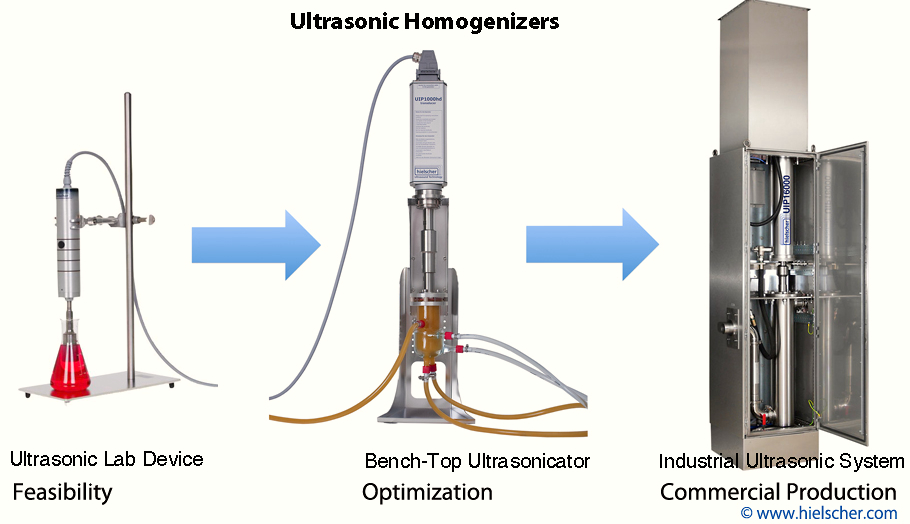
    초음파 고전단 균질화기는 실험실, 벤치탑, 파일럿 및 산업 공정에 사용됩니다.

    Hielscher 초음파는 실험실, 파일럿 및 산업 규모에서 혼합 응용 분야, 분산, 유화 및 추출을위한 고성능 초음파 균질화기를 제조합니다.


    자주 묻는 질문

    What is a Catalyst?

    A catalyst is a substance that increases the rate of a chemical reaction by lowering the activation energy, without being consumed stoichiometrically in the reaction. It provides an alternative reaction pathway and can often be reused.

    What is a Spent Catalyst?

    A spent catalyst is a catalyst that has lost part or all of its catalytic activity, selectivity, or stability after use. Deactivation may result from fouling, coke deposition, poisoning, sintering, leaching, or structural degradation.

    What is a Spent FCC Catalyst?

    A spent FCC catalyst is a deactivated catalyst from the fluid catalytic cracking process in petroleum refining. FCC catalysts are typically zeolite-based materials used to crack heavy hydrocarbons into lighter products such as gasoline, olefins, and LPG. They become spent due to coke formation, metal contamination, hydrothermal degradation, and loss of acidity or surface area.

    How do Catalysts get Consumed?

    Catalysts are not consumed in the ideal stoichiometric sense, but they can be deactivated or physically lost during operation. Common mechanisms include:

    • Poisoning: irreversible adsorption of impurities on active sites.
    • Fouling/coking: deposition of carbonaceous material blocks pores and active sites.
    • Sintering: high temperatures cause active particles to agglomerate, reducing surface area.
    • Leaching: active components dissolve into the reaction medium.
    • Attrition: mechanical abrasion breaks catalyst particles, especially in fluidized beds.
    • Phase transformation: the catalyst structure changes into a less active form.


    What are the Four Types of Catalysts?

    The four commonly distinguished types are:

  • Homogeneous catalysts: catalyst and reactants are in the same phase, usually liquid.
  • Heterogeneous catalysts: catalyst and reactants are in different phases, often a solid catalyst with gas or liquid reactants.
  • Biocatalysts: enzymes or whole cells catalyze biochemical reactions.
  • Electrocatalysts: catalysts accelerate electrochemical reactions at electrode surfaces.
  •  

    문헌 / 참고문헌

    왜 Hielscher 초음파인가?

    • 고능률
    • 최첨단 기술
    • 신뢰도 & 견고성
    • 조정 가능하고 정밀한 공정 제어
    • 일괄 & 인라인
    • 모든 볼륨에 대해
    • 인텔리전트 소프트웨어
    • 스마트 기능(예: 프로그래밍 가능, 데이터 프로토콜, 원격 제어)
    • 쉽고 안전한 작동
    • 낮은 유지 보수
    • CIP(clean-in-place, 클린-인-플레이스)

    최고의 초음파 처리기를 사용한 타당성 테스트부터 공정 최적화 및 산업 설치까지 - Hielscher 초음파는 성공적인 초음파 공정을 위한 파트너입니다!

    Hielscher 초음파는 고성능 초음파 균질화기를 제조합니다. 받는 사람 산업 규모.

    귀하의 프로세스에 대해 논의하게 되어 기쁩니다.