Prove pratiche di erosione da cavitazione su rivestimenti in bronzo marino
I test di erosione da cavitazione risultano particolarmente utili quando collegano un’esposizione controllata in laboratorio a un problema ingegneristico reale. Un esempio pratico è la valutazione di rivestimenti in bronzo resistenti alla cavitazione per componenti marittimi quali timoni e eliche navali. Queste parti operano in zone in cui le fluttuazioni locali di pressione possono generare bolle di vapore che collassano in prossimità della superficie, creando ripetuti carichi d’urto ad alta intensità. Nel tempo, ciò provoca corrosione puntiforme, danni da fatica, cedimento del rivestimento e perdita di materiale.
Prova di erosione da cavitazione dei rivestimenti in bronzo
Nello studio condotto da Hauer et al., i rivestimenti in bronzo realizzati mediante spruzzatura a freddo, spruzzatura a caldo, spruzzatura HVOF e spruzzatura ad arco sono stati confrontati con il bronzo di nichel-alluminio fuso e l’acciaio per la costruzione navale. La domanda centrale era semplice: quale processo di rivestimento è in grado di produrre una superficie in bronzo in grado di resistere all’esposizione alla cavitazione per un periodo sufficientemente lungo da garantire l’impiego in ambiente marino? Per rispondere a questa domanda, i ricercatori hanno utilizzato una prova di erosione da cavitazione basata sulla norma ASTM G32-16 con un apparato vibratorio, che includeva un sistema vibratorio a ultrasuoni Hielscher UIP1000hdT come sistema di prova.

Sonicatore UIP1000hdT (1000 W, 20 kHz) Configurazione del banco di prova per l'erosione da cavitazione
Controllo preciso delle condizioni di prova e registrazione automatica dei dati
Il sonicatore UIP1000hdT è particolarmente adatto a questo tipo di prova poiché emette ultrasuoni ad alta intensità e bassa frequenza nell’intervallo utilizzato per le prove di erosione da cavitazione. L’impianto di prova dell’erosione da cavitazione che utilizza il sonicatore da 1000 watt opera a 20 kHz e consente un monitoraggio preciso del processo, il controllo dell’ampiezza, la misurazione della temperatura e la registrazione automatica dei dati di prova. Queste funzioni sono importanti poiché l’intensità della cavitazione dipende fortemente dall’ampiezza, dalla temperatura del liquido, dalla pressione del liquido, dalla geometria del sonotrodo e dalla distanza tra il sonotrodo e il campione.
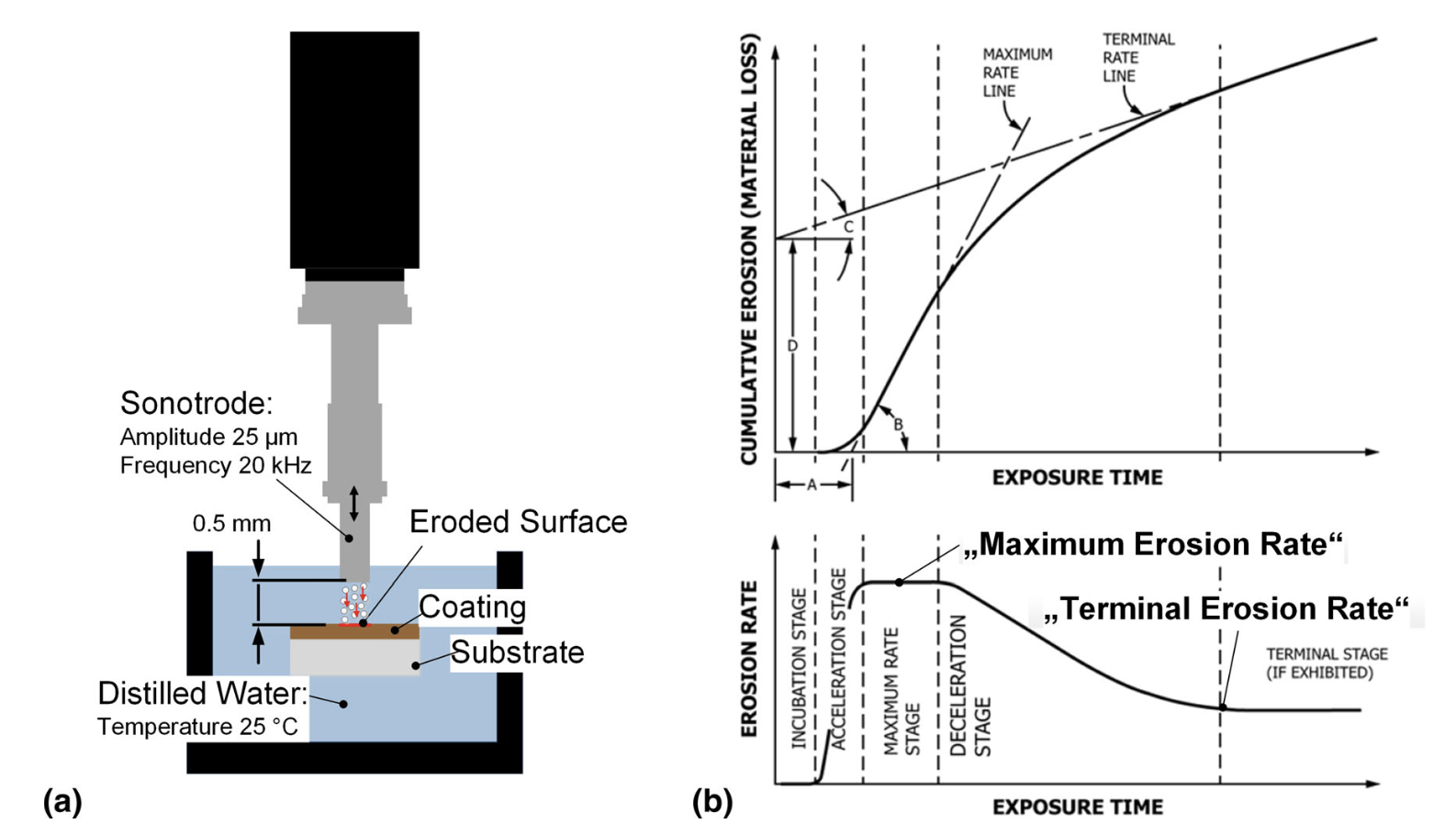
(a) Prova di erosione da cavitazione secondo la norma ASTM G32-16 con il sonicatore UIP1000hd (metodo indiretto). Tutti i parametri di prova sono valori nominali; le tolleranze sono indicate nella norma.
(b) Fasi schematiche della curva erosione-tempo e parametri caratteristici della procedura di prova.
Grafica e studio: ©Hauer et al., 2021.
Prova di erosione per cavitazione ultrasonica su rivestimenti in bronzo
Per l’esempio del rivestimento in bronzo marino, la prova è stata eseguita secondo la configurazione indiretta ASTM G32. In questa configurazione, il provino non è fissato al corno vibrante. Il sonotrodo a ultrasuoni genera invece cavitazione in acqua distillata, e il provino rivestito è fissato sotto il sonotrodo a una distanza definita. Hauer et al. hanno utilizzato una distanza di 0,5 mm tra il campione e il sonotrodo, una frequenza di 20 kHz e un’ampiezza picco-picco di 50 µm. Il liquido di prova era acqua distillata, mantenuta a temperatura approssimativamente ambiente, intorno ai 25 °C.
La preparazione dei campioni è una fase fondamentale. Prima dell’esposizione alla cavitazione, le superfici rivestite sono state levigate e lucidate in modo graduale utilizzando un abrasivo diamantato fine con granulometria inferiore a 4 µm. Ciò riduce l’influenza di particelle non ben aderenti o di irregolarità superficiali che, altrimenti, potrebbero staccarsi immediatamente e distorcere la curva di erosione. L’obiettivo non è quello di migliorare l’aspetto del rivestimento, ma di creare una condizione iniziale riproducibile, in modo che la perdita di massa misurata rifletta la resistenza alla cavitazione piuttosto che una preparazione superficiale inadeguata.

Cella di prova regolabile in altezza per prove di erosione per cavitazione (ASTM G32-16)
La procedura di prova di erosione da cavitazione ultrasonica e i relativi risultati
La procedura di prova pratica è semplice. Innanzitutto, ogni campione viene pulito, asciugato e pesato su una bilancia di precisione. Viene quindi posizionato nella cella di prova sotto il sonotrodo BS4d22 del sonicatore UIP1000hdT, con la distanza di 0,5 mm impostata con cura e in modo ripetibile. Il sonicatore viene azionato all’ampiezza e alla frequenza definite, mentre la temperatura del liquido viene controllata per impedire che il riscaldamento alteri l’intensità della cavitazione. Dopo un intervallo di esposizione definito, il campione viene rimosso, pulito, asciugato e pesato nuovamente. Questa sequenza viene ripetuta con intervalli di esposizione crescenti, a seconda del materiale, fino all’ottenimento di una curva di erosione completa.
La misura grezza è la perdita di massa. Ai fini del confronto ingegneristico, tale perdita di massa viene convertita in perdita di volume utilizzando la densità del materiale. La perdita di volume viene quindi divisa per l’area superficiale esposta per determinare la profondità media di erosione. Dalla curva di profondità di erosione, il ricercatore può calcolare i parametri caratteristici dell’erosione, quali la velocità massima di erosione, la velocità terminale di erosione e la profondità media di erosione. Hielscher osserva inoltre che l’erosione può essere riportata in termini di massa, volume o profondità di penetrazione per unità di tempo o per energia ultrasonica erogata, a seconda del protocollo scelto.
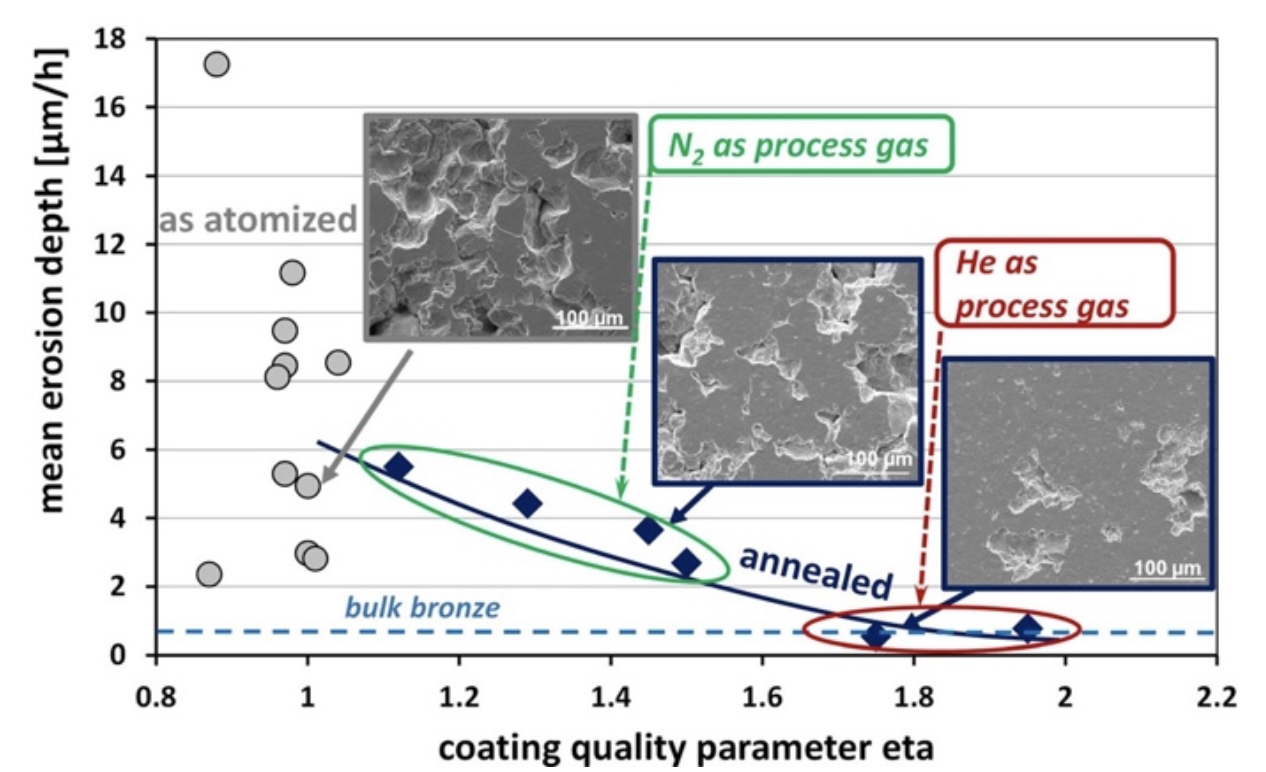
Profondità medie di erosione in funzione dei parametri di qualità del rivestimento corretti n. Il ricottura della polvere e la conseguente riduzione della sua resistenza consentono di ottenere rivestimenti di elevata qualità. Le figure mostrano il danneggiamento superficiale ottenuto dopo un tempo di prova di cavitazione pari a 100 min.
Grafici e studio: ©Hauer et al., 2021.
Una lezione importante che si ricava dallo studio di Hauer è che i tassi di erosione iniziali possono essere fuorvianti. I rivestimenti applicati mediante spruzzatura termica e cinetica hanno spesso mostrato un’elevata perdita iniziale di materiale, seguita da un tasso di erosione più basso e più stabile. Per questo motivo, Hauer et al. hanno utilizzato il tasso di erosione terminale come indicatore più rappresentativo delle prestazioni a lungo termine del rivestimento. Nel loro confronto della durata di 120 minuti, il tasso di erosione terminale è stato valutato principalmente a partire dalla seconda metà della prova, oltre i 60 minuti, per cogliere meglio il comportamento stabilizzato.
I risultati dei test dimostrano l’utilità di un apparato di cavitazione vibratoria controllata. Il bronzo di nichel-alluminio fuso ha raggiunto una velocità di erosione finale di circa 0,40 µm/h. Il bronzo ottimizzato applicato mediante spruzzatura a caldo ha raggiunto 0,57 µm/h, un valore prossimo a quello del campione di riferimento fuso. Un rivestimento ottimizzato applicato mediante spruzzatura ad arco su acciaio per la costruzione navale ha raggiunto circa 1,02 µm/h, mentre un rivestimento HVOF ottimizzato ha raggiunto circa 1,74 µm/h. Anche se questi rivestimenti non hanno eguagliato pienamente il bronzo fuso per eliche, hanno comunque superato di gran lunga l’acciaio da costruzione navale; lo studio riporta che i rivestimenti applicati a spruzzo ad arco e HVOF hanno raggiunto una resistenza alla cavitazione rispettivamente circa 26 volte e 16 volte superiore rispetto all’acciaio VL-A.

Punta sostituibile per ASTM G32 – test di erosione per cavitazione
Utilizza un sonicatore come apparecchio vibrante per le tue prove di erosione da cavitazione
 La conclusione pratica è che le prove di erosione da cavitazione con il sonicatore UIP1000hdT come apparato vibrante non si limitano a classificare i materiali. Esse rivelano in che modo il processo di rivestimento, la microstruttura, il contenuto di ossido, la porosità, l’adesione interfacciale e il post-trattamento influenzano il comportamento reale all’erosione. Hauer et al. hanno concluso che la tecnologia HVOF e la spruzzatura ad arco possono offrire un ottimo compromesso tra prestazioni e costi per il miglioramento delle superfici dei timoni in acciaio, mentre la spruzzatura a freddo e a caldo sono preferibili quando è richiesta una resistenza alla cavitazione simile a quella del bronzo di nichel-alluminio massiccio.
Per i laboratori e gli sviluppatori di rivestimenti, la chiave per ottenere risultati riproducibili è il controllo rigoroso dei parametri di prova: ampiezza del sonotrodo, frequenza, distanza tra il sonotrodo e il campione, temperatura del liquido, composizione chimica del liquido, preparazione del campione, intervalli di pesatura e calcolo del tasso di erosione. Una volta definite queste condizioni, l’Hielscher UIP1000hdT offre un metodo pratico e ripetibile per tradurre la cavitazione ultrasonica in dati quantitativi sulle prestazioni del rivestimento.

Foglio di lavoro campione per i test di erosione per cavitazione
Qui puoi trovare le istruzioni per le prove di erosione da cavitazione!
Configurazione per la prova di erosione da cavitazione secondo la norma ASTM G32
I sonicatori UIP500hdT, UIP1000hdT, UIP15000hdT e UIP2000hdT sono adatti alle prove previste dalla norma ASTM G32. Possiamo fornire ciascuna di queste unità con un accurato protocollo di misurazione dell'ampiezza dell'ampiezza meccanica sulla punta del sonotrodo. Si consiglia di utilizzare uno di questi dispositivi con un sonotrodo BS4d22 (diametro 22 mm) e un supporto ST2.
| sonicatore | Potenza dell'ultrasuono | frequenza |
|---|---|---|
| UIP500hdT | 500W | 20kHz |
| UIP1000hdT | 1000W | 20kHz |
| UIP1500hdT | 1500W | 20kHz |
| UIP2000hdT | 2000W | 20kHz |

Sonotrodo ASTM G32 -16 da 15,9 mm con punta sostituibile
Progettazione, produzione e consulenza – Qualità Made in Germany
Gli ultrasuoni Hielscher sono noti per i loro elevati standard di qualità e design. La robustezza e la facilità d'uso consentono un'agevole integrazione dei nostri ultrasuoni negli impianti industriali. Gli ultrasuonatori Hielscher sono in grado di gestire facilmente condizioni difficili e ambienti impegnativi.
Hielscher Ultrasonics è un'azienda certificata ISO e pone particolare enfasi sugli ultrasuonatori ad alte prestazioni, caratterizzati da tecnologia all'avanguardia e facilità d'uso. Naturalmente, gli ultrasuoni Hielscher sono conformi alla normativa CE e soddisfano i requisiti UL, CSA e RoH.

Erosione da cavitazione sulla superficie del titanio
Domande frequenti
Che cos’è la norma ASTM G32-16?
La norma ASTM G32-16 è un metodo di prova standard dell’ASTM International per la misurazione dell’erosione da cavitazione mediante un apparato vibrante. Nello studio citato, tale metodo è stato applicato in una configurazione indiretta con un sonotrodo a 20 kHz, un'ampiezza picco-picco di 50 µm e una distanza tra il campione e il sonotrodo pari a 0,5 mm.
Cosa sono i rivestimenti in bronzo?
I rivestimenti in bronzo sono strati superficiali costituiti da leghe a base di rame, quali il bronzo al nichel-alluminio o il bronzo al manganese-alluminio, applicati a un substrato mediante processi quali la spruzzatura a freddo, la spruzzatura a caldo, la spruzzatura HVOF o la spruzzatura ad arco. Sono utilizzati per migliorare la resistenza all’usura, alla corrosione e all’erosione da cavitazione, in particolare sui componenti marittimi.
A cosa serve la prova di erosione da cavitazione?
Le prove di erosione da cavitazione vengono utilizzate per quantificare la resistenza di un materiale o di un rivestimento ai danni causati dal collasso delle bolle di cavitazione. Esse misurano la perdita di materiale nel tempo, la convertono in profondità di erosione e valutano parametri quali la velocità massima di erosione e la velocità terminale di erosione, al fine di consentire il confronto tra i materiali e la scelta del processo più adeguato.
Gli apparecchi a vibrazione ultrasonica vengono utilizzati anche per altri metodi di prova?
Sì. Oltre alla norma ASTM G32-16, gli apparecchi a vibrazione ultrasonica (sonicatori) possono essere utilizzati per studi comparativi sulla cavitazione-corrosione o sulla durata dei rivestimenti.
Scopri come vengono utilizzati i test di erosione da cavitazione sui rivestimenti in bronzo marino!
Inoltre, le vibrazioni ultrasoniche vengono utilizzate per le prove di fatica assiale, in particolare nel regime di fatica ad altissimo numero di cicli. Un provino sintonizzato sulla risonanza longitudinale – —in genere intorno ai 20 kHz—viene sottoposta a una tensione ciclica – compressione.
Scopri come vengono utilizzate le vibrazioni ultrasoniche per le prove di fatica assiale sui provini!
Letteratura / Riferimenti
- Hielscher Cavitation Erosion Test Protocol – ASTM G32
- Hauer, Michél; Gärtner, Frank; Krebs, Sebastian; Klassen, Thomas; Watanabe, Makoto; Kuroda, Seiji; Krömmer, Werner; Henkel, Knuth-Michael (2021): Process Selection for the Fabrication of Cavitation Erosion-Resistant Bronze Coatings by Thermal and Kinetic Spraying in Maritime Applications. Journal of Thermal Spray Technology 30, 2021.
- Bolewski, Łukasz; Szkodo, Marek; Kmieć, Mateusz (2017): Cavitation erosion degradation of Belzona® coatings. Advances in Materials Science. 17, 2017.
- Kmieć, Mateusz; Karpiński, Bartłomiej; Szkodo, Marek (2016): Cavitation Erosion of P110 Steel in Different Drilling Muds. Advances in Materials Science. 16, 2016.
- Müller, Saskia; Fischper, Maurice; Mottyll, Stephan; Skoda, Romuald; Hussong, Jeanette (2014): Analysis of the cavitating flow induced by an ultrasonic horn – Experimental investigation on the influence of actuation phase, amplitude and geometrical boundary conditions. EPJ Web of Conferences 67, 2014.
- Alta efficienza
- Tecnologia all'avanguardia
- affidabilità & robustezza
- controllo di processo regolabile e preciso
- lotto & in linea
- per qualsiasi volume
- software intelligente
- funzioni intelligenti (ad esempio, programmabili, protocollo dati, controllo remoto)
- Facile e sicuro da usare
- Bassa manutenzione
- CIP (clean-in-place)
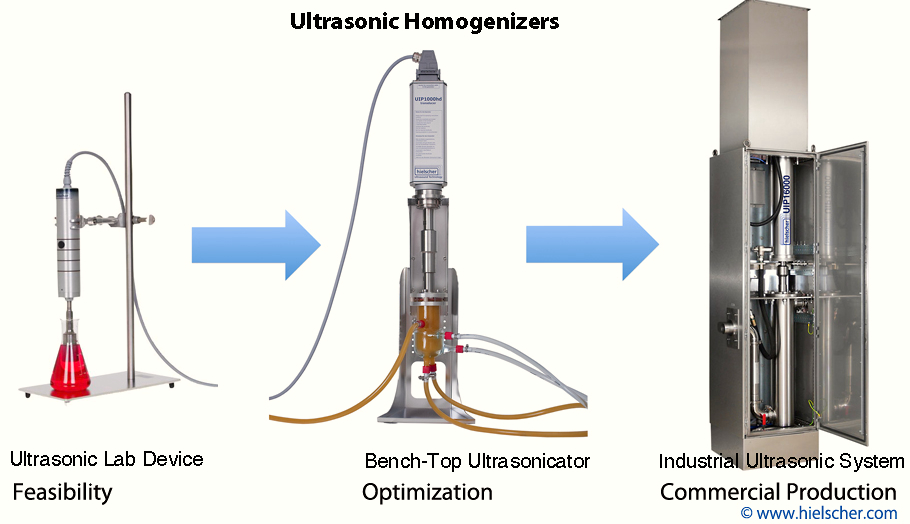
Hielscher Ultrasonics produce omogeneizzatori a ultrasuoni ad alte prestazioni da laboratorio a dimensioni industriali.