Sono-elektrolízis az ipari fémkivonáshoz
Mivel a réz, a nikkel, a kobalt, a cink, az ezüst, az arany, a ritkafémek és az akkumulátorokhoz szükséges anyagok iránti globális kereslet folyamatosan növekszik, a fémgyártókra egyre nagyobb nyomás nehezedik, hogy az ércekből, koncentrátumokból, meddőből, újrahasznosított anyagáramokból és alacsony minőségű nyersanyagokból minél több értéket nyerjenek ki. A hidrometallurgiában a fémvisszanyerés egyik legelterjedtebb módszere az elektrolitikus kinyerés, más néven elektroextrakció: az oldott fémionokat elektromos áram alkalmazásával nyerik ki a kimosóoldatból, amelynek hatására az ionok redukálódnak, és a fém a katódon lerakódik.
Sono-elektrolízis a hidrometallurgiai fémvisszanyerés javítása érdekében
A sono-elektrokinyerés ezt az elvet fejleszti tovább azáltal, hogy az elektrokinyerést nagy intenzitású ultrahanggal ötvözi. Az eredmény egy sonoelektrokémiai folyamat, amelyben az akusztikus kavitáció, a mikroszivárgás és az elektrokémiai redukció együttesen hatnak. Ahelyett, hogy kizárólag az elektromos potenciálra és a hagyományos elektrolitáramlásra támaszkodna, a sono-elektrolytikus kinyerés intenzív helyi keverést hoz létre közvetlenül az elektród felületén vagy annak közelében, ahol a fémlerakódás ténylegesen megtörténik. Széles körben ismert, hogy az ultrahang fokozza a tömegáramlást, megzavarja a diffúziós réteget, megtisztítja az elektród felületeit, eltávolítja a gázbuborékokat, és elősegíti a magasabb elektrokémiai sebességeket.

Elektro-szonikáció, amelyben a szonotróda és a reaktor fala szolgál elektródaként.

Ultrahangos elektródák: 2 ultrahangos átalakító mozgatja az anódot, illetve a katódot. Az ultrahangos elektródák egyidejűleg elektródaként és ultrahangos érzékelőként is működnek, javítva ezzel az elektrolitikus kinyerés hatékonyságát.
Az érctől a katódig: hogyan működik a szonikus galvanizálás?
Az ipari elektrolitikus kinyerés általában a kioldással kezdődik. Ebben az előkészítő lépésben a célfémet az ércből, a koncentrátumból, a feldolgozási maradékból, a salakból, a fekete masszából, az elektronikus hulladékból vagy más kohászati alapanyagból vizes oldatba oldják ki. A fém és az érc kémiai összetételétől függően a kimosószer lehet savas, lúgos, klorid-, szulfát- vagy cianid-alapú, ammóniás, szerves sav-alapú, vagy más módon kémiailag úgy alakítható ki, hogy feloldja az értékes fémfázist.
A kimosás után a fémtartalmú kimosóoldatot általában tisztítják, finomítják, majd beállítják a pH-értékét, a vezetőképességét, a hőmérsékletét, a fémkoncentrációját és a szennyezőanyag-összetételét. Az elektrolitikus kinyerőcellában ez a fémtartalmú elektrolit az anód és a katód között áramlik. Szabályozott áram hatására az oldott fémionok vándorolnak, és a katód felületén redukálódnak, ahol szilárd fémlerakódást képeznek. A szono-elektrolízis során ultrahangot vezetnek be ebbe az elektrokémiai környezetbe, így az akusztikus energia fokozza az ionok transzportját és az elektród határréteg megújulását.
Egyszerűen fogalmazva a folyamat lépései a következők:
- Kiválás: Az értékes fémeket az ércből vagy a másodlagos nyersanyagból oldatba oldják.
- Az oldat kondicionálása: A kimosófolyadékot megtisztítják vagy beállítják a szelektivitás és a lerakódási viselkedés javítása érdekében.
- Szon-elektrokémiai lerakódás: Az elektrolíziscellában az ultrahang és az elektromos áram egyidejűleg hatnak.
- Katódvisszanyerés: A fémlerakódásokat – az eljárás kialakításától függően – lemezként, porként, szivacsként, fóliaként vagy más formában nyerik ki.
- Elektrolit-visszakeringetés: A kimerült elektrolit regenerálható, újrahasznosítható, vagy visszajuttatható a hidrometallurgiai körbe.

Beépített ultrahangos-elektrokémiai berendezés
Miért javítja az ultrahangkezelés az elektrolitikus kinyerést?
 Számos elektrolitikus kinyerési rendszerben a fő szűk keresztmetszet nem csupán maga az elektromos reakció. Hanem a friss fémionok katódfelületre történő eljuttatása, a reakciótermékek és a gázbuborékok eltávolítása, valamint az aktív, tiszta és homogén elektród-felület fenntartása. Az ultrahang közvetlenül orvosolja ezeket a korlátokat.
Amikor nagy teljesítményű ultrahang hatol be az elektrolitba, akusztikus kavitációt vált ki: mikroszkopikus buborékok keletkeznek, rezegnek, majd összeomlanak. Ezek az összeomlások mikrosugárokat, lökéshullámokat és intenzív helyi nyíróerőt generálnak. A folyadékfázisú feldolgozás során ez lokalizált keveredést, mikrokeveredést, diszperziót, agglomeráció felbomlását és gyorsított fázishatár-transzportot eredményezhet.
A Hielscher ultrahang- és sono-elektro-technológiája a folyadékok feldolgozása céljából alkalmazott, szabályozott akusztikus kavitációra épül, amelynek során az ultrahanghullámok kavitációs mezőket hoznak létre, amelyek nyíróerőt, lökéshullámokat, mikrosugarakat és reprodukálható energiaátadást eredményeznek folyadékokban, szuszpenziókban és iszapokban.
Az elektrolitikus kinyerés során ezek a hatások különösen értékesek, mivel az elektrokémiai reakció egy felületen zajlik. Az ultrahang csökkentheti a koncentrációs gradienseket az elektróda közelében, összenyomhatja vagy felbomlaszthatja a diffúziós réteget, és folyamatosan friss fémionokat juttathat a katódhoz. Az ultrahanggal fokozott elektrokémiai anyagszállítással kapcsolatos legújabb kutatások az akusztikus áramlás által vezérelt diffúziós réteg összenyomódáson keresztül történő áramfokozást írják le, míg az ultrahanggal segített elektródos lerakódással kapcsolatos kutatások a kavitáció, a mikroáramlás és az akusztikus nyomás hatásai révén javuló iontranszportot jelentenek.
A szinergia: ultrahangkezelés és elektrokémia
A szono-elektrolízis előnye nem csupán abban rejlik, hogy az ultrahang “kever” A megoldás. A Hielscher Sono-Electro-Probes készülékek ultrahangos érzékelőket és elektródákat egyesítenek, amelyek egyidejűleg nagy intenzitású ultrahangot és elektromos áramot vezetnek be egy elektrokémiai rendszerbe. Ennek kulcsa a két energiatípus szinergikus összekapcsolása: az elektromos energia hajtja a fémion-redukciós reakciót, míg az akusztikus energia javítja azokat a fizikai és felületi feltételeket, amelyek között a reakció lezajlik.
Ez a szinergia számos, az ipar számára releváns előnyt eredményezhet:
- Nagyobb anyagátvitel: Az ultrahangkezelés javítja az oldott fémionok katódfelülethez való eljutását, ezzel csökkentve a helyi kimerülést.
- Tisztább elektródafelületek: A kavitáció és az akusztikus áramlás elősegíti a passziváló rétegek, a lazán tapadó részecskék, a gázbuborékok és a reakciótermékek eltávolítását.
- Az áramhatékonyság javításának lehetősége: Egy aktívabb elektródfelület csökkentheti a koncentrációs polarizációval és a felületi eltömődéssel járó veszteségeket, bár a végső hatékonyság az elektrolit kémiai összetételétől és az üzemeltetési paraméterektől függ.
- Egyenletesebb lerakódás: Az ultrahanggal támogatott galvanizálás simább, sűrűbb, egyenletesebb bevonatokkal és finomabb szemcsés szerkezettel jár együtt.
- Gyorsabb galvanizálási kinetika: A fokozott anyagátvitel és a felületi aktiválás optimalizált körülmények között nagyobb lerakódási sebességet tesz lehetővé.
- A diffúzió korlátozásainak mérséklése: Az elektródánál a határréteg felkavarásával az ultrahang elősegítheti az egyenletesebb lerakódást még akkor is, ha a fémkoncentráció viszonylag alacsony.
- A komplex elektrolitok jobb kezelése: Az ultrahangos keverés elősegítheti a szuszpenziók, a finom részecskék és a nehezen kinyerhető oldatok feldolgozását azáltal, hogy javítja a diszperziót és csökkenti a helyi pangást.
Ezért a szono-elektrolízis különösen vonzó megoldás azoknál a hidrometallurgiai folyamatoknál, ahol a hagyományos elektrolízist lassú kinetika, kedvezőtlen lerakódási morfológia, koncentrációs polarizáció, elektród-elzáródás, gázbuborékok által okozott fedés vagy alacsony fémion-koncentráció korlátozza.
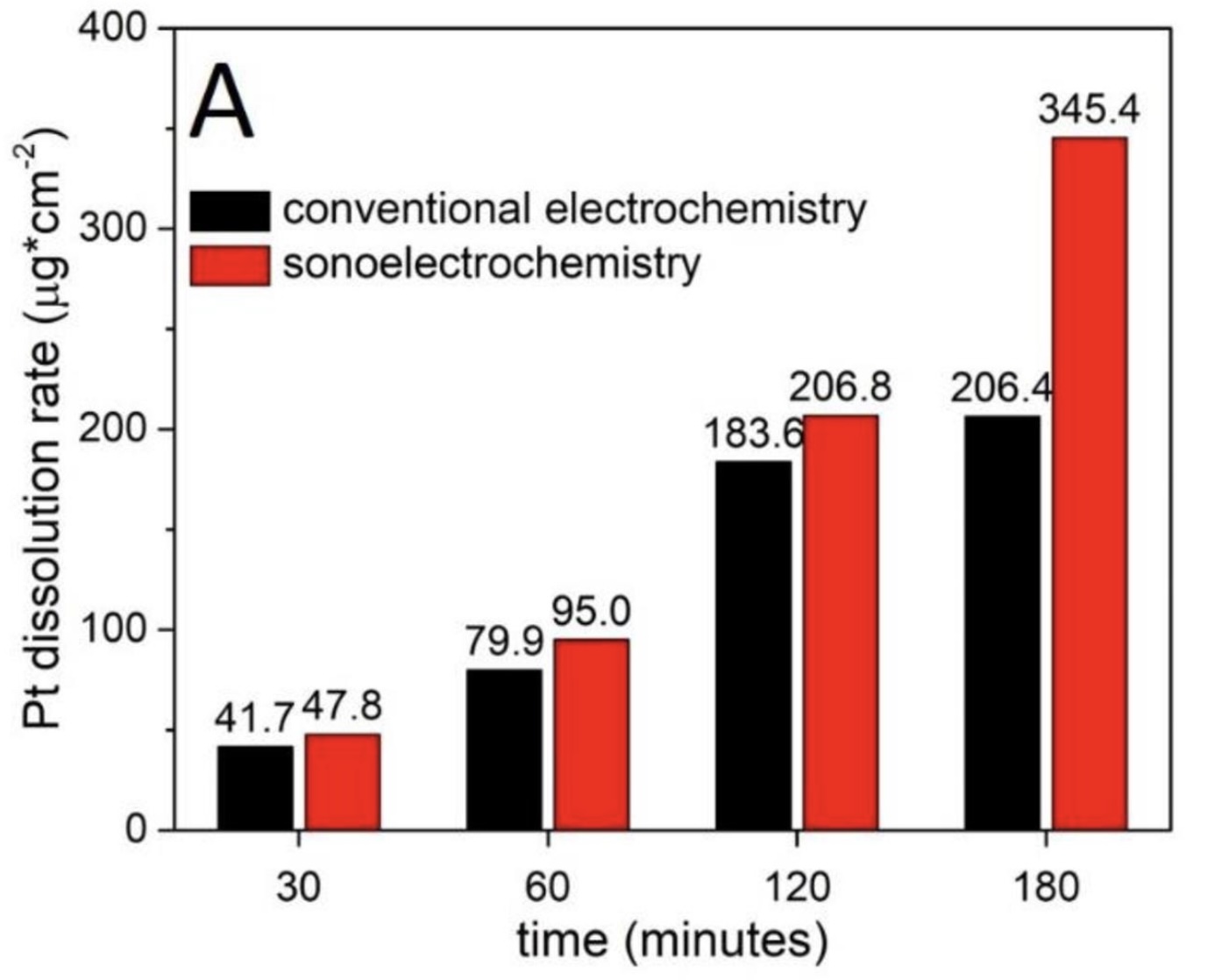
A Pt-elektródák hagyományos és sonoelektrokémiai oldódási sebességeinek összehasonlítása.
Tanulmány és grafikonok: ©Vasile és társai, 2021
A fémkitermelés ipari előnyei
Az ipari fémkitermelés terén a szono-elektrolízis előnye a folyamat intenzívebbé tételében rejlik. Ha az ultrahangteljesítményt, az elektródák geometriáját, az elektrolit összetételét és az áramsűrűséget megfelelően hangolják össze, akkor rövidebb idő alatt potenciálisan több fém nyerhető ki, javul a lerakódás morfológiája, és stabilabbá válik a cellaműködés.
Gyakorlati szempontból a szono-elektrolízis a következőket támogatja:
- Kivonás alacsony koncentrációjú kimosófolyadékokból: A jobb anyagátvitel hozzájárulhat a lerakódás fenntartásához, ha az oldott fémkoncentrációk nem ideálisak.
- A katód minőségének javítása: A simább és egyenletesebb lerakódások megkönnyíthetik a későbbi rétegtávolítást, olvasztást, finomítást vagy a porkezelést.
- Alacsonyabb szennyeződési hajlam: A felület folyamatos megújítása csökkentheti a passziválás és a nem kívánt felületi rétegek hatását.
- Kompaktabb folyamattervezés: A gyorsabb kinetika – a folyamat kémiai jellemzőitől függően – kisebb sejtek használatát vagy nagyobb áteresztőképességet tesz lehetővé.
- A másodlagos erőforrásokból történő hatékonyabb kitermelés: Az akkumulátorok fekete tömege, az elektronikus hulladék, a katalizátorok, a salakok és az ipari maradékanyagok gyakran komplex kimosódási oldatokat eredményeznek, amelyek esetében a fokozott anyagátvitel nagy jelentőséggel bír.
- A folyamat jobb szabályozhatósága: A modern ultrahangos rendszerek beépíthetők szakaszos vagy folyamatos inline berendezésekbe, és beállíthatók az amplitúdó, a tartózkodási idő, az áramlási sebesség, a hőmérséklet és az energia-bevitel segítségével.
A Hielscher sono-elektro-rendszerei egyedülállóak: a sono-elektróda egyszerre működik ultrahangos érzékelőként és elektródaként. A sono-elektro-rendszereket a folyadékfeldolgozás méretarányos kiterjeszthetőségére tervezték, a laboratóriumi vizsgálatoktól a kísérleti üzemeltetésen át az ipari inline gyártásig. A nagy teljesítményű ultrahang, a 24 órás, hét napos folyamatos üzemeltetési képesség, az ipari szintű robusztusság és az alacsony karbantartási igény miatt a Hielscher sono-elektro-rendszerei ideálisak az ipari sono-elektrokinyeréshez.
Az olyan szabályozható paraméterek – mint az amplitúdó, az energia-bevitel, az áramlási sebesség, a hőmérséklet és a tartózkodási idő – segítségével megvalósuló lineáris méretnövelés jelentősen elősegíti a termelési kapacitások növelését.
Szonikus elektrolízis a kimosás–elektrolízis folyamatláncban
Egy hagyományos hidrometallurgiai üzemben az elektrolitikus kinyerés gyakran a kimosás, a szilárd-folyadék elválasztás, a tisztítás, valamint esetenként az oldószeres extrakció vagy az ioncsere után következik. Az ultrahangos elektrolitikus kinyerés beépíthető ebbe a későbbi kinyerési lépésbe, hogy fokozza az oldott fémionok szilárd fémmé történő átalakulását.
Egy tipikus folyamatmenet körülbelül így nézhet ki:
- A zúzott ércet, a koncentrátumot, a meddőt vagy a másodlagos nyersanyagot kimosással kezelik a célfém oldódásának elősegítése érdekében.
- Az oldhatatlan kísérőanyagokat, a maradék szilárd anyagokat és a nem kívánt fázisokat eltávolítják vagy mennyiségüket csökkentik.
- A telített kénsavoldatot kémiailag úgy állítják be, hogy szelektív elektrolitikus kinyerésre alkalmas legyen.
- Az elektrolitot egy ultrahangos elektródákkal és keringető rendszerrel felszerelt elektrolíziscellába vezetik be.
- Az ultrahangkezelés javítja az ionáramlást és az elektródfelület megújulását, miközben az alkalmazott áram a fémet a katódra rakja le.
- A fémterméket kinyerik, az elektrolitot pedig újrahasznosítják vagy további feldolgozásra továbbítják.
Ez a kombináció különösen érdekes azokban az esetekben, amikor a fémkitermelő iparnak nehezebben feldolgozható nyersanyagokkal kell megbirkóznia. Számos jövőbeli nyersanyag alacsonyabb fémtartalommal, több szennyeződéssel, finomabb részecskékkel, vegyületkeverékekkel vagy változó összetétellel rendelkezik. A szono-elektrolytikus kinyerés lehetőséget kínál az elektrokémiai kinyerési lépés megbízhatóbbá tételére azáltal, hogy javítja az elektrolit és az elektróda felülete közötti kölcsönhatást.

Az ultrahangos szonda elektródaként működik. Az ultrahanghullámok elősegítik az elektrokémiai reakciókat, ami jobb hatékonyságot, magasabb hozamot és gyorsabb konverziós arányt eredményez.
A sonoelektrokémia jelentősen javítja az elektródálási folyamatokat.
Ultrahangos-elektrokémiai fémvisszanyerés: magasabb hozamok alacsonyabb feldolgozási költségek mellett
Az elektrolitikus kinyerés már ma is a hidrometallurgia egyik alapköve, mivel segítségével a fémek vizes oldatokból nagy értékű szilárd termékek formájában nyerhetők ki. A szono-elektrolitikus kinyerés javítja a hagyományos elektrolitikus kinyerés hatékonyságát azáltal, hogy növeli a kinyerési hatékonyságot, az áramhatékonyságot és csökkenti az energiafogyasztást.
A nagy teljesítményű ultrahang és az elektrolitikus kinyerés szinergikus hatásai kiküszöbölik az elektrokémiai interfész fizikai korlátait, és elősegítik az intenzívebb, jobban szabályozható és potenciálisan hatékonyabb fémvisszanyerést. A bányászati, újrahasznosítási és kohászati tevékenységek esetében ez a technológia segít áthidalni a szakadékot az egyre összetettebb nyersanyagok és a tisztább, szelektívebb, nagyobb áteresztőképességű kinyerési módszerek iránti igény között.
A szonokémiai elektrolízis mint a folyamatok intenzívebbé tételét szolgáló eszköz
A fémkitermelés jövője attól függ majd, hogy sikerül-e több fémet kinyerni a nehezebben kitermelhető nyersanyagokból. Sok régióban csökken a magas minőségű ércek mennyisége, miközben a réz, a nikkel, a kobalt, a lítiummal kapcsolatos fémek, a nemesfémek és a ritka elemek iránti kereslet növekszik. Ugyanakkor az iparág figyelmét az elsődleges ércekről egyre inkább a másodlagos erőforrásokra, például a használt akkumulátorokra, az elektronikai hulladékra, a katalizátorokra, az ipari maradékanyagokra és a technológiai vizekre terjeszti ki.
A szono-elektrokinyerés ezen a területen egy rendkívül ígéretes eljárás-intenzifikációs stratégiát kínál. Az elektrokémiai fémkinyerés szelektivitásának és az ultrahangos kavitáció határfelületi erejének ötvözésével javíthatja az anyagátadást, az elektródaktivitást, a lerakódás morfológiáját és az eljárás megbízhatóságát. Az ipari üzemeltetők számára ez egy hatékonyabb utat jelent a kimosott fémionoktól a kinyerhető fémtermékig.
Röviden összefoglalva: a szono-elektrokinyerés a katód felületét dinamikusabb reakciózónává alakítja. Az ultrahangkezelés aktív állapotban tartja az elektrokémiai határfelületet; az elektrokémia az oldott ionokat fémmé alakítja; és ezek együttesen hatékony alapot biztosítanak a modern hidrometallurgiai kinyeréshez.
Nagy teljesítményű ultrahangos-elektromos szondák és ultrahangos-elektromos reaktorok
A Hielscher Ultrasonics az Ön régóta tapasztalt partnere a nagy teljesítményű ultrahangos rendszereknek. A legmodernebb ultrahangos szondákat és reaktorokat gyártjuk és forgalmazzuk, amelyeket világszerte használnak nagy igénybevételt jelentő alkalmazásokhoz igényes környezetben. A sonoelectrochemistry, Hielscher kifejlesztett speciális ultrahangos szondák, amelyek működhetnek katód és / vagy anód, valamint ultrahangos reaktorcellák alkalmas elektrokémiai reakciók. Ultrahangos elektródák és cellák állnak rendelkezésre galvanikus / voltaikus, valamint elektrolitikus rendszerekhez.
Vegye fel velünk a kapcsolatot most, és mondja el nekünk elektrokémiai folyamatkövetelményeit! Javasoljuk Önnek a legmegfelelőbb ultrahangos elektródákat és reaktorbeállítást!
Kapcsolat! / Kérdezzen tőlünk!

A Hielscher Ultrasonics nagy teljesítményű ultrahangos homogenizátorokat gyárt keverési alkalmazásokhoz, diszperzióhoz, emulgeáláshoz és extrakcióhoz laboratóriumi, kísérleti és ipari méretekben.
Gyakran Ismételt Kérdések
Mi az elektrolitikus kinyerés?
Az elektrolitikus kinyerés egy elektrokémiai fémkinyerési eljárás, amelynek során az oldott fémionokat egy vizes elektrolitból redukálják, és szilárd fém formájában lerakódnak a katódon. A fémtartalmú oldatot általában ércek, koncentrátumok, maradékanyagok vagy újrahasznosított anyagok kimosásával állítják elő, majd a rávezetett elektromos áram segítségével végzik el a célfém szelektív kinyerését.
Mi az a sono-elektro-szonda?
A Sono-Electro-Probe egy ultrahangos érzékelő és elektróda kombinációja, amely egyszerre juttat nagy intenzitású ultrahangot és elektromos áramot egy elektrokémiai rendszerbe. Sono-elektródaként akusztikus kavitációt és mikroszivárgást hoz létre az elektróda felületén vagy annak közelében, ami javítja a tömegátvitelt, felbomlasztja a diffúziós rétegeket, eltávolítja a gázbuborékokat vagy a passziváló rétegeket, és ezáltal fokozza az olyan elektrokémiai reakciókat, mint az elektródos lerakódás, az elektrolitikus kinyerés, az elektrooxidáció és az elektroredukció.
Melyek a szonoelektrokémia alkalmazási területei?
A sonoelektrokémia különböző folyamatokban és különböző iparágakban alkalmazható. A sonoelectrochemistry nagyon gyakori alkalmazásai a következők:
- Nanorészecske-szintézis (elektroszintézis)
- hidrogénszintézis
- elektrokoaguláció
- Szennyvíztisztító
- ohmos fűtés
- Törés emulziók
- Galvanizálás / Elektródálás
Irodalom / Hivatkozások
- Eugeniu Vasile, Adrian Ciocanea, Viorel Ionescu, Ioan Lepadatu, Cornelia Diac, Serban N. Stamatin (2021): A nemesfémek olcsóbbá tétele: Sonoelektrokémiai–hidrodinamikai kavitációs módszer a platinacsoportba tartozó fémek visszanyerésére használt autókatalizátorokból. Ultrasonics Sonochemistry, 72. évfolyam, 2021.
- Sherif S. Rashwan, Ibrahim Dincer, Atef Mohany, Bruno G. Pollet (2019): A Sono-Hydro-Gen-eljárás (ultrahanggal előidézett hidrogénelőállítás): Kihívások és lehetőségek. International Journal of Hydrogen Energy, 44. évfolyam, 29. szám, 2019, 14500–14526.
- Yurdal K.; Karahan İ.H. (2017): Ciklikus voltammetriai vizsgálat a Cu-Zn ötvözetből készült rétegek elektródos lerakódásáról: az ultrahangkezelés időtartamának hatásaActa Physica Polonica, 132. évf., 2017. 1087–1090.
- Mason, T.; Sáez Bernal, V. (2012): Bevezetés a szonoelektrokémia világába In: Power Ultrasound in Electrochemistry: From Versatile Laboratory Tool to Engineering Solution, első kiadás. Szerkesztette: Bruno G. Pollet. 2012, John Wiley & Sons Kft.
- Haas, I.: Gondolatok A. (2008): Fémes magnézium-nanorészecskék szintézise sonoelektrokémiai módszerrel. Chemical Communications 15(15), 2008. 1795–1798.
- Ashassi-Sorkhabi, H.; Bagheri, R. (2014): Polipirrol-rétegek sonoelektrokémiai és elektrokémiai szintézise St-12 acélon, valamint azok korróziós és morfológiai vizsgálata. Advances in Polymer Technology, 33. évf., 3. szám; 2014.
- A szono-elektrokémiai szintézis javítja a vegyipari gyártás hatékonyságát

Ultrahangos UIP2000hdT (2000 watt, 20kHz) katódként és / vagy anódként egy tartályban