Ultraäänilaitteet ASTM-testaus- ja käytäntöstandardeja varten
Hielscherin ultraäänilaitteet tarjoavat hallittua ja toistettavaa ultraäänikäsittelyä ASTM-menetelmiin, joihin kuuluvat ultraäänileikkaus, ultraääniuutto, kavitaatioeroosio ja MBEC-biofilmin irrottaminen.
Miksi sonikaattorin valinta on tärkeää ASTM-testauksessa
Ultraäänienergiaa hyödyntävät ASTM-menetelmät perustuvat määriteltyyn akustiseen kavitaatioon ja värähtelyyn, säädettyyn amplitudiin, toistettavaan näytteen sijoitteluun sekä johdonmukaiseen lämpötilan hallintaan. Vääränlainen ultraäänilaite voi aiheuttaa riittämätöntä kavitaatiota, epätasaista käsittelyä, liiallista kuumenemista tai huonoa toistettavuutta. Hielscherin ultraäänilaitteet on suunniteltu laboratoriovalidointityöhön, ja niissä on digitaalinen amplitudin säätö, tietojen tallennus, laaja sonotrodien yhteensopivuus sekä vankka jatkuva toiminta.
Miksi sonikaattorin valinta on tärkeää ASTM-testauksessa
Ultraäänienergiaa hyödyntävät ASTM-menetelmät perustuvat määriteltyyn akustiseen kavitaatioon ja värähtelyyn, säädettyyn amplitudiin, toistettavaan näytteen sijoitteluun sekä johdonmukaiseen lämpötilan hallintaan. Vääränlainen ultraäänilaite voi aiheuttaa riittämätöntä kavitaatiota, epätasaista käsittelyä, liiallista kuumenemista tai huonoa toistettavuutta. Hielscherin ultraäänilaitteet on suunniteltu laboratoriovalidointityöhön, ja niissä on digitaalinen amplitudin säätö, tietojen tallennus, laaja sonotrodien yhteensopivuus sekä vankka jatkuva toiminta.

Ultra-Sonic Shear System UP400St (24 kHz, 400 W) ASTM D2603:n äänen leikkausvakauden testaukseen
Säädelty energian syöttö
Digitaaliset ultraäänigeneraattorit auttavat varmistamaan, että amplitudi, aika, pulssiasetukset ja prosessin lämpötila ovat jäljitettävissä menetelmädokumentointia varten.
Menetelmäkohtaiset geometriat
Anturipohjaiset ultraäänilaitteet, suuritehoiset kavitaatiojärjestelmät ja levyultraäänilaitteet sopivat erilaisiin ASTM-näytemuotoihin, mittalaseista mikrotitrauslevyihin.
Toistettava näytteen käsittely
Vakaat ultraäänikäsittelyolosuhteet parantavat mittaussarjojen välistä vertailukelpoisuutta viskositeetin muutoksen, uuttotehokkuuden, kavitaatioeroosion ja biofilmin talteenoton osalta.
Sonicator-valintaopas yhdellä silmäyksellä
| ASTM-standardi | Testin tarkoitus | Miten ultraäänikäsittely auttaa | Suositeltu Sonicator-malli |
|---|---|---|---|
| ASTM D2603 | Polymeerejä sisältävien öljyjen, kuten voiteluöljyjen, vaihteistoöljyjen, traktorinesteiden, hydrauliöljyjen ja muiden polymeerejä sisältävien öljyjen, ultraäänileikkausvakaus. | Anturilla tuotettu ultraäänikavitaatio luo voimakkaita, toistettavia leikkausvoimia. Tämä nopeuttaa leikkausherkkien viskositeetti-indeksin parantajien mekaanista hajoamista ja mahdollistaa laboratorioissa pysyvän viskositeetin menetyksen mittaamisen hallituissa olosuhteissa. | UP400St ja S24d22-sonotrodi |
| ASTM D5621 | Polymeerisiä viskositeetin muokkaajia sisältävien hydraulinesteiden sonic-leikkausvakaus. | Ultraäänikäsittely altistaa hydraulinesteen määritellyille, voimakkaan leikkausvoiman aiheuttaville akustisille olosuhteille. Tämän avulla voidaan selvittää, säilyttävätkö polymeerilisäaineet viskositeettinsa vai hajoavatko ne voimakkaan mekaanisen rasituksen alaisena. | UP400St ja S24d22-sonotrodi |
| ASTM G32 | Metallien, pinnoitteiden, metalliseosten, keraamisten materiaalien ja muiden tekniikan alalla käytettävien materiaalien kavitaatioeroosiotestaus, kun ne altistetaan kavitaatiolle. | Värähtelevä ultraäänisonotrodi luo nesteeseen hallitun kavitaatiokentän. Kavitaatiokuplien toistuva muodostuminen ja romahtaminen aiheuttaa mitattavissa olevaa kulumista, minkä ansiosta voidaan vertailla materiaalien kestävyyttä kavitaatiovaurioita vastaan. | UIP1000hdT Vaihtoehdot: UIP500hdT tai UIP2000hdT |
| ASTM E1979-21 | Maalin, pölyn, maaperän ja ilmanäytteiden ultraäänipuhdistus lyijypitoisuuden määrittämistä varten. | Ultraäänikavitaatio parantaa uuttotehokkuutta hajottamalla hiukkasia, lisäämällä näytteen ja uuttoliuoksen välistä kosketuspintaa sekä nopeuttamalla lyijyn vapautumista myöhempää analyyttistä määrittämistä varten. | UP200Ht rutiinilaboratorioille UP400St suuremman intensiteetin tai läpimenon saavuttamiseksi |
| ASTM E2799-22 | Desinfiointiaineen tehokkuuden testaaminen seuraavia vastaan Pseudomonas aeruginosa biofilmi MBEC-määrityksen avulla. | Koko mikrolevyn kattava ultraäänikäsittely irrottaa biofilmin solut 96-peg-MBEC-kannesta kuoppiin niiden talteenottoa ja määrän määrittämistä varten. Tasainen mikrolevyn ultraäänikäsittely parantaa kuoppien välistä vertailukelpoisuutta ja tukee suurikapasiteettista biofilmitestausta. | Microplate sonicator UIP400MTP |
Suositellut Hielscher-ultraäänilaitteet ASTM-standardien mukaisesti
Seuraavissa ASTM-standardeissa ultraäänikäsittelyä käytetään keskeisenä testivaiheena tai ultraäänikäsittelyllä tuettuna näytteenvalmistusvaiheena. Valitse malli, joka vastaa vaadittua näytteen muotoa, tehotasoa ja käsittelykapasiteettia.
ASTM D2603 – Polymeerejä sisältävien öljyjen sonic shear -stabiilisuus
ASTM D2603 -standardissa arvioidaan polymeerejä sisältävien öljyjen leikkausvakautta mittaamalla pysyvää viskositeetin menetystä ultraäänivärähtelijässä suoritetun säteilytyskäsittelyn jälkeen. Testiä käytetään nesteille, kuten voiteluöljyille, vaihteistoöljyille, traktorinesteille ja muille polymeerimodifioiduille öljyille, joissa viskositeetti-indeksin parantajat voivat hajota voimakkaan leikkausvoiman vaikutuksesta.
Ultraäänikäsittelyn päätoiminto: ultraäänikärjen aiheuttama voimakas ja kohdennettu kavitaatio ja leikkausvoima.
Kriittiset valvontapisteet: kiinteä testausaika, määritelty anturin geometria, näytteen lämpötilan säätö ja toistettava upotussyvyys.
Tyypillinen tulos: viskositeetti ennen ja jälkeen ultraäänikäsittelyn pysyvän viskositeetin menetyksen määrittämiseksi.
Suositeltava ultraäänilaite: Hielscher UP400St ja S24d22-sonotrodi.
UP400St on Hielscherin suosittelema kokoonpano ASTM D2603 -standardin mukaisiin mittauksiin, sillä se tarjoaa 400 W:n ultraäänitehon taajuudella 24 kHz, tarkan amplitudin säädön, integroidun lämpötilanvalvonnan sekä yhteensopivuuden S24d22-anturin kanssa, jota käytetään ultraäänileikkausstabiilisuustesteissä.
Lue lisää standardista ASTM D2603!
ASTM D5621 – Hydraulinesteiden sonic shear -vakaus
ASTM D5621 -standardissa mitataan hydraulinesteiden leikkausvakautta määrittämällä nesteen lopullinen viskositeetti ultraäänivärähtelijässä suoritetun ultraäänisäteilyn jälkeen. Standardi on erityisen merkityksellinen hydraulinesteille, jotka sisältävät leikkaukselle herkkiä tai leikkaukselle kestäviä polymeerilisäaineita.
Ultraäänikäsittelyn päätoiminto: polymeerin leikkausnopeuden kiihtyminen akustisen kavitaation avulla.
Kriittiset valvontapisteet: ultraäänikornin valinta, amplitudin vakaus, lämpötilan säätö ja testin keston tasaisuus.
Tyypillinen tulos: lopullinen viskositeetti tai viskositeetin muutos standardoidun ultraäänikäsittelyn jälkeen.
Suositeltava ultraäänilaite: Hielscher UP400St ja S24d22-sonotrodi.
UP400St on myös ihanteellinen valinta ASTM D5621 -standardin mukaisiin mittauksiin. Sen 24 kHz:n anturityyppinen ultraäänileikkausjärjestelmä tarjoaa laboratorioille kompaktin, digitaalisesti ohjattavan alustan toistettavien hydraulinesteiden leikkauskokeiden suorittamiseen.
Lue lisää standardista ASTM D5621!
ASTM G32 – Kavitaatioeroosio ultraäänivärähtelylaitteella
ASTM G32 -standardissa kuvataan kavitaatioeroosiotestaus värähtelylaitteella. Koe-esine altistetaan korkeataajuiselle värähtelylle – ultraäänilaitteella tuotettu – nesteessä, jolloin muodostuu ja romahtaa onteloita, jotka aiheuttavat mitattavissa olevaa materiaalihukkaa. Menetelmää käytetään metallien, pinnoitteiden ja muiden teknisten materiaalien kavitaatioeroosionkestävyyden vertailuun.

Näytelaskentataulukko kavitaatioeroosion testausta varten
Ultraäänikäsittelyn päätoiminto: värähtelevän sonotrodin tuottama hallittu kavitaatiokenttä.
Kriittiset valvontapisteet: amplitudi, näytteen geometria, raon etäisyys, nesteen lämpötila, altistumisaika sekä näytteen massahäviön mittaus.
Tyypillinen tulos: eroosiovauhti, kumulatiivinen massahäviö tai suhteellinen kavitaatiokestävyys.
Suositeltava ultraäänilaite: Hielscher UIP1000hdT.
UIP1000hdT on erinomainen Hielscher-valinta ASTM G32 -standardin mukaisiin tutkimuksiin, sillä sen 1000 W:n ja 20 kHz:n anturimallinen rakenne tarjoaa korkean ja vakaan amplitudin, jota tarvitaan toistettavissa olevissa kavitaatioeroosiotutkimuksissa. Jos tarvitaan pienempää tai suurempaa tehoa, Hielscherin UIP500hdT- ja UIP2000hdT-mallit ovat sopivia vaihtoehtoja.
Lue lisää standardista ASTM G32!
Tutustu kavitaatioeroosiotestin kulkuun!

UIP1000hdT (1000W, 20kHz) Kavitaatioeroosiotestin koejärjestely
ASTM E1979-21 – Maalin, pölyn, maaperän ja ilmanäytteiden ultraäänipuhdistus lyijypitoisuuden määrittämistä varten
 ASTM E1979-21 on ultraäänipohjainen uuttomenetelmä ympäristönäytteiden valmistelemiseksi ennen lyijypitoisuuden analyyttistä määrittämistä. Menetelmää sovelletaan esimerkiksi kuiviin maalikalvoihin, laskeutuneeseen pölyyn, maaperään ja ilmassa oleviin hiukkasiin, jotka ovat peräisin lyijynpoisto-, kunnostus-, työterveys- ja ympäristöseurantatilanteista.
Ultraäänikäsittelyn päätoiminto: ultraääniuutto, jotta lyijy saadaan talteen myöhempää analyyttistä mittausta varten.
Kriittiset valvontapisteet: uuttosäiliö, ultraäänikäsittelyaika, lämpötila, happomatriisi ja tasainen energian siirto.
Tyypillinen tulos: jälkikäsittelyvaiheessa sijaitsevassa laboratoriossa analyysimenetelmällä määritetty uutetun lyijyn pitoisuus.
Suositeltava ultraäänilaite: Hielscher UP200Ht tai UP400St.
Rutiininomaisessa ASTM E1979 -standardin mukaisessa näytteenvalmistuksessa UP200Ht on erinomainen valinta laboratoriokäyttöön pienille ja keskisuurille uuttomäärille. UP400St-mallia suositellaan, kun tarvitaan suurempaa tehoa, suurempaa näytteenkäsittelykapasiteettia tai laajempaa sonotrodin joustavuutta.
Lue lisää standardista ASTM E1979-21!
ASTM E2799-22 – Pseudomonas aeruginosa -biofilmin torjunta-aineiden tehokkuuden testaaminen MBEC-määrityksellä
ASTM E2799-22 -standardissa määritellään toimintaparametrit Pseudomonas aeruginosa -biofilmin kasvattamiselle, käsittelylle, neutraloinnille ja talteenotolle suurikapasiteettisessa MBEC-määrityksessä. Biofilmi kasvaa 96-tappisella kannella, joka vastaa 96-kuoppista vastaanottolevyä. Desinfiointiaineelle altistumisen jälkeen biofilmi irrotetaan ja talteenotetaan ultraäänikäsittelyllä.
Ultraäänikäsittelyn päätoiminto: biofilmin samanaikainen ja toistettavissa oleva irrottaminen 96-tappisesta MBEC-kannesta mikrolevyn kuoppiin.
Kriittiset valvontapisteet: tasainen ultraäänienergia koko levyn alueella, säädettävä altistumisaika, pieni ristikontaminaatioriski sekä solujen talteenotto ilman liiallista tuhoavaa energiaa.
Tyypillinen tulos: elävien biofilmisolujen määrällinen palautuminen desinfiointikäsittelyn jälkeen.
Suositeltava ultraäänilaite: Hielscher UIP400MTP.
 UIP400MTP sopii erinomaisesti ASTM E2799-22 -standardin mukaisiin kokeisiin, koska se on suunniteltu mikrotitrauslevyille eikä yksittäisten astioiden koettimella tapahtuvaan käsittelyyn. Laite tuottaa tasaisen ultraäänikentän koko levyn alueelle, mikä mahdollistaa kaikkien kuoppien samanaikaisen käsittelyn ja biofilmin toistettavan irrottamisen MBEC-peg-kansista. Tämän ansiosta se sopii paremmin kuin kädessä pidettävä anturi suurikapasiteettisiin biofilmin käsittelyprosesseihin, joissa tasainen energian jakautuminen koko levyn alueelle ja näytteiden välinen vertailukelpoisuus ovat olennaisen tärkeitä.
Lue lisää UIP400MTP:stä ja MBEC-määrityksestä!
Lue lisää standardista ASTM E2799-22!
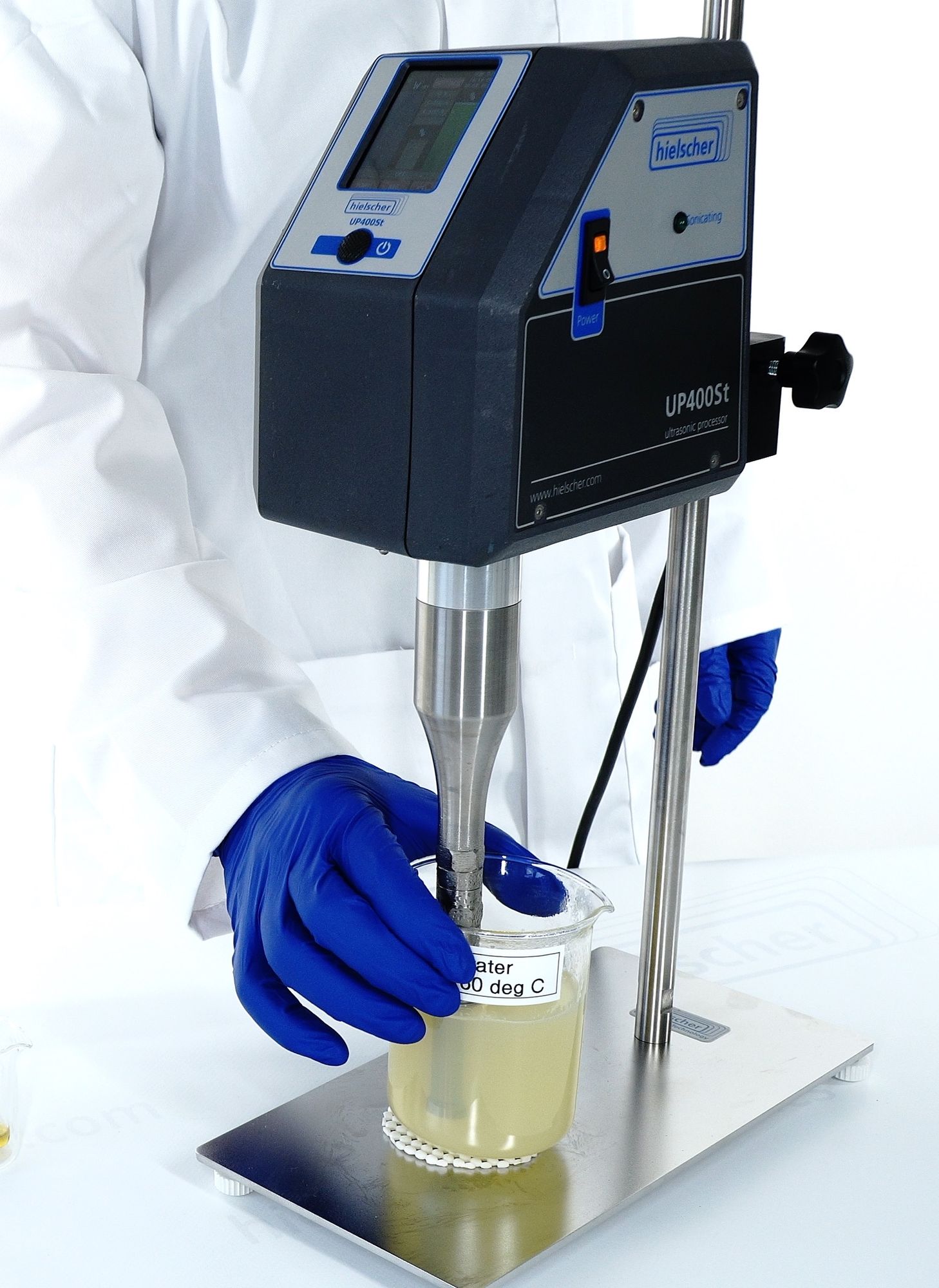
UP400St hydraulinesteiden ultraäänileikkausvakausmittauksiin
Noudata aina virallista ASTM-standardia, laboratoriosi laatujärjestelmän voimassa olevaa versiota sekä kaikkia validoituja sisäisiä toimintamenetelmiä (SOP). Hielscher voi auttaa sonotrodien, kiinnikkeiden, astioiden ja lisävarusteiden konfiguroinnissa vaadittavan menetelmän geometrian mukaisiksi.
ASTM-standardit ovat valvottuja asiakirjoja. Tällä sivulla esitetään yhteenveto ultraäänikäsittelyyn liittyvistä testisovelluksista ja laitteiden valintaohjeista; se ei korvaa virallista ASTM-menetelmätekstiä.
Suunnittelu, valmistus ja konsultointi – Laatu valmistettu Saksassa
Hielscher-ultraääniastiat ovat tunnettuja korkeimmista laatu- ja suunnittelustandardeistaan. Kestävyys ja helppokäyttöisyys mahdollistavat ultraäänilaitteidemme sujuvan integroinnin teollisuuslaitoksiin. Hielscher-ultraäänilaitteet käsittelevät helposti karkeita olosuhteita ja vaativia ympäristöjä.
Hielscher Ultrasonics on ISO-sertifioitu yritys ja painottaa erityisesti korkean suorituskyvyn ultraäänilaitteita, joissa on huipputeknologia ja käyttäjäystävällisyys. Tietenkin, Hielscher-ultraäänilaitteet ovat CE-yhteensopivia ja täyttävät UL: n, CSA: n ja RoHs: n vaatimukset.
Usein Kysytyt Kysymykset
Mitä lyhenne ASTM tarkoittaa?
ASTM oli alun perin lyhenne sanoista American Society for Testing and Materials. Nykyään organisaation virallinen nimi on ASTM International, ja se laatii vapaaehtoisia teknisiä standardeja materiaaleille, tuotteille, järjestelmille ja palveluille.
Mitkä ovat ASTM-standardien tyypit?
ASTM-standardit luokitellaan yleisesti useisiin asiakirjatyyppeihin: testausmenetelmät, vaatimukset, käytänteet, ohjeet, luokitukset ja terminologiastandardit. Tieteellisessä ja teollisessa käytössä ASTM-standardit määrittelevät pääasiassa, miten materiaaleja ja tuotteita testataan, määritellään, luokitellaan tai kuvataan.
Mitä eroa on ASTM-, ISO- ja DIN-standardeilla?
ASTM on standardointijärjestö, jonka juuret ovat vahvasti materiaalien testauksessa ja tuotteiden suorituskykyä koskevissa standardeissa. ISO on kansainvälinen standardointijärjestö, joka laatii maailmanlaajuisia standardeja kansallisten jäsenorganisaatioidensa kautta. DIN on Saksan kansallinen standardointielin, joka edustaa Saksan etuja eurooppalaisessa ja kansainvälisessä standardoinnissa.
Onko ASTM sama kuin ANSI?
Ei, ASTM laatii ja julkaisee teknisiä standardeja, kun taas ANSI koordinoi Yhdysvaltojen vapaaehtoista standardointijärjestelmää ja akkreditoi standardien laatijoita. ASTM-standardeja voidaan käyttää ANSI:n järjestelmissä, mutta ASTM ja ANSI ovat eri organisaatioita.

Hielscher Ultrasonics valmistaa korkean suorituskyvyn ultraäänihomogenisaattoreita sekoitussovelluksiin, dispersioon, emulgointiin ja uuttamiseen laboratorio-, pilotti- ja teollisessa mittakaavassa.
Kirjallisuus / Viitteet
- ASTM D5621-20, Standard Test Method for Sonic Shear Stability of Hydraulic Fluids, ASTM International, West Conshohocken, PA, 2020.
- ASTM D2603-20, Standard Test Method for Sonic Shear Stability of Polymer-Containing Oils, ASTM International, West Conshohocken, PA, 2020.
- ASTM E2799-22 Standard Test Method for Testing Disinfectant Efficacy against Pseudomonas aeruginosa Biofilm using the MBEC Assay
- ASTM E1979-21 Standard Practice for Ultrasonic Extraction of Paint, Dust, Soil, and Air Samples for Subsequent Determination of Lead
- ASTM32 Standard Test Method for Cavitation Erosion Using Vibratory Apparatus
- Spencer Court, Ilaria Corni, Nicola Symonds (2018): Cavitation Erosion Performance of Steel, Ceramics, Carbide, and Victrex PEEK Materials. Materials Performance and Characterization 1 May 2018; 7 (5): 1093–1106.
- Bolewski, Łukasz; Szkodo, Marek; Kmieć, Mateusz (2017): Cavitation erosion degradation of Belzona® coatings. Advances in Materials Science. 17, 2017.
- Kmieć, Mateusz; Karpiński, Bartłomiej; Szkodo, Marek (2016): Cavitation Erosion of P110 Steel in Different Drilling Muds. Advances in Materials Science. 16, 2016.
- Müller, Saskia; Fischper, Maurice; Mottyll, Stephan; Skoda, Romuald; Hussong, Jeanette (2014): Analysis of the cavitating flow induced by an ultrasonic horn – Experimental investigation on the influence of actuation phase, amplitude and geometrical boundary conditions. EPJ Web of Conferences 67, 2014.
- Michael, Paul; Cheekolu, Mercy; Panwar, Pawan; Devlin, Mark; Davidson, Rob; Johnson, Duval; Martini, Ashlie (2018): Temporary and Permanent Viscosity Loss Correlated to Hydraulic System Performance. Tribology Transactions 61, 2018.
- korkea hyötysuhde
- Uusinta teknologiaa
- luotettavuus & rotevuus
- säädettävä, tarkka prosessinohjaus
- erä & Inline
- mille tahansa tilavuudelle
- Älykäs ohjelmisto
- älykkäät ominaisuudet (esim. ohjelmoitavat, dataprotokollat, kauko-ohjaus).
- Helppo ja turvallinen käyttää
- vähän huoltoa vaativa
- CIP (puhdas paikan päällä)
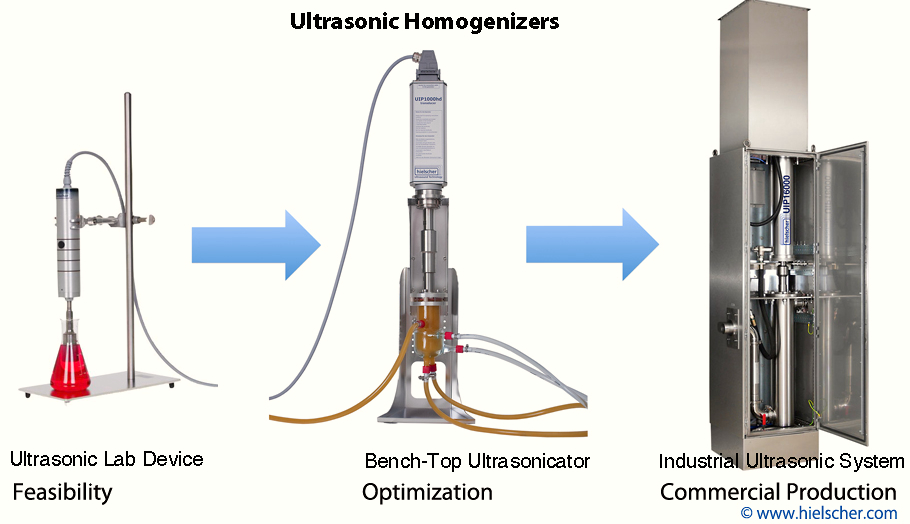
Hielscher Ultrasonics valmistaa korkean suorituskyvyn ultraäänihomogenisaattoreita laboratorio jotta Teollisuuden koko.