パラジウムナノ粒子のソノケミカル還元
パラジウム(Pd)はその触媒特性でよく知られており、材料研究、電子機器製造、医療、水素の精製、およびさまざまな化学用途でも広く利用されています。 超音波化学法を用いることで、PVP/Pdの比率を調整することにより、パラジウム粒子のサイズや形態を制御することができます。これにより、極めて微細で単分散なナノ粒子から、より大きなパラジウム凝集体まで、超音波を用いて合成することが可能となり、最適な触媒性能が得られるよう粒子サイズを調整することができます。
超音波によるパラジウム・ナノ粒子の製造
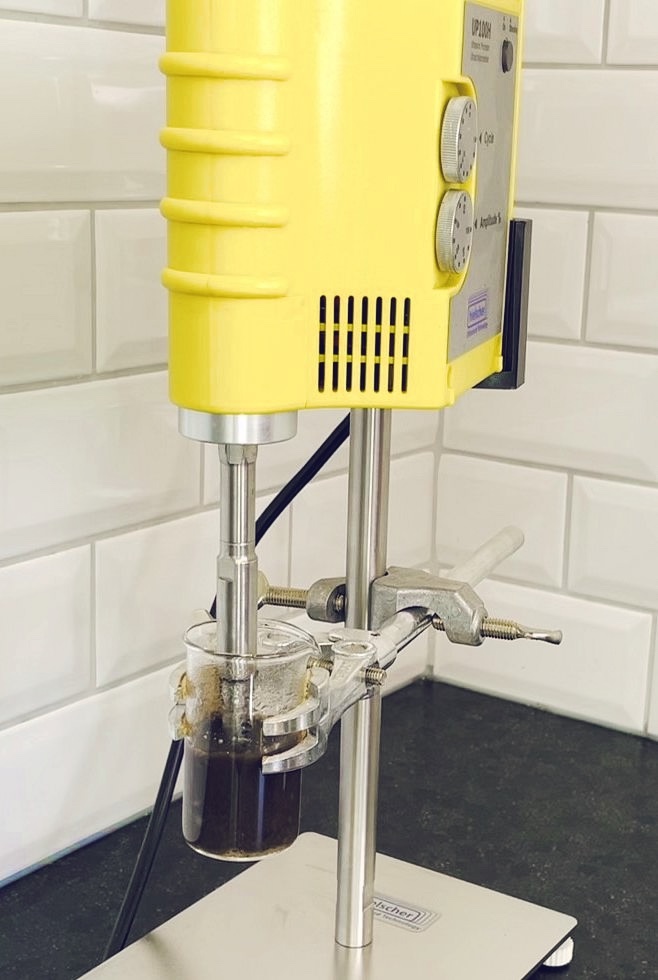 超音波を用いたパラジウムナノ粒子の還元法は、音響キャビテーションを利用して局所的な高エネルギー状態を生成し、溶液中のラジカルを還元することで、従来の高度な高温処理を必要とせずにパラジウムイオンを還元し、Pd(0)ナノ粒子を迅速かつ試薬を効率的に使用して合成する手法である。
重要な利点の一つは、プロセス制御です。 超音波処理時間や、PVP/Pd比などの安定化剤濃度は、生成物が約5 nmの均一に分散した球状ナノ粒子となるか、あるいは約20 nmのより大きな凝集体となるかに影響を及ぼします。これは、触媒としてのパラジウムの性能が粒子径、形態、分散性、および表面積に強く依存するため、工業的に重要な意味を持ちます。 パラジウムナノ粒子は、不均一系触媒、 電気触媒、機能性材料として広く有用であるため、超音波還元法は、比較的穏やかな液相条件下で微細に分散したPd触媒を製造する上で魅力的な手法であり、化学合成、環境触媒、燃料電池技術、および高い触媒活性と貴金属の効率的な利用が経済的に重要なその他のプロセスにおいて、潜在的な利点をもたらす。

工業用ナノ粒子の処理 ソニケーターUIP2000hdT付き
試料調製手順
サンプルは以下のように調製した:
サンプルは、30mLのEGと5-10mLのEGの混合液とした。-6PVPをmol分、15分間磁気撹拌して調製した。各試料について、Pd(NO₃)₂溶液を1.5mLおよび2mLと、異なる量を添加した。試料混合物は、2・10の比率で調製した。-3試料(a)中のPd(NO₃)₂のモル数は、2.66×10⁻³試料(b)中のPd(NO₃)₂のモル数。両方の混合物を、プローブ型超音波処理装置を用いて20mLバイアル内で超音波処理した。超音波処理時間を30、60、90、120、150、および180分とした時点で試料を採取した。
実験結果を分析するとこうなる:
- 1.Pd(II)からPd(0)への超音波化学的還元は、超音波処理時間に依存する。
- 2.PVP/Pd(II)モル比が高いと、丸みを帯びた形状で平均直径が約5nmの単分散パラジウム粒子が形成される。
- 3.しかし、PVP/Pd(II)モル比が低いと、20nmを中心とした大きな粒度分布を持つ凝集パラジウムナノ粒子が得られる。
超音波化学的手法によるパラジウムイオンの還元 パラジウム(II) パラジウム原子へ パラジウム(0) と仮定できる:
- (1) 水の熱分解:H₂O → •OH + •H
- (2) ラジカルの生成:RH(還元剤) + •OH(•H) → •R + H₂O(H₂)
- (3) イオン還元:Pd(II)+還元性ラジカル(-H、-R)→Pd(0)+R-CHO+H+。
- (4) 粒子の形成: NPd(0) → Pdn
結果PVP/Pd(II)比に応じて、分散または凝集したPdN が得られた。
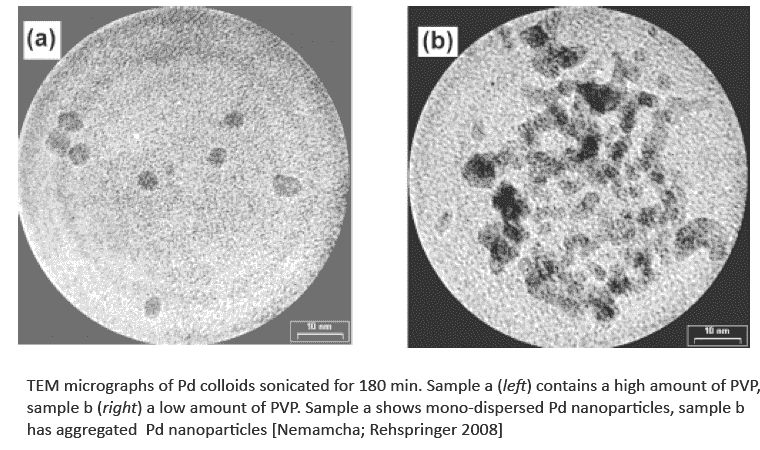
パラジウムの超音波還元:試料a(左)はPVPを多量に含み、試料b(右)はPVPを少量含む。UP100Hによる超音波処理時間:180分。試料aには単分散のPdナノ粒子が、試料bには凝集したPdナノ粒子が確認される。
画像および研究:©Nemamcha and Rehspringer, 2008
分析と結果
紫外可視吸収分析により、パラジウム(II)イオンのパラジウム(0)原子への超音波還元と超音波場での保持時間との関係が確認された。パラジウム(II)イオンのパラジウム(0)原子への還元は進行し、超音波照射時間の増加とともに完全に達成される。透過型電子顕微鏡(TEM)の顕微鏡写真から、以下のことがわかった:
- PVPを多量に添加すると、パラジウムイオンの超音波還元により、平均直径が約5nmの球状の単分散パラジウム粒子が形成される。
- 少量のPVPを使用すると、パラジウムナノ粒子の凝集体が得られる。動的光散乱(DLS)測定の結果、このパラジウムナノ粒子の凝集体は、20 nmを中心とする広い粒子径分布を示していることが明らかになった。

実験用超音波処理装置 UP100H パラジウムナノ粒子の調製に用いられてきた。

パラジウム(Pd)ナノ粒子は超音波処理で調製できる
デザイン、製造、コンサルティング – 品質 ドイツ製
Hielscher社の超音波装置は、その最高の品質と設計基準でよく知られています。頑丈で操作が簡単なため、産業設備にスムーズに組み込むことができます。過酷な条件や厳しい環境でも、Hielscherの超音波装置は容易に対応できます。
Hielscher Ultrasonics社は、ISO認証取得企業であり、最先端の技術と使いやすさを特徴とする高性能超音波振動子に特に重点を置いています。もちろん、Hielscherの超音波装置はCEに準拠しており、UL、CSA、RoHsの要件を満たしています。
文献/参考文献
- Nemamcha, A.; Rehspringer, J. L. (2008): Morphology of dispersed and aggregated PVV-Pd nanoparticles prepared by ultrasonic irradiation of Pd(NO₃)₂ solution in ethylene glycol. Rev. Adv. Mater. Sci. 18;2008. 685-688.
- Prekob, Á., Muránszky, G., Kocserha, I. et al. (2020): Sonochemical Deposition of Palladium Nanoparticles Onto the Surface of N-Doped Carbon Nanotubes: A Simplified One-Step Catalyst Production Method. Catalysis Letters 150, 2020. 505–513.
- Haitao Zheng, Mphoma S. Matseke, Tshimangadzo S. Munonde (2019): The unique Pd@Pt/C core-shell nanoparticles as methanol-tolerant catalysts using sonochemical synthesis. Ultrasonics Sonochemistry, Volume 57, 2019. 166-171.
知っておくべき事実
パラジウムとは何ですか?
パラジウムは、化学記号をPd、原子番号を46とする、希少な銀白色の貴金属です。プラチナ族金属に属し、化学的に安定しており、電気を通し、水素を吸収し、優れた触媒として機能することから高く評価されています。 微細に分散されたパラジウムは、水素化反応や脱水素化反応に特に有効であり、加熱されたパラジウムは水素をその内部に拡散させることができるため、水素の分離や精製に有用です。
パラジウムナノ粒子はどのような用途に使われているのでしょうか?
パラジウムナノ粒子は、主に高比表面積触媒として用いられます。ナノ粒子はバルクパラジウムに比べてはるかに大きな活性表面積を有するため、触媒効率を向上させ、高価な貴金属の使用量を削減することができます。 代表的な応用分野としては、化学合成、水素化反応、炭素-炭素カップリング反応、電気触媒、燃料電池の研究、水素の検知・貯蔵、環境触媒、および抗菌、光熱、抗がんシステムなどの一部の生物医学研究分野が挙げられる。パラジウムの触媒挙動は、粒子径、形態、および分散状態に大きく依存する。
パラジウムナノ粒子は、触媒機能を持たせるために、他の粒子にドープする目的でも使用されます。 フィッシャー・トロプシュ触媒としてのPd/N-BCNTを合成する超音波法について、詳しくはこちらをご覧ください!
パラジウムには毒性があるのでしょうか?
元素状の金属パラジウムは、一般的に毒性が低く、生物学的役割も知られていないと考えられていますが、パラジウム化合物、塩、粉塵、およびナノスケールの形態については、慎重に取り扱う必要があります。 職業上または実験室での曝露は、化合物や曝露経路によっては刺激や感作を引き起こす可能性があり、例えば塩化パラジウム溶液は粘膜を刺激する恐れがあります。 産業現場での取り扱いに関しては、実用的な結論として、バルク状の金属パラジウムはリスクが比較的低いものの、パラジウム粉末、可溶性パラジウム塩、およびパラジウムナノ粒子は、潜在的に有害な物質として扱い、粉塵対策、換気、手袋、眼の保護、および適切な廃棄物処理を行う必要があります。