Reativação de catalisadores usados através da sonicação
A reativação de catalisadores usados tornou-se um tema importante no processamento químico sustentável, nas operações de refinaria, na petroquímica, na catálise ambiental e nas estratégias de economia circular. Os catalisadores são essenciais para reações eficientes, mas, durante a utilização industrial, perdem gradualmente a sua atividade devido à deposição de coque, envenenamento por metais, incrustação, obstrução dos poros, sinterização, passivação da superfície ou acumulação de subprodutos da reação. A substituição de catalisadores usados é dispendiosa e consome muitos recursos, enquanto a sua eliminação pode causar impactos ambientais. A regeneração por ultrassons de catalisadores usados é uma técnica simples, mas altamente eficiente, para reativar catalisadores que tenham sido passivados, envenenados ou sujos durante a utilização.
Reativação de catalisadores usados através da sonicação
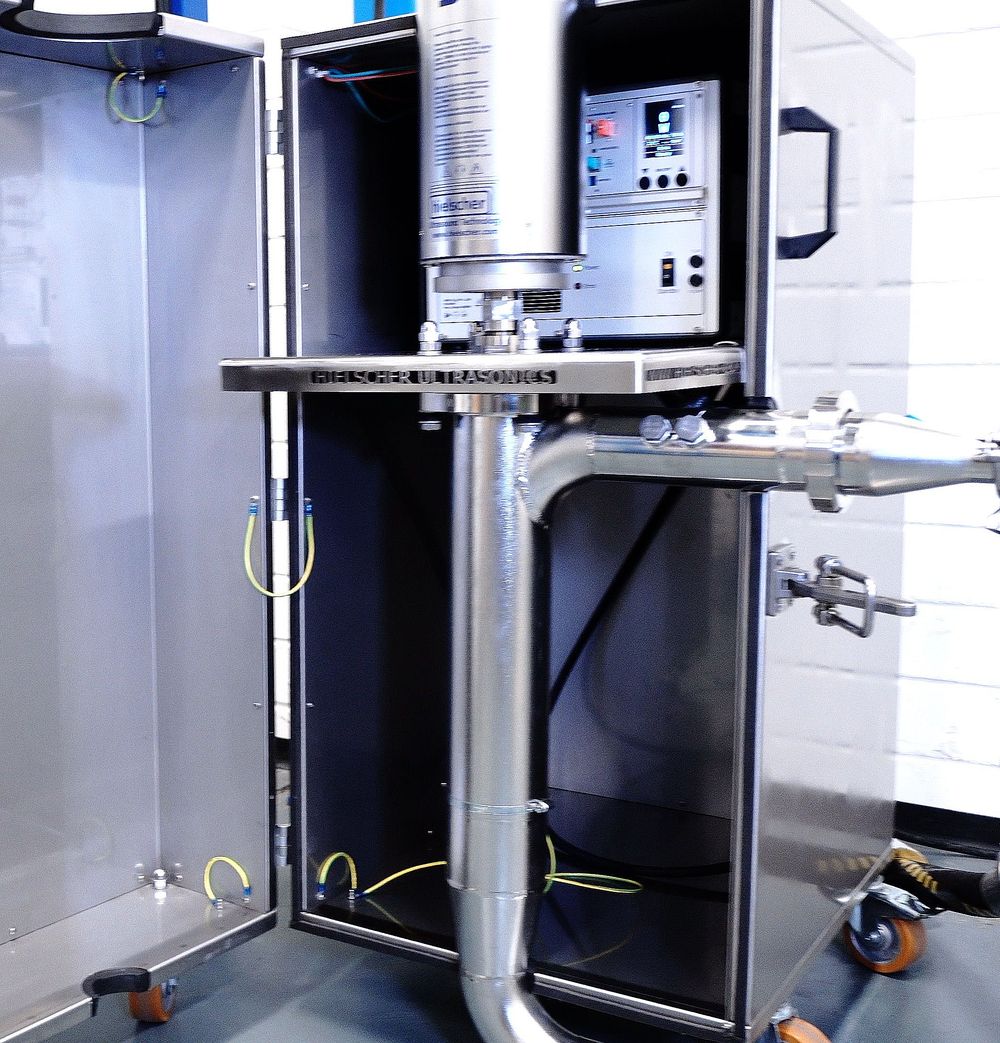 A sonicação, também conhecida como tratamento ultrassónico, constitui um método cientificamente relevante e tecnicamente atraente para a regeneração e reativação de catalisadores usados. Ao aplicar ultrassons de alta potência a suspensões de catalisadores, gera-se uma cavitação acústica intensa no meio líquido. O colapso das bolhas de cavitação produz microjatos localizados, ondas de choque, forças de cisalhamento e micromistura altamente turbulenta. Estes efeitos podem limpar as superfícies dos catalisadores, deslocar depósitos, melhorar o acesso dos reagentes aos poros bloqueados e apoiar processos de lixiviação química ou de regeneração oxidativa.
Estudos recentes sobre catalisadores usados de craqueamento catalítico em fase líquida demonstraram que a regeneração assistida por ultrassons pode melhorar a remoção de metais nocivos, ao mesmo tempo que ajuda a preservar a estrutura da zeólita e a microestrutura das partículas do catalisador. Estudos também relataram uma recuperação potenciada por ultrassons de metais, como o níquel, a partir de catalisadores usados, sendo que a sonicação acelera a extração através dos efeitos físicos e químicos da cavitação acústica.
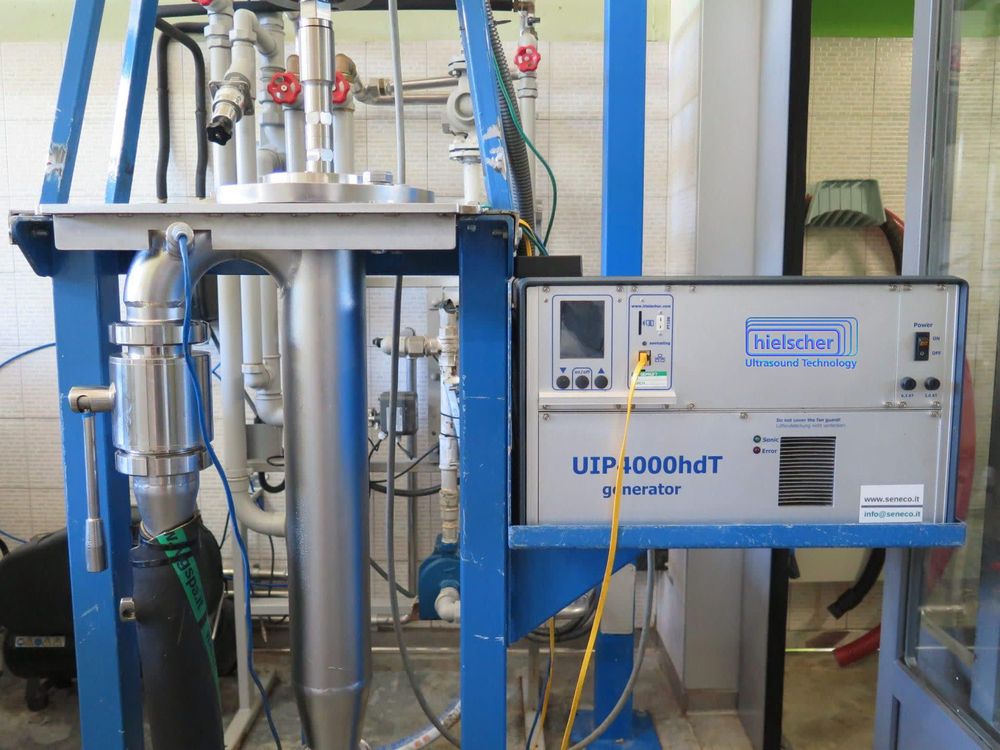
Sonicador em linha UIP4000hdT para a regeneração industrial de catalisadores usados
Por que razão a sonicação é eficaz na reativação de catalisadores usados
A importância científica da sonicação reside na sua capacidade de intensificar processos heterogéneos sólido-líquido. A regeneração de catalisadores é frequentemente limitada por uma transferência de massa insuficiente, poros obstruídos, superfícies passivadas e uma difusão lenta dos agentes de limpeza ou lixiviação na estrutura do catalisador. O ultrassom resolve estas limitações através de mecanismos mecânicos e físico-químicos.
As principais vantagens da sonicação incluem:
A importância do ultrassom não se limita à limpeza física. Na sonoquímica, a cavitação pode criar condições locais extremas e ambientes reativos, o que pode facilitar etapas de oxidação, modificação de superfícies ou extração química. Assim, a tecnologia ultrassónica pode aumentar a superfície ativa dos catalisadores, reduzir a incrustação em catalisadores sólidos dispersos e contribuir para a limpeza durante os processos de reciclagem de catalisadores.
Relevância industrial: da limpeza do catalisador à reativação funcional
A reativação de catalisadores usados é mais do que uma simples operação de manutenção. Trata-se de uma via cientificamente significativa para melhorar o desempenho ao longo do ciclo de vida do catalisador. Um catalisador regenerado não deve apenas parecer limpo; deve recuperar uma função catalítica significativa. Isto requer a restauração dos sítios ativos acessíveis, da acidez ou basicidade da superfície, da porosidade, da dispersão e do desempenho reativo.
O tratamento por ultrassons é relevante porque atua em vários níveis críticos da regeneração do catalisador:
Superfície: Remove as camadas de passivação e expõe os sítios ativos.
Poros: Contribui para a reabertura dos mesoporos e microporos obstruídos.
Partículas: Dispersa os aglomerados e melhora a homogeneidade da suspensão.
Processo: Intensifica o contacto líquido-sólido e melhora a eficiência dos meios de regeneração química.
Sustentabilidade: Promove a reutilização, a recuperação de metais e a minimização de resíduos.
 Um estudo recente sobre a regeneração por ultrassons e por oxidação de catalisadores usados de craqueamento catalítico fluido (FCC) revelou que os processos de oxidação avançada assistidos por ultrassons aumentaram a acidez do catalisador e permitiram que o catalisador regenerado fosse utilizado na síntese de monoestearato de glicerol. (cf. Anggoro et al., 2026)
Outro estudo demonstrou que a imersão em ácido sulfúrico diluído e a subsequente lixiviação assistida por ultrassons numa mistura de ácido sulfúrico e ácido oxálico melhoram significativamente a remoção de metais nocivos do catalisador FCC usado, sem destruir a estrutura da zeólita Y nem a microestrutura das partículas do catalisador usado. Em comparação com a lixiviação convencional, a lixiviação assistida por ultrassons requer apenas 1/4 do tempo para alcançar praticamente o mesmo efeito de remoção de metais nocivos e apresenta vantagens superiores na preservação da integridade das partículas. (cf. Wang et al., 2021).
A sonicação na reciclagem de catalisadores e na recuperação de metais
Os catalisadores usados contêm frequentemente metais valiosos, tais como níquel, vanádio, molibdénio, cobalto, metais do grupo da platina ou metais raros, dependendo do tipo de catalisador e da aplicação industrial. A sonicação pode contribuir tanto para a reativação do catalisador como para a recuperação de recursos. Na lixiviação assistida por ultrassons, a cavitação melhora a penetração da solução de lixiviação, remove as camadas limite em torno das partículas e expõe novas superfícies para a reação.
Isto torna a ecografia particularmente interessante para:
- Catalisadores usados de refinaria
- Catalisadores FCC
- Catalisadores de hidrotratamento e hidrodessulfurização
- Catalisadores Fischer-Tropsch
- Catalisadores metálicos suportados
- Catalisadores ambientais
- Carvão ativado e sistemas de catalisadores adsorventes
- Catalisadores heterogéneos contaminados com metais ou com incrustações

Sonicator UP400ST com configuração de célula de fluxo
Vantagens técnicas dos sonicadores Hielscher para a reciclagem de catalisadores usados
Os sonicadores de alta potência da Hielscher são ideais para a reciclagem e reativação de catalisadores usados, uma vez que fornecem energia ultrassónica controlada, reprodutível e escalável a suspensões líquido-sólidas. Para a regeneração de catalisadores, a fiabilidade do processo é essencial: a amplitude, a potência de entrada, o tempo de residência, o caudal, a temperatura, a pressão e a geometria do reator devem ser ajustáveis e reproduzíveis, desde os ensaios laboratoriais até à produção industrial.
A Hielscher oferece sistemas ultrassónicos que vão desde dispositivos laboratoriais compactos até unidades industriais, incluindo sonicadores do tipo sonda e reatores ultrassónicos de fluxo contínuo para processamento contínuo. Os sonicadores da Hielscher variam entre pequenas unidades laboratoriais e processadores industriais, tais como dispositivos de 500 W, 1 000 W, 2 000 W, 4 000 W, 6 000 W e 16 000 W, permitindo a ampliação da escala, desde testes de viabilidade até ao tratamento de catalisadores a nível de produção.
No que diz respeito à reciclagem de catalisadores usados, as vantagens técnicas incluem:
- Sonicação com sonda de alta intensidade para uma cavitação eficaz em suspensões de catalisadores abrasivos
- Opções de reatores de fluxo contínuo para processos de regeneração, lixiviação, lavagem ou dispersão contínuos
- Controlo preciso da amplitude para condições de processo reprodutíveis
- Arquitetura de equipamentos escalável, desde a triagem em laboratório até à reciclagem de catalisadores a nível industrial
- Design industrial robusto para ambientes exigentes de processamento químico
- Compatibilidade com processos sonoquímicos, tais como lixiviação ácida, limpeza oxidativa, dispersão e ativação de superfícies
Estas características tornam os sonicadores da Hielscher uma plataforma tecnológica prática para empresas e instituições de investigação que desenvolvem protocolos avançados de regeneração de catalisadores, quer o objetivo seja restaurar a atividade catalítica, recuperar metais valiosos, reduzir o volume de resíduos ou melhorar a sustentabilidade da produção catalítica.

Homogeneizador ultrassónico UIP2000hdT para a regeneração do catalisador num processo de fluxo contínuo
Uma tecnologia sustentável para a economia circular dos catalisadores
À medida que as indústrias avançam no sentido de uma produção mais limpa e da eficiência na utilização dos recursos, a gestão dos catalisadores usados está a tornar-se uma prioridade estratégica. A sonicação apoia esta transição, tornando a reativação dos catalisadores mais rápida, mais eficiente e mais controlável do ponto de vista técnico. Em vez de tratar os catalisadores usados como resíduos, o processamento ultrassónico ajuda a transformá-los em materiais reutilizáveis ou em fontes valiosas de matérias-primas secundárias.
A relevância industrial da sonicação reside na sua capacidade de combinar a ativação mecânica, a limpeza de superfícies, a dispersão e a intensificação da transferência de massa num único processo. Para os utilizadores industriais, a vantagem é igualmente clara: melhoria da reutilização de catalisadores, redução do consumo de matérias-primas, menor produção de resíduos e, potencialmente, custos operacionais mais baixos.
Aproveite as vantagens da regeneração de catalisadores por ultrassons
 A reativação de catalisadores usados através da sonicação constitui uma abordagem avançada à reciclagem de catalisadores, com um forte potencial científico e industrial. A cavitação acústica permite a remoção de depósitos, a reabertura de poros obstruídos, a melhoria da transferência de massa e a intensificação das etapas de regeneração química. Quando combinado com estratégias adequadas de lixiviação, oxidação, lavagem ou tratamento térmico, o tratamento ultrassónico pode contribuir para restaurar a atividade do catalisador e recuperar metais valiosos.
Com sonicadores de alta potência e escaláveis e reatores de fluxo ultrassónicos industriais, a Hielscher fornece a base técnica para o desenvolvimento de processos de regeneração de catalisadores usados que sejam fiáveis, reprodutíveis e eficientes. À medida que a reciclagem de catalisadores se torna cada vez mais importante para a química sustentável e a produção industrial circular, a sonicação está a emergir como uma ferramenta poderosa para prolongar a vida útil dos catalisadores e melhorar a eficiência dos recursos.
O quadro seguinte dá-lhe uma indicação da capacidade de processamento aproximada dos nossos ultra-sons:
| Volume do lote | caudal | Dispositivos recomendados |
|---|---|---|
| 1 a 500mL | 10 a 200mL/min | UP100H |
| 10 a 2000mL | 20 a 400mL/min | UP200Ht, UP400ST |
| 0.1 a 20L | 0.2 a 4L/min | UIP2000hdT |
| 10 a 100L | 2 a 10L/min | UIP4000hdt |
| 15 a 150L | 3 a 15L/min | UIP6000hdT |
| n.d. | 10 a 100L/min | UIP16000hdT |
| n.d. | maior | grupo de UIP16000hdT |
Conceção, fabrico e consultoria – Qualidade fabricada na Alemanha
Os ultrassons Hielscher são conhecidos pelos seus elevados padrões de qualidade e design. A robustez e a facilidade de operação permitem a integração harmoniosa dos nossos ultrassons nas instalações industriais. As condições difíceis e os ambientes exigentes são facilmente controlados pelos ultrassons Hielscher.
A Hielscher Ultrasonics é uma empresa certificada pela ISO e dá especial ênfase aos ultrassons de alto desempenho com tecnologia de ponta e facilidade de utilização. Naturalmente, os ultrassons da Hielscher estão em conformidade com a CE e cumprem os requisitos da UL, CSA e RoHs.

A Hielscher Ultrasonics fabrica homogeneizadores ultra-sónicos de alto desempenho para aplicações de mistura, dispersão, emulsificação e extração à escala laboratorial, piloto e industrial.
perguntas frequentes
O que é um catalisador?
Um catalisador é uma substância que aumenta a velocidade de uma reação química ao reduzir a energia de ativação, sem ser consumida estequiometricamente na reação. Proporciona uma via de reação alternativa e, muitas vezes, pode ser reutilizado.
O que é um catalisador usado?
Um catalisador usado é um catalisador que perdeu parte ou a totalidade da sua atividade catalítica, seletividade ou estabilidade após a utilização. A desativação pode resultar de incrustações, deposição de coque, envenenamento, sinterização, lixiviação ou degradação estrutural.
O que é um catalisador FCC usado?
Um catalisador FCC usado é um catalisador desativado proveniente do processo de craqueamento catalítico fluido na refinação de petróleo. Os catalisadores FCC são, normalmente, materiais à base de zeólito utilizados para craquear hidrocarbonetos pesados em produtos mais leves, tais como gasolina, olefinas e GPL. Tornam-se usados devido à formação de coque, contaminação por metais, degradação hidrotérmica e perda de acidez ou área superficial.
Como é que os catalisadores são consumidos?
Os catalisadores não são consumidos no sentido estequiométrico ideal, mas podem ser desativados ou perdidos fisicamente durante o funcionamento. Os mecanismos mais comuns incluem:
- Envenenamento: adsorção irreversível de impurezas nos sítios ativos.
- Incrustações/formação de coque: A deposição de material carbonoso obstrui os poros e os sítios ativos.
- Sinterização: As altas temperaturas provocam a aglomeração das partículas ativas, reduzindo a área de superfície.
- Lixiviação: os componentes ativos dissolvem-se no meio de reação.
- Abandono: A abrasão mecânica fragmenta as partículas do catalisador, especialmente em leitos fluidizados.
- Fase de transformação: a estrutura do catalisador transforma-se numa forma menos ativa.
Quais são os quatro tipos de catalisadores?
Os quatro tipos geralmente distinguidos são:
Literatura / Referências
- Darbandi, M., Moghaddasfar, A., Eynollahi, M. et al. (2025): Sustainable approach with enhanced removal performance of organic pollutant for wastewater treatment by ultrasonically regenerated mesoporous nickel oxide nanoparticles. Int. J. Environ. Sci. Technol. 22, 3495–3504 (2025).
- Anggoro D.D., Buchori L., Rinaldi N., Silviana S., Le Monde B.U., Putra M.F., Zainol, M.M. (2026): Hybrid Ultrasound and Advanced Oxidation Process Regeneration of Spent FCC Catalysts: Optimization and Their Catalytic Performance. Journal of Engineering and Technological Sciences, 58(2), 227–242.
- Xin Pu, Jin-ning Luan, Li Shi (2012): Reuse of Spent FCC Catalyst for Removing Trace Olefins from Aromatics. Bulletin of Korean Chemical Society 2012, Vol. 33, No. 8.
- Alta eficiência
- Tecnologia de ponta
- fiabilidade & robustez
- controlo preciso e ajustável do processo
- lote & em linha
- para qualquer volume
- software inteligente
- caraterísticas inteligentes (por exemplo, programáveis, protocolo de dados, controlo remoto)
- Fácil e seguro de operar
- Manutenção reduzida
- CIP (limpeza no local)
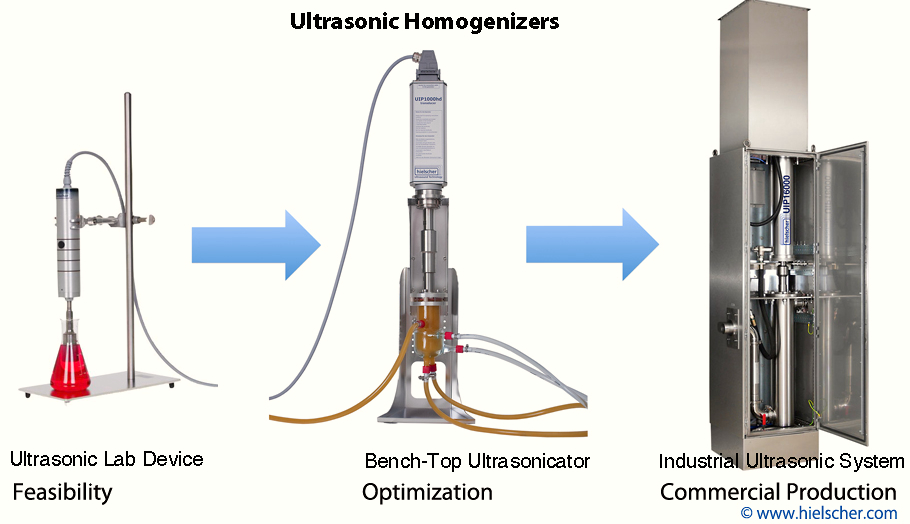
A Hielscher Ultrasonics fabrica homogeneizadores ultra-sónicos de alto desempenho a partir de laboratório para dimensão industrial.