팔라듐 나노 입자의 Sonochemical 환원
팔라듐(Pd)은 촉매 특성으로 잘 알려져 있을 뿐만 아니라, 재료 연구, 전자 제품 제조, 의학, 수소 정제 및 다양한 화학 분야에서도 널리 사용되고 있습니다. 초음파 화학 합성법을 이용하면 PVP/Pd 비율을 조절함으로써 팔라듐 입자의 크기와 형태를 제어할 수 있습니다. 이를 통해 매우 미세하고 단분산된 나노입자나 더 큰 팔라듐 응집체를 초음파로 합성할 수 있으며, 최적의 촉매 성능을 발휘하도록 입자 크기를 맞춤 설정할 수 있습니다.
팔라듐 나노 입자의 초음파 생산
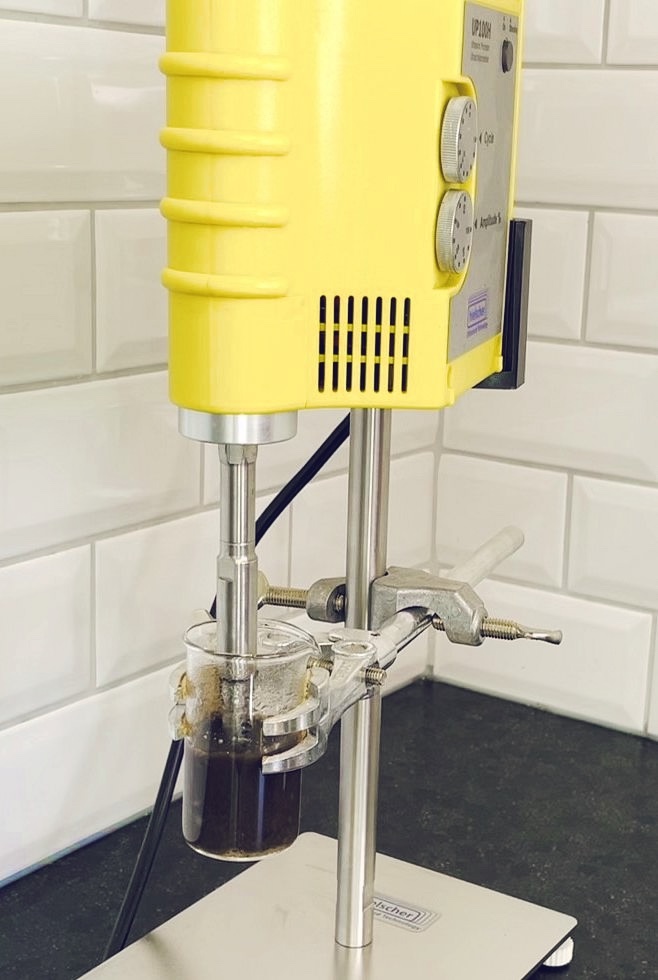 초음파를 이용한 팔라듐 나노입자 환원법은 음향 캐비테이션을 통해 국소적인 고에너지 상태를 생성하고 용액 내 라디칼을 환원함으로써, 기존의 고온 공정을 거치지 않고도 Pd(0) 나노입자를 제조할 수 있는 신속하고 시약 효율이 높은 방법을 제공한다.
주요 장점 중 하나는 공정 제어입니다: 초음파 처리 시간과 PVP/Pd 비율과 같은 안정제 농도는 제품이 약 5 nm 크기의 잘 분산된 둥근 나노입자로 형성될지, 아니면 약 20 nm 크기의 더 큰 응집체로 형성될지에 영향을 미칠 수 있으며, 이는 촉매 작용에서 팔라듐의 성능이 입자 크기, 형태, 분산도 및 표면적에 크게 좌우되기 때문에 산업적으로 중요한 사항입니다. 팔라듐 나노입자는 이종 촉매, 전기촉매 및 기능성 소재로서 널리 활용되고 있으므로, 초음파 환원법은 비교적 온화한 액상 조건에서 미세하게 분산된 Pd 촉매를 생산하는 데 매력적인 방법이며, 이는 화학 합성, 환경 촉매, 연료전지 기술 및 높은 촉매 활성과 효율적인 귀금속 활용이 경제적으로 중요한 기타 공정에서 잠재적인 이점을 제공합니다.

산업용 나노입자 가공 초음파 처리기 UIP2000hdT로
시료 전처리 절차
샘플은 다음과 같이 준비되었습니다.
샘플의 경우 30mL의 EG와 5·10의 혼합물-6PVP 몰을 자석 교반기로 15분간 교반하여 준비하였다. 각 시료에 따라 1.5mL 및 2mL의 서로 다른 양의 Pd(NO₃)₂ 용액을 첨가하였다. 시료 혼합물은 2·10의 비율로 조제하였다.-3시료 (a)에 포함된 Pd(NO₃)₂의 양은 mol이며, 2.66·10-3시료 (b)에 Pd(NO₃)₂를 mol 첨가하였다. 두 혼합물 모두 20mL 바이알에서 프로브형 초음파 처리기를 사용하여 초음파 처리를 실시하였다. 초음파 처리 시간 30, 60, 90, 120, 150 및 180분이 경과한 시점에 시료를 채취하였다.
실험 결과를 분석한 결과 다음과 같은 결과가 나타납니다.
- 1. Pd (II)를 Pd (0)로 초음파 화학적으로 환원시키는 것은 초음파 처리 시간에 따라 다릅니다.
- 2. 높은 PVP/Pd(II) 몰비는 둥근 모양과 약 5nm의 평균 직경을 갖는 단분산 팔라듐 입자의 형성으로 이어집니다.
- 3. 그러나 낮은 PVP/Pd(II) 몰비는 20nm를 중심으로 큰 크기 분포를 가진 응집체 팔라듐 나노입자를 얻는 것을 포함합니다.
팔라듐(II) 이온을 환원시키는 초음파 화학 경로 PD(II) 팔라듐 원자에 pd(0) 다음과 같이 가정할 수 있습니다.
- (1) 물의 열분해: H₂O → •OH + •H
- (2) 라디칼 생성: RH (환원제) + •OH(•H) → •R + H₂O(H₂)
- (3) 이온 환원 : Pd (II) + 환원 라디칼 (•H, •R) → Pd (0) + R • CHO + H +
- (4) 입자 형성 : NPd(0) → Pdn
결과: PVP/Pd(II) 비율에 따라 분산 또는 집계된 PdN 를 얻었다.
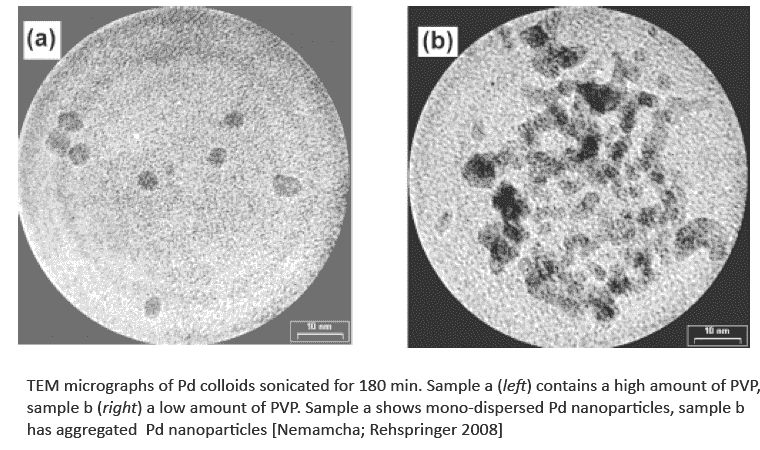
팔라듐의 초음파 환원: 시료 a(왼쪽)에는 다량의 PVP가 포함되어 있고, 시료 b(오른쪽)에는 소량의 PVP가 포함되어 있다. UP100H를 이용한 초음파 처리 시간: 180분. 시료 a에서는 단분산된 Pd 나노입자가 관찰되는 반면, 시료 b에서는 응집된 Pd 나노입자가 관찰된다.
이미지 및 연구: ©Nemamcha 및 Rehspringer, 2008
분석 및 결과
UV 가시 흡수 분석은 팔라듐 (II) 이온에서 팔라듐 (0) 원자로의 초음파 화학적 환원과 초음파장에서의 머무름 시간 사이의 관계를 확인합니다. 팔라듐 (II) 이온이 팔라듐 (0) 원자로 환원되는 과정이 진행되며 초음파 처리 시간이 증가함에 따라 완전히 달성 될 수 있습니다. 투과 전자 현미경(TEM)의 현미경 사진은 다음을 보여줍니다.
- 다량의 PVP를 첨가하면, 팔라듐 이온의 초음파 환원 반응을 통해 평균 직경이 약 5nm인 구형의 단분산 팔라듐 입자가 형성된다.
- 소량의 PVP를 사용하면 팔라듐 나노입자 응집체가 생성된다. 동적 광산란(DLS) 측정 결과, 팔라듐 나노입자 응집체는 20nm를 중심으로 한 넓은 크기 분포를 보이는 것으로 나타났다.

UP100H 실험실용 초음파 처리기 팔라듐 나노입자를 제조하는 데 사용되어 왔다.

팔라듐 (Pd) 나노 입자는 초음파 처리로 제조 할 수 있습니다
설계, 제조 및 컨설팅 – 독일에서 만든 품질
Hielscher 초음파는 최고의 품질과 디자인 표준으로 잘 알려져 있습니다. 견고 함과 쉬운 작동으로 초음파를 산업 시설에 원활하게 통합 할 수 있습니다. 거친 조건과 까다로운 환경은 Hielscher 초음파기로 쉽게 처리 할 수 있습니다.
Hielscher 초음파는 ISO 인증 회사이며 최첨단 기술과 사용자 친화성을 갖춘 고성능 초음파에 특히 중점을 둡니다. 물론, Hielscher 초음파는 CE를 준수하며 UL, CSA 및 RoHs의 요구 사항을 충족합니다.
문헌/참고문헌
- Nemamcha, A.; Rehspringer, J. L. (2008): Morphology of dispersed and aggregated PVV-Pd nanoparticles prepared by ultrasonic irradiation of Pd(NO₃)₂ solution in ethylene glycol. Rev. Adv. Mater. Sci. 18;2008. 685-688.
- Prekob, Á., Muránszky, G., Kocserha, I. et al. (2020): Sonochemical Deposition of Palladium Nanoparticles Onto the Surface of N-Doped Carbon Nanotubes: A Simplified One-Step Catalyst Production Method. Catalysis Letters 150, 2020. 505–513.
- Haitao Zheng, Mphoma S. Matseke, Tshimangadzo S. Munonde (2019): The unique Pd@Pt/C core-shell nanoparticles as methanol-tolerant catalysts using sonochemical synthesis. Ultrasonics Sonochemistry, Volume 57, 2019. 166-171.
알아 둘 만한 가치가 있는 사실
팔라듐이란 무엇인가요?
팔라듐은 화학 기호 Pd, 원자 번호 46인 희귀한 은백색의 귀금속입니다. 이 원소는 백금족 금속에 속하며, 화학적 안정성이 높고 전기를 잘 전도하며 수소를 흡수하고 뛰어난 촉매 역할을 하기 때문에 가치가 높습니다. 미세하게 분쇄된 팔라듐은 특히 수소화 및 탈수소화 반응에 효과적이며, 가열된 팔라듐은 수소가 그 속으로 확산되도록 하여 수소 분리 및 정제에 유용하게 사용됩니다.
팔라듐 나노입자는 어떤 용도로 사용되나요?
팔라듐 나노입자는 주로 표면적이 큰 촉매로 사용됩니다. 나노입자는 덩어리 형태의 팔라듐보다 훨씬 더 많은 활성 표면적을 노출시키기 때문에, 촉매 효율을 높이고 고가의 귀금속 사용량을 줄일 수 있습니다. 대표적인 응용 분야로는 화학 합성, 수소화 반응, 탄소-탄소 결합 반응, 전기촉매, 연료전지 연구, 수소 감지 및 저장, 환경 촉매, 그리고 항균, 광열, 항암 시스템과 같은 일부 생의학 연구 분야가 있습니다. 팔라듐의 촉매 거동은 입자 크기, 형태, 분산 상태에 크게 좌우됩니다.
팔라듐 나노입자는 또한 촉매 기능을 부여하기 위해 다른 입자에 도핑하는 데에도 사용됩니다. 피셔-트로프슈 촉매로 사용되는 Pd/N-BCNT를 합성하는 초음파 방법에 대해 자세히 알아보세요!
팔라듐은 유독한가요?
원소 상태의 금속 팔라듐은 일반적으로 독성이 낮고 알려진 생물학적 역할이 없는 것으로 간주되지만, 팔라듐 화합물, 염, 분진 및 나노 크기의 형태는 주의하여 취급해야 합니다. 직업적 또는 실험실 내 노출은 화합물과 노출 경로에 따라 자극이나 과민 반응을 유발할 수 있으며, 예를 들어 염화팔라듐 용액은 점막을 자극할 수 있습니다. 산업 현장에서의 취급에 있어 실질적인 결론은 다음과 같습니다. 대량 금속 팔라듐은 상대적으로 위험이 낮지만, 팔라듐 분말, 수용성 팔라듐 염 및 팔라듐 나노입자는 잠재적으로 유해한 물질로 간주하여 분진 제어, 환기, 장갑 착용, 눈 보호 및 적절한 폐기물 처리를 통해 관리해야 합니다.