해양용 청동 코팅의 실용적 캐비테이션 침식 시험
캐비테이션 침식 시험은 통제된 실험실 환경에서의 노출을 실제 공학적 문제와 연결할 때 가장 유용합니다. 실제 사례로는 선박의 방향타나 프로펠러와 같은 해양 부품에 사용되는 캐비테이션 저항성 청동 코팅의 평가가 있습니다. 이러한 부품은 국부적인 압력 변동으로 인해 증기 기포가 생성되고, 이 기포가 표면 근처에서 붕괴되면서 반복적인 고강도 충격 하중이 발생하는 영역에서 작동합니다. 시간이 지남에 따라 이는 피팅, 피로 손상, 코팅 파손 및 재료 손실을 초래합니다.
청동 코팅의 캐비테이션 침식 시험
Hauer 등이 수행한 연구에서는 냉간 스프레이, 온간 스프레이, HVOF 스프레이 및 아크 스프레이 방식으로 제작된 청동 코팅을 주조 니켈-알루미늄 청동 및 조선용 강철과 비교했다. 핵심 질문은 간단했다. 어떤 코팅 공정이 해양 환경에서 사용하기에 충분한 기간 동안 캐비테이션에 견딜 수 있는 청동 표면을 만들어낼 수 있는가? 이에 대한 답을 찾기 위해 연구진은 ASTM G32-16 표준에 기반한 캐비테이션 침식 시험을 실시했으며, 시험 시스템으로 Hielscher UIP1000hdT 초음파 진동 시스템을 포함한 진동 장치를 사용했다.

소니케이터 UIP1000hdT (1000W, 20kHz) 캐비테이션 침식 시험 장치
시험 조건의 정밀한 제어 및 자동 데이터 기록
UIP1000hdT 초음파 처리는 캐비테이션 침식 시험에 사용되는 주파수 범위에서 고강도, 저주파 초음파를 발생시키기 때문에 이러한 유형의 시험에 매우 적합합니다. 1000와트 초음파 처리기를 사용하는 캐비테이션 침식 시험 장치는 20kHz에서 작동하며, 정밀한 공정 모니터링, 진폭 제어, 온도 측정 및 시험 데이터의 자동 프로토콜 생성이 가능합니다. 캐비테이션 강도는 진폭, 액체 온도, 액체 압력, 소노트로드 형상 및 소노트로드와 시료 사이의 거리에 크게 좌우되기 때문에 이러한 기능들은 매우 중요합니다.
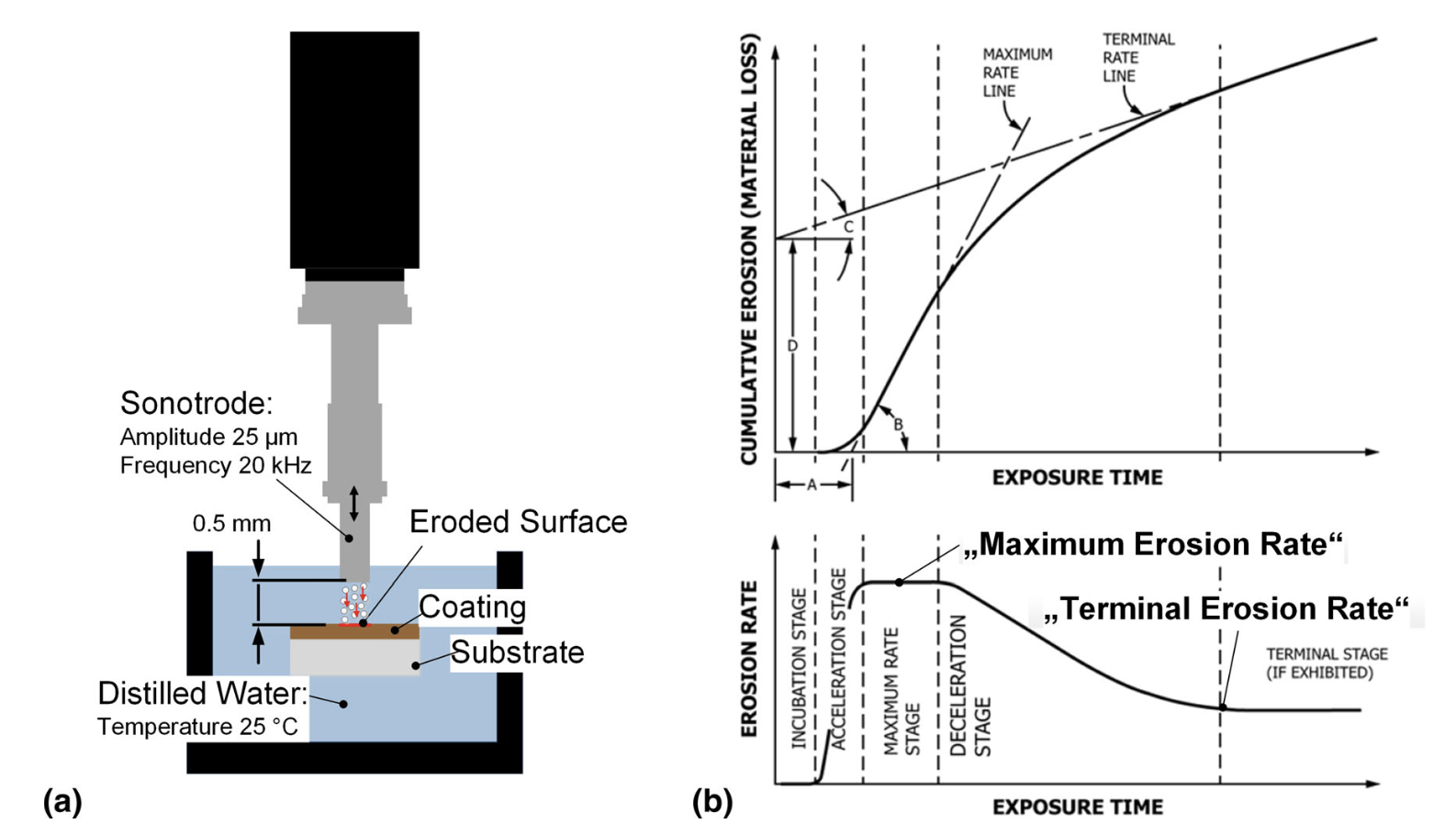
(a) 초음파 처리기 UIP1000hd를 사용하여 ASTM G32-16에 따른 캐비테이션 침식 시험(간접법). 모든 시험 매개변수는 공칭값이며, 허용 오차는 해당 표준에 명시되어 있다.
(b) 침식-시간 곡선의 개략적 단계 및 시험 절차의 특성 매개변수.
그래픽 및 연구: ©Hauer 외, 2021.
청동 코팅의 초음파 캐비테이션 침식 시험
해양용 청동 코팅의 경우, 시험은 간접식 ASTM G32 방식에 따라 수행되었습니다. 이 구성에서는 시편이 진동 혼에 부착되지 않습니다. 대신, 초음파 소노트로드가 증류수 내에서 캐비테이션을 발생시키고, 코팅된 시편은 소노트로드 아래에 정해진 간격을 두고 고정됩니다. Hauer 등은 시편과 소노트로드 사이의 거리를 0.5 mm로 설정하고, 주파수는 20 kHz, 피크 대 피크 진폭은 50 µm로 설정하여 실험을 수행했습니다. 시험 용액은 증류수였으며, 약 25 °C의 실온으로 유지되었습니다.
시편 준비는 매우 중요한 단계입니다. 캐비테이션 노출 전에, 코팅된 표면을 단계적으로 연마하고 광택 처리하여 4 µm 미만의 미세한 다이아몬드 연마재 수준까지 다듬었습니다. 이를 통해, 그렇지 않으면 즉시 박리되어 침식 곡선을 왜곡시킬 수 있는 느슨하게 부착된 입자나 표면 불규칙성의 영향을 줄일 수 있습니다. 목적은 코팅의 외관을 좋게 만드는 것이 아니라, 재현 가능한 초기 조건을 조성하여 측정된 질량 손실이 불충분한 표면 전처리 때문이 아니라 캐비테이션 저항성을 정확히 반영하도록 하는 데 있습니다.

캐비테이션 침식 시험을 위한 높이 조절식 시험 셀(ASTM G32-16)
초음파 캐비테이션 침식 시험 절차 및 그 결과
실제 시험 절차는 간단합니다. 먼저, 각 시료를 세척하고 건조한 후 정밀 저울로 무게를 측정합니다. 그런 다음, 0.5 mm의 간격을 신중하고 일관되게 설정하여 초음파 처리기 UIP1000hdT의 소노트로드 BS4d22 아래에 있는 시험 셀에 시료를 장착합니다. 초음파 발생기는 정의된 진폭과 주파수로 작동되며, 가열로 인해 캐비테이션 강도가 변하지 않도록 액체 온도를 제어합니다. 정의된 노출 시간이 경과한 후, 시편을 꺼내 세척하고 건조시킨 뒤 다시 무게를 측정합니다. 이 과정을 재료에 따라 점차 증가하는 노출 시간 동안 반복하여 완전한 침식 곡선을 얻습니다.
원시 측정값은 질량 손실입니다. 공학적 비교를 위해 이 질량 손실은 재료 밀도를 이용하여 부피 손실로 환산됩니다. 그런 다음 부피 손실을 노출된 표면적에 나누어 평균 침식 깊이를 구합니다. 연구자는 침식-깊이 곡선을 통해 최대 침식 속도, 최종 침식 속도, 평균 침식 깊이와 같은 특성 침식 매개변수를 계산할 수 있습니다. Hielscher는 또한 선택한 실험 프로토콜에 따라 침식 결과를 시간당 또는 공급된 초음파 에너지당 질량, 부피, 또는 침투 깊이로 보고할 수 있다고 언급합니다.
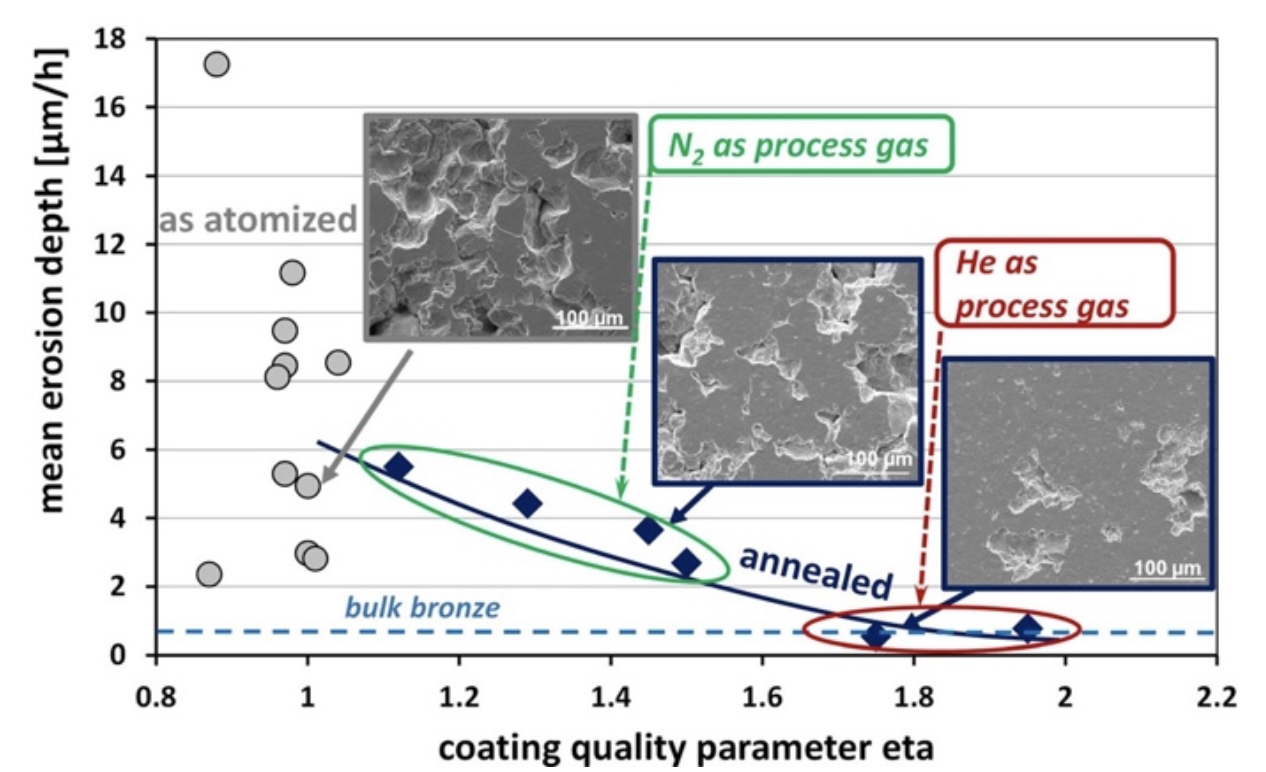
조정된 코팅 품질 매개변수 n에 따른 평균 침식 깊이. 분말 어닐링을 통해 분말 강도를 낮춤으로써 높은 코팅 품질을 달성할 수 있다. 삽입도는 100분간의 캐비테이션 시험 후 나타난 표면 손상 상태를 보여준다.
그래프 및 연구: ©Hauer 외, 2021.
Hauer 연구에서 얻을 수 있는 중요한 교훈 중 하나는 초기 침식 속도가 오해를 불러일으킬 수 있다는 점입니다. 열분사 및 동역학적 분사 코팅은 종종 초기에는 높은 재료 손실을 보이다가, 이후에는 더 낮고 안정적인 침식 속도를 나타내는 경향이 있습니다. 이러한 이유로 Hauer 등은 장기적인 코팅 성능을 나타내는 더 대표적인 지표로 최종 침식 속도를 사용했습니다. 120분간의 비교 실험에서, 안정화된 거동을 더 정확히 파악하기 위해 주로 시험 후반부인 60분 이후의 데이터를 바탕으로 최종 침식 속도를 평가했다.
시험 결과는 제어된 진동 캐비테이션 장치가 왜 유용한지를 보여줍니다. 주조 니켈-알루미늄 청동의 최종 침식 속도는 약 0.40 µm/h를 기록했습니다. 최적화된 온간 스프레이 청동은 0.57 µm/h에 달하여, 주조 기준값에 근접한 수치를 보였습니다. 조선용 강철에 적용된 최적화된 아크 스프레이 코팅은 약 1.02 µm/h를 기록한 반면, 최적화된 HVOF 코팅은 약 1.74 µm/h를 기록했습니다. 이러한 코팅들이 주조 프로펠러 청동과 완전히 동등한 수준은 아니었음에도 불구하고, 조선용 강철보다 현저히 우수한 성능을 보였으며, 연구 보고서에 따르면 아크 스프레이 및 HVOF 스프레이 코팅은 VL-A 강철에 비해 각각 약 26배 및 16배 더 뛰어난 캐비테이션 저항성을 나타냈다.

ASTM G32용 교체 가능한 팁 – 캐비테이션 침식 시험
캐비테이션 침식 시험을 위한 진동 장치로 초음파 처리기를 사용하십시오
 실질적인 결론은, 진동 장치로 UIP1000hdT 초음파 분사기를 사용한 캐비테이션 침식 시험이 단순히 재료를 순위 매기는 것 이상의 역할을 할 수 있다는 점입니다. 이 시험을 통해 코팅 공정, 미세구조, 산화물 함량, 기공률, 계면 결합력 및 후처리가 실제 침식 거동에 어떤 영향을 미치는지 밝혀낼 수 있습니다. Hauer 등은 HVOF 및 아크 스프레이 공법이 강철 방향타 표면 개선에 있어 성능과 비용 면에서 탁월한 균형을 제공할 수 있는 반면, 벌크 니켈-알루미늄 청동과 유사한 수준의 캐비테이션 저항성이 요구될 때는 냉간 및 온간 스프레이 공법이 더 적합하다고 결론지었습니다.
연구실 및 코팅 개발자에게 있어 재현 가능한 결과를 얻기 위한 핵심은 시험 매개변수, 즉 소노트로드 진폭, 주파수, 소노트로드와 시료 간의 거리, 액체 온도, 액체 성분, 시편 준비, 계량 간격, 침식률 계산 등을 엄격하게 제어하는 데 있습니다. 이러한 조건이 정의되면, Hielscher UIP1000hdT는 초음파 캐비테이션 현상을 정량적인 코팅 성능 데이터로 변환하는 실용적이고 재현성 높은 방법을 제공합니다.

Cavitation Erosion Testing을 위한 샘플 워크시트
캐비테이션 침식 시험에 대한 지침은 여기에서 확인하실 수 있습니다!
ASTM G32 캐비테이션 침식 시험 장치
UIP500hdT, UIP1000hdT, UIP15000hdT 및 UIP2000hdT 초음파 처리는 ASTM G32 시험에 적합합니다. 당사는 이러한 각 기기에 정확한 진폭 측정 프로토콜 소노트로드 끝단의 기계적 진폭. 이 두 장치 중 하나를 소노트로드 BS4d22(직경 22mm) 및 스탠드 ST2와 함께 사용하는 것을 권장합니다.
| 초음파 발생기 | 초음파 출력 | 빈도 |
|---|---|---|
| UIP500hdt 님 | 500와트 | 20kHz |
| UIP1000hdt | 1000W | 20kHz |
| UIP1500hdT 님 | 1500와트 | 20kHz |
| UIP2000hdT 님 | 2000W | 20kHz |

ASTM G32 -16 15.9mm Sonotrode 교체 가능한 팁
설계, 제조 및 컨설팅 – 독일에서 만든 품질
Hielscher 초음파는 최고의 품질과 디자인 표준으로 잘 알려져 있습니다. 견고 함과 쉬운 작동으로 초음파를 산업 시설에 원활하게 통합 할 수 있습니다. 거친 조건과 까다로운 환경은 Hielscher 초음파기로 쉽게 처리 할 수 있습니다.
Hielscher 초음파는 ISO 인증 회사이며 최첨단 기술과 사용자 친화성을 갖춘 고성능 초음파에 특히 중점을 둡니다. 물론, Hielscher 초음파는 CE를 준수하며 UL, CSA 및 RoHs의 요구 사항을 충족합니다.

티타늄 표면의 캐비테이션 침식
자주 묻는 질문
ASTM G32-16이란 무엇인가요?
ASTM G32-16은 진동 장치를 사용하여 캐비테이션 침식을 측정하기 위한 ASTM International 표준 시험 방법입니다. 인용된 연구에서는 20 kHz 소노트로드, 50 µm의 피크 대 피크 진폭, 0.5 mm의 시편-소노트로드 간격을 적용한 간접 방식이 사용되었습니다.
브론즈 코팅이란 무엇인가요?
청동 코팅은 니켈-알루미늄 청동이나 망간-알루미늄 청동과 같은 구리 기반 합금 표면층으로, 냉간 분사, 온간 분사, HVOF 분사 또는 아크 분사와 같은 공정을 통해 기판에 도포됩니다. 이 코팅은 특히 해양 부품에서 마모, 부식 및 캐비테이션 침식 저항성을 향상시키는 데 사용됩니다.
캐비테이션 침식 시험은 어떤 용도로 사용되나요?
캐비테이션 침식 시험은 재료나 코팅이 캐비테이션 기포의 붕괴로 인한 손상에 얼마나 잘 견디는지 정량적으로 평가하기 위해 사용됩니다. 이 시험은 시간 경과에 따른 재료 손실량을 측정하여 침식 깊이로 환산하고, 재료 비교 및 공정 선정을 위해 최대 침식 속도 및 최종 침식 속도와 같은 매개변수를 평가합니다.
초음파 진동 장치는 다른 시험 방법에도 사용되나요?
네. ASTM G32-16 표준 외에도, 초음파 진동 장치(소니케이터)를 활용하면 캐비테이션-부식 또는 코팅 내구성에 대한 비교 연구를 수행할 수 있습니다.
해양용 청동 코팅에 캐비테이션 침식 시험이 어떻게 활용되는지 알아보세요!
또한, 초음파 진동은 축방향 피로 시험, 특히 초고주기 피로 영역에서 사용됩니다. 종방향 공명에 맞춰진 시편은 – 일반적으로 20 kHz 전후의 주파수에서 주기적인 인장력을 받는다 – 압축.
초음파 진동이 시편의 축방향 피로 시험에 어떻게 활용되는지 알아보세요!
문헌 / 참고문헌
- Hielscher Cavitation Erosion Test Protocol – ASTM G32
- Hauer, Michél; Gärtner, Frank; Krebs, Sebastian; Klassen, Thomas; Watanabe, Makoto; Kuroda, Seiji; Krömmer, Werner; Henkel, Knuth-Michael (2021): Process Selection for the Fabrication of Cavitation Erosion-Resistant Bronze Coatings by Thermal and Kinetic Spraying in Maritime Applications. Journal of Thermal Spray Technology 30, 2021.
- Bolewski, Łukasz; Szkodo, Marek; Kmieć, Mateusz (2017): Cavitation erosion degradation of Belzona® coatings. Advances in Materials Science. 17, 2017.
- Kmieć, Mateusz; Karpiński, Bartłomiej; Szkodo, Marek (2016): Cavitation Erosion of P110 Steel in Different Drilling Muds. Advances in Materials Science. 16, 2016.
- Müller, Saskia; Fischper, Maurice; Mottyll, Stephan; Skoda, Romuald; Hussong, Jeanette (2014): Analysis of the cavitating flow induced by an ultrasonic horn – Experimental investigation on the influence of actuation phase, amplitude and geometrical boundary conditions. EPJ Web of Conferences 67, 2014.
- 고능률
- 최첨단 기술
- 신뢰도 & 견고성
- 조정 가능하고 정밀한 공정 제어
- 일괄 & 인라인
- 모든 볼륨에 대해
- 인텔리전트 소프트웨어
- 스마트 기능(예: 프로그래밍 가능, 데이터 프로토콜, 원격 제어)
- 쉽고 안전한 작동
- 낮은 유지 보수
- CIP(clean-in-place, 클린-인-플레이스)