Ultraschall-Siebeschüttler fir verbesserten Sievende – Eng Fallstudie
Traditionellt mechanescht Siewen vu feine Pudder gëtt dacks duerch d'rapid Bilden vun Agglomeraten behënnert – dacks verursaacht duerch Stärke-Kleefegkeet – wat de Siebnetzt séier blind mécht an d'Trenneffizienz drastësch reduzéiert. Den Ultraschall-Siebeschüttler adresséiert dëse kriteschen Erausfuerderung andeems hien héichfrequent mechanesch Vibriounen benotzt fir d'Sieboberfläche kontinuéierlech ze entblenden.
The results of the here presented study reveal a dramatic improvement in separation efficiency compared to conventional methods; while traditional sieving yielded less than 55% of the material in the optimal 200–450 μm range, the ultrasonic setup significantly enhanced the recovery of the desired fraction. Most notably, a 10-minute sieving cycle at a 75% ultrasonic amplitude successfully isolated 83.79% of the corn flour within the target size range, proving that ultrasonic deblinding is a highly effective and justified processing method for ensuring precise particle size distribution.
Who Benefits from the Use of an Ultrasonic Sieve Shaker
- Qualitéitskontroll & Laboratory Research: Wëssenschaftler an Techniker, déi Partikelgréisst Analyse maachen, kréien präzis, reproduzéierbar Resultater ouni d'Interferenz vu Mesh-Blendung.
- Liewensmëttel Industrie & Processors: Industries dealing with starch-based materials like corn, wheat, and rye flour benefit from consistent particle sizing, which is essential for optimizing products such as direct expanded extrudates.
- Manufacturing Operations: Facilities utilizing extrusion or similar processes improve the quality of their final products, as uniform particle sizes ensure better heat transfer and desired textural properties during processing.
Improve your Screening Process!

Ultrasonic Sieve Shaker mat Siebentierm
Fallstudie: Ultraschall-Sieb-Shaker fir Deblindings Écranen beim Maismeel-Sieben
 D'Fallstudie vu Brnčić an Nohëllefler (2009) evaluéiert d'Notzung vum Hielscher Ultraschall-Sieb-Shaker fir d'Maismeelfilterung fir d'Produktioun vu direkt-expanded Auspress-Liewensmëttel, dorënner Snacks, déi mat Molke- oder Sojaproteinen angereichert sinn, ze verbesseren. D'Partikelgréisst ass entscheedend beim Extrudéieren well et d'Mëschung vun den Zutaten, d'Transfer vu Hëtzt, d'Expansioun an d'Endprodukttextur beaflosst. Dofir hu versicht d'Fuerscher d'Maismeelpartikelen tëscht 200 an 450 μm ze isoléieren – d'preferred Gréisst fir dës Uwendung.
Conventional sieving was tested for 5, 10 and 15 minutes. Because corn flour contains sticky starch, particles collided and formed agglomerates that blocked the sieve, particularly the 450 μm mesh. Blockage began within the first or second minute and became worse with longer processing. Consequently, the proportion of flour in the desired range fell from 55.58% after 5 minutes to 54.11% after 10 minutes and only 49.37% after 15 minutes.
The trials were repeated using an ultrasonic system rated at up to 250 W and operating at 24 kHz. Three ultrasonic amplitudes – 25%, 50% and 75% – were evaluated at each sieving duration. The high-frequency mechanical vibrations passed through the sieve, broke down agglomerates and kept the mesh openings clear.
Ultraschall-vibréiert Séien hunn eng wesentlech Verbesserung produzéiert:
- No 5 Minutten ass déi benotzbar Fraktioun mat Amplituden eropgaang, an erreecht 79,57% bei 75% Amplituden.
- No 10 Minutte bei 75% Amplitude sinn 83,79% vun der Miel am Zilberäich gefall, am Verglach mat 54,11% mat konventionelle Seifen – e Gewënn vu bal 30 Prozentpunkte.
- No 15 Minutten bei 75% Amplitude blouf d'Zielfraktioun ähnlech héich bei 83,4%, am Verglach mat just 49,37% ouni Ultraschall.
Déi zwee bescht Resultater hunn de 75% Benchmark vun der Studie fir wirtschaftlech viabel Veraarbechtung iwwerschratt.
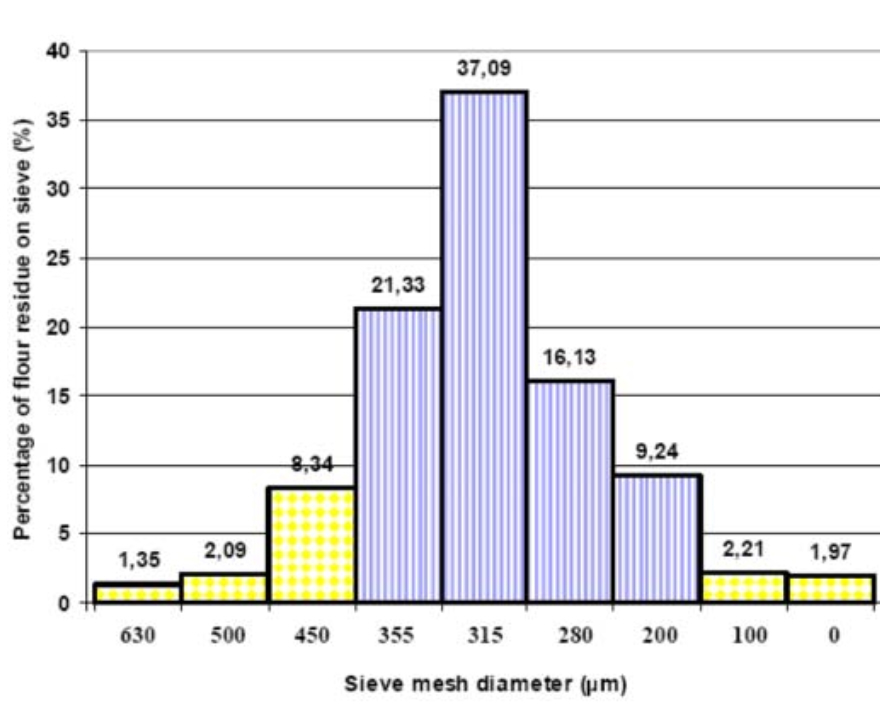
Resultater vum Siften vu Mais Miel mam Ultraschall-Sieb Shaker no 10 Minutten
Study and graphic: ©Brnčić et al., 2009.
Den Haaptvirdeel vum Ultraschallsieft ass dofir seng Fäegkeet fir Siebblenden ze vermeiden wärend e méi grousst a méi konsequent Ausbezuele vu korrekt Gréisst Material liwwert. Et kann och d'Siivkapazitéit erhalen, d'Vertrauen op manuell oder mechanesch Reinigungsmethoden reduzéieren an déi assoziéiert Risike vu Mesh Schued a Produktkontaminatioun limitéieren.
Overall, the study identifies 10 minutes of sieving at 75% ultrasonic amplitude as the most efficient tested condition. The resulting flour fraction supports more uniform mixing with protein concentrates and should promote more consistent extrusion, expansion and product texture. The method may also be suitable for particle-size separation of other powdered materials.
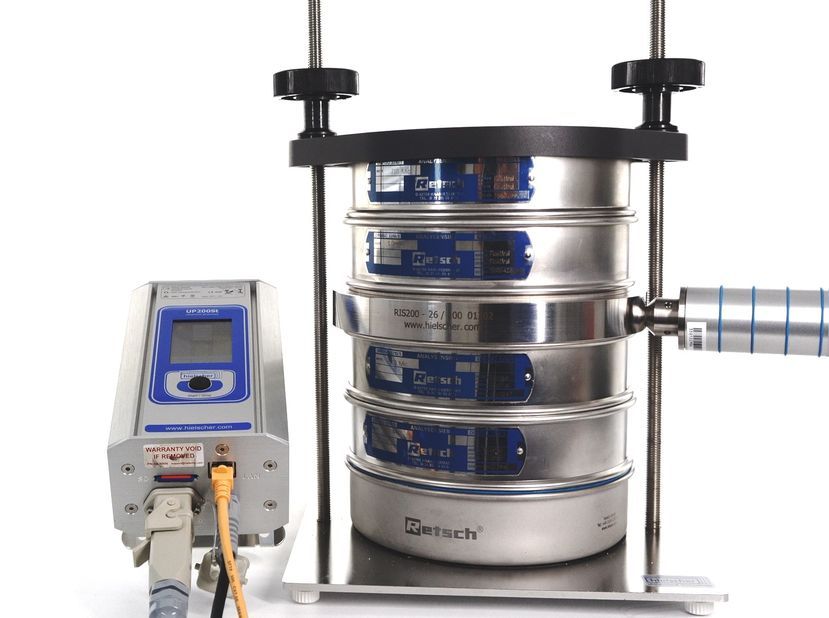
Firwat sollt ech en Ultraschall-Sieb-Shaker benotzen?
- Eliminatioun vu Siebverstopfung: Konventionell Séiwen vu feine, klebende Pulver (wéi Maispulver) féiert dacks zu séierer Netzendblockade wéinst Partikelagglomeratioun verursaacht duerch Stärkescheefegkeet. Ultraschallvibratiounen briechen dës Agglomerater kontinuéierlech op an halen d'Maschëffnungen während dem ganzen Prozess kloer.
- Bedeitend Erhéijung vum Ausbezuelung an der Präzisioun: Andeems Verstopfung verhënnert gëtt, kann Ultraschall-Séisung drastesch d'Recuperatioun vun der gewünschter Partikelfraktioun verbesseren. Zum Beispill, am Fallstudie ass déi gezil Fraktioun (200–450 μm) vun ënner 55% mat traditioneller Séiwen op iwwer 83% mam Ultraschall gestiegen.
- Optimiséierung vum ënnerleeschten Veraarbechtungsschaf: Precise particle size distribution is critical for analysis, quality control, and industrial applications.
- Superior Performance with Fine Particles: Traditional methods often fail with fine meshes (e.g., 450 μm or smaller) due to rapid clogging. Ultrasonic deblinding ensures that even the finest meshes remain effective, allowing for high-precision separation of fine powders and suspensions.
- Improved Mesh Durability, Reduced Cleaning: Mechanesch Deblinding Discs oder manuell Interventioun kënnen ineffizient sinn a potenziell schiedlech fir delikat Seifmeshes. Ultrasonic Sief Shaker reduzéiert d'Verschleiung vum Écran Mesh.
- Time and Cost Efficiency: Ultrasonic sieving achieves higher yields in shorter periods compared to extended traditional sieving times that yield lower recovery rates. This efficiency reduces labor costs and increases laboratory throughput.
- Versatility Across Industries: While demonstrated with food materials like corn, wheat, and rye flour, the technology is applicable to various fine powders and particles suspended in liquids, making it valuable for pharmaceutical, chemical, and material science research.
- Improved Reproducibility: By providing a consistent and controlled deblinding mechanism, ultrasonic sieving reduces the variability associated with manual sieving or mechanical tapping, leading to more reliable and repeatable analytical results.
Frequently Asked Questions: Ultrasonic Sieving of Food Materials
What is the main advantage of using an ultrasonic sieve shaker for fine powders like flour?
The primary advantage is the prevention of “sieve blinding” (blockage). Fine powders, especially those high in starch like corn flour, tend to form agglomerates due to stickiness and particle collision. These agglomerates quickly block the sieve mesh, reducing separation efficiency. Ultrasonic sieving uses high-frequency vibrations to break down these agglomerates in real-time, keeping the mesh openings clear and ensuring accurate particle size distribution.
How does the ultrasonic deblinding system work?
The system uses an ultrasonic transducer mounted on an empty ring placed between the bottom sieve and the device base. A power generator converts electrical impulses into a high-energy mechanical signal. This signal penetrates the sieve surface, breaking down agglomerates and “Entblindung” the mesh continuously during the sieving process.
Why is precise particle size important for extrusion processing?
Partikelgréisst beaflosst direkt d'Qualitéit vum Endprodukt. Fir direkt erweidert Extrudaten hu méi grouss Partikelen manner Kontaktfläche mam Extruderfass, wat zu engem schlechten Wärmetransfer an ongläiche Veraarbechtung féiert. Ëmgekéiert suerge richteg Gréisst Partikel eng eenheetlech Heizung a besser Textureigenschaften. Allgemeng gëtt e Rentabilitéitsschwell erfëllt wann op d'mannst 75% vun de Rohmaterialpartikelen an der wënschenswäerter Gréisstberäich falen.
Wéi vergläicht d'Ultraschall-Siving mat traditionelle mechanesche Seifen?
Traditionell Séien ouni Ultraschall resultéiert dacks zu enger séierer Seifblockéierung. An der Etude vum Brnčić et al. (2009) goufen d'Siewen an den éischten eng bis zwou Minutten komplett blann ginn, mat dem 450 μm-Sief am meeschte betraff. Traditionell Methoden hunn manner wéi 55% vum Material am optimalen Gréisstberäich erliewt, och no erweiderten Seifzäiten. Ultrasonic Sieving huet dëst wesentlech verbessert, wat d'Erhuelung vun iwwer 83% vun der gewënschter Fraktioun erlaabt.
Ginn et operationell Virdeeler fir Ultraschallsieft an engem Laboratoire ze benotzen?
Jo. Ultrasonic Sief Shakers beschleunegen net nëmmen d'Screening Workflows wesentlech, awer verbesseren och d'Sieeffizienz a reduzéieren de Verschleiung op delikate Seifmeshes.
How does ultrasonic sieving improve the accuracy of particle size analysis compared to traditional methods?
Traditional sieving of fine powders often results in sieve “blinding” or blockage due to the formation of agglomerates, which can skew results. Ultrasonic sieving solves this by using a high-frequency mechanical signal generated by a transducer mounted on the sieve base. This energy penetrates the mesh surface to break down agglomerates in real-time, keeping the mesh clear and ensuring accurate separation
What are the optimal settings for ultrasonic sieving to achieve the best separation results?
D'Fuerschung weist datt souwuel d'Siivdauer an d'Ultraschallamplitude kritesch Faktore sinn. Fir Materialien wéi Mais Miel, gouf eng Seefdauer vun 10 Minutten kombinéiert mat enger Ultraschallamplitude vu 75% als héich effektiv fonnt. Dëse spezifesche Kader huet erfollegräich 83,79% vum Material am gewënschten Partikelgréisstberäich (200-450 μm) isoléiert, wat d'traditionell Seifmethoden wesentlech iwwerpréift. (cf. Brnčić et al., 2009)
Firwat ass präzis Partikelgréisst Trennung wichteg fir downstream industriell Prozesser wéi Extrusioun?
Particle size directly impacts the quality of the final product. Larger particles have less contact area with the extruder barrel, leading to poor heat transfer and uneven processing. Conversely, properly sized particles ensure uniform heating and better contact with the extruder’s internal components, resulting in superior textural properties in the final extrudate.
Literatur / Referenzen
- FactSheet Ultrasonic Sieve Shaker UP200TS – Hielscher Ultrasonics
- FactSheet Ultraschall-Siebsystem UP200TS – Hielscher Ultrasonics – deutsch
- Brnčić, Mladen; Ines, Bradač; Tripalo, Branko; Ježek, Damir; Obradović, Valentina; Sven, Karlović; Bosiljkov, Tomislav (2009): Ultrasonically Improved Sieving of Food Materials for Manufacturing of Direct Expanded Extrudates. Agriculturae Conspectus Scientificus (ACS) 74, 2009.
- Xu R., Hong J., Morse C.L., Pike V.W. (2010): Synthesis, structure-affinity relationships, and radiolabeling of selective high-affinity 5-HT4 receptor ligands as prospective imaging probes for positron emission tomography. Journal of Medicinal Chemistry Oct 14;53(19), 2010. 7035-7047.
- An, Y., Kim, K., Lee, YJ. et al. (2026): Binding properties of sulfur to enable solvent-free fabrication of high-performance polymer-free sulfur-carbon positive electrodes. Nature Communications 17, 2360 (2026).
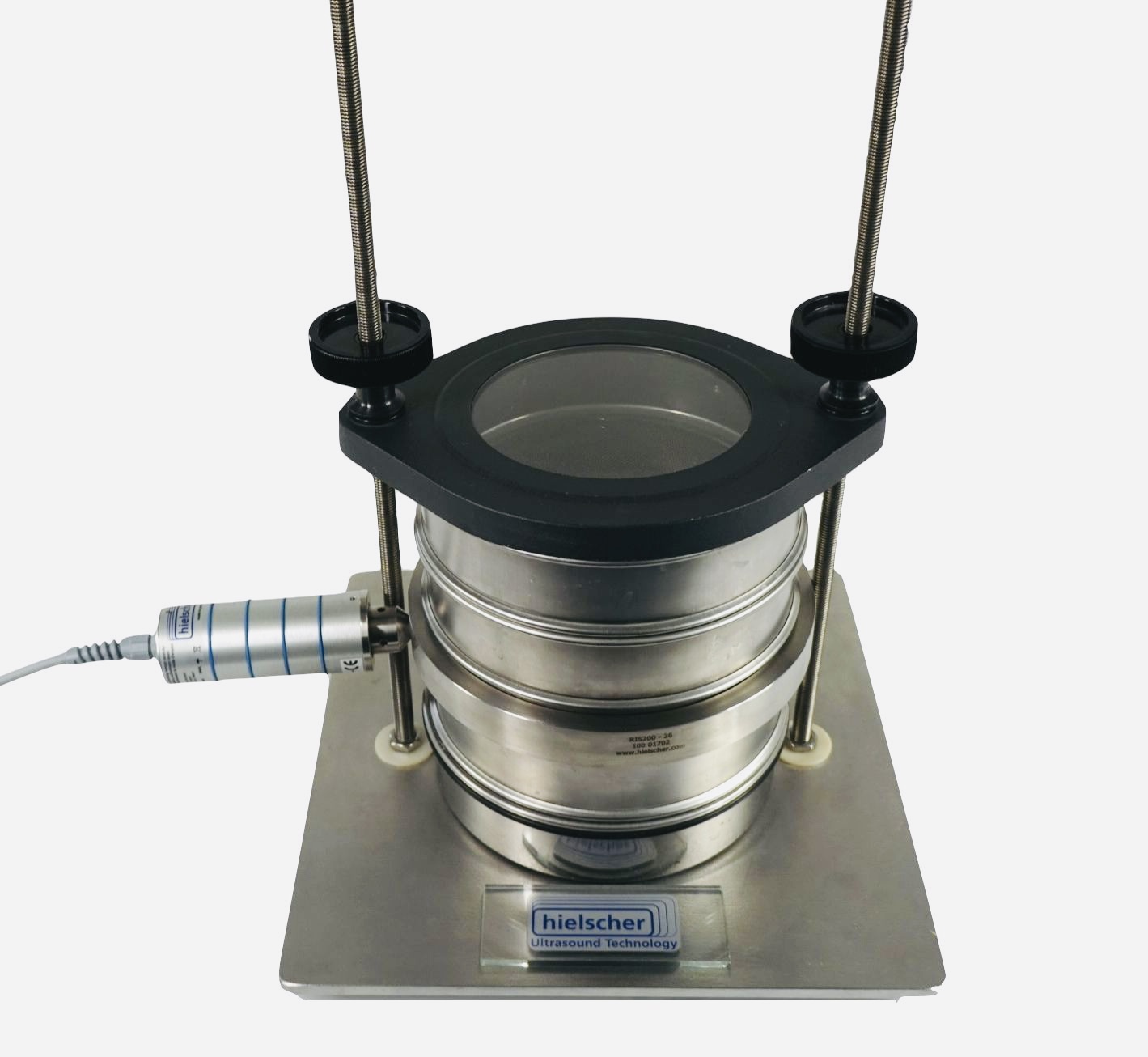
The Hielscher ultrasonic sieve shaker improves screening of dry and wet powders
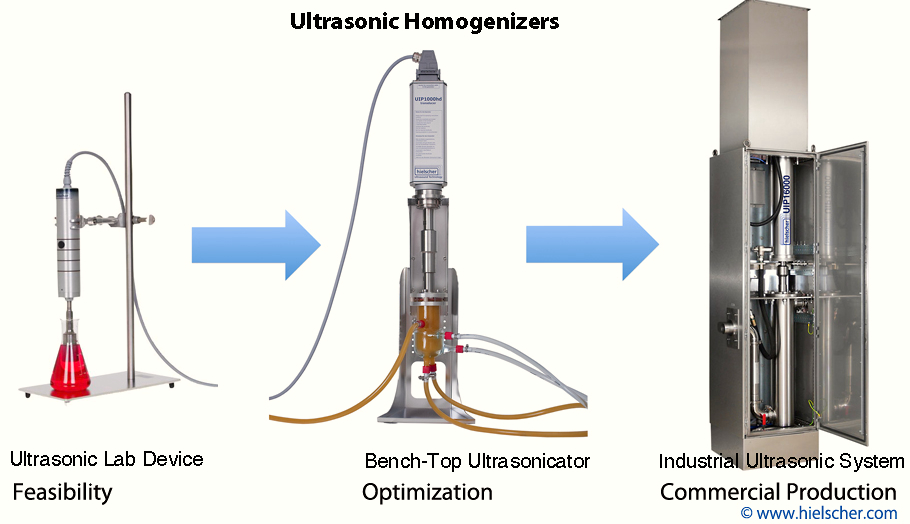
Hielscher Ultrasonics fabrizéiert High-Performance Ultrasonic Homogenisatoren aus Labo zu industriell Gréisst.