Χημικοί αντιδραστήρες με ενίσχυση μέσω υπερήχων – Τύποι, σχέδια και μηχανισμοί
Οι χημικοί αντιδραστήρες αποτελούν τον πυρήνα της βιομηχανικής χημείας, της σύνθεσης υλικών, της παραγωγής ειδικών χημικών, της φαρμακευτικής παραγωγής και της επεξεργασίας περιβαλλοντικών αποβλήτων. Καθώς οι βιομηχανίες επιδιώκουν ταχύτερες, καθαρότερες και ενεργειακά αποδοτικότερες διεργασίες, η υπερηχητική επεξεργασία, γνωστή και ως επεξεργασία με υπερήχους, έχει καταστεί μια μέθοδος με ολοένα και μεγαλύτερη σημασία για την εντατικοποίηση των αντιδραστήρων. Η τεχνολογία των υπερηχητικών αντιδραστήρων αναδιαμορφώνει τη χημική επεξεργασία, βελτιώνοντας την ανάμιξη, τη μεταφορά μάζας, την κινητική των αντιδράσεων και την ετερογενή κατάλυση σε συστήματα αντιδραστήρων διαλείπουσας και συνεχούς λειτουργίας.
Πώς η υπερήχηση βελτιώνει τους χημικούς αντιδραστήρες
Με την εισαγωγή υπερήχων υψηλής ισχύος σε έναν χημικό αντιδραστήρα, οι μηχανικοί μπορούν να δημιουργήσουν ανάμιξη με υπερηχητική ταλαντωτική ροή και ακουστική σπηλαίωση εντός του αντιδραστικού μέσου. Αυτοί οι μηχανισμοί βελτιώνουν την επαφή μεταξύ των αντιδρώντων, επιταχύνουν τη μεταφορά μάζας και μπορούν να ενισχύσουν τους ρυθμούς αντίδρασης, την επιλεκτικότητα και την απόδοση. Η υπερηχητική επεξεργασία είναι ιδιαίτερα αποτελεσματική σε συστήματα στερεού-υγρού, όπως η ετερογενής κατάλυση, και σε συστήματα υγρού-υγρού, όπως η γαλακτωματοποίηση, η εκχύλιση και οι διφασικές αντιδράσεις. Χρησιμοποιείται λιγότερο συχνά σε μίγματα αερίου-υγρού, επειδή η ακουστική σπηλαίωση δημιουργείται με μικρότερη αποτελεσματικότητα σε υγρά με υψηλή περιεκτικότητα σε αέριο.
Στον σύγχρονο σχεδιασμό των ηχοχημικών αντιδραστήρων, τα υγρά αναδεύονται μέσω υπερηχητικών ταλαντώσεων και σπηλαίωσης, συνήθως με πλάτη που κυμαίνονται από 10 έως 200 µm. Αυτό επιτρέπει την επίτευξη ισχυρών μικροσκοπικών φαινομένων ανάμιξης, τα οποία είναι δύσκολο να επιτευχθούν μόνο με τη συμβατική μηχανική ανάδευση.
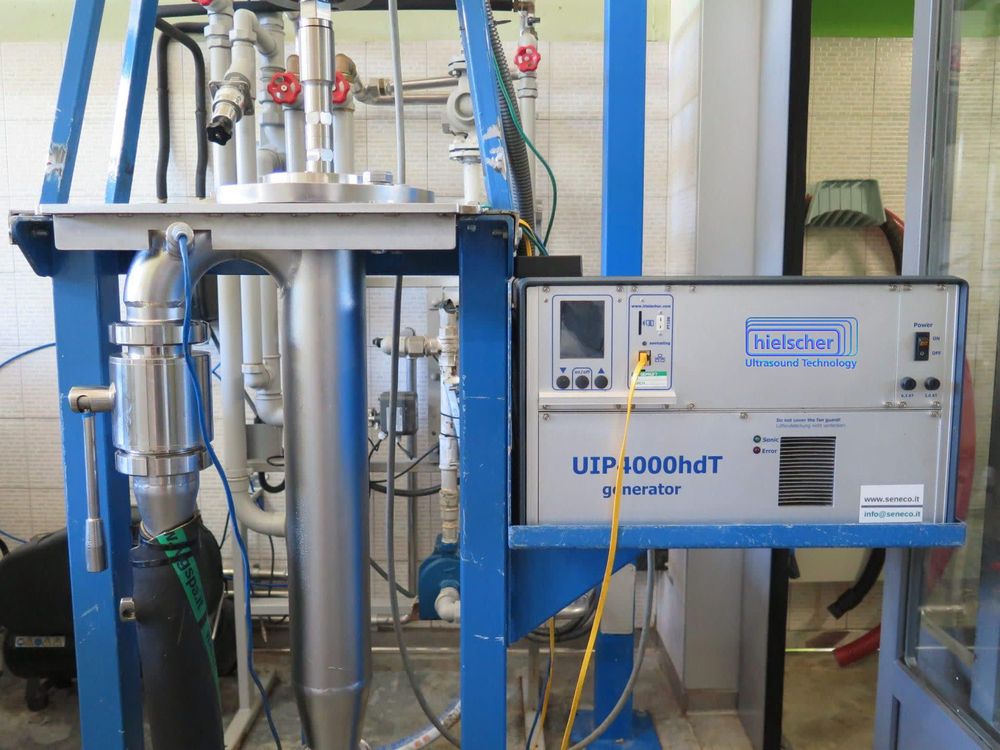
Ενσωματωμένος υπερηχητικός μετατροπέας UIP4000hdT με κυψέλη ροής για εντατικότερες χημικές αντιδράσεις
Γιατί η υπερήχηση ενισχύει τη δράση των χημικών αντιδραστήρων
Η βιομηχανική σημασία της υπερηχητικής επεξεργασίας έγκειται στην ικανότητά της να επηρεάζει τα φαινόμενα χημικής και φυσικής μεταφοράς σε μικρο- και μεσο-κλίμακα. Σε αντίθεση με τη συμβατική ανάδευση, τα υπερηχητικά κύματα δεν περιορίζονται απλώς στην κίνηση του υγρού όγκου. Δημιουργούν κύματα πίεσης, ταλαντωτική κίνηση, φυσαλίδες σπηλαίωσης και τοπικές ζώνες υψηλής ενέργειας.
Όταν οι φυσαλίδες ακουστικής σπηλαίωσης σχηματίζονται, μεγαλώνουν και καταρρέουν, δημιουργούν έντονα μικροπεριβάλλοντα. Αυτά τα φαινόμενα μπορούν να προκαλέσουν:
- υψηλές τοπικές δυνάμεις διάτμησης
- μικροεκτοξευτήρες κοντά σε στερεές επιφάνειες
- κρουστικά κύματα
- ταχεία μικροανάμιξη
- βελτιωμένη διασπορά σωματιδίων
- βελτιωμένη επαφή μεταξύ των επιφανειών
- ταχεία μεταφορά μάζας και θερμότητας
- επιπτώσεις στον καθαρισμό της επιφάνειας και στην ενεργοποίηση του καταλύτη
Τα φαινόμενα αυτά καθιστούν την υπερηχητική επεξεργασία εξαιρετικά χρήσιμη για την εντατικοποίηση των διεργασιών, ιδίως όταν οι αντιδράσεις περιορίζονται από τη διάχυση, την ανεπαρκή επαφή μεταξύ των φάσεων, τη ρύπανση του καταλύτη ή την ανεπαρκή ανάμιξη.
Υπερηχητική επεξεργασία σε αντιδραστήρες διαλείπουσας λειτουργίας
Οι αντιδραστήρες διαλείπουσας λειτουργίας χρησιμοποιούνται ευρέως σε εργαστήρια, πιλοτικές εγκαταστάσεις και στην παραγωγή ειδικών χημικών ουσιών. Είναι ευέλικτοι, εύκολοι στη χρήση και κατάλληλοι για τον έλεγχο αντιδράσεων, τη σύνθεση μικρών όγκων και την παραγωγή προϊόντων υψηλής αξίας.
Όταν η υπερηχητική επεξεργασία εφαρμόζεται σε αντιδραστήρες διαλείπουσας λειτουργίας, μπορεί να βελτιώσει σημαντικά την ομοιογένεια της ανάμειξης και της αντίδρασης. Οι υπερηχητικοί αισθητήρες, τα κύτταρα ροής ή οι εξωτερικά τοποθετημένοι μετατροπείς μπορούν να διοχετεύσουν ακουστική ενέργεια απευθείας στο αντιδραστικό μέσο.
Στα συστήματα μαζικής επεξεργασίας, η υπερηχητική επεξεργασία είναι ιδιαίτερα χρήσιμη για:
- ετερογενής κατάλυση
- Σύνθεση νανοσωματιδίων
- έλεγχος της κρυστάλλωσης
- Γαλακτωματοποίησης
- Εξαγωγή
- πολυμερισμός
- διάλυση και διασπορά στερεών
Στις αντιδράσεις στερεού-υγρού, τα υπερηχητικά κύματα μπορούν να αποτρέψουν τη συσσωμάτωση σωματιδίων και να βελτιώσουν την πρόσβαση στις καταλυτικές ή αντιδραστικές επιφάνειες. Στα συστήματα υγρού-υγρού, η υπερηχητική επεξεργασία μπορεί να δημιουργήσει λεπτές γαλακτώματα και να αυξήσει την επιφάνεια διαφάσεων μεταξύ μη αναμίξιμων φάσεων, γεγονός που συχνά οδηγεί σε ταχύτερους ρυθμούς αντίδρασης.
Αντιδραστήρες διαρροής για συνεχή ηχοχημική επεξεργασία
Οι αντιδραστήρες συνεχούς ροής συγκαταλέγονται μεταξύ των σημαντικότερων τύπων αντιδραστήρων για τη βιομηχανική υπερηχητική επεξεργασία. Αντί να υποβάλλεται σε επεξεργασία ένας σταθερός όγκος υγρού, το αντιδραστικό μείγμα διέρχεται συνεχώς μέσα από τον θάλαμο ενός υπερηχητικού αντιδραστήρα.
Αυτός ο σχεδιασμός είναι ιδιαίτερα ελκυστικός για την κλιμάκωση της παραγωγής, καθώς επιτρέπει στους μηχανικούς να ελέγχουν με μεγαλύτερη ακρίβεια τον χρόνο παραμονής, τον ρυθμό ροής, τη θερμοκρασία, την πίεση και την εισροή υπερηχητικής ενέργειας. Οι αντιδραστήρες υπερηχητικής χημείας συνεχούς ροής χρησιμοποιούνται συχνά όταν απαιτείται σταθερή ποιότητα προϊόντος και συνεχής λειτουργία.
Τα κύρια πλεονεκτήματα των αντιδραστήρων συνεχούς ροής με υπερήχους περιλαμβάνουν:
- ικανότητα συνεχούς παραγωγής
- βελτιωμένη αναπαραγωγιμότητα της διαδικασίας
- καλύτερος έλεγχος της θερμοκρασίας
- ελεγχόμενη κατανομή του χρόνου παραμονής
- ευκολότερη ενσωμάτωση σε βιομηχανικές γραμμές παραγωγής
- αρχιτεκτονική αντιδραστήρα με δυνατότητα κλιμάκωσης
Σε αυτά τα συστήματα, η ανάμιξη ροής με υπερηχητικές ταλαντώσεις μπορεί να ενισχύσει την ακτινική και την αξονική ανάμιξη, να μειώσει τις κλίσεις συγκέντρωσης και να βελτιώσει την αλληλεπίδραση των αντιδρώντων. Αυτό είναι ιδιαίτερα σημαντικό σε διεργασίες όπου η απόδοση της αντίδρασης εξαρτάται από την ταχεία επαφή των φάσεων ή την ταχεία διασπορά.
Ενθέμα κυψέλης ροής υπερήχων MultiPhaseCavitator
 Το MultiPhaseCavitator Insert-MPC48 είναι ένα εξειδικευμένο ένθετο για τους αντιδραστήρες κυψελίδας ροής υπερήχων της Hielscher, σχεδιασμένο για την ενίσχυση των διεργασιών υγρού/υγρού και υγρού/αερίου απευθείας στη ζώνη υπερηχητικής σπηλαίωσης. Με την έγχυση μιας δεύτερης υγρής φάσης ή αερίου μέσω 48 λεπτών καθετήρων στο κύριο ρεύμα υγρού, το MultiPhaseCavitator δημιουργεί πολύ μικρά σταγονίδια ή φυσαλίδες αερίου με υψηλή ειδική επιφάνεια διαφασικής επαφής. Αυτό το καθιστά ιδιαίτερα αποτελεσματικό για την υπερηχητική γαλακτωματοποίηση, όπου οι μη αναμίξιμες φάσεις διασκορπίζονται σε λεπτές γαλακτώματα, καθώς και για καταλυτικές αντιδράσεις αερίων, όπου η εγχυόμενη αέρια φάση διασκορπίζεται γρήγορα και έρχεται σε στενή επαφή με την υγρή φάση, τα διαλυμένα αντιδρώντα ή τους αιωρούμενους καταλύτες. Η προκύπτουσα διάτμηση λόγω σπηλαίωσης, η μικροανάμιξη και η ενισχυμένη μεταφορά μάζας μπορούν να βελτιώσουν την κινητική της αντίδρασης, την επαφή στα όρια των φάσεων και την αποδοτικότητα της διεργασίας σε συνεχή ή διαλείπουσα λειτουργία ροής.

Υπερήχων UIP2000hdT με αντιδραστήρα χημικής παρτίδας
Σχεδιασμοί χημικών αντιδραστήρων και τα οφέλη της υπερηχητικής επεξεργασίας
| Τύπος αντιδραστήρα | Τυπική εφαρμογή | Κύρια αποτελέσματα της υπερήχησης | Τεχνική Σημασία |
|---|---|---|---|
| Αντιδραστήρες πολτού | Ετερογενής κατάλυση με αιωρούμενα στερεά σωματίδια καταλύτη σε υγρή φάση· χρησιμοποιείται στην υδρογόνωση, την οξείδωση, τη μετατροπή βιομάζας, τις διεργασίες τύπου Fischer-Tropsch, τη φωτοκατάλυση και την επεξεργασία λυμάτων. | Η υπερηχητική επεξεργασία βελτιώνει τη διασπορά του καταλύτη, την αποσυμπύκνωση των σωματιδίων, τη μείωση του οριακού στρώματος, την ανανέωση της επιφάνειας, τη μεταφορά μάζας υγρού-στερεού, τον καθαρισμό της επιφάνειας του καταλύτη και τη μείωση της ρύπανσης. | Αυτό έχει ιδιαίτερη σημασία, καθώς πολλές καταλυτικές αντιδράσεις σε φάση πολτού περιορίζονται από το πόσο αποτελεσματικά τα αντιδρώντα φτάνουν στα ενεργά σημεία. Η ακουστική σπηλαίωση ενισχύει την επαφή στη διεπαφή καταλύτη-υγρού και μπορεί να βελτιώσει την κινητική της αντίδρασης. |
| Αντιδραστήρες δεξαμενής με συνεχή ανάδευση (CSTR) | Συνεχείς αντιδράσεις σε υγρή φάση, γαλακτωματοποίηση, καταλυτικές αντιδράσεις, καταβύθιση, κρυστάλλωση, αντιδράσεις πολυμερών και αιωρήματα στερεού-υγρού. | Ο υπέρηχος ενισχύει τη μικροανάμιξη, την αιωρήση σωματιδίων, τη γαλακτωματοποίηση, τη διασπορά και την τοπική εισροή ενέργειας. Μπορεί να συνδυαστεί με μηχανική ανάδευση για τη βελτίωση τόσο της μακροανάμιξης όσο και της μικροανάμιξης. | Τα CSTR με υπερήχους είναι χρήσιμα όταν οι συμβατικές πτερωτές δεν μπορούν να εξαλείψουν πλήρως τις νεκρές ζώνες, την ανεπαρκή διασπορά ή τους τοπικούς περιορισμούς στη μεταφορά μάζας. Οι υπερήχοι συμβάλλουν στη διαμόρφωση πιο ομοιόμορφων συνθηκών αντίδρασης και στη βελτίωση της εντατικοποίησης της διεργασίας. |
| Αντιδραστήρες σταθερής κλίνης | Σταθερές καταλυτικές κλίνες που χρησιμοποιούνται στην υδρογόνωση, την οξείδωση, την περιβαλλοντική κατάλυση, την πετροχημική επεξεργασία και την ετερογενή κατάλυση σε υγρή φάση. | Η υπερηχητική επεξεργασία μπορεί να βελτιώσει τη διαβροχή του καταλύτη, τη ροή του υγρού μέσα στο στρώμα, τη μείωση του οριακού στρώματος, τον καθαρισμό της επιφάνειας, τον περιορισμό των εναποθέσεων και τη μεταφορά μάζας προς τις καταλυτικές θέσεις. | Η απόδοση των συστημάτων σταθερής κλίνης συχνά περιορίζεται από το φαινόμενο της διοχέτευσης, την ανεπαρκή διαβροχή, την αντίσταση στη διάχυση και τον σχηματισμό αποθέσεων. Η ενίσχυση της διεργασίας με υπερήχους μπορεί να βελτιώσει την αξιοποίηση του καταλύτη και την ομοιομορφία της αντίδρασης. |
| Αντιδραστήρες ρευστοποιημένης κλίνης | Δυναμικά στρώματα αιωρούμενων σωματιδίων που χρησιμοποιούνται στην καταλυτική διαδικασία, την επεξεργασία σωματιδίων, την επικάλυψη, τον πολυμερισμό, την ξήρανση και τις αντιδράσεις στερεού-υγρού. | Η διέγερση με υπερήχους μπορεί να βελτιώσει τη διασπορά των σωματιδίων, να μειώσει τη συσσωμάτωση, να ενισχύσει την επαφή υγρού-στερεού, να σταθεροποιήσει τα εναιωρήματα και να βελτιώσει την προσβασιμότητα στην επιφάνεια του καταλύτη. | Η υπερηχητική επεξεργασία είναι ιδιαίτερα αποτελεσματική σε ρευστοποιημένες κλίνες υγρού-στερεού, όπου η σπηλαίωση μπορεί να δημιουργηθεί αποτελεσματικά. Σε συστήματα πλούσια σε αέρια, η σπηλαίωση είναι λιγότερο αποτελεσματική, γεγονός που καθιστά τους υπερήχους πιο κατάλληλους για εφαρμογές σε αντιδραστήρες με βάση το υγρό. |
| Αντιδραστήρες με μεμβράνη | Ολοκληρωμένα συστήματα αντίδρασης-διαχωρισμού που χρησιμοποιούνται για την επιλεκτική απομάκρυνση προϊόντων, τη δοσολογία αντιδραστηρίων, τις καταλυτικές διεργασίες με μεμβράνες και τις αντιδράσεις με τη βοήθεια διήθησης. | Ο υπέρηχος μπορεί να μειώσει τη ρύπανση της μεμβράνης, να βελτιώσει τη ροή του διηθήματος, να ενισχύσει τον καθαρισμό της επιφάνειας, να μειώσει την πόλωση συγκέντρωσης και να βελτιώσει την ανάμιξη κοντά στη διεπαφή της μεμβράνης. | Η υπερηχητική επεξεργασία συνδέει τη μηχανική των αντιδράσεων με την επιστήμη του διαχωρισμού. Αποτελεί ιδιαίτερα πολύτιμο εργαλείο σε περιπτώσεις όπου η ρύπανση, η αντίσταση στη μεταφορά μάζας ή ο ασθενής συσχετισμός αντίδρασης-διαχωρισμού περιορίζουν την απόδοση του αντιδραστήρα με μεμβράνη. |
Μηχανισμοί ενίσχυσης της απόδοσης των αντιδραστήρων υπερήχων
Τα πλεονεκτήματα της υπερήχησης στους χημικούς αντιδραστήρες βασίζονται σε διάφορους αλληλεπιδρώντες μηχανισμούς.
- Η ακουστική σπηλαίωση είναι ο σημαντικότερος μηχανισμός. Περιλαμβάνει τον σχηματισμό, την ανάπτυξη και την κατάρρευση μικροσκοπικών φυσαλίδων σε ένα υγρό που εκτίθεται σε υπερήχους υψηλής έντασης. Η κατάρρευση των φυσαλίδων προκαλεί τοπική απελευθέρωση ενέργειας και ισχυρές μηχανικές δυνάμεις.
- Η ακουστική ροή δημιουργεί σταθερή κίνηση του υγρού που προκαλείται από υπερηχητικά κύματα. Αυτό βελτιώνει την ανάμιξη και τη μεταφορά σε ζώνες όπου η μηχανική ανάδευση ενδέχεται να είναι ανεπαρκής.
- Η ανάμιξη με ταλαντωτική ροή λαμβάνει χώρα όταν οι υπερηχητικές δονήσεις προκαλούν ταχεία παλινδρομική κίνηση του υγρού. Στα συστήματα αντιδραστήρων, πλάτη κύματος περίπου 10 έως 200 µm μπορούν να επιφέρουν εξαιρετικά αποτελεσματική ανάδευση και βελτιωμένη μεταφορά μάζας.
- Η μικροεκτόξευση και τα κρουστικά κύματα εμφανίζονται κοντά σε φυσαλίδες σπηλαίωσης που καταρρέουν, ιδίως κοντά σε στερεές επιφάνειες. Αυτά τα φαινόμενα μπορούν να καθαρίσουν τις επιφάνειες των καταλυτών, να διαταράξουν τα οριακά στρώματα και να βελτιώσουν την πρόσβαση του υγρού στα ενεργά σημεία.
- Η αύξηση της επιφάνειας διαφάσης είναι ιδιαίτερα σημαντική στα συστήματα υγρού-υγρού. Τα υπερηχητικά κύματα μπορούν να δημιουργήσουν λεπτά σταγονίδια και σταθερές διασπορές, αυξάνοντας έτσι την επιφάνεια που διατίθεται για την αντίδραση ή τη μεταφορά μάζας.
Συνολικά, αυτοί οι μηχανισμοί καθιστούν την υπερηχητική επεξεργασία ένα ισχυρό εργαλείο για την εντατικοποίηση της λειτουργίας των χημικών αντιδραστήρων.
Βιομηχανική σημασία του σχεδιασμού των υπερηχητικών αντιδραστήρων
Η βιομηχανική σημασία των αντιδραστήρων με υπερήχους δεν περιορίζεται μόνο στην ταχύτερη ανάμιξη. Η υπερηχητική επεξεργασία προσφέρει έναν τρόπο χειρισμού των συνθηκών αντίδρασης σε κλίμακες που ο συμβατικός εξοπλισμός δεν μπορεί εύκολα να επιτύχει.
Στη χημική μηχανική, πολλοί περιορισμοί των αντιδραστήρων οφείλονται σε φαινόμενα μεταφοράς και όχι στους εγγενείς ρυθμούς αντίδρασης. Τα αντιδρώντα ενδέχεται να μην φτάνουν αρκετά γρήγορα στις καταλυτικές θέσεις. Τα μη αναμίξιμα υγρά ενδέχεται να έχουν ανεπαρκή επιφάνεια επαφής. Τα στερεά ενδέχεται να συσσωματωθούν. Οι μεμβράνες ενδέχεται να υποστούν ρύπανση. Οι επιφάνειες των καταλυτών ενδέχεται να φράξουν.
Η υπερηχητική επεξεργασία αντιμετωπίζει αυτούς τους περιορισμούς βελτιώνοντας άμεσα τις φυσικές συνθήκες στο εσωτερικό του αντιδραστήρα. Αυτό την καθιστά σημαντική για διάφορες ερευνητικές και βιομηχανικές προτεραιότητες:
- πιο οικολογική χημική επεξεργασία
- μειωμένη κατανάλωση ενέργειας και διαλυτών
- βελτιωμένη απόδοση του καταλύτη
- υψηλότερη επιλεκτικότητα της αντίδρασης
- ταχύτερη ανάπτυξη διαδικασιών
- συνεχής παραγωγή
- ενισχυμένα συστήματα αρθρωτών αντιδραστήρων
- σύνθεση προηγμένων υλικών
- βιώσιμη μετατροπή της βιομάζας και των ροών αποβλήτων
Για τους ερευνητές, η υπερηχητική επεξεργασία προσφέρει μια ελεγχόμενη μέθοδο για τη μελέτη της σχέσης μεταξύ της εισροής ακουστικής ενέργειας, της συμπεριφοράς της σπηλαίωσης, της ενίσχυσης της μεταφοράς και της χημικής απόδοσης. Για τη βιομηχανία, προσφέρει μια πρακτική οδό προς συμπαγή, αποδοτικά και επεκτάσιμα συστήματα αντιδραστήρων.

Ομογενοποιητής υπερήχων UIP2000hdT για χημικές αντιδράσεις σε αντιδραστήρα ροής
Πλεονεκτήματα της υπερήχησης στους χημικούς αντιδραστήρες
Η ενσωμάτωση των υπερήχων στο σχεδιασμό των αντιδραστήρων προσφέρει διάφορα λειτουργικά και επιστημονικά πλεονεκτήματα:
- ταχύτεροι ρυθμοί αντίδρασης χάρη στη βελτιωμένη μεταφορά μάζας
- καλύτερη ανάμιξη σε πολυφασικά συστήματα
- αυξημένη διασπορά στερεών και σταγονιδίων
- βελτιωμένη αξιοποίηση του καταλύτη
- περιορισμοί λόγω μειωμένης διάχυσης
- καθαρότερες επιφάνειες καταλύτη και μεμβράνης
- βελτιωμένη αναπαραγωγιμότητα της διαδικασίας σε συστήματα ροής
- πιθανή μείωση της θερμοκρασίας, της πίεσης ή του χρόνου αντίδρασης
- συμβατότητα με τη λειτουργία κατά παρτίδες και τη συνεχή λειτουργία
- μεγάλη σημασία για την ετερογενή κατάλυση και τις διφασικές αντιδράσεις
Αυτά τα πλεονεκτήματα καθιστούν την τεχνολογία των υπερηχητικών αντιδραστήρων ιδιαίτερα ελκυστική για τον τομέα των λεπτών χημικών, των ειδικών χημικών, της κατάλυσης, των νανοϋλικών, της πράσινης χημείας και της εντατικοποίησης των διεργασιών.

Υπερήχων κύτταρο ροής γυαλιού
Βελτιώστε την απόδοση του χημικού σας αντιδραστήρα με τα συστήματα υπερήχων της Hielscher!
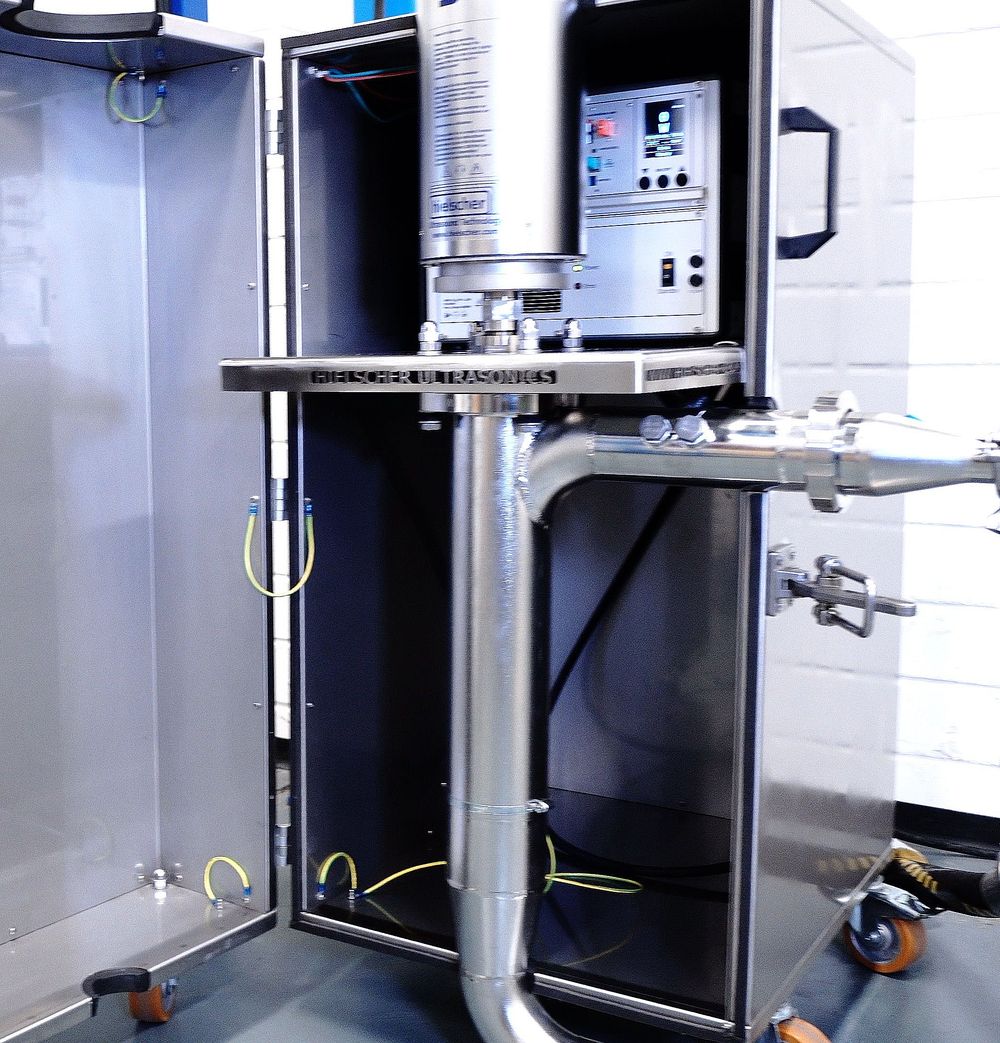 Τα συστήματα υπερήχων της Hielscher είναι ιδανικά για εξατομικευμένη ενσωμάτωση σε χημικούς αντιδραστήρες, καθώς διατίθενται ως ανθεκτικά συστήματα υπερήχων υψηλής ισχύος με προσαρμόσιμα σονοτρόδια, κυψέλες ροής, ένθετα αντιδραστήρων και εξαρτήματα ειδικά για κάθε διαδικασία. Ανάλογα με τη διάταξη της αντίδρασης, οι υπερηχητικοί επεξεργαστές της Hielscher μπορούν να εγκατασταθούν σε αντιδραστήρες διαλείπουσας λειτουργίας, αντιδραστήρες δεξαμενής με συνεχή ανάδευση, αντιδραστήρες ροής σε σειρά, βρόχους ανακυκλοφορίας, συστήματα υπό πίεση, καθώς και σε πιλοτικές εγκαταστάσεις ή μονάδες παραγωγής. Αυτή η ευελιξία επιτρέπει την εφαρμογή των υπερήχων ακριβώς εκεί όπου η σπηλαίωση είναι πιο αποτελεσματική: στη διεπαφή υγρού-στερεού, υγρού-υγρού ή υγρού-αερίου. Η Hielscher Ultrasonics προσφέρει επίσης διάφορους τύπους αντιδραστήρων υπερήχων κατά παρτίδα και εν σειρά, επιτρέποντας την ελεγχόμενη ηχοχημική επεξεργασία, τη γαλακτωματοποίηση, τη διασπορά, την ενεργοποίηση καταλυτών, τον καθαρισμό επιφανειών, την εντατικοποίηση της μεταφοράς μάζας και την επιτάχυνση των αντιδράσεων. Με τον ακριβή έλεγχο του πλάτους, της εισροής ισχύος, της θερμοκρασίας, της πίεσης, του ρυθμού ροής και του χρόνου παραμονής, οι υπερηχητικοί αντιδραστήρες της Hielscher μπορούν να προσαρμοστούν στις συγκεκριμένες απαιτήσεις της εργαστηριακής έρευνας, της ανάπτυξης διεργασιών, της κλιμάκωσης και της βιομηχανικής παραγωγής χημικών.
Ο παρακάτω πίνακας σας δίνει μια ένδειξη της κατά προσέγγιση ικανότητας επεξεργασίας των υπερήχων μας:
| Όγκος παρτίδας | Ροή | Προτεινόμενες συσκευές |
|---|---|---|
| 1 έως 500mL | 10 έως 200mL/min | UP100Η |
| 10 έως 2000mL | 20 έως 400mL / λεπτό | UP200Ht, UP400St |
| 0.1 έως 20L | 0.2 έως 4L/min | UIP2000hdT |
| 10 έως 100L | 2 έως 10L / λεπτό | UIP4000hdT |
| 15 έως 150L | 3 έως 15L / λεπτό | UIP6000hdT |
| μ.δ. | 10 έως 100L / λεπτό | UIP16000hdT |
| μ.δ. | μεγαλύτερου | σύμπλεγμα UIP16000hdT |
Σχεδιασμός, Κατασκευή και Συμβουλευτική – Ποιότητα Made in Germany
Hielscher υπερήχων είναι γνωστή για την υψηλότερη ποιότητα και τα πρότυπα σχεδιασμού τους. Η ευρωστία και η εύκολη λειτουργία επιτρέπουν την ομαλή ενσωμάτωση των υπερήχων μας σε βιομηχανικές εγκαταστάσεις. Οι σκληρές συνθήκες και τα απαιτητικά περιβάλλοντα αντιμετωπίζονται εύκολα από τους υπερήχους Hielscher.
Hielscher Υπέρηχοι είναι μια πιστοποιημένη εταιρεία ISO και δίνουν ιδιαίτερη έμφαση σε υψηλής απόδοσης υπερήχων που διαθέτουν state-of-the-art τεχνολογία και φιλικότητα προς το χρήστη. Φυσικά, Hielscher υπερήχων είναι CE συμβατό και πληρούν τις απαιτήσεις των UL, CSA και RoHs.

Υπερηχητικός ομογενοποιητής UIP1500hdT με έναν αντιδραστήρα ροής εξοπλισμένο με μανδύα ψύξης για τον έλεγχο της θερμοκρασίας της διεργασίας κατά τη διάρκεια της υπερηχητικής επεξεργασίας.
Συχνές Ερωτήσεις
Τι είναι οι χημικοί αντιδραστήρες;
Οι χημικοί αντιδραστήρες είναι ειδικά σχεδιασμένα δοχεία ή συστήματα στα οποία πραγματοποιούνται χημικές αντιδράσεις υπό ελεγχόμενες συνθήκες, όπως θερμοκρασία, πίεση, ανάμιξη, χρόνος παραμονής και συγκέντρωση των αντιδρώντων. Σκοπός τους είναι η μετατροπή των πρώτων υλών σε επιθυμητά προϊόντα με καθορισμένη απόδοση, επιλεκτικότητα και αποδοτικότητα της διεργασίας.
Ποιοι είναι οι κύριοι τύποι χημικών αντιδραστήρων;
Οι κύριοι τύποι χημικών αντιδραστήρων περιλαμβάνουν τους αντιδραστήρες διαλείπουσας λειτουργίας, τους αντιδραστήρες δεξαμενής με συνεχή ανάδευση, τους αντιδραστήρες ροής τύπου «plug flow», τους αντιδραστήρες σταθερής κλίνης, τους αντιδραστήρες ρευστοποιημένης κλίνης, τους αντιδραστήρες πολτού, τους αντιδραστήρες μεμβράνης, καθώς και τους φωτοχημικούς ή ηλεκτροχημικούς αντιδραστήρες. Κάθε τύπος αντιδραστήρα διαφέρει ως προς τη συμπεριφορά της ροής, το καθεστώς ανάμιξης, τα χαρακτηριστικά μεταφοράς θερμότητας και μάζας, καθώς και την καταλληλότητά του για ομογενείς ή ετερογενείς αντιδράσεις.
Ποια είναι η διαφορά μεταξύ ενός αντιδραστήρα ρευστοποιημένης κλίνης και ενός αντιδραστήρα σταθερής κλίνης;
Σε έναν αντιδραστήρα σταθερής κλίνης, τα στερεά σωματίδια του καταλύτη παραμένουν ακίνητα, ενώ τα αντιδρώντα ρέουν μέσα από την κλίνη του καταλύτη. Σε έναν αντιδραστήρα ρευστοποιημένης κλίνης, ένα ρευστό που ρέει προς τα πάνω αιωρεί και μετακινεί τα στερεά σωματίδια, δημιουργώντας μια δυναμική κλίνη με έντονη ανάμιξη, βελτιωμένη μεταφορά θερμότητας και καλύτερη επαφή σωματιδίων-ρευστού. Οι σταθερές κλίνες είναι απλούστερες και μηχανικά σταθερές, ενώ οι ρευστοποιημένες κλίνες παρέχουν υψηλότερη απόδοση ανάμιξης και μεταφοράς θερμότητας, αλλά απαιτούν πιο σύνθετο έλεγχο της ροής.
Τι είναι η κλίνη καταλύτη;
Μια κλίνη καταλύτη είναι ένας καθορισμένος όγκος στερεών σωματιδίων καταλύτη που είναι διατεταγμένα στο εσωτερικό ενός αντιδραστήρα. Παρέχει την ενεργή επιφάνεια στην οποία λαμβάνουν χώρα οι χημικές αντιδράσεις. Τα στρώματα καταλύτη μπορεί να είναι στατικά, όπως στους αντιδραστήρες σταθερής κλίνης, ή να αιωρούνται δυναμικά, όπως στους αντιδραστήρες ρευστοποιημένης κλίνης. Η απόδοσή τους εξαρτάται από τη δραστικότητα του καταλύτη, το μέγεθος των σωματιδίων, το πορώδες, την επιφάνεια, την κατανομή της ροής, τη μεταφορά θερμότητας και τη μεταφορά μάζας.
Βιβλιογραφία / Αναφορές
- Yu, Hang Gao, Jing; Zhong, Qili; Guo, Yahui; Xie, Yunfei; Yao, Weirong; Zhou, Weibiao (2018): Acoustic pressure and temperature distribution in a novel continuous ultrasonic tank reactor: a simulation study. IOP Conference Series: Materials Science and Engineering 2018.
- Francisco J. Navarro-Brull; Andrew R. Teixeira; Jisong Zhang; Roberto Gómez; Klavs F. Jensen (2018): Reduction of Dispersion in Ultrasonically-Enhanced Micropacked Beds. Industrial & Engineering Chemistry Research 57, 1; 2018. 122–128.
- M. Ajmal, S. Rusli, G. Fieg (2016): Modeling and experimental validation of hydrodynamics in an ultrasonic batch reactor. Ultrasonics Sonochemistry, Volume 28, 2016. 218-229.
- L. Castrillón, E. Marañón, Y. Fernández-Nava, P. Ormaechea, G. Quiroga (2013): Thermophilic co-digestion of cattle manure and food waste supplemented with crude glycerin in induced bed reactor (IBR). Bioresource Technology, Volume 136, 2013. 73-77.
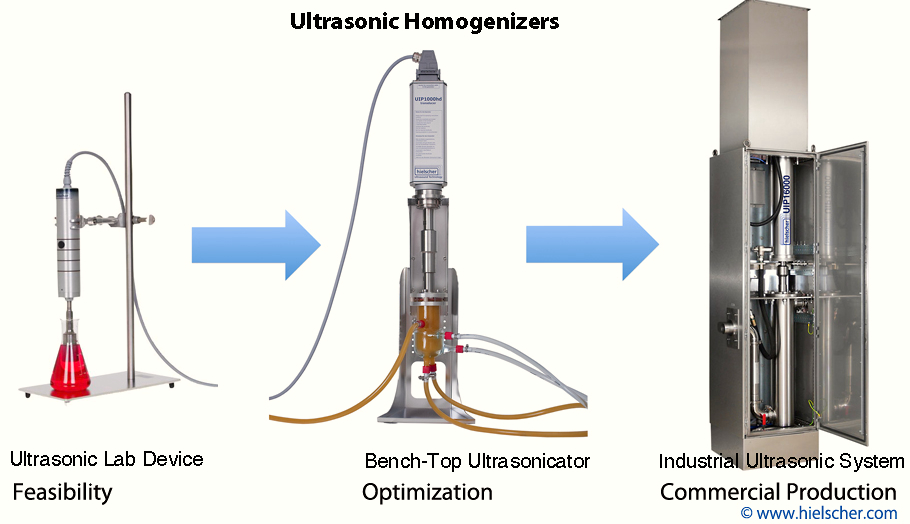
Hielscher Υπέρηχοι κατασκευάζει υψηλής απόδοσης υπερήχων ομογενοποιητές από εργαστήριο προς βιομηχανικό μέγεθος.