Ultrasonik Yoğunlaştırılmış Sabit Yataklı Reaktörler
Ultrasonik işlem, esas olarak dolgulu katalizör yatağının çevresinde ve içindeki kütle transferini yoğunlaştırarak sabit yataklı reaktörlerdeki katalitik reaksiyonları iyileştirebilir. Ayrıca, ultrasonik işlem katalizör yüzeyindeki pasivasyon ve kirlenme tabakalarını ortadan kaldırarak katalizörü sürekli olarak rejenerer.
Sonikasyonun Sabit Yataklı Katalizi Nasıl İyileştirdiği
Sabit yataklı bir reaktörde, katalizör parçacıkları sabit kalırken sıvı, gaz veya çok fazlı reaktifler yatak içinden akar. Reaksiyon performansı genellikle dış kütle transferi, gözenek difüzyonu, kanalizasyon, kirlenme ve ısı transferi gradyanları tarafından sınırlandırılır. Ultrason, akustik kavitasyon, mikro akış, kesme kuvvetleri ve basınç salınımları oluşturarak bu sınırlamaların birçoğunu azaltabilir.

Sonikatör UIP2000hdT sabit yataklı reaktöre entegre edilmiş
Ultrasonik Olarak Güçlendirilmiş Sabit Yataklı Reaksiyonların Başlıca Etkileri
- Geliştirilmiş dış kütle transferi: Ultrasonik mikroakış, katalizör parçacıklarının çevresindeki durgun sınır tabakasını azaltarak, reaktiflerin aktif bölgelere daha verimli bir şekilde ulaşmasını sağlar.
- Geliştirilmiş gözenek erişilebilirliği: Kavitasyonun neden olduğu basınç dalgalanmaları ve sıvı hareketi, reaktiflerin katalizör gözeneklerine nüfuz etmesini ve ürünlerin gözeneklerden uzaklaştırılmasını kolaylaştırabilir.
- Kirlenme ve pasivasyonun azaltılması: Ultrasonik işlem, katalizör yüzeylerindeki birikintileri, polimer filmleri, kok öncüllerini veya diğer pasivasyon katmanlarını gidermeye yardımcı olarak katalitik aktivitenin daha uzun süre korunmasını sağlar.
- Sıkıştırılmış yataklarda kanal oluşumunun azalması: Mikro-dolgulu yatak çalışmalarında, ultrasonun akış davranışını değiştirdiği ve dağılımı azalttığı, böylece reaktörün daha ideal bir tıkanak akışı davranışına yaklaşmasına yardımcı olduğu gösterilmiştir.
- Geliştirilmiş Isı Transferi: Akustik akış ve türbülans, yerel ısı dağılımını iyileştirerek katalizör yatağındaki sıcak noktaların veya soğuk bölgelerin oluşumunu azaltır.
- Daha yüksek dönüşüm oranı ve verim: Kütle transferini ve katalizöre erişimi iyileştirerek, ultrasonik işlem, özellikle reaksiyonun tamamen kinetik sınırlamadan ziyade taşıma sınırlamasına tabi olduğu durumlarda, reaksiyon hızını, dönüşüm oranını ve ürün verimini artırabilir.
Sıvı-katı temasında iyileştirme: Ultrason, katalizör parçacıklarının daha iyi ıslanmasını sağlar; bu özellik özellikle damlama yatağı, bulamaç beslemeli veya sıvı fazlı sabit yataklı sistemlerde yararlıdır.
Sonikasyon, Sabit Yataklı Katalizi Nasıl İyileştirir?
Temel mekanizma akustik kavitasyondur: ultrasonik dalgalar, büyüyen ve şiddetli bir şekilde çöken mikroskobik kabarcıklar oluşturur. Bu kabarcıkların çökmesi, yerel kesme kuvveti, mikro püskürmeler, şok dalgaları ve yoğun karıştırma oluşturur. Katalizör yüzeylerinin yakınında bu etkiler, katı-sıvı arayüzünü temizleyebilir, aktive edebilir ve yenileyebilir. Sonokataliz ile ilgili derlemeler, bunu ultrason ve katı katalizörler arasındaki bir sinerji olarak tanımlamakta; bu sinerji, ısı transferi ve kütle transferinde iyileşme ile katalitik yüzeylerdeki lokalize etkileri içermektedir.
Sonikasyon, sabit yataklı reaksiyonda aşağıdaki sorunlar yaşandığında en fazla fayda sağlar:
- katalizör gözeneklerine yavaş difüzyon,
- katalizör parçacıklarının yetersiz ıslanması,
- gözeneklerin içinde ürün birikmesi,
- kirlenme veya yüzey pasivasyonu,
- kütle transferi ile sınırlı kinetik,
- çok fazlı akıştaki dengesiz dağılım,
- dolu yataktan geçerek.
Sabit Yataklı Katalizörler
Sabit yataklar (bazen paketlenmiş yatak olarak da adlandırılır) genellikle 1-5 mm çaplara sahip granüller olan katalizör peletleri ile yüklenir. Reaktöre tek bir yatak şeklinde, ayrı kabuklar halinde veya tüpler halinde yüklenebilirler. Katalizörler çoğunlukla nikel, bakır, osmiyum, platin ve rodyum gibi metallere dayanır.
Güç ultrasonunun heterojen kimyasal reaksiyonlar üzerindeki etkileri iyi bilinmekte olup, endüstriyel katalitik süreçlerde yaygın olarak kullanılmaktadır. Sabit yataklı reaktördeki katalitik reaksiyonlar da sonikasyon işleminden fayda sağlamaktadır. Sabit yataklı katalizöre uygulanan ultrasonik ışınlama, yüksek reaktiviteye sahip yüzeyler oluşturur, sıvı faz (reaktifler) ile katalizör arasındaki kütle transferini artırır ve yüzeydeki pasifleştirici kaplamaları (örn. oksit tabakaları) ortadan kaldırır.
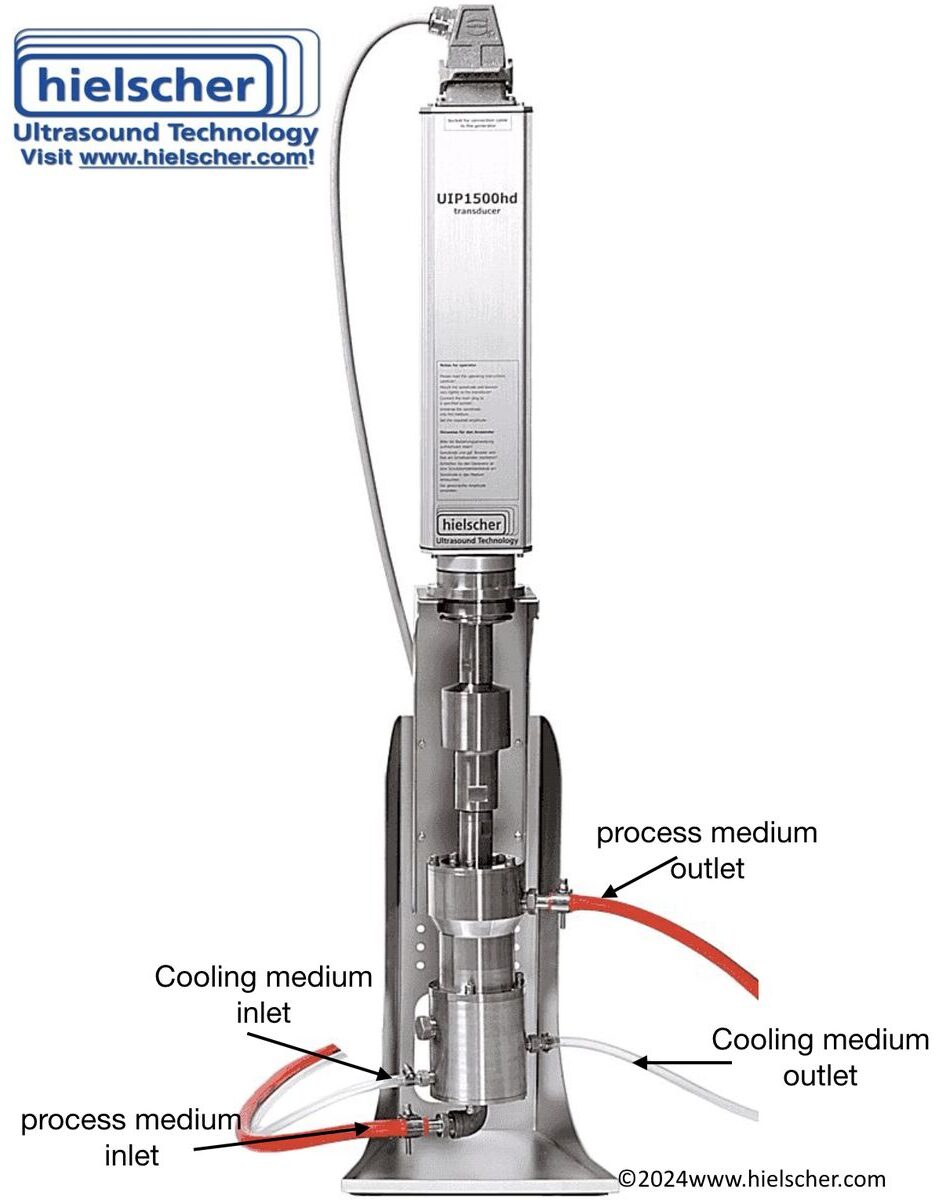
Kullanılmış katalizörlerin yeniden etkinleştirilmesi ve geri dönüşümü için akış hücresi donanımlı Sonicator UIP1500hdT
- Geliştirilmiş verimlilik
- Artan reaktivite
- Artan dönüşüm oranı
- Daha yüksek verim
- Katalizörün geri dönüşümü
Katalitik reaksiyonların ultrasonik yoğunlaştırılması
Ultrasonik karıştırma ve çalkalama, reaktan ve katalizör parçacıkları arasındaki teması geliştirir, yüksek oranda reaktif yüzeyler oluşturur ve kimyasal reaksiyonu başlatır ve / veya geliştirir.
Ultrasonik katalizör hazırlama, kristalleşme davranışında, dispersiyon / deagglomeration'da ve yüzey özelliklerinde değişikliklere neden olabilir. Ayrıca, önceden oluşturulmuş katalizörlerin özellikleri, pasifleştirici yüzey katmanlarının çıkarılması, daha iyi dispersiyon, kütle transferinin arttırılmasından etkilenebilir.
Ultrasonik Yöntemle Geliştirilmiş Reaksiyonlara Örnekler
- Hidrojenasyon reaksiyonları için Ni katalizörünün ultrasonik ön işlemi
- Tartarik asit ile soniklenmiş Raney Ni katalizörü çok yüksek bir enantiyoselektivite ile sonuçlanır
- Ultrasonik yöntemle sentezlenmiş Fischer-Tropsch katalizörleri
- Artan reaktivite için sonokimyasal olarak işlenmiş amorf toz katalizörler
- Amorf metal tozlarının sono-sentezi
Ultrasonik Katalizör Geri Kazanımı
Sabit yataklı reaktörlerdeki katı katalizörler genellikle küresel boncuklar, peletler, ekstrüde ürünler veya silindirik parçacıklar şeklinde kullanılır. Kimyasal reaksiyonlar sırasında katalizör yüzeyi, bir kirlenme tabakası nedeniyle pasifleşebilir; bu da zamanla katalitik aktivite ve/veya seçiciliğin kademeli olarak azalmasına yol açar.
Katalizörün devre dışı kalma süresi önemli ölçüde değişiklik gösterir. Örneğin, bir kırma katalizörünün devre dışı kalması saniyeler içinde gerçekleşebilirken, amonyak sentezinde kullanılan bir demir katalizörü 5–10 yıl boyunca aktif kalabilir. Bununla birlikte, katalizörün devre dışı kalması hemen hemen tüm katalitik işlemlerde gözlemlenir. Her ne kadar farklı devre dışı kalma mekanizmaları ortaya çıkabilse de – kimyasal, mekanik ve termal bozulma dahil – Kirlenme, katalizörün bozulmasının en yaygın nedenlerinden biridir.
Kirlenme, akışkan fazdaki maddelerin katalizör yüzeyine ve gözeneklerinin içine fiziksel olarak birikmesi anlamına gelir. Bu birikintiler reaktif bölgeleri tıkar, gözeneklere erişimi kısıtlar ve reaktifler ile aktif katalizör yüzeyi arasındaki teması azaltır. Kok veya karbonlu birikintiler nedeniyle oluşan katalizör kirlenmesi genellikle hızlı bir süreçtir; ancak birçok durumda ultrasonik rejenerasyon yoluyla kısmen veya tamamen geri döndürülebilir.
Ultrasonik kavitasyon, katalizör yüzeylerinden pasifleştirici kirlenme tabakalarını gidermek için etkili bir yöntemdir. Sonikasyon sırasında, yüksek yoğunluklu ultrason, sıvı ortamda kavitasyon kabarcıkları oluşturur. Bu kabarcıkların çökmesi, lokalize kesme kuvvetleri, mikro püskürmeler, şok dalgaları ve yoğun mikro karıştırma oluşturur. Bu etkiler, kir birikintilerinin katalizör yüzeyinden ayrılmasına, tıkanmış gözeneklerin yeniden açılmasına ve aktif bölgelere erişimin yeniden sağlanmasına yardımcı olur.
Ultrasonik katalizör geri kazanımı, genellikle katalizör parçacıklarının deiyonize su veya uygun bir çözücü gibi bir sıvı içinde dağıtılması ve bu süspansiyonun kontrollü ultrasonik işleme tabi tutulmasıyla gerçekleştirilir. Bu işlem, platin/silika elyaf katalizörleri, nikel katalizörleri ve diğer destekli metal katalizörler dahil olmak üzere çeşitli katalizör malzemelerinden birikmiş kalıntıları giderebilir. Sonuç olarak, ultrasonik işlem katalizörün yenilenmesine, katalizör ömrünün uzatılmasına ve prosesin sürdürülebilirliğinin artırılmasına katkıda bulunabilir.
Kimyasal Reaktörlere Entegre Edilmek Üzere Tasarlanmış Sonikasyon Cihazları
 Hielscher Ultrasonics, güç ultrasonunun sabit yataklı reaktörlere entegrasyonu için çeşitli ultrasonik işlemciler ve varyasyonlar sunar. Sabit yataklı reaktörlere monte edilmek üzere çeşitli ultrasonik sistemler mevcuttur. Daha karmaşık reaktör türleri için şunları sunuyoruz: özelleştirilmiş ultrasonik Çözümleri.
Sonikasyonun çeşitli reaktör tasarımlarında kimyasal reaksiyonları nasıl iyileştirdiğini öğrenin!
Ultrasonik işlemin kimyasal reaksiyonunuz üzerindeki etkilerini test etmek için, Teltow’daki ultrasonik proses laboratuvarımızı ve teknik merkezimizi ziyaret etmenizi bekliyoruz!
Bugün bize ulaşın! Kimyasal işleminizin ultrasonik yoğunlaştırmasını sizinle tartışmaktan mutluluk duyuyoruz!
Aşağıdaki tablo, Hielscher sonikatörlerinin yaklaşık işleme kapasitesinin bir göstergesini vermektedir:

Ultrasonik akış sistemi
- hidrojenasyon
- Alsilasyon
- Siyanasyon
- eterleştirme
- esterleşme
- Polimerizasyon
- Alitilasyon
- Bromlama
(örneğin Ziegler-Natta katalizörleri, metallocens)
Literatür / Referanslar
- Francisco J. Navarro-Brull; Andrew R. Teixeira; Jisong Zhang; Roberto Gómez; Klavs F. Jensen (2018): Reduction of Dispersion in Ultrasonically-Enhanced Micropacked Beds. Industrial & Engineering Chemistry Research 57, 1; 2018. 122–128.
- Yasuo Tanaka (2002): A dual purpose packed-bed reactor for biogas scrubbing and methane-dependent water quality improvement applying to a wastewater treatment system consisting of UASB reactor and trickling filter. Bioresource Technology, Volume 84, Issue 1, 2002. 21-28.
- Argyle, M.D.; Bartholomew, C.H. (2015): Heterogeneous Catalyst Deactivation and Regeneration: A Review. Catalysts 2015, 5, 145-269.
- Oza, R.; Patel, S. (2012): Recovery of Nickel from Spent Ni/Al2O3 Catalysts using Acid Leaching, Chelation and Ultrasonication. Research Journal of Recent Sciences Vol. 1; 2012. 434-443.
- Sana, S.; Rajanna, K.Ch.; Reddy, K.R.; Bhooshan, M.; Venkateswarlu, M.; Kumar, M.S.; Uppalaiah, K. (2012): Ultrasonically Assisted Regioselective Nitration of Aromatic Compounds in Presence of Certain Group V and VI Metal Salts. Green and Sustainable Chemistry, 2012, 2, 97-111.
- Suslick, K. S.; Skrabalak, S. E. (2008): “Sonocatalysis” In: Handbook of Heterogeneous Catalysis, vol. 4; Ertl, G.; Knözinger, H.; Schüth, F.; Weitkamp, J., (Eds.). Wiley-VCH: Weinheim, 2008. 2006-2017.
Bilmeye Değer Gerçekler
Ultrasonik Kavitasyon Nedir?
Ultrasonik kavitasyon, yüksek yoğunluklu ultrasona maruz kalan bir sıvı içindeki mikroskobik buhar veya gaz kabarcıklarının oluşumu, büyümesi ve şiddetli bir şekilde çökmesidir. Kabarcıkların çökmesi sırasında, yüksek sıcaklık, yüksek basınç, şok dalgaları, mikro püskürmeler ve yoğun kesme kuvvetleri dahil olmak üzere, çok kısa süreli aşırı yerel koşullar ortaya çıkabilir.
Sonokimya Nedir?
Sono-kimya, kimyasal ve fizikokimyasal süreçleri başlatmak, hızlandırmak veya değiştirmek amacıyla bu ultrasonik kavitasyon etkilerinin kullanılmasıdır. Kavitasyon, karıştırma, kütle transferi, emülsifikasyon, parçacık dispersiyonu, katalizör yüzeyinin temizlenmesi ve bazı durumlarda radikal oluşumunu artırdığı için, bu yöntem özellikle sıvı fazlı sistemlerde önemlidir. Sonuç olarak, sonokimya, heterojen kataliz, oksidasyon, ekstraksiyon, polimerizasyon, kristalizasyon ve nanomalzeme sentezi gibi reaksiyonları yoğunlaştırmak için kullanılır.
Heterojen Katalitik Reaksiyon Nedir?
Kimyada heterojen kataliz, katalizörün ve reaktanların fazlarının birbirinden farklı olduğu katalitik reaksiyon tipini ifade eder. Heterojen kimya bağlamında, faz sadece katı, sıvı ve gaz arasında ayrım yapmak için kullanılmaz, aynı zamanda yağ ve su gibi karışmayan sıvıları da ifade eder.
Heterojen bir reaksiyon sırasında, bir veya daha fazla reaktan, bir arayüzde, örneğin bir katı katalizörün yüzeyinde kimyasal bir değişikliğe uğrar.
Reaksiyon hızı, reaktanların konsantrasyonuna, partikül boyutuna, sıcaklığa, katalizöre ve diğer faktörlere bağlıdır.
Reaktan konsantrasyonu: Genel olarak, bir reaktanın konsantrasyonundaki bir artış, daha büyük arayüz ve dolayısıyla reaktan parçacıkları arasında daha büyük faz transferi nedeniyle reaksiyon hızını arttırır.
Parçacık boyutu: Reaktanlardan biri katı bir parçacık olduğunda, hız denklemi yalnızca konsantrasyonları gösterdiğinden ve katılar farklı bir fazda oldukları için bir konsantrasyona sahip olamayacağından, hız denkleminde gösterilemez. Bununla birlikte, katının parçacık boyutu, faz transferi için mevcut yüzey alanı nedeniyle reaksiyon hızını etkiler.
Reaksiyon sıcaklığı: Sıcaklık, Arrhenius denklemi aracılığıyla hız sabiti ile ilişkilidir: k = Ae-Ea/RT
Ea aktivasyon enerjisi olduğunda, R evrensel gaz sabitidir ve T Kelvin cinsinden mutlak sıcaklıktır. A, Arrhenius (frekans) faktörüdür. e-Ea/RT Eğrinin altındaki aktivasyon enerjisi olan Ea'dan daha büyük enerjiye sahip parçacıkların sayısını verir.
Katalizör: Çoğu durumda, reaksiyonlar bir katalizörle daha hızlı gerçekleşir çünkü daha az aktivasyon enerjisi gerektirirler. Heterojen katalizörler, reaksiyonun meydana geldiği bir şablon yüzey sağlarken, homojen katalizörler, mekanizmanın sonraki bir adımı sırasında katalizörü serbest bırakan ara ürünler oluşturur.
Diğer faktörler: Işık gibi diğer faktörler belirli reaksiyonları etkileyebilir (fotokimya).
Katalizör deaktivasyonunun türleri nelerdir?
- Katalizör zehirlenmesi, katalitik reaksiyon bölgelerini bloke eden katalitik bölgelerdeki türlerin güçlü kemisorpsiyonu için kullanılan terimdir. Zehirlenme geri dönüşümlü veya geri dönüşümsüz olabilir.
- Kirlenme, sıvı fazdaki türlerin katalitik yüzeye ve katalizör gözeneklerine biriktiği katalizörün mekanik bir bozunmasını ifade eder.
- Termal bozunma ve sinterleme, katalitik yüzey alanı, destek alanı ve aktif faz destek reaksiyonlarının kaybına neden olur.
- Buhar oluşumu, gaz fazının uçucu bileşikler üretmek için katalizör fazı ile reaksiyona girdiği kimyasal bir bozunma formu anlamına gelir.
- Buhar-katı ve katı-katı reaksiyonları, katalizörün kimyasal olarak deaktivasyonuna neden olur. Buhar, destek veya promotör, katalizör ile reaksiyona girer, böylece aktif olmayan bir faz üretilir.
- Katalizör parçacıklarının aşınması veya ezilmesi, mekanik aşınma nedeniyle katalitik malzeme kaybına neden olur. Katalizörün iç yüzey alanı, katalizör partikülünün mekanik kaynaklı ezilmesi nedeniyle kaybolur.
Sonikasyonun kullanılmış katalizörleri nasıl yeniden etkinleştirebileceği hakkında daha fazla bilgi edinin!
Nükleofilik ikame nedir?
Nükleofilik ikame, organik (ve inorganik) kimyada temel bir reaksiyon sınıfıdır; bu reaksiyonda bir nükleofil, ayrılan grubun yerine geçmek üzere, bir atomun veya atom grubunun pozitif ya da kısmen pozitif (+) yüküne saldırarak ayrılan grubun yerini alır. Elektron çifti alıcısı olan pozitif veya kısmen pozitif atoma elektrofil denir. Elektrofil ve ayrılan grubun oluşturduğu moleküler bütün genellikle substrat olarak adlandırılır.
Nükleofilik sübstitüsyon iki farklı yol olarak gözlemlenebilir – SN1 ve SN2 reaksiyon. Hangi tür reaksiyon mekanizması – sN1 veya SN2 – gerçekleşir, kimyasal bileşiklerin yapısına, nükleofil tipine ve çözücüye bağlıdır.