เครื่องปฏิกรณ์เตียงคงที่ที่เข้มข้นด้วยอัลตราโซนิก
การโซนิเคชันสามารถปรับปรุงปฏิกิริยาเร่งปฏิกิริยาในเตียงคงที่ (fixed-bed reactors) ได้โดยการเพิ่มความเข้มข้นของการถ่ายเทมวลรอบ ๆ และภายในเตียงตัวเร่งปฏิกิริยาที่บรรจุอยู่ นอกจากนี้ การโซนิเคชันยังช่วยกำจัดชั้นการป้องกันการกัดกร่อน (passivation) และชั้นการสะสมของสิ่งสกปรก (fouling) จากผิวหน้าของตัวเร่งปฏิกิริยา ทำให้สามารถฟื้นฟูตัวเร่ง
วิธีการที่การโซนิเคชันช่วยปรับปรุงการเร่งปฏิกิริยาแบบเตียงคงที่
ในเตาปฏิกรณ์แบบเตียงคงที่ (fixed-bed reactor) อนุภาคของตัวเร่งปฏิกิริยาจะคงที่อยู่ในตำแหน่งเดิม ขณะที่สารตั้งต้นที่เป็นของเหลว ของแก๊ส หรือสารตั้งต้นหลายเฟสไหลผ่านเตียงของตัวเร่งปฏิกิริยา ประสิทธิภาพของปฏิกิริยามักถูกจำกัดโดยการถ่ายเทมวลจากภายนอก การแพร่ผ่านรูพรุน การไหลแบบช่องแคบ การอุดตัน และการกระจายตัวของอุณหภูมิ อัลตราซาวด์สามารถลดข้อจำกัดเหล่านี้ได้หลายประการโดยการสร้างฟองเสียงในของเหลว (acoustic cavitation), การไหลของของเหลวในระดับจุลภาค (microstreaming), แรงเฉือน (shear forces), และการสั่นสะเทือนของความดัน (pressure oscillations)

เครื่องโซนิคเตอร์ UIP2000hdT รวมอยู่ในเตียงคงที่ของเครื่องปฏิกรณ์
ผลกระทบหลักของปฏิกิริยาแบบเตียงคงที่ที่ถูกกระตุ้นด้วยคลื่นเสียงความถี่สูง
- การถ่ายเทมวลภายนอกที่ดีขึ้น: การไหลของไมโครสตรีมมิ่งด้วยคลื่นอัลตราโซนิกช่วยลดชั้นขอบเขตที่หยุดนิ่งรอบๆ อนุภาคของตัวเร่งปฏิกิริยา ทำให้สารตั้งต้นสามารถเข้าถึงตำแหน่งที่ใช้งานได้อย่างมีประสิทธิภาพมากขึ้น
- การเข้าถึงรูพรุนที่ดีขึ้น: การผันผวนของแรงดันที่เกิดจากการเกิดโพรงอากาศและการเคลื่อนที่ของของเหลวสามารถปรับปรุงการแทรกซึมของสารตั้งต้นเข้าสู่รูพรุนของตัวเร่งปฏิกิริยาและการกำจัดผลิตภัณฑ์ออกจากรูพรุนได้
- การลดการเกิดคราบและการทำให้เป็นสภาพ การโซนิเคชันสามารถช่วยกำจัดคราบสะสม ฟิล์มพอลิเมอร์ สารตั้งต้นของโคก หรือชั้นป้องกันอื่นๆ จากพื้นผิวของตัวเร่งปฏิกิริยา ทำให้สามารถรักษาประสิทธิภาพการเร่งปฏิกิริยาได้นานขึ้น
- การไหลผ่านช่องแคบในเตียงบรรจุที่ลดลง: ในการศึกษาเตียงบรรจุขนาดเล็กมาก พบว่าอัลตราซาวด์สามารถปรับเปลี่ยนพฤติกรรมการไหลและลดการกระจายตัว ช่วยให้ตัวปฏิกรณ์เข้าใกล้พฤติกรรมการไหลแบบตัน (plug-flow) ที่เหมาะสมยิ่งขึ้น
- การถ่ายเทความร้อนที่เพิ่มขึ้น: การไหลของเสียงและการปั่นป่วนช่วยปรับปรุงการกระจายความร้อนในท้องถิ่น ลดจุดร้อนหรือโซนเย็นในเตียงของตัวเร่งปฏิกิริยา
- อัตราการแปลงและผลผลิตที่สูงขึ้น: โดยการปรับปรุงการถ่ายโอนมวลและการเข้าถึงตัวเร่งปฏิกิริยา การใช้อัลตราซาวนด์สามารถเพิ่มอัตราการเกิดปฏิกิริยา การเปลี่ยนแปลง และการผลิตผลของผลิตภัณฑ์ได้ โดยเฉพาะอย่างยิ่งเมื่อปฏิกิริยาถูกจำกัดโดยการขนส่งมากกว่าการจำกัดทางจลนศาสตร์เพียงอย่างเดียว
การปรับปรุงการสัมผัสระหว่างของเหลวกับของแข็ง: อัลตราซาวด์ช่วยส่งเสริมการเปียกของอนุภาคตัวเร่งปฏิกิริยาได้ดีขึ้น ซึ่งมีประโยชน์อย่างยิ่งในระบบเตียงไหล, ระบบป้อนแบบสลัดดี้, หรือระบบเตียงคงที่ในเฟสของเหลว
การสั่นด้วยคลื่นเสียงช่วยปรับปรุงการเร่งปฏิกิริยาแบบเตียงคงที่ได้อย่างไร?
กลไกหลักคือการเกิดโพรงอากาศเชิงเสียง: คลื่นอัลตราโซนิกสร้างฟองอากาศขนาดเล็กมากที่เติบโตและยุบตัวอย่างรุนแรง การยุบตัวของฟองอากาศเหล่านี้ก่อให้เกิดแรงเฉือนเฉพาะที่, ไมโครเจ็ต, คลื่นกระแทก และการผสมที่เข้มข้น ใกล้ผิวหน้าของตัวเร่งปฏิกิริยา ผลกระทบเหล่านี้สามารถทำความสะอาด กระตุ้น และฟื้นฟูผิวหน้าของของแข็งและของเหลวได้ บททบทวนการเร่งปฏิกิริยาด้วยเสียง (sonocatalysis) ได้อธิบายไว้ว่าผลกระทบนี้เป็นผล synergy ระหว่างคลื่นเสียงความถี่สูงกับตัวเร่งปฏิกิริยาของแข็ง ซึ่งเกี่ยวข้องกับการปรับปรุงการถ่ายเทความร้อน การถ่ายเทมวล และผลกระทบที่เฉพาะเจาะจงที่ผิวหน้าของตัวเร่งปฏิกิริยา
การโซนิเคชันมีประโยชน์มากที่สุดเมื่อปฏิกิริยาแบบชั้นคงที่ประสบปัญหา:
- การแพร่กระจายช้าเข้าสู่รูพรุนของตัวเร่งปฏิกิริยา
- การเปียกตัวที่ไม่ดีของอนุภาคตัวเร่งปฏิกิริยา
- การสะสมของผลิตภัณฑ์ภายในรูพรุน
- การเกิดคราบสกปรกหรือการเกิดชั้นป้องกันผิว
- จลนศาสตร์ที่จำกัดการถ่ายโอนมวล
- การกระจายตัวไม่สมดุลของการไหลหลายเฟส
- การไหลผ่านเตียงที่อัดแน่น
ตัวเร่งปฏิกิริยาเตียงคงที่
เตียงคงที่ (บางครั้งเรียกอีกอย่างว่าเตียงบรรจุ) มักเต็มไปด้วยเม็ดตัวเร่งปฏิกิริยา ซึ่งมักจะเป็นเม็ดที่มีเส้นผ่านศูนย์กลางตั้งแต่ 1-5 มม. สามารถบรรจุลงในเครื่องปฏิกรณ์ในรูปแบบของเตียงเดี่ยวเป็นเปลือกแยกหรือในท่อ ตัวเร่งปฏิกิริยาส่วนใหญ่ใช้โลหะ เช่น นิกเกิล ทองแดง ออสเมียม แพลตตินั่ม และโรเดียม
ผลกระทบของอัลตราซาวนด์กำลังสูงต่อปฏิกิริยาเคมีที่ไม่สม่ำเสมอเป็นที่รู้จักกันดีและถูกนำมาใช้กันอย่างแพร่หลายในกระบวนการเร่งปฏิกิริยาทางอุตสาหกรรม ปฏิกิริยาเร่งปฏิกิริยาในเตียงคงที่ก็ได้รับประโยชน์จากการบำบัดด้วยโซนิคเช่นกัน การฉายรังสีอัลตราโซนิกบนตัวเร่งปฏิกิริยาแบบเตียงคงที่สร้างพื้นผิวที่มีความไวต่อปฏิกิริยาสูง เพิ่มการขนส่งมวลระหว่างของเหลว (สารตั้งต้น) และตัวเร่งปฏิกิริยา และกำจัดสารเคลือบที่ป้องกันการเกิดปฏิกิริยา (เช่น ชั้นออกไซด์) จากพื้นผิว
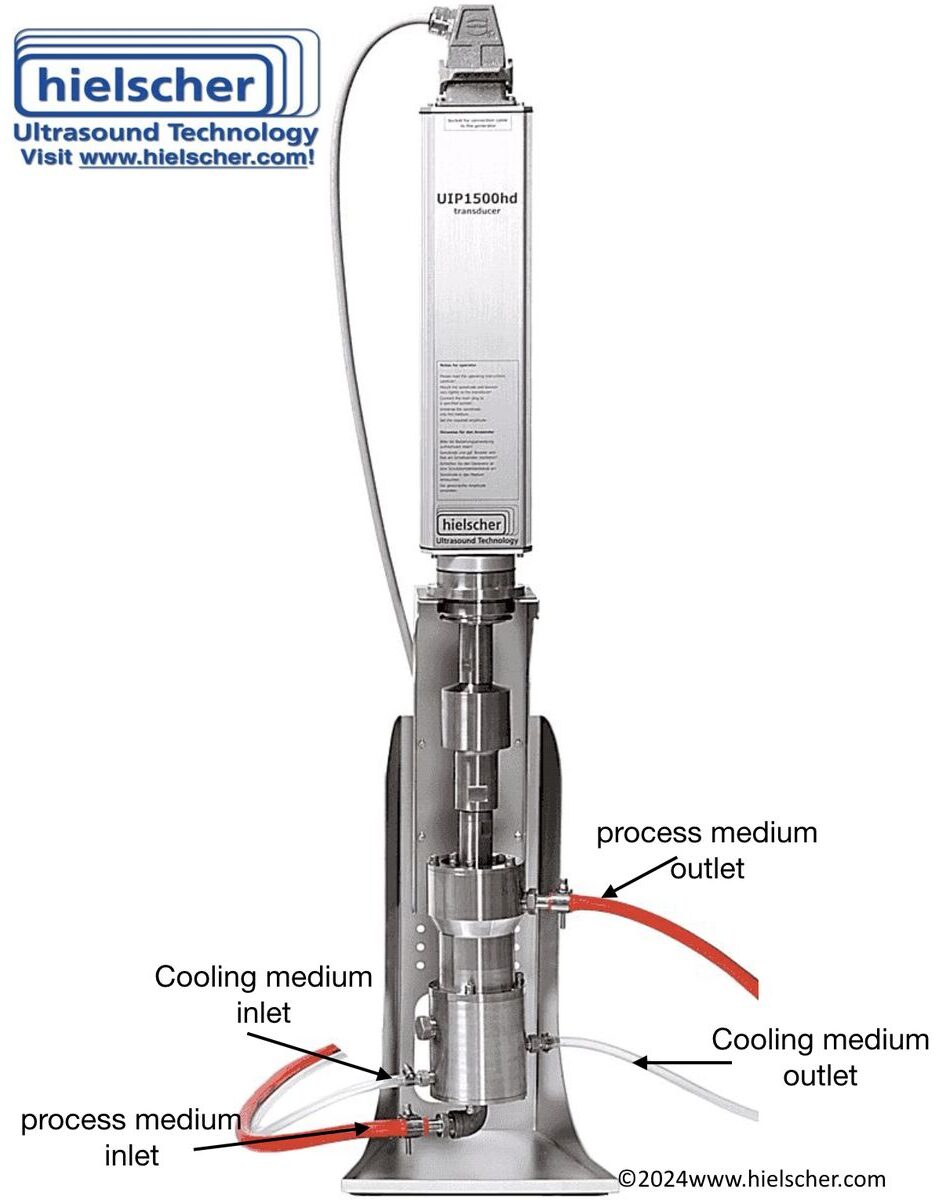
โซนิเคเตอร์ UIP1500hdT พร้อมเซลล์ไหลสำหรับการกระตุ้นและรีไซเคิลตัวเร่งปฏิกิริยาที่ใช้แล้ว
- ปรับปรุงประสิทธิภาพ
- ปฏิกิริยาที่เพิ่มขึ้น
- อัตราการแปลงที่เพิ่มขึ้น
- ผลผลิตที่สูงขึ้น
- การรีไซเคิลตัวเร่งปฏิกิริยา
การเพิ่มความเข้มข้นของปฏิกิริยาเร่งปฏิกิริยาอัลตราโซนิก
การผสมอัลตราโซนิกและการกวนช่วยเพิ่มการสัมผัสระหว่างอนุภาคสารตั้งต้นและตัวเร่งปฏิกิริยาสร้างพื้นผิวที่มีปฏิกิริยาสูงและเริ่มต้นและ / หรือเพิ่มปฏิกิริยาเคมี
การเตรียมตัวเร่งปฏิกิริยาอัลตราโซนิกอาจทําให้เกิดการเปลี่ยนแปลงพฤติกรรมการตกผลึกการกระจายตัว / การแยกตัวและคุณสมบัติของพื้นผิว นอกจากนี้ลักษณะของตัวเร่งปฏิกิริยาที่ขึ้นรูปไว้ล่วงหน้าอาจได้รับอิทธิพลจากการขจัดชั้นพื้นผิวแบบทู่การกระจายตัวที่ดีขึ้นเพิ่มการถ่ายโอนมวล
ตัวอย่างของปฏิกิริยาที่ได้รับการปรับปรุงด้วยคลื่นเสียงความถี่สูง
- การปรับสภาพอัลตราโซนิกของตัวเร่งปฏิกิริยา Ni สําหรับปฏิกิริยาไฮโดรเจน
- ตัวเร่งปฏิกิริยา Raney Ni ที่โซนิคด้วยกรดทาร์ทาริกส่งผลให้มี enantioselective สูงมาก
- ตัวเร่งปฏิกิริยา Fischer-Tropsch ที่สังเคราะห์ด้วยคลื่นเสียงความถี่สูง
- ตัวเร่งปฏิกิริยาผงอสัณฐานที่ผ่านการบําบัดด้วยโซโนเคมีเพื่อเพิ่มปฏิกิริยา
- การสังเคราะห์โซโนของผงโลหะอสัณฐาน
การกู้คืนตัวเร่งปฏิกิริยาอัลตราโซนิก
ตัวเร่งปฏิกิริยาที่เป็นของแข็งในเตาปฏิกรณ์แบบชั้นคงที่มักใช้ในรูปของเม็ดกลม เม็ดอัด แผ่นอัด หรืออนุภาคทรงกระบอก ในระหว่างปฏิกิริยาเคมี พื้นผิวของตัวเร่งปฏิกิริยาอาจเกิดการปิดผิวด้วยชั้นสิ่งสกปรก ส่งผลให้ประสิทธิภาพในการเร่งปฏิกิริยาและ/หรือความเลือกจำเพาะลดลงอย่างค่อยเป็นค่อยไปเมื่อเวลาผ่านไป
ระยะเวลาการเสื่อมสภาพของตัวเร่งปฏิกิริยาแตกต่างกันอย่างมาก ตัวอย่างเช่น การเสื่อมสภาพของตัวเร่งปฏิกิริยาในการแตกตัวอาจเกิดขึ้นภายในไม่กี่วินาที ในขณะที่ตัวเร่งปฏิกิริยาเหล็กที่ใช้ในการสังเคราะห์แอมโมเนียอาจยังคงทำงานได้นานถึง 5-10 ปี อย่างไรก็ตาม การเสื่อมสภาพของตัวเร่งปฏิกิริยาสามารถพบได้ในกระบวนการเร่งปฏิกิริยาเกือบทุกประเภท แม้ว่าจะมีกลไกการเสื่อมสภาพที่แตกต่างกันเกิดขึ้น – รวมถึงการเสื่อมสภาพทางเคมี ทางกล และทางความร้อน – การเกิดคราบสกปรกเป็นหนึ่งในสาเหตุที่พบบ่อยที่สุดของการเสื่อมสภาพของตัวเร่งปฏิกิริยา
การเกิดคราบหมายถึงการสะสมทางกายภาพของสสารจากเฟสของเหลวลงบนพื้นผิวของตัวเร่งปฏิกิริยาและภายในรูพรุนของมัน การสะสมเหล่านี้จะปิดกั้นตำแหน่งที่เกิดปฏิกิริยา จำกัดการเข้าถึงรูพรุน และลดการสัมผัสระหว่างสารตั้งต้นกับพื้นผิวตัวเร่งปฏิกิริยาที่มีประสิทธิภาพ การอุดตันของตัวเร่งปฏิกิริยาโดยโค้กหรือตะกอนคาร์บอนมักเป็นกระบวนการที่เกิดขึ้นอย่างรวดเร็ว อย่างไรก็ตาม ในหลายกรณีสามารถย้อนกลับได้บางส่วนหรือทั้งหมดด้วยการฟื้นฟูด้วยคลื่นเสียงความถี่สูง
การเกิดโพรงอากาศด้วยคลื่นเสียงความถี่สูงเป็นวิธีที่มีประสิทธิภาพในการกำจัดชั้นคราบสกปรกที่เกิดจากการถูกทำให้เป็นสารเฉื่อยออกจากพื้นผิวของตัวเร่งปฏิกิริยา ระหว่างการสั่นสะเทือนด้วยคลื่นเสียงความเข้มสูง คลื่นเสียงความเข้มสูงจะสร้างฟองอากาศในของเหลว ฟองอากาศจะยุบตัวลงและสร้างแรงเฉือนเฉพาะที่ ไมโครเจ็ต คลื่นกระแทก และการผสมในระดับจุลภาคอย่างเข้มข้น ผลกระทบเหล่านี้ช่วยขจัดคราบสกปรกออกจากพื้นผิวของตัวเร่งปฏิกิริยา เปิดรูพรุนที่อุดตัน และฟื้นฟูการเข้าถึงตำแหน่งที่ใช้งานได้
การกู้คืนตัวเร่งปฏิกิริยาด้วยคลื่นเสียงความถี่สูงมักดำเนินการโดยการกระจายอนุภาคตัวเร่งปฏิกิริยาในของเหลว เช่น น้ำปราศจากไอออนหรือตัวทำละลายที่เหมาะสม และนำสารแขวนลอยไปสัมผัสกับการบำบัดด้วยคลื่นเสียงความถี่สูงที่ควบคุมได้ กระบวนการนี้สามารถกำจัดคราบสกปรกที่เกาะติดจากวัสดุตัวเร่งปฏิกิริยาต่างๆ รวมถึงตัวเร่งปฏิกิริยาใยแก้วแพลทินัม/ซิลิกา ตัวเร่งปฏิกิริยานิกเกิล และตัวเร่งปฏิกิริยาโลหะที่รองรับอื่นๆ ดังนั้น การสั่นด้วยคลื่นเสียงสามารถช่วยในการฟื้นฟูตัวเร่งปฏิกิริยา, ยืดอายุการใช้งานของตัวเร่งปฏิกิริยา, และปรับปรุงความยั่งยืนของกระบวนการ
คลิกที่นี่เพื่อเรียนรู้เพิ่มเติมเกี่ยวกับการฟื้นฟูตัวเร่งปฏิกิริยาที่ใช้แล้วด้วยคลื่นอัลตราโซนิก!
เครื่องโซนิคสำหรับบูรณาการเข้ากับเครื่องปฏิกรณ์ทางเคมี
 Hielscher Ultrasonics นําเสนอโปรเซสเซอร์อัลตราโซนิกที่หลากหลายและรูปแบบต่างๆสําหรับการรวมอัลตราซาวนด์พลังงานเข้ากับเครื่องปฏิกรณ์เตียงคงที่ มีระบบอัลตราโซนิกต่างๆที่จะติดตั้งในเครื่องปฏิกรณ์เตียงคงที่ สําหรับประเภทเครื่องปฏิกรณ์ที่ซับซ้อนมากขึ้น อัลตราโซนิกที่กําหนดเอง โซ ลู ชั่น
เรียนรู้วิธีการที่การสั่นด้วยคลื่นเสียงช่วยปรับปรุงปฏิกิริยาเคมีในเครื่องปฏิกรณ์หลากหลายรูปแบบ!
เพื่อทดสอบผลกระทบของการสั่นสะเทือนต่อปฏิกิริยาทางเคมีของคุณ คุณสามารถเยี่ยมชมห้องปฏิบัติการกระบวนการอัลตราโซนิกและศูนย์เทคนิคของเราที่เทลโทว์ได้!
ติดต่อเราวันนี้! เรายินดีที่จะหารือเกี่ยวกับการเพิ่มความเข้มข้นของกระบวนการทางเคมีของคุณกับคุณ!
ตารางด้านล่างนี้แสดงให้คุณเห็นถึงกำลังการประมวลผลโดยประมาณของเครื่องโซนิเคเตอร์ Hielscher:
| ปริมาณแบทช์ | อัตราการไหล | อุปกรณ์ที่แนะนํา |
|---|---|---|
| 10 ถึง 2000 มล. | 20 ถึง 400 มล. / นาที | UP200 ฮิต, UP400ST |
| 0.1 ถึง 20L | 0.2 ถึง 4L / นาที | UIP2000hdt |
| 10 ถึง 100L | 2 ถึง 10L / นาที | ยูไอพี 4000 |
| ไม่ | 10 ถึง 100L / นาที | UIP16000 |
| ไม่ | ขนาด ใหญ่ | คลัสเตอร์ของ UIP16000 |

ระบบการไหลของอัลตราโซนิก
- การเติมไฮโดรเจน
- อัลไซเลชัน
- ไซยาเนต
- อีเธอร์ฟิเคชัน
- เอสเทอริฟิเคชัน
- พอลิเมอไรเซชัน
- อัลลิเลชั่น
- โบรมิเนชั่น
(เช่น ตัวเร่งปฏิกิริยา Ziegler-Natta, เมทัลโลเคน)
วรรณกรรม / อ้างอิง
- Francisco J. Navarro-Brull; Andrew R. Teixeira; Jisong Zhang; Roberto Gómez; Klavs F. Jensen (2018): Reduction of Dispersion in Ultrasonically-Enhanced Micropacked Beds. Industrial & Engineering Chemistry Research 57, 1; 2018. 122–128.
- Yasuo Tanaka (2002): A dual purpose packed-bed reactor for biogas scrubbing and methane-dependent water quality improvement applying to a wastewater treatment system consisting of UASB reactor and trickling filter. Bioresource Technology, Volume 84, Issue 1, 2002. 21-28.
- Argyle, M.D.; Bartholomew, C.H. (2015): Heterogeneous Catalyst Deactivation and Regeneration: A Review. Catalysts 2015, 5, 145-269.
- Oza, R.; Patel, S. (2012): Recovery of Nickel from Spent Ni/Al2O3 Catalysts using Acid Leaching, Chelation and Ultrasonication. Research Journal of Recent Sciences Vol. 1; 2012. 434-443.
- Sana, S.; Rajanna, K.Ch.; Reddy, K.R.; Bhooshan, M.; Venkateswarlu, M.; Kumar, M.S.; Uppalaiah, K. (2012): Ultrasonically Assisted Regioselective Nitration of Aromatic Compounds in Presence of Certain Group V and VI Metal Salts. Green and Sustainable Chemistry, 2012, 2, 97-111.
- Suslick, K. S.; Skrabalak, S. E. (2008): “Sonocatalysis” In: Handbook of Heterogeneous Catalysis, vol. 4; Ertl, G.; Knözinger, H.; Schüth, F.; Weitkamp, J., (Eds.). Wiley-VCH: Weinheim, 2008. 2006-2017.
ข้อเท็จจริงที่ควรค่าแก่การรู้
โพรงอากาศอัลตราโซนิกคืออะไร?
การเกิดคาวิเทชันด้วยคลื่นเสียงความถี่สูงคือการก่อตัว การเติบโต และการยุบตัวอย่างรุนแรงของฟองไอน้ำหรือแก๊สขนาดจุลภาคในของเหลวที่ถูกคลื่นเสียงความถี่สูงที่มีความเข้มสูงสัมผัส ในระหว่างการยุบตัวของฟอง จะเกิดสภาวะท้องถิ่นที่รุนแรงในระยะเวลาสั้นมาก ซึ่งรวมถึงอุณหภูมิสูง ความดันสูง คลื่นกระแทก ไมโครเจ็ต และแรงเฉือนที่รุนแรง
โซโนเคมีคืออะไร?
โซโนเคมีคือการใช้ผลของคาวิเทชันอัลตราโซนิกเพื่อเริ่มต้น เร่ง หรือปรับเปลี่ยนกระบวนการทางเคมีและฟิสิกเคมี มันมีความเกี่ยวข้องเป็นพิเศษในระบบเฟสของเหลวเพราะคาวิเทชันช่วยเพิ่มการผสม การถ่ายโอนมวล การเกิดอิมัลชัน การกระจายตัวของอนุภาค การทำความสะอาดพื้นผิวของตัวเร่งปฏิกิริยา และในบางกรณี การเกิดอนุมูลอิสระ ด้วยเหตุนี้, โซโนเคมีถูกนำมาใช้เพื่อเพิ่มความเข้มข้นของปฏิกิริยา เช่น การเร่งปฏิกิริยาแบบไม่สมดุล, การออกซิเดชัน, การสกัด, การสังเคราะห์พอลิเมอร์, การตกผลึก และการสังเคราะห์วัสดุนาโน.
ปฏิกิริยาเร่งปฏิกิริยาแบบไม่สม่ำเสมอคืออะไร?
ในทางเคมี ตัวเร่งปฏิกิริยาที่แตกต่างกันหมายถึงประเภทของปฏิกิริยาเร่งปฏิกิริยาที่เฟสของตัวเร่งปฏิกิริยาและสารตั้งต้นต่างกัน ในบริบทของเคมีที่แตกต่างกันเฟสไม่เพียง แต่ใช้เพื่อแยกแยะระหว่างของแข็งของเหลวและก๊าซเท่านั้น แต่ยังหมายถึงของเหลวที่ผสมกันไม่ได้เช่นน้ํามันและน้ํา
ในระหว่างปฏิกิริยาที่แตกต่างกัน สารตั้งต้นอย่างน้อยหนึ่งตัวจะผ่านการเปลี่ยนแปลงทางเคมีที่ส่วนต่อประสาน เช่น บนพื้นผิวของตัวเร่งปฏิกิริยาที่เป็นของแข็ง
อัตราการเกิดปฏิกิริยาขึ้นอยู่กับความเข้มข้นของสารตั้งต้นขนาดอนุภาคอุณหภูมิตัวเร่งปฏิกิริยาและปัจจัยเพิ่มเติม
ความเข้มข้นของสารตั้งต้น: โดยทั่วไป การเพิ่มความเข้มข้นของสารตั้งต้นจะเพิ่มอัตราปฏิกิริยาเนื่องจากส่วนต่อประสานที่ใหญ่ขึ้น และด้วยเหตุนี้การถ่ายโอนเฟสระหว่างอนุภาคสารตั้งต้นจึงมากขึ้น
ขนาดอนุภาค: เมื่อสารตั้งต้นตัวใดตัวหนึ่งเป็นอนุภาคที่เป็นของแข็ง จะไม่สามารถแสดงในสมการอัตราได้ เนื่องจากสมการอัตราแสดงเฉพาะความเข้มข้น และของแข็งไม่สามารถมีความเข้มข้นได้เนื่องจากอยู่ในเฟสที่แตกต่างกัน อย่างไรก็ตาม ขนาดอนุภาคของของแข็งส่งผลต่ออัตราการเกิดปฏิกิริยาเนื่องจากพื้นที่ผิวที่ใช้ได้สําหรับการถ่ายโอนเฟส
อุณหภูมิปฏิกิริยา: อุณหภูมิสัมพันธ์กับค่าคงที่อัตราผ่านสมการ Arrhenius: k = Ae-อีเอ/อาร์ที
โดยที่ Ea คือพลังงานกระตุ้น R คือค่าคงที่ของก๊าซสากลและ T คืออุณหภูมิสัมบูรณ์ในหน่วยเคลวิน A คือปัจจัย Arrhenius (ความถี่) e-อีเอ/อาร์ที ให้จํานวนอนุภาคภายใต้เส้นโค้งที่มีพลังงานมากกว่าพลังงานกระตุ้น Ea
ตัวเร่ง: ในกรณีส่วนใหญ่ ปฏิกิริยาจะเกิดขึ้นเร็วขึ้นด้วยตัวเร่งปฏิกิริยา เนื่องจากต้องใช้พลังงานกระตุ้นน้อยกว่า ตัวเร่งปฏิกิริยาที่แตกต่างกันให้พื้นผิวแม่แบบที่เกิดปฏิกิริยาในขณะที่ตัวเร่งปฏิกิริยาที่เป็นเนื้อเดียวกันสร้างผลิตภัณฑ์ระดับกลางที่ปล่อยตัวเร่งปฏิกิริยาในระหว่างขั้นตอนต่อไปของกลไก
ปัจจัยอื่นๆ: ปัจจัยอื่นๆ เช่น แสง อาจส่งผลต่อปฏิกิริยาบางอย่าง (โฟโตเคมี)
ประเภทของการปิดการทำงานของตัวเร่งปฏิกิริยาคืออะไร?
- พิษจากตัวเร่งปฏิกิริยาเป็นคําสําหรับการดูดซับเคมีที่แข็งแกร่งของสิ่งมีชีวิตบนไซต์ตัวเร่งปฏิกิริยาซึ่งปิดกั้นไซต์สําหรับปฏิกิริยาตัวเร่งปฏิกิริยา พิษสามารถย้อนกลับได้หรือย้อนกลับไม่ได้
- การเปรอะเปื้อนหมายถึงการย่อยสลายทางกลของตัวเร่งปฏิกิริยา ซึ่งสายพันธุ์จากเฟสของไหลสะสมลงบนพื้นผิวตัวเร่งปฏิกิริยาและในรูพรุนของตัวเร่งปฏิกิริยา
- การย่อยสลายทางความร้อนและการเผาผนึกส่งผลให้สูญเสียพื้นที่ผิวตัวเร่งปฏิกิริยาพื้นที่รองรับและปฏิกิริยาสนับสนุนเฟสที่ใช้งานอยู่
- การก่อตัวของไอหมายถึงรูปแบบการย่อยสลายทางเคมี โดยที่เฟสก๊าซทําปฏิกิริยากับเฟสตัวเร่งปฏิกิริยาเพื่อผลิตสารระเหยง่าย
- ปฏิกิริยาไอ - ของแข็งและของแข็ง - ของแข็งส่งผลให้เกิดการปิดใช้งานทางเคมีของตัวเร่งปฏิกิริยา ไอ ตัวรองรับ หรือโปรโมเตอร์ทําปฏิกิริยากับตัวเร่งปฏิกิริยาเพื่อให้เกิดเฟสที่ไม่ได้ใช้งาน
- การขัดสีหรือการบดขยี้อนุภาคตัวเร่งปฏิกิริยาส่งผลให้สูญเสียวัสดุเร่งปฏิกิริยาเนื่องจากการเสียดสีทางกล พื้นที่ผิวภายในของตัวเร่งปฏิกิริยาจะหายไปเนื่องจากการบดอนุภาคตัวเร่งปฏิกิริยาที่เกิดจากกลไก
อ่านเพิ่มเติมเกี่ยวกับการใช้คลื่นเสียงเพื่อฟื้นฟูตัวเร่งปฏิกิริยาที่หมดประสิทธิภาพ!
อะไรคือการแทนที่แบบนิวคลีโอฟิลิก?
การแทนที่แบบนิวคลีโอฟิลิกเป็นปฏิกิริยาพื้นฐานประเภทหนึ่งในเคมีอินทรีย์ (และเคมีอนินทรีย์) ซึ่งนิวคลีโอฟิลจะจับกับสารประกอบอินทรีย์เชิงซ้อนอย่างเลือกสรรในรูปแบบของเบสของลูอิส (ในฐานะตัวให้คู่อิเล็กตรอน) โดยจะเข้าทำปฏิกิริยากับอะตอมที่มีประจุบวกหรือมีประจุบวกบางส่วน (+) ประจุของอะตอมหรือกลุ่มของอะตอมที่ใช้แทนกลุ่มที่หลุดออกไป อะตอมที่มีประจุบวกหรือประจุบวกบางส่วนซึ่งเป็นตัวรับคู่ของอิเล็กตรอน เรียกว่า อิเล็กโทรฟิล ส่วนสารประกอบทั้งหมดของอิเล็กโทรฟิลและกลุ่มที่หลุดออกไปนั้น มักเรียกว่า ซับสเตรต
การทดแทนนิวคลีโอฟิลิกสามารถสังเกตได้เป็นสองเส้นทางที่แตกต่างกัน – เอสn1 และ Sn2 ปฏิกิริยา กลไกปฏิกิริยารูปแบบใด – Sn1 หรือ Sn2 – เกิดขึ้นขึ้นอยู่กับโครงสร้างของสารประกอบทางเคมีประเภทของนิวคลีโอฟิลและตัวทําละลาย