Axial Fatigue Testing with Ultrasound Vibration at 20 kHz
Axial Middegkeet Testen ass e Grondsteen vun der Materialwëssenschaft a Mechanesch Ingenieur, entwéckelt fir ze evaluéieren wéi Materialien a strukturell Komponenten sech ënner widderholl zyklesch Belaaschtung behuelen. Andeems d'Exemplare kontinuéierlech Spann- a Kompressiounsspannungen ënnerworf ginn, kënnen d'Ingenieuren d'Müdlechkeetsgrenze bestëmmen, d'Liewensdauer viraussoen an d'Feelmechanismus identifizéieren. Traditionell Müdegkeetstestmaschinne funktionnéieren typesch bei Frequenzen tëscht 10 an 400 Hz. Wärend effektiv fir Standard High-Cycle Middegkeet Testen, ginn dës konventionell Systemer héich Zäitintensiv wann se de Very High Cycle Fatigue (VHCF) Regime charakteriséieren, wat Liewensdauer iwwer 10⁷ bis 10⁹ Zyklen involvéiert.
Test Material Ausdauer bei 20 kHz!
Ultraschall vibréiert Middegkeet Testen ass fir Materialfuerscher entwéckelt, Testlaboratoiren an Ingenieursteams déi Metaller, Legierungen, Gelenker a fortgeschratt Materialien doriwwer eraus evaluéieren (107) Laaschtzyklen – ouni déi laang Runtime vu konventionelle Middegkeetsmaschinnen.
Ideal fir Raumfaart, Automobil, Energie, Fabrikatioun, an akademesch R&D Uwendungen wou séier, widderhuelend axial Middegkeet Testen d'Materialentwécklung, d'Haltbarkeetbewäertung an d'Feelanalyse ënnerstëtzen.
Mat enger 20 kHz Excitatiounsquell kënnen eng Milliard Zyklen theoretesch an ongeféier 14 Stonnen kontinuéierlecher Operatioun accumuléiert ginn.
Sot eis wéi eng Materialien Dir wëllt testen. Eist Team wäert hëllefen déi ideal Exemplar Uschloss ze wielen.
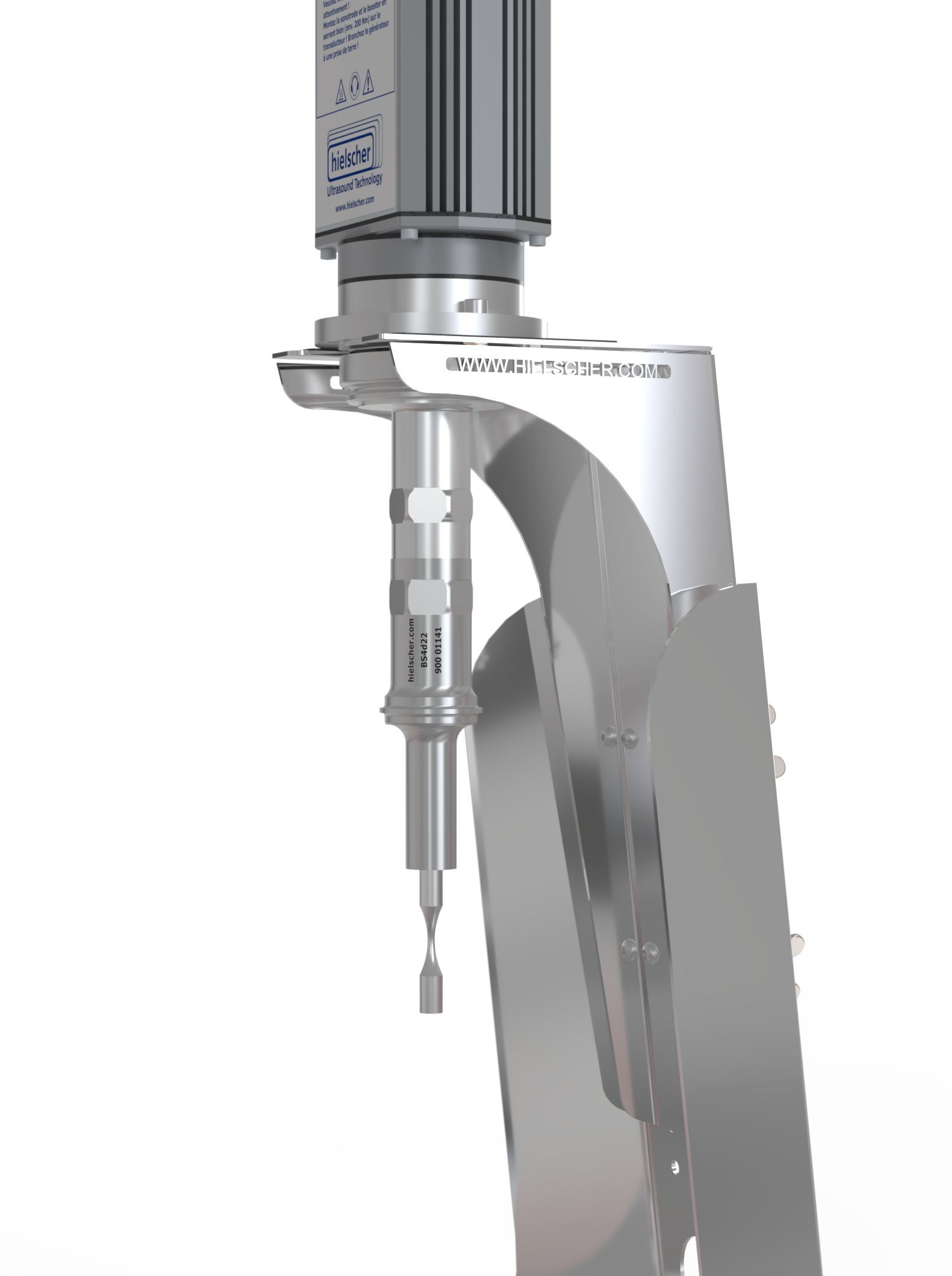
Bench-top test system integrating the sonicator UIP1000hdT for axial fatigue testing of standard test specimens. The tensile test fixture allows to test specimens of various materials
Ultrasonic Fatigue Testing (UFT)
To address the time constraints of conventional methods, ultrasonic fatigue testing has become an indispensable technique for rapid material characterization. Operating at a resonant frequency of 20 kHz, ultrasonic systems accelerate cyclic loading by a factor of 50 to 2,000 compared to traditional machines. This dramatic increase in frequency reduces testing duration from several months to just a few days or hours, enabling the rapid generation of complete stress-life (S-N) curves and facilitating the study of VHCF behavior in metals, alloys, and advanced composites.
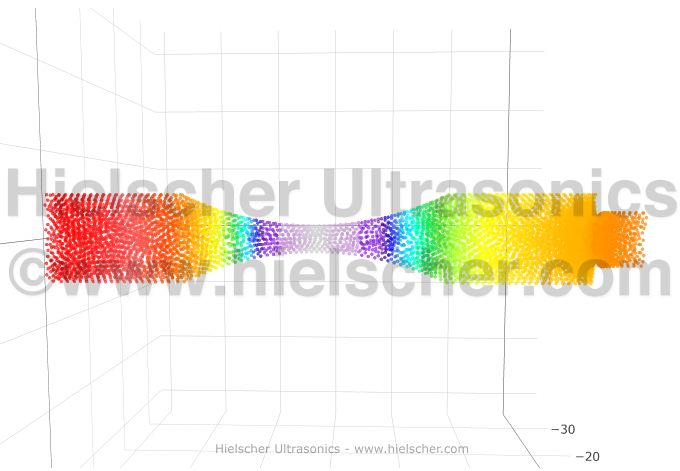
Dog-bone specimen for axial fatigue testing using sonication
The UIP1000hdT Sonicator: Mechanism and Control
 The Hielscher UIP1000hdT is a high-performance ultrasonic processor widely adapted for precision material testing. At its core, the system utilizes piezoelectric transducers that convert high-frequency electrical signals into mechanical vibrations. When configured for axial fatigue testing, the UIP1000hdT is coupled with a booster and horn assembly that amplifies these vibrations and delivers them to the test specimen.
Key operational characteristics include:
- 20 kHz Resonant Frequency: D'System funktionéiert op enger standard Ultraschallfrequenz, déi axial Stresswellen effizient duerch Standardermüdungsprobegeometrien féiert.
- Kontrolléiert Amplitud Liwwerung: De UIP1000hdT bitt präzis Amplitudkontroll, normalerweis a Mikrometer justéierbar. Dëst erlaabt Fuerscher exakt Stressniveauen festzeleeën, déi bestëmmte Deformations- oder Lastziler entspriechen.
- Geschlossene Schleifen Feedback: Modern Implementatiounen integréieren Versatzsensoren (sou wéi Laser-Doppler-Vibrometer oder Dehnungsmessstreifen), déi Echtzäiten Daten zeréck un de Sonikator-Controller liwweren. Dës Feedbackschleif passt d'Afankräfte dynamesch un fir eng konstant Amplitud ze behalen, wat Ännerungen an der Stäerkt, Temperatur oder Montagebedingungen vun den Proben kompenséiert.
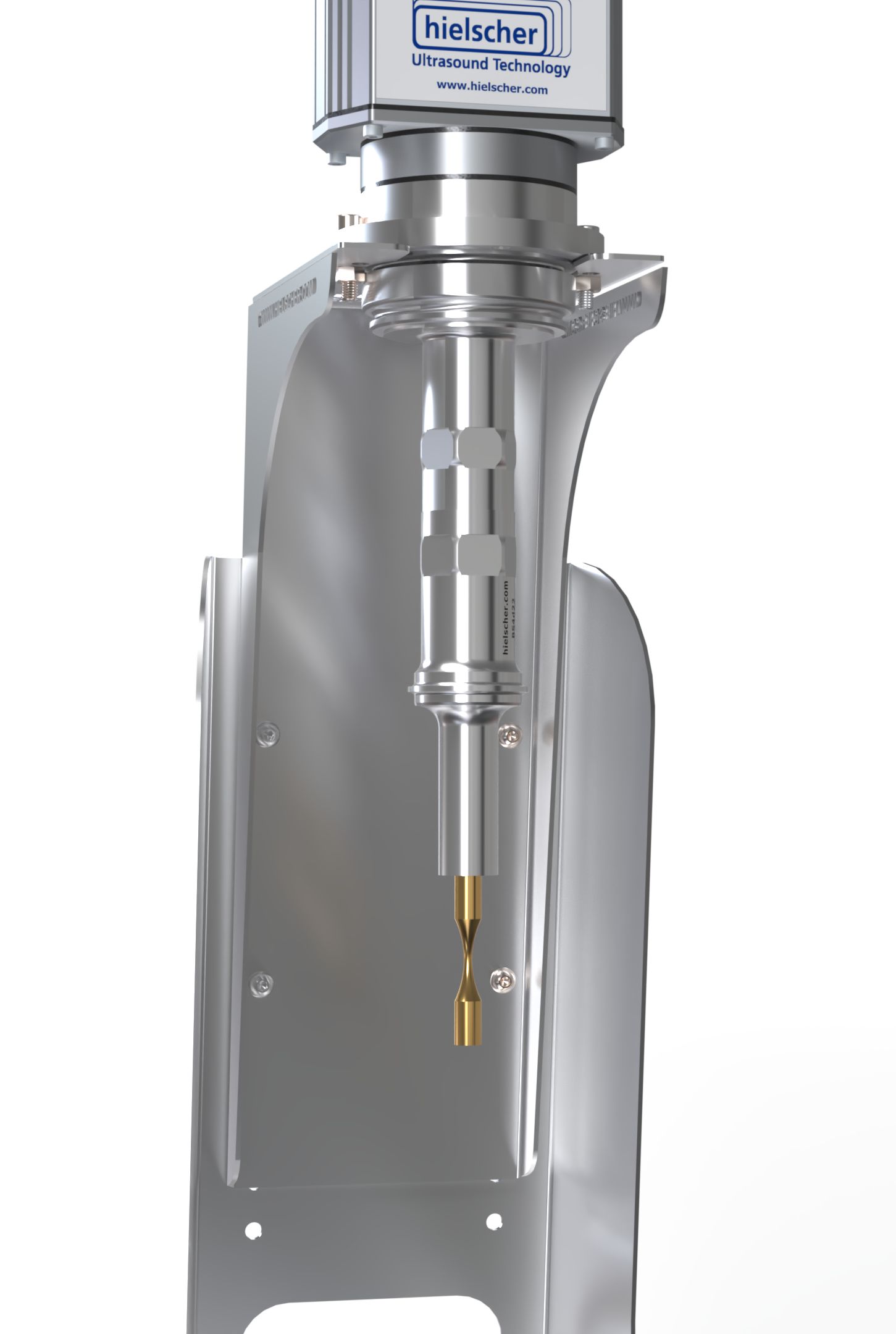
Sonicator UIP1000hdT fir Schwéngungsmüdegkeetstest vu Spannprouf bei 20kHz
Den UIP1000hdT-baséierte Setup kann eng kompakt Plattform fir beschleunegt axial Ermüdungstestung an den High-Cycle a ganz High-Cycle Regime ubidden. Zënter zouverlässeg Resultater hänken net nëmmen vun der Ultraschallvibratioun of, awer och vum Resonanzprobe-Design, genaue Amplitude-zu-Stress-Kalibrierung, Temperaturkontroll a kontinuéierlecher Iwwerwaachung vum komplette Schwéngungssystem, Hielscher hëlleft Iech mat dem Setup-Design a fabrizéiert personaliséiert Exemplar Uschlëss.
Wat Dir sollt berücksichtegen fir Vibrational Material Stäerkt Testen
Implementing a 20 kHz ultrasonic system like the UIP1000hdT for axial fatigue testing requires careful attention to several experimental factors:
- Specimen Design: To achieve resonance at 20 kHz, specimens are typically machined into hourglass or dog-bone geometries. These shapes concentrate stress in a narrow gauge section while matching the acoustic wavelength of the ultrasonic waveguide.
- Thermesch Gestioun: High-frequency cycling generates significant internal heat due to material hysteresis and friction. Uncontrolled temperature rise can alter material properties or induce thermal softening. Effective cooling systems, such as directed compressed air or liquid cooling jackets, are essential to maintain specimens near ambient conditions.
- Alignment and Fixture Design: Precise axial alignment is critical to avoid introducing parasitic bending moments. Custom fixtures must ensure that the ultrasonic horn transmits pure axial waves directly into the specimen, preserving data integrity.
- Failure Detection: At 20 kHz, specimen fracture causes an abrupt shift in the resonant frequency and amplitude. Monitoring systems track these real-time changes to automatically halt the test and record the exact cycle count at failure.
Accelerate Fatigue Testing with the Sonicator UIP1000hdT
Ultrasonic fatigue testing using the UIP1000hdT sonicator represents a highly efficient and precise methodology for assessing vibrational material strength. Applying controlled 20 kHz axial vibrations, researchers can rapidly characterize fatigue performance.
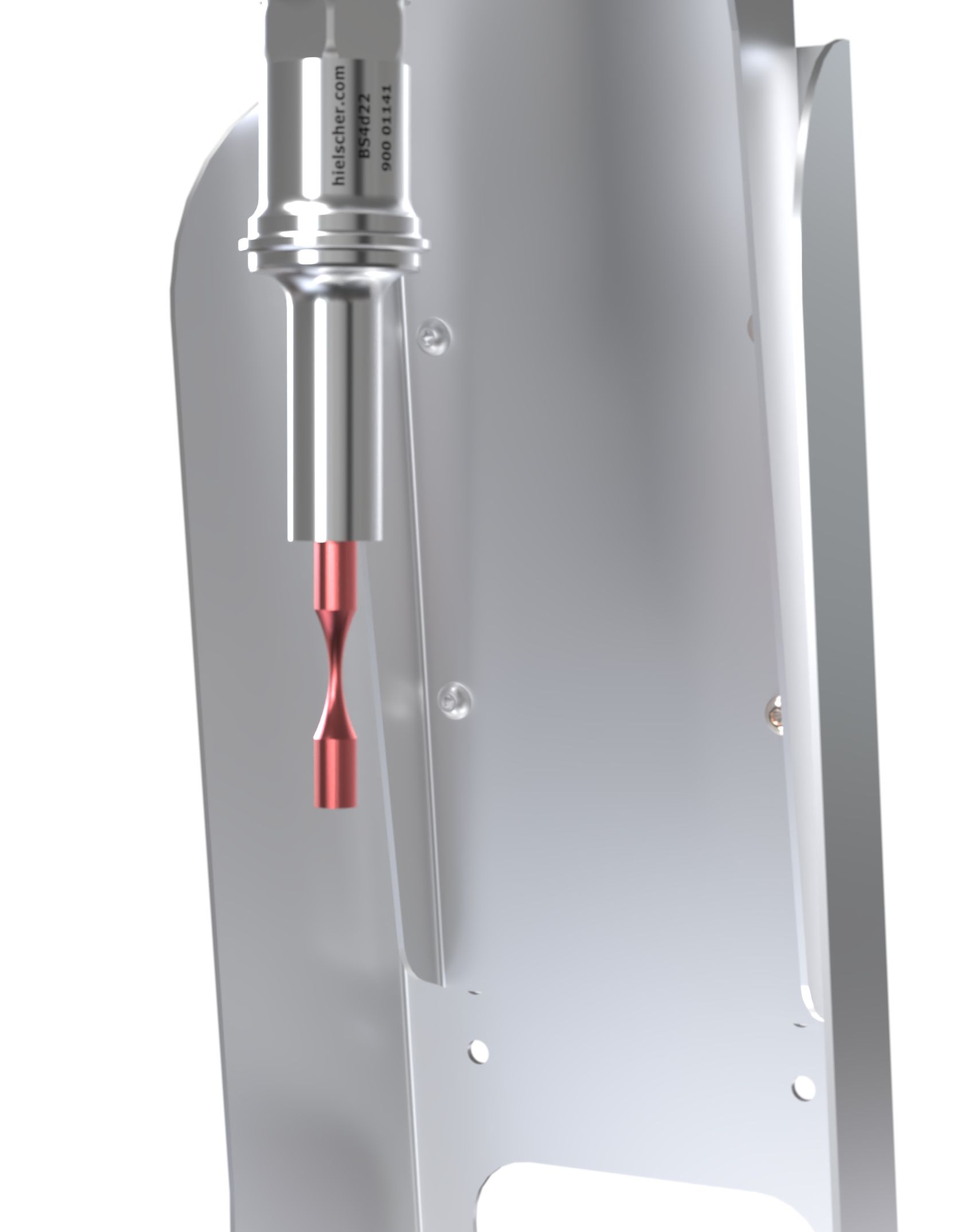
Axial fatigue test setup with the sonicator UIP1000hdT and dumbbell specimen
Oft gestallten Froen
Frequently Asked Questions about Ultrasonic Fatigue Testing
How are stress and strain levels estimated in Ultrasonic Fatigue Testing (UFT)?
In Ultrasonic Fatigue Testing (UFT), the estimation of strain or stress levels is based on a linear relationship between the tip displacement of the specimen and the strain at the control volume (typically the middle section of uniaxial hourglass specimens). To achieve this, the relationship is determined by measuring the strain – using a strain gauge or a Digital Image Correlation (DIC) system – and the corresponding tip displacement.
What materials are tested with Ultrasonic Fatigue Testing (UFT)?
Ultrasonic Fatigue Testing (UFT) is primarily used to test metals. The list below gives an overview about common metal tested by UFT:
- Carbon, low-alloy and stainless steels
- Cold-rolled EN8 steel (a medium-strength carbon steel)
- Aluminum alloys
- Titanium alloys
- Nickel-based superalloys
- Nickel-chromium alloys, e.g. Inconel 625 / Inconel 718
- Magnesium alloys
- Copper and copper alloys
- Cast irons
- Sintered and powder-metallurgy metals
- Additively manufactured metals
- Welded, brazed and surface-treated metallic specimens
What is the recommended calibration procedure for a UFT machine?
To calibrate the testing machine and establish the relationship between tip displacement and strain, it is recommended to perform measurements at the control volume. The procedure involves measuring the tip displacement amplitude and the resulting strain at the control volume over at least five different points within the testing machine’s capacity range.
How are experimental uncertainties in fatigue life estimation addressed?
Experimental uncertainties – such as those arising from material variations, measurement systems, and machine dynamics – are addressed using a probabilistic approach. This involves an ensemble-based technique that utilizes multiple data sets to produce a statistical relationship between strain and tip displacement, allowing for a more robust life estimation that accounts for these variabilities.
Literatur / Referenzen
- Sina Safari, Diogo Montalvão, Pedro R. da Costa, Luís Reis, Manuel Freitas (2025): Statistical calibration of ultrasonic fatigue testing machine and probabilistic fatigue life estimation. International Journal of Fatigue, Volume 199, 2025.
- Samuli Heikkinen (2010): Thermally Induced Ultra High Cycle Fatigue Of Copper Alloys Of The High Gradient Accelerating Structures. Doctoral Thesis at Helsinki University of Technology.
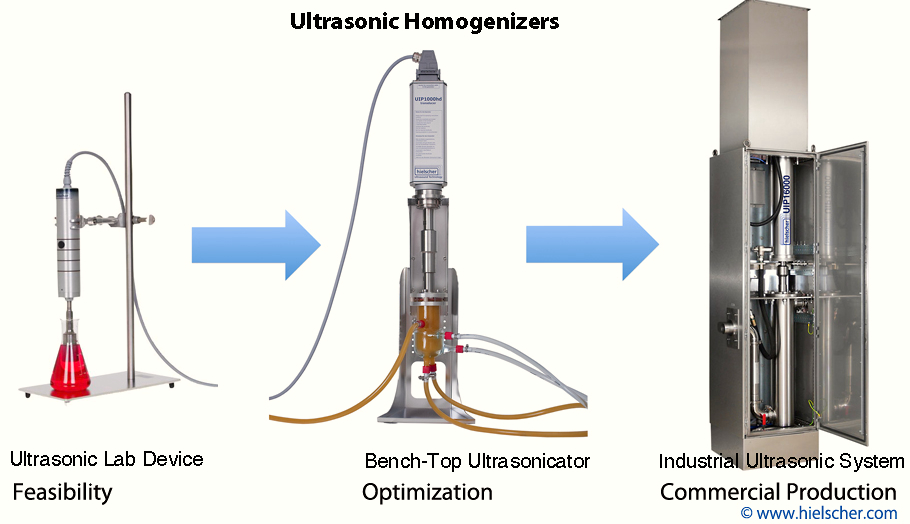
Hielscher Ultrasonics fabrizéiert High-Performance Ultrasonic Homogenisatoren aus Labo zu industriell Gréisst.