BIOMANN – Ultraschall fir Biomass Verdauung
- Energie aus Biogas produzéiert ass eng vun de wichtegsten erneierbaren Ressourcen an ass bedingt vun enger Versuergung vu Substrater an Offallmaterialien kompatibel mat verantwortlecher Notzung vun Ackerland, a sécher Liewensmëttel- a Fudderproduktioun.
- BIOMAN ass en EU finanzéierte Projet fir d'Untersuchung vu verschidde kierperlechen an enzymatesch Virbehandlungsstrategien an Technologie fir Biogasanlagen.
- Power Ultraschall ass eng bewährte Method fir d'Verdauung vun der Biomass ze verbesseren an doduerch d'Biogas-Ausbezuelung wesentlech ze erhéijen.

Biogas Produktioun mat Reinjection Loop
BIOMANN
Biologesch Offallmaterialien wéi Dünger a landwirtschaftlech Reschter bidden eng reichend Ressource fir d'Produktioun, an Europa a weltwäit. Wéi och ëmmer, well dës Substrater eng grouss Quantitéit u Faseren enthalen (5-80% vum Trockenstoffgehalt) mat engem nidderegen Methanpotenzial, sinn d'wirtschaftlech Virdeeler fir de Fonctionnement vun enger Biogasanlag dacks ze niddreg fir wirtschaftlech rentabel ze sinn wéinst dem nidderegen Biogas Ausbeutung pro Tonn. Fir d'Biogas-Ausbezuelung ze verbesseren, goufe Virbehandlungen (zB mechanesch, thermesch, chemesch a biologesch) bewisen datt se profitabel sinn (Angelidaki) & Ahring, 2000; Uellendahl et al., 2007). Am Bioman-Projet gëtt e Behandlungskonzept fir d'Re-Injection Loop ënnersicht mam Zil de Biogas-Ausbezuele pro Tonn Offallbiomass ze erhéijen, mat enger Viraussetzung datt d'Virdeeler vun der Behandlung d'Operatiounskäschte iwwerschreiden fir eng wirtschaftlech Nohaltegkeet ze garantéieren.
BIOMAN wäert fir eng Serie vu PMEen kierperlech an enzymatesch Virbehandlungsstrategien an Technologie fir Biogasanlagen entwéckelen. Dëst erlaabt de Konsortiummembere vu PMEen komplett Léisungen op de Maart ze bréngen an et erlaabt dem Landwirtschaftssecteur Biogasanlagen direkt op Rannerdünger a Stréi ze bedreiwen.
D'Reinjection Loop
“The Re-Injection Loop” ́ is for producing biogas from recalcitrant low-energy substrates with a high content of lignocellulose by combining a range of mechanical and enzymatic treatments, see Figure 1. Downsizing, ultra sound and enzymatic treatments are technologies to be used in the Re-Injection Loop and will be applied on pre-digested and dewatered biomasses before recirculation to the biogas reactor and of key focus is the overall economic sustainability (Uellendahl et al. 2013).
Unerkennung
BIOMAN gëtt finanzéiert vum Siwente Kaderprogramm vun der Europäescher Unioun, geréiert vum REA – Fuerschung Executive Agence: (FP7/2007-2013) ënner Subventiounsvertrag n0 FP7-SME-2012, 315664, “BIOMANN”.
Fakten Worth Wëssen
What is biogas and what is it made of?
Biogas is a mixture of gases produced by the breakdown of organic matter in the absence of oxygen. Its main components are methane (CH₄) and carbon dioxide (CO₂). The main components of biogas are methane (CH₄) and carbon dioxide (CO₂). Biogas can be produced from raw materials such as agricultural waste, manure, municipal waste, plant material, sewage, green waste or food waste. It is a renewable energy source and in many cases exerts a very small carbon footprint.
Well Methan, Waasserstoff a Kuelemonoxid (CO) mat Sauerstoff verbrannt oder oxidéiert kënne ginn, gëtt Biogas als erneierbar Energiequell benotzt. Dës Energie gëtt meeschtens als Brennstoff a fir Heizungszwecker benotzt oder se gëtt iwwer Gasmotor an Elektrizitéit an Hëtzt ëmgewandelt.
Why is pre-treatment needed for biogas production?
Biological waste materials such as manure and agricultural residues contain a high amount of fibres (5–80% of dry matter) with low methane potential, which often makes biogas plants unprofitable due to low biogas yield per ton. Pre-treatments (mechanical, thermal, chemical, and biological) are used to improve the yield.
What role does power ultrasound play in biomass digestion?
Power ultrasound is a proven method to improve the digestion of biomass and significantly increase biogas yield. Within the Re-Injection Loop, ultrasound is one of the key disintegration technologies applied alongside downsizing and enzymatic treatments.
How can I find the right ultrasonic system for my process?
Hielscher offers laboratory and industrial-grade ultrasonic processors (up to 16,000 W) and will discuss your specific requirements to provide a system that fits your digestion or pre-treatment setup.
Does sonication improve aerobic digestion of waste activated sludge?
Sonication is an effective way to enhance sludge digestion. Ultrasound improves the process by increasing cell-wall disruption and substrate bioavailability, which in anaerobic digestion raises methane yield per ton of waste biomass. For aerobic digestion of waste activated sludge (WAS), the same sonication mechanism also accelerates disintegration and hydrolysis and can reduce sludge volume. Discover the benefits of ultrasonic treatment in aerobic WAS digestion!
Literatur / Referenzen
- Karaalp, Duygu (2014): Enhancement of Biogas Production from Laying Hen Manure via Sonolysis as Pretreatment. Journal of Bioprocessing & Biotechniques 04(06), January 2014.
- Kavitha S., Jessin Brindha G.M., Sally Gloriana A., Rajashankar K., Yeom I.T., Rajesh Banu J. (2016): Enhancement of aerobic biodegradability potential of municipal waste activated sludge by ultrasonic aided bacterial disintegration. Bioresource Technology 2016 Jan;200:161-169.
- C. M. Braguglia, G. Mininni, A. Gianico (2008): Is sonication effective to improve biogas production and solids reduction in excess sludge digestion? Water Science Technology 1 March 2008; 57 (4): 479–483.
- Uellendahl, H., Njoku, S.I., Kragelund, C., Ottosen, L.,Ruiz , B.(2013): Boosting the economy of manure based biogas plants. Proceedings of the International Anaerobic Digestion Symposium at BiogasWorld 2013, April 23- 25, Berlin.
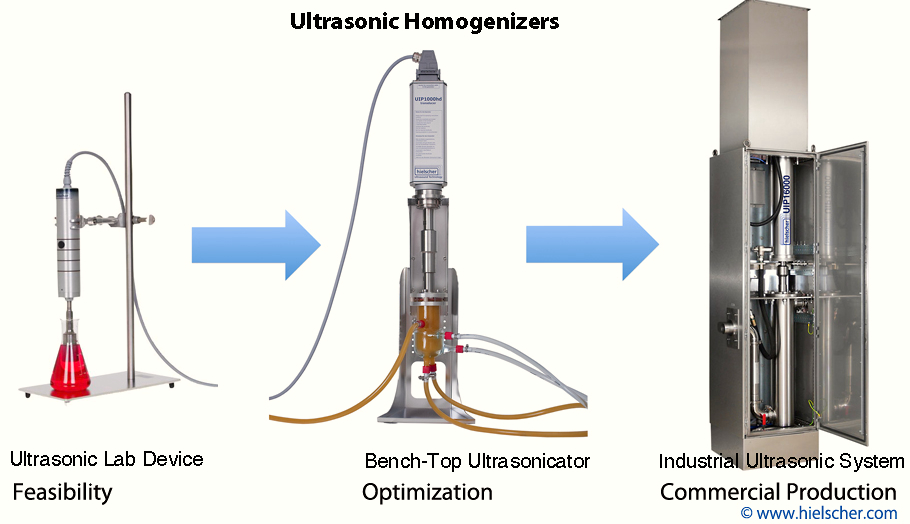
Hielscher Ultrasonics fabrizéiert High-Performance Ultrasonic Homogenisatoren aus Labo zu industriell Gréisst.