sonocatalysis – અલ્ટ્રાસોનિકલી આસિસ્ટેડ કેટાલિસિસ
Sonocatalysis, or ultrasonically assisted catalysis, is a process that significantly enhances chemical reaction rates and catalyst efficiency by taking advantages of the physical forces of acoustic cavitation. When ultrasound waves propagate through a reaction mixture, they generate microscopic bubbles that grow and collapse with immense energy. This implosive collapse creates localized “hotspots” characterized by extreme temperatures and pressures, alongside intense micro-jetting and turbulence. These effects are particularly transformative in heterogeneous catalysis, where they drastically improve mass transfer across phase boundaries, strip away passivating oxide layers, and prevent the fouling of catalyst surfaces. The result is a highly active reaction environment that lowers activation energy, accelerates conversion rates, and ensures the long-term stability and reusability of the catalyst.
What is Sonocatalysis? How Ultrasound Enhances Catalytic Reactions
Traditional catalysis accelerates chemical reactions by lowering activation energy, but heterogeneous systems often face inherent limitations like slow diffusion rates and surface fouling. Sonocatalysis – અલ્ટ્રાસોનિકલી આસિસ્ટેડ કેટાલિસિસ – ઉચ્ચ-તીવ્રતાવાળી એકોસ્ટિક energyર્જાને સીધી પ્રતિક્રિયા વાતાવરણમાં એકીકૃત કરીને આ અવરોધોને દૂર કરે છે.
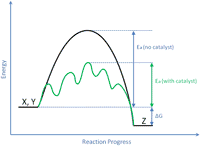 જેમ જેમ અલ્ટ્રાસાઉન્ડ તરંગો પ્રવાહી માધ્યમ દ્વારા પ્રસારિત થાય છે, તેમ તેમ તેઓ માઇક્રોસ્કોપિક પોલાણ પરપોટા પેદા કરે છે જે વધે છે અને હિંસક રીતે તૂટી જાય છે. આ વિસ્ફોટક પતન આત્યંતિક સ્થાનિક પરિસ્થિતિઓ બનાવે છે જે ઉત્પ્રેરકની સપાટીને સતત તાજું કરે છે, નાટ્યાત્મક રીતે સમૂહ સ્થાનાંતરણ, પ્રતિક્રિયા ગતિશાસ્ત્ર અને એકંદર પ્રક્રિયા કાર્યક્ષમતામાં સુધારો કરે છે. પરિણામ ઝડપી રૂપાંતર દર, ઉત્પ્રેરક લોડિંગમાં ઘટાડો, ઉન્નત પસંદગી અને વધુ ટકાઉ રાસાયણિક સંશ્લેષણ માર્ગ છે.
ઉપરોક્ત આકૃતિ રાસાયણિક પ્રતિક્રિયા X+Y માં ઉત્પ્રેરકની અસરને દર્શાવે છે જે Z ઉત્પન્ન કરે છે. ઉત્પ્રેરક નીચા સક્રિયકરણ energyર્જા ઇએ સાથે વૈકલ્પિક માર્ગ (લીલો) પ્રદાન કરે છે.

સોનોકેમિકલ સેટઅપ: ફ્લો સેલ રિએક્ટર FC22K સાથે સોનિકેટર UP400St
કી મિકેનિઝમ્સ: કેવી રીતે અલ્ટ્રાસોનિક તરંગો ઉત્પ્રેરક કાર્યક્ષમતાને વેગ આપે છે
Acoustic wavelengths in liquids (typically 110 mm down to 0.15 mm for frequencies between 20 kHz and 1 MHz) are significantly larger than molecular dimensions. Consequently, ultrasound does not directly interact with chemical bonds. Instead, its catalytic power is delivered through acoustic cavitation – the formation, growth, and asymmetric collapse of microbubbles in liquid media. This phenomenon requires at least one liquid phase and allows precise control over reaction intensity through amplitude, pressure, and sonication time adjustments.
અલ્ટ્રાસોનિક વિક્ષેપ & પ્રવાહી મિશ્રણ
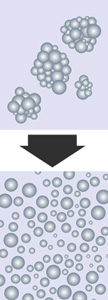 Heterogeneous reactions are inherently limited to the phase boundary where the catalyst and reagents coexist. Maximizing this interfacial area is critical for reaction speed. Ultrasonication excels at breaking down solid catalysts and liquid reagents into sub-micron or nano-scale dispersions and emulsions. By drastically reducing droplet and particle size, sonication exponentially increases the available surface area for molecular interaction. The graphic to the left shows the correlation between particle size and surface area. For many systems, a brief initial sonication generates a stable, high-surface-area mixture that sustains rapid reaction kinetics throughout the batch. Inline ultrasonic reactors are particularly effective for continuous processing, handling even highly viscous or concentrated slurries.
ઉન્નત માસ ટ્રાન્સફર & Boundary Layer Disruption
 In conventional reactors, reaction products often accumulate at the catalyst surface, creating a stagnant diffusion layer that blocks fresh reactants. Ultrasonic cavitation generates intense micro-jets, acoustic streaming, and localized turbulence that continuously disrupt this boundary layer. This constant “scrubbing” effect ensures rapid transport of reactants to the active sites and swift removal of products, effectively eliminating diffusion limitations. For extended reactions, periodic or recirculating sonication maintains peak mass transfer efficiency and prevents reaction slowdowns over time.
Energy Input via Acoustic Cavitation
કેવિટેશન અણુ સ્તરે કેન્દ્રિત ઊર્જા પહોંચાડવાની અત્યંત કાર્યક્ષમ, અનતાપીય (બલ્ક) પદ્ધતિ પ્રદાન કરે છે. બબલના પતન દરમ્યાન, સ્થાનિક હોટસ્પોટ્સનું તાપમાન 5,000 K ને પહોંચી જાય છે અને દબાણ 1,000 atm થી ઉપર હોય છે, તાપમાન/ઠંડકના દરો 10⁹ K/s ను પાર કરે છે. આ અતિશય પરિસ્થિતીઓ અણુ બોન્ડ તોડવાનું, મુક્ત રેડિકલ ઉત્પન્ન કરવાનું અને પ્રતિક્રિયા માટે જરૂરી કુલ સક્રિયકરણ ઊર્જા ઘટાડવાનું સમર્થ છે. પ્રશિક્ષક સંશોધક કેનેથ સુસ્લિકે નોંધ્યું છે કે, કેવિટેશન વિખરેલ акуસ્ટિક ઊર્જાને અત્યંત પ્રતિક્રિયાત્મક રાસાયણિક શક્તિમા રૂપાંતરિત કરે છે, તેવા માર્ગોને સક્ષમ બનાવે જે પરંપરાગત યાંત્રિક હલન પ્રક્રિયા હેઠળ અપ્રબળ અથવા અપૂર્ણ શક્ય હોય છે.
સપાટી સક્રિયકરણ & સતત પ્રેરક સોફાઈ
 નક્કર ઉત્પ્રેરક ઘણીવાર આડપેદાશો, કાર્બન થાપણો અથવા નિષ્ક્રિય ઓક્સાઇડ સ્તરોના ફાઉલિંગ-સંચયથી પીડાય છે જે સક્રિય સાઇટ્સને અવરોધિત કરે છે. અલ્ટ્રાસોનિક સફાઈ કઠોર રસાયણો વિના આ નિષ્ક્રિય સ્તરોને શારીરિક રીતે દૂર કરવા માટે પોલાણ શીયર દળો અને શોકવેવ્સ (1,000 એટીએમ સુધી) નો લાભ લે છે. આ ઇન-સીટુ સફાઈ સતત ઉત્પ્રેરક પ્રવૃત્તિ જાળવી રાખે છે, ઉત્પ્રેરક જીવનકાળ લંબાવે છે અને રિસાયક્લિંગને સરળ બનાવે છે. વધુમાં, તૂટી પડતા પરપોટાની યાંત્રિક અસર કણોની સપાટીને કોતરી શકે છે, તાજા, અત્યંત પ્રતિક્રિયાશીલ સ્ફટિક વિમાનોને ઉજાગર કરી શકે છે અને એકંદર ઉત્પ્રેરક ટર્નઓવરમાં સુધારો કરી શકે છે.
સાબિત એપ્લિકેશન્સ & સોનોકેટાલિસિસમાં કેસ સ્ટડીઝ
સોનોકેટાલિસિસ પ્રયોગશાળા સંશોધનથી બહુવિધ ઉચ્ચ-મૂલ્યના ક્ષેત્રોમાં માન્ય ઔદ્યોગિક પ્રક્રિયાઓમાં સંક્રમિત થઈ ગયું છે. મુખ્ય કાર્યક્રમોમાં શામેલ છે:
- Biodiesel Production (Transesterification): Ultrasonic assistance reduces reaction times from hours to minutes, enables lower catalyst concentrations, and improves FAME yields while simplifying downstream purification.
Explore the advantages of ultrasonic biodiesel transesterification! - Advanced Oxidation (Sono-Fenton Process): Enhanced hydroxyl radical generation accelerates the degradation of recalcitrant organic pollutants in wastewater, reducing chemical consumption and sludge production.
Discover how sonication improves Fenton reaction! - નેનોમેટરીયલ & Catalyst Synthesis: Rapid nucleation and controlled particle growth yield uniform, high-surface-area catalysts with improved thermal stability and mechanical strength.
- લીલા રસાયણશાસ્ત્ર & Fine Chemicals: સ્વચ્છ પ્રતિક્રિયા માર્ગો, ઓછી ઊર્જા વપરાશ, અને ઘટાડેલા દ્રાવક કચરો સોનોકેટાલિસિસને ફાર્માસ્યુટિકલ ઇન્ટરમિડિયેટ્સ અને વિશિષ્ટ રસાયણો માટે આદર્શ બનાવે છે.
ઔદ્યોગિક સોનોકેટાલિસિસ સાધનો & રેખીય માપનીયતા
Hielscher ઉત્પ્રેરક એપ્લિકેશન્સની માંગ માટે ખાસ રચાયેલ પ્રક્રિયા-ઑપ્ટિમાઇઝ્ડ અલ્ટ્રાસોનિક પ્રોસેસર્સનું ઉત્પાદન કરે છે. અમારી સિસ્ટમો તમામ ઉત્પાદન ભીંગડા પર સુસંગત, પુનરાવર્તિત પોલાણ પહોંચાડે છે, જે સખત એકોસ્ટિક એન્જિનિયરિંગ અને રીઅલ-ટાઇમ પ્રોસેસ મોનિટરિંગ દ્વારા સમર્થિત છે.
- લેબોરેટરી & આર&D: UP400St (400 W) લવચીક બેચ અને ઇનલાઇન પરીક્ષણ પ્રદાન કરે છે, જે સ્ક્રીનિંગ પ્રતિક્રિયા પરિસ્થિતિઓ અને ઉત્પ્રેરક ફોર્મ્યુલેશન માટે આદર્શ છે.
- પાયલોટ & પ્રક્રિયા વિકાસ: >UIP1000hdT (1,000 W) બ્રિજ લેબ અને ઉત્પાદન, ચોક્કસ સ્કેલ-અપ અભ્યાસ માટે મોડ્યુલર ફ્લો સેલ્સ અને એડજસ્ટેબલ પરિમાણો પ્રદાન કરે છે.
- ઔદ્યોગિક ઉત્પાદન: আমારી સંપૂર્ણ-ઉદ્યોગ UIP10000hdT (10 kW) અને UIP16000hdT (16 kW) પ્રોસેસર્સ સતત ઊંચા વોલ્યુમ પ્રોસેસિંગ હેન્ડલ કરે છે. અનેક યુનિટોને પેરલલ ક્લસ્ટર્સમાં નેટવર્ક કરી શકીએ છીએ જે લગભગ અસીમિત થ્રુપુટ પ્રાપ્ત કરે છે, જ્યારે યૂનિફોર્મ ઍકૌસ્ટિક ઇન્ટેન્સિટી જાળવવામાં આવે છે.
સોનોકેટાલિસીસમાં સ્કેલેબિલિટી પાવર ડેન્શિટી ઑપ્ટિમાઇઝેશન (વોટ્સ/લિટર) દ્વારા પ્રાપ્ત થાય છે, સિમ્પલ જ્યોમેટ્રિક સ્કેલિંગ દ્વારા નહીં. અમારી એન્જિનિયરિંગ ટીમ સમગ્ર પ્રક્રિયા સપોર્ટ પૂરો પાડે છે – શરૂઆતની શક્યતા અભ્યાસો અને ઍકૌસ્ટિક મોડેલિંગથી લઈને સંપૂર્ણ ડિપ્લોયમેન્ટ અને ઓપરેટર તાલીમ સુધી – ખાતરી કરે છે કે તમારી કૅટાલિટિક પ્રક્રિયા શ્રેષ્ઠ કાર્યક્ષમતા પર કાર્યરત છે.

અલ્ટ્રાસોનિકલી અજીટેડ રિએક્ટર અલ્ટ્રાસોનિકેટર UP200St સાથે તીવ્રિત કૅટાલિટિક ક્રિયાઓ માટે.
સાહિત્ય / સંદર્ભો
- Suslick, Kenneth; Skrabalak, Sara (2008): Sonocatalysis. In: Handbook of Heterogeneous Catalysis; Wiley-VCH 2008.Pages 1350-1357.
- Suslick, Kenneth S.; Hyeon, Taeghwan; Fang, Mingming; Cichowlas, Andrzej A. (1995): Sonochemical synthesis of nanostructured catalysts. Materials Science and Engineering: A. Proceedings of the Symposium on Engineering of Nanostructured Materials. ScienceDirect 204 (1–2): 186–192.
- Naeem, Marwa; Al-Sakkari, Eslam; Boffito, D; Rene, Eldon; Gadalla, Mamdouh; Ashour, Fatma (2023): Single-stage waste oil conversion into biodiesel via sonication over bio-based bifunctional catalyst: Optimization, preliminary techno-economic and environmental analysis. Fuel, 2023.
- Aharon Gedanken (2003): Sonochemistry and its application to nanochemistry. Current Science Vol. 85, No. 12 (25 December 2003), pp. 1720-1722.

ઇલેક્ટ્રોકેમિકલ પરિસ્થિતિઓ (ચોરસ) હેઠળ સમયના કાર્ય તરીકે હાઇડ્રોજન પેરોક્સાઇડ રચનાનો પ્લોટ, અને ઓછી શક્તિવાળા અલ્ટ્રાસાઉન્ડ (હીરા) અને ઉચ્ચ શક્તિવાળા અલ્ટ્રાસાઉન્ડ (ત્રિકોણ) સાથે સોનો-ઇલેક્ટ્રોકેમિકલ પરિસ્થિતિઓ હેઠળ.
ગ્રાફિક અને અભ્યાસ: ગોન્ઝાલેઝ-ગાર્સિયા એટ અલ., 2007