استخراج بابونه – بازده بالاتر، کیفیت بهتر با سونیکیشن
تولید عصارههای باکیفیت بابونه سریعتر، کارآمدتر و با قدرت تکرارپذیر. Hielscher ultrasonic extractors intensify the extraction of chamomile bioactives such as apigenin, flavonoids, phenolic compounds, polysaccharides and essential oil constituents. Whether you manufacture herbal teas, functional beverages, tinctures, dietary supplements, cosmetic actives or botanical ingredients, sonication helps you achieve higher yields, shorter extraction times and consistent extract quality.
Ultrasonic Chamomile Extraction for Food, Supplements and Cosmetics
Using high-intensity ultrasound, Hielscher sonicators create acoustic cavitation in the solvent–plant slurry. This disrupts chamomile flower tissue, improves solvent penetration and accelerates mass transfer. The result is a mild, non-thermal extraction process that can be precisely controlled and scaled from laboratory testing to continuous industrial production.
- Higher extract yield: Efficient release of flavonoids, phenolics, aroma compounds and other chamomile actives.
- Shorter processing time: Replace long maceration with fast ultrasonic extraction.
- Food-, supplement- and cosmetic-grade solvents: Water, ethanol, aqueous ethanol, glycerine, oils and other suitable solvents.
- Excellent process control: Adjustable amplitude, temperature, pressure, energy input, flow rate and residence time.
- Reliable scale-up: From small R&D batches to pilot trials and industrial inline extraction.
Tell us your raw material, solvent, batch size or target throughput. We will recommend the most suitable Hielscher sonicator and process setup for your chamomile extraction.
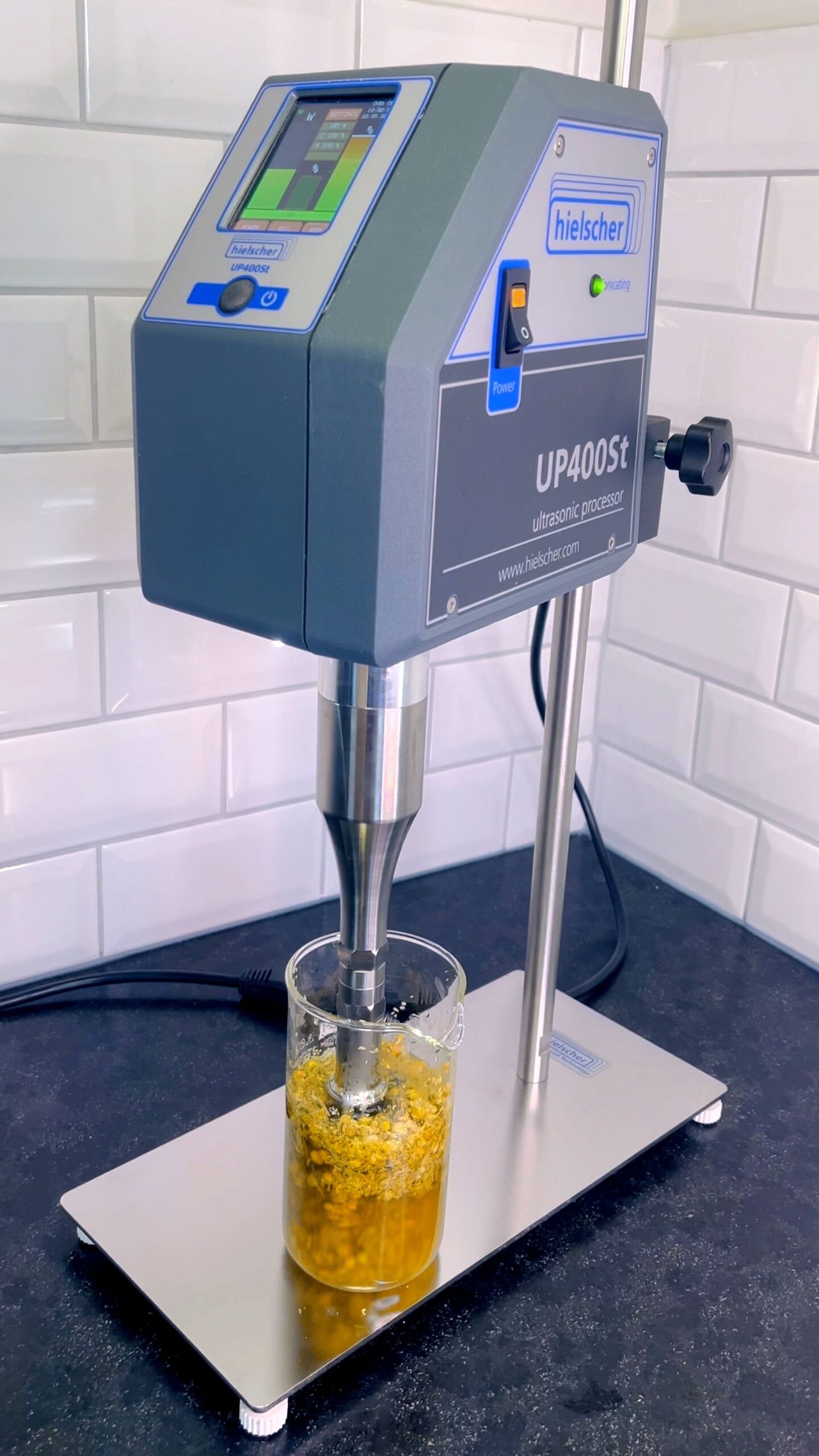
Sonicator UP400ST extracting bioactive compounds from chamomile
Why Sonication Improves Chamomile Extraction
In conventional botanical extraction, the solvent must slowly diffuse into the plant particles, dissolve the target compounds and diffuse back out into the bulk liquid. This process can take hours or days and often requires elevated temperatures or large solvent volumes. Sonication intensifies every step of this extraction mechanism.
در استخراج فراصوت، کاویتاسیون به طور فیزیکی ساختار گیاه شناسی را مختل کرده و لایه مرزی انتشار اطراف ذرات گیاهی را کاهش می دهد. حلال سریع تر وارد ماده گل بابونه می شود، در حالی که مواد زیست فعال حل شده به سرعت به مایع اطراف منتقل می شوند. این موضوع سونیکاسیون را به ویژه برای تولیدکنندگانی که به بازده استخراج بالا، زمان بسته بندی کوتاه و کیفیت استخراج یکنواخت نیاز دارند، ارزشمند می کند.
مزایای کلیدی استخراج بابونه با اولتراسونیک عبارتند از:
- بازده استخراج بالاتر: آزادسازی کامل تر فلاونوئیدها، فنولیک ها، ترکیبات روغن های ضروری و سایر مواد فعال گیاهی.
- زمان های کوتاه تر فرآوری: استخراجی که در غیر این صورت ممکن است نیاز به خنثی سازی طولانی داشته باشد، اغلب بسیار سریع تر انجام می شود.
- فرآوری ملایم و غیرحرارتی: قرار گرفتن کمتر در معرض حرارت به حفظ ترکیبات خوشبو و فیتوشیمیاییهای حساس به دما کمک میکند.
- کاهش نیاز به حلال: انتقال جرم بهبود یافته میتواند حجم مورد نیاز حلال یا چرخههای استخراج را کاهش دهد.
- کیفیت قابل تکرار: دامنه، ورودی انرژی، دما، فشار، نرخ جریان و زمان اقامت قابل کنترل هستند.
- تولید قابل مقیاسبندی: سونیکاتورهای Hielscher میتوانند از آزمایشهای R&D تا آزمایشهای پایلوت و تولید پیوسته خطی استفاده شوند.
بهعنوان یک فناوری افزایشدهنده فرایند برای آزادسازی ترکیبات بیواکتیو از گیاهان، استخراج اولتراسوند به طور گستردهای در صنایع غذایی، مکملهای تغذیهای و کاربردهای دارویی استفاده میشود.
انتخاب حلال مناسب برای استخراج بابونه
بابونه شامل ترکیبات قطبی و غیرقطبی است. بنابراین، حلال ایدهآل بستگی به نمایه عصاره هدف و کاربرد نهایی محصول دارد. میتوان از سونیکاسیون با آب، اتانول، اتانول آبی، گلیسرین، روغنهای گیاهی و سایر حلالهای خوراکی یا آرایشی استفاده کرد. اولتراسوند با طیف وسیعی از مواد گیاهی و حلالها از جمله آب، اتانول، گلیسرین و روغنهای گیاهی سازگار است.
اتانول آبی: استخراج طیف گسترده بابونه
For many commercial chamomile extracts, aqueous ethanol is the most versatile solvent system. For hydro-ethanolic extracts, a water–ethanol mixture is used to dissolve a broad range of polar and moderately lipophilic chamomile constituents. Water supports the extraction of hydrophilic compounds such as certain phenolic acids, polysaccharides and flavonoid glycosides, while ethanol improves the solubility of less polar compounds, including apigenin aglycone and many aroma-related constituents.
Apigenin is widely recognized as a poorly water-soluble flavonoid, while ethanol–water mixtures are frequently investigated as more suitable food- and pharma-compatible solvent systems for apigenin handling and recovery.
For food, supplement and cosmetic producers, aqueous ethanol offers several advantages:
- Broad phytochemical spectrum
- Food-grade and widely accepted solvent system
- Efficient extraction of flavonoids and phenolics
- Adjustable polarity by changing the ethanol/water ratio
- Easy downstream removal or concentration by evaporation
With sonication, aqueous ethanol becomes even more effective. Ultrasonic cavitation increases solvent penetration into the chamomile particles and accelerates dissolution of target molecules. This allows processors to optimize ethanol concentration, extraction time and temperature for a specific target: a mild chamomile flavor extract, a standardized apigenin-rich extract or a broad-spectrum botanical active for cosmetics.
Water: Clean-Label Chamomile Extracts for Beverages and Foods
 Water is the most natural solvent for chamomile extraction and is widely used for teas, infusions, beverages and clean-label food products. Water is especially suitable for extracting hydrophilic components, including certain flavonoid glycosides, phenolic acids, polysaccharides and water-soluble flavor compounds. However, water alone is less efficient for poorly water-soluble compounds such as apigenin aglycone and many lipophilic essential oil constituents.
Sonication significantly improves aqueous chamomile extraction. By breaking up the flower tissue and enhancing mass transfer, ultrasound helps water extract bioactives more rapidly and more completely than simple steeping. This is highly relevant for beverage manufacturers, tea extract producers and clean-label formulators who want to avoid organic solvents while still increasing extract strength and process efficiency.
Ultrasonic water extraction is particularly attractive when the final product is:
- Ready-to-drink chamomile beverage
- Herbal tea concentrate
- Functional water-based extract
- Alcohol-free supplement extract
- Cosmetic hydrosol-style botanical extract
Because sonication is a mechanical, non-thermal process, it can support high-quality aqueous extraction without relying on excessive heat. This helps preserve chamomile’s delicate floral profile and reduces the risk of cooked or degraded sensory notes.
Ethanol: Potent Botanical Extracts and Tinctures
Ethanol is a strong solvent for many chamomile bioactives and is especially useful when the target extract should contain a higher proportion of less polar flavonoids, phenolics and aroma-active constituents. Ethanol is widely used in botanical tinctures, supplement extracts and cosmetic actives because it is effective, food-compatible and easy to remove during concentration.
Pure ethanol is less polar than water and may not extract the full spectrum of hydrophilic chamomile constituents as effectively as aqueous ethanol. Therefore, many producers use ethanol–water blends instead of absolute ethanol. Still, ethanol-rich extraction can be beneficial when the goal is a concentrated extract with higher levels of apigenin aglycone, essential oil components and lipophilic actives.
Sonication enhances ethanol extraction by reducing extraction time and improving the release of compounds trapped within the flower structure. For supplement producers, this means more efficient production of high-strength tinctures, liquid extracts or dried extract intermediates. For cosmetics manufacturers, ethanol-based ultrasonic extraction can generate potent botanical actives for serums, toners, gels and emulsions.
Oil Extraction: Chamomile Actives for Cosmetic and Topical Formulations
 Vegetable oils such as olive oil, sunflower oil, jojoba oil or MCT oil are excellent carriers for lipophilic chamomile constituents. Oil extraction is especially relevant for natural cosmetics, skin-care oils, balms, massage oils and topical formulations. Lipophilic compounds such as essential oil constituents, bisabolol-related components and other non-polar aroma fractions are well suited to oil-based extraction.
However, oil is not the preferred solvent when the primary target is apigenin or other polar flavonoid derivatives. Apigenin has poor water solubility but is not typically treated as an oil-soluble botanical marker in the same way as terpenes or essential oil components. For apigenin-focused extracts, aqueous ethanol or ethanol-rich solvents are usually more appropriate.
Sonication makes oil-based chamomile extraction more efficient by dispersing plant particles thoroughly in the oil and increasing contact between the solvent and the botanical surface. This can shorten infusion times, increase extract intensity and improve batch-to-batch reproducibility. For cosmetic producers, ultrasonic oil extraction provides a clean, solvent-free route to chamomile-infused oils without long maceration times.
Sonication gives you full flexibility in solvent selection, including water, aqueous ethanol, pure ethanol and other common extraction media. Through mechanical cell disruption, ultrasound releases bioactive compounds rapidly into the liquid, creating potent full-spectrum extracts for pharmaceuticals, food, supplements and cosmetics.
Tell us your raw material, solvent, batch size or target throughput. We will recommend the best Hielscher sonicator and process setup for your chamomile extraction.
آپژنین و ترکیبات فعال بابونه: حلالیت مهم است
یک عصاره بابونه با کیفیت بالا با درک واضحی از قطبیت ترکیبات شروع میشود. بابونه یک ماده خام تکجزئی نیست؛ بلکه یک ماتریس گیاهی پیچیده است. حلال باید بر اساس پروفایل فعال دلخواه انتخاب شود.
آپیگنین و مشتقات آن از مهم ترین فلاونوئیدهای بابونه هستند. آپیژنین آگلیکون در آب به خوبی حل نمی شود، به همین دلیل آب به تنهایی ممکن است بازیابی آپیژنین را به حداکثر نرساند. اتانول و اتانول آبی عملکرد استخراج را برای فلاونوئیدهای کمتر محلول در آب بهبود می بخشند، در حالی که آب به استخراج گلیکوزیدهای قطبی و ترکیبات آب دوست بیشتر کمک می کند. ادبیات علمی آپیژنین را به عنوان یک بیوفلاونوئید کم محلول در آب توصیف می کند و مطالعات حلالیت در سیستم های اتانول، آب و اتانول-آب را گزارش می دهد.
برای استخراج عملی بابونه، این به این معناست که:
- آب برای عصاره های ملایم، پاک برچسب و آب دوست ایده آل است.
- اتانول آبی بهترین حلال همه کاره برای عصاره های بابونه با طیف وسیع است.
- اتانول برای تنتورهای قوی و عصاره های غنی از فلاونوئید مفید است.
- روغنهای گیاهی برای عصارههای آرایشی لیپوفیلیک و فرمولههای موضعی ایدهآل هستند.
سونیکیشن، حلالیت بنیادین یک مولکول را تغییر نمیدهد، اما به طور قابل توجهی سینتیک استخراج را بهبود میبخشد. امواج صوتی به حلال کمک میکنند تا سریعتر و کاملتر به ترکیبات هدف برسد. به همین دلیل است که استخراج اولتراسونیک بسیار قدرتمند است: این روش شیمی حلال مناسب را با تشدید فیزیکی کاویتاسیون صوتی ترکیب میکند.
سونیکاتورهای هایلشر: از آزمایشهای آزمایشگاهی تا عصارههای گل بابونه صنعتی
 یکی از مزایای اصلی فناوری اولتراسونیک هایلشر، مقیاسپذیری خطی است. تولیدکنندگان میتوانند با آزمایشهای کوچک آزمایشگاهی شروع کنند تا بهترین حلال، اندازه ذره، میزان بارگیری جامد، دامنه ارتعاش، دما و زمان استخراج را تعیین کنند. هنگامی که پارامترهای استخراج بهینه تعریف شدند، فرآیند میتواند بهطور خطی به تولید پایلوت و صنعتی با استفاده از پردازندههای اولتراسونیک بزرگتر هایلشر و راکتورهای سلول جریانی مقیاس شود.
هیلشر سونیکاتورهایی برای آزمایشگاه، میزکار، پردازش آزمایشی و صنعتی ارائه میدهد. سیستمهای صنعتی این شرکت برای عملیات مداوم و سنگین طراحی شدهاند و هیلشر بر عملیات دیجیتال، کنترل فرآیند، ثبت خودکار دادهها، کنترل از راه دور و طراحی صنعتی مقاوم برای سیستمهای hdT خود تاکید میکند.
برای استخراج بابونه به صورت تجاری، این به معنای موارد زیر است:
- آزمایش امکانسنجی مستقیم
- بهینهسازی پارامترها بهطور قابل اعتماد
- پردازش دستهای یا مداوم در خط تولید
- مدیریت دمای کنترلشده
- کیفیت قابل تکرار عصاره
- ظرفیت صنعتی با تجهیزات سونیکاسیون مقاوم
- کاهش ریسک افزایش مقیاس از R&D به تولید
برای مثال، دستگاه Hielscher UIP2000hdT یک اولتراسونیکاتور پروبی با توان 2000 وات برای پردازش مایعات در آزمایشگاه و صنعتی است که کاربردهای آن شامل استخراج، امولسیفیکاسیون، پراکندگی، هموژنیزاسیون و واکنشهای سونوشیمیایی میباشد. مدل Hielscher UIP16000hdT توان اولتراسونیک 16000 وات برای پردازش حجمهای زیاد را فراهم میکند.
استخراج بهتر بابونه با تقویت فرآیند اولتراسونیک
استخراج بابونه تنها به حل کردن ترکیبات گیاهی مربوط نمیشود. این درباره تولید یک ماده گیاهی با ارزش و پایدار است که نیازهای بازارهای مدرن غذا، مکملها و لوازم آرایشی را برآورده میکند. سونیکیشن با ترکیب پردازش ملایم با بازده استخراج بالا، به تولیدکنندگان یک مزیت قاطع میدهد.
With the right solvent and the right ultrasonic process parameters, producers can tailor chamomile extracts for specific applications: clean-label water extracts for beverages, broad-spectrum aqueous ethanol extracts for supplements, ethanol-rich tinctures for potent botanicals or oil-based infusions for natural cosmetics. Hielscher sonicators provide the ultrasonic power, process control and scale-up pathway required to turn chamomile into a high-quality commercial extract.
برای تولیدکنندگانی که به دنبال بهرهوری بالاتر، کیفیت بهتر و پردازش سریعتر هستند، استخراج بابونه با امواج فراصوت با استفاده از سونیکاتورهای Hielscher یک فناوری استخراج برتر است.
جدول زیر به شما نشانه ای از ظرفیت پردازش تقریبی مافوق صوت ما می دهد:
| حجم دسته ای | نرخ جریان | دستگاه های توصیه شده |
|---|---|---|
| 1 تا 500 میلی لیتر | 10 تا 200 میلی لیتر در دقیقه | UP100H |
| 10 تا 2000 میلی لیتر | 20 تا 400 میلی لیتر در دقیقه | تا 200 هرتز، UP400St |
| 0.1 تا 20 لیتر | 0.2 تا 4 لیتر در دقیقه | UIP2000hdT |
| 10 تا 100 لیتر | 2 تا 10 لیتر در دقیقه | UIP4000hdT |
| 15 تا 150 لیتر | 3 تا 15 لیتر در دقیقه | UIP6000hdT |
| ن.ا. | 10 تا 100 لیتر در دقیقه | UIP16000hdT |
| ن.ا. | بزرگتر | خوشه ای از UIP16000hdT |
استخراج بابونه برای تولیدکنندگان مواد غذایی و نوشیدنی
Food and beverage producers require extracts that are safe, consistent, flavorful and economically viable. Chamomile extracts are used in herbal teas, functional beverages, syrups, confectionery, dairy alternatives, relaxation drinks and flavor systems. The challenge is to produce an extract with a clean taste, appealing color and reliable active content without excessive heat or long extraction cycles.
Ultrasonic extraction offers a strong processing advantage. Water or aqueous ethanol can be used to produce food-grade chamomile extracts with higher yield and shorter processing times. Since sonication is non-thermal, processors can protect delicate aroma components while avoiding over-extraction of unwanted bitter or harsh notes.
For industrial beverage applications, Hielscher sonicators can be integrated into batch tanks or continuous flow-through systems. This allows producers to process larger volumes with controlled amplitude, residence time and temperature. Hielscher’s scale-up concept supports development at small scale and transfer to larger industrial systems while preserving the same core sonication mechanism.
Chamomile Extraction for Supplement Manufacturers
Supplement producers often focus on potency, standardization and reproducibility. Chamomile extracts may be marketed as liquid extracts, tinctures, powders, capsules, tablets or functional ingredient concentrates. For these applications, process control is critical: the same raw material must produce a consistent extract profile from batch to batch.
Hielscher sonicators give manufacturers direct control over important extraction parameters such as amplitude, energy input, temperature, pressure, solid-to-liquid ratio, flow rate and extraction time. This makes ultrasonic extraction suitable for process optimization and quality-by-design approaches.
For apigenin-rich chamomile extracts, aqueous ethanol is often a preferred solvent because it balances polarity and food-grade acceptability. Sonication helps maximize release of flavonoids and other bioactives while minimizing processing time. The result is a more efficient extraction process with improved yield and a clear route from laboratory trials to commercial production.
Chamomile Extraction for Cosmetic Producers
Chamomile is a popular cosmetic ingredient for skin-soothing, botanical positioning and natural formulation concepts. Chamomile extracts are used in creams, lotions, serums, shampoos, conditioners, after-sun products, baby care products, cleansing products and massage oils.
Cosmetic producers benefit from the solvent flexibility of sonication. Depending on the formulation, chamomile can be extracted into aqueous ethanol, water, glycerine, propylene glycol or oils. Oil-based ultrasonic chamomile extraction is particularly attractive for anhydrous balms, facial oils and natural skin-care formulations, while hydroalcoholic extracts are useful for gels, toners and emulsions.
سونیکیشن همچنین تولید آرایشی فراتر از استخراج را پشتیبانی می کند. پردازنده های اولتراسونیک هیلشر برای امولسیفیکاسیون، همگن سازی و پراکندگی استفاده می شوند، به این معنی که یک پلتفرم اولتراسونیک می تواند چندین مرحله پردازش مایع را در تولید آرایشی پشتیبانی کند. مواد داخلی هیلشر آرایشی را در میان صنایع فرآوری مایعات اولتراسونیک برجسته می کند و امولسیون ها، مواد فعال و همگن سازی را به عنوان حوزه های کاربردی مرتبط شناسایی می کند.

Hielscher مافوق صوت تولید کننده هموژنایزرهای مافوق صوت با کارایی بالا برای مخلوط کردن برنامه های کاربردی، پراکندگی، امولسیون و استخراج در آزمایشگاه، خلبان و مقیاس صنعتی.
پرسش و پاسخهای متداول
استخراج اولتراسونیک بابونه چیست؟
استخراج بابونه با استفاده از امواج اولتراسوند فرآیندی است که از امواج فراصوت با شدت بالا برای استخراج ترکیبات زیستفعال از گلهای بابونه استفاده میکند. کاویتاسیون صوتی سلولهای گیاه را مختل میکند، نفوذ حلال را بهبود میبخشد و انتقال ماده را تسریع میکند، که منجر به استخراج سریعتر و بازده بالاتر نسبت به خیس کردن یا ماکزیممگیری معمولی میشود.
چرا سونیکاسیون برای استخراج بابونه مؤثر است؟
سونیکاسیون مؤثر است زیرا به صورت مکانیکی ماتریکس گل بابونه را باز کرده و محدودیتهای نفوذ را کاهش میدهد. این امکان را فراهم میکند تا حلالهایی مانند آب، اتانول، اتانول آبی یا روغنها به ترکیبات هدفی که به دنبال آن هستیم، بهطور مؤثرتری دسترسی پیدا کنند. این فرآیند ملایم، قابل کنترل و مناسب برای مواد گیاهی حساس به حرارت است.
کدام حلال برای استخراج بابونه بهترین است؟
The best solvent depends on the target extract. Water is ideal for clean-label hydrophilic extracts and beverages. Aqueous ethanol is the best all-round solvent for broad-spectrum chamomile extracts. Ethanol is useful for tinctures and flavonoid-rich extracts. Vegetable oils are suitable for lipophilic cosmetic extracts and topical formulations.
Can chamomile be extracted with water only?
Yes. Water can be used to produce chamomile infusions, tea concentrates, beverages and alcohol-free extracts. However, water is less efficient for poorly water-soluble compounds such as apigenin aglycone. Ultrasonic extraction improves aqueous extraction by increasing mass transfer and releasing water-soluble bioactives more efficiently.
Can ultrasonic extraction increase apigenin yield?
Ultrasonic extraction can improve the release of apigenin-containing compounds from chamomile flowers by disrupting the plant matrix and accelerating solvent access. For apigenin-focused extracts, aqueous ethanol or ethanol-rich solvents are typically more suitable than water alone.
Is ultrasonic chamomile extraction suitable for food products?
Yes. Ultrasonic extraction can be performed with food-grade solvents such as water and ethanol. It is suitable for herbal teas, beverage concentrates, functional drinks, flavor extracts and other food applications where mild processing, clean taste and reproducible quality are important.
Is ultrasonic chamomile extraction suitable for dietary supplements?
بله. تولیدکنندگان مکمل از استخراج اولتراسوندی برای تهیه تنتورها، عصارههای مایع، غلیظها و واسطههای عصاره خشک استفاده میکنند. سونیکیشن از کنترل فرآیند، استانداردسازی و بازیابی مؤثر فلاونوئیدها، فنولها و دیگر ترکیبات فعال بابونه پشتیبانی میکند.
آیا استخراج بابونه با اولتراسوند برای محصولات آرایشی مناسب است؟
بله. بابونه میتواند به صورت اولتراسوندی در آب، اتانول آبی، گلیسیرین، پروپیلن گلیکول یا روغنهای گیاهی برای کاربردهای آرایشی استخراج شود. این عصارهها برای کرمها، لوسیونها، سرمها، تونرها، شامپوها، بالمها، روغنهای ماساژ و فرمولاسیونهای طبیعی مراقبت از پوست مناسب هستند.
آیا سونیکیشن عصاره بابونه را گرم میکند؟
Ultrasonic extraction is a mechanical, non-thermal process. Some process heat can occur due to energy input, but temperature can be controlled with cooling, flow-through reactors and optimized processing parameters. This makes sonication suitable for temperature-sensitive botanical compounds and delicate aroma profiles.
Can ultrasonic chamomile extraction be scaled to industrial production?
Yes. Hielscher ultrasonic extractors are available from laboratory scale to industrial production scale. Processes developed in the lab can be transferred to larger ultrasonic systems and continuous flow-cell reactors, enabling reliable scale-up for commercial chamomile extract manufacturing.
What are the main benefits of chamomile?
Chamomile is valued for its mild calming, digestive, antioxidant, anti-inflammatory and skin-soothing properties. Its flavonoids, terpenoids and phenolic compounds contribute to relaxation support, gastrointestinal comfort, irritation reduction and protection against oxidative stress.
What is German chamomile called?
German chamomile is botanically called Matricaria chamomilla L. It is also known as Matricaria recutita or blue chamomile. The term blue chamomile refers to the blue-colored chamazulene that can form in its essential oil during distillation.
What is the difference between Roman, Egyptian and German chamomile?
German chamomile, Matricaria chamomilla, is an annual plant rich in flavonoids such as apigenin derivatives and essential oil constituents such as bisabolol and chamazulene. Roman chamomile, Chamaemelum nobile, is a perennial species with a sweeter apple-like aroma and an essential oil profile dominated more by esters. Egyptian chamomile usually refers to high-quality Matricaria chamomilla grown in Egypt; it is a geographic origin, not a separate botanical species.
What is a hydro-ethanolic chamomile extract?
A hydro-ethanolic chamomile extract is produced with a mixture of water and ethanol. This solvent blend combines the polarity of water with the solvent strength of ethanol, allowing extraction of a broader phytochemical spectrum than water alone, including polar compounds, flavonoid glycosides and moderately lipophilic constituents such as apigenin.
What are the main phytochemicals in chamomile?
عمده ترکیبات شیمیایی گیاهی در بابونه شامل فلاونوئیدهایی مانند آپیژنین، لوتئولین، کوئرستین و گلیکوزیدهای آنها؛ اسیدهای فنولیک؛ کومارینهایی مانند هرنیارین و امبلیفرون؛ و مولکولهای روغن ضروری مانند α-بیزابولول، اکسیدهای بیزابولول، ماتریکین و چامازولن هستند.
مطالعه کنید که چگونه سونیکیشن در شیمی گیاهی استفاده میشود!
ادبیات / منابع
- Oktaviani, N. M. D., Larasati, I. D., Nugroho, A. W., Setyaningsih, W., & Palma, M. (2024): Ultrasound-Assisted Extraction of L-Tryptophan from Chamomile Flower: Method Development and Application for Flower Parts Characterization and Varietal Difference. Trends in Sciences, 21(3), 2024. 7348.
- Dent M., Dragović-Uzelac V., Elez Garofulić I., Bosiljkov T., Ježek D., Brnčić M. (2015): Comparison of Conventional and Ultrasound Assisted Extraction Techniques on Mass Fraction of Phenolic Compounds from sage (Salvia officinalis L.). Chem. Biochem. Eng. Q. 29(3), 2015. 475–484.
- Petigny L., Périno-Issartier S., Wajsman J., Chemat F. (2013): Batch and Continuous Ultrasound Assisted Extraction of Boldo Leaves (Peumus boldus Mol.). International Journal of Molecular Science 14, 2013. 5750-5764.
- Larasati, I.D.; Oktaviani, N.M.D.; Lioe, H.N.; Estiasih, T.; Palma, M.; Setyaningsih, W. (2023): Optimization of Ultrasound-Assisted Cold-Brew Method for Developing Roselle (Hibiscus sabdariffa L.)-Based Tisane with High Antioxidant Activity. Beverages, 9, 58; 2023.
- Turrini, F.; Beruto, M.; Mela, L.; Curir, P.; Triglia, G.; Boggia, R.; Zunin, P.; Monroy, F. (2021): Ultrasound-Assisted Extraction of Lavender (Lavandula angustifolia Miller, Cultivar Rosa) Solid By-Products Remaining after the Distillation of the Essential Oil. Applied Sciences 11, 2021.
https://doi.org/10.15255/CABEQ.2015.2168
- راندمان بالا
- تکنولوژی روز
- قابلیت اطمینان & نیرومندی
- کنترل فرآیند قابل تنظیم و دقیق
- دسته & درون خطی
- برای هر حجمی
- نرم افزار هوشمند
- ویژگی های هوشمند (به عنوان مثال، قابل برنامه ریزی، پروتکل داده ها، کنترل از راه دور)
- آسان و ایمن برای کار
- تعمیر و نگهداری کم
- CIP (تمیز کردن در محل)
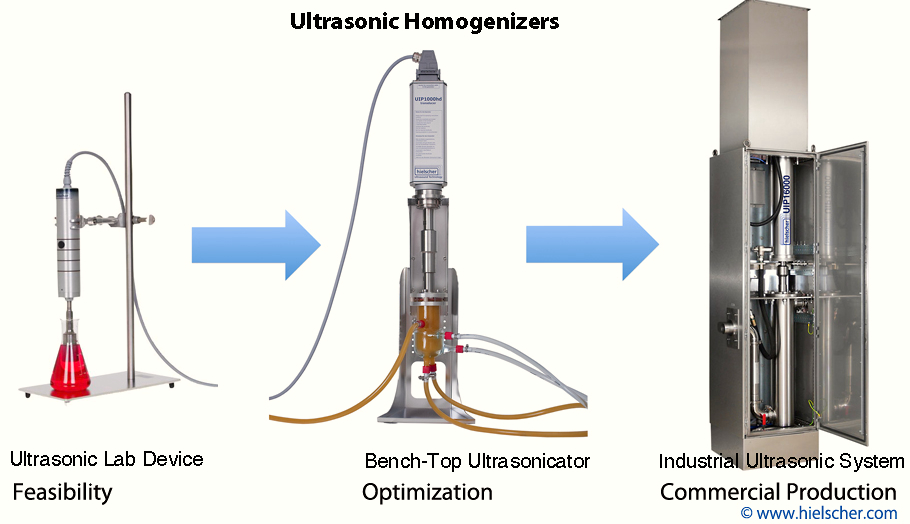
Hielscher مافوق صوت تولید کننده هموژنایزرهای مافوق صوت با کارایی بالا از ازمایشگاه ها تا اندازه صنعتی.