Ultrazvukovo zosilnené reaktory s pevným lôžkom
Ultrazvukové ožiarenie môže zlepšiť katalytické reakcie v reaktoroch s pevným ložom najmä prostredníctvom zintenzívnenia prenosu hmoty v okolí a vnútri náplne katalyzátora. Okrem toho ultrazvukové ožiarenie odstraňuje pasivačné a znečisťujúce vrstvy z povrchu katalyzátora, čím dochádza k jeho nepretržitej regenerácii.
Ako ultrazvuk zlepšuje katalýzu na pevnom loži
V reaktore s pevným ložom zostávajú častice katalyzátora nehybné, zatiaľ čo kvapalné, plynné alebo viacfázové reaktanty pretekajú ložom. Výkonnosť reakcie je často obmedzovaná vonkajším prenosom hmoty, difúziou v póroch, kanálovaním, zanášaním a gradientmi prenosu tepla. Ultrazvuk môže zmierniť viaceré z týchto obmedzení vytváraním akustickej kavitácie, mikroprúdenia, šmykových síl a tlakových oscilácií.

Sonicator UIP2000hdT integrované do reaktora s pevným ložom
Kľúčové účinky reakcií s pevným ložom zintenzívnených ultrazvukom
- Zlepšený prenos hmoty s vonkajším prostredím: Ultrazvukové mikroprúdenie znižuje rozsah stagnujúcej medznej vrstvy okolo častíc katalyzátora, čím umožňuje reaktantom efektívnejšie dosiahnuť aktívne miesta.
- Zlepšená prístupnosť pórov: Kolísania tlaku a pohyb kvapaliny vyvolané kavitáciou môžu zlepšiť prenikanie reaktantov do pórov katalyzátora a odstraňovanie produktov z pórov.
- Obmedzenie usadzovania nečistôt a pasivácia: Ultrazvukové ožiarenie môže pomôcť odstrániť usadeniny, polymérne vrstvy, prekurzory koksu alebo iné pasivačné vrstvy z povrchov katalyzátorov, čím sa na dlhší čas zachová katalytická aktivita.
- Znížené vytváranie kanálikov v upchatých ložiskách: V štúdiách s mikropakovaným ložiskom sa preukázalo, že ultrazvuk mení správanie toku a znižuje disperziu, čím pomáha reaktoru priblížiť sa k ideálnejšiemu správaniu s plošným tokom.
- Zlepšený prenos tepla: Akustické prúdenie a turbulencia zlepšujú lokálny odvod tepla, čím sa znižuje výskyt horúcich bodov alebo studených zón v katalytickom loži.
- Vyššia konverzia a výnos: Vďaka zlepšeniu prenosu hmoty a dostupnosti katalyzátora môže ultrazvukové ožiarenie zvýšiť rýchlosť reakcie, konverziu a výťažok produktu, najmä ak je reakcia obmedzená skôr transportom než čisto kineticky.
Lepší kontakt medzi kvapalinou a pevnou látkou: Ultrazvuk prispieva k lepšiemu zvlhčeniu častíc katalyzátora, čo je obzvlášť užitočné v systémoch s kvapkovým ložom, so zásobovaním suspenzou alebo v systémoch s pevným ložom v kvapalnej fáze.
Ako sonikácia zlepšuje katalýzu na pevnom loži?
Hlavným mechanizmom je akustická kavitácia: ultrazvukové vlny vytvárajú mikroskopické bubliny, ktoré rastú a prudko kolabujú. Ich kolaps vyvoláva lokálne šmykové napätie, mikroprúdy, rázové vlny a intenzívne premiešavanie. V blízkosti povrchov katalyzátorov môžu tieto účinky čistiť, aktivovať a obnovovať rozhranie medzi pevnou látkou a kvapalinou. Prehľady týkajúce sa sonokatalýzy to opisujú ako synergiu medzi ultrazvukom a pevnými katalyzátormi, ktorá zahŕňa zlepšený prenos tepla, prenos hmoty a lokalizované účinky na katalytických povrchoch.
Ultrazvuková úprava je najúčinnejšia v prípadoch, keď reakcia v pevnom loži trpí:
- pomalá difúzia do pórov katalyzátora,
- nedostatočné zmáčanie častíc katalyzátora,
- nahromadenie produktu vo vnútri pórov,
- znečistenie alebo pasivácia povrchu,
- kinetika obmedzená prenosom hmoty,
- nerovnomerné rozdelenie viacfázového prúdenia,
- prúdenie cez upchaté lože.
Katalyzátory s pevným lôžkom
Pevné lôžka (niekedy nazývané aj balené lôžko) sú bežne zaťažené katalyzátorovými peletami, čo sú zvyčajne granule s priemerom od 1 do 5 mm. Môžu byť vložené do reaktora vo forme jedného lôžka, ako samostatné škrupiny alebo v rúrkach. Katalyzátory sú väčšinou založené na kovoch ako nikel, meď, osmium, platina a ródium.
Vplyv výkonného ultrazvuku na heterogénne chemické reakcie je dobre známy a široko sa využíva v priemyselných katalytických procesoch. Aj katalytické reakcie v reaktore s pevným ložom ťažia z ožiarenia ultrazvukom. Ultrazvukové ožiarenie katalyzátora s pevným ložom vytvára vysoko reaktívne povrchy, zvyšuje prenos hmoty medzi kvapalnou fázou (reaktantmi) a katalyzátorom a odstraňuje pasivačné povlaky (napr. oxidové vrstvy) z povrchu.
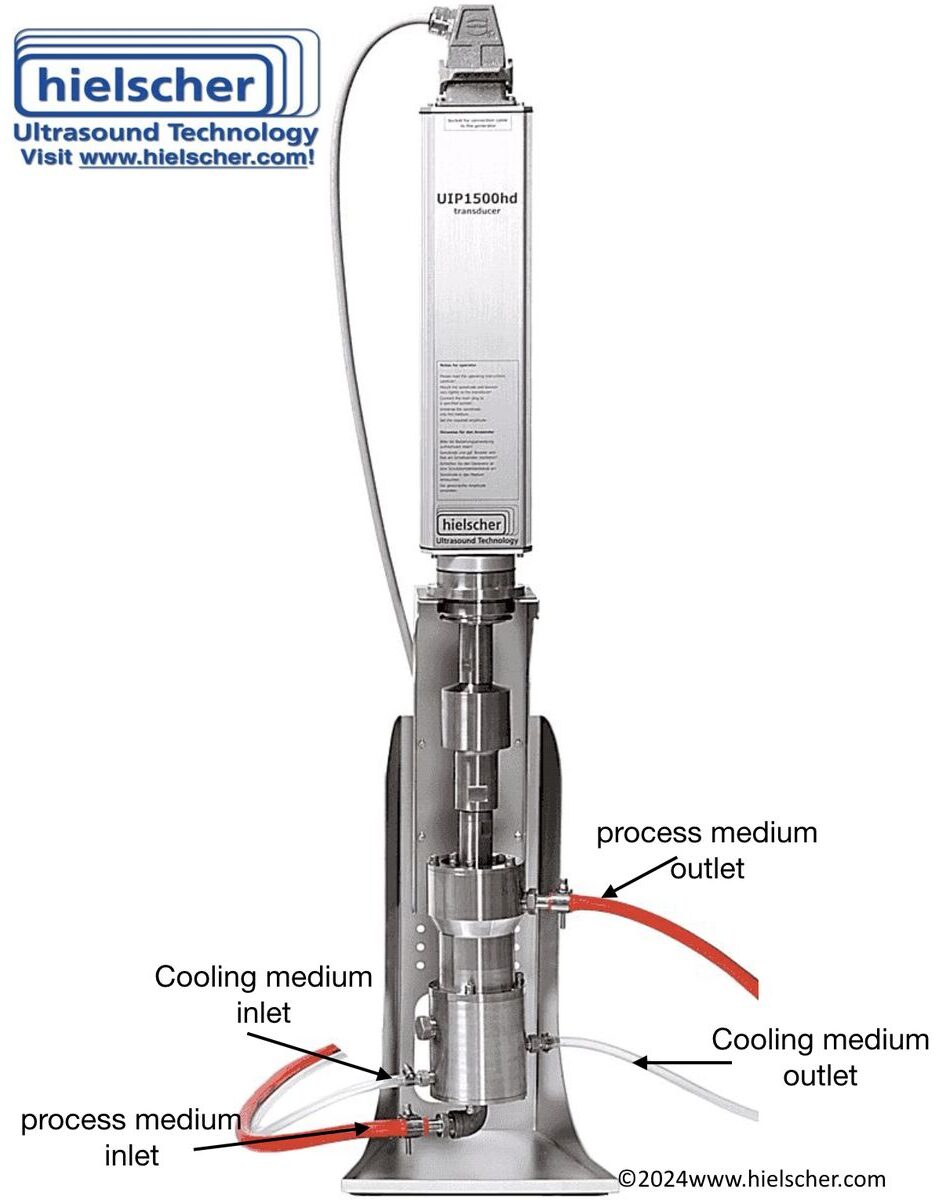
Sonicator UIP1500hdT s prietokovou komorou na reaktiváciu a recykláciu vyhorených katalyzátorov
- Zvýšená efektivita
- Zvýšená reaktivita
- Zvýšený konverzný pomer
- Vyšší výnos
- Recyklácia katalyzátora
Ultrazvuková intenzifikácia katalytických reakcií
Ultrazvukové miešanie a miešanie zlepšuje kontakt medzi časticami reaktantu a katalyzátora, vytvára vysoko reaktívne povrchy a iniciuje a/alebo zvyšuje chemickú reakciu.
Príprava ultrazvukového katalyzátora môže spôsobiť zmeny v kryštalizačnom správaní, disperzii / deaglomerácii a povrchových vlastnostiach. Okrem toho môžu byť vlastnosti predtvarovaných katalyzátorov ovplyvnené odstránením pasivačných povrchových vrstiev, lepšou disperziou, zvýšením prenosu hmoty.
Príklady reakcií vylepšených pomocou ultrazvuku
- Ultrazvuková predúprava Ni katalyzátora pre hydrogenačné reakcie
- Sonikovaný katalyzátor Raney Ni s kyselinou vínnou má za následok veľmi vysokú enantioselektivitu
- Ultrazvukom syntetizované Fischer-Tropschove katalyzátory
- Sonochemicky upravené amorfné práškové katalyzátory pre zvýšenú reaktivitu
- Sonosyntéza práškov amorfných kovov
Ultrazvuková regenerácia katalyzátora
Pevné katalyzátory v reaktoroch s pevným ložom sa bežne používajú vo forme guľovitých guličiek, peliet, extrudátov alebo valcovitých častíc. Počas chemických reakcií môže dôjsť k pasivácii povrchu katalyzátora v dôsledku usadzovania znečisťujúcej vrstvy, čo v priebehu času vedie k postupnej strate katalytickej aktivity a/alebo selektivity.
Časový priebeh deaktivácie katalyzátora sa značne líši. Napríklad deaktivácia katalyzátora pri krakovaní môže nastať v priebehu niekoľkých sekúnd, zatiaľ čo katalyzátor na báze železa používaný pri syntéze amoniaku môže zostať aktívny 5–10 rokov. Deaktivácia katalyzátora sa však vyskytuje prakticky vo všetkých katalytických procesoch. Hoci môžu nastať rôzne mechanizmy deaktivácie – vrátane chemickej, mechanickej a tepelnej degradácie – Ukladanie usadenín je jednou z najčastejších príčin zhoršenia účinnosti katalyzátora.
Pod pojmom „znečistenie“ sa rozumie fyzické usadzovanie látok z kvapalnej fázy na povrchu katalyzátora a vo vnútri jeho pórov. Tieto usadeniny blokujú reaktívne miesta, obmedzujú prístupnosť pórov a znižujú kontakt medzi reaktantmi a aktívnym povrchom katalyzátora. Zanášanie katalyzátora koksom alebo uhlíkatými usadeninami je často rýchly proces; v mnohých prípadoch ho však možno čiastočne alebo úplne zvrátiť pomocou ultrazvukovej regenerácie.
Ultrazvuková kavitácia je účinná metóda na odstraňovanie pasivujúcich usadenín z povrchov katalyzátorov. Počas sonikácie vytvára vysokointenzívny ultrazvuk v kvapalnom prostredí kavitačné bubliny. Ich kolaps spôsobuje lokálne šmykové sily, mikroprúdy, rázové vlny a intenzívne mikromiešanie. Tieto účinky pomáhajú odstraňovať usadeniny z povrchu katalyzátora, opäť otvárať upchaté póry a obnovovať prístup k aktívnym miestam.
Regenerácia katalyzátora pomocou ultrazvuku sa zvyčajne vykonáva tak, že sa častice katalyzátora dispergujú v kvapaline, napríklad v deionizovanej vode alebo vhodnom rozpúšťadle, a suspenzia sa vystaví kontrolovanému pôsobeniu ultrazvuku. Týmto procesom je možné odstrániť usadeniny z rôznych katalytických materiálov, vrátane katalyzátorov na báze platiny a kremičitých vlákien, niklových katalyzátorov a iných katalyzátorov s kovovým nosičom. V dôsledku toho môže ultrazvuková úprava prispieť k regenerácii katalyzátora, predĺženiu jeho životnosti a zlepšeniu udržateľnosti procesu.
Kliknite sem a dozviete sa viac o ultrazvukovej regenerácii vyhorených katalyzátorov!
Ultrazvukové zariadenia určené na integráciu do chemických reaktorov
 Spoločnosť Hielscher Ultrasonics ponúka rôzne ultrazvukové procesory a variácie na integráciu výkonového ultrazvuku do reaktorov s pevným lôžkom. Do reaktorov s pevným lôžkom sú k dispozícii rôzne ultrazvukové systémy. Pre zložitejšie typy reaktorov ponúkame prispôsobený ultrazvuk roztoky.
Zistite, ako ultrazvuk zlepšuje chemické reakcie v rôznych typoch reaktorov!
Ak chcete otestovať vplyv ultrazvuku na vašu chemickú reakciu, srdečne vás pozývame na návštevu nášho laboratória pre ultrazvukové procesy a technického centra v Teltowe!
Kontaktujte nás ešte dnes! Radi s vami prediskutujeme ultrazvukovú intenzifikáciu vášho chemického procesu!
V nasledujúcej tabuľke nájdete približnú kapacitu spracovania sonikátorov Hielscher:

Ultrazvukový prietokový systém
- hydrogenácia
- Alcylácia
- Kyanácia
- Etherifikácia
- Esterifikácie
- polymerizácia
- Allylácia
- Brómovanie
(napr. Zieglerove-Nattove katalyzátory, metalokény)
Literatúra / Referencie
- Francisco J. Navarro-Brull; Andrew R. Teixeira; Jisong Zhang; Roberto Gómez; Klavs F. Jensen (2018): Reduction of Dispersion in Ultrasonically-Enhanced Micropacked Beds. Industrial & Engineering Chemistry Research 57, 1; 2018. 122–128.
- Yasuo Tanaka (2002): A dual purpose packed-bed reactor for biogas scrubbing and methane-dependent water quality improvement applying to a wastewater treatment system consisting of UASB reactor and trickling filter. Bioresource Technology, Volume 84, Issue 1, 2002. 21-28.
- Argyle, M.D.; Bartholomew, C.H. (2015): Heterogeneous Catalyst Deactivation and Regeneration: A Review. Catalysts 2015, 5, 145-269.
- Oza, R.; Patel, S. (2012): Recovery of Nickel from Spent Ni/Al2O3 Catalysts using Acid Leaching, Chelation and Ultrasonication. Research Journal of Recent Sciences Vol. 1; 2012. 434-443.
- Sana, S.; Rajanna, K.Ch.; Reddy, K.R.; Bhooshan, M.; Venkateswarlu, M.; Kumar, M.S.; Uppalaiah, K. (2012): Ultrasonically Assisted Regioselective Nitration of Aromatic Compounds in Presence of Certain Group V and VI Metal Salts. Green and Sustainable Chemistry, 2012, 2, 97-111.
- Suslick, K. S.; Skrabalak, S. E. (2008): “Sonocatalysis” In: Handbook of Heterogeneous Catalysis, vol. 4; Ertl, G.; Knözinger, H.; Schüth, F.; Weitkamp, J., (Eds.). Wiley-VCH: Weinheim, 2008. 2006-2017.
Fakty, ktoré stoja za to vedieť
Čo je ultrazvuková kavitácia?
Ultrazvuková kavitácia je proces vzniku, rastu a prudkého kolapsu mikroskopických parných alebo plynových bublín v kvapaline vystavenej pôsobeniu ultrazvuku vysokej intenzity. Počas kolapsu bublín môžu na veľmi krátku dobu nastať extrémne lokálne podmienky, medzi ktoré patria vysoká teplota, vysoký tlak, rázové vlny, mikroprúdy a intenzívne šmykové sily.
Čo je sonochémia?
Sonochémia je využitie týchto ultrazvukových kavitačných efektov na spustenie, urýchlenie alebo modifikáciu chemických a fyzikálno-chemických procesov. Je obzvlášť dôležitá v systémoch v kvapalnej fáze, pretože kavitácia zlepšuje premiešavanie, prenos hmoty, emulgáciu, disperziu častíc, čistenie povrchu katalyzátora a v niektorých prípadoch aj tvorbu radikálov. V dôsledku toho sa sonochémia využíva na intenzifikáciu reakcií, ako sú heterogénna katalýza, oxidácia, extrakcia, polymerizácia, kryštalizácia a syntéza nanomateriálov.
Čo je to heterogénna katalytická reakcia?
V chémii sa heterogénna katalýza vzťahuje na typ katalytickej reakcie, kde sa fázy katalyzátora a reaktantov navzájom líšia. V kontexte heterogénnej chémie sa fáza nepoužíva len na rozlíšenie medzi pevnou látkou, kvapalinou a plynom, ale vzťahuje sa aj na nemiešateľné kvapaliny, napr. olej a voda.
Počas heterogénnej reakcie jeden alebo viac reaktantov podlieha chemickej zmene na rozhraní, napr. na povrchu pevného katalyzátora.
Rýchlosť reakcie závisí od koncentrácie reaktantov, veľkosti častíc, teploty, katalyzátora a ďalších faktorov.
Koncentrácia reaktantu: Vo všeobecnosti zvýšenie koncentrácie reaktantu zvyšuje rýchlosť reakcie v dôsledku väčšieho rozhrania a tým väčšieho prenosu fázy medzi časticami reaktantu.
Veľkosť častíc: Ak je jedným z reaktantov pevná častica, potom ju nemožno zobraziť v rovnici rýchlosti, pretože rovnica rýchlosti ukazuje iba koncentrácie a pevné látky nemôžu mať koncentráciu, pretože sú v inej fáze. Veľkosť častíc pevnej látky však ovplyvňuje rýchlosť reakcie v dôsledku dostupnej plochy povrchu pre prenos fázy.
Reakčná teplota: Teplota súvisí s rýchlostnou konštantou prostredníctvom Arrheniovej rovnice: k = Ae-Ea/RT
Kde Ea je aktivačná energia, R je univerzálna plynová konštanta a T je absolútna teplota v Kelvinoch. A je Arrheniov (frekvenčný) faktor. e-Ea/RT udáva počet častíc pod krivkou, ktoré majú energiu väčšiu ako aktivačná energia, Ea.
Katalyzátor: Vo väčšine prípadov prebiehajú reakcie s katalyzátorom rýchlejšie, pretože vyžadujú menej aktivačnej energie. Heterogénne katalyzátory poskytujú povrch templátu, na ktorom prebieha reakcia, zatiaľ čo homogénne katalyzátory tvoria medziprodukty, ktoré uvoľňujú katalyzátor počas nasledujúceho kroku mechanizmu.
Ďalšie faktory: Iné faktory, ako je svetlo, môžu ovplyvniť určité reakcie (fotochémia).
Aké sú typy deaktivácie katalyzátora?
- Otrava katalyzátorom je termín pre silnú chemisorpciu druhov na katalytických miestach, ktoré blokujú miesta pre katalytickú reakciu. Otrava môže byť reverzibilná alebo nezvratná.
- Znečistenie sa vzťahuje na mechanickú degradáciu katalyzátora, kde sa druhy z tekutej fázy ukladajú na katalytický povrch a v póroch katalyzátora.
- Tepelná degradácia a spekanie majú za následok stratu katalytického povrchu, podpornej plochy a aktívnych fázových podporných reakcií.
- Tvorba pár znamená chemickú degradačnú formu, kde plynná fáza reaguje s katalyzátorovou fázou za vzniku prchavých zlúčenín.
- Reakcie para-pevná látka a pevná látka-pevná látka majú za následok chemickú deaktiváciu katalyzátora. Para, podpora alebo promótor reagujú s katalyzátorom tak, že vzniká neaktívna fáza.
- Opotrebovanie alebo drvenie častíc katalyzátora má za následok stratu katalytického materiálu v dôsledku mechanického oderu. Vnútorný povrch katalyzátora sa stráca v dôsledku mechanicky vyvolaného drvenia častíc katalyzátora.
Prečítajte si viac o tom, ako môže ultrazvuková úprava reaktivovať vyčerpané katalyzátory!
Čo je nukleofilná substitúcia?
Nukleofilná substitúcia je základná trieda reakcií v organickej (a anorganickej) chémii, pri ktorej sa nukleofil selektívne viaže vo forme Lewisovej bázy (ako donor elektrónového páru) s organickým komplexom, v ktorom sa nachádza kladný alebo čiastočne kladný (+) atómu alebo skupiny atómov, aby nahradil odchádzajúcu skupinu. Kladne alebo čiastočne kladne nabitý atóm, ktorý je akceptorom elektrónového páru, sa nazýva elektrofil. Celá molekulárna jednotka pozostávajúca z elektrofilu a odchádzajúcej skupiny sa zvyčajne nazýva substrát.
Nukleofilnú substitúciu možno pozorovať ako dve rôzne dráhy – SN1 a SN2 reakcia. Aká forma reakčného mechanizmu – sN1 alebo SN2 – sa uskutočňuje, závisí od štruktúry chemických zlúčenín, typu nukleofila a rozpúšťadla.