Phương pháp tách kim loại bằng sóng âm và điện phân trong công nghiệp
Khi nhu cầu toàn cầu đối với đồng, niken, coban, kẽm, bạc, vàng, kim loại hiếm và các vật liệu liên quan đến pin tiếp tục gia tăng, các nhà sản xuất kim loại đang phải đối mặt với áp lực phải khai thác nhiều giá trị hơn từ quặng, quặng tinh, xỉ thải, dòng nguyên liệu tái chế và nguyên liệu đầu vào có hàm lượng thấp. Trong lĩnh vực thủy kim loại học, một trong những phương pháp thu hồi kim loại đã được áp dụng rộng rãi nhất là điện phân, còn được gọi là điện chiết: các ion kim loại hòa tan được thu hồi từ dung dịch ngâm rửa bằng cách áp dụng dòng điện, qua đó các ion này bị khử và kim loại được lắng đọng lên cực âm.
Phương pháp tách kim loại bằng sóng âm và điện phân nhằm nâng cao hiệu suất thu hồi kim loại trong quá trình thủy kim loại học
Phương pháp tách điện bằng sóng siêu âm (sono-electrowinning) phát triển nguyên lý này bằng cách kết hợp quá trình tách điện với sóng siêu âm cường độ cao. Kết quả là một quá trình điện hóa học bằng sóng siêu âm, trong đó hiện tượng xâm thực âm thanh, dòng chảy vi mô và phản ứng khử điện hóa học cùng tác động với nhau. Thay vì chỉ dựa vào điện thế và sự tuần hoàn điện giải thông thường, phương pháp điện phân siêu âm tạo ra sự trộn lẫn cục bộ mạnh mẽ ngay tại hoặc gần bề mặt tiếp xúc của điện cực, nơi thực sự diễn ra quá trình lắng đọng kim loại. Siêu âm được ghi nhận rộng rãi là có tác dụng tăng cường vận chuyển khối lượng, phá vỡ lớp khuếch tán, làm sạch bề mặt điện cực, loại bỏ bọt khí và hỗ trợ tốc độ điện hóa cao hơn.

Sonication điện, sử dụng sonotrode và thành bình phản ứng làm điện cực.

Đầu dò siêu âm-điện: 2 bộ chuyển đổi siêu âm lần lượt kích thích cực dương và cực âm. Các điện cực siêu âm hoặc đầu dò siêu âm-điện vừa đóng vai trò là điện cực vừa là đầu dò siêu âm, giúp nâng cao hiệu quả quá trình điện phân.
Từ quặng đến cực âm: Cơ chế hoạt động của phương pháp điện phân siêu âm
Quá trình điện phân công nghiệp thường bắt đầu bằng công đoạn tách chiết. Trong công đoạn đầu tiên này, kim loại mục tiêu được hòa tan từ quặng, quặng tinh, cặn thải quá trình, xỉ, chất thải đen, rác thải điện tử hoặc các nguyên liệu luyện kim khác vào dung dịch nước. Tùy thuộc vào thành phần hóa học của kim loại và quặng, dung dịch chiết có thể là axit, kiềm, dựa trên clorua, dựa trên sunfat, dựa trên xyanua, amoniac, dựa trên axit hữu cơ hoặc được điều chỉnh hóa học theo cách khác để hòa tan pha kim loại có giá trị.
Sau quá trình chiết xuất, dung dịch chiết giàu kim loại thường được làm trong, tinh chế và điều chỉnh các thông số như pH, độ dẫn điện, nhiệt độ, nồng độ kim loại và thành phần tạp chất. Trong buồng điện phân, dung dịch điện phân chứa kim loại này chảy giữa cực dương và cực âm. Khi dòng điện được điều khiển được áp dụng, các ion kim loại hòa tan di chuyển và bị khử tại bề mặt cực âm, nơi chúng tạo thành một lớp cặn kim loại rắn. Trong quá trình điện phân kết hợp siêu âm, sóng siêu âm được đưa vào môi trường điện hóa này để năng lượng âm thanh tăng cường quá trình vận chuyển ion và tái tạo lớp biên của điện cực.
Nói một cách đơn giản, trình tự quy trình như sau:
- Quá trình rửa trôi: Các kim loại quý được hòa tan từ quặng hoặc nguyên liệu thứ cấp vào dung dịch.
- Điều chỉnh dung dịch: Dung dịch chiết được tinh chế hoặc điều chỉnh để nâng cao độ chọn lọc và cải thiện tính chất lắng đọng.
- Phương pháp lắng đọng điện hóa bằng sóng âm: Sóng siêu âm và dòng điện tác động đồng thời trong buồng điện phân.
- Phục hồi cực âm: Các lớp lắng đọng kim loại được thu hoạch dưới dạng tấm, bột, xốp, lá mỏng hoặc các dạng lắng đọng khác tùy thuộc vào thiết kế quy trình.
- Tái tuần hoàn chất điện giải: Dung dịch điện phân đã cạn kiệt có thể được tái sinh, tái chế hoặc đưa trở lại mạch thủy kim.

Thiết bị điện hóa âm thanh dòng chảy
Tại sao quá trình siêu âm giúp cải thiện quá trình điện phân
 Điểm nghẽn chính trong nhiều hệ thống điện phân không chỉ nằm ở chính phản ứng điện hóa. Đó là việc cung cấp các ion kim loại mới cho bề mặt cực âm, loại bỏ các sản phẩm phản ứng và bọt khí, cũng như duy trì một bề mặt tiếp xúc điện cực hoạt động, sạch sẽ và đồng nhất. Công nghệ siêu âm giải quyết trực tiếp những hạn chế này.
Khi sóng siêu âm công suất cao đi vào dung dịch điện giải, nó tạo ra hiện tượng xâm thực âm thanh: các bong bóng vi mô hình thành, dao động và vỡ ra. Quá trình vỡ này tạo ra các tia nước vi mô, sóng xung kích và lực cắt cục bộ mạnh mẽ. Trong quá trình xử lý ở pha lỏng, hiện tượng này có thể tạo ra sự trộn cục bộ, trộn vi mô, phân tán, phá vỡ khối kết tụ và tăng tốc quá trình vận chuyển tại bề mặt phân cách.
Công nghệ siêu âm và công nghệ sono-điện của Hielscher tập trung vào hiện tượng xâm thực âm thanh được kiểm soát trong xử lý chất lỏng, trong đó sóng siêu âm tạo ra các trường xâm thực âm thanh, từ đó sinh ra lực cắt, sóng xung kích, các tia phun vi mô và quá trình truyền năng lượng có thể tái tạo vào chất lỏng, hỗn hợp lơ lửng và bùn.
Trong quá trình điện phân, những tác động này đặc biệt có giá trị vì phản ứng điện hóa diễn ra tại bề mặt. Sóng siêu âm có thể làm giảm độ dốc nồng độ gần điện cực, nén hoặc phá vỡ lớp khuếch tán, đồng thời liên tục đưa các ion kim loại mới đến cực âm. Các nghiên cứu gần đây về vận chuyển khối lượng điện hóa được tăng cường bằng sóng siêu âm mô tả sự tăng cường dòng điện thông qua việc nén lớp khuếch tán do dòng chảy âm thanh thúc đẩy, trong khi các nghiên cứu về điện phân được hỗ trợ bằng sóng siêu âm báo cáo sự cải thiện vận chuyển ion thông qua các hiệu ứng xâm thực, dòng chảy vi mô và áp suất âm thanh.
Sự kết hợp: Siêu âm kết hợp với điện hóa học
Ưu điểm của phương pháp tách điện bằng sóng siêu âm không chỉ đơn thuần là sóng siêu âm “khuấy động” Giải pháp. Các đầu dò Hielscher Sono-Electro-Probes kết hợp đầu dò siêu âm và điện cực, cho phép đồng thời đưa sóng siêu âm cường độ cao và dòng điện vào hệ thống điện hóa. Do đó, chìa khóa nằm ở sự kết hợp hiệp đồng giữa hai trường năng lượng: năng lượng điện thúc đẩy phản ứng khử ion kim loại, trong khi năng lượng âm thanh cải thiện các điều kiện vật lý và tại bề mặt tiếp xúc nơi phản ứng đó diễn ra.
Sự kết hợp này có thể mang lại một số lợi ích có ý nghĩa đối với ngành công nghiệp:
- Tốc độ truyền khối cao hơn: Quá trình siêu âm giúp tăng cường việc cung cấp các ion kim loại hòa tan đến bề mặt cực âm, từ đó làm giảm hiện tượng cạn kiệt cục bộ.
- Bề mặt điện cực sạch hơn: Hiện tượng xâm thực và dòng chảy âm thanh giúp loại bỏ các lớp màng thụ động, các hạt bám lỏng lẻo, bọt khí và các sản phẩm phản ứng.
- Tiềm năng cải thiện hiệu suất dòng điện: Một giao diện điện cực hoạt động mạnh hơn có thể giảm thiểu tổn thất liên quan đến hiện tượng phân cực nồng độ và tắc nghẽn bề mặt, mặc dù hiệu suất cuối cùng phụ thuộc vào thành phần hóa học của chất điện phân và các thông số vận hành.
- Quá trình lắng đọng đồng đều hơn: Phương pháp điện phân có sự hỗ trợ của sóng siêu âm được cho là mang lại lớp phủ mịn hơn, dày đặc hơn, đồng đều hơn và có cấu trúc hạt mịn hơn.
- Tốc độ điện phân nhanh hơn: Việc tăng cường quá trình truyền khối và kích hoạt bề mặt có thể giúp đạt được tốc độ lắng đọng cao hơn trong các điều kiện tối ưu.
- Các hạn chế liên quan đến sự khuếch tán bị suy giảm: Bằng cách làm xáo trộn lớp biên tại điện cực, sóng siêu âm có thể giúp quá trình lắng đọng diễn ra đồng đều hơn ngay cả khi nồng độ kim loại tương đối thấp.
- Xử lý tốt hơn các chất điện giải phức tạp: Khuấy bằng sóng siêu âm có thể hỗ trợ quá trình xử lý các hỗn hợp lơ lửng, các hạt mịn và dung dịch chiết khó xử lý bằng cách cải thiện độ phân tán và giảm hiện tượng ứ đọng cục bộ.
Điều này khiến phương pháp điện phân bằng sóng âm trở nên đặc biệt hấp dẫn đối với các quy trình thủy kim, nơi mà phương pháp điện phân truyền thống bị hạn chế bởi tốc độ phản ứng chậm, hình thái lớp lắng đọng kém, hiện tượng phân cực nồng độ, hiện tượng bám bẩn điện cực, hiện tượng bong bóng khí che phủ hoặc nồng độ ion kim loại thấp.
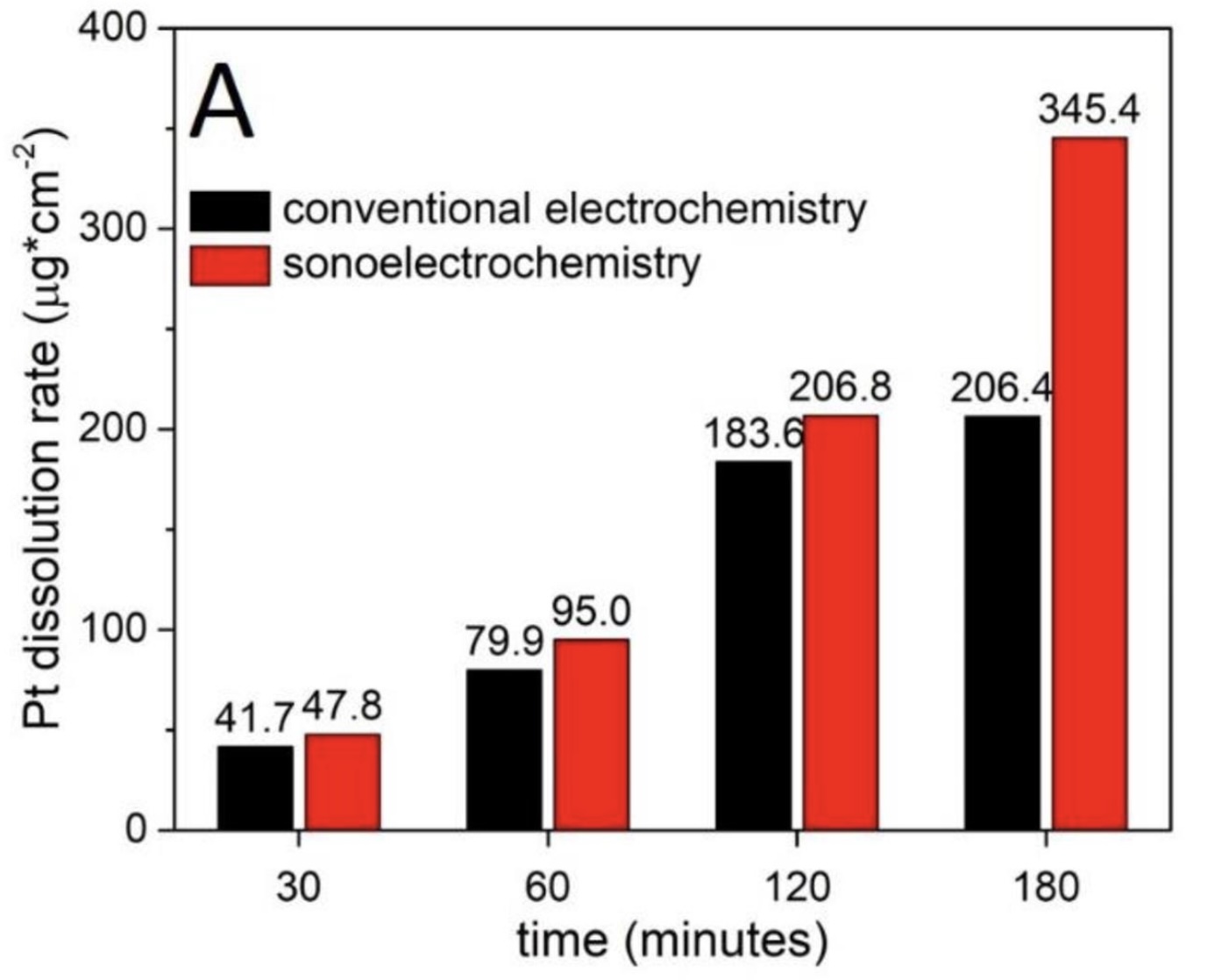
Tốc độ hòa tan của điện cực Pt theo phương pháp truyền thống so với phương pháp điện hóa học bằng sóng âm.
Nghiên cứu và biểu đồ: ©Vasile và cộng sự, 2021
Lợi ích công nghiệp trong lĩnh vực khai thác kim loại
Trong lĩnh vực khai thác kim loại công nghiệp, giá trị của phương pháp điện phân kết hợp siêu âm nằm ở việc tăng cường hiệu quả quy trình. Có thể thu hồi được lượng kim loại lớn hơn trong thời gian ngắn hơn, đồng thời cải thiện hình thái kết tủa và đảm bảo hoạt động ổn định hơn của buồng điện phân, miễn là công suất siêu âm, hình dạng điện cực, thành phần dung dịch điện phân và mật độ dòng điện được phối hợp hợp lý.
Trên thực tế, phương pháp tách kim loại bằng sóng âm và điện phân hỗ trợ:
- Tái thu hồi từ dung dịch rửa có nồng độ thấp: Quá trình truyền khối hiệu quả hơn có thể giúp duy trì quá trình kết tủa khi nồng độ kim loại hòa tan không ở mức lý tưởng.
- Nâng cao chất lượng cực âm: Các lớp lắng đọng mịn hơn và đồng đều hơn có thể giúp đơn giản hóa các công đoạn tiếp theo như tách lớp, nấu chảy, tinh chế hoặc xử lý bột.
- Khả năng bám bẩn thấp hơn: Việc tái tạo bề mặt liên tục có thể giảm thiểu tác động của quá trình thụ động hóa và các lớp màng bề mặt không mong muốn.
- Thiết kế quy trình gọn gàng hơn: Tốc độ phản ứng nhanh hơn có thể cho phép sử dụng các tế bào nhỏ hơn hoặc tăng năng suất, tùy thuộc vào đặc tính hóa học của quy trình.
- Tăng cường thu hồi từ các nguồn tài nguyên thứ cấp: Chất thải đen từ pin, rác thải điện tử, chất xúc tác, xỉ và cặn bã công nghiệp thường tạo ra các dung dịch rò rỉ phức tạp, trong đó việc tăng cường quá trình truyền khối là rất quan trọng.
- Khả năng kiểm soát quy trình tốt hơn: Các hệ thống siêu âm hiện đại có thể được tích hợp vào các hệ thống xử lý theo mẻ hoặc liên tục và được điều chỉnh thông qua các thông số như biên độ, thời gian lưu, tốc độ dòng chảy, nhiệt độ và công suất đầu vào.
Các hệ thống sono-electro của Hielscher có tính độc đáo: Điện cực sono-electro vừa đóng vai trò là đầu dò siêu âm vừa là điện cực. Các hệ thống sono-electro được thiết kế để xử lý chất lỏng có khả năng mở rộng quy mô, từ thử nghiệm trong phòng thí nghiệm đến vận hành thí điểm và sản xuất công nghiệp liên tục. Siêu âm công suất cao, khả năng vận hành liên tục 24/7, độ bền đạt tiêu chuẩn công nghiệp và yêu cầu bảo trì thấp khiến các hệ thống sono-electro của Hielscher trở thành lựa chọn lý tưởng cho quá trình tách điện bằng siêu âm trong công nghiệp.
Việc mở rộng quy mô tuyến tính thông qua việc kiểm soát các thông số như biên độ, năng lượng đầu vào, tốc độ dòng chảy, nhiệt độ và thời gian lưu giúp tăng đáng kể năng lực sản xuất.
Phương pháp điện phân Sono trong quy trình chiết xuất–điện phân
Trong một nhà máy thủy kim loại học truyền thống, quá trình điện phân thường được thực hiện sau các công đoạn ngâm chiết, tách rắn-lỏng, tinh chế và đôi khi là chiết xuất bằng dung môi hoặc trao đổi ion. Quá trình điện phân bằng sóng siêu âm có thể được tích hợp vào công đoạn thu hồi ở giai đoạn sau này để tăng cường quá trình chuyển đổi các ion kim loại hòa tan thành kim loại rắn.
Một quy trình điển hình có thể trông như sau:
- Quặng nghiền, quặng tinh, bùn thải hoặc nguyên liệu thứ cấp được đưa vào quá trình tách chiết để hòa tan kim loại mục tiêu.
- Các tạp chất không hòa tan, chất rắn còn lại và các pha không mong muốn được loại bỏ hoặc giảm bớt.
- Dung dịch Leach đã được điều chỉnh về mặt hóa học để phục vụ quá trình điện phân chọn lọc.
- Dung dịch điện phân được đưa vào một buồng điện phân được trang bị các điện cực siêu âm và hệ thống tuần hoàn.
- Quá trình siêu âm giúp cải thiện quá trình vận chuyển ion và tái tạo bề mặt điện cực, trong khi dòng điện được áp dụng giúp kim loại lắng đọng lên cực âm.
- Sản phẩm kim loại được thu hồi, còn dung dịch điện phân được tái chế hoặc chuyển đi xử lý tiếp.
Sự kết hợp này đặc biệt thú vị trong bối cảnh ngành công nghiệp khai thác kim loại cần xử lý các nguồn tài nguyên phức tạp hơn. Nhiều nguyên liệu thô trong tương lai có hàm lượng kim loại thấp hơn, chứa nhiều tạp chất hơn, có kích thước hạt mịn hơn, thành phần hóa học hỗn hợp hoặc thành phần biến đổi. Công nghệ điện phân kết hợp sóng âm (Sono-electrowinning) mở ra một hướng đi nhằm tăng cường độ ổn định cho quá trình thu hồi điện hóa bằng cách cải thiện sự tương tác giữa chất điện phân và bề mặt điện cực.

Đầu dò siêu âm hoạt động như điện cực. Sóng siêu âm thúc đẩy các phản ứng điện hóa dẫn đến cải thiện hiệu quả, năng suất cao hơn và tốc độ chuyển đổi nhanh hơn.
Sonoelectrochemistry cải thiện đáng kể quá trình điện cực.
Phương pháp thu hồi kim loại bằng sóng âm-điện hóa: Năng suất cao hơn với chi phí xử lý thấp hơn
Phương pháp điện phân đã trở thành một trong những nền tảng cơ bản của ngành thủy kim loại học vì nó có thể thu hồi kim loại từ các dung dịch nước dưới dạng các sản phẩm rắn có giá trị cao. Phương pháp điện phân kết hợp sóng âm giúp cải thiện phương pháp điện phân truyền thống bằng cách nâng cao hiệu suất thu hồi, hiệu suất dòng điện và giảm mức tiêu thụ năng lượng.
Tác động hiệp đồng giữa siêu âm công suất cao và phương pháp điện phân giúp khắc phục những hạn chế về mặt vật lý của giao diện điện hóa, đồng thời hỗ trợ quá trình thu hồi kim loại diễn ra mạnh mẽ hơn, có kiểm soát hơn và tiềm năng mang lại hiệu quả cao hơn. Đối với các hoạt động khai thác mỏ, tái chế và luyện kim, công nghệ này góp phần thu hẹp khoảng cách giữa các nguyên liệu đầu vào ngày càng phức tạp và nhu cầu về các quy trình chiết xuất sạch hơn, có tính chọn lọc cao hơn và năng suất cao hơn.
Phương pháp tách điện bằng sóng âm (Sono-Electrowinning) như một công cụ tăng cường quy trình
Tương lai của ngành khai thác kim loại sẽ phụ thuộc vào việc thu hồi được nhiều kim loại hơn từ các nguồn tài nguyên khó khai thác hơn. Các mỏ quặng có hàm lượng cao đang cạn kiệt ở nhiều khu vực, trong khi nhu cầu về đồng, niken, coban, các kim loại liên quan đến lithium, kim loại quý và các nguyên tố hiếm đang gia tăng. Đồng thời, ngành công nghiệp đang mở rộng phạm vi tập trung từ quặng nguyên sinh sang các nguồn tài nguyên thứ cấp như pin đã qua sử dụng, phế liệu điện tử, chất xúc tác, chất thải công nghiệp và nước thải công nghiệp.
Phương pháp tách điện bằng sóng siêu âm (Sono-electrowinning) mang lại một chiến lược tăng cường quy trình đầy tiềm năng cho lĩnh vực này. Bằng cách kết hợp tính chọn lọc của quá trình thu hồi kim loại điện hóa với sức mạnh tại bề mặt tiếp xúc của hiện tượng xâm thực siêu âm, phương pháp này có thể cải thiện quá trình truyền khối, hoạt tính điện cực, hình thái lớp lắng đọng và độ ổn định của quy trình. Đối với các nhà khai thác công nghiệp, điều này đồng nghĩa với việc có được một lộ trình hiệu quả hơn để chuyển đổi các ion kim loại đã được chiết xuất thành sản phẩm kim loại có thể thu hồi.
Tóm lại, phương pháp tách điện bằng sóng âm biến bề mặt cực âm thành một vùng phản ứng năng động hơn. Quá trình siêu âm giúp duy trì sự hoạt động của giao diện điện hóa; phản ứng điện hóa chuyển đổi các ion hòa tan thành kim loại; và sự kết hợp của hai yếu tố này tạo nên một nền tảng mạnh mẽ cho quá trình chiết xuất thủy kim hiện đại.
Đầu dò siêu âm-điện hiệu suất cao và lò phản ứng siêu âm-điện
Hielscher Ultrasonics là đối tác giàu kinh nghiệm lâu năm của bạn cho các hệ thống siêu âm hiệu suất cao. Chúng tôi sản xuất và phân phối đầu dò và lò phản ứng siêu âm hiện đại, được sử dụng trên toàn thế giới cho các ứng dụng hạng nặng trong môi trường khắt khe. Đối với điện hóa siêu âm, Hielscher đã phát triển các đầu dò siêu âm đặc biệt, có thể hoạt động như cực âm và / hoặc cực dương, cũng như các tế bào phản ứng siêu âm thích hợp cho các phản ứng điện hóa. Các điện cực và tế bào siêu âm có sẵn cho các hệ thống điện / voltaic cũng như điện phân.
Liên hệ với chúng tôi ngay bây giờ và cho chúng tôi biết về các yêu cầu quy trình điện hóa của bạn! Chúng tôi sẽ giới thiệu cho bạn thiết lập điện cực siêu âm và lò phản ứng phù hợp nhất!
Liên hệ với chúng tôi! / Hãy hỏi chúng tôi!

Hielscher Ultrasonics sản xuất homogenizers siêu âm hiệu suất cao cho các ứng dụng trộn, phân tán, nhũ tương hóa và khai thác trên phòng thí nghiệm, thí điểm và quy mô công nghiệp.
Các câu hỏi thường gặp
Điện phân là gì?
Phương pháp điện phân là một quy trình thu hồi kim loại bằng phương pháp điện hóa, trong đó các ion kim loại hòa tan được khử từ dung dịch điện phân và kết tủa dưới dạng kim loại rắn trên cực âm. Dung dịch chứa kim loại thường được tạo ra bằng cách tách chiết quặng, quặng tinh, cặn hoặc vật liệu tái chế; sau đó, dòng điện được dẫn vào sẽ thúc đẩy quá trình thu hồi có chọn lọc kim loại mục tiêu.
Sono-Electro-Probe là gì?
Đầu dò Sono-Electro-Probe là sự kết hợp giữa đầu dò siêu âm và điện cực, có khả năng đồng thời truyền sóng siêu âm cường độ cao và dòng điện vào hệ thống điện hóa. Với vai trò là một điện cực siêu âm, thiết bị này tạo ra hiện tượng xâm thực âm thanh và dòng chảy vi mô tại hoặc gần bề mặt điện cực, từ đó cải thiện quá trình truyền khối, phá vỡ các lớp khuếch tán, loại bỏ bọt khí hoặc màng thụ động, và nhờ đó tăng cường các phản ứng điện hóa như điện phân lắng đọng, điện phân chiết xuất, điện phân oxy hóa và điện phân khử.
Các ứng dụng của điện hóa học siêu âm là gì?
Điện hóa siêu âm có thể được áp dụng cho các quy trình khác nhau và trong các ngành công nghiệp khác nhau. Các ứng dụng rất phổ biến của điện hóa siêu âm bao gồm:
- Tổng hợp hạt nano (điện tổng hợp)
- Tổng hợp hydro
- điện đông máu
- Xử lý nước thải
- Sưởi ấm ohmic
- Phá vỡ nhũ tương
- Mạ điện / Lắng đọng điện
Văn học / Tài liệu tham khảo
- Eugeniu Vasile, Adrian Ciocanea, Viorel Ionescu, Ioan Lepadatu, Cornelia Diac, Serban N. Stamatin (2021): Làm cho kim loại quý trở nên rẻ hơn: Phương pháp cavitation thủy động học – điện hóa âm để tái chế các kim loại thuộc nhóm bạch kim từ các chất xúc tác ô tô đã qua sử dụng. Ultrasonics Sonochemistry, Tập 72, 2021.
- Sherif S. Rashwan, Ibrahim Dincer, Atef Mohany, Bruno G. Pollet (2019): Quy trình Sono-Hydro-Gen (Sản xuất hydro bằng sóng siêu âm): Những thách thức và cơ hội. Tạp chí Quốc tế về Năng lượng Hydro, Tập 44, Số 29, 2019, tr. 14500–14526.
- Yurdal K.; Karahan İ.H. (2017): Nghiên cứu phương pháp điện hóa tuần hoàn về quá trình điện phân tạo màng hợp kim Cu-Zn: Ảnh hưởng của thời gian xử lý bằng sóng siêu âmTạp chí Acta Physica Polonica, Tập 132, 2017. Trang 1087–1090.
- Mason, T.; Sáez Bernal, V. (2012): Giới thiệu về điện hóa học âm thanh Trong: “Siêu âm công suất trong điện hóa học: Từ công cụ phòng thí nghiệm đa năng đến giải pháp kỹ thuật”, ấn bản đầu tiên. Biên tập bởi Bruno G. Pollet. 2012, John Wiley & Sons, Công ty TNHH
- Haas, I.: Suy nghĩ A. (2008): Tổng hợp các hạt nano magiê kim loại bằng phương pháp điện hóa siêu âm. Chemical Communications 15(15), 2008. 1795–1798.
- Ashassi-Sorkhabi, H.; Bagheri, R. (2014): Tổng hợp son-điện hóa và điện hóa màng polypyrrole trên thép St-12 cùng các nghiên cứu về sự ăn mòn và hình thái của chúng. Tạp chí “Những tiến bộ trong công nghệ polymer”, Tập 33, Số 3; 2014.
- Phương pháp tổng hợp siêu âm-điện hóa học nâng cao hiệu quả trong sản xuất hóa chất.

Siêu âm UIP2000hdT (2000 watt, 20kHz) dưới dạng cực âm và / hoặc cực dương trong bể