Практичні випробування морських бронзових покриттів на кавітаційну ерозію
Випробування на кавітаційну ерозію є найбільш корисними, коли вони пов’язують контрольоване лабораторне випробування з реальною інженерною проблемою. Практичним прикладом є оцінка кавітаційно-стійких бронзових покриттів для морських деталей, таких як рулі та гвинти суден. Ці деталі працюють у зонах, де локальні коливання тиску можуть утворювати парові бульбашки, які руйнуються поблизу поверхні, створюючи повторювані ударні навантаження високої інтенсивності. З часом це призводить до утворення язв, втомних пошкоджень, руйнування покриття та втрати матеріалу.
Випробування бронзових покриттів на кавітаційну ерозію
У дослідженні Хауера та ін. бронзові покриття, отримані методами холодного, теплого, HVOF- та дугового напилення, порівнювали з литою нікель-алюмінієвою бронзою та суднобудівною сталлю. Головне питання було простим: який метод нанесення покриття дозволяє отримати бронзову поверхню, здатну витримувати кавітаційне навантаження протягом часу, достатнього для експлуатації в морських умовах? Щоб відповісти на це питання, дослідники провели випробування на кавітаційну ерозію відповідно до стандарту ASTM G32-16 із використанням вібраційного обладнання, зокрема ультразвукової вібраційної системи Hielscher UIP1000hdT як випробувальної установки.

Ультразвуковий апарат UIP1000hdT (1000 Вт, 20 кГц) Схема випробування на кавітаційну ерозію
Точний контроль умов випробувань та автоматизований запис даних
Ультразвуковий апарат UIP1000hdT чудово підходить для цього типу випробувань, оскільки він генерує високоінтенсивний низькочастотний ультразвук у діапазоні, що використовується для випробувань на кавітаційну ерозію. Схема випробування на кавітаційну ерозію з використанням ультразвукового апарата потужністю 1000 Вт працює на частоті 20 кГц і дозволяє здійснювати точний моніторинг процесу, регулювання амплітуди, вимірювання температури та автоматичне формування протоколів даних випробувань. Ці функції є важливими, оскільки інтенсивність кавітації значною мірою залежить від амплітуди, температури рідини, тиску рідини, геометрії сонотрода та відстані між сонотродом і зразком.
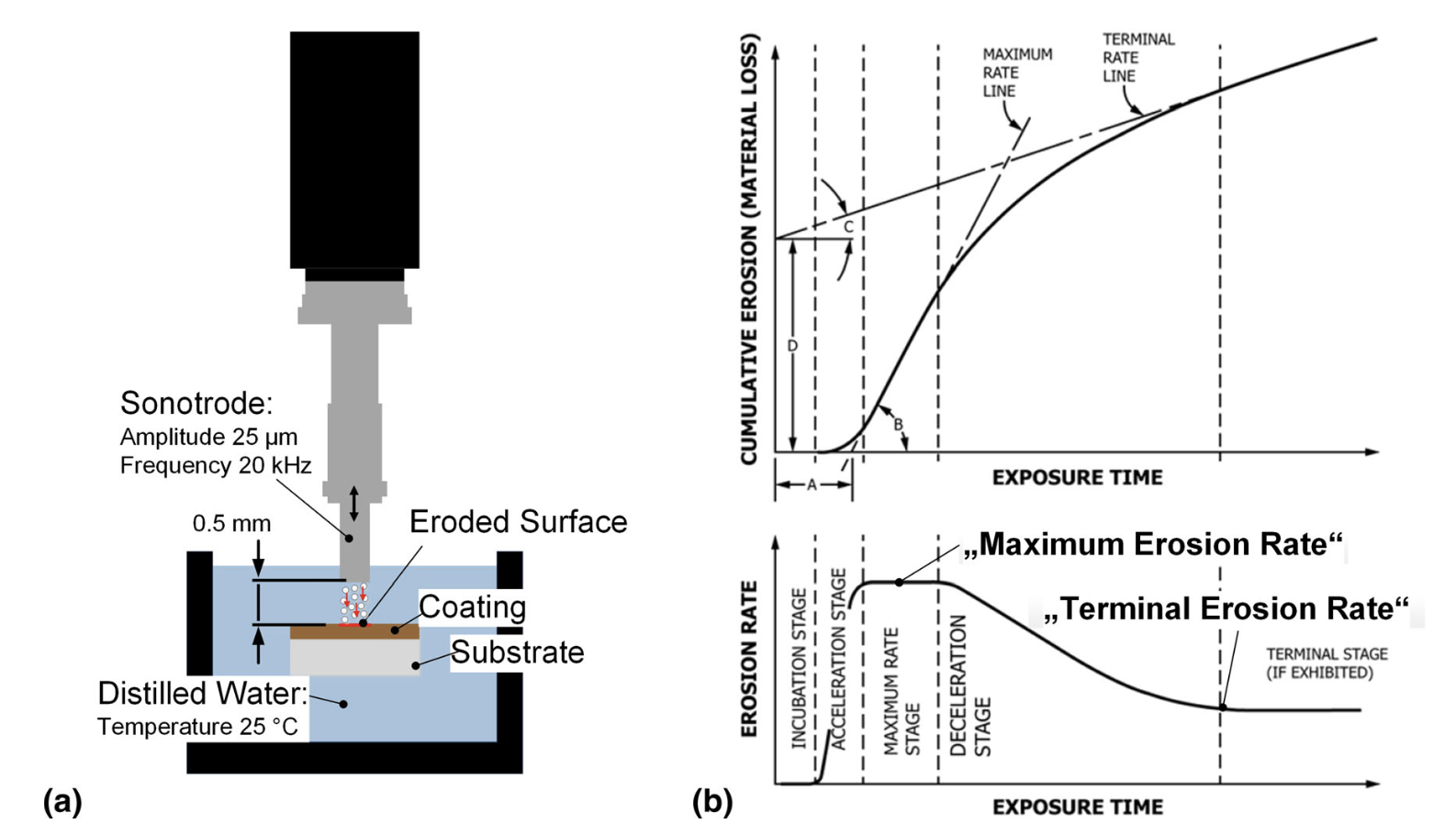
(a) Випробування на кавітаційну ерозію відповідно до стандарту ASTM G32-16 із використанням ультразвукового апарату UIP1000hd (непрямий метод). Усі параметри випробування є номінальними значеннями; допуски наведені у стандарті.
(б) Схематичні фази на кривій «ерозія — час» та характерні параметри процедури випробування.
Ілюстрації та дослідження: ©Hauer et al., 2021.
Випробування бронзових покриттів на ерозію під дією ультразвукової кавітації
Щодо прикладу покриття з морської бронзи, випробування проводилося за непрямою схемою ASTM G32. У цій конфігурації зразок не кріпиться до вібруючого рупора. Натомість ультразвуковий сонотрод створює кавітацію в дистильованій воді, а зразок з покриттям закріплюється під сонотродом на заданій відстані. Хауер та ін. використовували відстань 0,5 мм між зразком і сонотродом, частоту 20 кГц та амплітуду від піку до піку 50 мкм. Випробувальною рідиною була дистильована вода, температура якої підтримувалася приблизно на рівні кімнатної, близько 25 °C.
Підготовка зразків є критично важливим етапом. Перед кавітаційним впливом поверхні з покриттям поетапно шліфували та полірували за допомогою дрібного алмазного абразиву розміром менше 4 мкм. Це зменшує вплив слабко закріплених частинок або нерівностей поверхні, які в іншому випадку могли б відразу відірватися та спотворити криву ерозії. Мета полягає не в тому, щоб покриття виглядало привабливо, а в тому, щоб створити відтворювані вихідні умови, завдяки яким виміряна втрата маси відображатиме стійкість до кавітації, а не неякісну підготовку поверхні.

Регульована по висоті тестова камера для тестування на кавітаційну ерозію (ASTM G32-16)
Процедура випробувань на ультразвукову кавітаційну ерозію та їхні результати
Процедура практичного випробування є простою. Спочатку кожен зразок очищають, висушують і зважують на прецизійних вагах. Потім його встановлюють у випробувальну камеру під сонотрод BS4d22 ультразвукового апарата UIP1000hdT, ретельно та повторно встановлюючи зазор у 0,5 мм. Ультразвуковий апарат працює з заданою амплітудою та частотою, при цьому температура рідини контролюється, щоб запобігти зміні інтенсивності кавітації внаслідок нагрівання. Після закінчення заданого інтервалу впливу зразок виймають, очищають, висушують і знову зважують. Цю послідовність повторюють із збільшенням інтервалів впливу, що залежать від матеріалу, до отримання повної кривої ерозії.
Вимірюється втрата маси. Для технічного порівняння цю втрату маси перетворюють на втрату об’єму з використанням щільності матеріалу. Потім втрату об’єму ділять на площу відкритої поверхні, щоб визначити середню глибину ерозії. За кривою «ерозія — глибина» дослідник може обчислити характерні параметри ерозії, такі як максимальна швидкість ерозії, кінцева швидкість ерозії та середня глибина ерозії. Хільшер також зазначає, що ерозію можна виражати як масу, об’єм або глибину проникнення за одиницю часу або на одиницю поданої ультразвукової енергії, залежно від обраного протоколу.
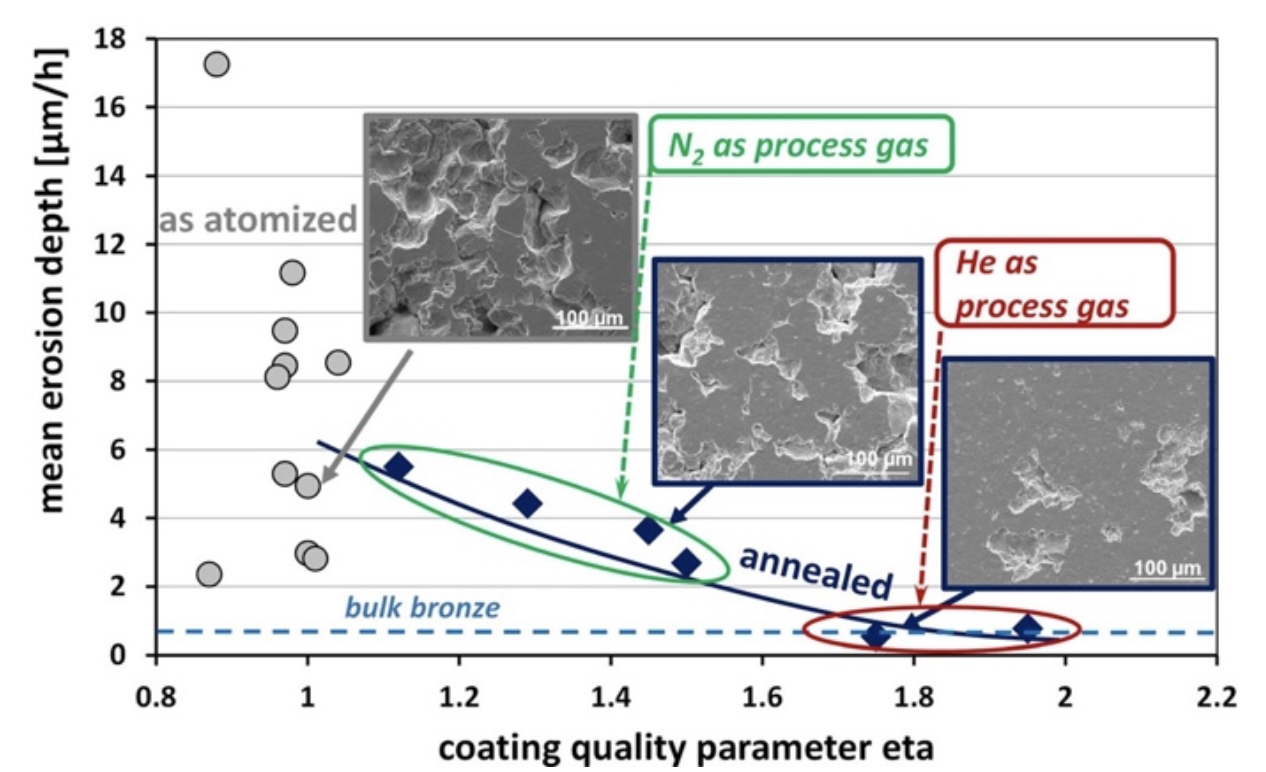
Середні глибини ерозії як функція скоригованих параметрів якості покриття n. Відпал порошку та, відповідно, зниження його міцності дозволяють досягти високої якості покриття. На вставках показано пошкодження поверхні, отримані після 100 хвилин кавітаційного випробування.
Графіки та дослідження: ©Hauer et al., 2021.
Одним із важливих висновків дослідження Гауера є те, що показники швидкості ерозії на початковому етапі можуть вводити в оману. Покриття, нанесені методами термічного та кінетичного напилення, часто демонстрували високу початкову втрату матеріалу, після чого швидкість ерозії знижувалася і ставала більш стабільною. З цієї причини Гауер та ін. використовували кінцеву швидкість ерозії як більш репрезентативний показник довгострокових експлуатаційних характеристик покриття. У своєму 120-хвилинному порівнянні кінцеву швидкість ерозії оцінювали переважно за результатами другої половини випробування (починаючи з 60-ї хвилини), щоб краще відобразити стабілізовану поведінку покриття.
Результати випробувань показують, чому пристрій для контрольованої вібраційної кавітації є цінним. Лита нікель-алюмінієва бронза продемонструвала кінцеву швидкість ерозії приблизно 0,40 мкм/год. Оптимізована бронза, нанесена методом гарячого напилення, досягла 0,57 мкм/год, що наближається до показника литого зразка. Оптимізоване дугове напилення на суднобудівній сталі показало швидкість ерозії близько 1,02 мкм/год, тоді як оптимізоване HVOF-напилення — близько 1,74 мкм/год. Навіть якщо ці покриття не повністю відповідали бронзі литого гвинта, вони значно перевершили суднобудівну сталь; у дослідженні зазначено, що покриття, нанесені методами дугового та HVOF-напилення, продемонстрували стійкість до кавітації, що приблизно у 26 та 16 разів вища, ніж у сталі VL-A, відповідно.

Змінний наконечник для ASTM G32 – Тест на кавітаційну ерозію
Використовуйте ультразвуковий апарат як вібраційний пристрій для проведення випробувань на кавітаційну ерозію
 Практичний висновок полягає в тому, що випробування на кавітаційну ерозію з використанням ультразвукового апарату UIP1000hdT як вібраційного пристрою дозволяє не лише класифікувати матеріали. Воно розкриває, як процес нанесення покриття, мікроструктура, вміст оксидів, пористість, зчеплення на межі розділу фаз та подальша обробка впливають на реальну поведінку під час ерозії. Хауер та ін. дійшли висновку, що методи HVOF та дугового напилення забезпечують оптимальний компроміс між експлуатаційними характеристиками та вартістю для поліпшення поверхонь сталевих рулів, тоді як холодне та тепле напилення є кращим вибором у випадках, коли потрібна стійкість до кавітації, близька до властивостей масивної нікель-алюмінієвої бронзи.
Для лабораторій та розробників покриттів запорукою відтворюваності результатів є суворий контроль параметрів випробувань: амплітуди сонотрода, частоти, відстані між сонотродом і зразком, температури рідини, хімічного складу рідини, підготовки зразків, інтервалів зважування та розрахунку швидкості ерозії. За умови дотримання цих вимог прилад Hielscher UIP1000hdT забезпечує практичний та відтворюваний спосіб перетворення ультразвукової кавітації на кількісні дані щодо характеристик покриття.

Зразок робочого аркуша для тестування на кавітаційну ерозію
Інструкції щодо випробувань на кавітаційну ерозію можна знайти тут!
Схема випробування на кавітаційну ерозію за стандартом ASTM G32
Ультразвукові апарати UIP500hdT, UIP1000hdT, UIP15000hdT та UIP2000hdT підходять для випробувань за стандартом ASTM G32. Ми можемо поставити кожну з цих моделей у комплекті з точним Протокол вимірювання амплітуди механічної амплітуди на кінчику сонотрода. Ми рекомендуємо використовувати будь-який із цих пристроїв разом із сонотродом BS4d22 (діаметр 22 мм) та підставкою ST2.
| Звуковий апарат | Потужність ультразвуку | частота |
|---|---|---|
| UIP500hdT | 500 Вт | 20 кГц |
| UIP1000HDT | 1000W | 20 кГц |
| UIP1500hdT | 1500 Вт | 20 кГц |
| UIP2000HDT | 2000W | 20 кГц |

ASTM G32 -16 Сонотрод 15,9 мм зі змінним наконечником
Проектування, виробництво та консалтинг – Якість зроблено в Німеччині
Ультразвукові апарати Hielscher добре відомі своїми найвищими стандартами якості та дизайну. Надійність і простота експлуатації дозволяють плавно інтегрувати наші ультразвукові апарати в промислові об'єкти. З важкими умовами та вимогливими умовами легко справляються ультразвукові апарати Hielscher.
Hielscher Ultrasonics є сертифікованою компанією ISO і приділяє особливу увагу високопродуктивним ультразвуковим апаратам, які відрізняються найсучаснішими технологіями та зручністю для використання. Звичайно, ультразвукові апарати Hielscher відповідають вимогам CE та відповідають вимогам UL, CSA та RoHs.

Кавітаційна ерозія на поверхні титану
Поширені запитання
Що таке ASTM G32-16?
ASTM G32-16 — це стандартний метод випробувань, затверджений ASTM International, для вимірювання кавітаційної ерозії за допомогою вібраційного приладу. У дослідженні, на яке посилається автор, цей метод застосовувався в непрямій схемі з сонотродом частотою 20 кГц, амплітудою від піку до піку 50 мкм та відстанню між зразком і сонотродом 0,5 мм.
Що таке бронзові покриття?
Бронзові покриття — це поверхневі шари зі сплавів на основі міді, таких як нікель-алюмінієва бронза або марганцево-алюмінієва бронза, що наносяться на основу за допомогою таких методів, як холодне напилення, тепле напилення, напилення методом HVOF або дугове напилення. Вони застосовуються для підвищення стійкості до зносу, корозії та кавітаційної ерозії, особливо на морських деталях.
Для чого використовується випробування на кавітаційну ерозію?
Випробування на кавітаційну ерозію застосовуються для кількісної оцінки стійкості матеріалу або покриття до пошкоджень, спричинених руйнуванням кавітаційних бульбашок. Під час випробувань вимірюється втрата матеріалу з плином часу, перетворюється на глибину ерозії та оцінюються такі параметри, як максимальна швидкість ерозії та кінцева швидкість ерозії, що дозволяє порівняти матеріали та обрати відповідний технологічний процес.
Чи використовуються ультразвукові вібраційні прилади в інших методах випробувань?
Так. Окрім стандарту ASTM G32-16, ультразвукові вібраційні прилади (сонікатори) можуть використовуватися для проведення порівняльних досліджень кавітаційно-корозійного впливу або довговічності покриттів.
Дізнайтеся, як випробування на кавітаційну ерозію застосовуються до покриттів з морської бронзи!
Крім того, ультразвукові коливання застосовуються для проведення осьових випробувань на втому, зокрема в режимі втомних навантажень із дуже великою кількістю циклів. Зразок, налаштований на поздовжній резонанс – зазвичай близько 20 кГц — піддається циклічному розтягуванню – стиснення.
Дізнайтеся, як ультразвукові коливання застосовуються для осьових випробувань зразків на втому!
Література / Список літератури
- Hielscher Cavitation Erosion Test Protocol – ASTM G32
- Hauer, Michél; Gärtner, Frank; Krebs, Sebastian; Klassen, Thomas; Watanabe, Makoto; Kuroda, Seiji; Krömmer, Werner; Henkel, Knuth-Michael (2021): Process Selection for the Fabrication of Cavitation Erosion-Resistant Bronze Coatings by Thermal and Kinetic Spraying in Maritime Applications. Journal of Thermal Spray Technology 30, 2021.
- Bolewski, Łukasz; Szkodo, Marek; Kmieć, Mateusz (2017): Cavitation erosion degradation of Belzona® coatings. Advances in Materials Science. 17, 2017.
- Kmieć, Mateusz; Karpiński, Bartłomiej; Szkodo, Marek (2016): Cavitation Erosion of P110 Steel in Different Drilling Muds. Advances in Materials Science. 16, 2016.
- Müller, Saskia; Fischper, Maurice; Mottyll, Stephan; Skoda, Romuald; Hussong, Jeanette (2014): Analysis of the cavitating flow induced by an ultrasonic horn – Experimental investigation on the influence of actuation phase, amplitude and geometrical boundary conditions. EPJ Web of Conferences 67, 2014.
- високий ККД
- Найсучасніші технології
- надійність & Надійності
- Регульований, точний контроль процесу
- Пакетний & Вбудовані
- на будь-який обсяг
- Інтелектуальне програмне забезпечення
- інтелектуальні функції (наприклад, програмування, протоколювання даних, дистанційне керування)
- Простота і безпека в експлуатації
- низькі експлуатаційні витрати
- CIP (прибирання на місці)
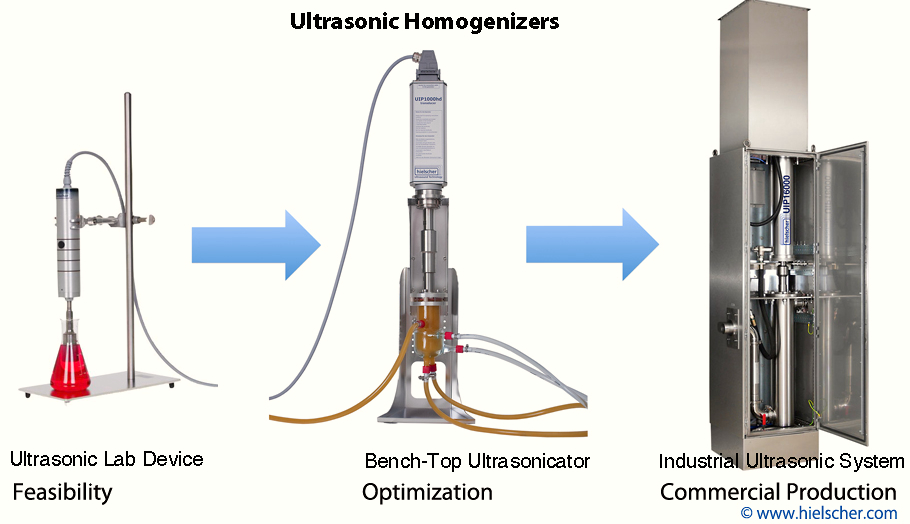
Hielscher Ultrasonics виробляє високоефективні ультразвукові гомогенізатори з Лабораторії до промислові розміри.