การลด Sonochemical ของอนุภาคนาโนแพลเลเดียม
แพลลาเดียม (Pd) เป็นที่รู้จักกันดีในด้านคุณสมบัติการเร่งปฏิกิริยา และถูกนำมาใช้อย่างแพร่หลายในงานวิจัยวัสดุ การผลิตอิเล็กทรอนิกส์ การแพทย์ การทำให้บริสุทธิ์ไฮโดรเจน และการประยุกต์ใช้ทางเคมีต่างๆ โดยใช้เส้นทางโซโนเคมี สามารถควบคุมขนาดและรูปร่างของอนุภาคแพลเลเดียมได้โดยการปรับอัตราส่วน PVP/Pd ซึ่งทำให้สามารถสังเคราะห์อนุภาคนาโนแพลเลเดียมที่มีขนาดเล็กมากและกระจายตัวเป็นเนื้อเดียว หรือกลุ่มอนุภาคแพลเลเดียมขนาดใหญ่ขึ้นได้ด้วยวิธีอัลตราโซนิก ช่วยให้สามารถปรับขนาดของอนุภาคให้เหมาะสมกับประสิทธิภาพการเร่งปฏิกิริยาสูงสุด
การผลิตอัลตราโซนิกของอนุภาคนาโนแพลเลเดียม
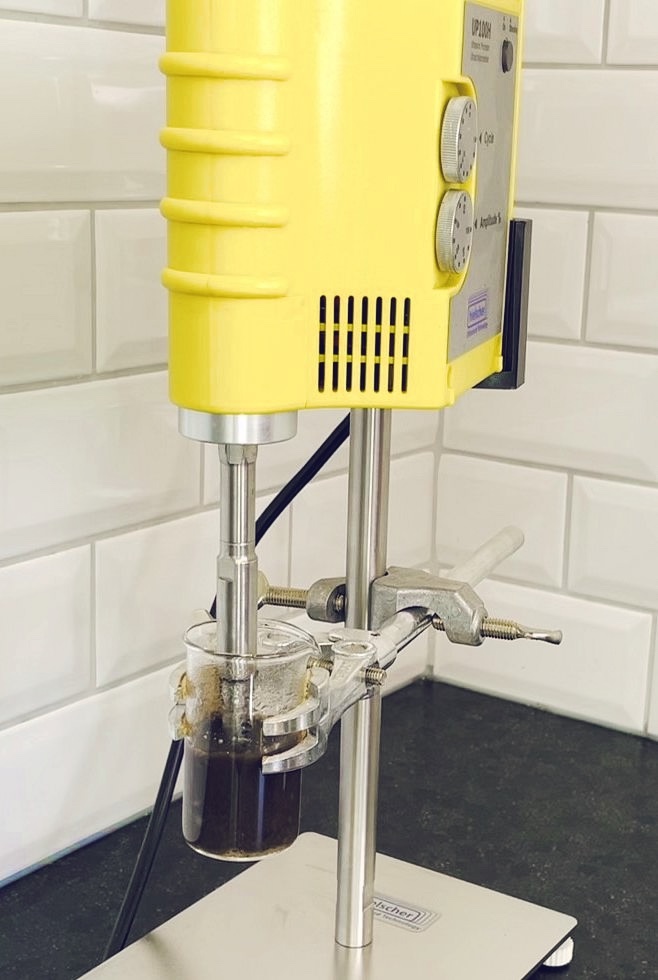 การลดขนาดอนุภาคนาโนแพลเลเดียมด้วยคลื่นอัลตราโซนิกเป็นวิธีที่มีประสิทธิภาพสูงและใช้สารรีเอเจนต์น้อยในการผลิตอนุภาคนาโน Pd(0) โดยใช้ปรากฏการณ์อะคูสติกคาวิเตชันเพื่อสร้างสภาวะพลังงานสูงเฉพาะจุดและลดอนุมูลอิสระในสารละลาย ทำให้ไอออนแพลเลเดียมสามารถถูกลดขนาดได้โดยไม่ต้องผ่านกระบวนการที่อุณหภูมิสูงแบบดั้งเดิม
ข้อได้เปรียบที่สำคัญคือการควบคุมกระบวนการ: เวลาในการโซนิเคชันและความเข้มข้นของสารช่วยเสถียร เช่น อัตราส่วน PVP/Pd สามารถส่งผลต่อการที่ผลิตภัณฑ์จะก่อตัวเป็นอนุภาคนาโนที่มีลักษณะกระจายตัวดี กลม ขนาดประมาณ 5 นาโนเมตร หรือเป็นกลุ่มก้อนขนาดใหญ่กว่า ขนาดประมาณ 20 นาโนเมตร ซึ่งมีความสำคัญในอุตสาหกรรม เนื่องจากประสิทธิภาพของแพลเลเดียมในการเร่งปฏิกิริยาขึ้นอยู่กับขนาดของอนุภาค รูปร่าง การกระจายตัว และพื้นที่ผิวอย่างมาก เนื่องจากอนุภาคนาโนของแพลลาเดียมมีคุณค่าอย่างแพร่หลายในฐานะตัวเร่งปฏิกิริยาแบบไม่สม่ำเสมอ ตัวเร่งปฏิกิริยาไฟฟ้า, และวัสดุที่มีฟังก์ชัน, การลดด้วยคลื่นเสียงความถี่สูงมีความน่าสนใจสำหรับการผลิตตัวเร่งปฏิกิริยา Pd ที่กระจายตัวละเอียดภายใต้สภาวะของเหลวที่ค่อนข้างอ่อนโยน โดยมีประโยชน์ที่อาจเกิดขึ้นสำหรับการสังเคราะห์ทางเคมี, การเร่งปฏิกิริยาทางสิ่งแวดล้อม, เทคโนโลยีเซลล์เชื้อเพลิง, และกระบวนการอื่น ๆ ที่ต้องการกิจกรรมการเร่งปฏิกิริยาสูงและการใช้โลหะมีค่าอย่างมีประสิทธิภาพซึ่งมีความสำคัญทางเศรษฐกิจ

การประมวลผลอนุภาคนาโนในอุตสาหกรรม ด้วยเครื่องโซนิเคเตอร์ UIP2000hdT
ขั้นตอนการเตรียมตัวอย่าง
ตัวอย่างจัดทําดังนี้:
สําหรับตัวอย่าง ส่วนผสมของ EG 30 มล. และ 5·10-6โมลของ PVP ถูกเตรียมโดยการกวนด้วยแม่เหล็กเป็นเวลา 15 นาที สำหรับตัวอย่างที่แตกต่างกัน ได้เติมสารละลาย Pd(NO₃)₂ ในปริมาณที่แตกต่างกัน คือ 1.5 มิลลิลิตร และ 2 มิลลิลิตร ตามลำดับ ส่วนผสมของตัวอย่างถูกเตรียมด้วยอัตราส่วน 2·10-3โมล Pd(NO₃)₂ ในตัวอย่าง (a) และ 2.66·10-3โมล Pd(NO₃)₂ ในตัวอย่าง (b) ทั้งสองส่วนผสมถูกทำให้เกิดเสียงด้วยเครื่องอัลตราโซนิกแบบโพรบในขวดขนาด 20 มิลลิลิตร ตัวอย่างถูกเก็บหลังจากเวลาการทำให้เกิดเสียง 30, 60, 90, 120, 150 และ 180 นาที
การวิเคราะห์ผลการทดลองแสดงให้เห็นว่า:
- 1. การลด sonochemical ของ Pd (II) เป็น Pd (0) ขึ้นอยู่กับเวลาของ sonication
- 2. อัตราส่วนโมลาร์ PVP / Pd (II) สูงนําไปสู่การก่อตัวของอนุภาคแพลเลเดียมแบบกระจายตัวเดียวที่มีรูปร่างโค้งมนและมีเส้นผ่านศูนย์กลางเฉลี่ยประมาณ 5 นาโนเมตร
- 3. อย่างไรก็ตาม อัตราส่วนโมลาร์ PVP/Pd (II) ต่ําเกี่ยวข้องกับการได้มาซึ่งอนุภาคนาโนแพลเลเดียมรวมที่มีการกระจายขนาดใหญ่ที่มีศูนย์กลางอยู่ที่ 20 นาโนเมตร
เส้นทางโซโนเคมีในการลดแพลเลเดียม (II) ไอออน พีดี(II) ไปยังอะตอมของแพลเลเดียม พีดี(0) สามารถสันนิษฐานได้ว่ามีดังต่อไปนี้:
- (1) การไพโรไลซิสด้วยน้ำ: H₂O → •OH+•H
- (2) การเกิดปฏิกิริยาแบบราก: RH (สารรีดิวซ์) + •OH(•H) → •R + H₂O(H₂)
- (3) การลดไอออน: Pd (II) + อนุมูลลด (•H, •R) → Pd (0) + R • CHO + H +
- (4) การก่อตัวของอนุภาค: nพีดี(0) → พีดีเอ็น
ผลลัพธ์: ขึ้นอยู่กับอัตราส่วน PVP/Pd (II) Pd แบบกระจายหรือรวมn ได้รับ
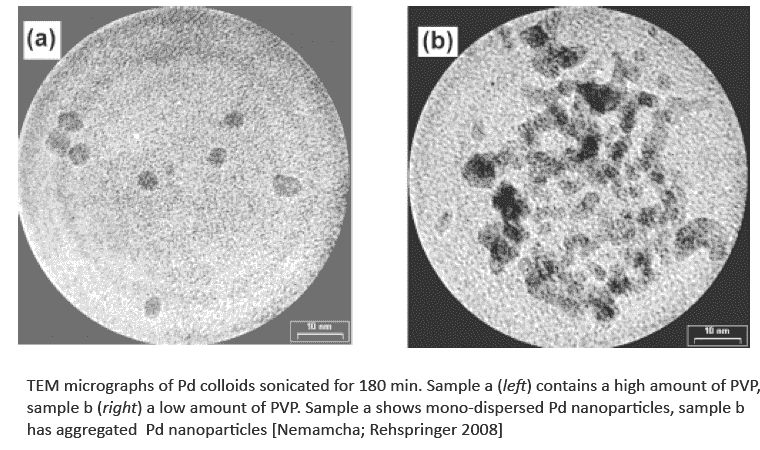
การลดด้วยโซนิเคชันของแพลเลเดียม: ตัวอย่าง a (ซ้าย) มีปริมาณ PVP สูง, ตัวอย่าง b (ขวา) มีปริมาณ PVP ต่ำ. เวลาในการโซนิเคชันด้วย UP100H: 180 นาที. ตัวอย่าง a แสดงอนุภาคนาโน Pd ที่กระจายตัวเดี่ยว, ตัวอย่าง b แสดงอนุภาคนาโน Pd ที่รวมตัวกัน.
ภาพและการศึกษา: ©Nemamcha และ Rehspringer, 2008
การวิเคราะห์และผลลัพธ์
การวิเคราะห์การดูดกลืนที่มองเห็นได้ด้วยรังสียูวียืนยันความสัมพันธ์ระหว่างการลดโซโนเคมีของแพลเลเดียม (II) ไอออนไปยังอะตอมของแพลเลเดียม (0) และเวลาการเก็บรักษาในสนามอัลตราโซนิก การลดไอออนของแพลเลเดียม (II) เป็นอะตอมของแพลเลเดียม (0) จะดําเนินไปและสามารถทําได้อย่างสมบูรณ์ด้วยเวลาการ sonication ที่เพิ่มขึ้น กล้องจุลทรรศน์ของกล้องจุลทรรศน์อิเล็กตรอนแบบส่องผ่าน (TEM) แสดงให้เห็นว่า:
- เมื่อมีการเติม PVP ในปริมาณสูง การลดไอออนแพลเลเดียมด้วยวิธีโซโนเคมีจะนำไปสู่การเกิดอนุภาคแพลเลเดียมที่มีขนาดเดียวและมีรูปร่างทรงกลม โดยมีเส้นผ่านศูนย์กลางเฉลี่ยประมาณ 5 นาโนเมตร
- การใช้ปริมาณเล็กน้อยของ PVP เกี่ยวข้องกับการได้มาซึ่งอนุภาคนาโนของพัลลาเดียมที่รวมตัวกัน การวัดด้วยเทคนิคการกระเจิงแสงแบบไดนามิก (DLS) แสดงให้เห็นว่าอนุภาคนาโนของพัลลาเดียมที่รวมตัวกันมีขนาดกระจายตัวกว้าง โดยมีค่าเฉลี่ยอยู่ที่ 20 นาโนเมตร

เครื่องโซนิเคเตอร์ในห้องปฏิบัติการ รุ่น UP100H ได้ถูกใช้ในการเตรียมอนุภาคนาโนของแพลเลเดียม

อนุภาคนาโนแพลเลเดียม (Pd) สามารถเตรียมได้โดยการ sonication
การออกแบบ การผลิต และการให้คําปรึกษา – คุณภาพ ผลิตในประเทศเยอรมนี
เครื่องอัลตราโซนิก Hielscher เป็นที่รู้จักกันดีในด้านคุณภาพและมาตรฐานการออกแบบสูงสุด ความทนทานและใช้งานง่ายช่วยให้สามารถรวมเครื่องอัลตราโซนิกของเราเข้ากับโรงงานอุตสาหกรรมได้อย่างราบรื่น สภาพที่ขรุขระและสภาพแวดล้อมที่ต้องการสามารถจัดการได้ง่ายโดยเครื่องอัลตราโซนิกของ Hielscher
Hielscher Ultrasonics เป็น บริษัท ที่ได้รับการรับรองมาตรฐาน ISO และให้ความสําคัญเป็นพิเศษกับเครื่องอัลตราโซนิกประสิทธิภาพสูงที่มีเทคโนโลยีล้ําสมัยและเป็นมิตรกับผู้ใช้ แน่นอนว่าเครื่องอัลตราโซนิกของ Hielscher เป็นไปตามมาตรฐาน CE และตรงตามข้อกําหนดของ UL, CSA และ RoHs
วรรณกรรม/อ้างอิง
- Nemamcha, A.; Rehspringer, J. L. (2008): Morphology of dispersed and aggregated PVV-Pd nanoparticles prepared by ultrasonic irradiation of Pd(NO₃)₂ solution in ethylene glycol. Rev. Adv. Mater. Sci. 18;2008. 685-688.
- Prekob, Á., Muránszky, G., Kocserha, I. et al. (2020): Sonochemical Deposition of Palladium Nanoparticles Onto the Surface of N-Doped Carbon Nanotubes: A Simplified One-Step Catalyst Production Method. Catalysis Letters 150, 2020. 505–513.
- Haitao Zheng, Mphoma S. Matseke, Tshimangadzo S. Munonde (2019): The unique Pd@Pt/C core-shell nanoparticles as methanol-tolerant catalysts using sonochemical synthesis. Ultrasonics Sonochemistry, Volume 57, 2019. 166-171.
ข้อเท็จจริงที่ควรค่าแก่การรู้
แพลลาเดียมคืออะไร?
แพลเลเดียมเป็นโลหะมีค่าหายาก สีขาวเงิน มีสัญลักษณ์ทางเคมีคือ Pd และเลขอะตอม 46 จัดอยู่ในกลุ่มโลหะแพลทินัม มีคุณค่าเนื่องจากมีความเสถียรทางเคมี นำไฟฟ้าได้ดี ซึมซับไฮโดรเจน และทำหน้าที่เป็นตัวเร่งปฏิกิริยาได้อย่างยอดเยี่ยม พัลลาเดียมที่แบ่งเป็นชิ้นเล็ก ๆ มีประสิทธิภาพเป็นพิเศษสำหรับปฏิกิริยาการไฮโดรจิเนชันและการดีไฮโดรจิเนชัน และเมื่อพัลลาเดียมถูกทำให้ร้อนขึ้น สามารถทำให้ไฮโดรเจนแพร่ผ่านได้ ซึ่งทำให้มีประโยชน์สำหรับการแยกและการทำให้บริสุทธิ์ไฮโดรเจน
นาโนพาร์ติเคิลแพลเลเดียมใช้ทำอะไร?
อนุภาคนาโนแพลลาเดียมถูกใช้เป็นหลักเป็นสารเร่งปฏิกิริยาที่มีพื้นที่ผิวสูง เนื่องจากอนุภาคนาโนมีพื้นที่ผิวที่ใช้งานได้มากกว่าแพลลาเดียมในรูปก้อนมาก จึงสามารถเพิ่มประสิทธิภาพของสารเร่งปฏิกิริยาและลดปริมาณโลหะมีค่าที่ต้องใช้ลงได้ การประยุกต์ใช้ทั่วไปได้แก่ การสังเคราะห์ทางเคมี ปฏิกิริยาไฮโดรจีเนชัน ปฏิกิริยาการเชื่อมต่อคาร์บอน-คาร์บอน การเร่งปฏิกิริยาไฟฟ้า การวิจัยเซลล์เชื้อเพลิง การตรวจจับและเก็บกักไฮโดรเจน การเร่งปฏิกิริยาทางสิ่งแวดล้อม และบางสาขาการวิจัยทางการแพทย์ เช่น ระบบต้านเชื้อจุลชีพ ระบบโฟโตเธอร์มัล และระบบต้านมะเร็ง พฤติกรรมการเร่งปฏิกิริยาของแพลเลเดียมขึ้นอยู่กับขนาดอนุภาค รูปร่าง และการกระจายตัวของอนุภาคเป็นอย่างมาก
อนุภาคนาโนแพลลาเดียมยังถูกใช้เพื่อเจือปนอนุภาคอื่น ๆ เพื่อให้ได้คุณสมบัติในการเร่งปฏิกิริยา อ่านเพิ่มเติมเกี่ยวกับเส้นทางอัลตราโซนิกในการสังเคราะห์ Pd/N-BCNT เป็นตัวเร่งปฏิกิริยา Fischer-Tropsch!
แพลเลเดียมเป็นพิษหรือไม่?
โดยทั่วไปแล้ว พัลลาเดียมโลหะธาตุถือเป็นสารที่มีพิษต่ำและไม่มีบทบาททางชีวภาพที่ทราบ แต่สารประกอบของพัลลาเดียม เกลือ ฝุ่น และรูปแบบขนาดนาโน ควรได้รับการจัดการอย่างระมัดระวัง การสัมผัสในสถานที่ทำงานหรือในห้องปฏิบัติการอาจก่อให้เกิดการระคายเคืองหรือการแพ้ได้ ขึ้นอยู่กับสารประกอบและเส้นทางการสัมผัส ตัวอย่างเช่น สารละลายแพลเลเดียมคลอไรด์อาจทำให้เยื่อเมือกเกิดการระคายเคือง สำหรับการจัดการในอุตสาหกรรม คำตอบในทางปฏิบัติคือ: แพลเลเดียมโลหะแบบเป็นก้อนมีความเสี่ยงค่อนข้างต่ำ แต่ผงแพลเลเดียม เกลือแพลเลเดียมที่ละลายน้ำได้ และอนุภาคนาโนแพลเลเดียมควรได้รับการปฏิบัติเสมือนเป็นวัสดุที่อาจเป็นอันตราย โดยต้องควบคุมฝุ่น ระบายอากาศ สวมถุงมือ อุปกรณ์ป้องกันดวงตา และจัดการของเสียอย่างเหมาะสม