Ultrazvuk otvára nové možnosti v supramolekulárnej chémii
Supramolekulárna chémia sa zakladá na slabých, reverzibilných interakciách: vodíkových väzbách, π–π stohovaní, van der Waalsových silách, solvofóbnych efektoch a chirálnom rozpoznávaní. Tieto interakcie umožňujú molekulám samoorganizovať sa do väčších štruktúr, ako sú vlákna, tyčinky, gély, agregáty a supramolekulárne polyméry. Pre chemikov a chemických inžinierov spočíva výzva nielen v tom, aby takéto štruktúry vytvorili, ale aj v tom, aby dokázali ovplyvniť, aká štruktúra vznikne, ako rýchlo vznikne a či zostane kineticky uväznená, alebo dosiahne termodynamicky najstabilnejší stav.
Ultrazvukové javy v chémii: Sonikácia riadi supramolekulárne samousporiadanie
Vedecká štúdia autorov Wehner a kol. (2020), uverejnená v časopise Nature Communications, dokazuje, že ultrazvukové ožiarenie možno využiť ako silný vonkajší podnet na riadenie procesov samousporiadania v supramolekulárnej chémii. Výskumníci skúmali racemickú zmes chirálnych molekúl perylénbisimidu a preukázali, že ultrazvuková ožiarenie môže riadiť tvorbu odlišných supramolekulárnych polymorfov. V závislosti od podmienok ultrazvukovej ožiarenia systém vytváral rôzne samousporiadané štruktúry, vrátane kineticky riadených konglomerátov a termodynamicky stabilného racemického supramolekulárneho polyméru. V štúdii bol na ultrazvukovú úpravu výslovne použitý ultrazvukový procesor Hielscher UP50H, prevádzkovaný pri frekvencii 30 kHz, výkone 50 W a amplitúde 100 %.
Tento výsledok má veľký význam pre modernú chémiu materiálov, pretože dokazuje, že ultrazvuk nie je len nástrojom na miešanie alebo dispergovanie. Za presne definovaných podmienok môže sonikácia slúžiť ako procesný parameter na riadenie molekulárnych dráh.

Reaktor s ultrazvukovým miešaním vybavený ultrazvukovým zariadením UP200St na intenzívnu syntézu supramolekulárnych polymérov.
Prečo sú ultrazvukové javy dôležité v chémii
 Ultrazvukové javy v chémii sú spôsobené hlavne akustickou kavitáciou. Keď sa do kvapaliny vnesie ultrazvuk s vysokou intenzitou, striedajúce sa tlakové cykly vytvárajú mikroskopické kavitačné bubliny. Ich rast a kolaps vedú k vzniku lokalizovaných podmienok s vysokou energiou, intenzívnemu mikroprúdeniu, silným šmykovým gradientom a efektívnemu prenosu hmoty. V chemických a materiálových procesoch môžu tieto efekty ovplyvňovať nukleáciu, agregáciu, tvorbu častíc, disperziu, kryštalizáciu a samousporiadanie.
V supramolekulárnej chémii je to obzvlášť cenné, pretože mnohé systémy sú závislé od priebehu reakcie. Tá istá molekula sa môže zoskupovať do rôznych polymorfov v závislosti od poradia a intenzity dodanej energie, teploty, koncentrácie, zloženia rozpúšťadla a času. Ultrazvukové ožiarenie poskytuje kontrolovateľný spôsob, ako do systému vniesť mechanickú energiu bez zmeny molekulárnej štruktúry stavebného bloku.
Pre chemických inžinierov je to rozhodujúca výhoda: ultrazvuk je možné parametrizovať. Amplitúdu, výkon, geometriu sonotródy a reaktora, teplotu, dobu zdržania, tlak a prietok je možné nastavovať, monitorovať a prenášať z testov realizovateľnosti do väčších spracovateľských objemov.
Ultrazvuk ako prostriedok na riadenie samousporiadania
V štúdii sa skúmala samousporiadanosť racemickej zmesi dvoch enantiomérnych molekúl perylénbisimidu. Ak chýba vhodný vonkajší podnet, takéto systémy môžu prejsť preferovanou cestou agregácie alebo uviaznuť v metastabilných stavoch. Vďaka použitiu kontrolovaného ultrazvuku sa výskumníkom podarilo dosiahnuť rôzne supramolekulárne výsledky.
Kľúčový zistenie je jednoduché, ale výstižné: sonikácia zmenila spôsob samousporiadania. Pri určitých teplotách a koncentráciách výkonový ultrazvuk podporil prechod z jedného agregátneho stavu do druhého. Za podmienok kinetickej sonikácie systém vytvoril supramolekulárny konglomerát. Za podmienok termodynamickej sonikácie vytvoril racemický supramolekulárny polymér s odlišnou morfológiou a vyššou stabilitou.
Vedecký prínos spočíva v schopnosti ovplyvniť, či prevládne homochirálna alebo heterochirálna agregácia. Priemyselný prínos spočíva v širšom poňatí: ultrazvukové ožiarenie môže pomôcť riadiť molekulárnu organizáciu, nielen urýchliť spracovanie.
Toto sa týka:
- supramolekulárne polyméry a funkčné organické materiály
- výskum chirálnej agregácie a separácie racemátov
- kryštalizácia a skríning polymorfov
- tvorba nanovlákien, nanotyčiek a agregátov farbív
- vývoj receptúr a pokročilé spracovanie materiálov
- zväčšovanie rozsahu chemických procesov podporovaných ultrazvukom

Priemyselný reaktor s ultrazvukovým výkonom 16 000 wattov určený na reakcie urýchľované sonochemicky.
Úloha ultrazvukových prístrojov Hielscher v supramolekulárnej chémii
 Pri experimentálnej práci sa ultrazvuková úprava vykonávala pomocou zariadenia Hielscher UP50H, kompaktného laboratórneho ultrazvukového procesora. UP50H je 50 W ultrazvukový procesor so sondou s frekvenciou 30 kHz, určený pre malé laboratórne vzorky, ktorý sa používa v chemických, biologických, lekárskych a analytických laboratóriách. Spoločnosť Hielscher opisuje zariadenie UP50H ako vhodné pre ručnú prevádzku alebo prevádzku na stojane a pre úlohy, ako je dispergovanie, rozpúšťanie, emulgovanie a homogenizácia malých objemov vzoriek.
V tejto štúdii zariadenie UP50H dodávalo ultrazvukovú energiu potrebnú na spustenie a riadenie transformácie supramolekulárnych agregátov. To poukazuje na dôležitý praktický aspekt pre chemikov: laboratórna sonikácia v malom objeme môže odhaliť procesné okná, ktoré je inak ťažké identifikovať len miešaním, zahrievaním alebo pasívnym starnutím.
V supramolekulárnej chémii je preto možné sonikátory sondového typu, ako napríklad UP50H, využívať nielen na prípravu vzoriek, ale aj ako aktívnu experimentálnu premennú. Zmenou teploty a trvania sonikácie môžu výskumníci skúmať kinetické a termodynamické režimy, skenovať cesty agregácie a identifikovať metastabilné alebo stabilné polymorfy.
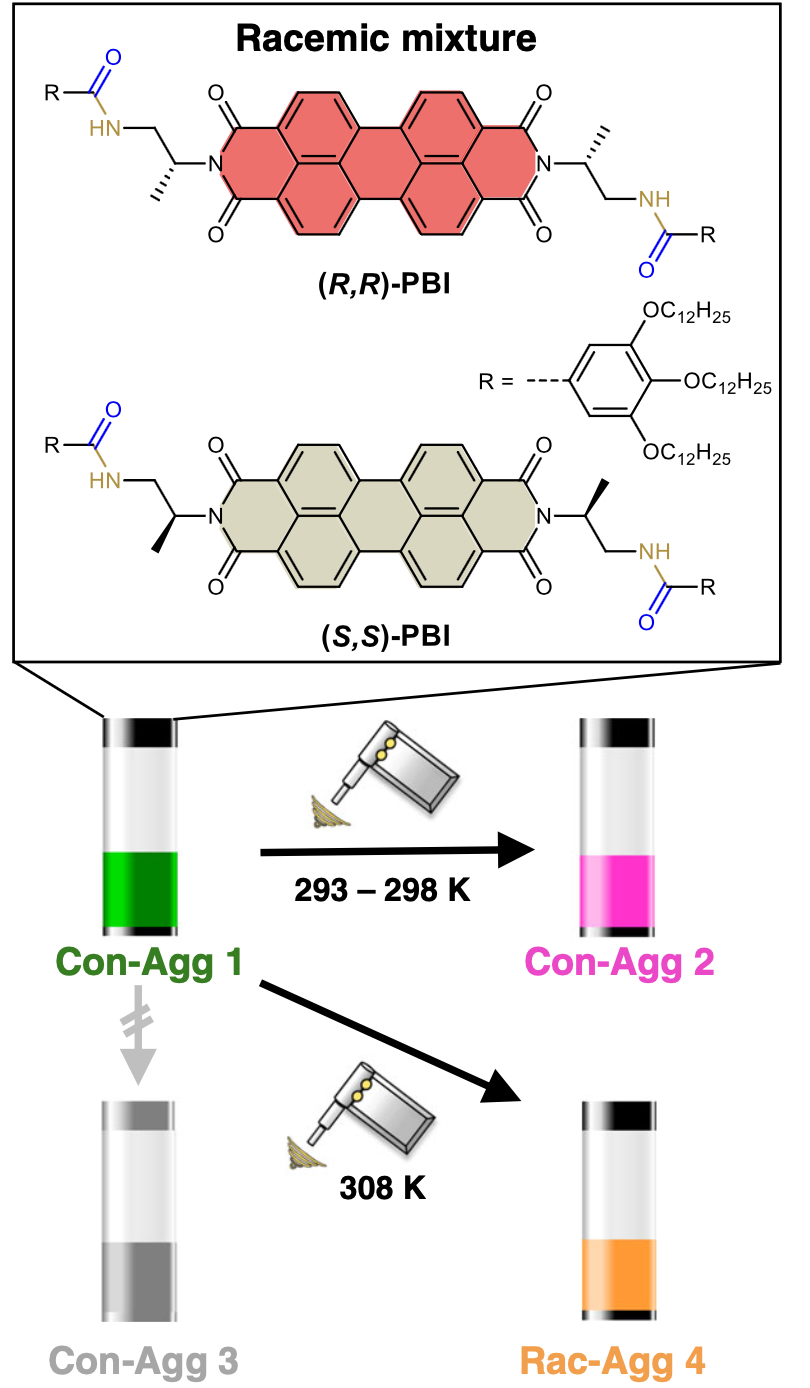
Spektroskopické štúdie racemickej zmesi (R,R)- a (S,S)-PBI. a Chemické štruktúry (R,R)- a (S,S)-PBI a schematické znázornenie ultrazvukom indukovanej supramolekulárnej polymerizácie racemickej zmesi (R,R)- a (S,S)-PBI na konglomeráty Con-Agg 1 a Con-Agg 2 a racemický supramolekulárny polymér Rac-Agg 4.
Štúdia a schéma: ©Wehner et al., 2020
Od laboratórneho objavu po škálovateľné ultrazvukové spracovanie
Hlavnou výhodou ultrazvukových zariadení spoločnosti Hielscher je dostupnosť ultrazvukovej techniky v celom vývojovom reťazci: od kompaktných laboratórnych zariadení cez stolové systémy až po priemyselné ultrazvukové procesory. Spoločnosť Hielscher ponúka ultrazvukové zariadenia a sondy na spracovanie kvapalín od laboratórneho až po výrobné meradlo, s aplikáciami zahŕňajúcimi chemické spracovanie, zmenšovanie veľkosti častíc, extrakciu, dispergáciu a homogenizáciu.
Toto je dôležité, pretože mnohé sľubné sonochemické alebo supramolekulárne objavy sa nedostanú ďalej ako do laboratória, ak nie je možné proces reprodukovať vo väčšom meradle. Prístup spoločnosti Hielscher k vývoju ultrazvukových procesov je založený na regulovateľných parametroch a škálovateľných konfiguráciách zariadení. Akonáhle sa identifikuje efektívne procesné okno pre ultrazvuk, proces je možné preniesť do väčších ultrazvukových systémov zachovaním príslušného príkona energie a spracovateľských podmienok.
Pre priemyselných používateľov to znamená, že sonikáciu možno považovať nielen za výskumnú metódu, ale aj za procesnú technológiu.
Inline sonikácia pre kontinuálne chemické spracovanie
Šaržová sonikácia je užitočná pri laboratórnom skríningu a optimalizácii malých objemov. Chemická výroba však často vyžaduje nepretržitú prevádzku, reprodukovateľnosť a definované doby zdržania. Ultrazvukové systémy spoločnosti Hielscher podporujú inline sonikáciu, pri ktorej sa kvapaliny čerpajú cez ultrazvukovú prietokovú komoru alebo reaktor a sú vystavené kavitačnému poľu za kontrolovaných podmienok.
Inline ultrazvukové spracovanie je možné prevádzkovať v režime jedného prechodu alebo v režime recirkulácie, čo umožňuje, aby kvapalina prešla zónou ultrazvukového spracovania raz alebo viackrát. Spoločnosť Hielscher uvádza, že jej ultrazvukové procesory sú k dispozícii ako pre dávkové, tak aj pre kontinuálne inline spracovanie, od laboratórnych a stolných zariadení až po zariadenia v plnom priemyselnom meradle.
V oblasti supramolekulárnej chémie a chemického inžinierstva ponúka inline sonikácia viacero výhod:
- riadená doba zdržania v kavitačnej zóne
- lepšia reprodukovateľnosť v porovnaní s nekontrolovaným miešaním v dávkach
- lepšie riadenie tepla prostredníctvom prietokových článkov a externého chladenia
- nepretržité spracovanie väčších objemov
- jednoduchšia integrácia do existujúcich chemických výrobných liniek
- prispôsobiteľná intenzita spracovania prostredníctvom regulácie prietoku, amplitúdy a konfigurácie reaktora
V chémii závislej od reakčných dráh môžu byť tieto parametre kľúčové. Ak supramolekulárny systém reaguje odlišne na krátke, intenzívne ožarovanie ultrazvukom v porovnaní s dlhodobým miernym ožarovaním, inline spracovanie poskytuje technický rámec na definovanie a reprodukovanie tejto expozície.
Lineárne zväčšovanie rozsahu: Od sonochemického skríningu až po výrobu
 Ultrazvuková technológia spoločnosti Hielscher je navrhnutá pre rozšírenie z laboratórneho testovania na priemyselné spracovanie. V prípade veľkých systémov je možné procesné parametre, ako sú amplitúda, tlak a teplota, optimalizovať v menších zariadeniach a následne preniesť do zariadení s vyššou priepustnosťou. Spoločnosť Hielscher opisuje efektívnosť ultrazvukového procesu ako lineárne škálovateľnú po určení optimálnej konfigurácie parametrov.
Táto schopnosť lineárneho škálovania je obzvlášť dôležitá pre chemikov a procesných inžinierov pracujúcich s citlivými supramolekulárnymi systémami. Samozostavujúce sa materiály často závisia od úzkych procesných okien. Zmena intenzity miešania, doby zdržania, teplotného profilu alebo hustoty energie môže ovplyvniť morfológiu produktu. Škálovateľné ultrazvukové systémy pomáhajú znížiť toto riziko tým, že zachovávajú definované podmienky sonikácie pri prechode procesu z mililitrov na litre a nakoniec na prietoky v produkčnom meradle.
Spoločnosť Hielscher ponúka aj priemyselné inline reaktory, ako je napríklad MultiSonoReactor, určené na vysokokapacitnú inline sonikáciu. Tieto systémy sú navrhnuté pre aplikácie, medzi ktoré patrí homogenizácia, miešanie, disperzia, extrakcia a sonochemické reakcie.
Vedecký a priemyselný význam supramolekulárnych polymorfov syntetizovaných ultrazvukom
Štúdia o supramolekulárnom polymorfizme riadenom ultrazvukom je významná tým, že demonštruje, ako možno ultrazvukové efekty v chémii využiť na dosiahnutie rôznych stavov látky v rámci toho istého molekulárneho systému. Namiesto toho, aby menili molekulu, výskumníci zmenili podmienky procesu. Práve v tomto bode sa sonikácia stáva atraktívnou pre priemyselnú chémiu: môže zlepšiť výsledky prostredníctvom intenzifikácie procesu namiesto dodatočných syntetických krokov.
Z hľadiska vedeckého výskumu prispievajú tieto zistenia k hlbšiemu pochopeniu chirálneho samousporiadania, kinetického zachytávania, termodynamickej regulácie a supramolekulárnych energetických krajín. V priemysle môžu tie isté princípy podporiť zdokonalené skríningové postupy polymorfov, rýchlejší vývoj funkčných materiálov, lepšiu kontrolu nad morfológiou agregátov a reprodukovateľnejšie spracovanie pokročilých chemických systémov.
Z praktického hľadiska môže ultrazvuková úprava pomôcť chemikom a chemickým inžinierom:
- urýchliť transformácie samousporiadania
- podporovať inak nedostupné agregačné dráhy
- zlepšiť reprodukovateľnosť v systémoch závislých od signálnych dráh
- znížiť závislosť od dlhých vyrovnávacích časov
- zobraziť kinetické a termodynamické stavy produktov
- zaviesť sľubné laboratórne výsledky do bežných výrobných procesov
Ultrazvukové spracovanie ako kľúčová technológia
Výkonný ultrazvuk je kľúčovou technológiou pre supramolekulárnu chémiu. Riadené dodávanie akustickej energie môže ovplyvňovať molekulárnu organizáciu zložitých systémov a umožniť prístup k štruktúram, ktoré je ťažké dosiahnuť len bežným miešaním alebo tepelným spracovaním.
Na príklade zariadenia Hielscher UP50H uvedená štúdia demonštruje prínos presnej laboratórnej sonikácie pre základný supramolekulárny výskum. Vďaka väčším stolovým a priemyselným sonikátorom spoločnosti Hielscher je možné tú istú technologickú platformu rozšíriť na optimalizáciu procesov, inline spracovanie a lineárne zväčšovanie rozsahu.
Chemikom to otvára nové experimentálne možnosti v oblasti samousporiadania a riadenia polymorfov. Chemickým inžinierom to poskytuje škálovateľný procesný nástroj na premenu ultrazvukových efektov v chémii na spoľahlivé výrobné stratégie.
Nasledujúca tabuľka vám poskytuje približnú kapacitu spracovania našich ultrazvukových prístrojov:
| Objem dávky | Prietok | Odporúčané zariadenia |
|---|---|---|
| 05 až 1,5 ml | N.A. | VialTweeter |
| 1 až 500 ml | 10 až 200 ml/min | UP100H |
| 10 až 2000 ml | 20 až 400 ml/min | UP200Ht, UP400St |
| 0.1 až 20 l | 00,2 až 4 l/min | UIP2000hdT |
| 10 až 100 l | 2 až 10 l/min | UIP4000hdT |
| 15 až 150 l | 3 až 15 l/min | UIP6000hdT |
| N.A. | 10 až 100 l/min | UIP16000hdT |
| N.A. | väčší | Zhluk UIP16000hdT |
Dizajn, výroba a poradenstvo – Kvalita vyrobená v Nemecku
 Ultrazvukové prístroje Hielscher sú známe svojou najvyššou kvalitou a dizajnovými štandardmi. Robustnosť a jednoduchá obsluha umožňujú bezproblémovú integráciu našich ultrazvukových prístrojov do priemyselných zariadení. Drsné podmienky a náročné prostredie ľahko zvládnu ultrazvukové prístroje Hielscher.
Hielscher Ultrasonics je spoločnosť s certifikáciou ISO a kladie osobitný dôraz na vysokovýkonné ultrazvukové prístroje s najmodernejšou technológiou a užívateľskou prívetivosťou. Ultrazvukové prístroje Hielscher sú samozrejme v súlade s CE a spĺňajú požiadavky UL, CSA a RoHs.

často kladené otázky
Čo je to supramolekulárna chémia?
Supramolekulárna chémia je oblasť chémie, ktorá sa zaoberá štúdiom organizovaných molekulárnych systémov vznikajúcich prostredníctvom nekovalentných interakcií, ako sú vodíkové väzby, π–π stohovanie, elektrostatické interakcie, koordinácia kovov, van der Waalsove sily a hydrofóbne efekty. Zameriava sa na to, ako molekuly rozpoznávajú, viažu sa a samovoľne sa zoskupujú do väčších funkčných štruktúr bez vytvárania trvalých kovalentných väzieb.
Čo sú supramolekulárne polyméry?
Supramolekulárne polyméry sú polymérne štruktúry, v ktorých sú monomérne jednotky spojené reverzibilnými nekovalentnými interakciami namiesto kovalentných väzieb. Keďže sa tieto interakcie môžu prerušiť a opäť vytvoriť, supramolekulárne polyméry často vykazujú dynamické správanie, reagujú na podnety a majú schopnosť samoregenerácie, čo ich predurčuje na použitie v oblasti pokrokových materiálov, nanotechnológií a funkčnej mäkké hmoty.
Čo sú Racemats?
Racemáty, alebo racemické zmesi, sú zmesi, ktoré obsahujú rovnaké množstvá dvoch enantiomérov chirálnej zlúčeniny. Keďže oba enantioméry otáčajú rovinné polarizované svetlo v opačných smeroch v rovnakej miere, racemát je spravidla celkovo opticky neaktívny.
Čo znamená „racemický“?
Termín „racemický“ znamená, že vzorka obsahuje obe enantiomérne formy chirálnej molekuly v pomere 1:1. Racemická látka preto nevykazuje žiadnu čistú optickú rotáciu, hoci jednotlivé molekuly sú chirálne.
Čo je to enantiomérna molekula?
Enantiomérna molekula je jednou z dvoch chirálnych molekúl, ktoré sú navzájom zrkadlovými obrazmi, ktoré nie je možné navzájom prekrývať. Enantioméry majú rovnaký molekulárny vzorec a konektivitu, líšia sa však trojrozmerným usporiadaním, čo môže viesť k odlišnému správaniu v chirálnych prostrediach, ako sú enzýmy, receptory alebo asymetrické systémy samousporiadania.
Literatúra / Referencie
- Wehner, M., Röhr, M.I.S., Stepanenko, V. et al. (2020): Control of self-assembly pathways toward conglomerate and racemic supramolecular polymers. Nature Communications 11, 5460 (2020).
- Rutgeerts LAJ, Soultan AH, Subramani R, Toprakhisar B, Ramon H, Paderes MC , De Borggraeve WM, Patterson J (2019): Robust scalable synthesis of a bis-urea derivative forming thixotropic and cytocompatible supramolecular hydrogels. Chem Commun (Camb). 2019 Jun 20;55(51):7323-7326.
- Subhankar Paul and Sailendra Mahanta (2015): Preparation and Characterization of Self-Assembled Graphene Oxide Supramolecular Structures. Journal of Medical and Bioengineering, Vol. 4, No. 6, pp. 480-483, December 2015.
- F. Portone, M. Amorini, M. Montanari, R. Pinalli, A. Pedrini, R.V erucchi, R. Brighenti, E. Dalcanale (2023): Molecular Auxetic Polymer of Intrinsic Microporosity via Conformational Switching of a Cavitand Crosslinker. Advanced Functional Materials 2023, 33, 2307605.

Ultrazvuk UIP6000hdT na inline disperziu chemikálií na mokrom konci
- vysoká účinnosť
- Najmodernejšia technológia
- spoľahlivosť & odolnosť
- nastaviteľné, presné riadenie procesu
- dávka & Inline
- pre akýkoľvek objem
- inteligentný softvér
- inteligentné funkcie (napr. programovateľné, dátový protokol, diaľkové ovládanie)
- jednoduchá a bezpečná obsluha
- nízka údržba
- CIP (čistenie na mieste)
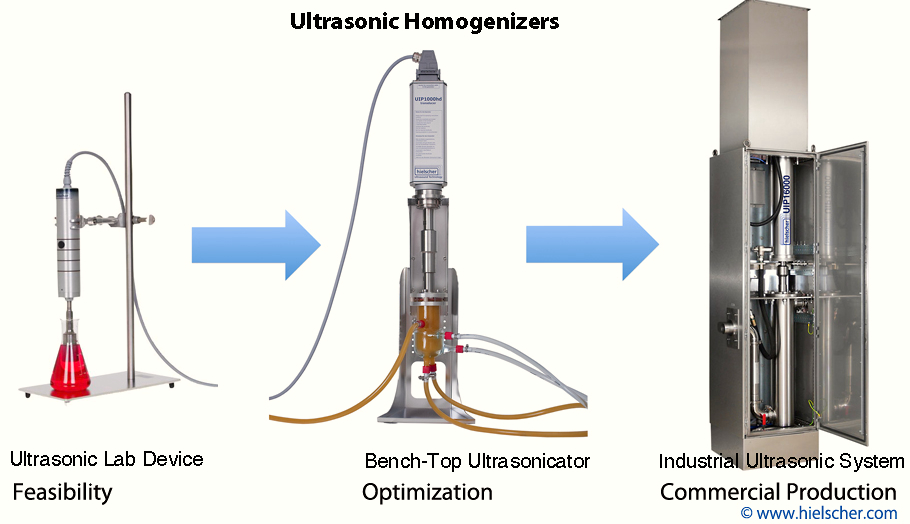
Spoločnosť Hielscher Ultrasonics vyrába vysokovýkonné ultrazvukové homogenizátory od laboratórium do priemyselná veľkosť.