Heractivering van gebruikte katalysator door middel van ultrasone behandeling
Het hergebruiken van gebruikte katalysatoren is een belangrijk onderwerp geworden binnen duurzame chemische verwerking, raffinaderijactiviteiten, de petrochemie, milieukatalysatie en strategieën voor de circulaire economie. Katalysatoren zijn essentieel voor efficiënte reacties, maar tijdens industrieel gebruik verliezen ze geleidelijk hun activiteit als gevolg van cokesafzetting, metaalvergiftiging, vervuiling, verstopping van poriën, sintering, oppervlaktepassivering of de ophoping van reactiebijproducten. Het vervangen van gebruikte katalysatoren is kostbaar en grondstofintensief, terwijl de verwijdering ervan een belasting voor het milieu kan vormen. Ultrasone regeneratie van gebruikte katalysatoren is een eenvoudige maar zeer efficiënte techniek voor het reactiveren van katalysatoren die tijdens het gebruik zijn gepassiveerd, vergiftigd of vervuild.
Heractivering van gebruikte katalysator door middel van ultrasone behandeling
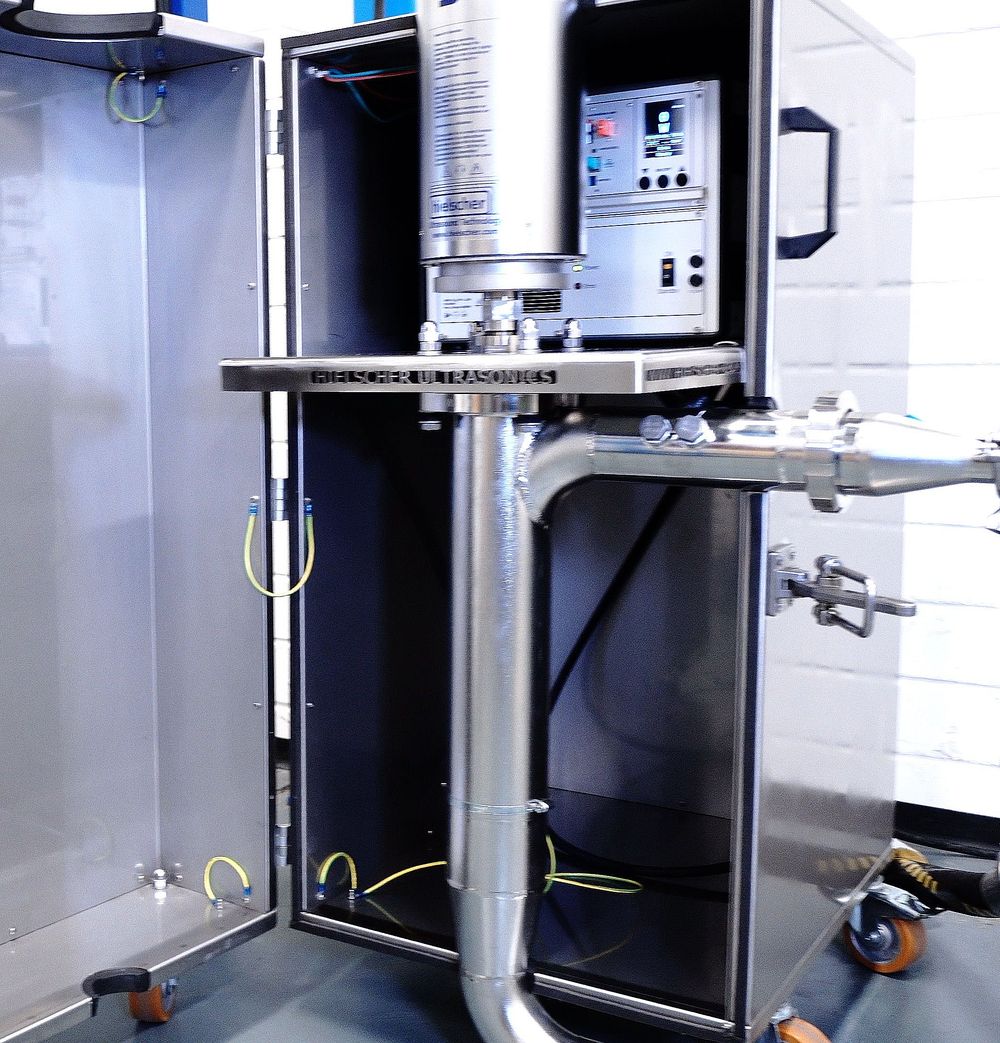 Sonicatie, ook wel ultrasone behandeling genoemd, biedt een wetenschappelijk relevante en technisch aantrekkelijke methode voor het regenereren en reactiveren van uitgewerkte katalysatoren. Door krachtige ultrasone golven toe te passen op katalysatorsuspensies, ontstaat er intense akoestische cavitatie in het vloeibare medium. Het instorten van cavitatiebellen leidt tot plaatselijke microstralen, schokgolven, afschuifkrachten en zeer turbulente micromenging. Deze effecten kunnen katalysatoroppervlakken reinigen, afzettingen losmaken, de toegang van reagentia tot verstopte poriën verbeteren en chemische uitloog- of oxidatieve regeneratieprocessen ondersteunen.
Uit recent onderzoek naar gebruikte katalysatoren voor vloeibare katalytische kraken is gebleken dat regeneratie met behulp van ultrasone trillingen de verwijdering van schadelijke metalen kan verbeteren en tegelijkertijd bijdraagt aan het behoud van het zeolietraamwerk en de microstructuur van de katalysatordeeltjes. Studies hebben ook melding gemaakt van een door ultrasone trillingen versterkte terugwinning van metalen zoals nikkel uit gebruikte katalysatoren, waarbij ultrasone behandeling de extractie versnelt door de fysische en chemische effecten van akoestische cavitatie.
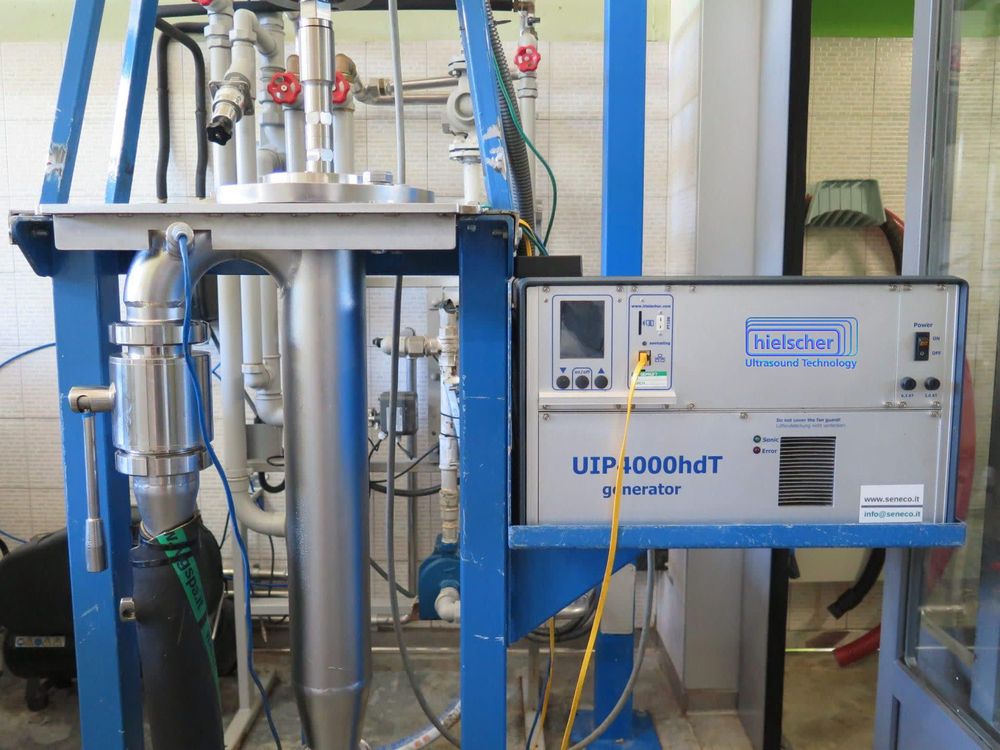
Inline-sonicator UIP4000hdT voor de industriële hergebruik van gebruikte katalysatoren
Waarom ultrasone behandeling effectief is voor het reactiveren van gebruikte katalysatoren
Het wetenschappelijke belang van ultrasone behandeling ligt in het vermogen om heterogene vast-vloeistofprocessen te intensiveren. De regeneratie van katalysatoren wordt vaak beperkt door een slechte massaoverdracht, verstopte poriën, gepassiveerde oppervlakken en een trage diffusie van reinigings- of uitloogmiddelen in de katalysatorstructuur. Ultrasone behandeling pakt deze beperkingen aan via mechanische en fysisch-chemische mechanismen.
De belangrijkste voordelen van ultrasone behandeling zijn onder meer:
Het nut van ultrasone trillingen beperkt zich niet tot fysieke reiniging. In de sonochemie kan cavitatie extreme lokale omstandigheden en reactieve omgevingen creëren, die oxidatie, oppervlaktemodificatie of chemische extractieprocessen kunnen bevorderen. Daardoor kan ultrasone energie het actieve oppervlak van katalysatoren vergroten, vervuiling van in vaste stof gedispergeerde katalysatoren verminderen en bijdragen aan de reiniging tijdens recyclingprocessen van katalysatoren.
Toepassingen in de industrie: van het reinigen van katalysatoren tot functionele reactivering
De reactivering van gebruikte katalysatoren is meer dan alleen een onderhoudswerkzaamheid. Het is een wetenschappelijk belangrijke methode om de prestaties van de katalysator gedurende zijn levenscyclus te verbeteren. Een geregenereerde katalysator moet er niet alleen schoon uitzien; hij moet ook zijn katalytische functie in aanzienlijke mate terugkrijgen. Dit vereist het herstel van toegankelijke actieve plaatsen, de zuurgraad of basischheid van het oppervlak, de porositeit, de dispersie en de reactieprestaties.
Ultrasone behandeling is van belang omdat deze op verschillende cruciale niveaus van de katalysatorregeneratie inwerkt:
Oppervlak: Het verwijdert passiverende lagen en legt actieve plaatsen bloot.
Poriën: Het bevordert het weer openen van verstopte mesoporiën en microporiën.
Deeltjes: Het breekt agglomeraten af en verbetert de homogeniteit van de suspensie.
Procedure: Het versterkt het contact tussen vloeistof en vaste stof en verbetert de efficiëntie van chemische regeneratiemedia.
Duurzaamheid: Het draagt bij aan hergebruik, metaalterugwinning en afvalbeperking.
 Uit een recent onderzoek naar regeneratie van gebruikte FCC-katalysatoren (Fluid Catalytic Cracking) door middel van ultrasone trillingen en oxidatie bleek dat geavanceerde oxidatieprocessen met behulp van ultrasone trillingen de zuurgraad van de katalysator verhoogden en het mogelijk maakten de geregenereerde katalysator te gebruiken bij de synthese van glycerolmonostearaat. (zie Anggoro et al., 2026)
Een ander onderzoek toonde aan dat onderdompeling in verdund zwavelzuur en daaropvolgende ultrasoon-ondersteunde uitloging in een mengsel van zwavelzuur en oxaalzuur de verwijdering van schadelijke metalen uit gebruikte FCC-katalysator aanzienlijk verbetert, zonder het Y-raamwerk van de zeoliet en de microstructuur van de deeltjes van de gebruikte katalysator te vernietigen. In vergelijking met conventionele uitloging heeft ultrasone uitloging slechts een kwart van de tijd nodig om vrijwel hetzelfde effect op de verwijdering van schadelijke metalen te bereiken en biedt deze methode aanzienlijke voordelen wat betreft het behoud van de integriteit van de deeltjes. (zie Wang et al., 2021).
Ultrasoonbehandeling bij de recycling van katalysatoren en de terugwinning van metalen
Gebruikte katalysatoren bevatten vaak waardevolle metalen zoals nikkel, vanadium, molybdeen, kobalt, metalen uit de platinagroep of zeldzame metalen, afhankelijk van het type katalysator en de industriële toepassing. Ultrasone behandeling kan zowel de reactivering van katalysatoren als de terugwinning van grondstoffen ondersteunen. Bij ultrasoon-ondersteunde uitloging verbetert cavitatie de penetratie van de uitlogingsoplossing, verwijdert het grenslagen rond de deeltjes en legt het nieuwe oppervlakken bloot voor de reactie.
Dit maakt echografie bijzonder interessant voor:
- Gebruikte katalysatoren uit raffinaderijen
- FCC-katalysatoren
- Katalysatoren voor hydrobehandeling en hydrodesulfurering
- Fischer-Tropsch-katalysatoren
- Gedragen metaalkatalysatoren
- Milieukatalysatoren
- Actieve kool en adsorbens-katalysatorsystemen
- Met metaal verontreinigde of aangetaste heterogene katalysatoren

Sonicator UP400ST met flowcelopstelling
Technische voordelen van Hielscher-sonicatoren voor de recycling van gebruikte katalysatoren
De krachtige ultrasone apparaten van Hielscher zijn bij uitstek geschikt voor het recyclen en reactiveren van gebruikte katalysatoren, omdat ze gecontroleerde, reproduceerbare en schaalbare ultrasone energie aan vloeistof-vastestof-suspensies toedienen. Voor de regeneratie van katalysatoren is procesbetrouwbaarheid essentieel: amplitude, ingangsvermogen, verblijftijd, stroomsnelheid, temperatuur, druk en reactorgeometrie moeten instelbaar en reproduceerbaar zijn, van laboratoriumproeven tot industriële doorvoer.
Hielscher biedt ultrasone systemen aan, variërend van compacte laboratoriumapparaten tot industriële installaties, waaronder ultrasone apparaten met sonde en doorstroom-ultrasone reactoren voor continue verwerking. Het assortiment ultrasone apparaten van Hielscher varieert van kleine laboratoriumapparaten tot industriële verwerkers, zoals apparaten van 500 W, 1.000 W, 2.000 W, 4.000 W, 6.000 W en 16.000 W, waardoor opschaling mogelijk is van haalbaarheidstests tot katalysatorbehandeling op productieniveau.
Wat betreft de recycling van gebruikte katalysatoren zijn de technische voordelen onder meer:
- Sonicatie met een sonde op hoge intensiteit voor effectieve cavitatie in schurende katalysatorslurries
- Opties voor doorstroomreactoren voor continue regeneratie-, uitloog-, was- of dispersieprocessen
- Nauwkeurige amplituderegeling voor reproduceerbare procesomstandigheden
- Schaalbare apparatuurarchitectuur, van laboratoriumonderzoek tot industriële katalysatorrecycling
- Robuust industrieel ontwerp voor veeleisende omgevingen in de chemische verwerking
- Compatibiliteit met sonochemische processen zoals zuuruitloging, oxidatieve reiniging, dispersie en oppervlakteactivering
Deze eigenschappen maken de sonicatoren van Hielscher tot een praktisch technologieplatform voor bedrijven en onderzoeksinstellingen die geavanceerde protocollen voor de regeneratie van katalysatoren ontwikkelen, of het nu gaat om het herstellen van de katalytische activiteit, het terugwinnen van waardevolle metalen, het verminderen van het afvalvolume of het verbeteren van de duurzaamheid van de katalytische productie.

Ultrasone homogenisator UIP2000hdT voor de regeneratie van katalysatoren in een doorstroomproces
Een duurzame technologie voor de circulaire katalysatoreconomie
Naarmate industrieën steeds meer overstappen op schonere productie en efficiënter gebruik van hulpbronnen, wordt het beheer van gebruikte katalysatoren een strategische prioriteit. Ultrasone behandeling ondersteunt deze overgang door de reactivering van katalysatoren sneller, efficiënter en technisch beter beheersbaar te maken. In plaats van gebruikte katalysatoren als afval te behandelen, helpt ultrasone verwerking om ze om te zetten in herbruikbare materialen of waardevolle bronnen van secundaire grondstoffen.
Het industriële belang van ultrasone behandeling ligt in het vermogen om mechanische activering, oppervlaktereiniging, dispersie en intensivering van de massaoverdracht in één proces te combineren. Voor industriële gebruikers is het voordeel eveneens duidelijk: beter hergebruik van katalysatoren, een lager grondstoffenverbruik, minder afvalproductie en mogelijk lagere exploitatiekosten.
Profiteer van de regeneratie van katalysatoren met behulp van ultrasone golven
 Het reactiveren van gebruikte katalysatoren door middel van ultrasone behandeling is een geavanceerde methode voor katalysatorrecycling met een groot wetenschappelijk en industrieel potentieel. Door akoestische cavitatie kunnen afzettingen worden verwijderd, verstopte poriën worden vrijgemaakt, de massaoverdracht worden verbeterd en chemische regeneratiestappen worden geïntensiveerd. In combinatie met geschikte uitloog-, oxidatie-, was- of thermische strategieën kan ultrasone behandeling bijdragen aan het herstel van de katalysatoractiviteit en de terugwinning van waardevolle metalen.
Met schaalbare, krachtige ultrasone apparaten en industriële ultrasone stromingsreactoren biedt Hielscher de technische basis voor de ontwikkeling van betrouwbare, reproduceerbare en efficiënte regeneratieprocessen voor gebruikte katalysatoren. Nu het recyclen van katalysatoren steeds belangrijker wordt voor duurzame chemie en circulaire industriële productie, ontpopt ultrasone behandeling zich als een krachtig hulpmiddel om de levensduur van katalysatoren te verlengen en de efficiëntie van hulpbronnen te verbeteren.
De onderstaande tabel geeft een indicatie van de verwerkingscapaciteit van onze ultrasone machines:
| Batchvolume | Debiet | Aanbevolen apparaten |
|---|---|---|
| 1 tot 500 ml | 10 tot 200 ml/min | UP100H |
| 10 tot 2000 ml | 20 tot 400 ml/min | UP200Ht, UP400St |
| 0.1 tot 20L | 0.2 tot 4L/min | UIP2000hdT |
| 10 tot 100 liter | 2 tot 10 l/min | UIP4000hdT |
| 15 tot 150 liter | 3 tot 15 l/min | UIP6000hdT |
| n.v.t. | 10 tot 100 l/min | UIP16000hdT |
| n.v.t. | groter | cluster van UIP16000hdT |
Ontwerp, productie en advies – Kwaliteit Made in Germany
Hielscher ultrasone machines staan bekend om hun hoge kwaliteit en ontwerpnormen. Robuustheid en eenvoudige bediening zorgen voor een soepele integratie van onze ultrasoonapparatuur in industriële faciliteiten. Ruwe omstandigheden en veeleisende omgevingen worden gemakkelijk door Hielscher ultrasoontoestellen aangepakt.
Hielscher Ultrasonics is een ISO-gecertificeerd bedrijf en legt speciale nadruk op hoogwaardige ultrasone apparaten met state-of-the-art technologie en gebruiksvriendelijkheid. Uiteraard zijn de Hielscher ultrasoonapparaten CE-conform en voldoen ze aan de eisen van UL, CSA en RoHs.

Hielscher Ultrasonics produceert hoogwaardige ultrasone homogenisatoren voor mengtoepassingen, dispergeren, emulgeren en extractie op laboratorium-, pilot- en industriële schaal.
veelgestelde vragen
Wat is een katalysator?
Een katalysator is een stof die de snelheid van een chemische reactie verhoogt door de activeringsenergie te verlagen, zonder dat deze stoichiometrisch in de reactie wordt verbruikt. Het biedt een alternatieve reactieroute en kan vaak worden hergebruikt.
Wat is een gebruikte katalysator?
Een uitgewerkte katalysator is een katalysator die na gebruik zijn katalytische activiteit, selectiviteit of stabiliteit geheel of gedeeltelijk heeft verloren. Deactivering kan het gevolg zijn van vervuiling, cokesafzetting, vergiftiging, sintering, uitloging of structurele aantasting.
Wat is een gebruikte FCC-katalysator?
Een uitgewerkte FCC-katalysator is een gedeactiveerde katalysator afkomstig uit het proces van vloeibare katalytische kraken in de aardolieraffinage. FCC-katalysatoren zijn doorgaans op zeoliet gebaseerde materialen die worden gebruikt om zware koolwaterstoffen te kraken tot lichtere producten zoals benzine, olefinen en LPG. Ze raken uitgewerkt door cokesvorming, metaalverontreiniging, hydrothermale afbraak en verlies van zuurgraad of oppervlakte.
Hoe worden katalysatoren verbruikt?
Katalysatoren worden niet in de ideale stoichiometrische zin verbruikt, maar kunnen tijdens het gebruik wel worden gedeactiveerd of fysiek verloren gaan. Veelvoorkomende mechanismen zijn onder meer:
- Vergiftiging: onomkeerbare adsorptie van onzuiverheden op actieve plaatsen.
- Aangroei/cokevorming: De afzetting van koolstofhoudend materiaal verstopt de poriën en de actieve plaatsen.
- Sinteren: Hoge temperaturen zorgen ervoor dat actieve deeltjes gaan agglomereren, waardoor het oppervlak kleiner wordt.
- Uitloging: de actieve bestanddelen lossen op in het reactiemedium.
- Afval: Mechanische slijtage zorgt ervoor dat katalysatordeeltjes worden afgebroken, met name in wervelbedden.
- Transformatiefase: de structuur van de katalysator verandert in een minder actieve vorm.
Wat zijn de vier soorten katalysatoren?
De vier meest voorkomende soorten zijn:
Literatuur / Referenties
- Darbandi, M., Moghaddasfar, A., Eynollahi, M. et al. (2025): Sustainable approach with enhanced removal performance of organic pollutant for wastewater treatment by ultrasonically regenerated mesoporous nickel oxide nanoparticles. Int. J. Environ. Sci. Technol. 22, 3495–3504 (2025).
- Anggoro D.D., Buchori L., Rinaldi N., Silviana S., Le Monde B.U., Putra M.F., Zainol, M.M. (2026): Hybrid Ultrasound and Advanced Oxidation Process Regeneration of Spent FCC Catalysts: Optimization and Their Catalytic Performance. Journal of Engineering and Technological Sciences, 58(2), 227–242.
- Xin Pu, Jin-ning Luan, Li Shi (2012): Reuse of Spent FCC Catalyst for Removing Trace Olefins from Aromatics. Bulletin of Korean Chemical Society 2012, Vol. 33, No. 8.
- hoog rendement
- ultramoderne technologie
- betrouwbaarheid & robuustheid
- instelbare, nauwkeurige procesregeling
- batch & inline
- voor elk volume
- intelligente software
- slimme functies (bijv. programmeerbaar, dataprotocollering, afstandsbediening)
- eenvoudig en veilig te bedienen
- gering onderhoud
- CIP (clean-in-place)
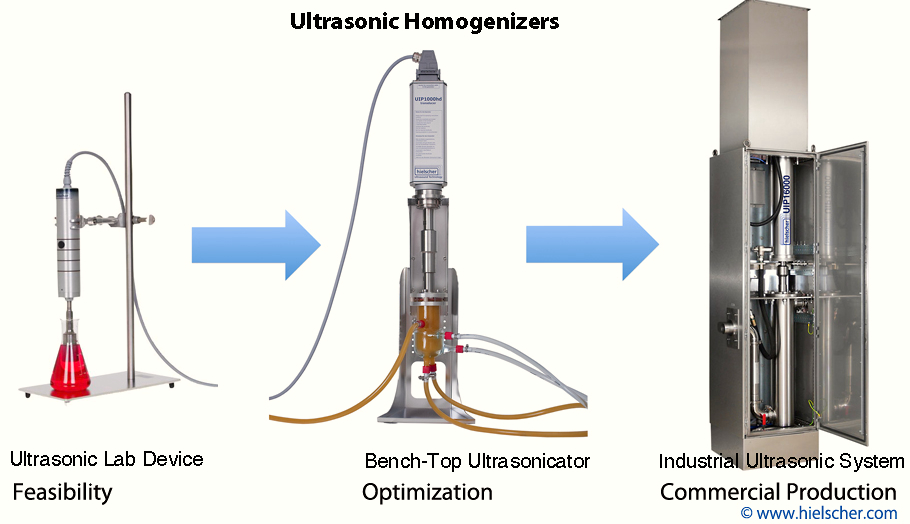
Hielscher Ultrasonics produceert hoogwaardige ultrasone homogenisatoren van lab naar industrieel formaat.