პალადიუმის ნანონაწილაკების სონოქიმიური რედუქცია
პალადიუმი (Pd) კარგად არის ცნობილი თავისი კატალიზური თვისებებით და ასევე ფართოდ გამოიყენება მასალების კვლევაში, ელექტრონიკის წარმოებაში, მედიცინაში, წყალბადის გაწმენდაში და სხვადასხვა ქიმიურ პროგრამებში. სონოქიმიური მარშრუტის გამოყენებით, პალადიუმის ნაწილაკების ზომა და მორფოლოგია შეიძლება კონტროლდებოდეს PVP/PD თანაფარდობის რეგულირებით. ეს საშუალებას აძლევს ძალიან წვრილი, მონოდისპერსიული ნანონაწილაკების ან უფრო დიდი პალადიუმის აგრეგატების ულტრაბგერითი სინთეზს, რაც საშუალებას აძლევს ნაწილაკების ზომებს მორგებული იყოს ოპტიმალური კატალიზური მუშაობისთვის.
პალადიუმის ნანონაწილაკების ულტრაბგერითი წარმოება
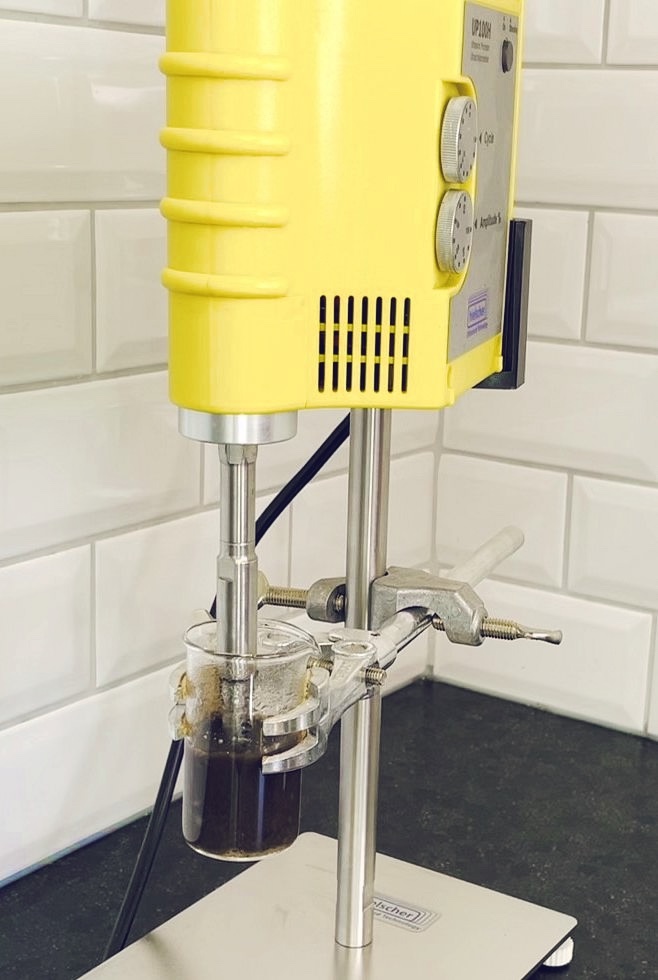 Ultrasonic palladium nanoparticle reduction offers a fast, reagent-efficient route to Pd(0) nanoparticles by using acoustic cavitation to generate localized high-energy conditions and reducing radicals in solution, enabling palladium ions to be reduced without conventional high-temperature processing.
A key advantage is process control: sonication time and stabilizer concentration, such as the PVP/Pd ratio, can influence whether the product forms as well-dispersed, rounded nanoparticles around 5 nm or as larger aggregates around 20 nm, which is industrially relevant because palladium performance in catalysis depends strongly on particle size, morphology, dispersion, and surface area. Since palladium nanoparticles are widely valuable as heterogeneous catalysts, electrocatalysts, and functional materials, ultrasonic reduction is attractive for producing finely dispersed Pd catalysts under comparatively mild liquid-phase conditions, with potential benefits for chemical synthesis, environmental catalysis, fuel-cell technologies, and other processes where high catalytic activity and efficient noble-metal utilization are economically important.

სამრეწველო ნანონაწილაკების დამუშავება სონიკატორ UIP2000hdT-ით
ნიმუშის მომზადების პროცედურა
ნიმუშები მომზადდა შემდეგნაირად:
ნიმუშებისთვის, 30მლ EG და 5·10 ნარევები-6PVP-ის მოლი მომზადდა მაგნიტური მორევით 15 წუთის განმავლობაში. სხვადასხვა ნიმუშებისთვის დაემატა სხვადასხვა რაოდენობის Pd (NO₃) ₂ ხსნარი, 1.5 მლ და 2 მლ. ნიმუშის ნარევები მომზადდა 2·10-3mol Pd(NO₃)₂ ნიმუშში (ა) და 2.66·10-3mol Pd(NO₃)₂ ნიმუშში (ბ). ორივე ნარევი გაჟღენთილი იყო 20 მლ ფლაკონში ზონდის ტიპის ულტრაბგერითი აპარატის გამოყენებით. ნიმუშები აღებული იქნა 30, 60, 90, 120, 150 და 180 წთ-ის გაჟონვის შემდეგ.
ექსპერიმენტული შედეგების ანალიზი აჩვენებს, რომ:
- 1. Pd(II)-ის Pd(0)-ად სონოქიმიური რედუქცია დამოკიდებულია სონიკაციის დროზე.
- 2. მაღალი PVP/Pd(II) მოლური თანაფარდობა იწვევს პალადიუმის მონოდისპერსული ნაწილაკების წარმოქმნას, რომლებსაც აქვთ მომრგვალებული ფორმა და საშუალო დიამეტრი დაახლოებით 5 ნმ.
- 3. თუმცა, დაბალი PVP/Pd(II) მოლური თანაფარდობა გულისხმობს პალადიუმის ნანონაწილაკების აგრეგატების მიღებას დიდი ზომის განაწილებით, რომელიც ორიენტირებულია 20 ნმ-ზე.
პალადიუმის (II) იონების შემცირების სონოქიმიური გზა Pd(II) პალადიუმის ატომებს Pd(0) შეიძლება ჩაითვალოს შემდეგი:
- (1) წყლის პიროლიზი: H₂O → •OH+•H
- (2) რადიკალური ფორმირება: RH (შემცირების აგენტი) + •OH (•H) → •R + H₂O (H₂)
- (3) იონების რედუქცია: Pd(II) + აღმდგენი რადიკალები (•H, •R) → Pd(0) + R•CHO + H+
- (4) ნაწილაკების წარმოქმნა: ნPd(0) → Pdn
შედეგი: PVP/Pd(II) თანაფარდობიდან გამომდინარე, დისპერსიული ან აგრეგირებული Pdნ მიღებულ იქნა.
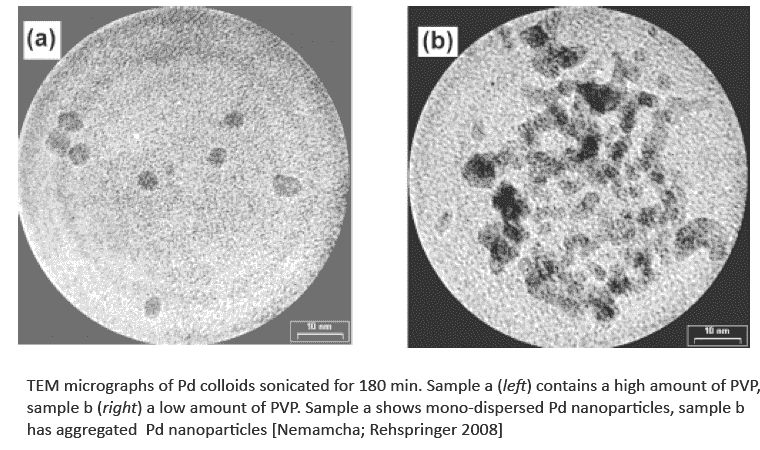
პალადიუმის სონოქიმიური შემცირება: ნიმუში A (მარცხნივ) შეიცავს PVP-ის დიდ რაოდენობას, ნიმუში b (მარჯვნივ) PVP-ის დაბალი რაოდენობა. Sonication დრო UP100H: 180 წთ. ნიმუში a გვიჩვენებს მონო დისპერსიულ Pd ნანო ნაწილაკებს, ნიმუში b აგრეგირებული Pd ნანო ნაწილაკებს.
სურათები და შესწავლა: ©Nemamcha and Rehspringer, 2008
ანალიზი და შედეგები
ულტრაიისფერი ხილული შთანთქმის ანალიზები ადასტურებს კავშირს პალადიუმის (II) იონების სონოქიმიურ შემცირებას პალადიუმის (0) ატომებთან და ულტრაბგერითი ველში შეკავების დროს შორის. პალადიუმის (II) იონების დაქვეითება პალადიუმის (0) ატომებამდე პროგრესირებს და შეიძლება მთლიანად მიღწეული იყოს გაჟონვის დროის გაზრდით. გადამცემი ელექტრონული მიკროსკოპის (TEM) მიკროგრაფები აჩვენებს, რომ:
- როდესაც მაღალი რაოდენობის PVP ემატება, პალადიუმის იონების სონოქიმიური შემცირება იწვევს მონოდისპერსული პალადიუმის ნაწილაკების წარმოქმნას სფერული ფორმით და საშუალო დიამეტრით დაახლოებით 5 ნანომეტრი.
- ბოლო რაოდენობის PVP-ს გამოყენება მოიცავს პალადიუმის ნანოჩასტაკების აღების მიღებას. დინამიური სინათლის გაფანტვის (DLS) გაზომვები აჩვენებს, რომ პალადიუმის ნანოჩასტაკების აგრეგატებს აქვს დიდი ზომის განაწილება, რომელიც მიზნად ისახავს 20 ნმ.

ლაბორატორიული სონიკატორი UP100H გამოიყენეს პალადიუმის ნანოჩასტაკების მოსამზადებლად.

პალადიუმის (Pd) ნანო ნაწილაკები შეიძლება მომზადდეს გახმოვანებით
დიზაინი, წარმოება და კონსულტაცია – ხარისხი დამზადებულია გერმანიაში
Hielscher ულტრაბგერითები ცნობილია მათი უმაღლესი ხარისხისა და დიზაინის სტანდარტებით. გამძლეობა და მარტივი მუშაობა საშუალებას იძლევა ჩვენი ულტრაბგერითი აპარატების გლუვი ინტეგრაცია სამრეწველო ობიექტებში. უხეში პირობები და მომთხოვნი გარემო ადვილად უმკლავდება Hielscher ულტრაბგერითებს.
Hielscher Ultrasonics არის ISO სერთიფიცირებული კომპანია და განსაკუთრებული აქცენტი კეთდება მაღალი ხარისხის ულტრაბგერაზე, რომელიც აღჭურვილია უახლესი ტექნოლოგიით და მომხმარებლის კეთილგანწყობით. რა თქმა უნდა, Hielscher ულტრაბგერითები შეესაბამება CE და აკმაყოფილებს UL, CSA და RoHs მოთხოვნებს.
ლიტერატურა/ცნობარი
- Nemamcha, A.; Rehspringer, J. L. (2008): Morphology of dispersed and aggregated PVV-Pd nanoparticles prepared by ultrasonic irradiation of Pd(NO₃)₂ solution in ethylene glycol. Rev. Adv. Mater. Sci. 18;2008. 685-688.
- Prekob, Á., Muránszky, G., Kocserha, I. et al. (2020): Sonochemical Deposition of Palladium Nanoparticles Onto the Surface of N-Doped Carbon Nanotubes: A Simplified One-Step Catalyst Production Method. Catalysis Letters 150, 2020. 505–513.
- Haitao Zheng, Mphoma S. Matseke, Tshimangadzo S. Munonde (2019): The unique Pd@Pt/C core-shell nanoparticles as methanol-tolerant catalysts using sonochemical synthesis. Ultrasonics Sonochemistry, Volume 57, 2019. 166-171.
ფაქტები, რომელთა ცოდნაც ღირს
რა არის პალადიუმი?
პალადიუმი არის იშვიათი, ვერცხლისფერი თეთრი ძვირფასი ლითონი ქიმიური სიმბოლოთი Pd და ატომური ნომერი 46. იგი მიეკუთვნება პლატინის ჯგუფის ლითონებს და ფასდება, რადგან ქიმიურად სტაბილურია, ატარებს ელექტროენერგიას, შთანთქავს წყალბადს და მოქმედებს როგორც შესანიშნავი კატალიზატორი. წვრილად გაყოფილი პალადიუმი განსაკუთრებით ეფექტურია ჰიდროგენაციისა და დეჰიდროგენაციის რეაქციებისთვის, ხოლო გაცხელებულ პალადიუმს შეუძლია წყალბადის გავრცელების საშუალება მისცეს მასში, რაც მას სასარგებლოს ხდის წყალბადის გამოყოფისა და გაწმენდისთვის.
რისთვის გამოიყენება პალადიუმის ნანონაწილაკები?
პალადიუმის ნანონაწილაკები ძირითადად გამოიყენება როგორც მაღალი ზედაპირის კატალიზატორები. იმის გამო, რომ ნანონაწილაკები ავლენენ ბევრად უფრო აქტიურ ზედაპირს, ვიდრე ნაყარი პალადიუმი, მათ შეუძლიათ გააუმჯობესონ კატალიზატორის ეფექტურობა და შეამცირონ საჭირო ძვირადღირებული კეთილშობილური ლითონის რაოდენობა. ტიპიური აპლიკაციები მოიცავს ქიმიურ სინთეზს, ჰიდროგენიზაციის რეაქციებს, ნახშირბად-ნახშირბადის შეერთების რეაქციებს, ელექტროკატალიზს, საწვავის უჯრედების კვლევას, წყალბადის ზონდირებას და შენახვას, გარემოსდაცვით კატალიზს და ბიოსამედიცინო კვლევის ზოგიერთ სფეროს, როგორიცაა ანტიმიკრობული, ფოტოთერმული და კიბოს საწინააღმდეგო სისტემები. პალადიუმის კატალიზური ქცევა ძლიერ დამოკიდებულია ნაწილაკების ზომაზე, მორფოლოგიასა და დისპერსიაზე.
პალადიუმის ნანონაწილაკები ასევე გამოიყენება სხვა ნაწილაკების დოპისთვის, კატალიზური ფუნქციონალურობის მისაღწევად. დაწვრილებით წაიკითხეთ ულტრაბგერითი გზის შესახებ Pd/N-BCNT-ის სინთეზისათვის როგორც ფიშერ-ტროპშის კატალიზატორის!
აპალადიუმი მავნეა?
Elemental metallic palladium is generally considered to have low toxicity and no known biological role, but palladium compounds, salts, dusts, and nanoscale forms should be handled carefully. Occupational or laboratory exposure can cause irritation or sensitization depending on the compound and route of exposure, and palladium chloride solutions, for example, may irritate mucous membranes. For industrial handling, the practical answer is: bulk metallic palladium is relatively low-risk, but palladium powders, soluble palladium salts, and palladium nanoparticles should be treated as potentially hazardous materials, with dust control, ventilation, gloves, eye protection, and proper waste handling.