سونیکیشن باعث بهبود هیدراتاسیون و مقاومت سیمان میشود.
Power ultrasound, also known as sonication, is gaining attention as a practical intensification technology for cement and mortar production. Recent research shows that ultrasonic treatment can improve particle dispersion, activate supplementary cementitious materials such as granulated blast furnace slag (GBFS), accelerate hydration, refine pore structure and significantly increase early-age strength.
Higher-Performance Slag-Blended Cement and Mortar With Power Ultrasound
In cement manufacturing and mortar production, one of the major technical challenges is the efficient use of supplementary cementitious materials. Granulated blast furnace slag, or GBFS, is widely used to reduce clinker content and improve sustainability. However, coarse or agglomerated slag particles often react slowly, limiting early strength development. Sonication offers a promising solution: it uses high-intensity acoustic cavitation to disperse agglomerates, fragment particles and increase the number of reactive nucleation sites inside the cement matrix.

سونیکاتور صنعتی UIP16000hdT برای پردازش سیمان خمیری با بازده بالا
چرا سونیکاسیون برای هیدراتاسیون سیمان مهم است
مزیت سونیکاسیون در توانایی آن برای عمل مستقیم بر سیستم ذرهای قبل و در طول هیدراتاسیون اولیه نهفته است. در یک سوسپانسیون سیمانی، کاویتاسیون اولتراسونیک نیروهای برشی موضعی، میکروجتها و نوسانات فشار ایجاد میکند. این اثرات به شکستن خوشهها، پراکندگی ذرات ریز و بروز سطوح معدنی تازه کمک میکند.
برای تولیدکنندگان سیمان و ملات، این موضوع اهمیت دارد زیرا هیدراتاسیون به شدت بر سطح مبتنی است. پراکندگی بهتر و ذرات واکنشپذیر کوچکتر میتواند تماس بین آب، فازهای کلینکر و ذرات سرباره را افزایش دهد. این میتواند منجر به آزادسازی سریعتر حرارت، سخت شدن اولیه بهتر و ساختار میکروی متراکمتر شود.
In slag-blended systems, sonication is especially relevant because GBFS often requires activation. Ultrasonic particle fragmentation – so-called sonofragmentation – of GBFS particles reduces particle size, particularly the 125–250 μm fraction.
Key Advantages of Sonication in Cement and Mortar Production
Power ultrasound supports industrial cement and mortar production in several ways:
- Improved particle dispersion: Sonication helps disperse cement, slag and fine mineral particles more uniformly in the paste or mortar mix.
- Reduced agglomeration: Ultrasonic treatment can break down particle clusters and may inhibit re-agglomeration during mixing.
- پالایش دانه: Coarser slag particles can be fragmented into finer fractions, increasing available surface area.
- More nucleation sites: Fragmented GBFS particles can act as nucleation centers for hydration products in the cement matrix.
- Accelerated hydration: Better dispersion and exposed surfaces can increase cumulative heat release and early hardening.
- Higher early strength: Sonicated slag-blended cement pastes can show substantial gains in compressive and flexural strength after only two days.
- Enhanced microstructure: Sonication can increase nanoporosity indicators and modify the pore structure, especially in the 2–10 nm pore range.

پراکندکننده اولتراسونیک UIP2000hdT for industrial production of cement pastes

تاثیر قدرت فراصوت (PUS) بر سرعت پالس اولتراسونیک خمیرهای سیمان آبرسان
Faster Setting and Early Strength in Precast Concrete with Power Ultrasound
The study “تأثیر قدرت اولتراسوند بر سیالیت و گیرش خمیرهای سیمان پرتلند” by Ch. Rößler investigates Portland cement pastes based on CEM I 42.5 R, a w/c ratio of 0.37 and 0.1% polyacrylate superplasticizer. The study usedsa Hielscher UIP1000hd sonicator in flow-through setup to evaluate whether power ultrasound could accelerate hydration, improve fluidity, shorten setting and increase early strength.
The results show that power ultrasound (PUS) accelerates the main hydration period. The temperature curve demonstrate an earlier hydration peak, while the microstructure images after five hours showed larger C-S-H phases in the ultrasound-treated paste than in the reference.
Key advantages achieved:
- Higher fluidity: slump increased from 122 mm in the reference paste to 158 mm after PUS treatment.
- Faster setting: initial set was shortened from 5 h 15 min to 3 h 45 min, and final set from 6 h 45 min to 4 h 30 min.
- Accelerated rigidification: ultrasonic pulse velocity indicated approximately 2 hours faster hardening.
- Higher early strength: mortar prisms produced from PUS-treated cement paste showed increased compressive strength during the first 24 hours.
- Process-economy potential: the authors estimated that an energy input of approximately 10 kWh/m³ cement paste could accelerate setting and early strength by around two hours, with an indicated cost of ≤ 1 Euro/m³ concrete.
- Reduced admixture demand: because PUS increased fluidity, the authors concluded that superplasticizer dosage could potentially be reduced.
These results are especially relevant for precast concrete production, where faster setting and early strength can reduce formwork time, heating demand and production cycle times.
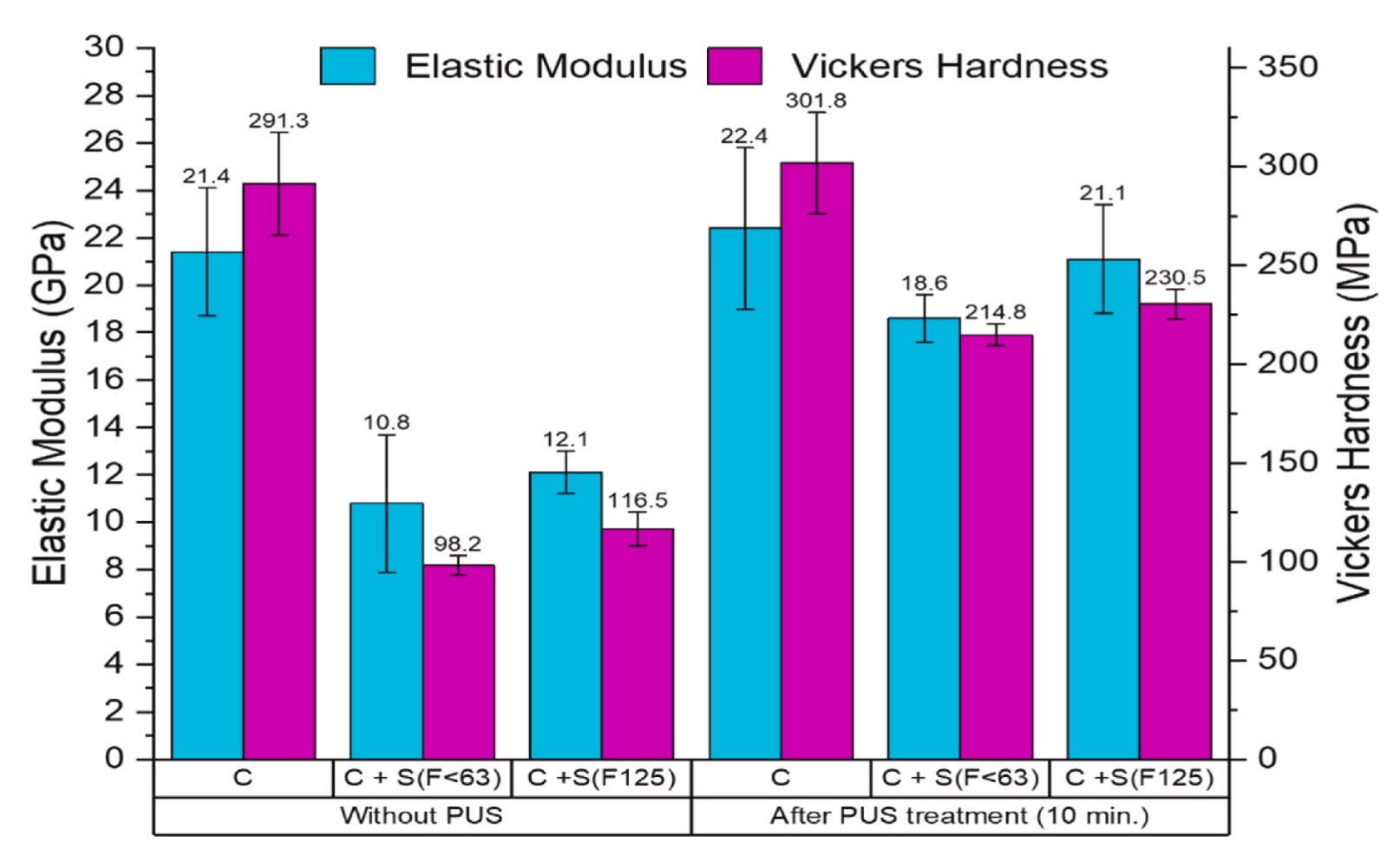
Vicker’s Hardness and Elastic Modulus of C + S pastes prepared conventionally and with the use of Power Ultrasound after 28 d.
Graphs and study: ©Lisowski et al. 2024.
Stronger Early Strength in GBFS-Blended Cement Paste
One of the most important findings for industrial cement and mortar applications is the improvement in early-age strength. According to Lisowski et al. (2024), pulsed ultrasound treatment of cement pastes containing 20% deposited GBFS produced considerably higher strength after two days. The reported increases reached up to 132% in compressive strength and 58% in flexural strength.
This is highly relevant for precast concrete, dry-mix mortar, repair mortars, tile adhesives and other cementitious products where early demolding, early handling strength or rapid construction progress is economically important.
The strength increase was correlated with increased cumulative heat of hardening, suggesting that sonication does not merely improve physical dispersion but also intensifies early hydration. In practical terms, this means that power ultrasound could help producers use slag more effectively without sacrificing early performance.
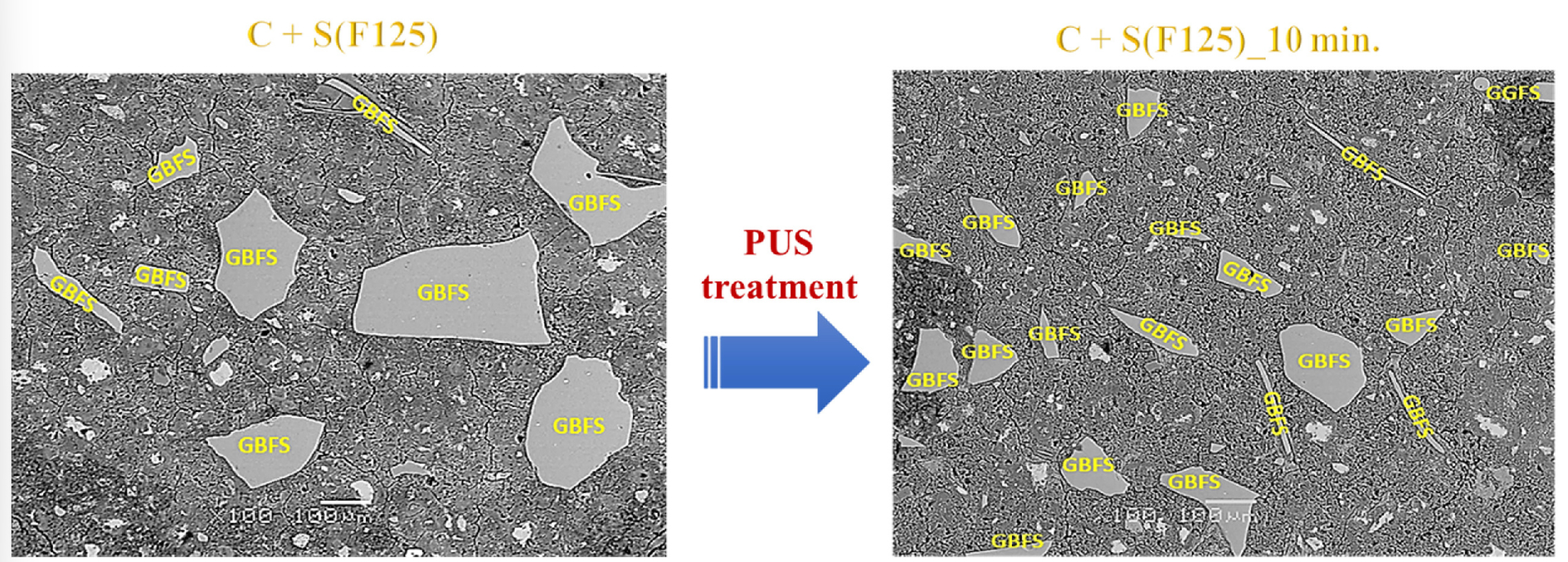
SEM images of Cement-GBFS paste specimen C + S comparing the effect without and with Power Ultrasound at 28d.
Images and study: ©Lisowski et al. 2024.
Sonofragmentation Makes Coarser Slag Fractions More Useful
 یک نتیجه بهویژه ارزشمند فعالسازی مؤثر بخشهای نسبتاً درشت GBFS است. این مطالعه نشان داد که بخش شل 125–250 میکرومتر بهترین مقاومت در سنین اولیه و 28 روزه را در صورت ترکیب با جداسازی ذرات شل رسوبشده و درمان با اولتراسوند قدرتی ارائه میدهد.
این امر از نظر صنعتی اهمیت دارد زیرا آسیاب کردن شل به اندازههای بسیار ریز انرژیبر است. اگر سونیکاسیون واکنشپذیری بخشهای درشتتر یا رسوبشده GBFS را بهبود بخشد، تولیدکنندگان میتوانند نیاز به آسیاب را کاهش دهند، کارآمدی مواد اولیه را بهبود بخشند و استفاده بهتری از جریانهای مواد ثانویه داشته باشند.
Learn how ultrasonic dispersion facilitates the production of nano-reinforced cement mortars!
Industrial Relevance: Power Ultrasound for Efficient Cement and Mortar Production
For industrial cement and mortar producers, sonication offers several strategic advantages. It can be integrated as a process-intensification step during slurry preparation, binder activation, admixture dispersion or high-performance mortar mixing. The technology is especially attractive for products that depend on fine particle distribution, fast hydration and optimized use of supplementary cementitious materials.
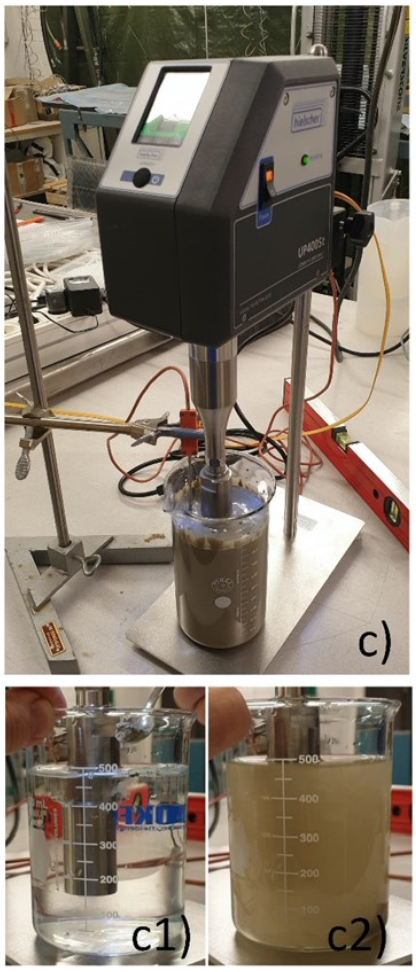
پروب نوع فراصوت UP400St برای پراکندگی دوغاب سیمان ریز ریز
(مطالعه و تصویر: ©دراگانوویچ و همکاران، 2020)
- Higher early strength without increasing clinker content
- Better activation of GBFS and other supplementary cementitious materials
- بهبود استفاده از ذرات درشت یا رسوبشده سرباره
- کاهش تجمع در سوسپانسیونهای سیمانی
- رفتار هیدراتاسیون و سختشدن یکنواختتر
- کاهش بالقوه شدت آسیاب برای جریانهای انتخابی سرباره
- بهبود عملکرد فرمولاسیونهای سیمان با کلینکر کم و سیمان کمکربن
این امر استفاده از سونیکاسیون را برای تولید سیمان پایدار، سیمان سربارهای، ملاتهای با عملکرد بالا، قطعات پیشساخته، مواد تعمیراتی و محصولات ساختمانی ویژه بسیار مرتبط میسازد.
سونیکاسیون به عنوان ابزاری برای فناوری سیمان کمکربن
The cement industry is under pressure to reduce CO₂ emissions, and lowering the clinker factor is one of the most direct routes. However, higher replacement levels with GBFS, fly ash, calcined clay or other supplementary cementitious materials can slow down early strength development. Power ultrasound may help overcome this bottleneck by improving dispersion, activating particles and accelerating early hydration.
Sonication can make slag-blended cement pastes more reactive and mechanically stronger, especially when the process is optimized for particle size fraction and treatment time. That combination is highly relevant for industrial-scale binder engineering.
Hielscher Sonicators for Enhanced Cement Hydration, Strength and Slag Reactivity
 سونیکاتورهای خطی Hielscher ابزار قدرتمندی برای بهبود هیدراتاسیون سیمان و مقاومت آن هستند، به ویژه در سیستمهای سیمانی مخلوط با سرباره.
For industrial cement deagglomeration and dispersion, Hielscher high-performance sonicators provide the intense cavitational shear required to break cement, slag and mineral filler agglomerates into finely dispersed particles, improving particle wetting, surface activation and homogeneity in cementitious slurries. Hielscher systems are available from bench-top and pilot scale to robust high-throughput production systems, including high-power inline sonicators for continuous processing of cement grout and mineral suspensions. This makes process development directly scalable from R&D تا توان عملیاتی کامل صنعتی. با حذف یا کاهش نیاز به رسانههای آسیاب، دئاگلومراسیون اولتراسوند فرآیند را ساده میکند، خطرات آلودگی را به حداقل میرساند و تلاش برای تمیزکاری را کاهش میدهد، در حالی که کیفیت پراکندگی قابل تکرار ارائه میدهد. برای تولیدکنندگان سیمان و ملات، سونیکاتورهای هایلشر بنابراین یک مسیر عملی برای سیستمهای چسباننده یکنواختتر، بهبود سینتیک هیدراسیون، استفاده بهتر از GBFS و سایر مواد سیمانی مکمل و فرمولاسیونهای کم-کلینکر با عملکرد بالاتر ارائه میدهند.
جدول زیر نشانهای از ظرفیت تقریبی پردازش سیستمهای اولتراسوند قدرتمند ما را ارائه میدهد:
| حجم دسته ای | نرخ جریان | دستگاه های توصیه شده |
|---|---|---|
| 50 میلیلیتر تا 20 لیتر | 0.1 تا 2 لیتر در دقیقه | UIP1000hdT |
| 0.1 تا 20 لیتر | 0.2 تا 4 لیتر در دقیقه | UIP2000hdT |
| 10 تا 100 لیتر | 2 تا 10 لیتر در دقیقه | UIP4000hdT |
| 15 تا 150 لیتر | 3 تا 15 لیتر در دقیقه | UIP6000hdT |
| ن.ا. | 10 تا 100 لیتر در دقیقه | UIP16000hdT |
| ن.ا. | بزرگتر | خوشه ای از UIP16000hdT |
طراحی، ساخت و مشاوره – کیفیت ساخت آلمان
مافوق صوت Hielscher به خوبی برای بالاترین کیفیت و استانداردهای طراحی خود را شناخته شده. استحکام و بهره برداری آسان اجازه می دهد تا ادغام صاف از ultrasonicators ما به امکانات صنعتی. شرایط خشن و محیط های خواستار به راحتی توسط مافوق صوت Hielscher رسیده.
Hielscher اولتراسونیک یک شرکت دارای گواهینامه ISO است و تاکید ویژه ای بر مافوق صوت با کارایی بالا با ویژگی های دولت از هنر فن آوری و کاربر پسند قرار داده است. البته، مافوق صوت Hielscher مطابق با CE و دیدار با الزامات UL، CSA و RoHs.

Hielscher مافوق صوت تولید کننده هموژنایزرهای مافوق صوت با کارایی بالا برای مخلوط کردن برنامه های کاربردی، پراکندگی، امولسیون و استخراج در آزمایشگاه، خلبان و مقیاس صنعتی.
پرسش و پاسخهای متداول
نوکلئاسیون C-S-H در بتن چیست؟
نوکلئاسیون C-S-H تشکیل اولیه هیدرات سیلیکات کلسیم روی سطوح ذرات در طی هیدراتاسیون سیمان است. C-S-H اصلیترین محصول هیدراتاسیون شکلدهنده به مقاومت در سیستمهای سیمان پرتلند است و نوکلئاسیون آن توسعه اولیه ریزساختار، گیرش و مقاومت را کنترل میکند.
کلینکر در سیمان چیست؟
Clinker is the sintered intermediate product produced by heating limestone, clay and other raw materials in a cement kiln to high temperature. It consists mainly of calcium silicate and calcium aluminate phases, which are ground with gypsum to produce Portland cement.
What is granulated blast furnace slag?
Granulated blast furnace slag (GBFS) is a glassy by-product of iron production formed by rapidly cooling molten blast furnace slag with water or air. When finely ground, it acts as a latent hydraulic supplementary cementitious material that reacts in cement systems to form additional C-S-H and improve durability and long-term strength.
ادبیات / منابع
- Peters S., Stöckigt M., Rößler C. (2009): Influence of power-ultrasound on the fluidity and setting of Portland cement pastes. In: Proceedings of the 17th International Conference on Building Materials (ibausil). Vol 1. Weimar, Germany; 2009. 259-264.
- Paweł Lisowski, Daria Jóźwiak-Niedźwiedzka, Magdalena Osial, Kamil Bochenek, Piotr Denis, Michał A. Glinicki (2024): Power ultrasound-assisted enhancement of granulated blast furnace slag reactivity in cement paste. Cement and Concrete Composites, Volume 154, 2024.
- Peters, S.; Kraus, M.; Rößler, Christiane; Ludwig, H.-M. (2011): Workability of cement suspensions Using power ultrasound to improve cement suspension workability. Betonwerk und Fertigteil-Technik/Concrete Plant and Precast Technology. 77, 2011. 26-33.
- Almir Draganović, Antranik Karamanoukian, Peter Ulriksen, Stefan Larsson (2022): Ultrasonic dispersion of hard dispersed ultrafine milled cement-based grout for water sealing of fractured hard rock. Construction and Building Materials, Volume 317, 2022.
- Almir Draganović, Antranik Karamanoukian, Peter Ulriksen, Stefan Larsson (2020): Dispersion of microfine cement grout with ultrasound and conventional laboratory dissolvers. Construction and Building Materials, Volume 251, 2020.

پردازش خمیر سیمان با استفاده از فراصوت Hielscher در یک فرایند جریان مداوم از طریق.
- راندمان بالا
- تکنولوژی روز
- قابلیت اطمینان & نیرومندی
- کنترل فرآیند قابل تنظیم و دقیق
- دسته & درون خطی
- برای هر حجمی
- نرم افزار هوشمند
- ویژگی های هوشمند (به عنوان مثال، قابل برنامه ریزی، پروتکل داده ها، کنترل از راه دور)
- آسان و ایمن برای کار
- تعمیر و نگهداری کم
- CIP (تمیز کردن در محل)
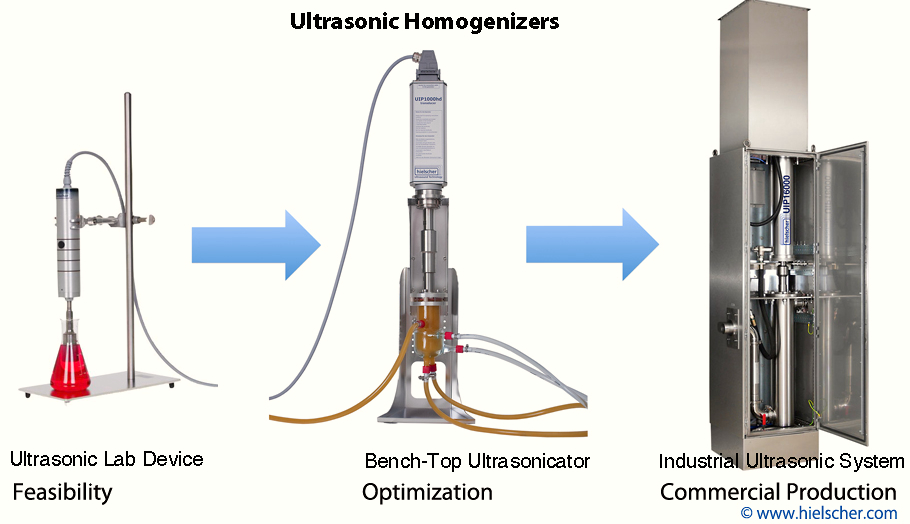
Hielscher مافوق صوت تولید کننده هموژنایزرهای مافوق صوت با کارایی بالا از ازمایشگاه ها تا اندازه صنعتی.