سونواوزوناسیون: همافزاییهای سونوشیمی و اوزوناسیون برای اکسیداسیون پیشرفته
Sono-Ozonation is an advanced oxidation process that combines ultrasound with ozonation in a single treatment system. While both technologies are effective on their own, their simultaneous application often produces a stronger effect than either method alone. This synergy is particularly valuable in environmental applications, where persistent organic pollutants, microorganisms, colorants, pharmaceuticals, pesticides, industrial chemicals, and other contaminants must be degraded efficiently. By integrating acoustic cavitation with ozone chemistry, sono-ozonation enhances radical generation, improves mass transfer, and accelerates oxidative reactions in liquid media.
How Does Sonication Improve Ozonation?
The principle of sono-ozonation is based on the interaction between ultrasonic cavitation and ozone decomposition. When high-intensity ultrasound is introduced into a liquid, alternating compression and rarefaction cycles generate microscopic cavitation bubbles. These bubbles grow and violently collapse, producing localized hot spots with extremely high temperatures and pressures for very short periods of time. Under these extreme conditions, water molecules can dissociate into highly reactive hydroxyl radicals. These radicals are among the most powerful non-selective oxidants in aqueous systems and are able to attack a broad range of organic compounds.
دریافت توصیه پردازشی
به ما نتیجه هدف، نرخ جریان یا حجم دستهای و حالت پردازش ترجیحی خود را بگویید. ما به شما کمک میکنیم تا سونیکاتور مناسب و پیکربندی مربوطه برای فرآیند اکسیداسیون پیشرفته خود را انتخاب کنید.
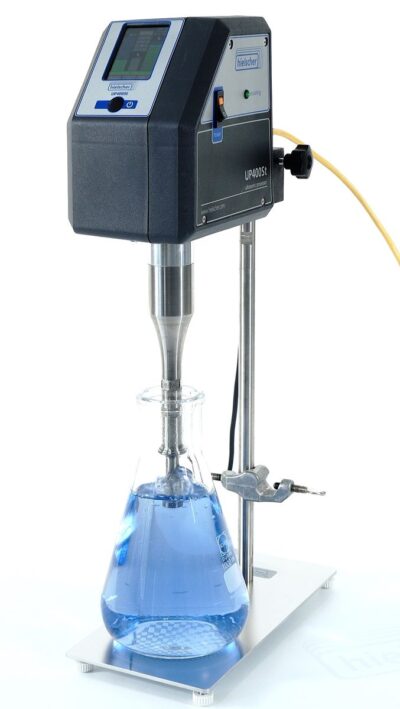
پروب نوع فراصوت UP400St
مزایای ازونیزاسیون با کمک اولتراسونیک
Ozone is also a strong oxidizing agent and is widely used for water and wastewater treatment. It can react directly with certain contaminants or decompose in water to form secondary oxidants such as hydroxyl radicals. However, ozonation can be limited by gas-liquid mass transfer, ozone solubility, and the selectivity of direct ozone reactions. Ultrasound helps overcome these limitations. Cavitation improves the dispersion of ozone gas in the liquid, reduces bubble size, renews the gas-liquid interface, and promotes turbulent micro-mixing. As a result, ozone dissolves more effectively and decomposes more readily into reactive radical species.
The combined effect is a more efficient oxidative environment. In sono-ozonation, ozone molecules may enter cavitation bubbles or concentrate near bubble interfaces, where they are exposed to intense thermal and mechanical conditions during collapse. This accelerates ozone decomposition and increases the formation of hydroxyl radicals and other reactive oxygen species. The process therefore improves the degradation rate of organic pollutants and can reduce treatment time compared with conventional ozonation. In many applications, sono-ozonation also improves mineralization, meaning that organic molecules are not only transformed into intermediate compounds but are further oxidized toward carbon dioxide, water, and inorganic ions.
One of the most important advantages of sono-ozonation is its ability to treat compounds that are resistant to conventional oxidation. Many environmental contaminants, including dyes, phenolic compounds, endocrine-disrupting chemicals, pharmaceutical residues, and surfactants, can be difficult to remove completely. Ozone may react selectively with electron-rich groups, while ultrasound-induced radicals can attack less selective molecular sites. The combination expands the range of oxidation pathways and improves the probability of contaminant breakdown. This makes sono-ozonation attractive for wastewater treatment, drinking water polishing, leachate treatment, process water recycling, and remediation of contaminated aqueous streams.
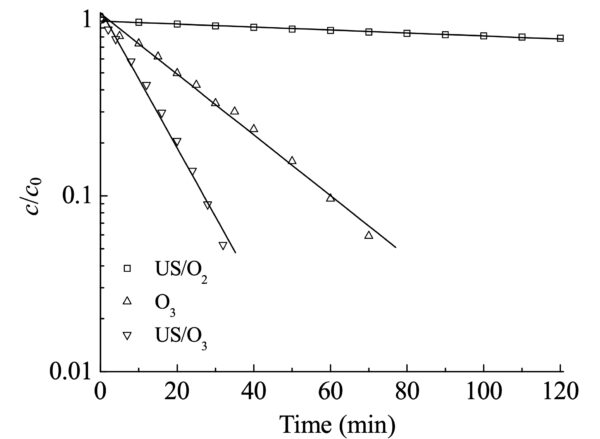
First-order degradation of p-nitrophenol due to sonication with O2, ozonation and sonolytic ozonation. The O3 gas flow at 40 ml/min, pH=3, T=298 K. The initial p-nitrophenol concentration was 50 mg/L. The ultrasonic power generation of transducer was 125 W.
Graphic and study: ©Xu et al., 2005
Applications of Sono-Ozonation
Sono-Ozonation is highly relevant for microbial inactivation. Ultrasound can physically disrupt microbial cells through shear forces, microjets, shock waves, and localized pressure changes. Ozone, meanwhile, oxidizes cell walls, membranes, enzymes, and genetic material. When both methods are applied together, the antimicrobial effect can be enhanced. Cavitation may weaken or damage cell structures, allowing ozone and radical species to attack more effectively. This combined action can improve disinfection performance against bacteria, fungi, algae, and other microorganisms. For applications where microbial control and organic contaminant degradation are both required, sono-ozonation offers a powerful multifunctional treatment approach.
Beyond chemical degradation and antimicrobial activity, sono-ozonation can improve physicochemical properties of treated liquids. Ultrasonic cavitation increases mixing intensity, promotes degassing and gas dispersion, and enhances the contact between oxidants and contaminants. These effects can support reductions in color, odor, chemical oxygen demand, turbidity, and certain refractory organic fractions. In some processes, sono-ozonation can also improve downstream treatment by converting persistent substances into more biodegradable compounds, thereby increasing the efficiency of biological treatment steps.
Closed Reactors for Efficient Processing and Easy Scale-up
 A practical advantage of sono-ozonation is that it can be implemented in closed reactor systems. Hielscher probe-type sonicators are particularly suitable for this type of integration because they deliver high-intensity ultrasound directly into the liquid through a titanium sonotrode. The probe can be mounted into a closed vessel or flow-through reactor using appropriate ports, flanges, or fittings. At the same time, ozone can be introduced through a gas inlet, diffuser, sparger, or recirculation loop. This allows ultrasound and ozone to act simultaneously within the same reaction volume.
Such a setup is straightforward and scalable. The closed reactor contains the liquid to be treated, while the ultrasonic probe transfers acoustic energy directly into the medium. Ozone flows continuously or intermittently through the reactor, depending on the process requirements. The ultrasound improves ozone dispersion and contact with the liquid phase, while the closed configuration helps contain ozone safely and enables controlled off-gas handling. Excess ozone can be directed to an ozone destructor or suitable exhaust treatment system. Important operating parameters include ultrasonic amplitude, power input, treatment time, ozone concentration, gas flow rate, temperature, pressure, pH, and reactor geometry.
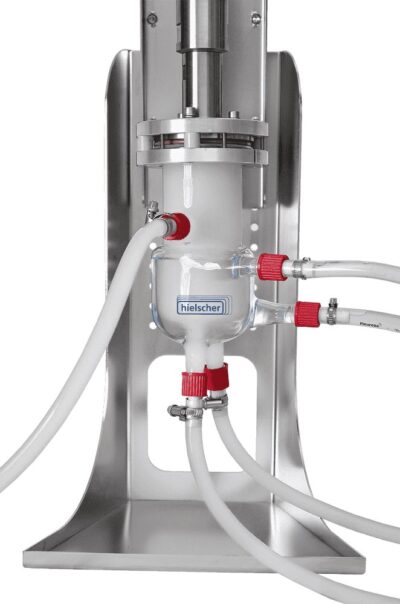
Sonicator UIP1000hdT with inline reactor for sono-ozonation
سونیکاتورهای هایلشر برای اوزونیزاسیون و اکسیداسیون پیشرفته
سونیکاتورهای نوع پروب هایلشر میتوانند برای فرآیندهای سولانو-اوزوناسیون دستهای یا پیوسته مورد استفاده قرار گیرند. در توسعه آزمایشگاهی، اولتراسوندهای جمعوجور به محققان اجازه میدهند تا سینتیک واکنش، تخریب آلایندهها و کاهش میکروبی تحت شرایط کنترلشده را ارزیابی کنند. برای عملیات پایلوت و صنعتی، سیستمهای اولتراسوندی قویتر میتوانند در مخازن بزرگتر یا راکتورهای جریان پیوسته ادغام شوند. از آنجا که سونیکاسیون پروب انرژی را بهطور کارآمد به مایع منتقل میکند، برای تقویت فرآیند که در آن کاویتاسیون قوی و بازتولیدپذیری قابل اعتماد مورد نیاز است، مناسب است.
Sono-Ozonation represents a highly effective synergistic method that combines the chemical oxidation power of ozone with the physical and sonochemical effects of ultrasound. The process increases radical formation, improves gas-liquid mass transfer, accelerates contaminant degradation, and enhances antimicrobial activity. Its compatibility with closed reactors and direct integration of Hielscher probe-type sonicators makes sono-ozonation a practical and versatile approach for environmental treatment, water purification, wastewater remediation, and advanced oxidation applications.
جدول زیر به شما نشانه ای از ظرفیت پردازش تقریبی مافوق صوت ما می دهد:
| حجم دسته ای | نرخ جریان | دستگاه های توصیه شده |
|---|---|---|
| 0.5 تا 1.5 میلی لیتر | ن.ا. | VialTweeter(ویال گروهی) |
| 1 تا 500 میلی لیتر | 10 تا 200 میلی لیتر در دقیقه | UP100H |
| 10 تا 2000 میلی لیتر | 20 تا 400 میلی لیتر در دقیقه | تا 200 هرتز، UP400St |
| 0.1 تا 20 لیتر | 0.2 تا 4 لیتر در دقیقه | UIP2000hdT |
| 10 تا 100 لیتر | 2 تا 10 لیتر در دقیقه | UIP4000hdT |
| 15 تا 150 لیتر | 3 تا 15 لیتر در دقیقه | UIP6000hdT |
| ن.ا. | 10 تا 100 لیتر در دقیقه | UIP16000hdT |
| ن.ا. | بزرگتر | خوشه ای از UIP16000hdT |
طراحی، ساخت و مشاوره – کیفیت ساخت آلمان
مافوق صوت Hielscher به خوبی برای بالاترین کیفیت و استانداردهای طراحی خود را شناخته شده. استحکام و بهره برداری آسان اجازه می دهد تا ادغام صاف از ultrasonicators ما به امکانات صنعتی. شرایط خشن و محیط های خواستار به راحتی توسط مافوق صوت Hielscher رسیده.
Hielscher اولتراسونیک یک شرکت دارای گواهینامه ISO است و تاکید ویژه ای بر مافوق صوت با کارایی بالا با ویژگی های دولت از هنر فن آوری و کاربر پسند قرار داده است. البته، مافوق صوت Hielscher مطابق با CE و دیدار با الزامات UL، CSA و RoHs.

Hielscher مافوق صوت تولید کننده هموژنایزرهای مافوق صوت با کارایی بالا برای مخلوط کردن برنامه های کاربردی، پراکندگی، امولسیون و استخراج در آزمایشگاه، خلبان و مقیاس صنعتی.
پرسش و پاسخهای متداول
What is an Advanced Oxidation Process (AOP)?
یک فرآیند اکسیداسیون پیشرفته (AOP) یک روش شیمیایی است که گونههای اکسیژن بسیار واکنشپذیر، به ویژه رادیکالهای هیدروکسیل، را تولید میکند تا آلایندههای آلی مقاوم در آب، فاضلاب، هوا یا مایعات فرآیندی را اکسید و تجزیه کند.
اوزناسیون چیست؟
اوزناسیون یک فرآیند اکسیداسیون است که در آن گاز اوزون به یک جریان مایع یا گاز وارد میشود تا با آلایندهها، میکروارگانیسمها، ترکیبات بوی بد یا رنگها واکنش دهد. این فرآیند میتواند به طور مستقیم از طریق اکسیداسیون با اوزون یا به طور غیرمستقیم از طریق تشکیل گونههای رادیکالی عمل کند.
اوزون چیست؟
Ozone is a triatomic form of oxygen with the chemical formula O₃. It is a highly reactive, unstable oxidizing gas that decomposes to oxygen and reactive oxygen species, making it useful for disinfection, deodorization, and contaminant degradation.
ادبیات / منابع
- Moretti, A., E. Gover, G. Bisson, C. Comuzzi, D. Goi, M. Marino (2026): Evaluating Low-Frequency Ultrasound as a Pretreatment to Improve Ozonation Antimicrobial Efficacy in Urban Wastewater Treatment. Water Environment Research 98, no. 3: e70322.
- Rossi, G., Mainardis, M., Aneggi, E. et al. (2021): Combined ultrasound-ozone treatment for reutilization of primary effluent – a preliminary study. Environmental Science and Pollution Research 28, 2021. 700–710.
- Xu XW, Shi HX, Wang DH. (2005): Ozonation with ultrasonic enhancement of p-nitrophenol wastewater. J Zhejiang Univ Sci B. 2005 May;6(5):319-323.
- راندمان بالا
- تکنولوژی روز
- قابلیت اطمینان & نیرومندی
- کنترل فرآیند قابل تنظیم و دقیق
- دسته & درون خطی
- برای هر حجمی
- نرم افزار هوشمند
- ویژگی های هوشمند (به عنوان مثال، قابل برنامه ریزی، پروتکل داده ها، کنترل از راه دور)
- آسان و ایمن برای کار
- تعمیر و نگهداری کم
- CIP (تمیز کردن در محل)
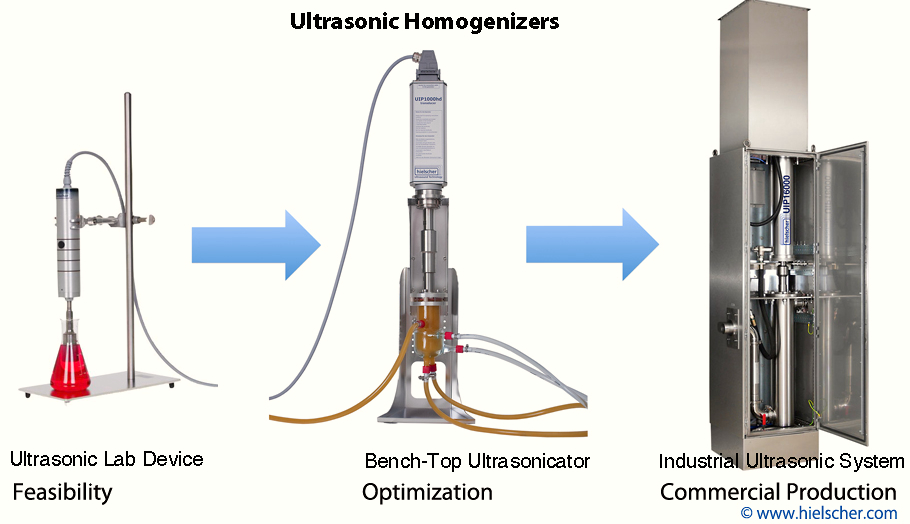
Hielscher مافوق صوت تولید کننده هموژنایزرهای مافوق صوت با کارایی بالا از ازمایشگاه ها تا اندازه صنعتی.