تولید بیولوبریکانت: فشردهسازی فرآیند با سونیکیشن
The lubricant industry is entering a decisive phase of formulation innovation. As industrial users, mobility sectors, marine operators, and environmentally sensitive applications move toward biodegradable and renewable alternatives, lubricant manufacturers are under increasing pressure to deliver high-performance biolubricants without compromising viscosity control, oxidative stability, wear protection, or long-term storage stability. Market analysts report continued growth for biolubricants, driven by demand for biodegradable, lower-emission and sustainable lubricant solutions across transportation and industrial applications.
Ultrasonic Production of Biolubricants: Process Intensification for Sustainable Lubricants
Against this backdrop, ultrasonic processing, also known as sonication, is gaining industrial relevance as a versatile production technology for biolubricant manufacturing. High-power ultrasound can be used for ultrasonic dispersion, sonochemical transesterification, emulsification, and microgel particle preparation, giving formulators a robust tool to improve both chemical conversion and physical formulation quality. This makes sonication a highly efficient processing technique used in bio-lubricating oils, bio-lubricating greases, water-based biolubricants and food-grade lubricants.

هموژنیزر اولتراسونیک UIP2000hdT for industrial production of biolubricants
چرا پردازش اولتراسونیک برای تولیدکنندگان روانکارهای زیستی اهمیت دارد
روانکارهای زیستی اغلب به سیستمهای مواد خام پیچیده متکی هستند: روغنهای گیاهی، استرهای سنتتیک، پلیمرهای زیستمبنا، مشتقات سلولزی، مواد افزودنی عملکردی، آنتیاکسیدانها، بازدارندههای خوردگی، عوامل ضدسایش، تعدیلکنندههای اصطکاک، و فازهای آبی یا نوع امولسیون. این مواد میتوانند در ویژگیهایی مانند قطبیت، ویسکوزیته، اندازه ذرات، انحلالپذیری و رفتار بینسطحی تفاوتهای قابلتوجهی داشته باشند. میکسرهای معمولی، سیستمهای روتور-استاتور، یا همزدن طولانی دستهای ممکن است همیشه چگالی انرژی کافی برای تولید پراکندگیهای ریز و پایدار یا واکنشهای سریع بینسطحی فراهم نکنند.
Sonication addresses these challenges through acoustic cavitation. When high-intensity ultrasound is introduced into liquids, microscopic cavitation bubbles form, grow, and collapse. This creates localized high shear, intense micro-mixing, turbulence, particle deagglomeration, and reactive zones that can accelerate mass transfer and chemical reactions. In transesterification research, ultrasound has been widely studied as a way to overcome slow reaction kinetics and inefficient contact between oil and alcohol phases.
For lubricant manufacturers, this means ultrasound is not merely a laboratory homogenization method. It is a process intensification technology that can support the production of more stable, more uniform, and more efficient bio-based lubricant formulations.
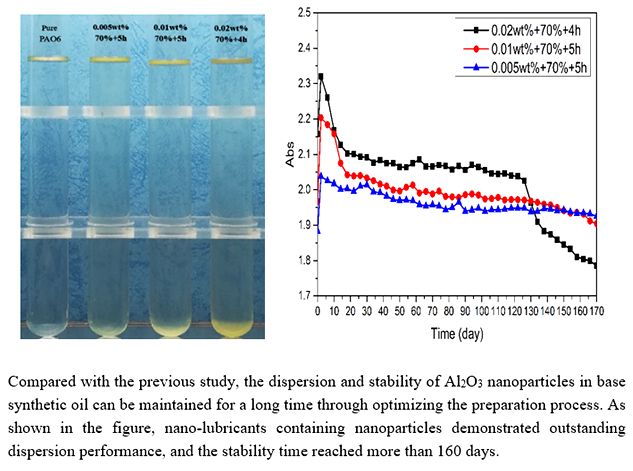
پراکندکننده نوع پروب اولتراسونیک روانکارهای زیستی با عملکرد بالا ایجاد میکند.
(مطالعه و تصویر: لیو و همکاران، ۲۰۲۰)
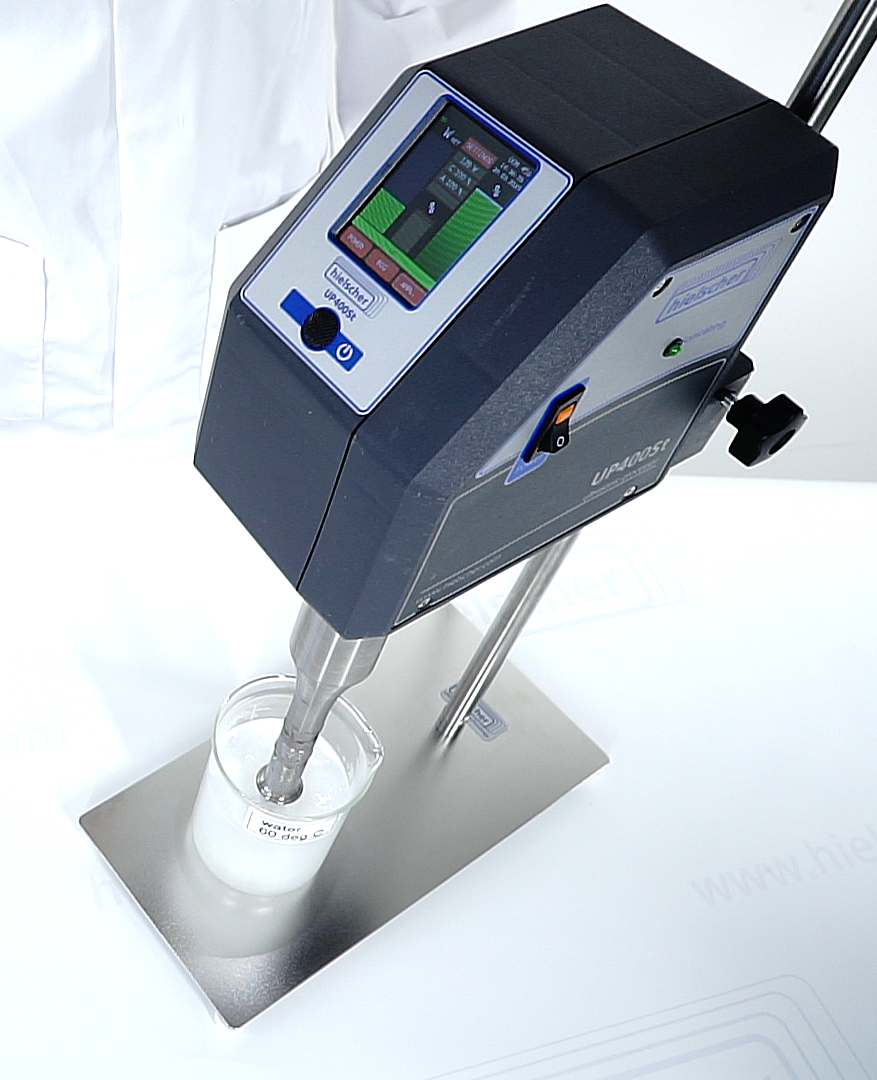
امولسیون سازی اولتراسونیک فرمولاسیونهای روانکار زیستی
پراکندگی اولتراسونیک افزودنیهای روانکار مبتنی بر زیست
یکی از چالشهای کلیدی در فرمولاسیون روانکار زیستی، یکپارچهسازی همگن افزودنیهای مبتنی بر زیست است. موادی مانند کربوکسیمتیل سلولز، نانوفیبرهای سلولزی، بیوپلیمرها، صمغهای طبیعی، مشتقات لیگنین، غلیظکنندههای مبتنی بر زیست و نانوذرات کاربردی میتوانند به شدت بر ویسکوزیته، لغزندگی، عملکرد ضدسایش، تشکیل فیلم و پایداری تعلیق تأثیر بگذارند. با این حال، این مواد اغلب تمایل به کلکسیون شدن، هیدراته شدن آهسته یا تشکیل ساختار ژل غیر یکنواخت دارند.
Ultrasonic dispersion helps manufacturers reduce agglomerates and distribute additives more uniformly throughout the lubricant matrix. This is particularly valuable for water-based lubricants, nanolubricants, grease-like systems, and emulsion-based biolubricants. Recent research on cellulose-based systems shows that sonication can significantly affect dispersion behavior, rheology, and network structure, making it a useful processing tool for tuning cellulose-containing formulations.
For lubricant manufacturers, better dispersion can translate into:
- More consistent viscosity and rheological behavior
- Improved additive efficiency at lower dosage levels
- Reduced sedimentation, phase separation, or floating solids
- More reproducible tribological performance
- Shorter processing times compared with extended mechanical stirring
Carboxymethyl cellulose is especially relevant because it is widely used as a cellulose derivative with useful viscosity, surface, and film-forming properties. In lubricant systems, sonication can help integrate CMC and other biopolymers into stable aqueous or emulsion formulations, supporting the development of environmentally improved lubricants with controlled flow behavior and enhanced formulation stability.
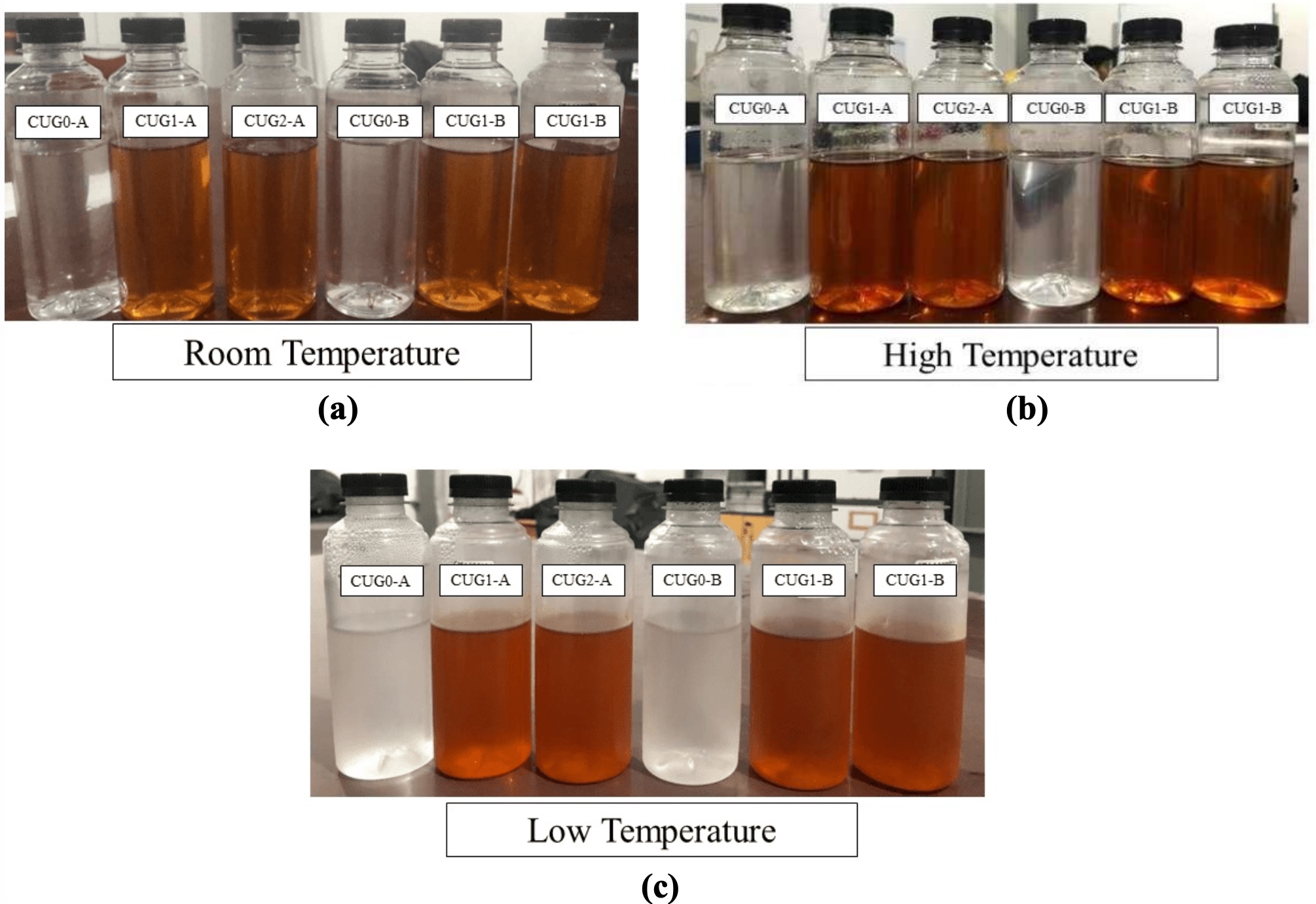
Biolubricants with ultrasonically-dispersed carboxymethyl cellulose. Ultrasonic dispersion produces long-term stable nano-biolubricants
Study and images: ©Rahmadiawan et al., 2022
Sonochemical Transesterification for Diester and Ester-Based Biolubricants
Esters are among the most important base fluids for high-performance biolubricants. They can offer good lubricity, high viscosity index, biodegradability, and favorable low-temperature behavior, depending on the feedstock and molecular structure. Diesters and polyol esters are particularly important for applications such as hydraulic fluids, compressor oils, metalworking fluids, chainsaw oils, marine lubricants, and specialty industrial lubricants.
One promising application of ultrasound is the sonochemical preparation of esters by transesterification. In conventional transesterification, immiscible reactants such as oils and alcohols often require intensive mixing, elevated temperatures, catalysts, and extended reaction times. Ultrasound improves mass transfer by creating fine emulsions between the reactant phases and continuously renewing the interface where the reaction occurs.
Sonication-assisted transesterification is an established technique well proven for advantages such as faster reaction rates, improved phase contact, shorter separation times, high yields, and reduced waste formation under suitable conditions. Lubricant manufacturers use the ultrasonic transesterification method to produce ester-based biolubricant components, including diesters and other functional ester structures.
Ultrasonic transesterification helps manufacturers:
- Improve contact between oil, alcohol, and catalyst phases
- Reduce reaction time by intensifying interfacial mass transfer
- Support lower-temperature or more energy-efficient processing windows
- Improve conversion consistency in batch or continuous production
- Enable compact reactor designs for scalable ester production
برای شرکتهایی که در حال تولید روغنهای پایه بیولوبرکانت هستند، اولتراسونیک راهی برای تشدید فرآیندهای استریفیکاسیون و ترانساستریفیکاسیون ارائه میدهد و در عین حال از تولید پاکتر و کارآمدتر حمایت میکند.
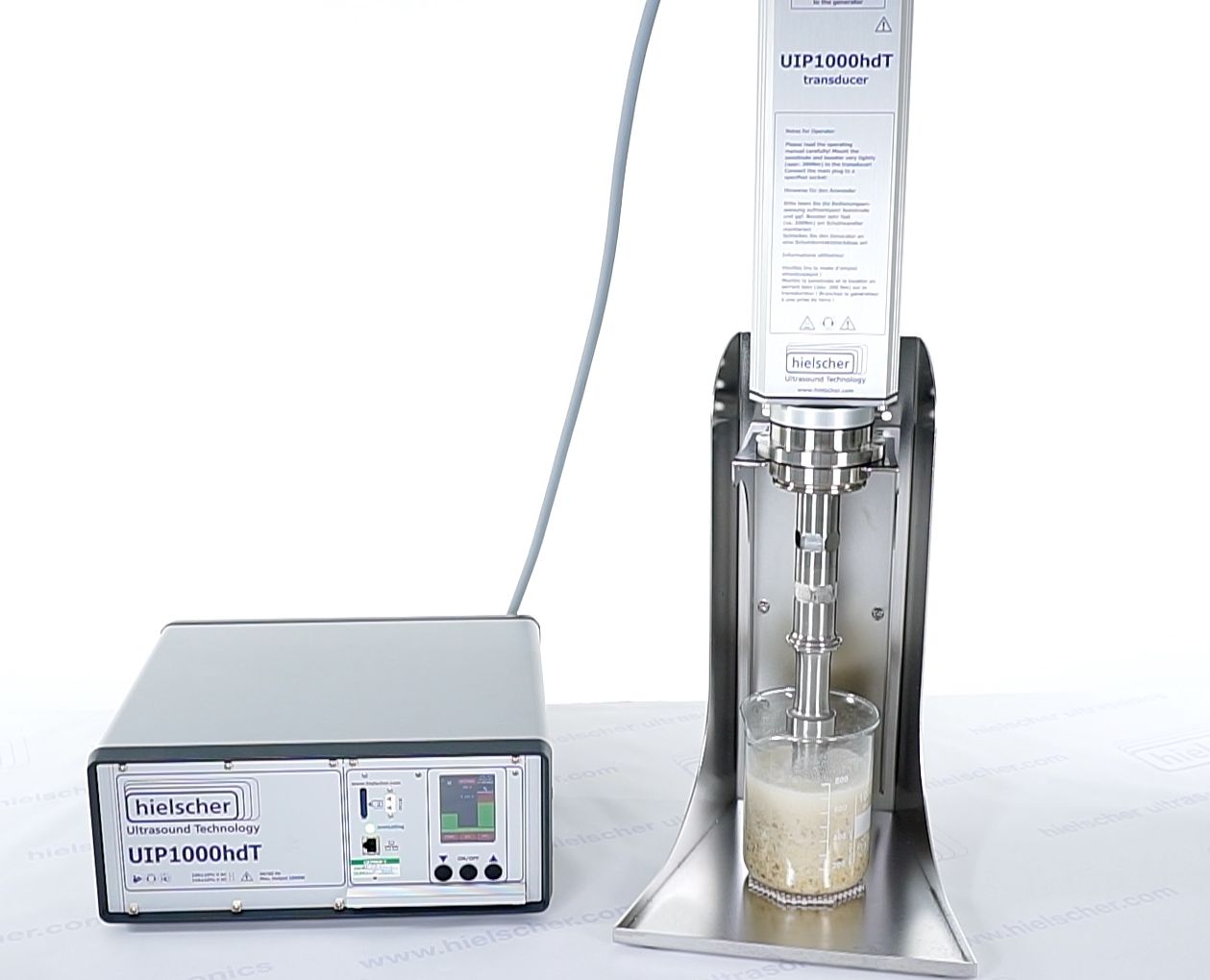
سونیکاتور قدرتمند 1000 وات UIP1000hdT
پل بین آزمایشگاهی و تولید
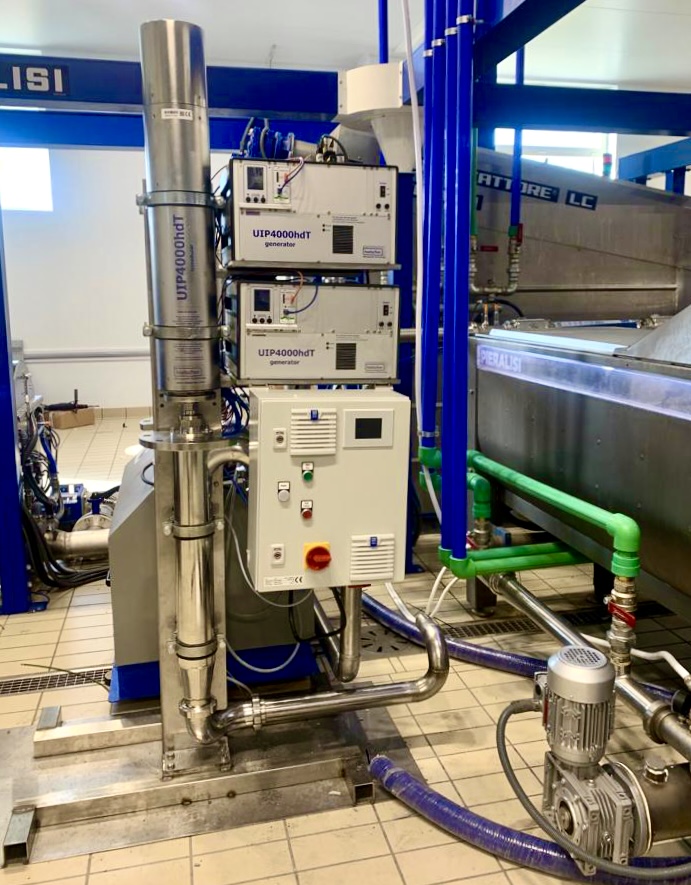
سونوگرافی قدرت – خوشهای از 2 دستگاه سونیکاتورهای UIP4000hdT با سلولهای جریان برای عملیات پیوسته داخل خطی
امولسیفیکاسیون اولتراسونیک فرمولاسیونهای روانکننده
 Many modern biolubricants are not simple single-phase oils. They may include water-in-oil emulsions, oil-in-water emulsions, additive concentrates, wax dispersions, polymer-modified systems, or complex multiphase packages. The quality of these emulsions has a direct impact on storage stability, lubricity, cooling performance, corrosion protection, and application behavior.
Ultrasonic emulsification is highly effective because cavitation generates intense local shear forces that break droplets into smaller sizes and create narrow droplet-size distributions. In lubricant manufacturing, this can be used to emulsify bio-based oils, ester phases, water phases, surfactants, polymeric stabilizers, and functional additives into stable formulations.
This is particularly relevant for:
- بیولوبریکانتهای پایهآب
- مایعهای فلزکاری و مایعات برش
- مایعات هیدرولیک با اجزای تجدیدپذیر
- گریسهای نوع امولسیون و روانکنندههای نیمهجامد
- متمرکزکنندهها و پیشپراکنشهای افزودنی
- سیستمهای روانکننده حاوی بیوپلیمرها یا مشتقات سلولز
ریزامولسیفیکاسیون پایداری فیزیکی فرمولاسیونهای روانکننده را بهبود میبخشد و میتواند نیاز به بارگذاری بیش از حد سورفاکتانت را کاهش دهد. برای تولیدکنندگان، این امر هم مزایای عملکردی و هم مزایای هزینهای به همراه دارد: پایداری بهبود یافته، استفاده موثرتر از افزودنیها و انعطافپذیری بیشتر در فرمولاسیون.
سونیکیشن برای ذرات میکروژل امولسیون
Another emerging area is the production of emulsion microgel particles for advanced lubricant formulations. Microgels can act as rheology modifiers, carriers for active ingredients, friction modifiers, or responsive structuring agents. In bio-based lubricant systems, microgel particles may be produced from natural polymers, modified cellulose, polysaccharides, proteins, or other renewable polymer systems.
Ultrasonic processing supports microgel preparation by enabling controlled emulsification, droplet-size reduction, polymer dispersion, and phase structuring. The same cavitation-driven mechanisms that produce fine emulsions can also help create small, uniform precursor droplets or dispersed polymer domains that are subsequently gelled, crosslinked, or stabilized.
Optimize Your Biolubricant Production with Sonication
 One of the most important questions for lubricant manufacturers is whether ultrasonic processing can reliably integrated into production lines. With Hielscher sonicators, the answer is clearly yes. Hielscher high-performance sonicators are engineered for continuous operation, inline processing, and seamless integration into existing production lines, making them a powerful and reliable solution for industrial biolubricant manufacturing.
In a typical industrial setup, the lubricant premix, additive slurry, oil-alcohol reaction mixture, or emulsion feed is pumped through an ultrasonic flow cell, where it is exposed to precisely controlled ultrasonic energy. Key process parameters such as amplitude, pressure, temperature, flow rate, residence time, and specific energy input can be accurately adjusted, monitored, and are automatically documented. This high level of controllability gives lubricant manufacturers the process security required for reproducible formulation quality, validated production protocols, and consistent scale-up from R&D trials to pilot production and full industrial throughput.
For biolubricant producers, this scalability is especially important because formulation requirements are becoming more demanding. Customers expect sustainable products, but they also expect the same or better performance than conventional petroleum-based lubricants. Hielscher sonicators help manufacturers bridge this gap by combining power, reliability, controllability, and linear scalability in one robust ultrasonic platform. These advantages make Hielscher sonicators the preferred choice for companies that need industrial-grade sonication for high-quality bio-based lubricant formulations.
جدول زیر به شما نشانه ای از ظرفیت پردازش تقریبی مافوق صوت ما می دهد:
| حجم دسته ای | نرخ جریان | دستگاه های توصیه شده |
|---|---|---|
| 1 تا 500 میلی لیتر | 10 تا 200 میلی لیتر در دقیقه | UP100H |
| 10 تا 2000 میلی لیتر | 20 تا 400 میلی لیتر در دقیقه | تا 200 هرتز، UP400St |
| 0.1 تا 20 لیتر | 0.2 تا 4 لیتر در دقیقه | UIP2000hdT |
| 10 تا 100 لیتر | 2 تا 10 لیتر در دقیقه | UIP4000hdT |
| 15 تا 150 لیتر | 3 تا 15 لیتر در دقیقه | UIP6000hdT |
| ن.ا. | 10 تا 100 لیتر در دقیقه | UIP16000hdT |
| ن.ا. | بزرگتر | خوشه ای از UIP16000hdT |
طراحی، ساخت و مشاوره – کیفیت ساخت آلمان
مافوق صوت Hielscher به خوبی برای بالاترین کیفیت و استانداردهای طراحی خود را شناخته شده. استحکام و بهره برداری آسان اجازه می دهد تا ادغام صاف از ultrasonicators ما به امکانات صنعتی. شرایط خشن و محیط های خواستار به راحتی توسط مافوق صوت Hielscher رسیده.
Hielscher اولتراسونیک یک شرکت دارای گواهینامه ISO است و تاکید ویژه ای بر مافوق صوت با کارایی بالا با ویژگی های دولت از هنر فن آوری و کاربر پسند قرار داده است. البته، مافوق صوت Hielscher مطابق با CE و دیدار با الزامات UL، CSA و RoHs.

اولتراسونیک UIP6000hdT برای پراکندگی آنلاین نانومواد در روانکنندهها
پرسش و پاسخهای متداول
روانکارهای زیستی چیستند؟
روانکارهای زیستی روانکارهایی هستند که از مواد اولیه تجدیدپذیر یا زیستمبنا مانند روغنهای گیاهی، چربیهای حیوانی، استرهای سنتتیک یا سایر خوراکیهای قابل تجزیه بیولوژیکی فرمولبندی شدهاند. این روانکارها برای کاهش اصطکاک، سایش و حرارت بین سطوح متحرک طراحی شدهاند و در عین حال دارای قابلیت تجزیه زیستی بهتر، سمیت کمتر و تأثیر محیطی کمتری نسبت به بسیاری از روانکارهای مبتنی بر نفت هستند.
مرسومترین مواد پایه در فرمولاسیون روانکارهای زیستی چه هستند؟
رایجترین مواد پایه برای روانکنندههای زیستی شامل روغنهای گیاهی، استرهای سنتتیک و روغنهای زیستی اصلاحشده شیمیایی هستند. خوراکهای مورد استفاده معمول شامل روغن کلزا، روغن سویا، روغن آفتابگردان، روغن نخل، روغن کرچک، روغن نارگیل و روغن جاتروفا میباشند. استرهای سنتتیک، مانند دیاسترها و پلیاسترها، به طور گسترده استفاده میشوند زیرا در مقایسه با بسیاری از روغنهای طبیعی بدون فرآوری، پایداری اکسیداتیو بهتر، عملکرد دمای پایین، کنترل ویسکوزیته و پایداری هیدرولیتی را ارائه میدهند.
چه مواد زیستی به عنوان نانو-افزودنی در روانکنندههای زیستی استفاده میشوند؟
Bio-based materials used as nano-additives in biolubricants include mainly nanocellulose, especially cellulose nanocrystals and cellulose nanofibers, as well as lignin nanoparticles, chitosan nanoparticles, starch-based nanoparticles, alginate-based particles, protein-based nanoparticles, biochar, and other biomass-derived carbon nanoparticles. Among these, nanocellulose is one of the most studied because it is renewable, biodegradable, mechanically robust, and can improve friction reduction, anti-wear behavior, viscosity modification, and tribofilm formation in vegetable-oil-based and other eco-friendly lubricant systems.
What Conventional Nanomaterials are Used as Additives in Biolubricants?
Carbon-based nanoparticles such as graphene, graphite, carbon nanotubes and carbon dots, Al₂O₃, TiO₂, SiO₂, ZnO, MoS₂, or WS₂ can be used as performance additives in biolubricants.as well as inorganic nanoparticles such as Al₂O₃, are increasingly investigated as functional additives in biolubricants. When finely dispersed, these nano-additives can improve friction reduction, wear protection, load-bearing capacity and formulation stability.
عملکرد به شدت به پخش پایدار بستگی دارد. نانوذراتی که به خوبی پخش نشدهاند میتوانند تجمع پیدا کنند، تهنشین شوند، یا حتی سائیدگی سایشی را افزایش دهند. دقیقاً در اینجا است که پخش فراصوتی اهمیت پیدا میکند، زیرا سونیکاسیون کمک میکند تا نانوذرات از هم باز شوند و به طور یکنواخت در روغنهای زیستپایه، استرها، امولسیونها یا سیستمهای روانکننده اصلاحشده با پلیمر توزیع شوند.
بیشتر درباره پخش نانو افزودنیها در روانکنندهها بخوانید!
تفاوت بین روانکنندههای زیستپایه و قابلتجزیه بیولوژیکی چیست؟
روانکننده زیستپایه به این معناست که روانکننده حاوی بخش قابلتجدید یا مشتق شده از زیست کربن قابلتوجهی است.
روانکننده قابلتجزیه بیولوژیکی به این معناست که فرمول نهایی یا اجزای آن معیارهای قابلتجزیه زیستمحیطی را برآورده میکنند، که اغلب با استفاده از آزمونهایی مانند OECD 301 ارزیابی میشوند.
ادبیات / منابع
- Arumugam, S., Chengareddy, P., Tamilarasan, A. et al. (2019): RSM and Crow Search Algorithm-Based Optimization of Ultrasonicated Transesterification Process Parameters on Synthesis of Polyol Ester-Based Biolubricant. Arabian Journal for Science and Engineering 44, 2019. 5535–5548.
- László Vanyorek, Dávid Kiss, Ádám Prekob, Béla Fiser, Attila Potyka, Géza Németh, László Kuzsela, Dirk Drees, Attila Trohák, Béla Viskolcz (2019): Application of nitrogen doped bamboo-like carbon nanotube for development of electrically conductive lubricants. Journal of Materials Research and Technology, Volume 8, Issue 3, 2019. 3244-3250.
- Kałużny Jarosł, Waligórski M, Szymański GM, Merkisz J, Różański J, Nowicki M, Al Karawi M, Kempa K. (2020): Reducing friction and engine vibrations with trace amounts of carbon nanotubes in the lubricating oil. Tribology International 2020.
- Mosleh, Mohsen; Atnafu, Neway; Belk, John; Nobles, Orval (2009): Modification of sheet metal forming fluids with dispersed nanoparticles for improved lubrication. Wear 267, 2009. 1220-1225.
- Li J, Du C, Delgado MA, et al. (2026): The application of nanocellulose in eco-friendly lubricants: A review. Friction, 2026.

هموژنایزر التراسونیک UIP1000hdT، یک فراصوت قدرتمند 1000 وات برای فرمولهکردن روانکنندههای زیستی
- راندمان بالا
- تکنولوژی روز
- قابلیت اطمینان & نیرومندی
- کنترل فرآیند قابل تنظیم و دقیق
- دسته & درون خطی
- برای هر حجمی
- نرم افزار هوشمند
- ویژگی های هوشمند (به عنوان مثال، قابل برنامه ریزی، پروتکل داده ها، کنترل از راه دور)
- آسان و ایمن برای کار
- تعمیر و نگهداری کم
- CIP (تمیز کردن در محل)
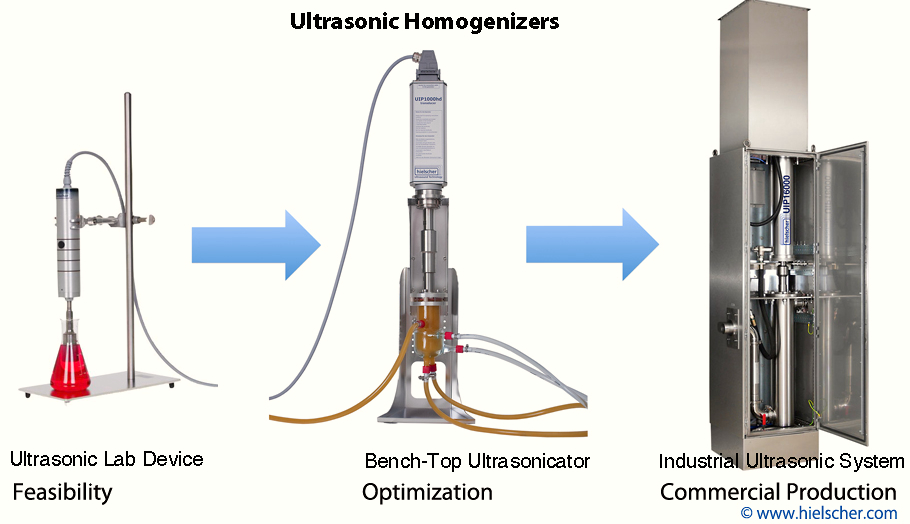
Hielscher مافوق صوت تولید کننده هموژنایزرهای مافوق صوت با کارایی بالا از ازمایشگاه ها تا اندازه صنعتی.