سنتز دیاستر اولتراسوندی برای تولید روانکننده زیستی با عملکرد بالا
The shift from petroleum-derived lubricants to renewable, biodegradable and high-performance ester-based lubricants is accelerating across industrial sectors. Lubricant manufacturers are under increasing pressure to reduce environmental impact while maintaining demanding performance criteria such as high viscosity index, low volatility, good lubricity, thermal stability and reliable low-temperature behavior. In this context, ultrasonic transesterification offers a powerful process intensification strategy for the synthesis of ester-based raw materials used in modern biolubricant formulations.
Ultrasonic Transesterification of Diesters for Biolubricants
ترانس استریفیکاسیون اولتراسونیک روغن ها و چربی های گیاهی تکنیکی پایدار است که به طور قابل توجهی بازده استر را بهبود می بخشد، محدودیت های فرآوری را کاهش می دهد و مسیر ترانس استریفیکاسیون را برای تولید روان کننده صنعتی جذاب تر می کند. سونیکاتورهای نوع پروب هیلشر برای سنتز مؤثر استر در تولید خطی تحت شرایط فرآیند کنترل شده استفاده می شوند.

3x سونیکاتور UIP1000hdT برای ترانس استریفیکاسیون روغن ها به استرها و پلی ال ها
سنتز بیوروان کننده از طریق ترانس استریفیکاسیون
 روغن های گیاهی مواد اولیه جذابی برای زیست روان کننده ها هستند زیرا تجدیدپذیر، زیست تخریب پذیر و روان کاری خوبی دارند. با این حال، روغن های گیاهی تیمار نشده اغلب از پایداری اکسیداتیو محدود و خواص ضعیف در دمای پایین رنج می برند. یکی از راهکارهای رایج برای غلبه بر این معایب، تبدیل استرهای متیل مشتق شده از روغن گیاهی به استرهای پلی ال مانند استرهای پنتااریتریتول از طریق ترانس استریفیکاسیون است.
در مطالعه “بهینه سازی مبتنی بر الگوریتم جستجوی RSM و Crow برای پارامترهای فرایند ترانس استریفیکاسیون فراصوت در سنتز بیوروان کننده مبتنی بر استر پلی ال” by Arumugam et al., rapeseed oil was first converted into rapeseed oil methyl ester. In a second step, this methyl ester was reacted with pentaerythritol in the presence of p-toluenesulfonic acid catalyst and xylene as solvent. The target product was a pentaerythritol ester suitable as a biolubricant base oil. This reaction is highly relevant to lubricant manufacturers because polyol esters are widely used as synthetic lubricant base stocks for compressor oils, hydraulic fluids, refrigeration oils and other high-performance lubricant applications.
چالش اصلی در ترانساستریفیکاسیون سنتی این است که واکنش اغلب به دلیل انتقال جرمی ضعیف بین واکنشدهندهها محدود میشود. استرهای متیل، پلیالها و کاتالیزورها همیشه یک سیستم واکنش یکنواخت ایدهآل را تشکیل نمیدهند. همزدن سنتی میتواند به زمانهای طولانی واکنش، دمای بالا و مصرف انرژی زیاد نیاز داشته باشد، در حالی که هنوز بازده میانه تولید میکند. اینجاست که فرآیند فراصوتی یک مزیت قاطع ارائه میدهد.
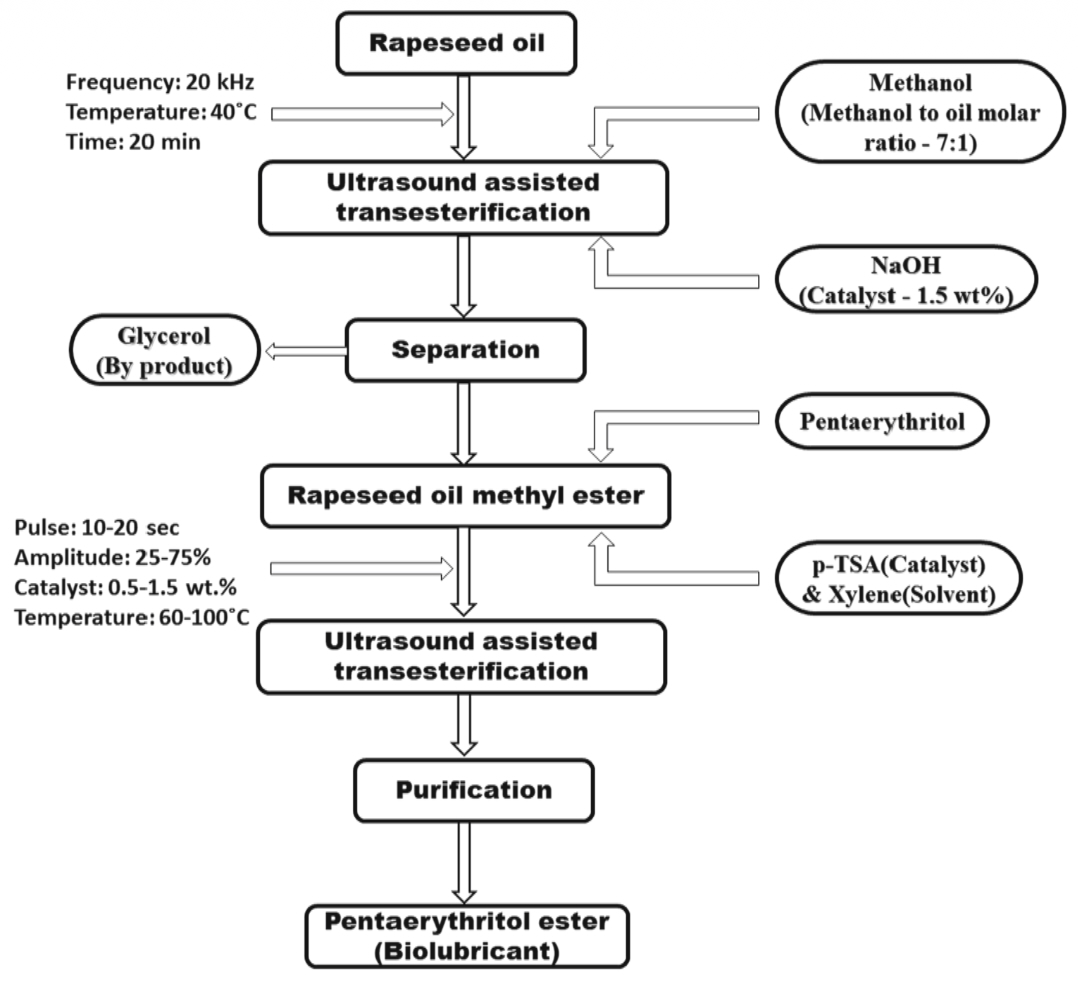
نمودار جریان فرآیند ترانساستریفیکاسیون فراصوتی استر پنتائرایتریتیل
مطالعه و گرافیک: ©Arumugam et al,.2019
چگونه ترانساستریفیکاسیون فراصوتی سنتز استر را تشدید میکند
Ultrasonic transesterification uses high-intensity ultrasound to create acoustic cavitation in the liquid reaction medium. Cavitation generates microscopic bubbles that grow and collapse violently. This produces intense local shear forces, microjets, acoustic streaming and micro-emulsification.
For ester synthesis, these effects are highly valuable because they:
- reduce droplet size and improve phase contact
- increase interfacial area between immiscible or poorly miscible reactants
- enhance catalyst accessibility
- انتقال جرم را تسریع کنید
- improve reaction kinetics
- support higher ester yield under optimized conditions
مطالعه توضیح میدهد که آشفتگی حاصل از کاویتاسیون و میکرو امولسیونها محدودیتهای انتقال جرم در ترانساستریفیکیشن معمولی را برطرف میکنند. در نتیجه، واکنشدهندهها مؤثرتر توزیع میشوند و واکنش کاتالیزوری سریعتر و کاملتر پیش میرود.
نتایج مطالعه: تولید بالاتر استر با استفاده از اولتراسوند
مطالعه فرآیند کمکی اولتراسوند را با استفاده از روش طراحی سطح پاسخ و الگوریتم جستجوی کلاغ بهینهسازی کرد. متغیرهای فرآیندی بررسیشده شامل پالس اولتراسونیک، دامنه اولتراسونیک، غلظت کاتالیزور و دمای واکنش بودند.
شرایط بهینه فرآیند اولتراسوند به شرح زیر بودند:
سیستم سونیکاتور: سونیکاتور نوع پروب Hielscher UP400St
پالس اولتراسونیک: 15 ثانیه
دامنه اولتراسونیک: 60٪
غلظت کاتالیزور: 1.5 درصد وزنی
دمای واکنش: ۱۰۰ درجه سانتی گراد
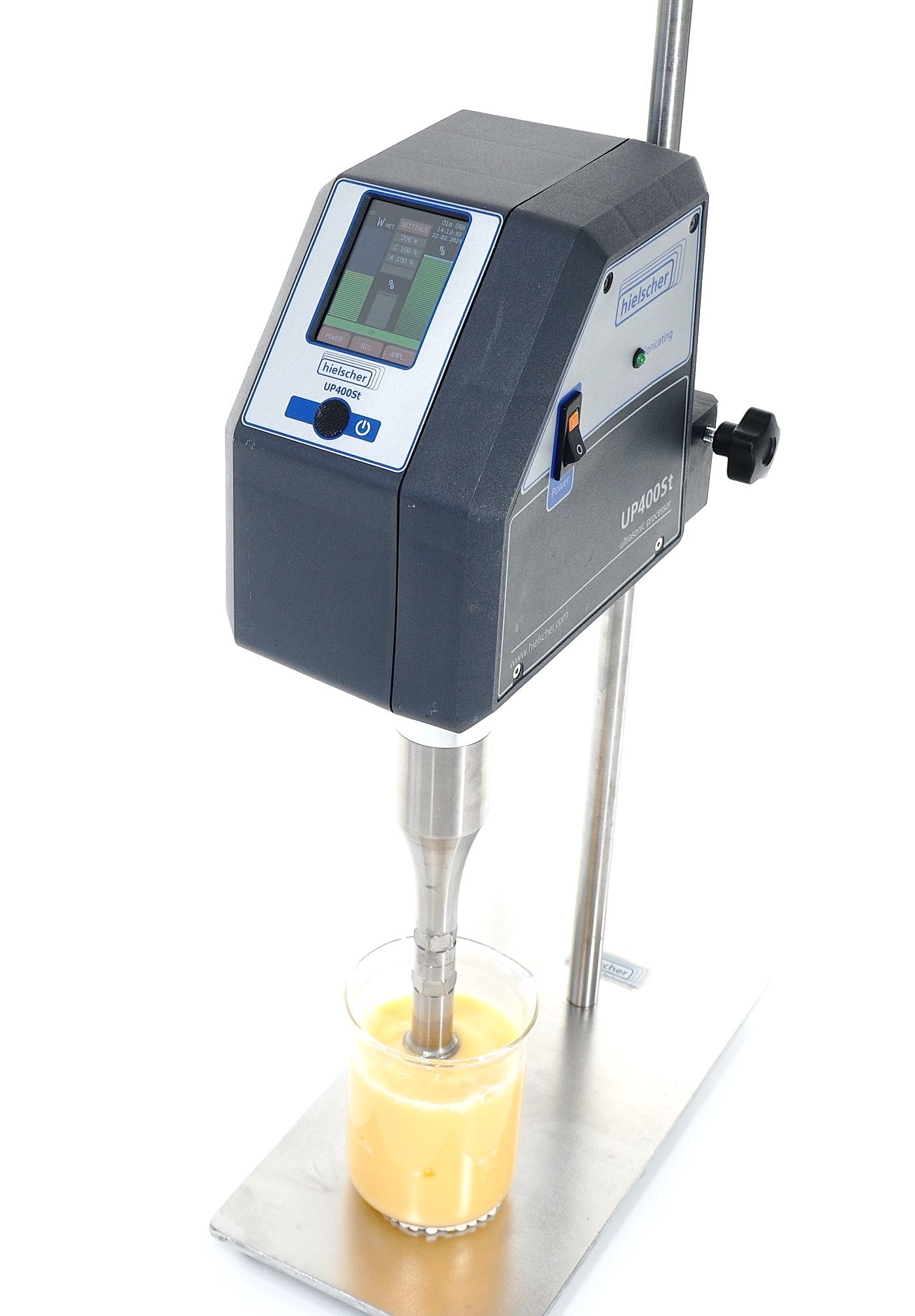 Under these optimized conditions, the ultrasound-assisted transesterification achieved a pentaerythritol ester yield of approximately 81.4%. By comparison, the conventional transesterification route produced only about 47% yield under the conditions evaluated in the study. This means that ultrasonic processing increased the ester yield by more than 70% relative to the conventional route.
For lubricant manufacturers, this is a highly relevant result. A higher yield means better utilization of raw materials, reduced side streams, improved process economics and potentially lower production cost per kilogram of ester base oil.
با اولتراسوند بیشتر برای امولسیونهای بهتر آشنا شوید.
Confirmation of Ester Formation
The study by Arumugam et al. (2019) confirmed the formation of pentaerythritol ester by FTIR spectroscopy and gas chromatography. FTIR analysis showed characteristic ester carbonyl and ester C–O peaks, while additional peaks supported the presence of the pentaerythrityl group. Gas chromatography further confirmed the product composition, including monoester, diester, triester and tetraester fractions.
For biolubricant production, this analytical confirmation is important because lubricant performance depends strongly on ester composition. The ability to promote the formation of desired ester structures through controlled ultrasonic transesterification gives manufacturers a practical tool for improving base oil quality and process consistency.
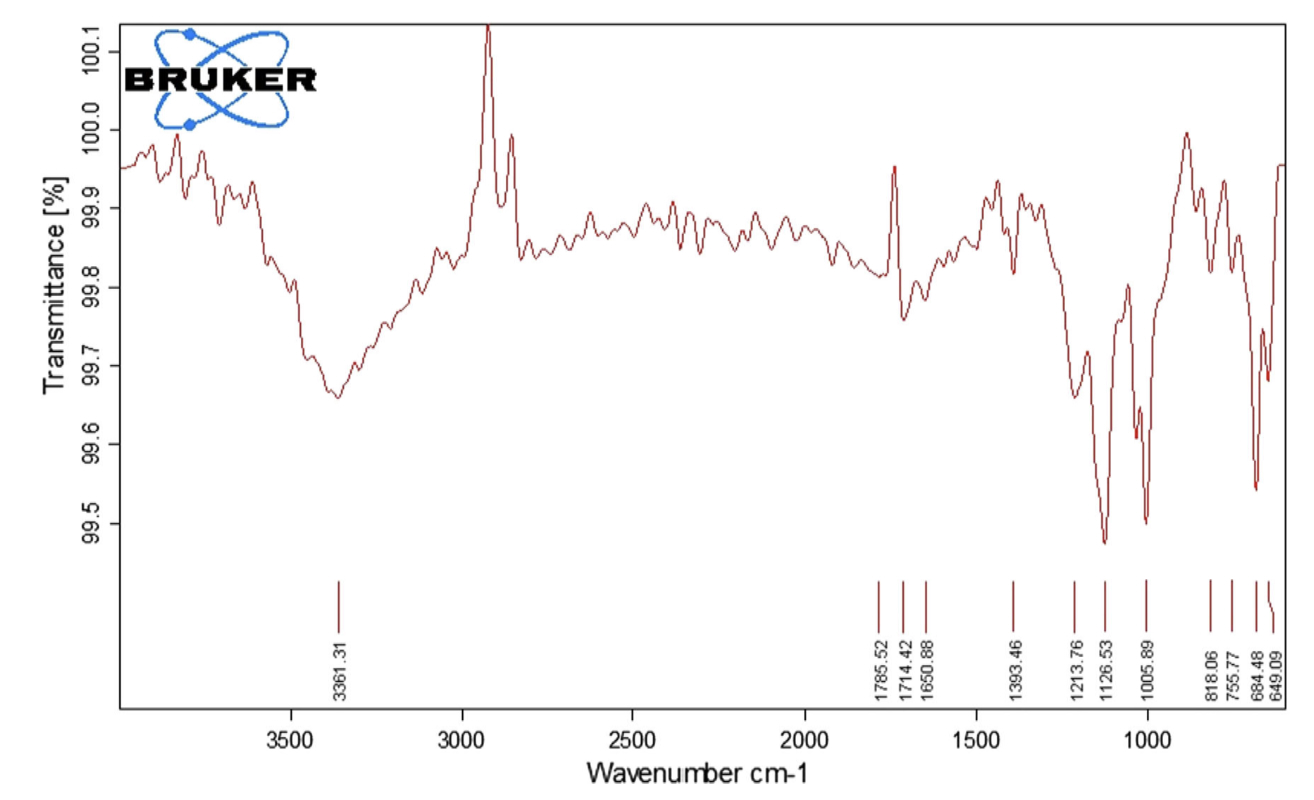
طیف FTIR استر پنتا اریتریتول تراستریفیکهشده بهصورت اولتراسونیک
مطالعه و گرافیک: ©Arumugam و همکاران، 2019
مزایای سونیکاتورهای هیلشر برای تولیدکنندگان روانکنندهها
 هیلشر مجموعه کاملی از سونیکاتورها از واحدهای R&D تا سیستمهای اولتراسونیک صنعتی کامل ارائه میدهد. این امکان را فراهم میکند تا یک فرایند در مقیاس آزمایشگاهی توسعه یابد و سپس با استفاده از همان اصول اولتراسونیک اساسی به مقیاس پایلوت و تولید منتقل شود.
All sonicators from 200 watts and more power feature digital control, programmable settings, remote operation via browser, automated data protocoling, pluggable temperature and pressure sensors and much more for highest user-friendliness and repeatable results.
For industrial lubricant production, Hielscher’s range includes compact laboratory sonicators for feasibility studies, pilot-scale systems for process optimization and industrial ultrasonic processors such as the UIP500hdT, UIP1000hdT, UIP1500hdT, UIP2000hdT, UIP4000hdT, UIP16000hdT and larger multi-unit installations for continuous high-volume processing.
Flow-through reactors allow controlled residence time, pressurization for more intense cavitation, temperature management and inline integration into existing esterification or transesterification production lines.
Hielscher ultrasonic processors offer important advantages for ester and biolubricant synthesis:
- precise amplitude control for reproducible cavitation intensity
- adjustable pulsing to optimize energy input and thermal management
- high-power probe sonication for direct and efficient energy transfer into the reaction medium
- batch and continuous-flow operation for flexible process development
- industrial scalability from lab testing to high-throughput manufacturing
- robust equipment design for demanding chemical processing environments
جدول زیر به شما نشانه ای از ظرفیت پردازش تقریبی مافوق صوت ما می دهد:
| حجم دسته ای | نرخ جریان | دستگاه های توصیه شده |
|---|---|---|
| 1 تا 500 میلی لیتر | 10 تا 200 میلی لیتر در دقیقه | UP100H |
| 10 تا 2000 میلی لیتر | 20 تا 400 میلی لیتر در دقیقه | تا 200 هرتز، UP400St |
| 0.1 تا 20 لیتر | 0.2 تا 4 لیتر در دقیقه | UIP2000hdT |
| 10 تا 100 لیتر | 2 تا 10 لیتر در دقیقه | UIP4000hdT |
| 15 تا 150 لیتر | 3 تا 15 لیتر در دقیقه | UIP6000hdT |
| ن.ا. | 10 تا 100 لیتر در دقیقه | UIP16000hdT |
| ن.ا. | بزرگتر | خوشه ای از UIP16000hdT |
Ultrasonic Diester Synthesis as a Manufacturing Strategy
اصل فرآیندی ترانساستریفیکاسیون اولتراسوندی روغنها و چربیها به صورت مستقیم با سنتز دیاستر اولتراسوندی و تولید گستردهتر روانکارهای زیستی مبتنی بر استر مرتبط است. دیاسترها به دلیل رفتار مطلوب ویسکوزیته-دمای آنها، خاصیت روانکاری و ویژگیهای دمای پایین، به عنوان مواد پایه روانکارهای سنتزی اهمیت دارند. مانند سایر واکنشهای استریفیکاسیون و ترانساستریفیکاسیون، سنتز دیاستر اغلب از تماس بهتر واکنشدهندهها، انتقال جرم سریعتر و استفاده مؤثرتر از کاتالیزور بهرهمند میشود.
بنابراین، اولتراسوند یک ابزار عملی برای تقویت تولیدکنندگانی است که استرها را از خوراکهای تجدیدپذیر، استرهای متیل اسید چرب، الکلها، پلیاولها یا پیشمادههای دیگر استر تولید میکنند. بهجای تکیه صرف بر حرارت و همزدن مکانیکی، اولتراسوند مخلوطشدن ناشی از کاویتاسیون را در سطح میکروسکوپی ایجاد میکند، جایی که بسیاری از محدودیتهای واکنش واقعاً رخ میدهند.
برای مهندسان فرآیند، این بدان معناست که راکتورهای اولتراسونیک میتوانند برای بهبود موارد زیر استفاده شوند:
- سرعت واکنش
- بازده استر
- کارایی کاتالیزور
- پراکندهسازی فاز
- سازگاری بین بچها
- کمحجمی فرآیند
- بهرهوری انرژی در مقایسه با فرآوری طولانی سنتی

تراستریفیکاسیون اولتراسونیک حدود 75٪ تبدیل را در 1.5 دقیقه اول به دست میآورد و پس از 6 دقیقه در حدود 90٪ تبدیل به تعادل میرسد.
روش معمولی نرخ تبدیل بسیار کندتری را نشان می دهد و پس از 8 دقیقه تنها به حدود 40 درصد تبدیل می رسد.
مطالعه و گرافیک: ©Fayyazi و همکاران، 2014
از مطالعه آزمایشگاهی تا تولید صنعتی روانکار زیستی
Ultrasound-assisted transesterification is a suitable method for producing esters for lubricants (such as pentaerythritol ester-based biolubricant) with improved yield and reduced reaction severity compared with the conventional route. Arumugam et al. (2019) reported a yield increase from 47% to approximately 81.4%, which clearly demonstrates the commercial relevance of ultrasonic process intensification.
For lubricant manufacturers, the implications are straightforward: ultrasonic transesterification can help convert renewable feedstocks into high-value ester base oils more efficiently. With Hielscher sonicators, the same technology platform used in laboratory optimization can be scaled to continuous industrial operation. This makes ultrasonic processing not only a research tool, but a viable manufacturing strategy for next-generation biolubricants.
با ادغام راکتورهای اولتراسونیک هیلشر در خطوط سنتز استر، تولیدکنندگان می توانند ترانس استریفیکاسیون را تشدید کنند، بازده را بهبود بخشند و ذخایر پایه روان کننده پایدارتر را از مواد خام مشتق شده از روغن گیاهی توسعه دهند. با ادامه رشد تقاضا برای روان کننده های زیست تخریب پذیر و تجدیدپذیر، سنتز اولتراسونیک دی ستر و پلی ال استر مسیر قوی ای به سوی تولید زیست روان کننده های پاک تر، کارآمدتر و رقابتی تر از نظر تجاری ارائه می دهد.

Hielscher مافوق صوت تولید کننده هموژنایزرهای مافوق صوت با کارایی بالا برای مخلوط کردن برنامه های کاربردی، پراکندگی، امولسیون و استخراج در آزمایشگاه، خلبان و مقیاس صنعتی.
پرسش و پاسخهای متداول
استرها چیستند؟
Esters are organic compounds formed by the reaction of an alcohol with a carboxylic acid, typically with the elimination of water. Chemically, they contain the functional group –COO–, in which a carbonyl carbon is bonded to an alkoxy group. Esters occur naturally in fats, oils, waxes, and many plant-derived substances, and they can also be synthesized for controlled chemical and performance properties.
What is an Ester-Based Lubricant?
روان کننده مبتنی بر استر، روان کننده ای است که سیال پایه اصلی آن از مولکول های استر تشکیل شده و نه روغن معدنی یا پایه مشتق شده از نفت دیگر. استرهای سنتتیک در روان کننده ها برای کاربردهای دمای بالا و پایین استفاده می شوند زیرا ترکیبی از روان کاری قوی، رفتار خوب ویسکوزیته-دمایی، حل پذیری بالا، فراریت پایین و سازگاری افزودنی مطلوب هستند. سمیت پایین و زیست تخریب پذیری عالی آن ها، آن ها را به ویژه در روان کننده های نهایی برای کمپرسورها، زنجیرها، یاتاقان ها، سیستم های هیدرولیکی، سیالات فلزکاری و کاربردهای حساس به محیط زیست بسیار ارزشمند می کند.
چرا استرها در زیست روان کننده ها استفاده می شوند؟
استرها در روان کننده های زیستی استفاده می شوند زیرا می توانند از اسیدهای چرب تجدیدپذیر، روغن های گیاهی یا سایر مواد اولیه زیست پایه تولید شوند و در عین حال روان کاری بالا، زیست تجزیه پذیری خوب، سمیت پایین و تمایل سطحی قوی ارائه دهند. در مقایسه با روغن های گیاهی تصفیه نشده، استرهای سنتتیک می توانند پایداری اکسیداتیو، پایداری هیدرولیتیک، جریان دمای پایین، کنترل ویسکوزیته و عملکرد حرارتی را بهبود بخشند. این موضوع آن ها را برای زیست روان کننده های با عملکرد بالا مناسب می کند، جایی که هم سازگاری زیست محیطی و هم قابلیت اطمینان فنی لازم است.
بیشتر درباره تولید زیست روان کننده های اولتراسونیک بیاموزید!
پلی اولسترها چیست؟
Polyolesters are synthetic esters formed by reacting polyhydric alcohols, such as neopentyl glycol, trimethylolpropane, or pentaerythritol, with fatty acids or other carboxylic acids. Because their molecular structure contains multiple ester groups and no unstable hydrogen atoms on the central alcohol structure, polyolesters usually exhibit excellent thermal stability, oxidative resistance, low volatility, high lubricity, and good viscosity-temperature behavior. They are widely used as premium base fluids in biodegradable lubricants, aviation lubricants, compressor oils, hydraulic fluids, and other demanding lubricant applications.
Learn more about ultrasonic polyol synthesis!
ادبیات / منابع
- Arumugam, S., Chengareddy, P., Tamilarasan, A. et al. (2019): RSM and Crow Search Algorithm-Based Optimization of Ultrasonicated Transesterification Process Parameters on Synthesis of Polyol Ester-Based Biolubricant. Arabian Journal for Science and Engineering 44, 2019. 5535–5548.
- Nicolas A. Patience, Federico Galli, Marco G. Rigamonti, Dalma Schieppati, Daria C. Boffito (2019): Ultrasonic Intensification To Produce Diester Biolubricants. Industrial & Engineering Chemistry Research 58, 19; 2019. 7957–7963.
- Abdullah, C. S. ; Baluch, N.; Mohtar S. (2015): Ascendancy of ultrasonic reactor for micro biodiesel production. Jurnal Teknologi (Sciences ; Engineering) 77:5; 2015. 155-161.
- Ali Gholami, Fathollah Pourfayaz, Akbar Maleki (2021): Techno-economic assessment of biodiesel production from canola oil through ultrasonic cavitation. Energy Reports, Volume 7, 2021. 266-277.
- راندمان بالا
- تکنولوژی روز
- قابلیت اطمینان & نیرومندی
- کنترل فرآیند قابل تنظیم و دقیق
- دسته & درون خطی
- برای هر حجمی
- نرم افزار هوشمند
- ویژگی های هوشمند (به عنوان مثال، قابل برنامه ریزی، پروتکل داده ها، کنترل از راه دور)
- آسان و ایمن برای کار
- تعمیر و نگهداری کم
- CIP (تمیز کردن در محل)
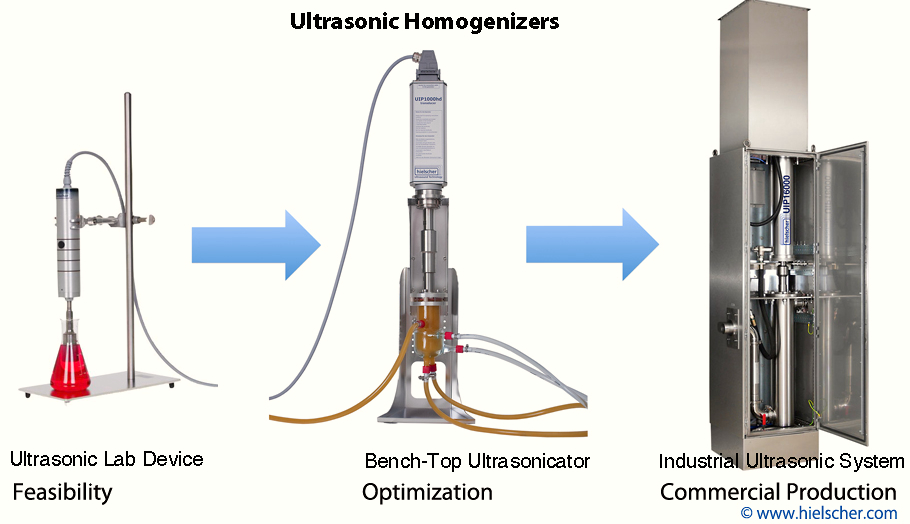
Hielscher مافوق صوت تولید کننده هموژنایزرهای مافوق صوت با کارایی بالا از ازمایشگاه ها تا اندازه صنعتی.