Morteros de cemento reforzados con nanomateriales mediante dispersión ultrasónica
La sonicación ultrasónica mejora la dispersión, la exfoliación y la desaglomeración del grafeno, los nanotubos de carbono (CNT) y los nanomateriales en pastas de cemento y morteros. Los sonicadores de Hielscher permiten la formulación de cementos de alto rendimiento desde la fase de I+D&D a la producción industrial.
Morteros de cemento reforzados con nanomateriales – Mejor dispersión y desaglomeración mediante sonicación
Los morteros y pastas de cemento reforzados con nanomateriales ofrecen una vía prometedora hacia la obtención de materiales de construcción de alto rendimiento. Mediante la incorporación de nanomateriales como el grafeno, el óxido de grafeno, los nanotubos de carbono (CNT), la nanosílice, las nanoarcillas u otros rellenos funcionales, los materiales cementosos pueden diseñarse para mejorar su resistencia mecánica, su resistencia al agrietamiento, su durabilidad, su conductividad eléctrica, reducir su permeabilidad y mejorar su rendimiento a largo plazo.
El problema: El potencial completo de los nanomateriales en los sistemas de cemento solo se alcanza cuando las partículas se dispersan de manera uniforme. Las láminas de grafeno, los haces de nanotubos de carbono (CNT) y otros nanoaditivos tienden a formar aglomerados debido a las fuertes fuerzas de van der Waals, la elevada energía superficial y el entrelazamiento. La agitación convencional, la mezcla con rotor-estator o la simple mezcla de polvos a menudo no logran romper estos aglomerados de forma suficiente. El resultado es una distribución deficiente, puntos débiles en la matriz del mortero, un uso ineficaz de los costosos nanomateriales y propiedades del material inconsistentes.
La solución: Los ultrasonificadores de sonda de Hielscher ofrecen una solución eficaz, escalable y contrastada industrialmente para la dispersión, exfoliación, desaglomeración y entrelazamiento funcional de nanomateriales en pastas de cemento, formulaciones de mortero y suspensiones de precursores. Hielscher desarrolla y fabrica procesadores ultrasónicos para el tratamiento de líquidos, desde estudios de viabilidad en laboratorio hasta la producción industrial en continuo, con una gama diseñada para la ampliación de la escala, desde sistemas de laboratorio compactos hasta equipos industriales de alta potencia.

Sonicador industrial UIP16000hdT para la dispersión a gran escala de nanomateriales en pastas de cemento
Por qué es importante la dispersión de los nanomateriales en los morteros de cemento
Los nanomateriales pueden mejorar significativamente los compuestos cementosos, ya que interactúan con la matriz de cemento a una escala de longitud muy pequeña. El grafeno, los nanotubos de carbono (CNT) y otros nanorellenos, si se dispersan adecuadamente, pueden actuar como puntos de nucleación, cerrar microfisuras, refinar las estructuras porosas y mejorar la transferencia de cargas dentro de la matriz endurecida.
En la práctica, el rendimiento depende menos de la cantidad nominal de nanomaterial añadido y más de la calidad de la dispersión. Una pequeña cantidad de grafeno o de nanotubos de carbono (CNT) bien dispersada puede ofrecer mejores resultados que una cantidad mayor de material mal dispersado. Los aglomerados actúan como defectos en lugar de como refuerzo. Reducen la trabajabilidad, generan concentraciones de tensiones y limitan la superficie efectiva del aditivo.
La dispersión ultrasónica resuelve este reto fundamental en la formulación. El ultrasonido de alta intensidad genera fuertes fuerzas de cizallamiento localizadas, micromezcla, ondas de choque y microchorros de líquido mediante la cavitación acústica. Estos efectos separan los nanomateriales agrupados, humedecen las superficies de las partículas y las distribuyen de manera uniforme por toda la fase líquida antes de que se incorporen al cemento en polvo, a la pasta o al mortero.
Desaglomeración ultrasónica de grafeno, nanotubos de carbono y nanoaditivos
Las nanoplacas de grafeno, el óxido de grafeno, el óxido de grafeno reducido y los nanotubos de carbono resultan especialmente interesantes para los materiales cementosos avanzados. Pueden contribuir a la resistencia a la tracción, la resistencia a la flexión, la tenacidad a la fractura, la conductividad eléctrica, el comportamiento térmico y la durabilidad. Al mismo tiempo, se encuentran entre los aditivos más difíciles de dispersar.
La cavitación ultrasónica ayuda a superar las fuerzas de atracción entre estructuras a escala nanométrica. En un líquido sometido a ultrasonidos, el colapso de las burbujas de cavitación genera un intenso aporte de energía local. Esto permite romper los agrupamientos de partículas, separar los haces de nanotubos de carbono (CNT), exfoliar materiales en capas y mejorar la distribución de los nanorellenos.
Entre los principales efectos de los ultrasonidos en la producción de mortero nanoreforzado se incluyen:
- Desaglomeración: Descomponer los aglomerados de grafeno, nanotubos de carbono, nanosílice o aditivos híbridos en distribuciones de partículas más pequeñas y uniformes.
- Dispersión: Distribuir de manera homogénea nanomateriales en agua, soluciones de plastificantes, mezclas de aditivos o lechadas cementosas.
- Exfoliación: Separar materiales en capas, como el grafito, las nanoplacas de grafeno o las arcillas, en láminas más finas con una mayor superficie activa.
- Humectación y activación: Mejorar el contacto de los líquidos con las superficies de los nanomateriales para lograr una mejor interacción con los hidratos del cemento y los aditivos.
- Entrelazamiento y formación de redes: Favorece la formación de redes distribuidas de nanotubos de carbono (CNT) o grafeno que pueden mejorar la capacidad de puenteo de grietas, la conductividad y la funcionalidad estructural.
- Reproducibilidad: Creación de condiciones de proceso controladas para obtener formulaciones homogéneas, desde los ensayos de laboratorio hasta la escala de producción.
Ventajas de la dispersión ultrasónica en pastas de cemento y morteros
El valor económico y técnico de la sonicación es especialmente notable en la producción de cemento de alto rendimiento. Los nanomateriales suelen ser caros, y su utilidad depende de que se utilicen de forma eficiente. Cuando la sonicación mejora la calidad de la dispersión, los formuladores suelen poder reducir la sobredosificación, aumentar la reproducibilidad y obtener un mayor rendimiento por kilogramo de aditivo.
Para los fabricantes de morteros avanzados, materiales de reparación, componentes prefabricados, materiales cementosos imprimibles en 3D o productos químicos especializados para la construcción, el procesamiento por ultrasonidos puede contribuir a:
- Mejor rendimiento a la compresión, a la flexión y a la tracción gracias a una mejor distribución de los nanorrellenos.
- Mayor resistencia al agrietamiento y mayor tenacidad gracias a un micro-refuerzo más eficaz.
- Se ha reducido la permeabilidad y se ha mejorado la durabilidad gracias al perfeccionamiento de la estructura porosa.
- Una calidad del material más uniforme de un lote a otro.
- Mejor aprovechamiento del costoso grafeno, los nanotubos de carbono (CNT) y otros nanoaditivos.
- Una selección más rápida de formulaciones y una optimización más rápida de los procesos.
- Producción escalable, desde el desarrollo en laboratorio hasta el procesamiento industrial continuo.
- Un mejor control de los parámetros del proceso, como la amplitud, la energía aportada, el caudal, la temperatura y el tiempo de residencia.
Los ultrasonificadores de Hielscher están diseñados para proporcionar una transferencia de energía cuantificable y reproducible en líquidos, suspensiones y lodos. El mismo mecanismo básico de sonicación puede utilizarse en todas las clases de potencia, lo que permite a los clientes desarrollar los parámetros del proceso a pequeña escala y, posteriormente, trasladarlos a sistemas de mesa, piloto o industriales de mayor tamaño.
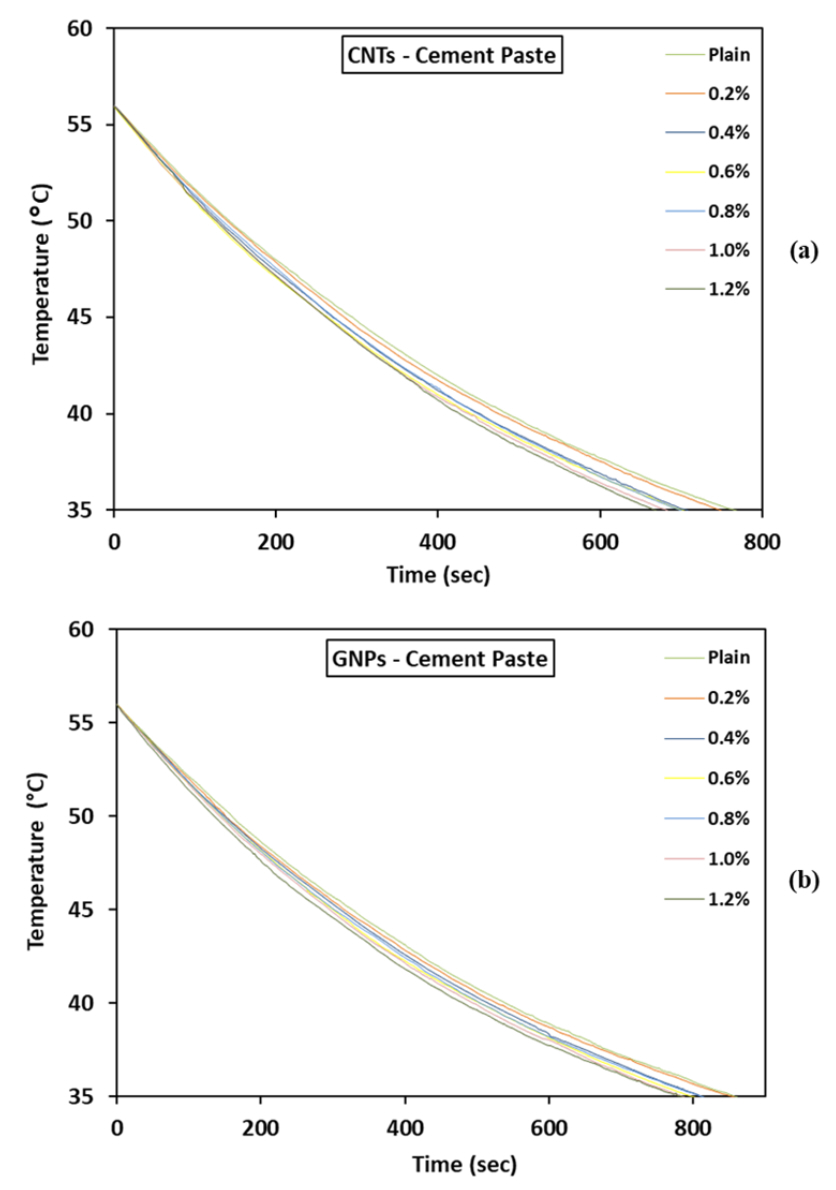
Termografías infrarrojas de pasta de cemento nanomodificada reforzada con (a) nanotubos de carbono (CNT) y (b) nanopartículas de grafeno (GNP). Los nanotubos de carbono y el grafeno se dispersaron con el sonicador UP400S.
Estudio y gráficos: ©Farmaki et al., 2025
Tratamiento por ultrasonidos antes de añadir el cemento: la vía de proceso preferida
En muchas formulaciones de cemento reforzado con nanomateriales, el método más eficaz consiste en dispersar primero el nanomaterial en la fase líquida. Esta puede ser agua, una solución de superplastificante, un dispersante que contenga tensioactivo, un aditivo polimérico, un sol de sílice u otro componente líquido de la formulación del mortero.
Un proceso típico de ultrasonidos consiste en lo siguiente:
- Añade grafeno, nanotubos de carbono u otros nanomateriales a la fase líquida.
- Humedece previamente el polvo o el nanorelleno mientras se remueve moderadamente.
- Aplica ultrasonidos de alta intensidad para desaglomerar y dispersar el material.
- Controla la temperatura si es necesario.
- Añade la nanodispersión tratada con ultrasonidos al cemento, la arena y otros componentes del mortero.
- Mezcla hasta obtener una pasta o mortero con la consistencia deseada.
Este método permite un mejor control que la mezcla en seco de nanopartículas en el cemento en polvo. Además, aumenta la probabilidad de que los nanomateriales ya estén separados, humedecidos y distribuidos de manera uniforme antes de que comiencen la hidratación y el fraguado.

Sonómetro UP400St para la dispersión de lechada de cemento microfino
(Estudio e imagen: ©Draganovic et al., 2020)
Ventajas económicas de la producción de cemento de alto rendimiento
Los nanoaditivos pueden resultar costosos, y su uso debe justificarse mediante mejoras cuantificables en el rendimiento. Una dispersión deficiente supone un desperdicio de material. El grafeno o los nanotubos de carbono (CNT) aglomerados aumentan el coste de la formulación sin aportar el refuerzo esperado. Por el contrario, la dispersión ultrasónica mejora la utilización efectiva de los nanomateriales.
Entre los beneficios económicos se incluyen:
- Menos residuos de aditivos: Una mayor cantidad del nanomaterial contribuye al rendimiento, en lugar de permanecer retenida en aglomerados.
- Menor riesgo en la formulación: Una dispersión uniforme reduce el número de lotes defectuosos y los resultados inestables en los ensayos.
- R más rápido&D ciclos: Las formulaciones pueden someterse a un proceso de selección con parámetros de sonicación controlados.
- Mejora en la ampliación de la producción: Los parámetros del proceso pueden transferirse de las pruebas de viabilidad a los equipos industriales.
- Productos de mayor valor: Los morteros más resistentes, duraderos y funcionales son ideales para aplicaciones de alta calidad.
- Potencial de producción continua: La sonicación en línea permite un procesamiento de alto rendimiento para la fabricación comercial.
Para los fabricantes, el valor clave no es solo una mejor calidad de dispersión, sino la capacidad de convertir el cemento reforzado con nanomateriales de un concepto de laboratorio en un proceso de producción controlado y escalable.
De la formulación en laboratorio a la producción industrial de cemento
Una de las principales ventajas de la tecnología ultrasónica de Hielscher es la facilidad para ampliar la escala de producción. Las formulaciones de cemento reforzado con nanomateriales pueden desarrollarse a escala de laboratorio y, posteriormente, trasladarse a sistemas de mayor tamaño sin alterar el principio fundamental del proceso. En lugar de tener que rediseñar el proceso de dispersión para la producción, los fabricantes pueden ajustar la potencia ultrasónica, la geometría de la célula de flujo, el tiempo de residencia y la configuración del reactor.
Esto reduce el riesgo técnico. Además, acorta el camino desde las muestras de mortero satisfactorias hasta los productos de cemento de alto rendimiento destinados al mercado.
Un flujo de trabajo típico de ampliación de escala incluye:
- Define las prestaciones deseadas del mortero y el sistema de nanomateriales.
- Tamizar grafeno, nanotubos de carbono (CNT), nanosílice o aditivos híbridos.
- Determina la intensidad de sonicación necesaria y la energía aportada.
- Optimizar los medios de dispersión, los aditivos y el control de la temperatura.
- Realice lotes de prueba con los sistemas UIP1000hdT o UIP2000hdT.
- Comprobar las propiedades del mortero, como la resistencia, la trabajabilidad y la durabilidad.
- Traslada el proceso a los clústeres UIP6000hdT o UIP16000hdT para su puesta en producción.
- Integrar la sonicación en línea en la fabricación en continuo.
El cemento de alto rendimiento requiere una dispersión de alta calidad
El futuro de la tecnología del cemento no se basa únicamente en la nueva química de los aglutinantes. También depende de un mejor control de la microestructura, de los aditivos funcionales y del proceso de fabricación. Los nanomateriales, como el grafeno y los nanotubos de carbono (CNT), pueden contribuir a producir materiales cementosos más resistentes, más tenaces, más inteligentes y más duraderos. Pero para ello es necesaria una dispersión fiable.
Los ultrasonificadores de Hielscher ofrecen a los productores de cemento, a los fabricantes de productos químicos para la construcción y a los institutos de investigación una herramienta escalable para el procesamiento de nanoaditivos. Desde las primeras fases de formulación hasta la producción en línea de alto rendimiento, la sonicación mejora la dispersión, la exfoliación, la desaglomeración y la estructuración funcional de los nanomateriales en pastas de cemento y morteros.
Para la producción de cemento de alto rendimiento, el tratamiento por ultrasonidos ofrece una clara ventaja: un mejor rendimiento del material, un uso más eficiente de los costosos nanoaditivos y una vía directa desde el éxito en el laboratorio hasta la fabricación industrial.
En la siguiente tabla encontrará algunas indicaciones sobre la capacidad de procesamiento aproximada de nuestros sonicadores:
| Volumen del lote | Tasa de flujo | Dispositivos recomendados |
|---|---|---|
| 10 a 2000 mL | 20 a 400 mL/min. | UP400St |
| 0,1 a 20 L | 0,2 a 4 L/min | UIP2000hdT |
| 10 a 100 L | 2 a 10 L/min | UIP4000hdT |
| 15 a 150L | De 3 a 15 l/min | UIP6000hdT |
| n.a. | 10 a 100 L/min | UIP16000hdT |
| n.a. | mayor | Grupo de UIP16000hdT |
Sonicadores Hielscher para investigación, pruebas de viabilidad y producción
Hielscher ofrece procesadores ultrasónicos en diferentes clases de potencia: de laboratorio, de sobremesa, piloto e industrial. Esto resulta esencial para los desarrolladores de cemento y mortero, ya que las formulaciones nanoreforzadas suelen tener que pasar por varias etapas: selección inicial de materiales, desarrollo de los parámetros de dispersión, ensayos de mortero, lotes piloto y producción industrial.
La gama de productos de Hielscher se basa en el procesamiento ultrasónico escalable, con sistemas para el desarrollo en laboratorio, pruebas piloto y de banco, operaciones industriales de alta rendimiento y producción continua en línea mediante celdas de flujo y reactores.
UIP1000hdT y UIP2000hdT para investigación en laboratorio y pruebas de viabilidad
Los modelos UIP1000hdT y UIP2000hdT son potentes procesadores ultrasónicos de sobremesa destinados al desarrollo de formulaciones, estudios de viabilidad y procesamiento a escala media. Son ideales para desarrollar formulaciones de cemento nanoreforzado, en las que los investigadores necesitan evaluar el tipo de nanomaterial, la concentración, la composición química del dispersante, la intensidad de la sonicación, el tiempo de procesamiento y el control de la temperatura.
Estos sistemas son ideales para:
- Dispersión de grafeno y nanotubos de carbono (CNT) en agua o en soluciones mixtas.
- Pruebas de viabilidad de pastas de cemento nanoreforzadas.
- Optimización del aporte de energía de sonicación.
- Preparación de lotes de ensayo reproducibles.
- Desarrollo de fórmulas de mortero de alto rendimiento.
- Procesamiento continuo a pequeña escala con configuraciones de celdas de flujo.
- Validación de la ampliación de escala antes de la producción industrial.
para R&Los equipos de la serie D, el UIP1000hdT y el UIP2000hdT, proporcionan la intensidad de proceso necesaria para nanomateriales exigentes, al tiempo que mantienen una configuración práctica para entornos de laboratorio, centros técnicos y plantas piloto.

Clústeres UIP6000hdT y UIP16000hdT para la producción de alto rendimiento
 Para la producción a escala comercial de aditivos para cemento nanoreforzados, nanodispersiones o componentes de mortero de alto rendimiento, los ultrasonificadores industriales de Hielscher, como el UIP6000hdT y el UIP16000hdT, pueden configurarse en grupos para un procesamiento continuo de alto rendimiento.
Los grupos de unidades UIP6000hdT o UIP16000hdT permiten a los fabricantes aumentar la capacidad de procesamiento al tiempo que mantienen un aporte controlado de energía ultrasónica. Este enfoque modular resulta especialmente útil cuando los volúmenes de producción pasan de la escala piloto a la fabricación a gran escala.
Compatibilidad con configuraciones industriales:
- Dispersión continua en línea de grafeno, nanotubos de carbono (CNT) y nanoaditivos.
- Procesamiento de alto rendimiento de dispersiones maestras de nanomateriales.
- Integración en líneas de producción de aditivos para cemento o de mortero premezclado.
- Funcionamiento en paralelo de los reactores ultrasónicos para aumentar la capacidad.
- Entornos de producción robustos que funcionan las 24 horas del día, los 7 días de la semana.
- Control y supervisión de procesos para garantizar una calidad constante del producto.
Los sistemas industriales de Hielscher están diseñados para un funcionamiento continuo en condiciones exigentes, y se ofrecen unidades de alta potencia de hasta 16 kW por dispositivo.

Hielscher Ultrasonics fabrica homogeneizadores ultrasónicos de alto rendimiento para aplicaciones de mezcla, dispersión, emulsificación y extracción a escala de laboratorio, piloto e industrial.
Preguntas frecuentes
¿Por qué se refuerzan el cemento y el mortero con nanomateriales?
 El cemento y el mortero se refuerzan con nanomateriales para mejorar sus prestaciones mecánicas, de durabilidad y funcionales a nivel microestructural. Nanomateriales como el grafeno, los nanotubos de carbono, la nanosílice, las nanoarcillas y las nanopartículas de óxidos metálicos pueden rellenar los poros a escala nanométrica, proporcionar sitios de nucleación para los productos de hidratación del cemento y mejorar la densidad de empaquetamiento de la matriz endurecida.
Gracias a su elevada superficie específica y a su elevada relación de aspecto, los nanomateriales pueden mejorar la transferencia de cargas, cubrir microfisuras y retrasar la propagación de las fisuras. Esto puede aumentar la resistencia a la compresión, la resistencia a la flexión, la resistencia a la tracción, la tenacidad a la fractura y la resistencia a la abrasión.
Los nanomateriales también modifican la estructura porosa de los materiales cementosos. Una red de poros más densa y refinada reduce la permeabilidad, la absorción de agua, la penetración de cloruros, la carbonatación y el ataque químico. Esto mejora la durabilidad y prolonga la vida útil.
Algunos nanomateriales aportan propiedades funcionales que van más allá del refuerzo mecánico. El grafeno y los nanotubos de carbono pueden mejorar la conductividad eléctrica y térmica, lo que permite el desarrollo de cemento con sensores integrados, la monitorización del estado de las estructuras, materiales antiestáticos, blindaje electromagnético o aplicaciones de infraestructura inteligente.
En la práctica, el nano-refuerzo permite a los fabricantes de cemento y mortero formular materiales de mayor rendimiento con una mejor relación resistencia-aglutinante, mayor durabilidad y funcionalidades adicionales. El requisito fundamental es una dispersión homogénea, ya que los nanomateriales aglomerados actúan como defectos en lugar de como refuerzo.
¿En qué medida influye la respuesta térmica de la pasta de cemento en la calidad del cemento?
Cuando el cemento reacciona con el agua, las reacciones de hidratación liberan calor. La termografía infrarroja registra la evolución de la temperatura superficial de la pasta a lo largo del tiempo, por lo que la curva térmica resultante actúa como una huella práctica del sistema cementoso. Estudios recientes han demostrado que la termografía infrarroja permite seguir las curvas de hidratación y predecir los tiempos de fraguado con una fuerte correlación con la calorimetría isotérmica, al tiempo que resulta más adaptable al terreno y no invasiva.
En cuanto a la calidad del cemento, los parámetros más relevantes son:
- Inicio de la hidratación: indica la rapidez con la que el aglutinante comienza a reaccionar tras la adición de agua.
- Velocidad de aumento de la temperatura: indica la cinética de hidratación y la reactividad inicial.
- Temperatura máxima: refleja la intensidad de la liberación de calor y puede revelar diferencias en la finura del cemento, la composición de las fases del clinker, los materiales cementosos complementarios o la dosificación de los aditivos.
- Tiempo hasta alcanzar el pico térmico: se refiere al tiempo de fraguado y al desarrollo inicial de la resistencia.
- Uniformidad térmica en toda la muestra: pone de manifiesto una mezcla deficiente, segregación, aglomerados, una distribución irregular del agua o una dispersión desigual de los aditivos.
- Comparación entre lotes: permite detectar desviaciones en la calidad del cemento, la compatibilidad de los aditivos, la relación agua-cemento o los errores de formulación.
En el control de calidad, la termografía infrarroja resulta especialmente útil porque es un método no destructivo, sin contacto y visualmente intuitivo.
¿Qué es la exfoliación ultrasónica de nanomateriales?
Además de la simple dispersión, el ultrasonido puede utilizarse para la exfoliación de nanomateriales. Esto resulta especialmente relevante en el caso de los nanomateriales en capas, como el grafito, las nanoplacas de grafeno, las pilas de óxido de grafeno o las nanoarcillas. La exfoliación aumenta la superficie activa y puede mejorar el efecto de refuerzo del material en matrices cementosas.
En las aplicaciones relacionadas con el cemento, las plaquetas de grafeno exfoliado proporcionan una mejor interacción con los productos de hidratación y ejercen una mayor influencia en el desarrollo de la microestructura. Esto es relevante para:
- Pastas de cemento mejoradas con grafeno
- Morteros modificados con óxido de grafeno
- Materiales cementosos reforzados con nanoarcilla
- Sistemas híbridos de grafeno y nanotubos de carbono
- Compuestos de cemento conductores
- Compuestos cementosos de alta resistencia y rendimiento ultraalto
¡Descubre más sobre la exfoliación ultrasónica del grafeno!
¿Cuál es la ventaja de la distribución y el entrelazamiento ultrasónicos de los nanotubos de carbono (CNT)?
 Los nanotubos de carbono son nanorrefuerzos muy eficaces, pero su dispersión resulta complicada, ya que los CNT tienden a formar haces y aglomerados enredados de forma natural. El tratamiento ultrasónico permite separar los haces y distribuir los CNT por toda la fase líquida. Si se controla adecuadamente, la sonicación puede ayudar a crear una red funcional de nanotubos en la matriz del mortero, en lugar de aglomerados aislados.
Esto es importante tanto para aplicaciones mecánicas como funcionales del cemento. Una red distribuida de nanotubos de carbono (CNT) puede contribuir a la capacidad de puentear grietas, a la conductividad eléctrica, al comportamiento de los sensores piezorresistivos y al desarrollo de materiales cementosos inteligentes. Por ejemplo, el mortero modificado con CNT puede utilizarse en la monitorización del estado de las estructuras, en el hormigón autosensor, en materiales de reparación conductores o en componentes prefabricados avanzados.
El objetivo no es simplemente “mezclar” Los nanotubos de carbono (CNT), pero también para controlar su posición e interacción dentro de la matriz de cemento. La dispersión ultrasónica ofrece a los formuladores una herramienta práctica para ajustar esta estructura.
¡Descubre más sobre la dispersión ultrasónica de nanotubos de carbono!
Literatura / Referencias
- Dalla, Panagiota T., Ilias K. Tragazikis, George Trakakis, Costas Galiotis, Konstantinos G. Dassios, Theodore E. Matikas (2021): Multifunctional Cement Mortars Enhanced with Graphene Nanoplatelets and Carbon Nanotubes. Sensors 21, no. 3: 933.
- Ilias Κ. Tragazikis, Konstantinos G. Dassios, Panagiota T. Dalla, Dimitrios A. Exarchos, Theodore E. Matikas (2019): Acoustic emission investigation of the effect of graphene on the fracture behavior of cement mortars. Engineering Fracture Mechanics, Volume 210, 2019. 444-451.
- Bibi, U., Bahrami, A., Shabbir, F., Imran, M., Nasir, M. A., Ahmad, A. (2023): Graphene-Based Strain Sensing of Cementitious Composites with Natural and Recycled Sands. Sensors, 23(16), 2023. 7175.
- Farmaki, S. G., Dalla, P. T., Exarchos, D. A., Dassios, K. G., & Matikas, T. E. (2025): Thermal and Electrical Properties of Cement-Based Materials Reinforced with Nano-Inclusions. Nanomanufacturing, 5(3), 13; 2025.
- elevada eficiencia
- Tecnología punta
- fiabilidad & robustez
- control de procesos preciso y ajustable
- lote & en línea
- para cualquier volumen
- software inteligente
- funciones inteligentes (por ejemplo, programables, protocolo de datos, control remoto)
- Manejo sencillo y seguro
- Bajo mantenimiento
- CIP (limpieza in situ)
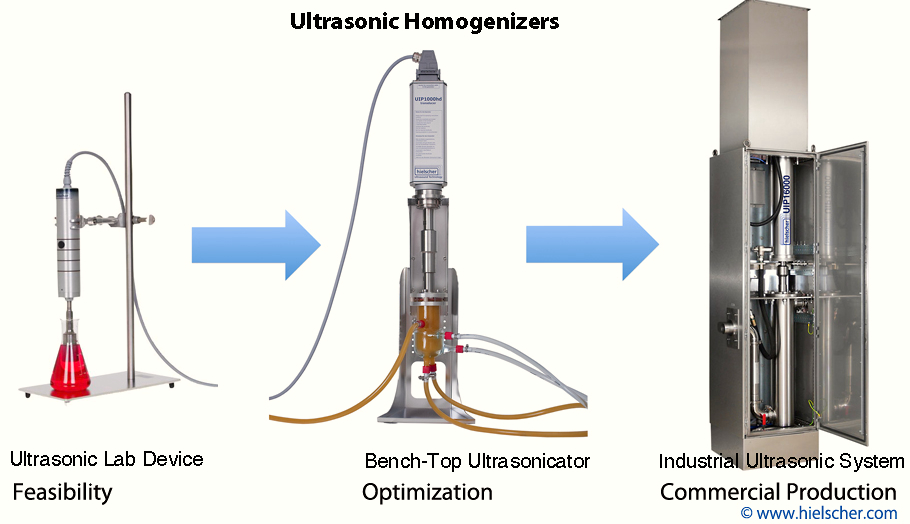
Hielscher Ultrasonics fabrica homogeneizadores ultrasónicos de alto rendimiento de laboratorio a tamaño industrial.