Сонохимична редукция на паладиеви наночастици
Палладият (Pd) е добре известен със своите каталитични свойства и се използва широко в изследванията на материалите, производството на електроника, медицината, пречистването на водород и различни химически приложения. Чрез сонохимичен метод размерът и морфологията на паладиевите частици могат да се контролират чрез регулиране на съотношението PVP/Pd. Това позволява ултразвуковата синтеза както на много фини, монодисперсни наночастици, така и на по-големи паладиеви агрегати, като размерите на частиците могат да се адаптират за постигане на оптимална каталитична ефективност.
Ултразвуково производство на паладиеви наночастици
 Ултразвуковото редуциране на наночастици от паладий предлага бърз и икономичен по отношение на реагентите метод за получаване на наночастици Pd(0) чрез използване на акустична кавитация за създаване на локализирани условия с висока енергия и редуциращи радикали в разтвора, което позволява редуцирането на паладиевите йони без необходимост от традиционна високотемпературна обработка.
Ключово предимство е контролът върху процеса: времето на ултразвукова обработка и концентрацията на стабилизатора, като например съотношението PVP/Pd, могат да повлияят на това дали продуктът ще се образува като добре диспергирани, заоблени наночастици с размер около 5 nm или като по-големи агрегати с размер около 20 nm, което е от значение за промишленото приложение, тъй като ефективността на паладия в катализа зависи силно от размера на частиците, морфологията, дисперсията и повърхностната площ. Тъй като наночастиците от паладий са широко използвани като хетерогенни катализатори, електрокатализатори и функционални материали, ултразвуковото редуциране е привлекателен метод за получаване на фино диспергирани Pd катализатори при сравнително меки условия в течна фаза, с потенциални ползи за химичния синтез, екологичната катализа, технологиите за горивни клетки и други процеси, при които високата каталитична активност и ефективното използване на благородни метали са икономически важни.

Промишлена обработка на наночастици със сонатор UIP2000hdT
Процедура за подготовка на пробите
Пробите бяха подготвени, както следва:
За пробите — смеси от 30 ml EG и 5,10-6mol PVP бяха приготвени чрез магнитно разбъркване в продължение на 15 минути. Към различните проби бяха добавени различни количества разтвор на Pd(NO₃)₂ – 1,5 mL и 2 mL. Смесите за пробите бяха приготвени в съотношение 2·10-3mol Pd(NO₃)₂ в проба (а) и 2,66·10-3mol Pd(NO₃)₂ в проба (б). Двете смеси бяха подложени на ултразвукова обработка във флакон с обем 20 mL с помощта на ултразвуков апарат със сонда. Пробите бяха взети след времена на ултразвукова обработка от 30, 60, 90, 120, 150 и 180 минути.
Анализът на резултатите от експеримента показва, че:
- 1. Сонохимичната редукция на Pd(II) до Pd(0) зависи от времето на ултразвук.
- 2. Високото моларно съотношение PVP/Pd(II) води до образуването на монодисперсни паладиеви частици със заоблена форма и среден диаметър около 5nm.
- 3. Въпреки това, ниското PVP/Pd(II) моларно съотношение включва получаването на агрегати паладиеви наночастици с голямо разпределение по размер, центрирано при 20nm.
Сонохимичният път на редуциране на паладиеви (II) йони Pd(II) към паладиеви атоми Pd(0) може да се приеме, че е следното:
- (1) Пиролиза на вода: H₂O → •OH + •H
- (2) Образуване на радикали: RH (редуктор) + •OH(•H) → •R + H₂O(H₂)
- (3) Редукция на йоните: Pd(II) + редуциращи радикали (•H, •R) → Pd(0) + R•CHO + H+
- (4) Образуване на частици: NPd(0) → Pdn
Резултат: В зависимост от съотношението PVP/Pd(II), диспергиран или агрегиран PdN бяха получени.
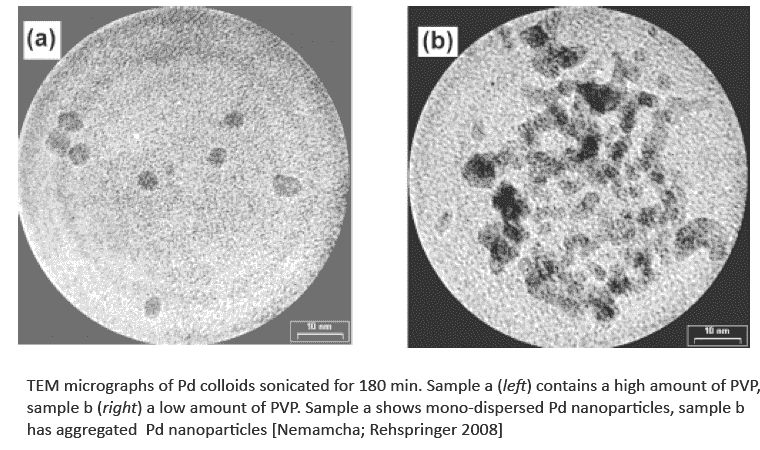
Сонохимично редуциране на паладий: проба а (вляво) съдържа голямо количество PVP, а проба б (вдясно) – малко количество PVP. Продължителност на ултразвуковата обработка с UP100H: 180 мин. Проба а показва монодисперсни наночастици от Pd, а проба б – агрегирани наночастици от Pd.
Илюстрации и изследване: ©Nemamcha и Rehspringer, 2008
Анализ и резултати
UV-видимите абсорбционни анализи потвърждават връзката между сонохимичната редукция на паладиеви йони (II) до паладиеви (0) атоми и времето на задържане в ултразвуковото поле. Редукцията на паладиеви йони (II) до паладиеви (0) атоми прогресира и може да бъде напълно постигната с увеличаване на времето за ултразвук. Микроснимките на трансмисионната електронна микроскопия (TEM) показват, че:
- Когато се добави голямо количество PVP, сонохимичното редуциране на паладиевите йони води до образуването на монодисперсни паладиеви частици със сферична форма и среден диаметър от приблизително 5 nm.
- При използването на малко количество PVP се получават агрегати от наночастици на паладий. Измерванията чрез динамично светлинно разсейване (DLS) показват, че агрегатите от наночастици на паладий имат широко разпределение на размерите, със среден размер 20 nm.

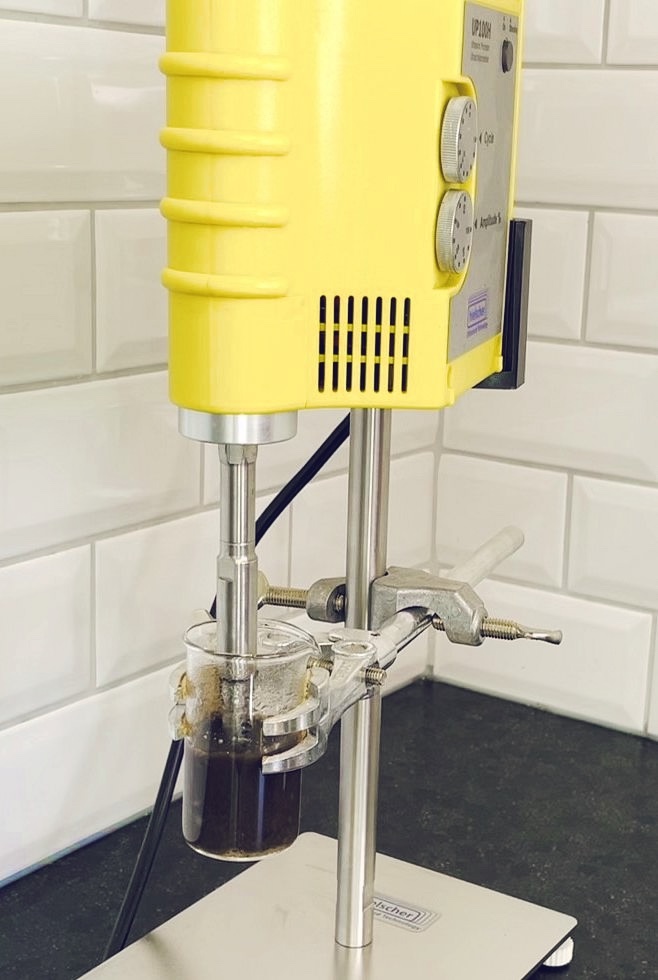
Лабораторният ултразвуков апарат UP100H се използва за получаване на наночастици от паладий.

Паладиеви (Pd) наночастици могат да бъдат получени чрез ултразвук
Проектиране, производство и консултиране – Качество, произведено в Германия
Ултразвуковите апарати Hielscher са добре известни със своите най-високи стандарти за качество и дизайн. Здравината и лесната работа позволяват безпроблемното интегриране на нашите ултразвукови апарати в промишлени съоръжения. Тежките условия и взискателните условия се справят лесно с ултразвуковите апарати на Hielscher.
Hielscher Ultrasonics е сертифицирана по ISO компания и поставя специален акцент върху високопроизводителните ултразвукови уреди, отличаващи се с най-съвременна технология и удобство за потребителя. Разбира се, ултразвуковите апарати на Hielscher са съвместими с CE и отговарят на изискванията на UL, CSA и RoHs.
Литература/Препратки
- Nemamcha, A.; Rehspringer, J. L. (2008): Morphology of dispersed and aggregated PVV-Pd nanoparticles prepared by ultrasonic irradiation of Pd(NO₃)₂ solution in ethylene glycol. Rev. Adv. Mater. Sci. 18;2008. 685-688.
- Prekob, Á., Muránszky, G., Kocserha, I. et al. (2020): Sonochemical Deposition of Palladium Nanoparticles Onto the Surface of N-Doped Carbon Nanotubes: A Simplified One-Step Catalyst Production Method. Catalysis Letters 150, 2020. 505–513.
- Haitao Zheng, Mphoma S. Matseke, Tshimangadzo S. Munonde (2019): The unique Pd@Pt/C core-shell nanoparticles as methanol-tolerant catalysts using sonochemical synthesis. Ultrasonics Sonochemistry, Volume 57, 2019. 166-171.
Факти, които си струва да знаете
Какво е паладий?
Палладият е рядък, сребристо-бял благороден метал с химичен символ Pd и атомен номер 46. Той принадлежи към металите от платиновата група и се цени, защото е химически стабилен, проводи електричество, абсорбира водород и действа като отличен катализатор. Фино раздробеното паладий е особено ефективно при реакции на хидрогениране и дехидрогениране, а нагрятото паладий позволява на водорода да се дифузира през него, което го прави полезно за отделяне и пречистване на водород.
За какво се използват наночастиците от паладий?
Наночастиците от паладий се използват предимно като катализатори с голяма повърхност. Тъй като наночастиците разполагат с много по-голяма активна повърхност в сравнение с паладия в масивно състояние, те могат да повишат ефективността на катализатора и да намалят необходимото количество от скъпия благороден метал. Типичните приложения включват химичен синтез, реакции на хидрогениране, реакции на свързване въглерод–въглерод, електрокатализа, изследвания в областта на горивните клетки, детекция и съхранение на водород, екологична катализа, както и някои области на биомедицинските изследвания, като например антимикробни, фототермични и противоракови системи. Каталитичното поведение на паладия зависи силно от размера, морфологията и дисперсията на частиците.
Наночастиците от паладий се използват и за легиране на други частици с цел постигане на каталитични свойства. Прочетете повече за ултразвуковия метод за синтез на Pd/N-BCNT като катализатор по метода на Фишер-Тропш!
Токсичен ли е паладият?
Обикновено се счита, че елементарният метален паладий има ниска токсичност и няма известна биологична роля, но съединенията, солите, праховете и наноразмерните форми на паладия трябва да се боравят внимателно. Професионалната или лабораторната експозиция може да предизвика дразнене или сенсибилизация в зависимост от съединението и начина на експозиция, като например разтворите на паладиев хлорид могат да дразнят лигавиците. При промишлена работа практичният отговор е: металичното паладий в насипно състояние е с относително нисък риск, но праховете от паладий, разтворимите соли на паладия и наночастиците от паладий трябва да се третират като потенциално опасни материали, като се осигуряват мерки за контрол на праха, вентилация, ръкавици, защита на очите и правилно боравене с отпадъците.