Thử nghiệm xói mòn do hiện tượng xâm thực thực tế đối với các lớp phủ bằng đồng biển
Thử nghiệm xói mòn do hiện tượng xâm thực có ích nhất khi nó kết nối quá trình phơi nhiễm được kiểm soát trong phòng thí nghiệm với một vấn đề kỹ thuật thực tế. Một ví dụ thực tế là việc đánh giá các lớp phủ đồng chống xói mòn do hiện tượng xâm thực do cavitation dành cho các bộ phận hàng hải như bánh lái và cánh quạt tàu. Các bộ phận này hoạt động trong các khu vực mà sự dao động áp suất cục bộ có thể tạo ra các bong bóng hơi nước, sau đó vỡ ra gần bề mặt, gây ra các tải trọng va đập cường độ cao lặp đi lặp lại. Theo thời gian, điều này dẫn đến hiện tượng rỗ bề mặt, hư hỏng do mỏi, lớp phủ bị hỏng và mất vật liệu.
Thử nghiệm xói mòn do hiện tượng xâm thực của các lớp phủ bằng đồng thau
Trong nghiên cứu của Hauer và cộng sự, các lớp phủ đồng được tạo ra bằng phương pháp phun lạnh, phun ấm, phun HVOF và phun hồ quang đã được so sánh với đồng niken-nhôm đúc và thép đóng tàu. Câu hỏi trọng tâm rất đơn giản: quy trình phủ nào có thể tạo ra bề mặt đồng chịu được tác động của hiện tượng xâm thực do xâm thực đủ lâu để sử dụng trong môi trường hàng hải? Để trả lời câu hỏi này, các nhà nghiên cứu đã sử dụng thử nghiệm xói mòn do hiện tượng xâm thực dựa trên tiêu chuẩn ASTM G32-16 với thiết bị rung, bao gồm hệ thống rung siêu âm Hielscher UIP1000hdT làm hệ thống thử nghiệm.

Máy siêu âm UIP1000hdT (1000W, 20kHz) Thiết bị thử nghiệm xói mòn do hiện tượng xâm thực
Kiểm soát chính xác các điều kiện thử nghiệm và ghi chép dữ liệu tự động
Máy siêu âm UIP1000hdT rất phù hợp cho loại thử nghiệm này vì nó tạo ra sóng siêu âm cường độ cao, tần số thấp trong dải tần được sử dụng cho thử nghiệm xói mòn do hiện tượng xâm thực. Thiết lập thử nghiệm xói mòn do hiện tượng xâm thực sử dụng máy siêu âm 1000 watt hoạt động ở tần số 20 kHz, cho phép giám sát quy trình chính xác, kiểm soát biên độ, đo nhiệt độ và tự động ghi lại dữ liệu thử nghiệm. Các chức năng này rất quan trọng vì cường độ xâm thực do hiện tượng cavitation phụ thuộc mạnh mẽ vào biên độ, nhiệt độ chất lỏng, áp suất chất lỏng, hình dạng đầu dò siêu âm và khoảng cách giữa đầu dò siêu âm và mẫu thử.
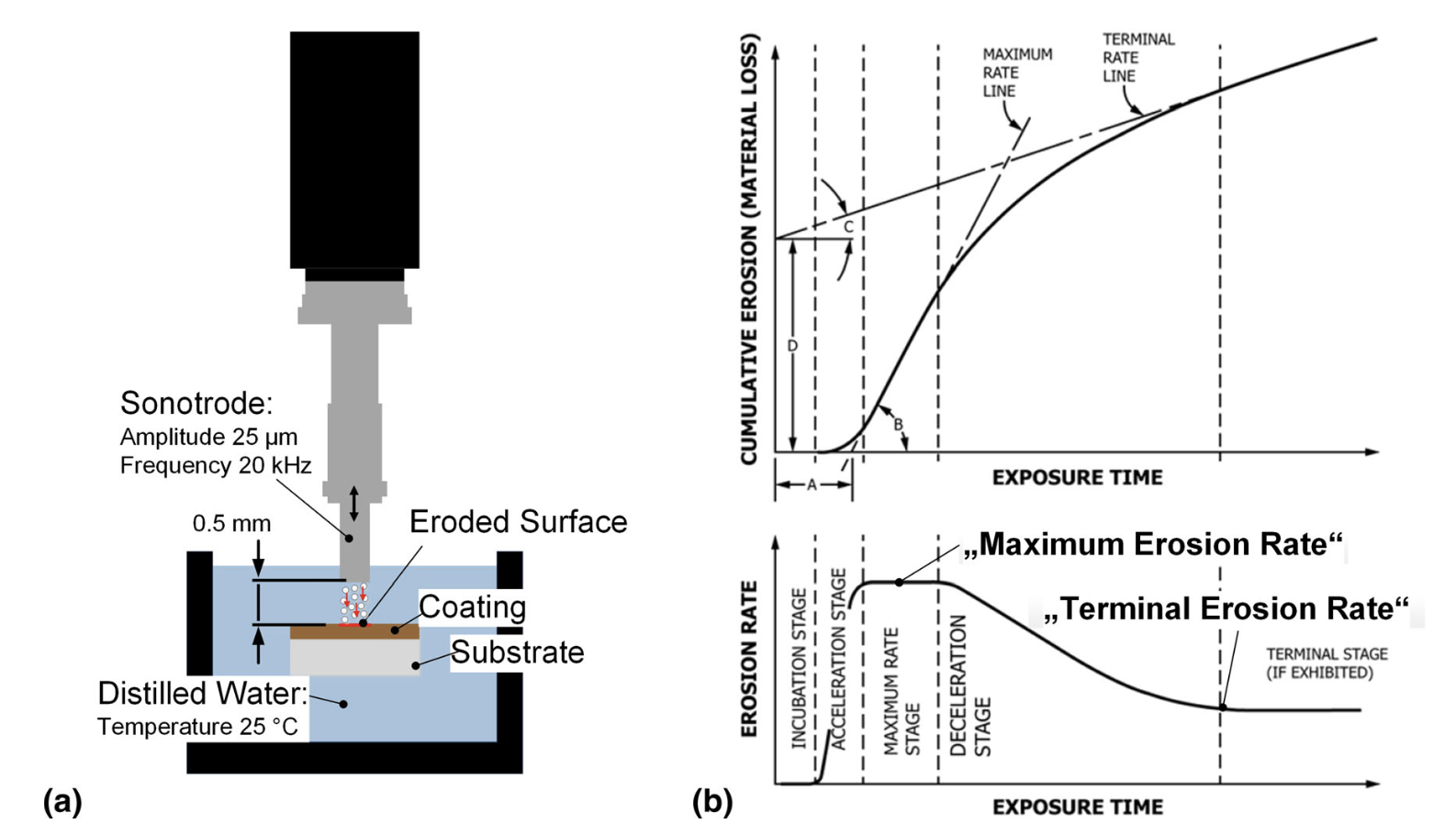
(a) Thử nghiệm xói mòn do hiện tượng xâm thực theo tiêu chuẩn ASTM G32-16 bằng máy tạo sóng siêu âm UIP1000hd (phương pháp gián tiếp). Tất cả các thông số thử nghiệm đều là giá trị danh định; các dung sai được nêu trong tiêu chuẩn.
(b) Các giai đoạn sơ đồ trên đường cong xói mòn theo thời gian và các thông số đặc trưng trong quy trình thử nghiệm.
Hình ảnh và nghiên cứu: ©Hauer và cộng sự, 2021.
Thử nghiệm xói mòn do hiện tượng cavitation siêu âm đối với các lớp phủ bằng đồng thau
Đối với ví dụ về lớp phủ đồng biển, thử nghiệm được thực hiện theo phương pháp gián tiếp theo tiêu chuẩn ASTM G32. Trong cấu hình này, mẫu thử không được gắn vào còi rung. Thay vào đó, đầu dò siêu âm tạo ra hiện tượng xâm thực trong nước cất, và mẫu thử đã được phủ lớp phủ được cố định bên dưới đầu dò siêu âm với khoảng cách xác định. Hauer và cộng sự đã sử dụng khoảng cách 0,5 mm giữa mẫu thử và đầu dò siêu âm, tần số 20 kHz và biên độ đỉnh-đỉnh là 50 µm. Chất lỏng thử nghiệm là nước cất, được duy trì ở nhiệt độ xấp xỉ nhiệt độ phòng, khoảng 25 °C.
Chuẩn bị mẫu là một bước quan trọng. Trước khi tiếp xúc với hiện tượng xâm thực, các bề mặt được phủ lớp phủ đã được mài và đánh bóng theo từng bước bằng vật liệu mài kim cương mịn có kích thước dưới 4 µm. Điều này giúp giảm thiểu ảnh hưởng của các hạt bám lỏng lẻo hoặc các bất thường trên bề mặt, vốn có thể bong ra ngay lập tức và làm sai lệch đường cong xâm thực. Mục tiêu không phải là làm cho lớp phủ trông đẹp mắt, mà là tạo ra một điều kiện ban đầu có thể tái tạo được, để sự mất khối lượng đo được phản ánh khả năng chống xói mòn do hiện tượng xâm thực, chứ không phải do việc chuẩn bị bề mặt không tốt.

Tế bào thử nghiệm có thể điều chỉnh độ cao để kiểm tra xói mòn xâm thực (ASTM G32-16)
Quy trình thử nghiệm xói mòn do hiện tượng cavitation siêu âm và kết quả thu được
Quy trình thử nghiệm thực tế rất đơn giản. Đầu tiên, mỗi mẫu thử được làm sạch, sấy khô và cân trên cân chính xác. Sau đó, mẫu được đặt vào buồng thử nghiệm bên dưới đầu phát sóng BS4d22 của máy siêu âm UIP1000hdT với khe hở 0,5 mm được điều chỉnh cẩn thận và lặp lại chính xác. Máy siêu âm được vận hành ở biên độ và tần số đã định, trong khi nhiệt độ chất lỏng được kiểm soát để ngăn chặn sự gia nhiệt làm thay đổi cường độ xâm thực. Sau một khoảng thời gian tiếp xúc đã định, mẫu thử được lấy ra, làm sạch, sấy khô và cân lại. Chuỗi thao tác này được lặp lại với các khoảng thời gian tiếp xúc tăng dần tùy thuộc vào vật liệu cho đến khi thu được đường cong xâm thực hoàn chỉnh.
Đo lường ban đầu là sự mất khối lượng. Để so sánh trong kỹ thuật, sự mất khối lượng này được chuyển đổi thành sự mất thể tích bằng cách sử dụng mật độ vật liệu. Sau đó, sự mất thể tích được chia cho diện tích bề mặt tiếp xúc để xác định độ sâu xói mòn trung bình. Từ đường cong độ sâu xói mòn, nhà nghiên cứu có thể tính toán các thông số xói mòn đặc trưng như tốc độ xói mòn tối đa, tốc độ xói mòn cuối cùng và độ sâu xói mòn trung bình. Hielscher cũng lưu ý rằng xói mòn có thể được báo cáo dưới dạng khối lượng, thể tích hoặc độ sâu xâm nhập trên đơn vị thời gian hoặc trên đơn vị năng lượng siêu âm được cung cấp, tùy thuộc vào quy trình được chọn.
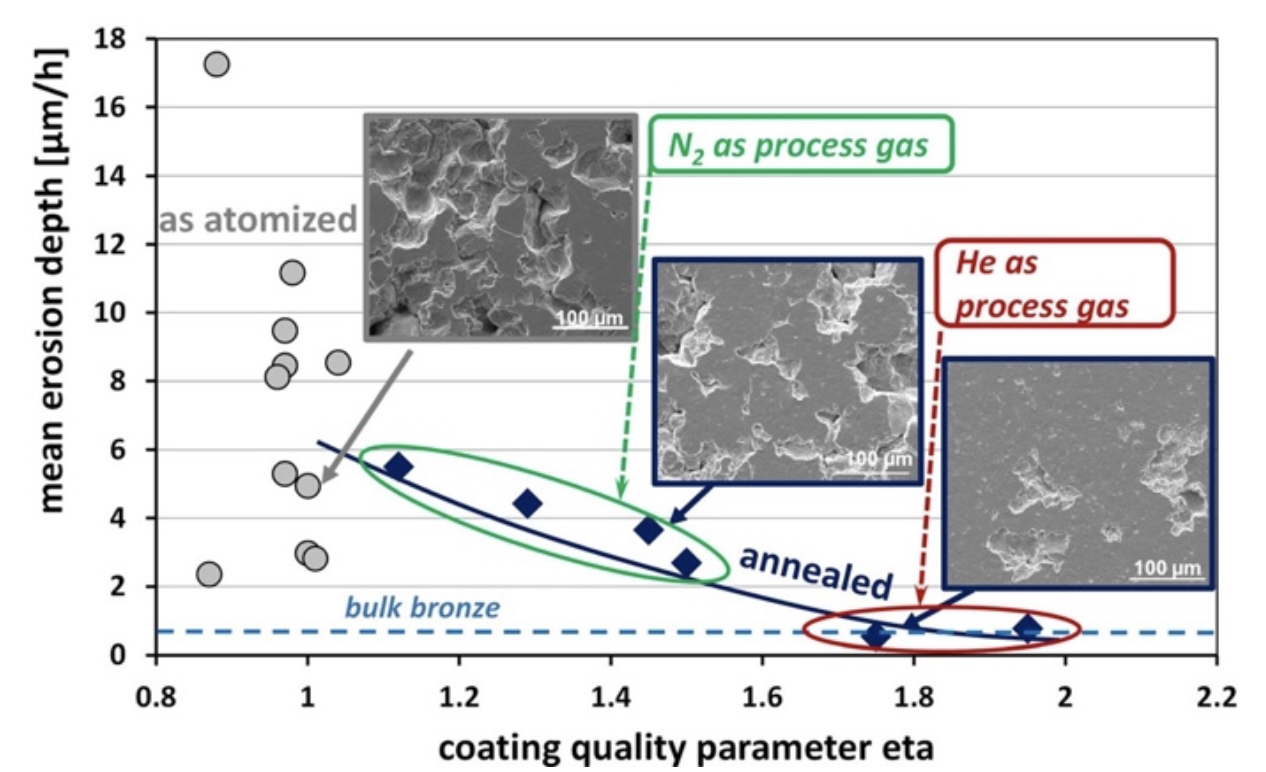
Độ sâu xói mòn trung bình phụ thuộc vào các thông số chất lượng lớp phủ đã được điều chỉnh n. Quá trình ủ bột, từ đó làm giảm độ bền của bột, giúp đạt được chất lượng lớp phủ cao. Các hình chèn cho thấy mức độ hư hỏng bề mặt thu được sau thời gian thử nghiệm xâm thực bằng cavitation là 100 phút.
Biểu đồ và nghiên cứu: ©Hauer và cộng sự, 2021.
Một bài học quan trọng từ nghiên cứu của Hauer là tốc độ mài mòn ban đầu có thể gây hiểu lầm. Các lớp phủ được phun bằng phương pháp nhiệt và động học thường cho thấy mức hao hụt vật liệu ban đầu cao, sau đó là tốc độ mài mòn thấp hơn và ổn định hơn. Vì lý do này, Hauer và các cộng sự đã sử dụng tốc độ mài mòn cuối cùng làm chỉ số đại diện hơn cho hiệu suất lâu dài của lớp phủ. Trong so sánh kéo dài 120 phút của họ, tốc độ mài mòn cuối cùng được đánh giá chủ yếu từ nửa sau của thử nghiệm, tức là sau 60 phút, để phản ánh chính xác hơn hành vi ổn định của lớp phủ.
Kết quả thử nghiệm cho thấy lý do tại sao thiết bị tạo xâm thực rung có kiểm soát lại có giá trị. Đồng thau niken-nhôm đúc đạt tốc độ xâm thực cuối cùng khoảng 0,40 µm/h. Lớp phủ đồng thau phun nóng được tối ưu hóa đạt 0,57 µm/h, gần bằng giá trị tham chiếu của vật liệu đúc. Lớp phủ đồng được phun hồ quang đã tối ưu hóa trên thép đóng tàu đạt khoảng 1,02 µm/h, trong khi lớp phủ HVOF đã tối ưu hóa đạt khoảng 1,74 µm/h. Ngay cả khi các lớp phủ này không hoàn toàn tương đương với đồng thau đúc của cánh quạt, chúng vẫn vượt trội hơn hẳn so với thép đóng tàu; nghiên cứu cho biết các lớp phủ phun hồ quang và phun HVOF lần lượt đạt khả năng chống xói mòn do cavitation tốt hơn khoảng 26 lần và 16 lần so với thép VL-A.

Mẹo có thể thay thế cho ASTM G32 – Kiểm tra xói mòn hang động
Sử dụng máy siêu âm (Sonicator) làm thiết bị rung trong các thử nghiệm xói mòn do hiện tượng cavitation
 Kết luận thực tiễn là việc thử nghiệm xói mòn do hiện tượng xâm thực bằng máy tạo sóng siêu âm UIP1000hdT làm thiết bị rung không chỉ dừng lại ở việc xếp hạng các vật liệu. Thử nghiệm này còn làm sáng tỏ cách thức mà quy trình phủ lớp, cấu trúc vi mô, hàm lượng oxit, độ xốp, độ bám dính tại giao diện và quá trình xử lý sau ảnh hưởng đến hành vi xói mòn thực tế. Hauer và các cộng sự đã kết luận rằng phương pháp phun HVOF và phun hồ quang có thể mang lại sự cân bằng hiệu quả giữa hiệu suất và chi phí trong việc cải thiện bề mặt bánh lái bằng thép, trong khi phương pháp phun lạnh và phun ấm được ưu tiên khi cần độ bền chống xói mòn do hiện tượng xâm thực gần bằng đồng thau niken-nhôm nguyên khối.
Đối với các phòng thí nghiệm và các nhà phát triển công nghệ phủ, chìa khóa để đạt được kết quả có thể lặp lại chính là việc kiểm soát chặt chẽ các thông số thử nghiệm: biên độ sonotrode, tần số, khoảng cách giữa sonotrode và mẫu, nhiệt độ dung dịch, thành phần hóa học của dung dịch, quy trình chuẩn bị mẫu, khoảng thời gian cân đo, và tính toán tốc độ ăn mòn. Khi các điều kiện này được xác định rõ ràng, thiết bị Hielscher UIP1000hdT cung cấp một phương pháp thực tiễn và có thể lặp lại để chuyển đổi hiện tượng xâm thực siêu âm thành dữ liệu định lượng về hiệu suất lớp phủ.

Bảng tính mẫu để kiểm tra xói mòn hang động
Bạn có thể tìm thấy hướng dẫn về các thử nghiệm xói mòn do hiện tượng cavitation tại đây!
Thiết bị thử nghiệm xói mòn do hiện tượng xâm thực theo tiêu chuẩn ASTM G32
Các máy siêu âm UIP500hdT, UIP1000hdT, UIP15000hdT và UIP2000hdT phù hợp để thực hiện thử nghiệm theo tiêu chuẩn ASTM G32. Chúng tôi có thể cung cấp kèm theo mỗi thiết bị này một thiết bị đo chính xác Giao thức đo biên độ của biên độ cơ học tại đầu sonotrode. Chúng tôi khuyến nghị sử dụng một trong hai thiết bị này cùng với sonotrode BS4d22 (đường kính 22 mm) và giá đỡ ST2.
| Sonicator | Công suất siêu âm | tần số |
|---|---|---|
| UIP500hdt | 500W | 20kHz |
| UIP1000hdt | 1000W | 20kHz |
| UIP1500hdT | 1500W | 20kHz |
| UIP2000hdT | 2000W | 20kHz |

ASTM G32 -16 15.9mm Sonotrode với đầu có thể thay thế
Thiết kế, sản xuất và tư vấn – Chất lượng Sản xuất tại Đức
Hielscher ultrasonicators nổi tiếng với chất lượng cao nhất và tiêu chuẩn thiết kế của họ. Mạnh mẽ và hoạt động dễ dàng cho phép tích hợp trơn tru của ultrasonicators của chúng tôi vào các cơ sở công nghiệp. Điều kiện khắc nghiệt và môi trường đòi hỏi dễ dàng được xử lý bởi Hielscher ultrasonicators.
Hielscher Ultrasonics là một công ty được chứng nhận ISO và đặc biệt nhấn mạnh vào ultrasonicators hiệu suất cao có công nghệ tiên tiến và thân thiện với người dùng. Tất nhiên, Hielscher ultrasonicators là CE tuân thủ và đáp ứng các yêu cầu của UL, CSA và RoHs.

Xói mòn hang động trên bề mặt titan
Các câu hỏi thường gặp
Tiêu chuẩn ASTM G32-16 là gì?
ASTM G32-16 là phương pháp thử nghiệm tiêu chuẩn của ASTM International dùng để đo lường sự ăn mòn do hiện tượng xâm thực bằng cách sử dụng thiết bị rung. Trong nghiên cứu được trích dẫn, phương pháp này được áp dụng trong một bố trí gián tiếp với sonotrode 20 kHz, biên độ đỉnh-đỉnh 50 µm và khoảng cách giữa mẫu và sonotrode là 0,5 mm.
Lớp phủ đồng là gì?
Lớp phủ đồng là các lớp bề mặt hợp kim có thành phần chính là đồng, chẳng hạn như đồng-niken-nhôm hoặc đồng-mangan-nhôm, được phủ lên vật liệu nền thông qua các quy trình như phun lạnh, phun ấm, phun HVOF hoặc phun hồ quang. Chúng được sử dụng để nâng cao khả năng chống mài mòn, chống ăn mòn và chống xói mòn do hiện tượng xâm thực, đặc biệt là trên các bộ phận hàng hải.
Thử nghiệm xói mòn do hiện tượng cavitation được sử dụng để làm gì?
Thử nghiệm xói mòn do hiện tượng xâm thực được sử dụng để định lượng mức độ bền của vật liệu hoặc lớp phủ trước những hư hại do sự vỡ tan của các bong bóng xâm thực gây ra. Phương pháp này đo lường lượng vật liệu bị mất theo thời gian, chuyển đổi thành độ sâu xói mòn, đồng thời đánh giá các thông số như tốc độ xói mòn tối đa và tốc độ xói mòn cuối cùng nhằm so sánh vật liệu và lựa chọn quy trình.
Các thiết bị rung siêu âm có được sử dụng cho các phương pháp thử nghiệm khác không?
Đúng vậy. Ngoài tiêu chuẩn ASTM G32-16, các thiết bị rung siêu âm (sonicator) có thể hỗ trợ các nghiên cứu so sánh về hiện tượng xói mòn do hiện tượng xâm thực hoặc độ bền của lớp phủ.
Khám phá cách thức thử nghiệm xói mòn do hiện tượng cavitation được áp dụng cho các lớp phủ đồng thau hàng hải!
Hơn nữa, dao động siêu âm được sử dụng trong thử nghiệm mỏi trục, đặc biệt là trong chế độ mỏi chu kỳ rất cao. Một mẫu thử được điều chỉnh để đạt cộng hưởng dọc – – thường ở mức khoảng 20 kHz – phải chịu lực kéo tuần hoàn – nén.
Hãy khám phá cách sử dụng dao động siêu âm trong thử nghiệm mỏi theo trục của các mẫu thử!
Văn học / Tài liệu tham khảo
- Hielscher Cavitation Erosion Test Protocol – ASTM G32
- Hauer, Michél; Gärtner, Frank; Krebs, Sebastian; Klassen, Thomas; Watanabe, Makoto; Kuroda, Seiji; Krömmer, Werner; Henkel, Knuth-Michael (2021): Process Selection for the Fabrication of Cavitation Erosion-Resistant Bronze Coatings by Thermal and Kinetic Spraying in Maritime Applications. Journal of Thermal Spray Technology 30, 2021.
- Bolewski, Łukasz; Szkodo, Marek; Kmieć, Mateusz (2017): Cavitation erosion degradation of Belzona® coatings. Advances in Materials Science. 17, 2017.
- Kmieć, Mateusz; Karpiński, Bartłomiej; Szkodo, Marek (2016): Cavitation Erosion of P110 Steel in Different Drilling Muds. Advances in Materials Science. 16, 2016.
- Müller, Saskia; Fischper, Maurice; Mottyll, Stephan; Skoda, Romuald; Hussong, Jeanette (2014): Analysis of the cavitating flow induced by an ultrasonic horn – Experimental investigation on the influence of actuation phase, amplitude and geometrical boundary conditions. EPJ Web of Conferences 67, 2014.
- Hiệu quả cao
- Công nghệ tiên tiến
- Độ tin cậy & Mạnh mẽ
- Điều chỉnh, kiểm soát quá trình chính xác
- mẻ & Inline
- cho bất kỳ khối lượng nào
- Phần mềm thông minh
- Tính năng thông minh (ví dụ: có thể lập trình, ghi nhật ký dữ liệu, điều khiển từ xa)
- Dễ dàng và an toàn để vận hành
- bảo trì thấp
- CIP (sạch tại chỗ)
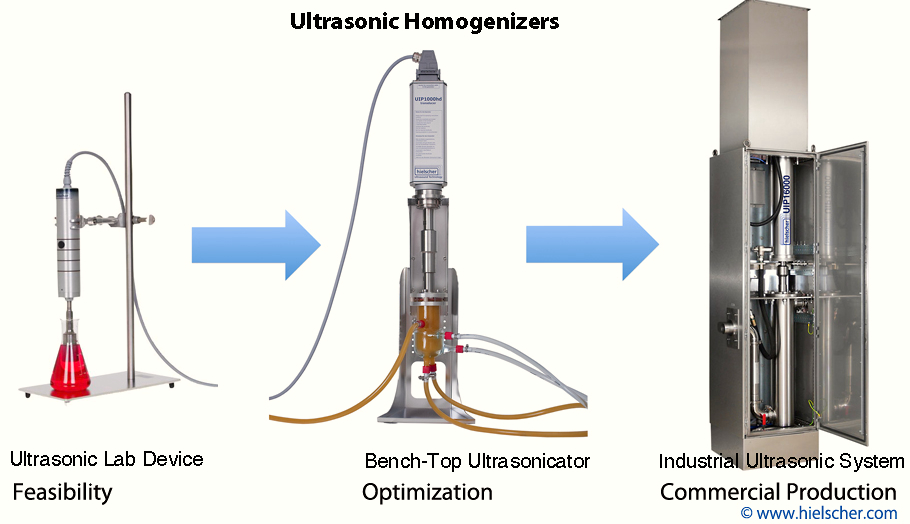
Hielscher Ultrasonics sản xuất homogenizers siêu âm hiệu suất cao từ phòng thí nghiệm đến quy mô công nghiệp.