Ультразвукове електролітичне вилучення металів у промислових цілях
Оскільки світовий попит на мідь, нікель, кобальт, цинк, срібло, золото, рідкісні метали та матеріали, що використовуються у виробництві акумуляторів, продовжує зростати, виробники металів відчувають тиск з метою отримання більшої вигоди з руд, концентратів, хвостів, вторинної сировини та низькосортної сировини. У гідрометалургії одним із найпоширеніших способів вилучення металів є електроліз, також відомий як електроекстракція: розчинені іони металів вилучаються з розчину вилуговування за допомогою електричного струму, який призводить до відновлення іонів та осадження металу на катоді.
Ультразвукове електролітичне вилучення для підвищення ефективності гідрометалургійного вилучення металів
Ультразвукове електролітичне вилучення розвиває цей принцип, поєднуючи електролітичне вилучення з високоінтенсивним ультразвуком. У результаті утворюється ультразвуково-електрохімічний процес, у якому спільно діють акустична кавітація, мікропотоки та електрохімічне відновлення. Замість того, щоб покладатися лише на електричний потенціал та звичайну циркуляцію електроліту, соноелектроліз забезпечує інтенсивне локальне перемішування безпосередньо на межі розділу з електродом або поблизу неї, де фактично відбувається осадження металу. За даними численних досліджень, ультразвук покращує масообмін, порушує дифузійний шар, очищає поверхні електродів, видаляє бульбашки газу та сприяє підвищенню швидкості електрохімічних реакцій.

Електросонікація з використанням сонотрода та стінки реактора в якості електродів.

Ультразвукові електроди: 2 ультразвукові перетворювачі збурюють відповідно анод і катод. Ультразвукові електроди або ультразвукові датчики одночасно виконують функції електродів та ультразвукових датчиків, що сприяє покращенню процесу електролізу.
Від руди до катода: як працює ультразвукове електроосадження
Промислове електролітичне вилучення зазвичай починається з вилуговування. На цьому попередньому етапі цільовий метал розчиняється з руди, концентрату, технологічних залишків, шлаку, чорної маси, електронних відходів або іншої металургійної сировини у водний розчин. Залежно від хімічного складу металу та руди, вилужувач може бути кислим, лужним, на основі хлоридів, сульфатів, ціанідів, аміаку, органічних кислот або іншим чином хімічно адаптованим для розчинення ціннісної металевої фази.
Після вилуговування насичений розчин зазвичай освітлюють, очищують та регулюють за показниками рН, провідності, температури, концентрації металу та складу домішок. У електролізері цей електроліт, що містить метал, протікає між анодом і катодом. При подачі регульованого струму розчинені іони металу мігрують і відновлюються на поверхні катода, де утворюють твердий металевий осад. У процесі ультразвукового електролізу в це електрохімічне середовище подається ультразвук, завдяки чому акустична енергія посилює перенесення іонів та оновлення прикордонного шару електродів.
Якщо говорити просто, послідовність процесів така:
- Вилуговування: Цінні метали вилучаються з руди або вторинної сировини шляхом розчинення.
- Підготовка розчину: Вилуговувальний розчин очищують або коригують з метою підвищення селективності та поліпшення характеристик осадження.
- Ультразвуково-електрохімічне осадження: В електролізері одночасно діють ультразвук та електричний струм.
- Відновлення катода: Металеві осади вилучаються у вигляді листів, порошку, губки, фольги або в інших формах, залежно від технологічної схеми.
- Рециркуляція електроліту: Використаний електроліт можна регенерувати, переробити або повернути в гідрометалургійний цикл.

Вбудована ультразвуково-електрохімічна установка
Чому ультразвукова обробка покращує процес електролізу
 Головним вузьким місцем у багатьох системах електролітичного вилучення є не лише сама електрична реакція. Це також подача свіжих іонів металу на поверхню катода, видалення продуктів реакції та бульбашок газу, а також підтримання активної, чистої та однорідної поверхні електрода. Ультразвук дозволяє безпосередньо усунути ці обмеження.
Коли ультразвук високої потужності потрапляє в електроліт, він викликає акустичну кавітацію: утворюються мікроскопічні бульбашки, які коливаються та руйнуються. Ці руйнування генерують мікрострумені, ударні хвилі та інтенсивне локальне зсувне напруження. У процесі обробки в рідкій фазі це може призводити до локалізованого перемішування, мікроперемішування, диспергування, деагломерації та прискореного міжфазного транспорту.
Ультразвукова та соноелектротехнологія компанії Hielscher базується на контрольованій акустичній кавітації для обробки рідин, де ультразвукові хвилі створюють кавітаційні поля, які генерують зсувні сили, ударні хвилі, мікрострумені та забезпечують відтворюваний перенос енергії в рідини, суспензії та шлами.
У процесі електролітичного вилучення ці ефекти є особливо цінними, оскільки електрохімічна реакція відбувається на поверхні. Ультразвук може зменшувати градієнти концентрації поблизу електрода, стискати або руйнувати дифузійний шар, а також безперервно доставляти свіжі іони металу до катода. У недавніх роботах, присвячених ультразвуковому посиленню електрохімічного масопереносу, описується посилення струму за рахунок стиснення дифузійного шару під дією акустичного потоку, тоді як дослідження з ультразвукового осадження вказують на поліпшення переносу іонів завдяки ефектам кавітації, мікропотоків та акустичного тиску.
Синергія: ультразвукова обробка в поєднанні з електрохімією
Перевага ультразвукового електролізу полягає не лише в тому, що ультразвук “перемішує” Рішення. Зонди Hielscher Sono-Electro-Probes поєднують ультразвукові зонди та електроди, які одночасно подають ультразвук високої інтенсивності та електричний струм в електрохімічну систему. При цьому ключовим моментом є синергетичне поєднання двох енергетичних полів: електрична енергія прискорює реакцію відновлення іонів металів, тоді як акустична енергія покращує фізичні та міжфазні умови, за яких відбувається ця реакція.
Ця синергія може принести низку переваг, що мають промислове значення:
- Більш інтенсивний масообмін: Ультразвукова обробка покращує надходження розчинених іонів металу до поверхні катода, зменшуючи локальне виснаження.
- Більш чисті поверхні електродів: Кавітація та акустична течія сприяють видаленню пасивуючих плівок, слабко прикріплених частинок, бульбашок газу та продуктів реакції.
- Потенціал підвищення ефективності використання струму: Більш активний інтерфейс електрода може зменшити втрати, пов’язані з концентраційною поляризацією та закупорюванням поверхні, хоча кінцевий ККД залежить від хімічного складу електроліту та робочих параметрів.
- Більш рівномірне нанесення: Електроосадження з використанням ультразвуку забезпечує утворення більш гладких, щільних і однорідних осадів, а також структури з дрібнішим зерном.
- Прискорена кінетика електроосадження: Посилений масообмін та активація поверхні можуть забезпечити вищі швидкості осадження в оптимізованих умовах.
- Обмеження, пов’язані зі зниженою дифузією: Впливаючи на прикордонний шар біля електрода, ультразвук може сприяти більш рівномірному осадженню навіть за умови відносно низької концентрації металу.
- Покращене поводження зі складними електролітами: Ультразвукове перемішування може сприяти обробці суспензій, дрібних частинок та складних розчинів вилуговування, покращуючи дисперсію та зменшуючи локальні застійні зони.
Це робить соно-електроліз особливо привабливим для гідрометалургійних циклів, де традиційний електроліз обмежується повільною кінетикою, незадовільною морфологією осаду, поляризацією концентрації, забрудненням електродів, покриттям бульбашками газу або низькою концентрацією іонів металу.
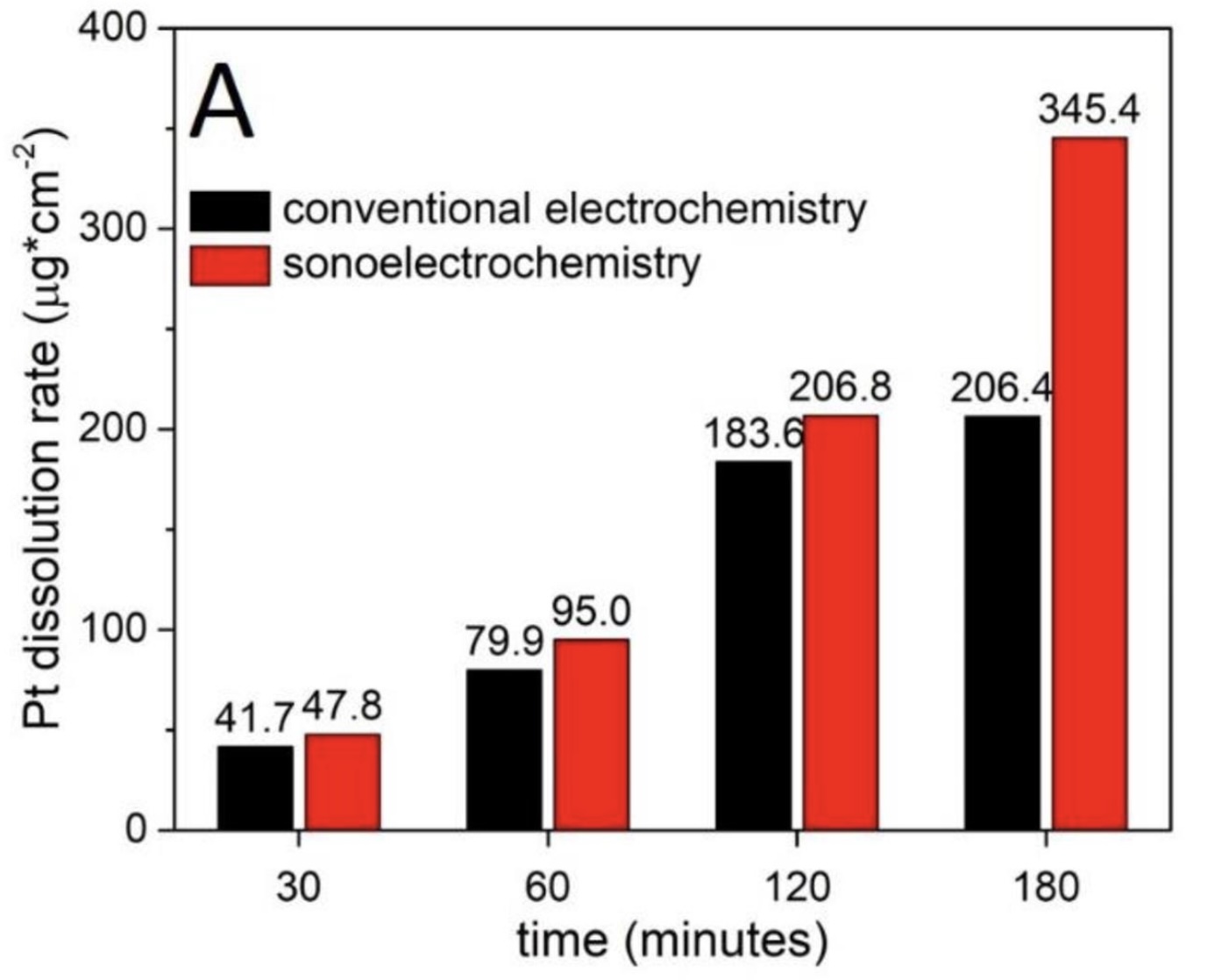
Швидкості розчинення на Pt-електродах: традиційні та соноелектрохімічні методи.
Дослідження та графіки: ©Vasile та ін., 2021
Переваги промислового застосування для видобутку металів
У промисловому видобутку металів цінність ультразвукового електролізу полягає в інтенсифікації процесу. За умови правильного узгодження потужності ультразвукового впливу, геометрії електродів, складу електроліту та щільності струму можна потенційно отримати більшу кількість металу за коротший час, забезпечивши при цьому кращу морфологію осаду та більш стабільну роботу комірки.
На практиці соно-електроліз сприяє:
- Вилучення з розчинів низької концентрації: Покращений масообмін може сприяти підтримці процесу осадження навіть тоді, коли концентрації розчиненого металу не є оптимальними.
- Покращення якості катода: Більш гладкі та однорідні відкладення можуть спростити подальші етапи — очищення, плавлення, рафінування або обробку порошку.
- Менша схильність до обростання: Постійне оновлення поверхні може зменшити вплив пасивації та небажаних поверхневих плівок.
- Більш компактна конструкція технологічного процесу: Більш швидка кінетика може забезпечити використання менших клітин або більшу пропускну здатність, залежно від хімічних особливостей процесу.
- Покращене видобування з вторинних ресурсів: Чорна маса акумуляторів, електронні відходи, каталізатори, шлаки та промислові залишки часто утворюють складні розчини вилуговування, у яких важливе значення має інтенсифікація масообміну.
- Краща керованість процесом: Сучасні ультразвукові системи можна інтегрувати в періодичні або безперервні потокові установки та налаштовувати за допомогою регулювання амплітуди, часу перебування, витрати, температури та енергоспоживання.
Ультразвуково-електричні системи Hielscher є унікальними: ультразвуковий електрод одночасно виконує функції ультразвукового датчика та електрода. Ультразвуково-електричні установки розроблені з урахуванням масштабованої обробки рідин — від лабораторних випробувань до пілотних випробувань та промислового поточного виробництва. Ультразвук високої потужності, можливість безперервної роботи 24/7, промислова надійність та мінімальні вимоги до технічного обслуговування роблять соно-електросистеми Hielscher ідеальним рішенням для промислового соно-електровидобутку.
Лінійне масштабування за допомогою контрольованих параметрів, таких як амплітуда, енергоспоживання, витрата, температура та час перебування, дозволяє значно збільшити виробничі потужності.
Ультразвукове електролітичне вилучення в технологічному ланцюгу «вилуговування — електролітичне вилучення»
На традиційному гідрометалургійному заводі електроліз часто здійснюється після вилуговування, розділення твердої та рідкої фаз, очищення, а іноді й екстракції розчинником або іонного обміну. Ультразвуковий електроліз можна інтегрувати в цей наступний етап вилучення, щоб прискорити перетворення розчинених іонів металу на твердий метал.
Типовий технологічний маршрут може виглядати так:
- Подрібнену руду, концентрат, хвости або вторинну сировину піддають вилуговуванню для розчинення цільового металу.
- Нерозчинна пуста порода, залишкові тверді речовини та небажані фази видаляються або їх кількість зменшується.
- Розчин з вилученими металами хімічно регулюють для селективного електролітичного вилучення.
- Електроліт подається в електролітичну комірку, оснащену ультразвуковими електродами та системою циркуляції.
- Ультразвукова обробка покращує транспорт іонів та оновлення поверхні електрода, тоді як під дією прикладеного струму метал осідає на катоді.
- Металевий продукт вилучають, а електроліт переробляють або направляють на подальшу обробку.
Ця комбінація є особливо цікавою в тих випадках, коли металодобувна промисловість має переробляти сировину, що представляє більшу складність. Багато видів майбутньої сировини містять нижчий вміст металу, більше домішок, дрібніші частинки, змішані хімічні сполуки або мають мінливий склад. Ультразвукове електролітичне вилучення відкриває можливість зробити етап електрохімічного вилучення більш надійним завдяки поліпшенню взаємодії між електролітом та поверхнею електрода.

Ультразвуковий зонд виконує функцію електрода. Ультразвукові хвилі сприяють електрохімічним реакціям, що призводить до підвищення ефективності, вищого виходу та швидшої швидкості перетворення.
Соноелектрохімія значно покращує процеси електроосадження.
Ультразвуково-електрохімічне вилучення металів: вищі виходи при нижчих технологічних витратах
Електровидобуток вже є наріжним каменем гідрометалургії, оскільки дозволяє отримувати метали з водних розчинів у вигляді високоцінних твердих продуктів. Ультразвуковий електровидобуток вдосконалює традиційну електроекстракцію за рахунок підвищення ефективності вилучення, ефективності струму та зниження енергоспоживання.
Синергетичний ефект потужного ультразвуку та електролітичного вилучення дозволяє подолати фізичні обмеження електрохімічного інтерфейсу та сприяє більш інтенсивному, контрольованому й потенційно ефективнішому вилученню металів. У гірничодобувній, переробній та металургійній галузях ця технологія допомагає подолати розрив між дедалі складнішою сировиною та потребою у чистіших, більш селективних методах вилучення з вищою пропускною здатністю.
Ультразвукове електролітичне вилучення як засіб інтенсифікації технологічного процесу
Майбутнє видобутку металів залежатиме від того, чи вдасться видобувати більше металу з більш складних родовищ. У багатьох регіонах запаси високоякісних руд скорочуються, тоді як попит на мідь, нікель, кобальт, літієві метали, дорогоцінні метали та рідкісні елементи зростає. Водночас галузь розширює сферу своєї діяльності, переходячи від первинних руд до вторинних ресурсів, таких як відпрацьовані акумулятори, електронний брухт, каталізатори, промислові відходи та технологічні стоки.
Ультразвукове електролітичне вилучення є перспективною стратегією інтенсифікації технологічного процесу в даній галузі. Поєднуючи селективність електрохімічного вилучення металів із міжфазною дією ультразвукової кавітації, ця технологія дозволяє покращити масообмін, активність електродів, морфологію осаду та надійність процесу. Для промислових підприємств це означає більш ефективний шлях перетворення вилужених іонів металів у метал, придатний для вилучення.
Коротко кажучи, соно-електроліз перетворює поверхню катода на більш динамічну зону реакції. Ультразвукова обробка підтримує активність електрохімічного інтерфейсу; електрохімія перетворює розчинені іони на метал; і разом вони створюють потужну платформу для сучасного гідрометалургійного видобутку.
Високоефективні ультразвуково-електричні зонди та ультразвуково-електричні реактори
Hielscher Ultrasonics - ваш давній досвідчений партнер для високопродуктивних ультразвукових систем. Ми виробляємо та розповсюджуємо найсучасніші ультразвукові зонди та реактори, які використовуються у всьому світі для важких умов експлуатації в складних умовах. Для соноелектрохімії компанія Hielscher розробила спеціальні ультразвукові зонди, які можуть виступати в якості катода та/або анода, а також ультразвукові реакторні комірки, придатні для електрохімічних реакцій. Ультразвукові електроди та елементи випускаються для гальванічних / вольтаїчних, а також електролітичних систем.
Зв'яжіться з нами зараз і розкажіть нам про свої вимоги до електрохімічного процесу! Ми порекомендуємо Вам найбільш підходящі ультразвукові електроди та налаштування реактора!
Зв'яжіться з нами! / Запитайте нас!

Hielscher Ultrasonics виробляє високоефективні ультразвукові гомогенізатори для змішування, диспергування, емульгування та екстракції в лабораторних, пілотних та промислових масштабах.
Поширені запитання
Що таке електроліз?
Електроліз — це електрохімічний процес вилучення металу, під час якого розчинені іони металу відновлюються з водного електроліту й осідають у вигляді твердого металу на катоді. Розчин, що містить метал, зазвичай отримують шляхом вилуговування руд, концентратів, відходів або вторинної сировини, після чого під дією електричного струму відбувається селективне вилучення цільового металу.
Що таке «соно-електрозонд»?
Ультразвуково-електричний зонд — це комбінований ультразвуковий зонд та електрод, який одночасно подає ультразвук високої інтенсивності та електричний струм в електрохімічну систему. Як соноелектрод, він створює акустичну кавітацію та мікропотоки на поверхні електрода або поблизу неї, що покращує масообмін, руйнує дифузійні шари, видаляє бульбашки газу або пасивуючі плівки, а отже, інтенсифікує електрохімічні реакції, такі як електроосадження, електровидобуток, електроокислення та електровідновлення.
Які існують сфери застосування соноелектрохімії?
Соноелектрохімія може застосовуватися в різних процесах і в різних галузях промисловості. До дуже поширених застосувань соноелектрохімії можна віднести наступні:
- Синтез наночастинок (електросинтез)
- синтез водню
- Електрокоагуляція
- Очищення стічних вод
- омічний нагрів
- Розбивання емульсій
- Гальванічне покриття / Електроосадження
Література / Список літератури
- Еугеніу Васіле, Адріан Чоканеа, Віорел Іонеску, Іоан Лепадату, Корнелія Діак, Сербан Н. Стаматін (2021): Як здешевити дорогоцінні метали: Соноелектрохімічний — гідродинамічний кавітаційний метод рекуперації металів платинової групи з відпрацьованих автомобільних каталізаторів. «Ultrasonics Sonochemistry», том 72, 2021 рік.
- Шеріф С. Рашван, Ібрагім Дінчер, Атеф Мохані, Бруно Г. Поллет (2019): Процес «Sono-Hydro-Gen» (виробництво водню під дією ультразвуку): виклики та можливості. «International Journal of Hydrogen Energy», том 44, випуск 29, 2019 р., 14500–14526.
- Юрдал К.; Карахан І.Х. (2017): Дослідження методом циклічної вольтаметрії процесу електроосадження плівок сплаву міді та цинку: вплив тривалості ультразвукової обробкиActa Physica Polonica, т. 132, 2017. С. 1087–1090.
- Мейсон, Т.; Саес Бернал, В. (2012): Вступ до соноелектрохімії У: «Потужний ультразвук в електрохімії: від універсального лабораторного інструменту до інженерного рішення», перше видання. Під редакцією Бруно Г. Полле. 2012, видавництво «John Wiley» & Sons, ТОВ
- Хаас, І.: «Думки А.» (2008): Синтез наночастинок металевого магнію методом соноелектрохімії. Chemical Communications 15(15), 2008. 1795–1798.
- Ашассі-Сорхабі, Х.; Багері, Р. (2014): Соноелектрохімічний та електрохімічний синтез плівок поліпіролу на сталі St-12 та дослідження їх корозійних властивостей і морфології. «Досягнення в галузі технології полімерів», т. 33, вип. 3; 2014 р.
- Соноелектрохімічний синтез підвищує ефективність хімічного виробництва

Ультразвуковий UIP2000hdT (2000 Вт, 20 кГц) у вигляді катода та/або анода в резервуарі