Sonochemická redukcia nanočastíc paládia
Palládium (Pd) je dobre známe svojimi katalytickými vlastnosťami a široko sa využíva aj vo výskume materiálov, vo výrobe elektroniky, v medicíne, pri čistení vodíka a v rôznych chemických aplikáciách. Pomocou sonochemickej metódy je možné regulovať veľkosť a morfológiu častíc paládia úpravou pomeru PVP/Pd. To umožňuje ultrazvukovú syntézu buď veľmi jemných, monodisperzných nanočastíc, alebo väčších agregátov paládia, čím je možné prispôsobiť rozmery častíc tak, aby dosahovali optimálny katalytický výkon.
Ultrazvuková výroba nanočastíc paládia
 Ultrazvuková redukcia nanočastíc paládia ponúka rýchly spôsob výroby nanočastíc Pd(0) s úsporným využívaním činidiel, a to prostredníctvom akustickej kavitácie, ktorá vytvára lokalizované podmienky s vysokou energiou a redukčné radikály v roztoku, čím umožňuje redukciu iónov paládia bez použitia bežných vysokoteplotných procesov.
Kľúčovou výhodou je kontrola procesu: doba sonikácie a koncentrácia stabilizátora, ako napríklad pomer PVP/Pd, môžu ovplyvniť, či sa produkt vytvorí vo forme dobre dispergovaných, zaoblených nanočastíc s veľkosťou okolo 5 nm, alebo vo forme väčších agregátov s veľkosťou okolo 20 nm, čo je z priemyselného hľadiska dôležité, pretože výkonnosť paládia v katalýze silne závisí od veľkosti častíc, morfológie, disperzie a povrchovej plochy. Keďže nanočastice paládia majú široké uplatnenie ako heterogénne katalyzátory, elektrokatalyzátorov a funkčných materiálov, je ultrazvuková redukcia atraktívna pre výrobu jemne dispergovaných Pd katalyzátorov za pomerne miernych podmienok v kvapalnej fáze, s potenciálnymi prínosmi pre chemickú syntézu, environmentálnu katalýzu, technológie palivových článkov a iné procesy, kde je vysoká katalytická aktivita a efektívne využitie ušľachtilých kovov ekonomicky dôležité.

Priemyselné spracovanie nanočastíc so sonikátorom UIP2000hdT
Postup prípravy vzorky
Vzorky boli pripravené nasledovne:
Pre vzorky zmesi 30 ml EG a 5·10-6mol PVP sa pripravil magnetickým miešaním po dobu 15 minút. Do jednotlivých vzoriek sa pridali rôzne množstvá roztoku Pd(NO₃)₂, a to 1,5 ml a 2 ml. Zmesi vzoriek sa pripravili v pomere 2·10-3mol Pd(NO₃)₂ vo vzorke (a) a 2,66·10-3mol Pd(NO₃)₂ vo vzorke (b). Obidve zmesi boli ošetrene ultrazvukom v 20 ml skúmavke pomocou ultrazvukového zariadenia so sondou. Vzorky boli odobraté po 30, 60, 90, 120, 150 a 180 minútach ošetrenej ultrazvukom.
Analýza experimentálnych výsledkov ukazuje, že:
- 1. Sonochemická redukcia Pd(II) na Pd(0) závisí od času sonikácie.
- 2. Vysoký molárny pomer PVP/Pd(II) vedie k tvorbe monodispergovaných častíc paládia so zaobleným tvarom a stredným priemerom asi 5 nm.
- 3. Nízky molárny pomer PVP/Pd(II) však zahŕňa získanie agregátov nanočastíc paládia s veľkou distribúciou veľkosti so stredom na 20 nm.
Sonochemická cesta redukcie iónov paládia (II) Pd(II) na atómy paládia Pd(0) možno predpokladať, že sú tieto:
- (1) Pyrolýza vody: H₂O → •OH + •H
- (2) Tvorba radikálov: RH (redukčné činidlo) + •OH(•H) → •R + H₂O(H₂)
- (3) Redukcia iónov: Pd(II) + redukčné radikály (•H, •R) → Pd(0) + R•CHO + H+
- (4) Tvorba častíc: NPd(0) → Pdn
Výsledok: V závislosti od pomeru PVP/Pd(II) rozptýlené alebo agregované PdN boli získané.
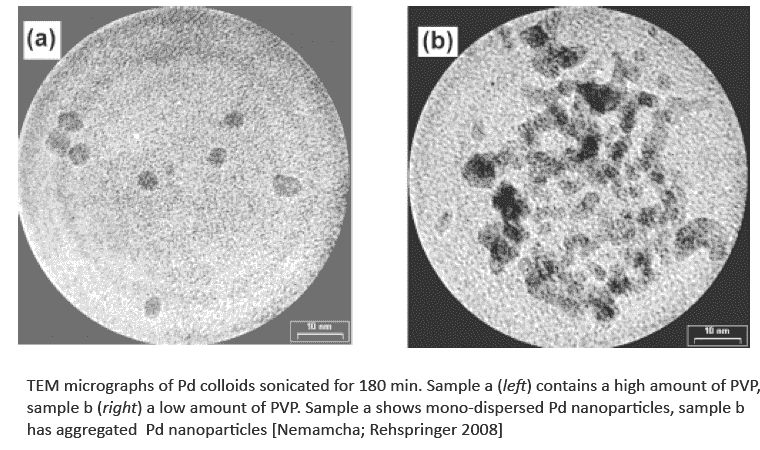
Sonochemická redukcia paládia: vzorka a (vľavo) obsahuje vysoké množstvo PVP, vzorka b (vpravo) nízke množstvo PVP. Doba sonikácie pomocou zariadenia UP100H: 180 min. Vzorka a vykazuje monodisperzné nanočastice Pd, vzorka b agregované nanočastice Pd.
Obrázky a štúdia: ©Nemamcha a Rehspringer, 2008
Analýza a výsledky
Absorpčné analýzy viditeľného UV žiarenia potvrdzujú vzťah medzi sonochemickou redukciou iónov paládia(II) na atómy paládia(0) a retenčným časom v ultrazvukovom poli. Redukcia iónov paládia(II) na atómy paládia(0) postupuje a dá sa úplne dosiahnuť predĺžením času sonikácie. Mikrosnímky transmisnej elektrónovej mikroskopie (TEM) ukazujú, že:
- Pri pridaní veľkého množstva PVP vedie sonochemická redukcia iónov paládia k tvorbe monodisperzných častíc paládia sférického tvaru s priemerným priemerom približne 5 nm.
- Použitie malého množstva PVP vedie k vzniku agregátov nanočastíc paládia. Merania pomocou dynamického rozptylu svetla (DLS) ukazujú, že agregáty nanočastíc paládia majú široké rozloženie veľkostí so strednou hodnotou 20 nm.

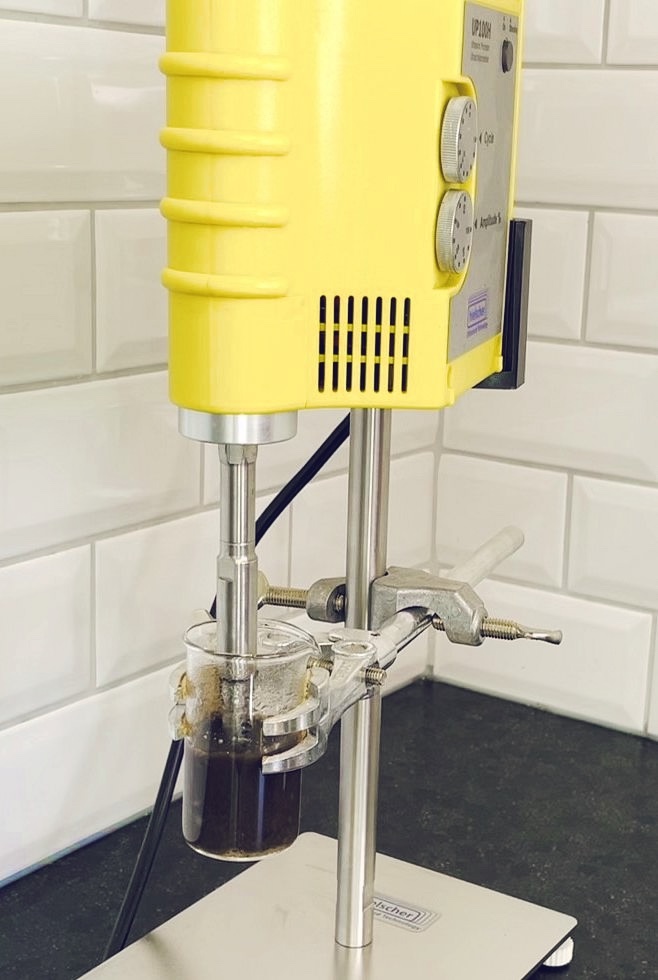
Laboratórny ultrazvukový prístroj UP100H sa používa na prípravu nanočastíc paládia.

Nano častice paládia (Pd) je možné pripraviť sonikáciou
Dizajn, výroba a poradenstvo – Kvalita vyrobená v Nemecku
Ultrazvukové prístroje Hielscher sú známe svojou najvyššou kvalitou a dizajnovými štandardmi. Robustnosť a jednoduchá obsluha umožňujú bezproblémovú integráciu našich ultrazvukových prístrojov do priemyselných zariadení. Drsné podmienky a náročné prostredie ľahko zvládnu ultrazvukové prístroje Hielscher.
Hielscher Ultrasonics je spoločnosť s certifikáciou ISO a kladie osobitný dôraz na vysokovýkonné ultrazvukové prístroje s najmodernejšou technológiou a užívateľskou prívetivosťou. Ultrazvukové prístroje Hielscher sú samozrejme v súlade s CE a spĺňajú požiadavky UL, CSA a RoHs.
Literatúra/Referencie
- Nemamcha, A.; Rehspringer, J. L. (2008): Morphology of dispersed and aggregated PVV-Pd nanoparticles prepared by ultrasonic irradiation of Pd(NO₃)₂ solution in ethylene glycol. Rev. Adv. Mater. Sci. 18;2008. 685-688.
- Prekob, Á., Muránszky, G., Kocserha, I. et al. (2020): Sonochemical Deposition of Palladium Nanoparticles Onto the Surface of N-Doped Carbon Nanotubes: A Simplified One-Step Catalyst Production Method. Catalysis Letters 150, 2020. 505–513.
- Haitao Zheng, Mphoma S. Matseke, Tshimangadzo S. Munonde (2019): The unique Pd@Pt/C core-shell nanoparticles as methanol-tolerant catalysts using sonochemical synthesis. Ultrasonics Sonochemistry, Volume 57, 2019. 166-171.
Fakty, ktoré stoja za to vedieť
Čo je to palládium?
Palládium je vzácny, striebrobiely drahý kov s chemickým symbolom Pd a atómovým číslom 46. Patrí medzi kovy platinovej skupiny a je cenené pre svoju chemickú stabilitu, schopnosť viesť elektrinu, absorbovať vodík a pôsobiť ako vynikajúci katalyzátor. Jemne rozptýlené palládium je obzvlášť účinné pri hydrogenačných a dehydrogenačných reakciách a zahriate palládium umožňuje difúziu vodíka cez seba, vďaka čomu je užitočné pri separácii a čistení vodíka.
Na čo sa používajú nanočastice paládia?
Nanopartikuly paládia sa používajú hlavne ako katalyzátory s veľkou povrchovou plochou. Keďže nanopartikuly ponúkajú oveľa väčšiu aktívnu povrchovú plochu ako paládium v hromadnom stave, môžu zvýšiť účinnosť katalyzátora a znížiť množstvo potrebného drahého ušľachtilého kovu. Medzi typické aplikácie patria chemická syntéza, hydrogenačné reakcie, reakcie spájania uhlíka s uhlíkom, elektrokatalýza, výskum palivových článkov, detekcia a skladovanie vodíka, environmentálna katalýza a niektoré oblasti biomedicínskeho výskumu, ako sú antimikrobiálne, fototermálne a protinádorové systémy. Katalytické správanie paládia silne závisí od veľkosti častíc, morfológie a disperzie.
Nanopartikuly palladia sa tiež používajú na dopovanie iných častíc s cieľom dosiahnuť katalytické vlastnosti. Prečítajte si viac o ultrazvukovej metóde syntézy Pd/N-BCNT ako katalyzátora pre Fischer-Tropschov proces!
Je palládium toxické?
S prvkovým kovovým palládiom sa vo všeobecnosti počíta s nízkou toxicitou a nemá žiadnu známu biologickú úlohu, avšak so zlúčeninami palladia, soľami, prachom a nanoformami by sa malo zaobchádzať opatrne. Expozícia na pracovisku alebo v laboratóriu môže spôsobiť podráždenie alebo senzibilizáciu v závislosti od zlúčeniny a spôsobu expozície; napríklad roztoky chloridu paládiového môžu dráždiť sliznice. Pokiaľ ide o priemyselnú manipuláciu, praktická odpoveď znie: kovové palládium vo veľkom množstve predstavuje relatívne nízke riziko, avšak s palládiovými práškami, rozpustnými soľami palladia a nanočasticami palladia by sa malo zaobchádzať ako s potenciálne nebezpečnými materiálmi, pričom je potrebné zabezpečiť kontrolu prachu, vetranie, používanie rukavíc, ochranu očí a správne nakladanie s odpadom.