Sənaye Metal Çıxarılması üçün Sono-Elektrowining
Qlobal mis, nikel, kobalt, sink, gümüş, qızıl, nadir metallar və batareya üçün uyğun materiallara tələbat artdıqca, metal istehsalçıları filizlərdən, konsentratlardan, artıq məhlullardan, təkrar emal edilmiş axınlardan və aşağı keyfiyyətli xammallardan daha çox dəyər əldə etmək üçün təzyiq altındadırlar. Hidrometallurgiyada metal bərpası üçün ən çox tətbiq olunan yollardan biri elektroqazanma, başqa sözlə elektroekstraksiyadır: həll olunmuş metal ionları elektrik cərəyanı tətbiq edilərək bərpa olunur, bu isə ionları azaldır və metali katoda çökdürür.
Yaxşılaşdırılmış Hidrometallurgik Metal Bərpası üçün Sono-Elektroqazanma
Sono-elektrowinning bu prinsipi yüksək intensivlikli ultrasəs ilə elektrowinning birləşdirərək irəli aparır. Nəticədə akustik kavitasiya, mikroaxın və elektrokimyəvi reduksiya birlikdə təsir göstərən sonoelektrokimyəvi proses yaranır. Yalnız elektrik potensialı və ənənəvi elektrolit dövriyyəsinə əsaslanmaq əvəzinə, sono-elektrowinning birbaşa elektrod interfeysində və ya yaxınlığında intensiv lokal qarışıq yaradır, burada metal çökməsi faktiki olaraq baş verir. Ultrasəsin kütlə daşınmasını gücləndirdiyi, diffuziya təbəqəsini pozduğu, elektrod səthlərini təmizlədiyi, qaz qabarcıqlarını aradan qaldırdığı və elektrokimyəvi sürətləri artırdığı geniş şəkildə bildirilir.

Sonotrod və reaktor divarının elektrod kimi istifadə olunması ilə elektro-sonikasiya.

Sono-elektro-problar: 2 ultrasəs transduser müvafiq olaraq anod və katod qarışdırır. Sono-elektrodlar və ya sono-elektro-problar elektro qazanma qabiliyyətini yaxşılaşdırmaq üçün eyni anda həm elektrod, həm də ultrasəs prob kimi fəaliyyət göstərir.
Rudadan Katoda: Sono-Elektrodeposition Necə İşləyir
Industrial electrowinning usually begins with leaching. In this upstream step, the target metal is dissolved from an ore, concentrate, process residue, slag, black mass, electronic waste, or other metallurgical feedstock into an aqueous solution. Depending on the metal and ore chemistry, the leachant may be acidic, alkaline, chloride-based, sulfate-based, cyanide-based, ammoniacal, organic-acid-based, or otherwise chemically tailored to dissolve the valuable metal phase.
Yuyulmadan sonra hamilə leç məhlulu adətən təmizlənir, təmizlənir və pH, keçiricilik, temperatur, metal konsentrasiyası və çirklənmə profilinə görə tənzimlənir. Elektroqalib hüceyrədə bu metal daşıyan elektrolit anod ilə katod arasında axır. İdarə olunan cərəyan tətbiq olunduqda, həll olmuş metal ionları katod səthində hərəkət edir və azaldılır, burada bərk metal çöküntü əmələ gətirir. Sono-elektroqazanmada ultrasəs bu elektrokimyəvi mühitə daxil edilir ki, akustik enerji ionların daşınmasını və elektrod sərhəd qatının yenilənməsini gücləndirsin.
Sadə dillə desək, proses ardıcıllığı belədir:
- Yuyulma: Dəyərli metallar filiz və ya ikinci dərəcəli xammaldan həll olunaraq məhlulda həll olunur.
- Məhlul kondisioneri: Süzülmə mayesi seçiciliyi və çöküntü davranışını yaxşılaşdırmaq üçün təmizlənir və ya tənzimlənir.
- Sono-elektrokimyəvi çökdürmə: Ultrasəs və elektrik cərəyanı elektrovinning hüceyrəsində eyni zamanda təsir göstərir.
- Katodun bərpası: Metal çöküntüləri proses dizaynından asılı olaraq vərəq, toz, süngər, folqa və ya digər çöküntü formalarında toplanır.
- Elektrolit dövriyyəsi: Tükənmiş elektrolit bərpa edilə, təkrar emal edilə və ya hidrometallurgiya dövriyyəsinə qaytarıla bilər.

Inline sono-elektrokimyəvi qurğu
Niyə sonikasiyanın elektrovinningi yaxşılaşdırması
 Bir çox elektrowinning sistemlərində əsas dar boğaz yalnız elektrik reaksiyası deyil. Bu, katod səthinə təzə metal ionlarının çatdırılması, reaksiya məhsulları və qaz qabarcıqlarının çıxarılması və aktiv, təmiz, homojen elektrod interfeysinin saxlanılmasıdır. Ultrason birbaşa bu məhdudiyyətləri həll edir.
Yüksək güclü ultrason elektrolytə daxil olduqda, akustik kavitasiya yaradır: mikroskopik qabarcıqlar əmələ gəlir, titrəyir və çökməyə başlayır. Bu çökmələr mikrojetlər, şok dalğaları və intensiv lokal kəsilmə yaradır. Maye faza işlənməsində bu lokal qarışdırma, mikro-qarışdırma, dispersiya, deaglomerasiyon və sürətləndirilmiş interfeys nəqliyyatı yarada bilər.
Hielscher ultrasonic and sono-electro-technology is positioned around controlled acoustic cavitation for liquid processing, where ultrasonic waves generate cavitation fields that produce shear, shock waves, microjets, and reproducible energy transfer into fluids, suspensions, and slurries.
Elektroqazanma prosesində bu təsirlər xüsusilə qiymətlidir, çünki elektrokimyəvi reaksiya səthdə baş verir. Ultrasəs elektrod yaxınlığındakı konsentrasiya gradientlərini azalda, diffuziya qatını sıxa və ya poza, və yeni metal ionlarını davamlı olaraq katoda gətirə bilər. Ultrasəsin gücləndirilmiş elektrokimyəvi maddə daşımasına dair son işlər akustik axın vasitəsilə diffuziya qatının sıxılmasını və bunun nəticəsində cərəyan artımını təsvir edir, ultrasəsin kömək etdiyi elektrodpozisiya üzrə tədqiqatlar isə kavitasiya, mikroaxın və akustik təzyiq effektləri vasitəsilə ion daşınmasının yaxşılaşdığını bildirir.
Sinergiya: Sonikasiya və Elektrokimya
Sono-elektroqazanmanın üstünlüyü yalnız ultrasəsin “qarışdırması deyil” həll. Hielscher Sono-Elektro-Problar ultrasəs probları və elektrodları birləşdirərək eyni anda yüksək intensivlikli ultrasəs və elektrik cərəyanını elektrokimyəvi sistemə daxil edir. Burada əsas məqam iki enerji sahəsinin sinergetik əlaqəsidir: elektrik enerjisi metal-ion reduksiya reaksiyasını idarə edir, akustik enerji isə həmin reaksiyanın baş verdiyi fiziki və interfeys şəraitini yaxşılaşdırır.
Bu sinerji sənaye baxımından bir sıra əhəmiyyətli faydalar yarada bilər:
- Daha yüksək kütlə ötürülməsi: Sonikasiya katod səthinə həll olmuş metal ionlarının təchizatını yaxşılaşdırır, lokal boşalmanın azaldılması.
- Daha təmiz elektrod səthləri: Kavitasiya və akustik axın passivləşdirici filmləri, boş yapışmış hissəcikləri, qaz qabarcıqlarını və reaksiya məhsullarını aradan qaldırmağa kömək edir.
- Yaxşılaşdırılmış cari effektivlik potensialı: Daha aktiv elektrod interfeysi konsentrasiya qütbləşməsi və səth tıxanması ilə əlaqəli itkiləri azalda bilər, baxmayaraq ki, son effektivlik elektrolit kimyası və əməliyyat parametrlərindən asılıdır.
- Daha bərabər çökmə: Ultrasəs köməkli elektrod çökməsi daha hamar, daha sıx, daha bərabər çökmələr və daha incə dənə strukturları ilə əlaqələndirilmişdir.
- Daha sürətli elektrod çökmə kinetikası: Məhdudlaşdırılmış kütlə ötürülməsinin artırılması və səthin aktivləşdirilməsi optimallaşdırılmış şəraitdə daha yüksək çökmə sürətlərini təmin edə bilər.
- Diffuziya məhdudiyyətlərinin azalması: Elektroddakı sərhəd qatını pozmaqla ultrasəs, metal konsentrasiyaları nisbətən aşağı olsa belə daha sabit çökməni dəstəkləyə bilər.
- Mürəkkəb elektrolitlərin daha yaxşı idarə olunması: Ultrasəs qarışdırması süspansiyaların, incə hissəciklərin və çətin sızan mayelərin emalını dəstəkləyə bilər, dispersiyanı yaxşılaşdırır və lokal durğunluğu azaldır.
Bu, sono-elektroqazanmanı xüsusilə yavaş kinetika, zəif yataq morfologiyası, konsentrasiya polarizasiyası, elektrodların çirklənməsi, qaz qabarcıqlarının örtüyü və ya aşağı metal-ion konsentrasiyası ilə məhdudlaşdırdığı hidrometallurgiya dövrələri üçün cəlbedici edir.
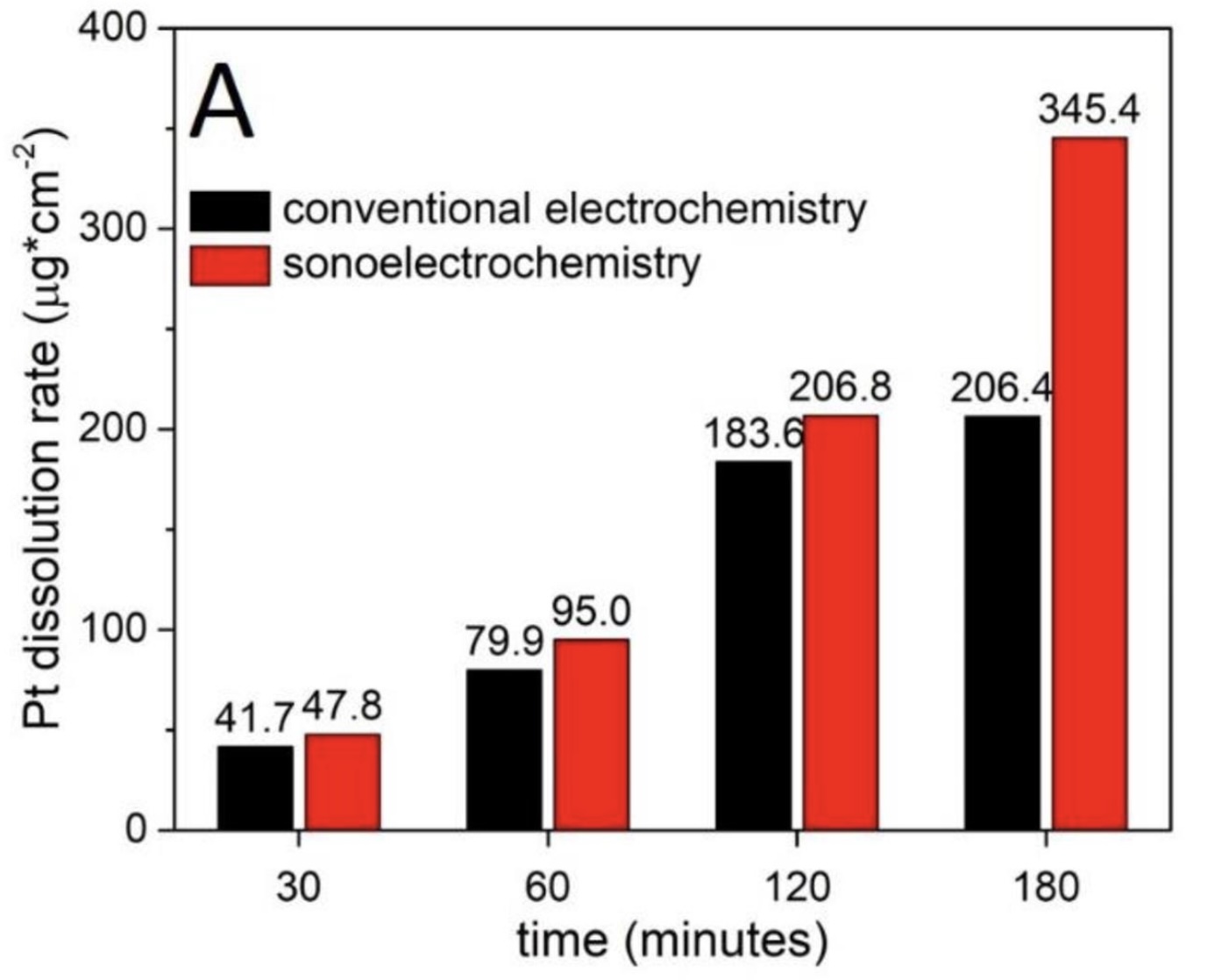
Pt elektrodlarının ənənəvi və sonoelektrokimyəvi həll olma sürətləri.
Tədqiqat və qrafiklər: ©Vasile və b., 2021
Metal Cıxarılması üçün Sənaye Faydaları
Metalların sənaye üsulu ilə çıxarılmasında, sono-elektromaddələşdirmənin dəyəri prosesin intensivləşdirilməsindədir. Əgər səs gücü, elektrod geometrisi, elektrolit tərkibi və cərəyan sıxlığı düzgün uyğunlaşdırılırsa, qısa zamanda daha çox metalı bərpa etmək, yüksək keyfiyyətli tökülmələr və daha sabit hüceyrə əməliyyatı əldə etmək mümkündür.
Praktiki baxımdan, sono-elektrowinning dəstəkləyir:
- Aşağı dərəcəli əritmə mayelərindən bərpa: Daha yaxşı kütlə ötürülməsi, həll olunmuş metal konsentrasiyaları ideal olmadıqda da tökməni saxlamağa kömək edə bilər.
- Katod keyfiyyətinin yaxşılaşdırılması: Daha hamar və daha vahid tökülmələr, sonrakı soyma, əritmə, təmizləmə və ya toz emalı proseslərini sadələşdirə bilər.
- Aşağı çirklənmə meyli: Davamlı səth yenilənməsi passivləşmənin və istənməyən səth filmlərinin təsirini azalda bilər.
- Daha kompakt proses dizaynı: Daha sürətli kinetika proses kimyasından asılı olaraq kiçik hüceyrələrə və ya daha yüksək məhsuldarlığa imkan verə bilər.
- İkincil resurslardan təkmilləşdirilmiş bərpa: Batareya qara kütləsi, elektron tullantıları, katalizatorlar, şlaklar və sənaye qalıqları tez-tez mürəkkəb leç məhlulları yaradır, burada gücləndirilmiş kütlə ötürülməsi dəyərlidir.
- Daha yaxşı proses idarəetməsi: Müasir ultrasəs sistemləri partiyalı və ya fasiləsiz inline qurğulara inteqrasiya edilə bilər və amplituda, qalma vaxtı, axın sürəti, temperatur və enerji girişinə görə tənzimlənə bilər.
Hielscher sono-elektro-sistemləri unikaldır: Sono-elektrod eyni anda həm ultrasəs zond, həm də elektrod kimi fəaliyyət göstərir. Sono-elektro-qurğular laboratoriya testlərindən pilot əməliyyata və sənaye inline istehsalına qədər miqyaslana bilən maye emalı ətrafında hazırlanıb. Yüksək güclü ultrasəs, 24/7 fasiləsiz işləmə qabiliyyəti, sənaye səviyyəsində möhkəmlik və az texniki xidmət Hielscher sono-elektro sistemlərini sənaye sono-elektro qələbəsi üçün ideal edir.
Amplituda, enerji girişi, axın sürəti, temperatur və qalma vaxtı kimi idarə olunan parametrlər vasitəsilə xətti miqyaslanma istehsal güclərinin əhəmiyyətli dərəcədə artmasına kömək edir.
Leaching–Electrowinning Chain-də Sono-Elektroqazanma
Ənənəvi hidrometallurgiya zavodunda elektrowinning tez-tez lixiviasiyadan, bərk- maye ayrılmasından, təmizləmədən və bəzən də həll ekstraksiyası və ya ion mübadiləsindən sonra yerləşdirilir. Sono-elektrowinning, həll olunmuş metal ionlarının bərk metallara çevrilməsinin gücləndirilməsi üçün bu aşağı axın bərpa mərhələsinə inteqrasiya edilə bilər.
Tipik proses yolu aşağıdakı kimi görünə bilər:
- Əzilmiş filiz, konsentrat, tailings və ya ikinci dərəcəli xammal hədəf metalı həll etmək üçün lixiviyalaşdırılır.
- Çözünməz gang, qalıq bərk maddələr və istənməyən fazalar çıxarılır və ya azaldılır.
- Hamilə lixiviya həlli selektiv elektrowinning üçün kimyəvi şəkildə tənzimlənir.
- Elektrolit sono-elektrodlar və dövran ilə təchiz edilmiş electrowinning hüceyrəsinə verilir.
- Sonikasiya ion daşınmasını və elektrod səthinin yenilənməsini yaxşılaşdırır, tətbiq olunan cərəyan isə metalı katod üzərinə yerləşdirir.
- Metal məhsul yığılır, elektrolit təkrar emal edilir və ya əlavə müalicəyə göndərilir.
Bu kombinasiya, metal çıxarma sənayesinin daha çətin resursları emal etməli olduğu yerlərdə xüsusilə maraqlıdır. Gələcək bir çox xammal aşağı metal keyfiyyətləri, daha çox çirkləndirici, daha incə hissəciklər, qarışıq kimyəvi maddələr və ya dəyişkən tərkib ehtiva edir. Sono-elektrowinning elektrokimyəvi bərpa mərhələsini daha möhkəm etmək üçün elektrolit ilə elektrod səthi arasındakı qarşılıqlı əlaqəni yaxşılaşdırmaq üçün yol təklif edir.

Ultrasəs prob elektrod kimi fəaliyyət göstərir. Ultrasəs dalğaları təkmilləşdirilmiş səmərəlilik, yüksək məhsuldarlıq və daha sürətli çevrilmə dərəcələri ilə nəticələnən elektrokimyəvi reaksiyaları təşviq edir.
Sonoelektrokimya elektrodepozisiya proseslərini əhəmiyyətli dərəcədə yaxşılaşdırır.
Sono-Elektrokimyəvi Metal Bərpası: Daha Yüksək Məhsuldarlıq Və Aşağı Proses Xərcləri
Elektroçıxarma artıq hidrometallurgiyanın əsas sütunlarından biridir, çünki o, metalları maye məhlullardan yüksək dəyərli bərk məhsullar kimi bərpa edə bilir. Sono-elektroçıxarma ənənəvi elektrokimyəvi çıxarımı bərpa səmərəliliyini, cərəyan səmərəliliyini və enerji istehlakını yaxşılaşdırmaqla artırır.
Güc ultrason və elektroçıxarmanın sinergetik təsirləri elektrokimyəvi interfeysin fiziki məhdudiyyətlərini həll edir və daha intensiv, nəzarətli və potensial olaraq daha səmərəli metal bərpasını dəstəkləyir. Mədənçilik, təkrar emal və metallurgiya əməliyyatları üçün bu texnologiya getdikcə mürəkkəbləşən xammal mənbələri ilə daha təmiz, daha seçici və daha yüksək məhsuldarlığa malik çıxarma yollarına olan ehtiyac arasındakı boşluğu bağlamağa kömək edir.
Sono-Elektroçıxarma kimi prosesin intensivləşdirilməsi aləti
The future of metal extraction will depend on recovering more metal from more difficult resources. High-grade ores are declining in many regions, while demand for copper, nickel, cobalt, lithium-related metals, precious metals, and rare elements is increasing. At the same time, industry is expanding its focus from primary ores to secondary resources such as spent batteries, electronic scrap, catalysts, industrial residues, and process waters.
Sono-electrowinning offers a compelling process-intensification strategy for this landscape. By combining the selectivity of electrochemical metal recovery with the interfacial power of ultrasonic cavitation, it can improve mass transfer, electrode activity, deposit morphology, and process robustness. For industrial operators, this means a stronger route from leached metal ions to recoverable metal product.
In short, sono-electrowinning turns the cathode surface into a more dynamic reaction zone. Sonication keeps the electrochemical interface active; electrochemistry converts dissolved ions into metal; and together they create a powerful platform for modern hydrometallurgical extraction.
High-Performance Sono-Electro-Probes and SonoElectroReactors
Hielscher Ultrasonics yüksək performanslı ultrasəs sistemləri üçün uzun müddətdir təcrübəli tərəfdaşınızdır. Biz tələbkar mühitlərdə ağır yük tətbiqləri üçün bütün dünyada istifadə olunan ən müasir ultrasəs zondları və reaktorlarını istehsal edir və yayırıq. Sonoelektrokimya üçün Hielscher katod və/və ya anod kimi çıxış edə bilən xüsusi ultrasəs zondları, həmçinin elektrokimyəvi reaksiyalar üçün uyğun olan ultrasəs reaktor hüceyrələri hazırlamışdır. Ultrasonik elektrodlar və hüceyrələr galvanik / voltaik, eləcə də elektrolitik sistemlər üçün mövcuddur.
İndi bizimlə əlaqə saxlayın və elektrokimyəvi proses tələblərinizi bizə bildirin! Biz sizə ən uyğun ultrasəs elektrodlarını və reaktorun quraşdırılmasını tövsiyə edəcəyik!
Bizimlə əlaqə saxlayın! / Bizdən soruşun!

Hielscher Ultrasonics, laboratoriya, pilot və sənaye miqyasında qarışdırma tətbiqləri, dispersiya, emulsiya və ekstraksiya üçün yüksək performanslı ultrasəs homogenizatorları istehsal edir.
Tez-tez soruşulan suallar
Electrowinning nədir?
Electrowinning, əridilmiş metal ionlarının suv məhlulundan azaldıldığı və katod üzərinə bərk metal kimi çökməsi ilə aparılan elektrokimyəvi metal bərpa prosesidir. Metal tərkibli məhlul adətən rudlar, konsentratlar, qalıqlar və ya yenidən istifadə olunan materialların leşinqindən əldə edilir, bundan sonra tətbiq olunan elektrik cərəyanı hədəf metalın seçimli şəkildə bərpasını təmin edir.
Sono-Elektro-Probe nədir?
A Sono-Electro-Probe is a combined ultrasonic probe and electrode that simultaneously introduces high-intensity ultrasound and electrical current into an electrochemical system. As a sono-electrode, it creates acoustic cavitation and microstreaming at or near the electrode surface, which improves mass transfer, disrupts diffusion layers, removes gas bubbles or passivating films, and thereby intensifies electrochemical reactions such as electrodeposition, electrowinning, electrooxidation, and electroreduction.
What are Applications of Sonoelectrochemistry?
Sonoelektrokimya müxtəlif proseslərə və müxtəlif sənaye sahələrində tətbiq oluna bilər. Sonoelektrokimyanın çox yayılmış tətbiqlərinə aşağıdakılar daxildir:
- Nanohissəciklərin sintezi (elektrosintez)
- hidrogen sintezi
- elektrokoaqulyasiya
- Çirkab suların təmizlənməsi
- ohmik istilik
- Emulsiyaların parçalanması
- Elektrokaplama / Elektroçökmə
Ədəbiyyat / İstinadlar
- Eugeniu Vasile, Adrian Ciocanea, Viorel Ionescu, Ioan Lepadatu, Cornelia Diac, Serban N. Stamatin (2021): Making precious metals cheap: Xarici avtomobil katalizatorlarından platin qrupu metalları təkrar emal etmək üçün sonoelektrokimyəvi – hidrodinamik kavitasiyalı üsul. Ultrasonics Sonochemistry, Cild 72, 2021.
- Sherif S. Rashwan, İbrahim Dincer, Atef Mohany, Bruno G. Pollet (2019): Sono-Hydro-Gen prosesi (Ultrasəs ilə hidrogen istehsalı): Çətinliklər və imkanlar. International Journal of Hydrogen Energy, Cild 44, Sayı 29, 2019, 14500-14526.
- Yurdal K.; Karahan İ.H. (2017): Cu-Zn Alaşımlı Filmlərin Elektrodepozisiyasına dair Siklik Voltammetriya Təhlili: Ultrasəs Vaxtının Təsiri. Acta Physica Polonica Cild 132, 2017. 1087-1090.
- Mason, T.; Sáez Bernal, V. (2012): Sonoelektrokimiyaya Giriş Elektrokimyada Güc Ultrasəs: Çoxistiqamətli Laboratoriya Alətindən Mühəndislik Həllinə Qədər, Birinci Nəşr. Redaktor: Bruno G. Pollet. 2012 John Wiley & Sons, Ltd.
- Haas, I.: Gedanken A. (2008): Metal maqnezium nanohissəciklərinin sonoelektrokimya ilə sintezi. Kimyəvi Kommunikasiya 15(15), 2008. 1795-1798.
- Ashassi-Sorkhabi, H.; Bagheri R. (2014): St-12 poladında polipirol filmlərinin sonoelektrokimyəvi və elektrokimyəvi sintezi və onların korroziya və morfoloji tədqiqatları. Polimer Texnologiyasında İnkişafı, Cild 33, Buraxılış 3; 2014.
- Sono-Elektrokimyəvi Sintez Kimyəvi İstehsalda Səmərəliliyi Artırır

Ultrasonik UIP2000hdT (2000 vatt, 20 kHz) bir tankda katod və/və ya anod kimi