Chất bôi trơn nano được cải tiến nhờ quá trình phân tán bằng sóng siêu âm
Việc tích hợp các chất phụ gia nano vào công thức dầu bôi trơn được coi là một trong những bước tiến quan trọng nhất trong lĩnh vực ma sát học trong những năm gần đây. Tuy nhiên, các nhà nghiên cứu và kỹ sư quy trình vẫn phải đối mặt với một thách thức dai dẳng: làm sao để đạt được sự phân tán đồng nhất của các hạt nano trong dầu gốc có độ nhớt cao mà không làm suy giảm tính toàn vẹn cấu trúc của chúng. Các phương pháp trộn truyền thống thường không thể phá vỡ các cụm hạt một cách hiệu quả, dẫn đến hiệu suất sản phẩm không ổn định và độ ổn định khi bảo quản bị hạn chế.
Giải pháp: Phân tán chất phụ gia nano bằng sóng siêu âm trong công thức dầu bôi trơn
Siêu âm công suất cao là giải pháp tối ưu cho những thách thức về quá trình phân tán này. Bằng cách ứng dụng nguyên lý xâm thực âm thanh, thiết bị siêu âm tạo ra các chu kỳ luân phiên giữa áp suất cao và áp suất thấp trong môi trường lỏng. Trong chu kỳ áp suất thấp, các bong bóng chân không nhỏ hình thành trong chất lỏng. Khi các bong bóng này đạt đến thể tích tối đa và không thể hấp thụ thêm năng lượng, chúng sẽ vỡ tan một cách dữ dội trong chu kỳ áp suất cao. Sự vỡ tan này tạo ra các điều kiện cực đoan cục bộ – nhiệt độ lên tới khoảng 5000 Kelvin và áp suất vượt quá 1000 atm – giúp phân tán hiệu quả các cụm hạt nano và đảm bảo sự phân bố đồng đều trong toàn bộ ma trận chất bôi trơn.
Đối với các kỹ sư quy trình, điều này có nghĩa là sự khác biệt giữa một loại chất bôi trơn bị lắng cặn và tách lớp chỉ sau vài tuần và một loại chất bôi trơn duy trì được các thông số hiệu suất trong suốt thời gian sử dụng của bộ phận.

Máy phân tán siêu âm UIP2000hdT dùng trong sản xuất công nghiệp các loại chất bôi trơn
Nghiên cứu điển hình: Ống nano carbon dạng tre được pha tạp nitơ trong mỡ dẫn điện
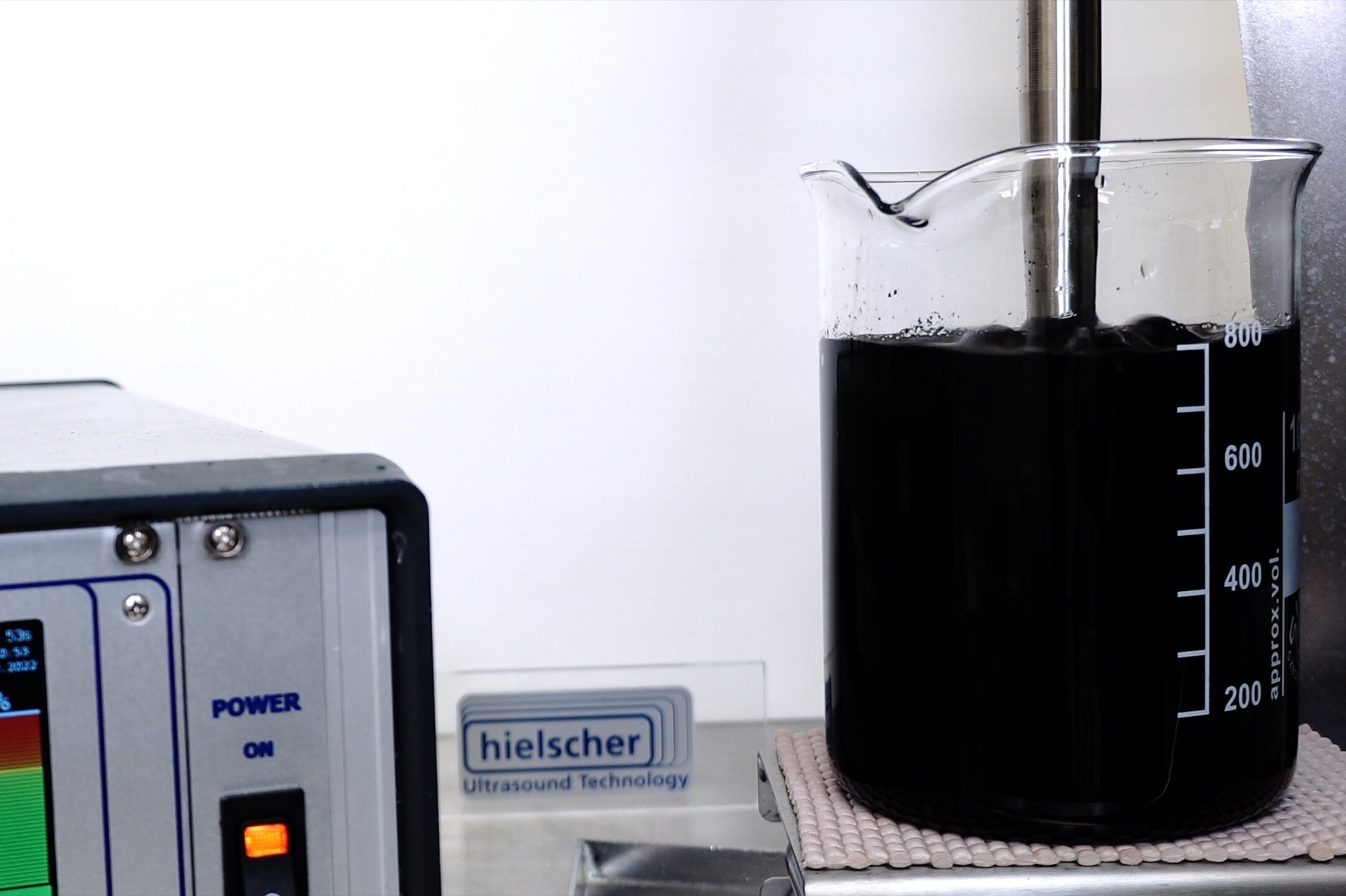 Một ví dụ thuyết phục về hiệu quả của công nghệ siêu âm trong sản xuất chất bôi trơn được trích dẫn từ một nghiên cứu được công bố trên Tạp chí Nghiên cứu và Công nghệ Vật liệu (2019). Nghiên cứu này có tiêu đề “Ứng dụng ống nano carbon dạng tre được pha tạp nitơ trong việc phát triển các chất bôi trơn dẫn điện,” minh họa cách thiết bị đồng nhất hóa kiểu đầu dò Hielscher UIP1000hdT (340 W, thời gian xử lý 2 phút) đã giúp sản xuất được các loại mỡ bôi trơn ổ trục đồng nhất, ổn định và có tính dẫn điện.
Các nhà nghiên cứu đã sử dụng các ống nano carbon hình tre (BCNTs) làm chất phụ gia dẫn điện cho mỡ bôi trơn. Nhờ việc đưa nitơ vào cấu trúc graphit của thành ống nano, các tính chất điện tử và cấu trúc đặc biệt đã hình thành, dẫn đến khả năng hấp phụ và độ dẫn điện tuyệt vời. Ống nano carbon là những vật liệu có cấu trúc nano dẫn điện đáng chú ý, và các tính chất điện tử của chúng có thể được điều chỉnh cụ thể bằng cách đưa các nguyên tử nitơ vào thông qua các kỹ thuật pha tạp.
Các kết quả này nhấn mạnh sức mạnh của quá trình phân tán bằng sóng siêu âm:
Nghiên cứu điển hình này đóng vai trò như một minh chứng kỹ thuật về tính khả thi: khi vật liệu nano phù hợp kết hợp với năng lượng siêu âm phù hợp, chất bôi trơn thu được sẽ đạt được các chỉ số hiệu suất mà trước đây được coi là không thể đạt được bằng các phương pháp trộn truyền thống.

Máy đồng nhất siêu âm UIP1500hdT với một bình phản ứng dòng chảy được trang bị lớp vỏ làm mát để kiểm soát nhiệt độ quá trình trong quá trình xử lý bằng sóng siêu âm.

Chất bôi trơn nano PTFE sau 7 ngày chuẩn bị (A: dầu gốc, B: Chất bôi trơn nano PTFE với siêu âm 1 giờ, C: Chất bôi trơn nano PTFE với 30 phút siêu âm).
(Nghiên cứu và hình ảnh: © Kumar và cộng sự, 2013)
Đặc điểm chính của quá trình phân tán nano bằng sóng siêu âm trong chất bôi trơn
Phương pháp phân tán bằng sóng siêu âm mang lại kết quả vượt trội, chứng minh tiềm năng ứng dụng trong công nghiệp của nó:
- Yêu cầu tối thiểu về phụ gia: Một lượng BCNT tương đối nhỏ, cụ thể là 1,5% theo trọng lượng, là đủ để đạt được độ dẫn điện tốt của mỡ bôi trơn, vượt quá 14 mS. Các mẫu chứa ống nano cho thấy độ dẫn điện tốt, dao động từ 7 đến 18,5 mS trong các phép đo tĩnh.
- Hiệu suất được cải thiện trong quá trình vận hành: Các phép đo độ dẫn điện trong quá trình vận hành thực tế của ổ bi cho thấy các giá trị còn cao hơn nữa, với giá trị tối đa là 31,5 mS được ghi nhận ở công thức chứa 3% BCNT. Độ dẫn điện tăng lên trong từng trường hợp so với các phép đo ở trạng thái tĩnh, cho thấy rằng ứng suất cơ học trong quá trình vận hành giúp cải thiện hơn nữa các đường dẫn điện.
- Hiệu suất ma sát vượt trội: Các mẫu chứa 1,5% khối lượng BCNT đạt được các đặc tính ma sát hiệu quả, với các giá trị mô-men ma sát lần lượt là 6,1 và 5,1 Nmm. Điều này chứng tỏ rằng nồng độ phụ gia tối ưu giúp cân bằng giữa tính dẫn điện và hiệu suất cơ học.
- Tính ổn định nhiệt được cải thiện: Việc bổ sung dầu silicone có độ nhớt cao (5000 mm²/s) và silica khí như các chất làm đặc giúp nâng điểm chảy xuống trên 150°C, từ đó khắc phục một hạn chế quan trọng trong các ứng dụng nhiệt độ cao.
- Công thức được tối ưu hóa: Dầu nền PDMS chứa 3% BCNT và 1,0% SiO₂ dạng keo, có độ nhớt 50 mm/s, đã chứng tỏ là rất phù hợp để sử dụng trong vòng bi, nhờ kết hợp được tính dẫn điện với độ bền cơ học.
Công nghệ siêu âm: Lợi thế trong việc mở rộng quy mô sản xuất công nghiệp
 Mặc dù quá trình phát triển ở quy mô phòng thí nghiệm sử dụng thiết bị Hielscher UIP1000hdT đã chứng minh tính khả thi của ý tưởng, nhưng giá trị thực sự đối với các ứng dụng công nghiệp lại nằm ở khả năng mở rộng quy mô tuyến tính. Các thiết bị siêu âm Hielscher mang lại lợi thế độc đáo nhờ khả năng mở rộng quy mô tuyến tính, cho phép chuyển đổi liền mạch từ giai đoạn R&Từ quy trình xử lý trên bàn làm việc sang sản xuất liên tục với khối lượng lớn.
Đối với ứng dụng công nghiệp, các kỹ sư quy trình có thể sử dụng mẫu UIP4000hdT công suất 4 kW, máy siêu âm UIP6000hdT công suất 6 kW hoặc mẫu UIP16000hdT mạnh mẽ công suất 16 kW được trang bị các buồng dòng chảy chuyên dụng. Cách tiếp cận mở rộng quy mô tuyến tính này đảm bảo rằng các công thức được phát triển ở quy mô phòng thí nghiệm vẫn duy trì chất lượng phân tán và đặc tính phân bố hạt giống hệt nhau khi được sản xuất ở quy mô công nghiệp. Sự nhất quán đạt được thông qua xử lý siêu âm giúp loại bỏ sự biến động giữa các mẻ sản xuất – vấn đề thường gặp ở các phương pháp trộn truyền thống – điều này đặc biệt quan trọng đối với các ứng dụng chất bôi trơn hiệu suất cao trong các ngành hàng không vũ trụ, ô tô và máy móc chính xác.
Tại sao công nghệ siêu âm lại quan trọng đối với sự đổi mới trong lĩnh vực chất bôi trơn
Những ưu điểm của công nghệ phân tán phụ gia nano bằng sóng siêu âm không chỉ dừng lại ở hiệu quả trộn đơn thuần. Công nghệ này cho phép:
- Tăng cường lượng chất phụ gia: Có thể bổ sung các chất phụ gia nano ở nồng độ cao hơn mà không gây ra hiện tượng kết tụ, từ đó tối đa hóa các lợi ích về hiệu suất.
- Tăng cường độ ổn định khi bảo quản: Các hỗn hợp phân tán đồng nhất giúp ngăn ngừa hiện tượng lắng cặn và tách pha trong thời gian bảo quản kéo dài.
- Chất lượng sản phẩm ổn định: Mỗi mẻ sản xuất đều đạt được các đặc tính phân tán giống hệt nhau, điều này có ý nghĩa quyết định đối với các ứng dụng đòi hỏi sự kiểm soát chất lượng nghiêm ngặt.
- Giảm thời gian xử lý: Quá trình xâm thực siêu âm giúp phân tán chất chỉ trong vài phút, thay vì phải mất hàng giờ như các phương pháp truyền thống.
- Tính linh hoạt trong các công thức: Công nghệ này có thể áp dụng cho nhiều loại dầu gốc, chất làm đặc và các loại phụ gia khác nhau, mang lại sự linh hoạt trong quá trình phát triển công thức.
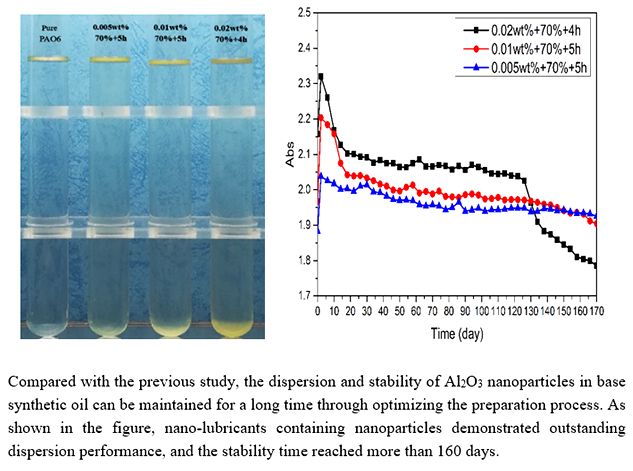
Máy phân tán kiểu đầu dò siêu âm tạo ra các chất bôi trơn sinh học hiệu suất cao.
(Nghiên cứu và hình ảnh: Liu và cộng sự, 2020)
Nâng cao hiệu quả sản xuất chất bôi trơn nano nhờ công nghệ phân tán bằng sóng siêu âm
Việc tích hợp công nghệ siêu âm vào quy trình sản xuất chất bôi trơn đánh dấu một bước ngoặt mang tính đột phá trong cách thức kết hợp các chất phụ gia nano vào công thức chất bôi trơn. Như đã được chứng minh qua thành công trong việc phát triển các loại mỡ bôi trơn dẫn điện sử dụng ống nano carbon dạng tre được pha tạp nitơ, quá trình siêu âm năng lượng cao mang lại các hỗn hợp phân tán đồng nhất, ổn định với các đặc tính hiệu suất vượt trội. Với khả năng mở rộng quy mô tuyến tính của Hielscher, từ máy siêu âm để bàn UIP1000hdT đến các mẫu máy siêu âm công nghiệp lắp trong dây chuyền như UIP4000hdT, UIP6000hdT và UIP16000hdT kèm buồng lưu lượng, các nhà nghiên cứu và kỹ sư quy trình có thể tự tin chuyển đổi từ giai đoạn R&Từ giai đoạn nghiên cứu và phát triển đến sản xuất thương mại, đảm bảo rằng những thành tựu đổi mới đạt được trong phòng thí nghiệm sẽ mang lại hiệu quả tương tự tại nhà máy.
Tương lai của công nghệ chất bôi trơn không chỉ nằm ở việc phát triển các chất phụ gia nano mới, mà còn ở việc làm chủ các kỹ thuật phân tán nhằm khai thác hết tiềm năng của chúng. Công nghệ xử lý bằng sóng siêu âm đóng vai trò cầu nối giữa những khám phá khoa học và ứng dụng công nghiệp, mở đường cho thế hệ tiếp theo của các chất bôi trơn hiệu suất cao dành cho các ứng dụng công nghiệp đòi hỏi khắt khe.
Bảng dưới đây cung cấp cho bạn một dấu hiệu về khả năng xử lý gần đúng của ultrasonicators của chúng tôi:
| Khối lượng hàng loạt | Tốc độ dòng chảy | Thiết bị được đề xuất |
|---|---|---|
| 1 đến 500mL | 10 đến 200ml / phút | UP100H |
| 10 đến 2000mL | 20 đến 400ml / phút | UP200Ht, UP400ST |
| 0.1 đến 20L | 0.2 đến 4L / phút | UIP2000hdT |
| 10 đến 100L | 2 đến 10L / phút | UIP4000hdt |
| 15 đến 150L | 3 đến 15L / phút | UIP6000hdT |
| N.A. | 10 đến 100L / phút | UIP16000hdT |
| N.A. | Lớn | Cụm UIP16000hdT |
Thiết kế, sản xuất và tư vấn – Chất lượng Sản xuất tại Đức
Hielscher ultrasonicators nổi tiếng với chất lượng cao nhất và tiêu chuẩn thiết kế của họ. Mạnh mẽ và hoạt động dễ dàng cho phép tích hợp trơn tru của ultrasonicators của chúng tôi vào các cơ sở công nghiệp. Điều kiện khắc nghiệt và môi trường đòi hỏi dễ dàng được xử lý bởi Hielscher ultrasonicators.
Hielscher Ultrasonics là một công ty được chứng nhận ISO và đặc biệt nhấn mạnh vào ultrasonicators hiệu suất cao có công nghệ tiên tiến và thân thiện với người dùng. Tất nhiên, Hielscher ultrasonicators là CE tuân thủ và đáp ứng các yêu cầu của UL, CSA và RoHs.

Siêu âm UIP6000hdT để phân tán trực tiếp các vật liệu nano trong chất bôi trơn
Các câu hỏi thường gặp
Các loại chất bôi trơn là gì?
Chất bôi trơn thường được phân loại thành chất bôi trơn lỏng, chất bôi trơn bán rắn, chất bôi trơn rắn và chất bôi trơn khí. Chất bôi trơn lỏng bao gồm dầu khoáng, dầu tổng hợp và dầu thực vật. Chất bôi trơn bán rắn bao gồm mỡ bôi trơn. Chất bôi trơn rắn bao gồm than chì, disulfua molypden, PTFE và nitrua bo. Chất bôi trơn khí, chẳng hạn như không khí, được sử dụng trong các hệ thống chuyên dụng có tải trọng thấp hoặc tốc độ cao.
Làm thế nào để phân biệt các loại chất bôi trơn?
Chất bôi trơn có thể được phân biệt dựa trên dạng vật lý, thành phần và mục đích sử dụng. Trong thực tiễn bảo trì, chúng thường được phân thành bốn loại chính: dầu, mỡ bôi trơn, chất bôi trơn thấm sâu và chất bôi trơn khô. Dầu và mỡ bôi trơn là các loại chất bôi trơn được sử dụng phổ biến nhất trong các hoạt động công nghiệp hàng ngày, trong khi chất bôi trơn thấm sâu và chất bôi trơn khô được dùng cho các tác vụ cụ thể hơn, chẳng hạn như nới lỏng các bộ phận bị kẹt hoặc giảm ma sát ở những nơi mà chất bôi trơn dạng lỏng không phù hợp.
Chất bôi trơn sinh học là gì?
Chất bôi trơn sinh học là các chất bôi trơn được chiết xuất hoàn toàn hoặc một phần từ các nguồn sinh học tái tạo, chẳng hạn như dầu thực vật, mỡ động vật hoặc các este tổng hợp được sản xuất từ nguyên liệu sinh học. Chúng được thiết kế để đảm bảo khả năng bôi trơn đồng thời mang lại khả năng phân hủy sinh học tốt hơn, độc tính thấp hơn và tác động môi trường ít hơn so với nhiều loại chất bôi trơn truyền thống có nguồn gốc từ dầu mỏ.
Tìm hiểu cách siêu âm hỗ trợ quá trình sản xuất chất bôi trơn sinh học!
PEG có được sử dụng trong chất bôi trơn không?
Polyethylene glycol (PEG) được sử dụng trong các chất bôi trơn, đặc biệt là trong các công thức chất bôi trơn hòa tan trong nước và chất bôi trơn tổng hợp.
PEG có thể đóng vai trò là chất lỏng nền, phụ gia bôi trơn, chất điều chỉnh độ nhớt, chất giữ ẩm hoặc chất hòa tan, tùy thuộc vào trọng lượng phân tử và công thức của nó. Chất này được sử dụng trong các ứng dụng như dung dịch gia công kim loại, chất bôi trơn dệt may, dầu thủy lực, chất bôi trơn máy nén, chất tách khuôn và mỡ bôi trơn chuyên dụng.
Các ưu điểm của nó bao gồm khả năng bôi trơn tốt, khả năng hòa tan trong nước, độ bay hơi thấp, tính ổn định nhiệt và khả năng tương thích với nhiều chất phụ gia. Tuy nhiên, PEG không phù hợp với mọi hệ thống chất bôi trơn vì nó có thể hút ẩm, khả năng tương thích với một số loại dầu khoáng có thể bị hạn chế, và hiệu suất của nó phụ thuộc rất nhiều vào trọng lượng phân tử và điều kiện vận hành.
Chất bôi trơn được dùng để làm gì?
Chất bôi trơn được sử dụng để giảm ma sát và mài mòn giữa các bề mặt đang chuyển động tương đối với nhau. Chúng còn giúp tản nhiệt, ngăn ngừa ăn mòn, giảm tiếng ồn và rung động, bịt kín các khe hở, loại bỏ tạp chất, đồng thời nâng cao hiệu suất và tuổi thọ của các hệ thống cơ khí.
Tại sao việc bôi trơn máy móc lại quan trọng?
Bôi trơn rất quan trọng vì nó tạo ra một lớp màng bảo vệ giữa các bộ phận chuyển động của máy móc, ngăn chặn sự tiếp xúc trực tiếp giữa các bề mặt kim loại. Điều này giúp giảm ma sát, mài mòn, sinh nhiệt, tổn thất năng lượng và nguy cơ hỏng hóc cơ khí. Việc bôi trơn đúng cách giúp nâng cao độ tin cậy, hiệu suất, tuổi thọ của các bộ phận và kéo dài khoảng thời gian bảo dưỡng.
Văn học / Tài liệu tham khảo
- László Vanyorek, Dávid Kiss, Ádám Prekob, Béla Fiser, Attila Potyka, Géza Németh, László Kuzsela, Dirk Drees, Attila Trohák, Béla Viskolcz (2019): Application of nitrogen doped bamboo-like carbon nanotube for development of electrically conductive lubricants. Journal of Materials Research and Technology, Volume 8, Issue 3, 2019. 3244-3250.
- Kałużny Jarosł, Waligórski M, Szymański GM, Merkisz J, Różański J, Nowicki M, Al Karawi M, Kempa K. (2020): Reducing friction and engine vibrations with trace amounts of carbon nanotubes in the lubricating oil. Tribology International 2020.
- Mosleh, Mohsen; Atnafu, Neway; Belk, John; Nobles, Orval (2009): Modification of sheet metal forming fluids with dispersed nanoparticles for improved lubrication. Wear 267, 2009. 1220-1225.
- Li J, Du C, Delgado MA, et al. (2026): The application of nanocellulose in eco-friendly lubricants: A review. Friction, 2026.

Máy đồng nhất siêu âm UIP1000hdT, một máy siêu âm mạnh mẽ 1000 watt để phân tán các hạt nano
- Hiệu quả cao
- Công nghệ tiên tiến
- Độ tin cậy & Mạnh mẽ
- Điều chỉnh, kiểm soát quá trình chính xác
- mẻ & Inline
- cho bất kỳ khối lượng nào
- Phần mềm thông minh
- Tính năng thông minh (ví dụ: có thể lập trình, ghi nhật ký dữ liệu, điều khiển từ xa)
- Dễ dàng và an toàn để vận hành
- bảo trì thấp
- CIP (sạch tại chỗ)
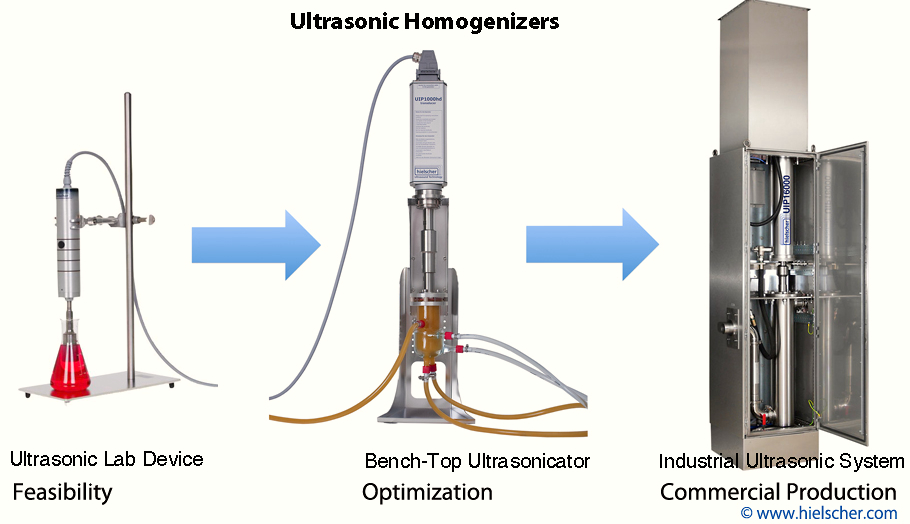
Hielscher Ultrasonics sản xuất homogenizers siêu âm hiệu suất cao từ phòng thí nghiệm đến quy mô công nghiệp.