Pallādija nanodaļiņu sonoķīmiskā reducēšana
Pallādijs (Pd) ir labi pazīstams ar savām katalītiskajām īpašībām un tiek plaši izmantots materiālu pētniecībā, elektronikas ražošanā, medicīnā, ūdeņraža attīrīšanā un dažādos ķīmiskajos pielietojumos. Izmantojot sonohimisko metodi, pallādija daļiņu izmēru un morfoloģiju var kontrolēt, mainot PVP/Pd attiecību. Tas ļauj ar ultraskaņas palīdzību sintezēt gan ļoti smalkas, monodispersas nanodaļiņas, gan lielākus pallādija agregātus, tādējādi pielāgojot daļiņu izmērus optimālai katalītiskajai aktivitātei.
Pallādija nanodaļiņu ultraskaņas ražošana
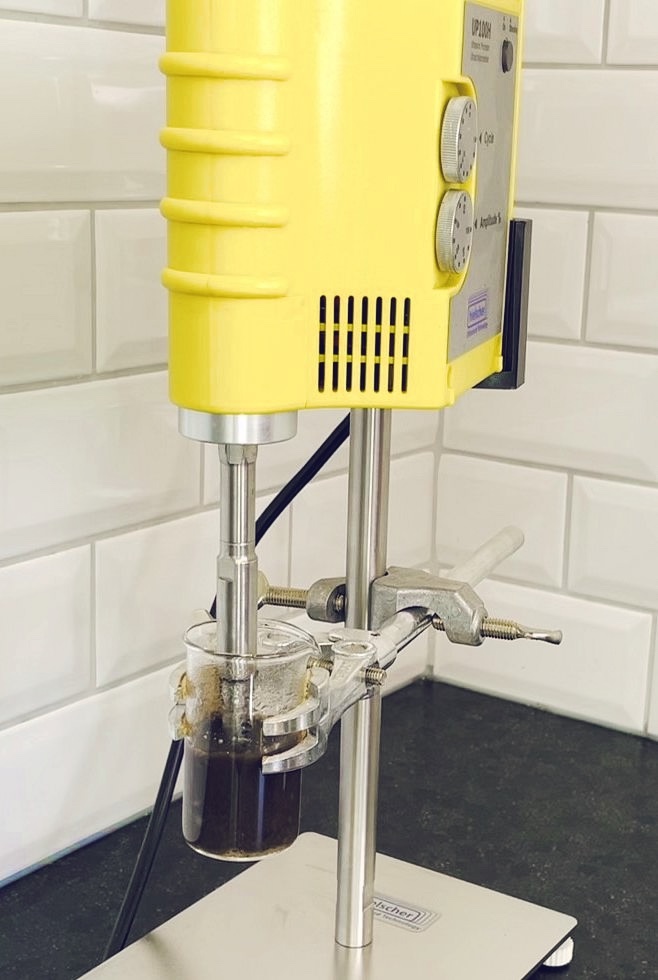 Pallādija nanodaļiņu reducēšana ar ultraskaņu piedāvā ātru un reaģentu taupīgu metodi Pd(0) nanodaļiņu iegūšanai, izmantojot akustisko kavitāciju, lai radītu lokalizētus augstas enerģijas apstākļus un reducētu radikāļus šķīdumā, tādējādi ļaujot reducēt pallādija jonus bez tradicionālās augsttemperatūras apstrādes.
Galvenā priekšrocība ir procesa kontrole: ultraskaņošanas laiks un stabilizatora koncentrācija, piemēram, PVP/Pd attiecība, var ietekmēt to, vai produkts veidojas kā labi disperģētas, apaļas nanodaļiņas apmēram 5 nm lielumā vai kā lielāki agregāti apmēram 20 nm lielumā, kas ir nozīmīgi rūpniecībā, jo pallādija veiktspēja katalīzē ir ļoti atkarīga no daļiņu izmēra, morfoloģijas, dispersijas un virsmas laukuma. Tā kā pallādija nanodaļiņas ir plaši izmantojamas kā heterogēnie katalizatori, elektrokatalizatoriem un funkcionāliem materiāliem, ultraskaņas reducēšana ir pievilcīga metode, lai salīdzinoši maigos šķidrās fāzes apstākļos ražotu smalki disperģētus Pd katalizatorus, kas var sniegt potenciālus ieguvumus ķīmiskajā sintēzē, vides katalīzē, degvielas elementu tehnoloģijās un citos procesos, kur augsta katalītiskā aktivitāte un efektīva dārgmetālu izmantošana ir ekonomiski nozīmīga.

Rūpnieciskā nanodaļiņu apstrāde ar sonikatoru UIP2000hdT
Parauga sagatavošanas kārtība
Paraugus sagatavoja šādi:
Paraugiem maisījumi ar 30 ml EG un 5·10-6PVP molu sagatavoja, 15 minūtes maisot ar magnētisko maisītāju. Dažādiem paraugiem pievienoja atšķirīgu Pd(NO₃)₂ šķīduma daudzumu — 1,5 ml un 2 ml. Paraugu maisījumus sagatavoja attiecībā 2·10-3mol Pd(NO₃)₂ paraugā (a) un 2,66·10-3mol Pd(NO₃)₂ paraugā (b). Abus maisījumus apstrādāja ar ultraskaņu 20 ml flakonā, izmantojot zondes tipa ultraskaņas iekārtu. Paraugus ņēma pēc 30, 60, 90, 120, 150 un 180 minūšu ultraskaņas apstrādes.
Eksperimenta rezultātu analīze rāda, ka:
- 1. Pd(II) sonoķīmiskā reducēšana uz Pd(0) ir atkarīga no ultraskaņas apstrādes laika.
- 2. Augsta PVP/Pd(II) molārā attiecība izraisa monodispersu pallādija daļiņu veidošanos ar noapaļotu formu un vidējo diametru aptuveni 5nm.
- 3. Tomēr zemā PVP/Pd(II) molārā attiecība ietver agregātu pallādija nanodaļiņu iegūšanu ar lielu izmēru sadalījumu, kura centrā ir 20nm.
Pallādija (II) jonu reducēšanas sonoķīmiskais ceļš Pd(II) uz pallādija atomiem Pd(0) var pieņemt, ka tas ir šāds:
- (1) Ūdens pirolīze: H₂O → •OH + •H
- (2) Radikāļu veidošanās: RH (reducētājs) + •OH(•H) → •R + H₂O(H₂)
- (3) Jonu reducēšana: Pd(II) + reducējošie radikāļi (•H, •R) → Pd(0) + R•CHO + H+
- (4) Daļiņu veidošanās: NPd(0) → Pdn
Rezultāts: Atkarībā no PVP/Pd(II) attiecības, disperģēts vai agregēts PdN tika iegūti.
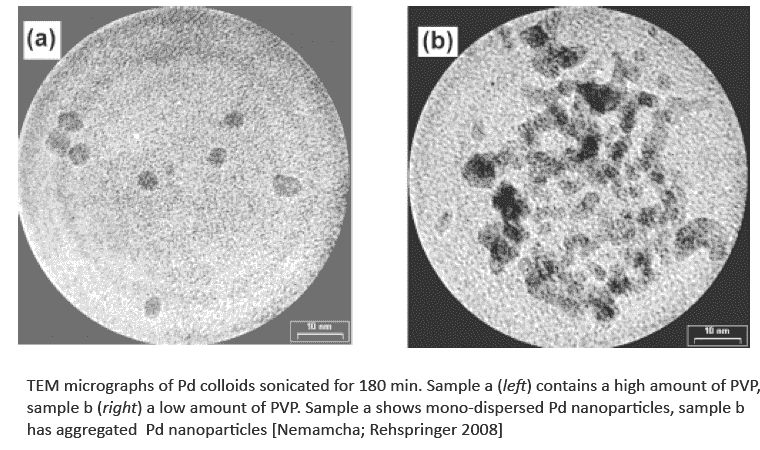
Pallādija sonohimiskā reducēšana: paraugs a (kreisajā pusē) satur lielu PVP daudzumu, paraugs b (labajā pusē) — nelielu PVP daudzumu. Ultraskaņas apstrādes ilgums ar UP100H: 180 min. Paraugā a redzamas monodispersas Pd nanodaļiņas, paraugā b — agregētas Pd nanodaļiņas.
Attēli un pētījums: ©Nemamcha un Rehspringer, 2008
Analīze un rezultāti
UV redzamās absorbcijas analīzes apstiprina saistību starp pallādija(II) jonu sonoķīmisko reducēšanu uz pallādija(0) atomiem un aiztures laiku ultraskaņas laukā. Pallādija(II) jonu reducēšana uz pallādija(0) atomiem progresē, un to var pilnībā panākt, palielinot ultraskaņas apstrādes laiku. Transmisijas elektronmikroskopijas (TEM) mikrografi parāda, ka:
- Pievienojot lielu PVP daudzumu, pallādija jonu sonohimiskā reducēšana izraisa monodispersu pallādija daļiņu veidošanos, kurām ir sfēriska forma un vidējais diametrs aptuveni 5 nm.
- Izmantojot nelielu PVP daudzumu, tiek iegūti pallādija nanodaļiņu agregāti. Dinamiskās gaismas izkliedes (DLS) mērījumi liecina, ka pallādija nanodaļiņu agregātiem ir plašs izmēru sadalījums, kura centrs atrodas pie 20 nm.

Laboratorijas ultraskaņas iekārta UP100H ir izmantots pallādija nanodaļiņu sagatavošanai.

Pallādija (Pd) nano daļiņas var pagatavot ar ultraskaņu
Projektēšana, ražošana un konsultācijas – Kvalitāte ražots Vācijā
Hielscher ultrasonikatori ir labi pazīstami ar saviem augstākajiem kvalitātes un dizaina standartiem. Robustums un viegla darbība ļauj vienmērīgi integrēt mūsu ultrasonikatorus rūpnieciskajās iekārtās. Hielscher ultrasonikatori viegli apstrādā neapstrādātus apstākļus un prasīgu vidi.
Hielscher Ultrasonics ir ISO sertificēts uzņēmums un īpašu uzsvaru liek uz augstas veiktspējas ultrasonikatoriem, kas piedāvā vismodernākās tehnoloģijas un lietotājdraudzīgumu. Protams, Hielscher ultrasonikatori atbilst CE prasībām un atbilst UL, CSA un RoHs prasībām.
Literatūra/Atsauces
- Nemamcha, A.; Rehspringer, J. L. (2008): Morphology of dispersed and aggregated PVV-Pd nanoparticles prepared by ultrasonic irradiation of Pd(NO₃)₂ solution in ethylene glycol. Rev. Adv. Mater. Sci. 18;2008. 685-688.
- Prekob, Á., Muránszky, G., Kocserha, I. et al. (2020): Sonochemical Deposition of Palladium Nanoparticles Onto the Surface of N-Doped Carbon Nanotubes: A Simplified One-Step Catalyst Production Method. Catalysis Letters 150, 2020. 505–513.
- Haitao Zheng, Mphoma S. Matseke, Tshimangadzo S. Munonde (2019): The unique Pd@Pt/C core-shell nanoparticles as methanol-tolerant catalysts using sonochemical synthesis. Ultrasonics Sonochemistry, Volume 57, 2019. 166-171.
Fakti, kurus ir vērts zināt
Kas ir pallādijs?
Pallādijs ir rets, sudrabaini balts dārgmetāls ar ķīmisko simbolu Pd un atomnumuru 46. Tas pieder pie platīna grupas metāliem un tiek augsti vērtēts, jo ir ķīmiski stabils, vada elektrību, absorbē ūdeņradi un darbojas kā izcils katalizators. Smalki sadalīts pallādijs ir īpaši efektīvs hidrogenēšanas un dehidrogenēšanas reakcijās, savukārt uzkarsēts pallādijs ļauj ūdeņradim difūzēt caur to, kas padara to noderīgu ūdeņraža atdalīšanai un attīrīšanai.
Kādiem mērķiem izmanto pallādija nanodaļiņas?
Pallādija nanodaļiņas galvenokārt izmanto kā katalizatorus ar lielu virsmas laukumu. Tā kā nanodaļiņām ir daudz lielāks aktīvās virsmas laukums nekā masveida pallādijam, tās var uzlabot katalizatora efektivitāti un samazināt nepieciešamo dārgā cēlmetāla daudzumu. Tipiski pielietojumi ietver ķīmisko sintēzi, hidrogenēšanas reakcijas, oglekļa–oglekļa savienošanas reakcijas, elektrokatalīzi, degvielas elementu pētījumus, ūdeņraža noteikšanu un uzglabāšanu, vides katalīzi, kā arī dažas biomedicīnas pētījumu jomas, piemēram, pretmikrobu, fototermiskās un pretvēža sistēmas. Pallādija katalītiskā darbība ir cieši atkarīga no daļiņu izmēra, morfoloģijas un dispersijas.
Pallādija nanodaļiņas izmanto arī citu daļiņu leģēšanai, lai panāktu katalītiskas īpašības. Uzziniet vairāk par ultraskaņas metodi Pd/N-BCNT sintēzei kā Fišera–Tropša katalizatoram!
Vai pallādijs ir toksisks?
Parasti uzskata, ka elementārajam metāliskajam pallādijam ir zema toksicitāte un nav zināma bioloģiska nozīme, taču ar pallādija savienojumiem, sāļiem, putekļiem un nanomēroga formām jāapietas uzmanīgi. Atkarībā no savienojuma un iedarbības veida saskare ar pallādiju darbavietā vai laboratorijā var izraisīt kairinājumu vai paaugstinātu jutību, un, piemēram, pallādija hlorīda šķīdumi var kairināt gļotādas. Rūpnieciskai apstrādei praktiskais secinājums ir šāds: metāliskais pallādijs lielos daudzumos rada salīdzinoši zemu risku, taču pallādija pulveri, šķīstošie pallādija sāļi un pallādija nanodaļiņas jāuzskata par potenciāli bīstamām vielām, tādēļ jānodrošina putekļu kontrole, ventilācija, jāvalkā cimdi un acu aizsardzība, kā arī jānodrošina atkritumu pareiza apstrāde.