הפחתה סונוכימית של ננו-חלקיקי פלדיום
פלדיום (Pd) ידוע היטב בתכונותיו הקטליטיות, והוא נמצא בשימוש נרחב גם במחקר חומרים, בייצור אלקטרוניקה, ברפואה, בטיהור מימן וביישומים כימיים שונים. באמצעות תהליך סונוכימי, ניתן לשלוט בגודל ובמורפולוגיה של חלקיקי הפלדיום על ידי התאמת היחס בין PVP ל-Pd. דבר זה מאפשר סינתזה אולטראסונית של חלקיקים ננומטריים עדינים מאוד ומונו-דיספרסים, או של אגרגטים גדולים יותר של פלדיום, ובכך להתאים את ממדי החלקיקים לביצועים קטליטיים מיטביים.
ייצור על-קולי של ננו-חלקיקי פלדיום
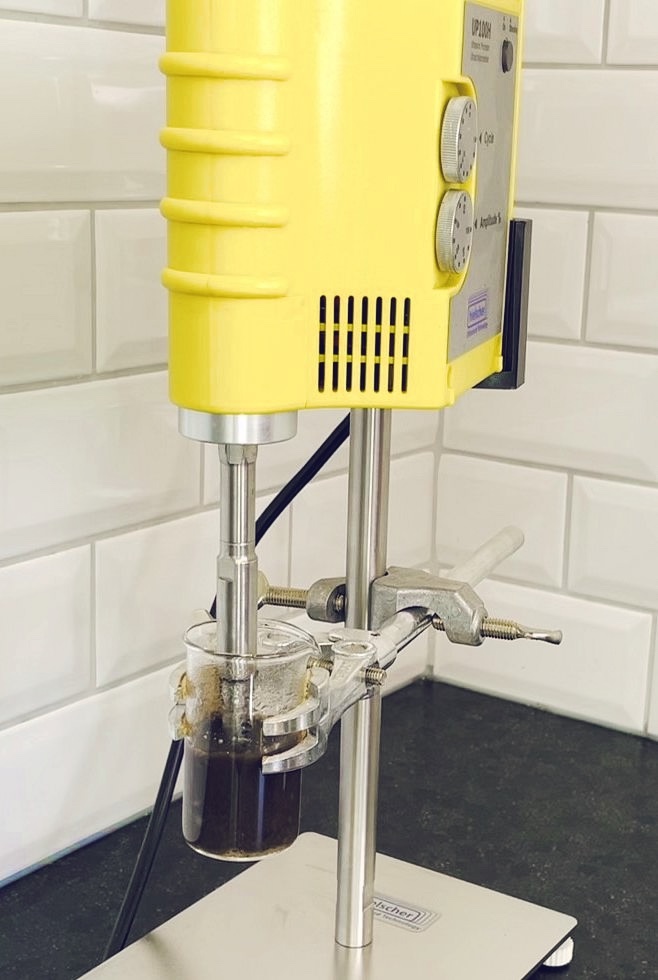 הפחתת חלקיקי ננו של פלדיום באמצעות אולטרסאונד מציעה שיטה מהירה וחסכונית בחומרים כימיים להפקת חלקיקי ננו של Pd(0), באמצעות שימוש בקוויטציה אקוסטית ליצירת תנאים מקומיים בעלי אנרגיה גבוהה ורידיקלים מפחיתים בתמיסה, מה שמאפשר הפחתת יוני פלדיום ללא צורך בעיבוד בטמפרטורות גבוהות כמקובל.
יתרון מרכזי הוא השליטה בתהליך: זמן האולטרסאונד וריכוז המייצב, כגון היחס בין PVP ל-Pd, יכולים להשפיע על האופן שבו המוצר נוצר – כננו-חלקיקים מעוגלים ומפוזרים היטב בגודל של כ-5 ננומטר, או כאגרגטים גדולים יותר בגודל של כ-20 ננומטר. לכך יש חשיבות תעשייתית, שכן ביצועי הפלדיום בקטליזה תלויים במידה רבה בגודל החלקיקים, במורפולוגיה, בפיזור ובשטח הפנים. מכיוון שננו-חלקיקי פלדיום הם בעלי ערך רב כזרזים הטרוגניים, כאלקטרו-זרזים וכחומרים פונקציונליים, הפחתה אולטראסונית מהווה שיטה אטרקטיבית לייצור זרזי Pd מפוזרים היטב בתנאי שלב נוזלי מתונים יחסית, עם יתרונות פוטנציאליים עבור סינתזה כימית, קטליזה סביבתית, טכנולוגיות תאי דלק ותהליכים אחרים שבהם לפעילות קטליטית גבוהה ולניצול יעיל של מתכות אצילות יש חשיבות כלכלית.

עיבוד ננו-חלקיקים בתעשייה עם מכשיר הסוניקציה UIP2000hdT
נוהל הכנת הדגימה
הדגימות הוכנו כדלקמן:
עבור הדגימות, תערובות של 30mL של EG ו 5·10-6מול של PVP הוכנו באמצעות ערבוב מגנטי למשך 15 דקות. לדגימות השונות נוספו כמויות שונות של תמיסת Pd(NO₃)₂, 1.5 מ"ל ו-2 מ"ל. תערובות הדגימות הוכנו ביחס של 2·10-3mol Pd(NO₃)₂ בדגימה (א) ו-2.66·10-3mol Pd(NO₃)₂ בדגימה (ב). שתי התערובות עברו טיפול קולי בבקבוקון בנפח 20 מ"ל באמצעות מכשיר אולטראסוניק מסוג "פרובה". הדגימות נלקחו לאחר זמני טיפול קולי של 30, 60, 90, 120, 150 ו-180 דקות.
ניתוח תוצאות הניסוי מראה כי:
- 1. ההפחתה הסונוכימית של Pd(II) ל-Pd(0) תלויה בזמן הסוניקציה.
- 2. היחס המולרי הגבוה בין PVP/Pd(II) מוביל להיווצרות חלקיקי פלדיום חד-מפוזרים בעלי צורה מעוגלת וקוטר ממוצע של כ-5 ננומטר.
- 3. עם זאת, היחס המולרי הנמוך של PVP/Pd(II) כרוך בקבלת ננו-חלקיקי פלדיום אגרגטים עם התפלגות גודל גדולה שמרכזו 20nm.
התוואי הסונוכימי של יוני פלדיום מחזרים (II) Pd(II) לאטומי פלדיום Pd(0) ניתן להניח שהדברים הבאים:
- (1) פירוליזה של מים: H₂O → •OH+•H
- (2) היווצרות רדיקלים: RH (חומר מחזר) + •OH(•H) → •R + H₂O(H₂)
- (3) הפחתת יונים: Pd(II) + רדיקלים מחזרים (•H, •R) → Pd(0) + R•CHO + H+
- (4) היווצרות חלקיקים: NPd(0) → Pdn
תוצאה: בהתאם ליחס PVP/Pd(II), Pd מפוזר או מצטברN הושגו.
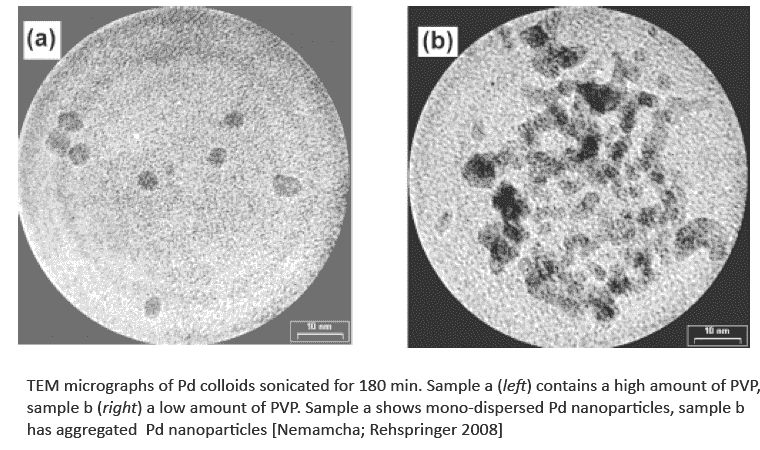
הפחתה סונוכימית של פלדיום: דגימה א' (משמאל) מכילה כמות גבוהה של PVP, ודגימה ב' (מימין) מכילה כמות נמוכה של PVP. משך הטיפול הקולי במכשיר UP100H: 180 דקות. בדגימה א' נראים חלקיקי ננו-פלדיום מונו-מפוזרים, ובדגימה ב' נראים חלקיקי ננו-פלדיום מצטברים.
תמונות ומחקר: ©Nemamcha ו-Rehspringer, 2008
ניתוח ותוצאות
ניתוחי הבליעה הנראים UV מאשרים את הקשר בין ההפחתה הסונוכימית של יוני פלדיום (II) לאטומי פלדיום(0) לבין זמן השמירה בשדה העל-קולי. הפחתת יוני פלדיום(II) לאטומי פלדיום(0) מתקדמת וניתנת להשגה מלאה עם הגדלת זמן הסוניקציה. המיקרוגרפים של מיקרוסקופ אלקטרונים תמסורת (TEM) מראים כי:
- כאשר מוסיפים כמות גדולה של PVP, הפחתה סונוכימית של יוני פלדיום מובילה להיווצרות חלקיקי פלדיום מונו-דיספרסריים בעלי צורה כדורית וקוטר ממוצע של כ-5 ננומטר.
- השימוש בכמות קטנה של PVP מביא ליצירת אגרגטים של חלקיקי ננו-פלדיום. מדידות פיזור האור הדינמי (DLS) מגלות כי לאגרגטים של חלקיקי הננו-פלדיום יש התפלגות גודל רחבה, שמרכזה ב-20 ננומטר.

מכשיר הסוניקטור המעבדתי UP100H שימש להכנת חלקיקי ננו של פלדיום.

ניתן להכין ננו חלקיקי פלדיום (Pd) על ידי סוניקציה
תכנון, ייצור וייעוץ – איכות תוצרת גרמניה
Hielscher ultrasonicators ידועים באיכות הגבוהה ביותר שלהם סטנדרטים עיצוב. חוסן ותפעול קל מאפשרים שילוב חלק של האולטרסאונד שלנו במתקנים תעשייתיים. תנאים קשים וסביבות תובעניות מטופלים בקלות על ידי אולטרסוניקטורים Hielscher.
Hielscher Ultrasonics היא חברה מוסמכת ISO לשים דגש מיוחד על ultrasonicators ביצועים גבוהים שמציעות טכנולוגיה חדישה וידידותיות למשתמש. כמובן, Hielscher ultrasonicators הם תואמי CE ולעמוד בדרישות של UL, CSA ו RoHs.
ספרות/מקורות
- Nemamcha, A.; Rehspringer, J. L. (2008): Morphology of dispersed and aggregated PVV-Pd nanoparticles prepared by ultrasonic irradiation of Pd(NO₃)₂ solution in ethylene glycol. Rev. Adv. Mater. Sci. 18;2008. 685-688.
- Prekob, Á., Muránszky, G., Kocserha, I. et al. (2020): Sonochemical Deposition of Palladium Nanoparticles Onto the Surface of N-Doped Carbon Nanotubes: A Simplified One-Step Catalyst Production Method. Catalysis Letters 150, 2020. 505–513.
- Haitao Zheng, Mphoma S. Matseke, Tshimangadzo S. Munonde (2019): The unique Pd@Pt/C core-shell nanoparticles as methanol-tolerant catalysts using sonochemical synthesis. Ultrasonics Sonochemistry, Volume 57, 2019. 166-171.
עובדות שכדאי לדעת
מהו פלדיום?
פלדיום הוא מתכת יקרה נדירה, בצבע לבן-כסוף, שסימנה הכימי הוא Pd ומספרו האטומי 46. הוא נמנה עם מתכות קבוצת הפלטינה, והוא מוערך בזכות היציבות הכימית שלו, יכולתו להוליך חשמל, יכולתו לספוג מימן, ותפקודו כזרז מצוין. פלדיום המפורק לחלקיקים זעירים יעיל במיוחד בתגובות הידרוגנציה ודה-הידרוגנציה, ופלדיום מחומם מאפשר למימן להתפזר דרכו, מה שהופך אותו לשימושי להפרדת מימן ולטיהורו.
לאילו מטרות משמשים חלקיקי ננו של פלדיום?
ננו-חלקיקי פלדיום משמשים בעיקר כזרזים בעלי שטח פנים גדול. מכיוון שננו-חלקיקים חושפים שטח פנים פעיל גדול בהרבה מאשר פלדיום במצב מוצק, הם יכולים לשפר את יעילות הזרז ולהפחית את כמות המתכת האצילה היקרה הנדרשת. יישומים אופייניים כוללים סינתזה כימית, תגובות הידרוגנציה, תגובות צימוד פחמן-פחמן, אלקטרוקטליזה, מחקר בתחום תאי הדלק, חישה ואחסון מימן, קטליזה סביבתית, וכמה תחומי מחקר ביו-רפואיים כגון מערכות אנטי-מיקרוביאליות, פוטותרמיות ואנטי-סרטניות. ההתנהגות הקטליטית של הפלדיום תלויה במידה רבה בגודל החלקיקים, במורפולוגיה ובפיזור.
חלקיקי ננו של פלדיום משמשים גם להוספה לחלקיקים אחרים על מנת להשיג תכונות קטליטיות. קראו עוד על השיטה האולטראסונית לסינתזה של Pd/N-BCNT כזרז לפישר-טרופש!
האם פלדיום הוא חומר רעיל?
פלדיום מתכתי טהור נחשב בדרך כלל כבעל רעילות נמוכה וללא תפקיד ביולוגי ידוע, אך יש לטפל בזהירות בתרכובות פלדיום, במלחים, באבק ובצורות ננומטריות שלו. חשיפה תעסוקתית או במעבדה עלולה לגרום לגירוי או לרגישות, בהתאם לתרכובת ולדרך החשיפה; לדוגמה, תמיסות כלוריד פלדיום עלולות לגרות את הריריות. לגבי טיפול תעשייתי, התשובה המעשית היא: פלדיום מתכתי בתפזורת הוא בעל סיכון נמוך יחסית, אך יש להתייחס לאבקות פלדיום, מלחי פלדיום מסיסים וננו-חלקיקי פלדיום כחומרים שעלולים להיות מסוכנים, תוך הקפדה על בקרת אבק, אוורור, כפפות, הגנה על העיניים וטיפול נאות בפסולת.